


Deuteronomy 31:6
Bible text: King James Version (1769 Blayney text) · Public domain
Bible text: King James Version with Strong's numbers · Public domain
Bible text: Berean Standard Bible · Public domain
Bible text: American Standard Version (1901) · Public domain
Bible text: World English Bible, Messianic edition · Public domain
Bible text: Geneva Bible (1599) · Public domain
Bible text: Young's Literal Translation · Public domain
- חִזְקוּchiz·Kube strongH2388V-Qal-Imp-2mpVerb Qal Imperative 2nd Plural Masculine
- וְאִמְצוּve·'im·Tzuand be boldH553Conj-w ¦ V-Qal-Imp-2mpVerb Qal Imperative 2nd Plural Masculineוְandאִמְצוּbe bold
- אַל'almay notH408NegParticle Negative
- תִּירְאוּti·re·'Uyou be afraidH3372V-Qal-Imperf-2mpVerb Qal Imperfect 2nd Plural Masculine
- וְאַלve·'aland may notH408Conj-w ¦ NegParticle Negativeוְandאַלmay not
- תַּעַרְצוּta·'ar·Tzuyou be terrifiedH6206V-Qal-Imperf-2mpVerb Qal Imperfect 2nd Plural Masculine
- מִפְּנֵיהֶםmi·pe·nei·Hemof <before> themH6440Prep-m ¦ N-mpc ¦ 3mpNoun Plural Masculine Constructמִofפְּנֵי<before>הֶםthem
- כִּיkiforH3588PrtParticle Conditional
- יְהוָהYah·wehYahwehH3068N-properNoun Proper Title
- אֱלֹהֶיךָ'e·lo·Hei·khayour GodH430N-mpc ¦ 2msNoun Plural Masculine ConstructאֱלֹהֶיGodךָyour
- הוּאhu'heH1931Pro-3msPronoun Personal 3rd Singular Masculine
- הַהֹלֵךְha·ho·Lekh[is] the [one who] goesH1980Art ¦ V-Qal-Prtcpl-msVerb Qal Participle Singular Masculine Absoluteהַ[is] theהֹלֵךְ[one who] goes
- עִמָּךְ'i·Makhwith youH5973Prep ¦ 2msPreposition Definiteעִמָּwithךְyou
- לֹאlo'notH3808NegParticle Negative
- יַרְפְּךָyar·pe·Khahe will abandon youH7503V-Hiphil-Imperf-3ms ¦ 2msVerb Hiphil Imperfect 3rd Singular Masculineיַרְפְּhe will abandonךָyou
- וְלֹאve·Lo'and notH3808Conj-w ¦ NegParticle Negativeוְandלֹאnot
- יַעַזְבֶךָּya·'az·Ve·kahe will forsake youH5800V-Qal-Imperf-3ms ¦ 2msVerb Qal Imperfect 3rd Singular Masculineיַעַזְבֶhe will forsakeךָּyou
English is a literal word-by-word gloss of the Hebrew, not the KJV's wording. Why?
This is the original text the KJV's translators worked from — each Hebrew word with its own literal English meaning in this verse, prepared by scholars at Tyndale House, Cambridge. The KJV translates whole sentences, not word by word, so its wording differs: one Hebrew word can become several English words, and the KJV may choose “the LORD” where the gloss reads “Yahweh”. Both are faithful — they answer different questions. For the KJV's own rendering, switch to the KJV text.
Details
See on the biblical-era map
Study this verse
Public-domain commentary
Matthew Henry
From his Commentary on the Whole Bible. Henry comments on passages, not single verses — this entry covers Deuteronomy 31:1–8. His two-level outline is real structure in the source text, so it is rendered as structure.
Loth to part (we say) bids oft farewell. Moses does so to the children of Israel: not because he was loth to go to God, but because he was loth to leave them, fearing that when he had left them they would leave God. He had finished what he had to say to them by way of counsel and exhortation: here he calls them together to give them a word of encouragement, especially with reference to the wars of Canaan, in which they were now to engage. It was a discouragement to them that Moses was to be removed at a time when he could so ill be spared: though Joshua was continued to fight for them in the valley, they would want Moses to intercede for them on the hill, as he did, Exo 17:10. But there is no remedy: Moses can no more go out and come in, Deu 31:2. Not that he was disabled by any decay either of body or mind; for his natural force was not abated, Deu 24:7. But he cannot any longer discharge his office; for, 1. He is 120 years old, and it is time for him to think of resigning his honour and returning to his rest. He that had arrived at so great an age then, when seventy or eighty was the ordinary stint, as appears by the prayer of Moses (Psa 90:10), might well think that he had accomplished as a hireling his day. 2. He is under a divine sentence: Thou shalt not go over Jordan. Thus a full stop was put to his usefulness; hitherto he must go, hitherto he must serve, but no further. So God had appointed it and Moses acquiesces: for I know not why we should any of us desire to live a day longer than while God has work for us to do; nor shall we be accountable for more time than is allotted us. But, though Moses must not go over himself, he is anxious to encourage those that must.
I.He encourages the people; and never could any general animate his soldiers upon such good grounds as those on which Moses here encourages Israel.
1.He assures them of the constant presence of God with them (Deu 31:3): The Lord thy God. that has led thee and kept thee hitherto will go over before thee; and those might follow boldly who were sure that they had God for their leader. He repeats it again (Deu 31:6) with an emphasis: "The Lord thy God, the great Jehovah, who is thine in covenant, he it is, he and no less, he and no other, that goes before thee; not only who by his promise has assured thee that he will go before thee; but by his ark, the visible token of his presence, shows thee that he does actually go before thee." And he repeats it with enlargement: "Not only he goes over before thee at first, to bring thee in, but he will continue with thee all along, with thee and thine; he will not fail thee nor forsake thee; he will not disappoint thy expectations in any strait, nor will he ever desert thy interest; be constant to him, and he will be so to thee." This is applied by the apostle to all God's spiritual Israel, for the encouragement of their faith and hope; unto us is this gospel preached, as well as unto them He will never fail thee, nor forsake thee, Heb 13:5.
2.He commends Joshua to them for a leader: Joshua, he shall go over before thee, Deu 31:3. One whose conduct, and courage, and sincere affection to their interest, they had had long experience of; and one whom God had ordained and appointed to be their leader, and therefore, no doubt, would own and bless, and make a blessing to them. See Num 27:18. Note, It is a great encouragement to a people when, instead of some useful instruments that are removed, God raises up others to carry on his work.
3.He ensures their success. The greatest generals, supported with the greatest advantages, must yet own the issues of war to be doubtful and uncertain; the battle is not always to the strong nor to the bold; an ill accident unthought of may turn the scale against the highest hopes. But Moses had warrant from God to assure Israel that, notwithstanding the disadvantages they laboured under, they should certainly be victorious. A coward will fight when he is sure to be a conqueror. God undertakes to do the work - he will destroy these nations; and Israel shall do little else than divide the spoil - thou shalt possess them, Deu 31:3. Two things might encourage their hopes of this: - (1.) The victories they had already obtained over Sihon and Og (Deu 31:4), from which they might infer both the power of God, that he could do what he had done, and the purpose of God, that he would finish what he had begun to do. Thus must we improve our experience. (2.) The command God had given them to destroy the Canaanites (Deu 7:2; Deu 12:2), to which he refers here (Deu 31:5, that you may do unto them according to all which I have commanded you), and from which they might infer that, if God had commanded them to destroy the Canaanites, no doubt he would put it into the power of their hands to do it. Note, What God has made our duty we have reason to expect opportunity and assistance from him for the doing of. So that from all this he had reason enough to bid them be strong and of a good courage, Deu 31:6. While they had the power of God engaged for them they had no reason to fear all the powers of Canaan engaged against them.
II.He encourages Joshua, Deu 31:7, Deu 31:8. Observe,
1.Though Joshua was an experienced general, and a man of approved gallantry and resolution, who had already signalized himself in many brave actions, yet Moses saw cause to bid him be of good courage, now that he was entering upon a new scene of action; and Joshua was far from taking it as an affront, or as a tacit questioning of his courage, to be thus charged, as sometimes we find proud and peevish spirits invidiously taking exhortations and admonitions for reproaches and reflections. Joshua himself is very well pleased to be admonished by Moses to be strong and of good courage.
2.He gives him this charge in the sight of all Israel, that they might be the more observant of him whom they saw thus solemnly inaugurated, and that he might set himself the more to be an example of courage to the people who were witnesses to this charge here given to him as well as to themselves.
3.He gives him the same assurances of the divine presence, and consequently of a glorious success, that he had given the people. God would be with him, would not forsake him, and therefore he should certainly accomplish the glorious enterprise to which he was called and commissioned: Thou shalt cause them to inherit the land of promise. Note, Those shall speed well that have God with them; and therefore they ought to be of good courage. Through God let us do valiantly, for through him we shall do victoriously; if we resist the devil, he shall flee, and God shall shortly tread him under our feet.
Historical interpretation
Four Centuries of Reception
2 surviving comments on this verse. Each one is dated, so this reads as a timeline rather than a list.
Select a marker to jump to its quote. Markers stagger vertically where authors wrote within a few decades of each other.
Let brotherly love continue. Be not forgetful to entertain strangers: for thereby some have entertained angels unawares. Remember them that are in bonds, as bound with them; and them which suffer adversity, as being yourselves also in the body. Marriage is honourable in all, and the bed undefiled: but whoremongers and adulterers God will judge. Let your conversation be without covetousness; and be content with such things as ye have: for he hath said, I will never leave thee, nor forsake thee. [Deuteronomy 31:6-8] So that we may boldly say, The Lord is my helper, and I will not fear what man shall do unto me.
Pay attention to what comes next: “Without love, a measure of money is sufficient for present needs, because he himself said, ‘I will not forsake you; I will not desert you.’ ” “You were afraid of all kinds of evils, against which you were saving money; count me as your guarantor.” That’s what God says to you. God—not a man, not your equal or you yourself—says to you: “I will not forsake you; I will not desert you.” If a person made such a promise, you would trust him. God makes it, and you hesitate? He made the promise, put it in writing, made out the bond; you needn’t worry at all.
Continue studying Deuteronomy 31:6 across the web’s major study libraries — every link below opens this exact verse, chapter, or book on the destination site.
Read & Compare
 BibleGatewayThis verse in more than 200 translations and 70 languages.
 Bible.comThe YouVersion reader — hundreds of translations, reading plans, and highlights.
 ESV.orgCrossway's official English Standard Version reader.
 NET BibleThe NET translation with 60,000+ translators' notes on every rendering decision.
 STEP BibleTyndale House's free study tool — original text, vocabulary, and scholarly resources.
 BibliaLogos Bible Software's free web reader.
 USCCBThe New American Bible (Revised Edition) with the U.S. bishops' study notes.
Commentaries
 BibleHub CommentariesDozens of classic commentaries on this verse, gathered on one page.
 StudyLightMore than 100 commentary sets — the largest collection on the web.
 BibleRefPlain-English commentary on what this verse means, verse by verse.
 Enduring WordDavid Guzik's free commentary on this chapter, widely used by Bible teachers.
 Bible Study ToolsVerse commentary alongside Greek and Hebrew study aids.
Original Language & Research
- BibleHub InterlinearThe verse word by word — original language, transliteration, and English.
- BibleHub LexiconEvery word's original-language definition and Strong's entry.
 Blue Letter BibleDeep-study tools — Strong's numbers, concordance, and word studies.
 SefariaThe Hebrew text with Rashi and centuries of Jewish commentary.
Sermons, Hymns & Audio


TrulyRandomVerse is not affiliated with these sites and doesn’t control their content. They’re linked because they’re genuinely useful.
Summary
Deuteronomy 31:6 is a powerful and foundational declaration delivered by Moses to the Israelites as they stood on the brink of entering the Promised Land. This verse serves as a profound charge to courage and an antidote to fear, assuring both the entire nation and their newly appointed leader, Joshua, that their ultimate strength, success, and security are not rooted in their own capabilities or military might, but in the unwavering presence and covenant faithfulness of the LORD their God, who promises never to abandon or fail His people.
Context
ShowHideLiterary Context
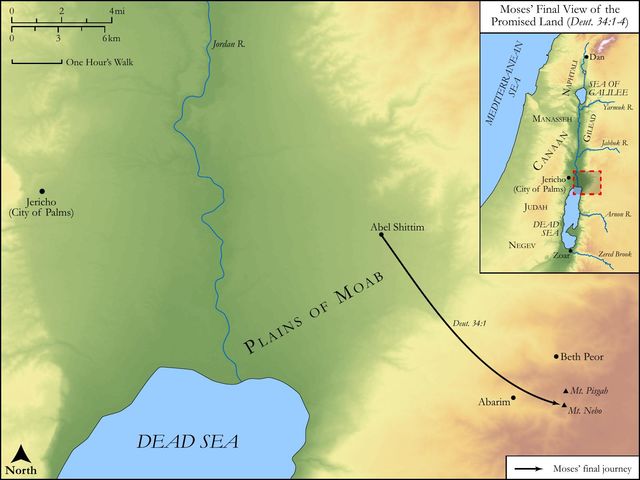
This verse is strategically placed within Moses' final, poignant discourse to the nation of Israel, meticulously recorded in the book of Deuteronomy. As Moses approaches his impending death and the Israelites prepare for the momentous crossing of the Jordan River into Canaan, he delivers a series of vital exhortations, reiterations of the Law, and blessings. Chapter 31 marks a crucial transitional moment, as Moses formally commissions Joshua as his successor in the full view of all Israel. Verses 1-8 specifically detail Moses' concluding words of encouragement, addressed first to the people and then directly to Joshua, emphasizing God's continuous leadership and steadfast faithfulness. Deuteronomy 31:6 functions as the foundational promise that undergirds the subsequent, direct command to Joshua found in Deuteronomy 31:7-8, where Moses reiterates the identical message of strength and courage, assuring Joshua that the LORD Himself will go before him. This charge here not only anticipates but also directly sets the theological and narrative stage for the subsequent book of Joshua, particularly Joshua 1:1-9, where God Himself echoes and expands upon this very command to Joshua, making it the cornerstone of his leadership.
Historical & Cultural Context
The Israelites found themselves at a pivotal and profoundly daunting threshold. The arduous forty years of wilderness wandering were drawing to a close, and the formidable, divinely mandated task of conquering the land of Canaan lay immediately before them. This was a territory inhabited by powerful, often idolatrous, nations possessing fortified cities and, in many cases, superior military technology. The collective memory of their parents' catastrophic failure to enter the land, which was primarily due to fear and unbelief, as vividly recounted in Numbers 14, loomed large over the current generation. Culturally, leadership transitions, especially from a figure as monumental and divinely appointed as Moses, to a new, untested leader like Joshua, would naturally induce considerable apprehension and uncertainty among the people. Moses' words in this verse were far more than mere platitudes; they served as an essential spiritual and psychological anchor for a people facing immense challenges, powerfully reminding them that their success and victory would not be achieved by human strength or military prowess, but solely by divine presence and omnipotent power—a concept absolutely central to their unique covenant relationship with Yahweh.
Key Themes
ShowHideDeuteronomy 31:6 masterfully encapsulates several overarching and enduring themes prevalent throughout the book of Deuteronomy and the broader Pentateuch. The theme of Divine Presence is unequivocally central, declaring that "the LORD thy God, he it is that doth go with thee," which profoundly signifies God's active, personal, and guiding involvement in the daily life and grand endeavors of His covenant people. This intimate presence serves as the bedrock for the theme of Courage and Fearlessness, as the repeated imperative "Be strong and of a good courage, fear not, nor be afraid of them" directly confronts and counters the innate human tendency towards apprehension in the face of overwhelming odds, grounding true bravery not in human strength but in God's unwavering faithfulness. Finally, the potent double negative promise, "he will not fail thee, nor forsake thee," emphatically underscores the theme of God's Unfailing Faithfulness and His immutable covenant loyalty. This profound assurance that God will never abandon His people or renege on His sacred promises, regardless of the obstacles they face or even their own shortcomings, is a foundational truth that resonates deeply and consistently throughout the entire biblical narrative, from the initial covenant with Abraham in Genesis 12:1-3 to the ultimate New Covenant promises revealed in the New Testament.
Exposition and Analysis
ShowHideKey Word Analysis
ShowHideThis primitive root signifies "to fasten upon; hence, to seize, be strong (figuratively, courageous, causatively strengthen, cure, help, repair, fortify), obstinate." In the imperative "Be strong," it conveys a command to actively take hold of inner resolve, to be firm, resolute, and to gather one's strength. It's an active call to fortitude, implying not just a passive state of being strong but an active, God-empowered posture of resilience and determination in the face of challenges.
This primitive root means "to be alert, physically (on foot) or mentally (in courage); confirm, be courageous (of good courage, stedfastly minded, strong, stronger)." Often paired with châzaq, it emphasizes the mental and spiritual fortitude required to face daunting tasks without shrinking back. It speaks to the inner boldness and steadfastness of mind necessary to act decisively, complementing the active resolve of châzaq. The combination forms a powerful hendiadys, emphasizing comprehensive inner and outer resolve.
This primitive root, akin to יָלַךְ, means "to walk (in a great variety of applications, literally and figuratively); (all) along, apace, behave (self), come, (on) continually, be conversant, depart." In the phrase "he it is that doth go with thee," it highlights God's active, personal, and continuous accompaniment. It's not merely a promise of distant oversight but of intimate, guiding presence, implying that God is actively moving alongside His people, leading the way.
This primitive root means "to slacken (in many applications, literal or figurative); abate, cease, consume, draw (toward evening), faint, (be) feeble, forsake, idle, leave, let alone (go, down), (be) slack, stay, be still, be slothful, (be) weak(-en)." In this context, it speaks of God never slackening His grip, weakening His support, or becoming negligent concerning His people. It assures a steadfastness that will not diminish or become lax, guaranteeing His unfailing commitment.
This primitive root means "to loosen, i.e. relinquish, permit, etc.; commit self, fail, forsake, fortify, help, leave (destitute, off), refuse." It conveys the idea of complete withdrawal, abandonment, or severance of relationship. The promise that God will not ʻâzab His people is a profound assurance of His enduring presence and covenant commitment, signifying that He will never turn away from them, even when they face their greatest challenges or when they might feel most vulnerable.
Verse Breakdown
ShowHide"Be strong and of a good courage"
This opening imperative is a direct, urgent command, addressed first to the entire nation of Israel and then, by extension, to Joshua. It is a dual call to both inner fortitude (courage) and outward resolve (strength). This command acknowledges the natural human tendency towards fear and apprehension when facing overwhelming odds (like the Canaanite nations) and actively counters it with a divine mandate for bravery, not based on self-reliance but on the subsequent promise of God's presence.
"fear not, nor be afraid of them"
This negative imperative reinforces the positive command to be strong and courageous. "Them" explicitly refers to the formidable and often terrifying inhabitants of Canaan whom Israel was about to confront in battle. This clause directly addresses and seeks to dispel the apprehension, terror, and potential paralysis that could grip the people, assuring them that their enemies, despite their perceived strength and numbers, are not to be feared because of the greater power at work.
"for the LORD thy God, he [it is] that doth go with thee"
This pivotal clause provides the foundational reason and the ultimate source for the commands preceding it. The Israelites' ability to be strong, courageous, and fearless is not inherent to them but is entirely derived from the active, personal, and leading presence of Yahweh, their covenant God. He is not merely observing from a distance but is actively accompanying them, leading the way into battle, into the land, and into their future, guaranteeing His active involvement.
"he will not fail thee, nor forsake thee"
This is a powerful, emphatic double negative promise, serving as the ultimate assurance of God's absolute and unwavering faithfulness and covenant loyalty. "Fail" implies a weakening of support, a letting go, or a diminishing of commitment, while "forsake" implies abandonment, desertion, or a complete withdrawal of presence. God guarantees that He will neither weaken His commitment nor withdraw His presence from His people, ensuring His perpetual support, loyalty, and steadfast care, regardless of the challenges they face.
Literary Devices
ShowHideDeuteronomy 31:6 is rich in rhetorical and literary devices that amplify its message of divine assurance. The verse is dominated by Imperative Language, with direct commands such as "Be strong," "be of a good courage," "fear not," and "nor be afraid." These imperatives underscore the urgency and divine authority of Moses' final words. The verse also employs striking Repetition and Parallelism, particularly in the paired phrases "Be strong and of a good courage" and "fear not, nor be afraid." This creates a powerful, memorable, and rhythmically impactful exhortation, driving home the central message. The negative commands "fear not, nor be afraid" function as a Litotes, emphasizing the positive assurance of God's active presence and unwavering support by negating the opposite, undesirable state of fear. Furthermore, the two clauses "he will not fail thee, nor forsake thee" form a strong Merism, encompassing the full spectrum of God's steadfast loyalty—He will neither weaken His grip nor abandon His people entirely. The entire verse can also be observed as a subtle Chiasm (A-B-B'-A'): A (command to courage and fearlessness), B (reason for courage: God goes with you), B' (God will not fail you), A' (God will not forsake you), thereby structurally reinforcing the central idea that God's unwavering presence and faithfulness are the sole basis for human courage and confidence.
Theological and Thematic Connections
ShowHideDeuteronomy 31:6 offers a profound theological statement about the very character of God and the nature of His covenant relationship with humanity. It reveals God as eternally faithful, actively present, and the ultimate, inexhaustible source of strength and courage for His people. This promise is not contingent upon human merit, perfect obedience, or inherent strength, but rather rests entirely on God's unchanging character and His immutable covenant loyalty. It powerfully underscores the foundational biblical principle that true courage is not the absence of fear or the presence of human might, but rather the active presence of unwavering faith in a God who promises to never leave nor abandon His own. This foundational truth about God's steadfastness and His commitment to His people is woven throughout the entire tapestry of Scripture, forming the bedrock of trust and hope for believers across all generations and circumstances.
Reflection and Application
ShowHideDeuteronomy 31:6 remains a timeless beacon of hope and a powerful, enduring call to faith for believers in every age. In a world perpetually fraught with uncertainty, personal challenges, and daunting, seemingly insurmountable tasks, this verse serves as a vital reminder that our true strength, courage, and resilience are not self-generated or found within our limited human capabilities. Instead, they flow directly from the unfailing, omnipotent presence of the Almighty God. This verse challenges us to confront our fears head-on, not by denying their existence or pretending they don't affect us, but by consciously and deliberately choosing to trust in God's unwavering promise. Whether we are facing a new career path, navigating a difficult medical diagnosis, struggling through a complex relational conflict, or simply grappling with the general anxieties of daily life, this verse calls us to step forward with profound confidence and resolute trust. It assures us that the very same God who miraculously led Israel through the perilous wilderness and triumphantly into the Promised Land is actively, personally, and intimately with us today, committed to our ultimate well-being, and will never abandon us. It invites us to find deep rest and peace in His faithfulness, allowing His constant, abiding presence to transform our apprehension into an unshakeable, courageous trust.
Questions for Reflection
ShowHideFAQ
ShowHideWhat does "fail thee, nor forsake thee" mean in practical terms for believers today?
ShowHideIn practical terms, the powerful promise "he will not fail thee, nor forsake thee" means that God will never relinquish His commitment to you, nor will He abandon you in times of profound need. It signifies that He will never withdraw His steadfast support, His unconditional love, or His abiding presence from your life. This divine assurance guarantees His constant provision, His unerring guidance, and His unwavering faithfulness, even when circumstances appear bleak, when you feel utterly alone, or when your own strength gives way. It means He will always uphold His covenant with you, just as He promised ancient Israel He would lead them into the Promised Land and never leave them. This profound truth is powerfully echoed and affirmed in the New Testament, such as in Hebrews 13:5, which directly quotes this very promise from Deuteronomy to encourage believers to live contentedly and be free from the love of money, because they can trust that God is always with them, providing for their needs.
Christ-Centered Fulfillment
ShowHideDeuteronomy 31:6 finds its ultimate and most profound fulfillment in the person and redemptive work of Jesus Christ. While initially a direct promise to the nation of Israel under the Old Covenant, the assurance that God "will not fail thee, nor forsake thee" culminates in the New Covenant through Christ. Jesus is the very embodiment of God's promised presence, for He is literally "God with us," the Immanuel, as prophesied and fulfilled in Matthew 1:23. His incarnation means that God Himself literally "went with us" into the human experience, fully sharing our weaknesses, trials, and temptations, yet without sin. The supreme demonstration of God's unfailing commitment and His refusal to abandon humanity is seen in Christ's atoning death on the cross and His glorious resurrection, through which He secured eternal life and an unbreakable, everlasting relationship for all who place their faith in Him. Through the indwelling Holy Spirit, Christ continually fulfills the promise of divine presence, assuring His followers, "I am with you always, even to the end of the age" (Matthew 28:20). Believers are now inextricably "in Christ," a spiritual union so profound and secure that nothing "will be able to separate us from the love of God that is in Christ Jesus our Lord" (Romans 8:39). Thus, the courage and fearlessness commanded in Deuteronomy 31:6 are now empowered by the indwelling Spirit of Christ, who guarantees God's eternal faithfulness and presence, ensuring that He will never fail or forsake His redeemed people, no matter the circumstance.