


Deuteronomy 31:4
Bible text: King James Version (1769 Blayney text) · Public domain
Bible text: Berean Standard Bible · Public domain
Bible text: American Standard Version (1901) · Public domain
Bible text: World English Bible, Messianic edition · Public domain
Bible text: Geneva Bible (1599) · Public domain
Bible text: Young's Literal Translation · Public domain
- וְעָשָׂהve·'a·Sahand he will doH6213Conj-w ¦ V-Qal-ConsecPerf-3msVerb Qal Consecutive Perfect 3rd Singular Masculineוְandעָשָׂהhe will do
- יְהוָהYah·wehYahwehH3068N-properNoun Proper Title
- לָהֶםla·Hemto <the> themPrep-l ¦ 3mpSuffix Personal 3rd Plural Masculineלָto <the>הֶםthem
- כַּאֲשֶׁרka·'a·Sherjust asH834Prep-k ¦ RelParticle Relativeכַּjustאֲשֶׁרas
- עָשָׂה'a·Sahhe didH6213V-Qal-Perf-3msVerb Qal Perfect 3rd Singular Masculine
- לְסִיחוֹןle·si·Chonto SihonH5511Prep-l ¦ N-proper-mNoun Proper MasculineלְtoסִיחוֹןSihon
- וּלְעוֹגu·le·'ogand to OgH5747Conj-w ¦ Prep-l ¦ N-proper-mNoun Proper MasculineוּandלְtoעוֹגOg
- מַלְכֵיmal·Khei[the] kings ofH4428N-mpcNoun Plural Masculine Construct
- הָאֱמֹרִיha·'e·mo·Rithe Amorite[s]H567Art ¦ N-msNoun Gentilic Singular Masculine AbsoluteהָtheאֱמֹרִיAmorite[s]
- וּלְאַרְצָםu·le·'ar·Tzamand to their landH776Conj-w ¦ Prep-l ¦ N-fsc ¦ 3mpNoun Singular Feminine Constructוּandלְtoאַרְצָlandםtheir
- אֲשֶׁר'a·SherwhomH834RelParticle Relative
- הִשְׁמִידhish·Midhe destroyedH8045V-Hiphil-Perf-3msVerb Hiphil Perfect 3rd Singular Masculine
- אֹתָם'o·Tam<obj.> themH853DirObjM ¦ 3mpParticle Object Indicatorאֹתָ<obj.>םthem
English is a literal word-by-word gloss of the Hebrew, not the KJV's wording. Why?
This is the original text the KJV's translators worked from — each Hebrew word with its own literal English meaning in this verse, prepared by scholars at Tyndale House, Cambridge. The KJV translates whole sentences, not word by word, so its wording differs: one Hebrew word can become several English words, and the KJV may choose “the LORD” where the gloss reads “Yahweh”. Both are faithful — they answer different questions. For the KJV's own rendering, switch to the KJV text.
Details
See on the biblical-era map
Study this verse
Public-domain commentary
Matthew Henry
From his Commentary on the Whole Bible. Henry comments on passages, not single verses — this entry covers Deuteronomy 31:1–8. His two-level outline is real structure in the source text, so it is rendered as structure.
Loth to part (we say) bids oft farewell. Moses does so to the children of Israel: not because he was loth to go to God, but because he was loth to leave them, fearing that when he had left them they would leave God. He had finished what he had to say to them by way of counsel and exhortation: here he calls them together to give them a word of encouragement, especially with reference to the wars of Canaan, in which they were now to engage. It was a discouragement to them that Moses was to be removed at a time when he could so ill be spared: though Joshua was continued to fight for them in the valley, they would want Moses to intercede for them on the hill, as he did, Exo 17:10. But there is no remedy: Moses can no more go out and come in, Deu 31:2. Not that he was disabled by any decay either of body or mind; for his natural force was not abated, Deu 24:7. But he cannot any longer discharge his office; for, 1. He is 120 years old, and it is time for him to think of resigning his honour and returning to his rest. He that had arrived at so great an age then, when seventy or eighty was the ordinary stint, as appears by the prayer of Moses (Psa 90:10), might well think that he had accomplished as a hireling his day. 2. He is under a divine sentence: Thou shalt not go over Jordan. Thus a full stop was put to his usefulness; hitherto he must go, hitherto he must serve, but no further. So God had appointed it and Moses acquiesces: for I know not why we should any of us desire to live a day longer than while God has work for us to do; nor shall we be accountable for more time than is allotted us. But, though Moses must not go over himself, he is anxious to encourage those that must.
I.He encourages the people; and never could any general animate his soldiers upon such good grounds as those on which Moses here encourages Israel.
1.He assures them of the constant presence of God with them (Deu 31:3): The Lord thy God. that has led thee and kept thee hitherto will go over before thee; and those might follow boldly who were sure that they had God for their leader. He repeats it again (Deu 31:6) with an emphasis: "The Lord thy God, the great Jehovah, who is thine in covenant, he it is, he and no less, he and no other, that goes before thee; not only who by his promise has assured thee that he will go before thee; but by his ark, the visible token of his presence, shows thee that he does actually go before thee." And he repeats it with enlargement: "Not only he goes over before thee at first, to bring thee in, but he will continue with thee all along, with thee and thine; he will not fail thee nor forsake thee; he will not disappoint thy expectations in any strait, nor will he ever desert thy interest; be constant to him, and he will be so to thee." This is applied by the apostle to all God's spiritual Israel, for the encouragement of their faith and hope; unto us is this gospel preached, as well as unto them He will never fail thee, nor forsake thee, Heb 13:5.
2.He commends Joshua to them for a leader: Joshua, he shall go over before thee, Deu 31:3. One whose conduct, and courage, and sincere affection to their interest, they had had long experience of; and one whom God had ordained and appointed to be their leader, and therefore, no doubt, would own and bless, and make a blessing to them. See Num 27:18. Note, It is a great encouragement to a people when, instead of some useful instruments that are removed, God raises up others to carry on his work.
3.He ensures their success. The greatest generals, supported with the greatest advantages, must yet own the issues of war to be doubtful and uncertain; the battle is not always to the strong nor to the bold; an ill accident unthought of may turn the scale against the highest hopes. But Moses had warrant from God to assure Israel that, notwithstanding the disadvantages they laboured under, they should certainly be victorious. A coward will fight when he is sure to be a conqueror. God undertakes to do the work - he will destroy these nations; and Israel shall do little else than divide the spoil - thou shalt possess them, Deu 31:3. Two things might encourage their hopes of this: - (1.) The victories they had already obtained over Sihon and Og (Deu 31:4), from which they might infer both the power of God, that he could do what he had done, and the purpose of God, that he would finish what he had begun to do. Thus must we improve our experience. (2.) The command God had given them to destroy the Canaanites (Deu 7:2; Deu 12:2), to which he refers here (Deu 31:5, that you may do unto them according to all which I have commanded you), and from which they might infer that, if God had commanded them to destroy the Canaanites, no doubt he would put it into the power of their hands to do it. Note, What God has made our duty we have reason to expect opportunity and assistance from him for the doing of. So that from all this he had reason enough to bid them be strong and of a good courage, Deu 31:6. While they had the power of God engaged for them they had no reason to fear all the powers of Canaan engaged against them.
II.He encourages Joshua, Deu 31:7, Deu 31:8. Observe,
1.Though Joshua was an experienced general, and a man of approved gallantry and resolution, who had already signalized himself in many brave actions, yet Moses saw cause to bid him be of good courage, now that he was entering upon a new scene of action; and Joshua was far from taking it as an affront, or as a tacit questioning of his courage, to be thus charged, as sometimes we find proud and peevish spirits invidiously taking exhortations and admonitions for reproaches and reflections. Joshua himself is very well pleased to be admonished by Moses to be strong and of good courage.
2.He gives him this charge in the sight of all Israel, that they might be the more observant of him whom they saw thus solemnly inaugurated, and that he might set himself the more to be an example of courage to the people who were witnesses to this charge here given to him as well as to themselves.
3.He gives him the same assurances of the divine presence, and consequently of a glorious success, that he had given the people. God would be with him, would not forsake him, and therefore he should certainly accomplish the glorious enterprise to which he was called and commissioned: Thou shalt cause them to inherit the land of promise. Note, Those shall speed well that have God with them; and therefore they ought to be of good courage. Through God let us do valiantly, for through him we shall do victoriously; if we resist the devil, he shall flee, and God shall shortly tread him under our feet.
Continue studying Deuteronomy 31:4 across the web’s major study libraries — every link below opens this exact verse, chapter, or book on the destination site.
Read & Compare
 BibleGatewayThis verse in more than 200 translations and 70 languages.
 Bible.comThe YouVersion reader — hundreds of translations, reading plans, and highlights.
 ESV.orgCrossway's official English Standard Version reader.
 NET BibleThe NET translation with 60,000+ translators' notes on every rendering decision.
 STEP BibleTyndale House's free study tool — original text, vocabulary, and scholarly resources.
 BibliaLogos Bible Software's free web reader.
 USCCBThe New American Bible (Revised Edition) with the U.S. bishops' study notes.
Commentaries
 BibleHub CommentariesDozens of classic commentaries on this verse, gathered on one page.
 StudyLightMore than 100 commentary sets — the largest collection on the web.
 BibleRefPlain-English commentary on what this verse means, verse by verse.
 Enduring WordDavid Guzik's free commentary on this chapter, widely used by Bible teachers.
 Bible Study ToolsVerse commentary alongside Greek and Hebrew study aids.
Original Language & Research
- BibleHub InterlinearThe verse word by word — original language, transliteration, and English.
- BibleHub LexiconEvery word's original-language definition and Strong's entry.
 Blue Letter BibleDeep-study tools — Strong's numbers, concordance, and word studies.
 SefariaThe Hebrew text with Rashi and centuries of Jewish commentary.
Sermons, Hymns & Audio


TrulyRandomVerse is not affiliated with these sites and doesn’t control their content. They’re linked because they’re genuinely useful.
Summary
Deuteronomy 31:4 delivers a potent declaration of divine assurance from Moses to the Israelites, standing on the precipice of the Promised Land. This verse serves as a profound reminder of God's unwavering faithfulness and consistent character, promising that He will replicate His past, decisive victories against formidable enemies, specifically Sihon and Og, for this new generation as they prepare to confront the inhabitants of Canaan. It is designed to instill courage, bolster faith, and affirm that the God who faithfully led them through the wilderness will continue to fight for them, ensuring their triumph and the ultimate fulfillment of His covenant promises.
Context
ShowHideLiterary Context
This verse is strategically placed within Moses' poignant farewell discourse, just before his death and Israel's long-awaited entry into Canaan. Following the weighty covenant renewal and the recitation of blessings and curses in Deuteronomy 27-30, Moses shifts his focus to preparing the people for the impending conquest. In Deuteronomy 31:1-3, Moses explicitly states his inability to lead them across the Jordan, immediately declaring that "the LORD your God, He will go over before you." He then publicly commissions Joshua as his successor, emphasizing that Joshua will lead the people into the land and distribute it among them. Verse 4, therefore, functions as a crucial word of encouragement, a firm promise of divine assistance, and a direct extension of Moses' declaration that God Himself will lead the charge against their enemies, echoing the theme of divine presence and intervention established earlier in the book, such as in Deuteronomy 20:4.
Historical & Cultural Context
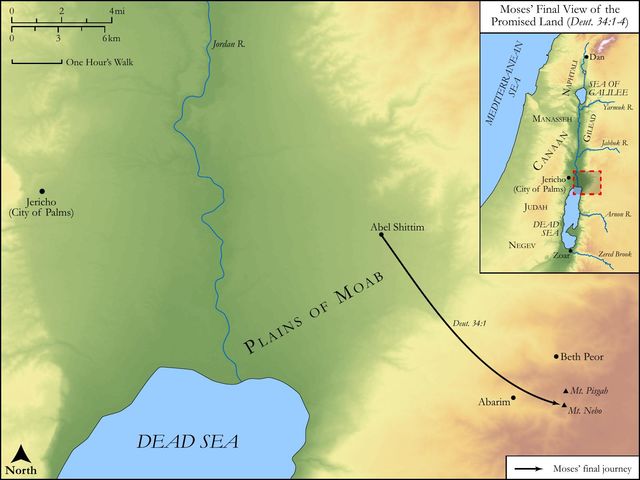
At this moment, the Israelites are encamped on the plains of Moab, poised to cross the Jordan River and commence the conquest of Canaan. This particular generation, having grown up in the wilderness, had not directly experienced the miraculous Red Sea crossing or the initial victories of their parents' generation. However, they had recently witnessed God's power firsthand in the decisive defeats of Sihon, king of the Amorites, and Og, king of Bashan, whose territories they now occupied (as vividly recounted in Numbers 21:21-35). These were not minor skirmishes; Sihon and Og were powerful, formidable kings commanding strong armies and fortified cities, representing significant obstacles to Israel's progress. Among the kings of that day, warfare often involved psychological intimidation; the reputation of a king and his army was paramount. Moses' deliberate reference to Sihon and Og serves to counter any potential fear or doubt among the Israelites by reminding them that God had already overcome such mighty foes, thereby demonstrating His superior power over any earthly kingdom they might encounter.
Key Themes
ShowHideDeuteronomy 31:4 profoundly reinforces several core themes central to the book of Deuteronomy and the broader Pentateuch. Firstly, it underscores Divine Consistency and Faithfulness, asserting that God's character and His methods of delivering His people remain unwavering. His past actions are presented as an ironclad guarantee of His future ones, emphasizing that the God who acted decisively yesterday will act decisively tomorrow. Secondly, the verse highlights the critical importance of Remembering Past Victories as a vital source of present and future assurance. Moses intentionally recalls the specific, recent, and undeniable victories over Sihon and Og to build confidence in the face of new, daunting challenges, a theme eloquently echoed in Psalm 77:11. Thirdly, it provides a direct Assurance of Future Triumph through divine intervention. The promise that "the LORD shall do unto them as he did" is a crucial prophetic declaration, assuring the Israelites that God will similarly destroy the kings and peoples of Canaan, thereby fulfilling His covenant promise to give them the land, as explicitly commanded in Deuteronomy 7:1-2.
Exposition and Analysis
ShowHideKey Word Analysis
ShowHideThe term יְהֹוָה (Yᵉhôvâh) refers to the personal, covenantal name of God, often translated as "Jehovah" or "the Lord." Derived from the root "to be," it signifies God as the self-existent, eternal, and unchanging One. Its presence here emphasizes that it is not merely a generic deity, but the specific God who entered into covenant with Israel, who is performing these mighty acts. This name assures Israel that the one who made the promises is the one who will fulfill them, demonstrating His consistent and active presence in their history.
The Hebrew verb עָשָׂה (ʻâsâh) is a remarkably broad term meaning "to do," "to make," "to act," or "to accomplish." Its repetition in the phrase "shall do...as he did" is highly significant. It conveys not just a past event, but an active, ongoing, and predictable pattern of divine intervention. This word underscores God's active engagement and effectiveness in bringing about His purposes. It speaks to His capacity to perform, execute, and bring to pass His will, ensuring that His promise is not empty but will be concretely realized.
The verb שָׁמַד (shâmad) is a powerful and definitive term signifying complete annihilation, to "wipe out," "exterminate," or "utterly destroy." This strong term is frequently used in the context of divine judgment against wicked nations, or Israel's command to completely remove pagan influences from the land. Its use here underscores the thoroughness and decisiveness of God's victory over Sihon and Og, implying that the future conquest of Canaan's inhabitants will be equally decisive and complete, leaving no remnant of the opposition. This is not a partial victory, but an absolute triumph that clears the way for Israel's inheritance.
Verse Breakdown
ShowHide"And the LORD shall do unto them"
This opening clause immediately identifies the divine agent of action – YHWH, the covenant God of Israel. The future tense "shall do" is a definitive promise, not a mere possibility or suggestion. "Them" refers to the formidable inhabitants of Canaan, the nations that Israel is about to confront. This sets the stage for a divine re-enactment of past power, assuring Israel that their God will actively engage on their behalf.
"as he did to Sihon and to Og, kings of the Amorites,"
This crucial clause provides the historical precedent and the specific, recent examples of God's past intervention. Sihon, king of Heshbon, and Og, king of Bashan, were powerful Amorite rulers whose territories were strategically important and whose armies were formidable. Their decisive defeat, recounted in Numbers 21, was a fresh and undeniable demonstration of God's ability to overcome seemingly insurmountable human opposition. This direct comparison assures the Israelites that the same divine power that crushed these mighty kings will be unleashed against the kings and peoples of Canaan.
"and unto the land of them, whom he destroyed."
This final phrase clarifies the comprehensive scope of God's destructive power and victory. It was not just the kings themselves who were defeated, but also their entire dominion – their armies, their people, and their land – that God utterly destroyed. This comprehensive destruction signifies a complete victory and the clearing of the land for Israel's inheritance. It reinforces the idea that God's intervention is thorough and leaves no lingering threat, ensuring the complete fulfillment of His promise to give Israel the land.
Literary Devices
ShowHideDeuteronomy 31:4 prominently employs Analogy or Comparison, drawing a direct and explicit parallel between God's past actions and His promised future deeds. By referencing the recent and powerful defeat of Sihon and Og, Moses uses a known historical event to illustrate the certainty of God's future intervention against the Canaanites. This serves as a potent rhetorical device to instill confidence and banish fear. The verse also utilizes Recapitulation and Remembrance, as Moses, through this declaration, compels the Israelites to recall God's mighty acts, transforming historical memory into a source of present and future assurance. Furthermore, the verse functions as a Divine Assurance or Promise, using declarative and absolute language ("the LORD shall do") to convey the absolute certainty of God's commitment to His covenant people. The use of the strong verb "destroyed" (Hebrew shamad) also provides Emphasis, highlighting the thoroughness and decisiveness of God's judgment and victory, leaving no room for doubt about the outcome.
Theological and Thematic Connections
ShowHideDeuteronomy 31:4 is a profound theological statement on God's unwavering character and His active, consistent involvement in the history of His people. It underscores the theme of divine consistency: the God who acted powerfully in the past is the same God who will act powerfully in the future. This consistency is deeply rooted in His covenant faithfulness; He is eternally bound by His promises to Israel. The verse also speaks to God's absolute sovereignty over all nations, demonstrating that no earthly power, however formidable, can stand against His will or thwart His redemptive purposes. The defeat of Sihon and Og was not merely a military victory for Israel, but a divine act of judgment against wicked kingdoms and a clear demonstration of God clearing the way for His chosen people to inherit their promised land. It foreshadows the broader theological principle that God actively fights for His people, not just in physical battles, but against all forms of opposition, whether human or spiritual. This divine intervention is foundational to Israel's identity and their understanding of their inheritance.
Reflection and Application
ShowHideDeuteronomy 31:4 offers timeless encouragement for believers facing daunting challenges in any era. Just as God demonstrated His power and faithfulness to Israel by decisively defeating Sihon and Og, He remains faithful and consistent in His character and actions towards His people in every generation. When we encounter new "giants" or "fortified cities" in our lives—whether they be personal struggles, professional obstacles, spiritual battles, or societal pressures—this verse calls us to remember God's past deliverances. His track record of faithfulness, both in our own lives, in the rich history of the church, and as meticulously recorded in Scripture, serves as a powerful assurance that He is able and willing to lead us through present difficulties and grant us triumph. It encourages us to trust in His consistent character and divine strength, knowing that the God who has overcome in the past will surely overcome again. This truth empowers us to step into new territories, literal or metaphorical, with courage and faith, confident that the Lord goes before us, clearing the way and securing the victory.
Questions for Reflection
ShowHideFAQ
ShowHideWhy are Sihon and Og specifically mentioned here, out of all of Israel's past victories?
ShowHideSihon and Og are specifically mentioned because their defeat was a very recent and tangible demonstration of God's power for the generation about to enter Canaan. Unlike the crossing of the Red Sea, which the older generation experienced, the victories over Sihon and Og occurred just prior to Moses' address, on the east side of the Jordan. These kings were renowned for their strength and the strategic importance of their territories, representing the kind of formidable opposition Israel would soon face. By referencing these specific, recent, and significant victories, Moses provides concrete, undeniable proof of God's ability to overcome powerful enemies, thereby instilling immediate confidence in the Israelites as they prepared to face even greater challenges in Canaan. It served as a powerful psychological and spiritual anchor for a nation on the brink of a monumental task, reminding them that the same God who conquered these powerful Amorite kings would conquer the Canaanites for them, as detailed in Numbers 21:21-35.
Does this verse promote violence or an aggressive worldview for believers today?
ShowHideNo, this verse does not promote indiscriminate violence or an aggressive worldview for believers today. It must be understood within its specific historical and theological context. This was a unique period in redemptive history where God, as the sovereign Lord of all creation, was executing judgment on exceedingly wicked nations (the Canaanites) whose iniquity was full (Genesis 15:16). Simultaneously, He was fulfilling His covenant promise to Abraham to give his descendants the land. The "holy war" in the Old Testament was a divinely commanded, limited, and specific act of judgment and land acquisition, not a general pattern for all human conflict. For New Testament believers, our warfare is primarily spiritual, against "principalities, against powers, against the rulers of the darkness of this world, against spiritual wickedness in high places" (Ephesians 6:12). Our weapons are not carnal but spiritual (2 Corinthians 10:4), and our mission is to make disciples of all nations, not to conquer them physically.
Christ-Centered Fulfillment
ShowHideDeuteronomy 31:4, while rooted in historical Israel's conquest, finds its ultimate and profound fulfillment in the person and work of Jesus Christ. The consistency of God's character, so central to this verse, culminates perfectly in Christ. Just as God "did" for Israel in defeating physical enemies and clearing the way for their inheritance, He "did" for all humanity in Christ by decisively conquering the ultimate spiritual enemies: sin, death, and the devil. The "destruction" of Sihon and Og foreshadows Christ's complete triumph over the powers of darkness. Through His sacrificial death and glorious resurrection, Jesus disarmed and made a public spectacle of the spiritual rulers and authorities, triumphing over them by the cross (Colossians 2:15). He rendered powerless him who had the power of death, that is, the devil, and delivered those who through fear of death were subject to lifelong slavery (Hebrews 2:14-15). For believers today, the assurance of Deuteronomy 31:4 is not merely a historical anecdote but a living reality: the same God who delivered Israel delivers us from the dominion of darkness and transfers us into the kingdom of His beloved Son (Colossians 1:13). Our "Promised Land" is not a geographical territory, but the spiritual inheritance and eternal life found in Christ, secured by His decisive victory, ensuring that in all things, we are more than conquerors through Him who loved us (Romans 8:37).