


Exodus 23:31
- וְשַׁתִּיve·sha·Tiand I will fixH7896Conj-w ¦ V-Qal-ConsecPerf-1csVerb Qal Consecutive Perfect 1st Singular common genderוְandשַׁתִּיI will fix
- אֶת'et<obj.>H853DirObjMParticle Object Indicator
- גְּבֻלְךָge·vul·Khayour borderH1366N-msc ¦ 2msNoun Singular Masculine Constructגְּבֻלְborderךָyour
- מִיַּםmi·yamfrom [the] sea ofH3220Prep-m ¦ N-mscNoun Singular Masculine Constructמִfromיַּם[the] sea of
- סוּףsufreed[s]H5488N-msNoun Title Singular Masculine Absolute
- וְעַדve·'adand toH5704Conj-w ¦ PrepPrepositionוְandעַדto
- יָםyam[the] sea ofH3220N-mscNoun Singular Masculine Construct
- פְּלִשְׁתִּיםpe·lish·Tim[the] PhilistinesH6430N-mpNoun Gentilic Plural Masculine Absolute
- וּמִמִּדְבָּרu·mi·mid·Barand from [the] wildernessH4057Conj-w ¦ Prep-m ¦ N-msNoun Singular Masculine Absoluteוּandמִfromמִּדְבָּר[the] wilderness
- עַד'adtoH5704PrepPreposition
- הַנָּהָרha·na·Harthe RiverH5104Art ¦ N-properNoun Proper LocationהַtheנָּהָרRiver
- כִּיkiforH3588PrtParticle Conditional
- אֶתֵּן'e·TenI will giveH5414V-Qal-Imperf-1csVerb Qal Imperfect 1st Singular common gender
- בְּיֶדְכֶםbe·yed·Khemin your handH3027Prep-b ¦ N-csc ¦ 2mpNoun Singular common gender Constructבְּinיֶדְhandכֶםyour
- אֵת'et<obj.>H853DirObjMParticle Object Indicator
- יֹשְׁבֵיyo·she·Vei[the] inhabitants ofH3427V-Qal-Prtcpl-mpVerb Qal Participle Plural Masculine Construct
- הָאָרֶץha·'A·retzthe landH776Art ¦ N-fsNoun Singular Feminine Absoluteהָtheאָרֶץland
- וְגֵרַשְׁתָּמוֹve·ge·rash·Ta·movand you will drive out themH1644Conj-w ¦ V-Piel-ConsecPerf-2ms ¦ 3mpVerb Piel Consecutive Perfect 2nd Singular Masculineוְandגֵרַשְׁתָּyou will drive outמוֹthem
- מִפָּנֶיךָmi·pa·Nei·khafrom before youH6440Prep-m ¦ N-mpc ¦ 2msNoun Plural Masculine Constructמִfromפָּנֶיbeforeךָyou
English is a literal word-by-word gloss of the Hebrew, not the KJV's wording. Why?
This is the original text the KJV's translators worked from — each Hebrew word with its own literal English meaning in this verse, prepared by scholars at Tyndale House, Cambridge. The KJV translates whole sentences, not word by word, so its wording differs: one Hebrew word can become several English words, and the KJV may choose “the LORD” where the gloss reads “Yahweh”. Both are faithful — they answer different questions. For the KJV's own rendering, switch to the KJV text.
Details
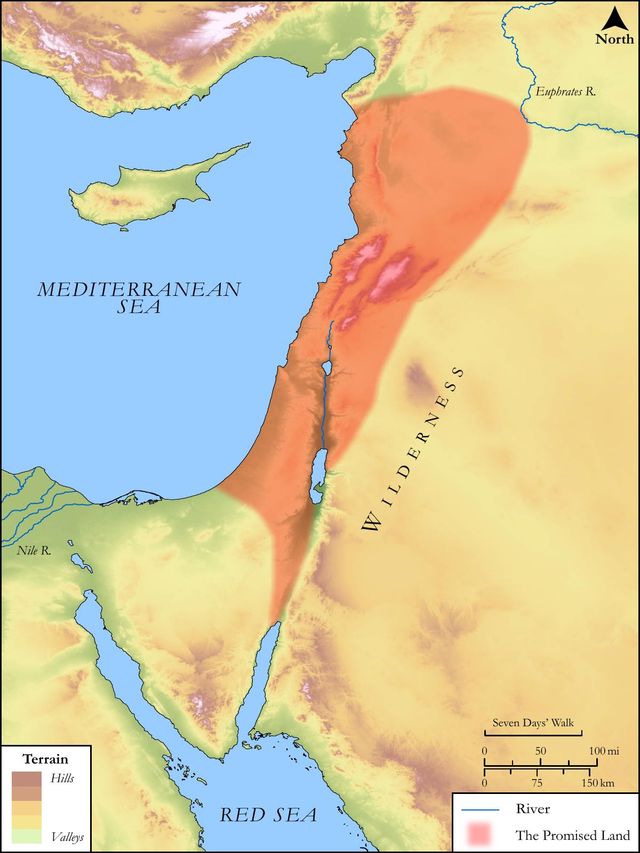
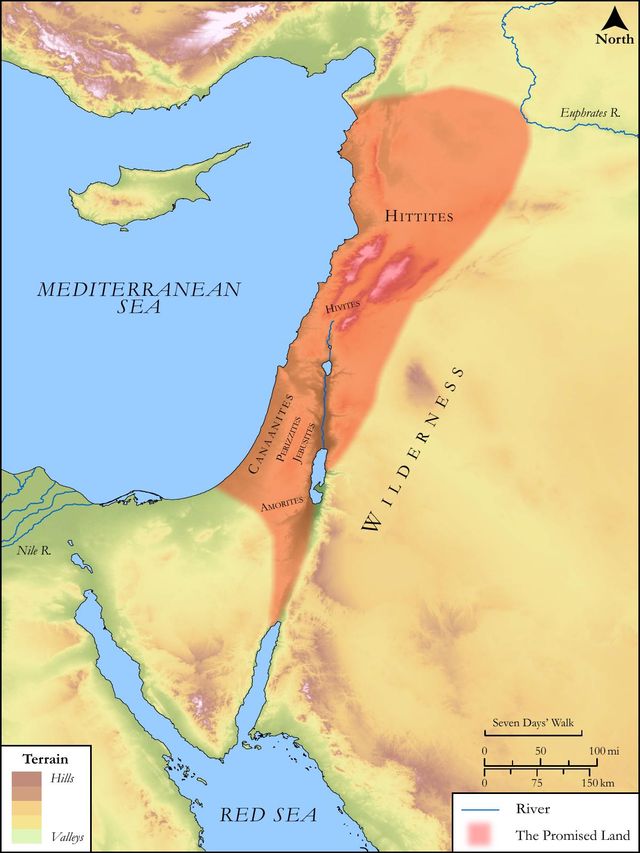
See on the biblical-era maps

Study this verse
Public-domain commentary
Matthew Henry
From his Commentary on the Whole Bible. Henry comments on passages, not single verses — this entry covers Exodus 23:20–33. His three-level outline is real structure in the source text, so it is rendered as structure.
Three gracious promises are here made to Israel, to engage them to their duty and encourage them in it; and each of the promises has some needful precepts and cautions joined to it.
I.It is here promised that they should be guided and kept in their way through the wilderness to the land of promise:
Behold, I send an angel before thee (Exo 23:20), my angel (Exo 23:23), a created angel, say some, a minister of God's providence, employed in conducting and protecting the camp of Israel; that it might appear that God took a particular care of them, he appointed one of his chief servants to make it his business to attend them, and see that they wanted for nothing. Others suppose it to be the Son of God, the angel of the covenant; for the Israelites in the wilderness are said to tempt Christ; and we may as well suppose him God's messenger, and the church's Redeemer, before his incarnation, as the Lamb slain from the foundation of the world. And we may the rather think he was pleased to undertake the deliverance and guidance of Israel because they were typical of his great undertaking. It is promised that this blessed angel should keep them in the way, though it lay through a wilderness first, and afterwards through their enemies' country; thus God's spiritual Israel shall be kept through the wilderness of this earth, and from the insults of the gates of hell. It is also promised that he should bring them into the place which God had not only designed but prepared for them: and thus Christ has prepared a place for his followers, and will preserve them to it, for he is faithful to him that appointed him. The precept joined with this promise is that they be observant of, and obedient to, this angel whom God would send before them (Exo 23:21): "Beware of him, and obey his voice in every thing; provoke him not in any thing, for it is at your peril if you do, he will visit your iniquity." Note,
1.Christ is the author of salvation to those only that obey him. The word of command is Hear you him, Mat 17:5. Observe what he hath commanded, Mat 28:20.
2.Our necessary dependence upon the divine power and goodness should awe us into obedience. We do well to take heed of provoking our protector and benefactor, because if our defence depart from us, and the streams of his goodness be cut off, we are undone. Therefore, "Beware of him, and carry it towards him with all possible reverence and caution. Fear the Lord, and his goodness." 3. Christ will be faithful to those who are faithful to him, and will espouse their cause who adhere to his: I will be an adversary to thine adversaries, Exo 23:22. The league shall be offensive and defensive, like that with Abraham, I will bless him that blesseth thee, and curse him that curseth thee. Thus is God pleased to twist his interests and friendships with his people's.
II.It is promised that they should have a comfortable settlement in the land of Canaan, which they hoped now (though it proved otherwise) within a few months to be in the possession of, Exo 23:24-26. Observe,
1.How reasonable the conditions of this promise are - only that they should serve their own God, who was indeed the only true God, and not the gods of the nations, which were no gods at all, and which they had no reason at all to have any respect for. They must not only not worship their gods, but they must utterly overthrow them, in token of their great abhorrence of idolatry, their resolution never to worship idols themselves, and their care to prevent any other from worshipping them; as the converted conjurors burnt their books, Act 19:19.
2.How rich the particulars of this promise are.
(1.)The comfort of their food. He shall bless thy bread and thy water; and God's blessing will make bread and water more refreshing and nourishing than a feast of fat things and wines on the lees without that blessing.
(2.)The continuance of their health: "I will take sickness away, either prevent it or remove it. Thy land shall not be visited with epidemical diseases, which are very dreadful, and sometimes have laid countries waste." (3.) The increase of their wealth. Their cattle should not be barren, nor cast their young, which is mentioned as an instance of prosperity, Job 21:10. (4.) The prolonging of their lives to old age: "The number of thy days I will fulfil, and they shall not be cut off in the midst by untimely deaths." Thus hath godliness the promise of the life that now is.
III.It is promised that they should conquer and subdue their enemies, the present occupants of the land of Canaan, who must be driven out to make room for them. This God would do,
1.Effectually by his power (Exo 23:17, Exo 23:18); not so much by the sword and bow of Israel as by the terrors which he would strike into the Canaanites. Though they were so obstinate as not to be willing to submit to Israel, resign their country, and retire elsewhere, which they might have done, yet they were so dispirited that they were not able to stand before them. This completed their ruin; such power had the devil in them that they would resist, but such power had God over them that they could not. I will send my fear before thee; and those that fear will soon flee. Hosts of hornets made way for the hosts of Israel; such mean creatures can God make use of for the chastising of his people's enemies, as in the plagues of Egypt. When God pleases, hornets can drive out Canaanites, as well as lions could, Jos 24:12.
2.He would do it gradually, in wisdom (Exo 23:29, Exo 23:30), not all at once, but by little and little. As the Canaanites had kept possession till Israel had grown into a people, so there should still be some remains of them till Israel should grow so numerous as to replenish the whole. Note, The wisdom of God is to be observed in the gradual advances of the church's interests. It is in real kindness to the church that its enemies are subdued by little and little; for thus we are kept upon our guard, and in a continual dependence upon God. Corruptions are thus driven out of the hearts of God's people; not all at once, but by little and little; the old man is crucified, and therefore dies slowly. God, in his providence, often delays mercies, because we are not ready for them. Canaan has room enough to receive Israel, but Israel is not numerous enough to occupy Canaan. We are not straitened in God; if we are straitened, it is in ourselves. The land of Canaan is promised them (Exo 23:31) in its utmost extent, which yet they were not possessed of till the days of David; and by their sins they soon lost possession. The precept annexed to this promise is that they should not make any friendship, nor have any familiarity, with idolaters, Exo 23:32, Exo 23:33. Idolaters must not so much as sojourn in their land, unless they renounced their idolatry. Thus they must avoid the reproach of intimacy with the worshippers of false gods and the danger of being drawn to worship with them. By familiar converse with idolaters, their dread and detestation of the sin would wear off; they would think it no harm, in compliment to their friends, to pay some respect to their gods, and so by degrees would be drawn into the fatal snare. Note, Those that would be kept from bad courses must keep from bad company; it is dangerous living in a bad neighbourhood; others' sins will be our snares, if we look not well to ourselves. We must always look upon our greatest danger to be from those that would cause us to sin against God. Whatever friendship is pretended, that is really our worst enemy that draws us from our duty.
Continue studying Exodus 23:31 across the web’s major study libraries — every link below opens this exact verse, chapter, or book on the destination site.
Read & Compare
 BibleGatewayThis verse in more than 200 translations and 70 languages.
 Bible.comThe YouVersion reader — hundreds of translations, reading plans, and highlights.
 ESV.orgCrossway's official English Standard Version reader.
 NET BibleThe NET translation with 60,000+ translators' notes on every rendering decision.
 STEP BibleTyndale House's free study tool — original text, vocabulary, and scholarly resources.
 BibliaLogos Bible Software's free web reader.
 USCCBThe New American Bible (Revised Edition) with the U.S. bishops' study notes.
Commentaries
 BibleHub CommentariesDozens of classic commentaries on this verse, gathered on one page.
 StudyLightMore than 100 commentary sets — the largest collection on the web.
 BibleRefPlain-English commentary on what this verse means, verse by verse.
 Enduring WordDavid Guzik's free commentary on this chapter, widely used by Bible teachers.
 Bible Study ToolsVerse commentary alongside Greek and Hebrew study aids.
Original Language & Research
- BibleHub InterlinearThe verse word by word — original language, transliteration, and English.
- BibleHub LexiconEvery word's original-language definition and Strong's entry.
 Blue Letter BibleDeep-study tools — Strong's numbers, concordance, and word studies.
 SefariaThe Hebrew text with Rashi and centuries of Jewish commentary.
Sermons, Hymns & Audio


TrulyRandomVerse is not affiliated with these sites and doesn’t control their content. They’re linked because they’re genuinely useful.
Summary
Exodus 23:31 stands as a profound declaration of God's unwavering covenant promise to the Israelites, delineating the expansive geographical boundaries of the land they were destined to inherit. This verse not only specifies the vast territorial extent from the Red Sea to the Euphrates River but also powerfully underscores God's sovereign commitment to actively deliver the land's current inhabitants into Israel's hands, thereby ensuring their successful conquest and settlement, contingent upon their faithful obedience to His commands.
Context
ShowHideLiterary Context
Exodus 23:31 is strategically positioned within the "Book of the Covenant" (Exodus 20-23), a pivotal section where God elaborates on the laws and promises given to Israel at Mount Sinai. Following the foundational Ten Commandments in Exodus 20 and a detailed array of civil and ceremonial statutes in Exodus 21, Exodus 22, chapter 23 transitions into a series of divine assurances and warnings concerning Israel's impending entry into Canaan. This verse, in particular, serves as a capstone to these promises, reinforcing God's commitment to lead them, drive out their enemies, and bless their obedience, directly linking the legal framework to the promised inheritance. It demonstrates that God's laws are not abstract but are intrinsically tied to His redemptive plan for His people and their possession of the land.
Historical & Cultural Context
At the time of this declaration, Israel stood at the threshold of nationhood, having recently been delivered from slavery in Egypt and now encamped at Mount Sinai. They were a nascent people, about to embark on the formidable task of conquering a land inhabited by numerous, often hostile, peoples. In the ancient Near East, the concept of a divine grant of territory was significant, often defining a deity's power and a king's legitimate rule. God's explicit outlining of the land's maximal boundaries in Exodus 23:31 served multiple crucial purposes: it reassured a fledgling nation of their divine inheritance, provided a clear objective for their future conquest, and underscored that their claim to the land was not based on military might but on God's sovereign decree and covenant faithfulness. This promise directly echoes and expands upon the earlier covenant made with Abraham concerning his descendants and the land, as first recorded in Genesis 12:7 and reiterated with specific borders in Genesis 15:18-21.
Key Themes
ShowHideThis verse powerfully contributes to several overarching themes within Exodus and the broader Pentateuch. Central among these is Divine Sovereignty and Faithfulness, as God unilaterally declares His intention to set boundaries and deliver inhabitants, demonstrating His absolute control over history and geography. It also highlights the theme of Covenant Promise and Fulfillment, reinforcing the ancient pledge made to Abraham regarding the land and assuring its eventual realization through divine power. Furthermore, the verse introduces the crucial dynamic of Divine Initiative and Human Responsibility, where God's guaranteed provision ("I will deliver") is coupled with Israel's mandated action ("thou shalt drive them out"), underscoring that God's blessings often require obedient participation from His people.
Exposition and Analysis
ShowHideKey Word Analysis
ShowHideThis verb (H7896) means to place, put, appoint, or establish. In this context, it emphasizes God's sovereign authority and deliberate action in defining and assigning the boundaries of the Promised Land. It is not a suggestion or a possibility, but a divine decree, indicating that the land's extent is divinely ordained and guaranteed by God's power and will. This word underscores the unilateral nature of God's promise, rooted in His unchangeable character.
The Hebrew word (H5414) means to give, place, or surrender. When God states, "I will deliver the inhabitants of the land into your hand," it signifies His active and direct intervention. He is not merely assisting Israel in their conquest; He is actively handing over the enemy, making their defeat a certainty. This highlights the divine initiative and empowerment behind Israel's success, ensuring that victory is ultimately God's gift and not solely dependent on human strength.
This verb (H1644) means to expel, dispossess, or cast out from a possession. While God promises to deliver the inhabitants, this phrase places a clear and active responsibility on Israel. They are not passive recipients of the land but are mandated to participate in the divine plan by actively expelling the existing inhabitants. This emphasizes the necessary human response of obedience and action in cooperation with God's sovereign will, a partnership in fulfilling His redemptive purposes.
Verse Breakdown
ShowHide"And I will set thy bounds from the Red sea even unto the sea of the Philistines"
This clause defines the southern and western borders of the Promised Land. The "Red sea" (Hebrew: yam suph, H5488, H3220), typically referring to the Gulf of Aqaba or the northern arm of the Red Sea, marks the southeastern extent. The "sea of the Philistines" is the Mediterranean Sea, establishing the western boundary. This specifies a vast expanse from south to west, indicating the breadth and potential of the promised inheritance.
"and from the desert unto the river"
This phrase delineates the southern wilderness and the eastern/northern boundaries. "The desert" (Hebrew: midbâr, H4057) refers to the wilderness regions south of Canaan, such as the Wilderness of Zin or Paran, forming the southern border. "The river" (Hebrew: nâhâr, H5104) is widely understood to be the Euphrates River, signifying the maximal eastern and northern extent of the promised territory. This expansive definition portrays a land far greater than what Israel initially occupied, reflecting the full scope of God's covenant promise.
"for I will deliver the inhabitants of the land into your hand"
This is the divine assurance and the basis for Israel's ability to possess the land. God explicitly states His intention to actively hand over the current occupants of Canaan (Hebrew: yâshab, H3427, "inhabitants" of the land, H776) to Israel. The phrase "into your hand" (Hebrew: yâd, H3027) signifies giving control or power over them. This emphasizes that Israel's conquest would not be solely by their military might but by God's supernatural intervention and empowerment, making their victory divinely guaranteed.
"and thou shalt drive them out before thee"
This final clause outlines Israel's crucial role and responsibility. Despite God's promise to deliver, Israel is commanded to actively participate in the dispossessing (Hebrew: gârash, H1644) of the inhabitants. The phrase "before thee" (Hebrew: pânîym, H6440, "face") implies a direct, active expulsion. This highlights the interplay between divine sovereignty and human obedience, where God provides the power and opportunity, but His people must act in faith to fulfill His mandate.
Literary Devices
ShowHideExodus 23:31 effectively employs several literary devices to convey its powerful message. Merism is prominently used in the geographical description: "from the Red sea even unto the sea of the Philistines, and from the desert unto the river." By naming the extreme points of the territory (south to west, and south to northeast), the verse encompasses the entire promised land, signifying its vastness and totality. This rhetorical device assures the audience of the comprehensive nature of God's grant. Furthermore, the verse demonstrates a clear contrast between divine action and human responsibility through the use of active and passive voices. God declares, "I will set thy bounds" and "I will deliver," emphasizing His sovereign, initiating role. In stark contrast, Israel is commanded, "thou shalt drive them out," highlighting their necessary obedience and active participation. This interplay underscores the covenantal dynamic where God's promises are fulfilled through His power, yet require His people's faithful response. The entire verse functions as a covenant promise, reinforcing God's faithfulness to His earlier commitment to Abraham, reiterating the divine pledge of land as an inheritance.
Theological and Thematic Connections
ShowHideExodus 23:31 stands as a powerful testament to God's absolute sovereignty over all creation, including nations and territories. It underscores His unwavering faithfulness to His covenant promises, particularly the Abrahamic Covenant, demonstrating that His word is immutable and His plans will be brought to fruition. The verse also beautifully illustrates the dynamic interplay between divine initiative and human responsibility: God promises to deliver the land and its inhabitants, yet Israel is commanded to actively "drive them out." This highlights that while salvation and blessing are God's gifts, they often require a responsive, obedient participation from humanity. The concept of "inheritance" is central, portraying God's people as recipients of a divinely appointed blessing, not through their merit, but through His grace and covenant love. This promise of a vast, divinely-secured territory speaks to God's generous provision and His desire for His people to dwell securely under His dominion.
Reflection and Application
ShowHideExodus 23:31 offers profound spiritual lessons for believers today, mirroring God's faithfulness and our call to active obedience. Just as God promised a physical land to Israel, He has promised us a spiritual inheritance in Christ—a life of abundance, freedom from sin's dominion, and the indwelling presence of His Spirit. This verse encourages us to trust implicitly in God's promises, knowing that He is fully capable of delivering on every word He has spoken. However, like Israel, we are not passive recipients. We are called to "drive out" the spiritual inhabitants that seek to hinder our walk with God—sinful habits, negative thought patterns, worldly influences, and spiritual strongholds. This requires active engagement, spiritual warfare, and consistent obedience to God's commands. By relying on His power, we are empowered to "take ground" for His kingdom in our personal lives, families, communities, and spheres of influence, becoming agents of His redemptive purposes in the world. Our spiritual boundaries are set by Christ, and within those bounds, we are called to actively live out our faith, dispossessing that which opposes God's reign in our lives.
Questions for Reflection
ShowHideFAQ
ShowHideDid Israel ever fully possess the land promised in Exodus 23:31, extending to the Euphrates River?
ShowHideWhile the reigns of King David and King Solomon saw the closest fulfillment of this expansive promise, as recorded in passages like 1 Kings 4:21 and 2 Chronicles 9:26, Israel never consistently or fully occupied the entire territory from the Red Sea to the Euphrates. Their failure to completely dispossess the inhabitants, often due to disobedience and compromise, meant that the maximal boundaries were rarely, if ever, fully and permanently under their control. This partial fulfillment highlights the conditional aspect of the covenant, where God's promises are contingent upon Israel's obedience, and points forward to a greater, ultimate fulfillment.
What is the significance of "the river" being understood as the Euphrates River?
ShowHideThe identification of "the river" as the Euphrates River is crucial because it signifies the maximal, most expansive extent of the land promised to Abraham and his descendants. This specific boundary was first mentioned in God's covenant with Abraham in Genesis 15:18, where God declares, "Unto thy seed have I given this land, from the river of Egypt unto the great river, the river Euphrates." By reiterating this boundary in Exodus 23:31, God reconfirms the vastness and generosity of His gift. It underscores that the land was not merely a small parcel but a significant territory intended for a great nation, emphasizing God's boundless provision and the grand scale of His redemptive plan for Israel.
Christ-Centered Fulfillment
ShowHideExodus 23:31, with its promise of a vast inheritance and divine assistance in dispossessing enemies, finds its ultimate and spiritual fulfillment in Jesus Christ. The physical land of Canaan, with its defined borders and the struggle to possess it, serves as a powerful type for the spiritual inheritance and kingdom that believers receive in Christ. Jesus is the true "land" or "rest" for God's people, as described in Hebrews 4:9-10, offering a spiritual dwelling place of peace, blessing, and eternal life. Through His atoning work, Christ has already "delivered the inhabitants" of sin, death, and the devil into our hands, disarming the spiritual powers that once held humanity captive (Colossians 2:15). The command to "drive them out" is transformed into the spiritual warfare believers engage in through Christ's victory—actively resisting sin, overcoming temptation, and battling spiritual forces of evil by the power of the Holy Spirit (Ephesians 6:12). The "bounds" of the kingdom are no longer geographical but extend to all nations, as Christ commissions His followers to make disciples of all peoples (Matthew 28:18-20), ultimately culminating in the universal reign of God's kingdom where "the kingdoms of this world are become the kingdoms of our Lord, and of his Christ" (Revelation 11:15). Thus, in Christ, the promise of inheritance is expanded and perfectly realized, not in a mere earthly territory, but in an eternal, spiritual dominion.