


Exodus 23:27
- אֶת'et<obj.>H853DirObjMParticle Object Indicator
- אֵימָתִי'ei·ma·Timy terrorH367N-fsc ¦ 1csNoun Singular Feminine Constructאֵימָתִterrorיmy
- אֲשַׁלַּח'a·sha·LachI will sendH7971V-Piel-Imperf-1csVerb Piel Imperfect 1st Singular common gender
- לְפָנֶיךָle·fa·Nei·kha<to> before youH6440Prep-l ¦ N-mpc ¦ 2msNoun Plural Masculine Constructלְ<to>פָנֶיbeforeךָyou
- וְהַמֹּתִיve·ha·mo·Tiand I will confuseH2000Conj-w ¦ V-Qal-ConsecPerf-1csVerb Qal Consecutive Perfect 1st Singular common genderוְandהַמֹּתִיI will confuse
- אֶת'et<obj.>H853DirObjMParticle Object Indicator
- כָּלkoleveryH3605N-mscNoun Singular Masculine Construct
- הָעָםha·'Am<the> peopleH5971Art ¦ N-msNoun Singular Masculine Absoluteהָ<the>עָםpeople
- אֲשֶׁר'a·SherwhichH834RelParticle Relative
- תָּבֹאta·Vo'you will goH935V-Qal-Imperf-2msVerb Qal Imperfect 2nd Singular Masculine
- בָּהֶםba·Hemamong <the> themPrep-b ¦ 3mpSuffix Personal 3rd Plural Masculineבָּamong <the>הֶםthem
- וְנָתַתִּיve·na·ta·Tiand I will giveH5414Conj-w ¦ V-Qal-ConsecPerf-1csVerb Qal Consecutive Perfect 1st Singular common genderוְandנָתַתִּיI will give
- אֶת'et<obj.>H853DirObjMParticle Object Indicator
- כָּלkolallH3605N-mscNoun Singular Masculine Construct
- אֹיְבֶיךָ'o·ye·Vei·khayour enemiesH341V-Qal-Prtcpl-mp ¦ 2msVerb Qal Participle Plural Masculine Constructאֹיְבֶיenemiesךָyour
- אֵלֶיךָ'e·Lei·khato youH413Prep ¦ 2msPreposition Definiteאֵלֶיtoךָyou
- עֹרֶף'O·refneckH6203N-msNoun Singular Masculine Absolute
English is a literal word-by-word gloss of the Hebrew, not the KJV's wording. Why?
This is the original text the KJV's translators worked from — each Hebrew word with its own literal English meaning in this verse, prepared by scholars at Tyndale House, Cambridge. The KJV translates whole sentences, not word by word, so its wording differs: one Hebrew word can become several English words, and the KJV may choose “the LORD” where the gloss reads “Yahweh”. Both are faithful — they answer different questions. For the KJV's own rendering, switch to the KJV text.
Details
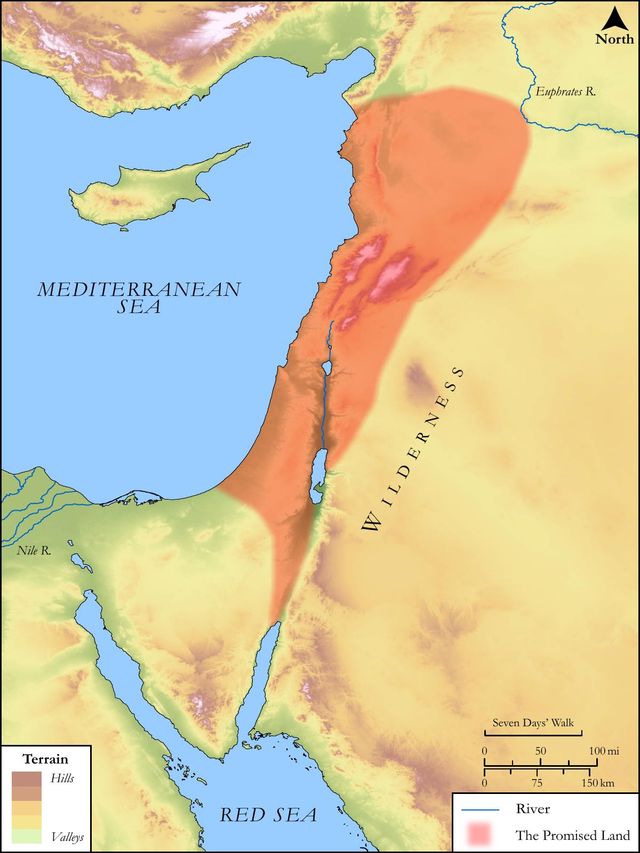
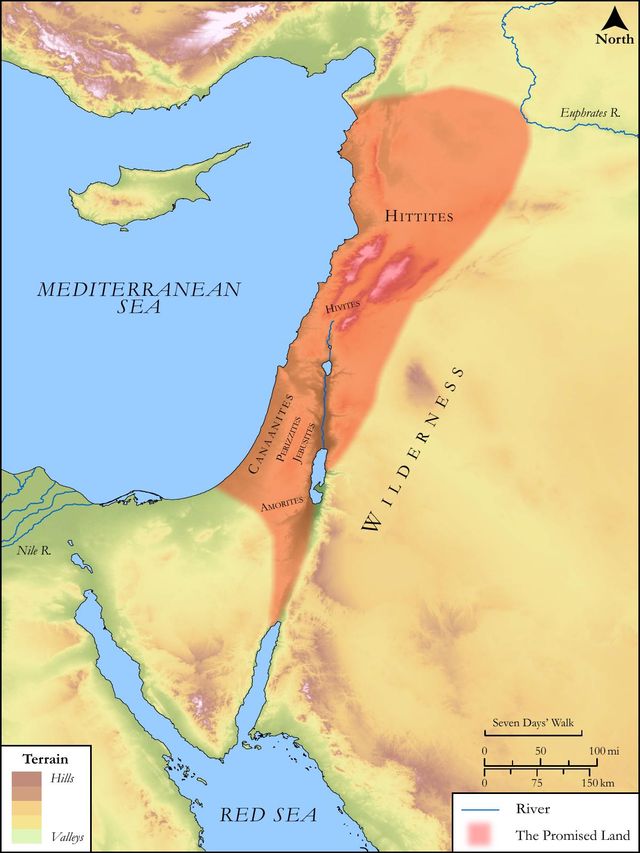
See on the biblical-era map

Study this verse
Public-domain commentary
Matthew Henry
From his Commentary on the Whole Bible. Henry comments on passages, not single verses — this entry covers Exodus 23:20–33. His three-level outline is real structure in the source text, so it is rendered as structure.
Three gracious promises are here made to Israel, to engage them to their duty and encourage them in it; and each of the promises has some needful precepts and cautions joined to it.
I.It is here promised that they should be guided and kept in their way through the wilderness to the land of promise:
Behold, I send an angel before thee (Exo 23:20), my angel (Exo 23:23), a created angel, say some, a minister of God's providence, employed in conducting and protecting the camp of Israel; that it might appear that God took a particular care of them, he appointed one of his chief servants to make it his business to attend them, and see that they wanted for nothing. Others suppose it to be the Son of God, the angel of the covenant; for the Israelites in the wilderness are said to tempt Christ; and we may as well suppose him God's messenger, and the church's Redeemer, before his incarnation, as the Lamb slain from the foundation of the world. And we may the rather think he was pleased to undertake the deliverance and guidance of Israel because they were typical of his great undertaking. It is promised that this blessed angel should keep them in the way, though it lay through a wilderness first, and afterwards through their enemies' country; thus God's spiritual Israel shall be kept through the wilderness of this earth, and from the insults of the gates of hell. It is also promised that he should bring them into the place which God had not only designed but prepared for them: and thus Christ has prepared a place for his followers, and will preserve them to it, for he is faithful to him that appointed him. The precept joined with this promise is that they be observant of, and obedient to, this angel whom God would send before them (Exo 23:21): "Beware of him, and obey his voice in every thing; provoke him not in any thing, for it is at your peril if you do, he will visit your iniquity." Note,
1.Christ is the author of salvation to those only that obey him. The word of command is Hear you him, Mat 17:5. Observe what he hath commanded, Mat 28:20.
2.Our necessary dependence upon the divine power and goodness should awe us into obedience. We do well to take heed of provoking our protector and benefactor, because if our defence depart from us, and the streams of his goodness be cut off, we are undone. Therefore, "Beware of him, and carry it towards him with all possible reverence and caution. Fear the Lord, and his goodness." 3. Christ will be faithful to those who are faithful to him, and will espouse their cause who adhere to his: I will be an adversary to thine adversaries, Exo 23:22. The league shall be offensive and defensive, like that with Abraham, I will bless him that blesseth thee, and curse him that curseth thee. Thus is God pleased to twist his interests and friendships with his people's.
II.It is promised that they should have a comfortable settlement in the land of Canaan, which they hoped now (though it proved otherwise) within a few months to be in the possession of, Exo 23:24-26. Observe,
1.How reasonable the conditions of this promise are - only that they should serve their own God, who was indeed the only true God, and not the gods of the nations, which were no gods at all, and which they had no reason at all to have any respect for. They must not only not worship their gods, but they must utterly overthrow them, in token of their great abhorrence of idolatry, their resolution never to worship idols themselves, and their care to prevent any other from worshipping them; as the converted conjurors burnt their books, Act 19:19.
2.How rich the particulars of this promise are.
(1.)The comfort of their food. He shall bless thy bread and thy water; and God's blessing will make bread and water more refreshing and nourishing than a feast of fat things and wines on the lees without that blessing.
(2.)The continuance of their health: "I will take sickness away, either prevent it or remove it. Thy land shall not be visited with epidemical diseases, which are very dreadful, and sometimes have laid countries waste." (3.) The increase of their wealth. Their cattle should not be barren, nor cast their young, which is mentioned as an instance of prosperity, Job 21:10. (4.) The prolonging of their lives to old age: "The number of thy days I will fulfil, and they shall not be cut off in the midst by untimely deaths." Thus hath godliness the promise of the life that now is.
III.It is promised that they should conquer and subdue their enemies, the present occupants of the land of Canaan, who must be driven out to make room for them. This God would do,
1.Effectually by his power (Exo 23:17, Exo 23:18); not so much by the sword and bow of Israel as by the terrors which he would strike into the Canaanites. Though they were so obstinate as not to be willing to submit to Israel, resign their country, and retire elsewhere, which they might have done, yet they were so dispirited that they were not able to stand before them. This completed their ruin; such power had the devil in them that they would resist, but such power had God over them that they could not. I will send my fear before thee; and those that fear will soon flee. Hosts of hornets made way for the hosts of Israel; such mean creatures can God make use of for the chastising of his people's enemies, as in the plagues of Egypt. When God pleases, hornets can drive out Canaanites, as well as lions could, Jos 24:12.
2.He would do it gradually, in wisdom (Exo 23:29, Exo 23:30), not all at once, but by little and little. As the Canaanites had kept possession till Israel had grown into a people, so there should still be some remains of them till Israel should grow so numerous as to replenish the whole. Note, The wisdom of God is to be observed in the gradual advances of the church's interests. It is in real kindness to the church that its enemies are subdued by little and little; for thus we are kept upon our guard, and in a continual dependence upon God. Corruptions are thus driven out of the hearts of God's people; not all at once, but by little and little; the old man is crucified, and therefore dies slowly. God, in his providence, often delays mercies, because we are not ready for them. Canaan has room enough to receive Israel, but Israel is not numerous enough to occupy Canaan. We are not straitened in God; if we are straitened, it is in ourselves. The land of Canaan is promised them (Exo 23:31) in its utmost extent, which yet they were not possessed of till the days of David; and by their sins they soon lost possession. The precept annexed to this promise is that they should not make any friendship, nor have any familiarity, with idolaters, Exo 23:32, Exo 23:33. Idolaters must not so much as sojourn in their land, unless they renounced their idolatry. Thus they must avoid the reproach of intimacy with the worshippers of false gods and the danger of being drawn to worship with them. By familiar converse with idolaters, their dread and detestation of the sin would wear off; they would think it no harm, in compliment to their friends, to pay some respect to their gods, and so by degrees would be drawn into the fatal snare. Note, Those that would be kept from bad courses must keep from bad company; it is dangerous living in a bad neighbourhood; others' sins will be our snares, if we look not well to ourselves. We must always look upon our greatest danger to be from those that would cause us to sin against God. Whatever friendship is pretended, that is really our worst enemy that draws us from our duty.
Continue studying Exodus 23:27 across the web’s major study libraries — every link below opens this exact verse, chapter, or book on the destination site.
Read & Compare
 BibleGatewayThis verse in more than 200 translations and 70 languages.
 Bible.comThe YouVersion reader — hundreds of translations, reading plans, and highlights.
 ESV.orgCrossway's official English Standard Version reader.
 NET BibleThe NET translation with 60,000+ translators' notes on every rendering decision.
 STEP BibleTyndale House's free study tool — original text, vocabulary, and scholarly resources.
 BibliaLogos Bible Software's free web reader.
 USCCBThe New American Bible (Revised Edition) with the U.S. bishops' study notes.
Commentaries
 BibleHub CommentariesDozens of classic commentaries on this verse, gathered on one page.
 StudyLightMore than 100 commentary sets — the largest collection on the web.
 BibleRefPlain-English commentary on what this verse means, verse by verse.
 Enduring WordDavid Guzik's free commentary on this chapter, widely used by Bible teachers.
 Bible Study ToolsVerse commentary alongside Greek and Hebrew study aids.
Original Language & Research
- BibleHub InterlinearThe verse word by word — original language, transliteration, and English.
- BibleHub LexiconEvery word's original-language definition and Strong's entry.
 Blue Letter BibleDeep-study tools — Strong's numbers, concordance, and word studies.
 SefariaThe Hebrew text with Rashi and centuries of Jewish commentary.
Sermons, Hymns & Audio


TrulyRandomVerse is not affiliated with these sites and doesn’t control their content. They’re linked because they’re genuinely useful.
Summary
Exodus 23:27 conveys a powerful divine assurance to ancient Israel on the threshold of the Promised Land. It declares God's active and supernatural intervention in their conquest of Canaan, promising to send a pervasive, debilitating fear ahead of them that will disorient and ultimately lead to the destruction of their enemies. This verse underscores the Lord's unwavering commitment to His covenant people, demonstrating His absolute sovereignty over nations and His intention to fulfill His promises through miraculous means, thereby ensuring Israel's success in inheriting the land.
Context
ShowHideLiterary Context
Exodus 23:27 is situated within a significant block of covenant stipulations and divine promises delivered by God to Israel at Mount Sinai, following the Decalogue and various civil laws found in Exodus 20, Exodus 21, Exodus 22, Exodus 23. Specifically, it belongs to a section of explicit divine assurances regarding the impending conquest of Canaan, spanning Exodus 23:20-33. This segment begins with the promise of an angelic guide to protect and lead Israel (Exodus 23:20), followed by conditions for Israel's obedience and stern warnings against idolatry. Verses 27-31 meticulously detail the supernatural methods of conquest—divine terror, the sending of hornets, and a gradual expulsion of the inhabitants—emphatically asserting that God, not Israel's nascent military strength, would secure the land. The chapter culminates with a reaffirmation of the covenant and a strict prohibition against making treaties with the indigenous peoples, reinforcing the critical themes of Israel's distinctiveness and God's exclusive claim on their worship.
Historical & Cultural Context
At the time of this pronouncement, the Israelites were a recently liberated slave nation, having minimal military experience or established strength, standing at the precipice of entering Canaan. This land was occupied by numerous formidable peoples—including the Hittites, Girgashites, Amorites, Canaanites, Perizzites, Hivites, and Jebusites, as explicitly listed in Exodus 23:23. These groups were often militarily potent, residing in fortified cities, and deeply entrenched in idolatrous practices and morally abhorrent customs. The divine promise in Exodus 23:27 served as a crucial morale booster, addressing the natural apprehension of a people facing such daunting adversaries. It provided profound assurance that their success would not hinge on their own limited prowess but on the active, supernatural intervention of Yahweh, who had already demonstrated His overwhelming power through the plagues in Egypt and the miraculous parting of the Red Sea (Exodus 14). This concept of a deity instilling panic and fear in enemy armies to secure victory for a favored people was a recognized motif in ancient Near Eastern warfare, making God's promise culturally resonant while simultaneously elevating it to a unique demonstration of His sovereign power.
Key Themes
ShowHideThis verse powerfully contributes to several overarching themes within Exodus and the broader Pentateuch. Foremost is the theme of Divine Sovereignty and Omnipotence, showcasing God's absolute control over nations and the outcomes of human conflict. It reinforces the idea that Israel's success is entirely dependent on God's active participation, not their own strength, echoing the motif of God as the Divine Warrior who fights for His people. This is seen in earlier narratives such as the defeat of Egypt at the Red Sea (Exodus 14:14). The verse also highlights Covenant Faithfulness, as God is demonstrating His commitment to the promises made to Abraham, Isaac, and Jacob regarding the land (Genesis 15:18-21). Furthermore, it introduces the concept of Divine Terror as a spiritual weapon, a psychological warfare tactic employed by God to disarm the enemy before physical engagement, a theme that reappears in the conquest narratives of Joshua. Finally, it underscores the Distinctiveness of Israel and the necessity of their separation from the idolatrous practices of the Canaanites, as God clears the land to establish a holy nation.
Exposition and Analysis
ShowHideKey Word Analysis
ShowHideThis term denotes a profound, supernatural dread or terror. It refers to a divinely induced panic or psychological paralysis that would afflict Israel's enemies, causing them to lose courage, cohesion, and the will to fight, often before direct military engagement. This "fear" is not merely a human emotion but an active agent of God's judgment, a spiritual weapon that disarms the enemy from within, rendering them vulnerable and susceptible to defeat.
While often translated "destroy," hâmam carries the primary nuance of "to put in commotion," "to disturb," "to rout," or "to discomfit." It implies a chaotic, disorganized defeat rather than a systematic annihilation. God's action would not just defeat the enemy but would utterly disorient them, making them vulnerable and incapable of effective resistance, leading to their subsequent destruction or expulsion.
This phrase is a vivid idiom formed from H5414 (nâthan, "to give/make") and H6203 (ʻôreph, "the back of the neck/back"). It literally means "to give the back" or "to turn the back," signifying flight, rout, or decisive defeat. It depicts the enemies not merely retreating in an orderly fashion but fleeing in panicked, disorganized disarray, exposing their backs to the advancing Israelites. This imagery emphasizes a complete and humiliating defeat, where the enemy is utterly routed and put to flight, unable to stand their ground.
Verse Breakdown
ShowHide"I will send my fear before thee"
This opening clause immediately establishes God's direct and active agency in the impending conquest, using the emphatic first-person pronoun "I." The "fear" is not something Israel generates or earns, but a divine emanation, a supernatural terror that God Himself will project ahead of Israel. This pre-emptive psychological warfare would demoralize and disorient the enemy, preparing the way for Israel's advance by undermining their will to resist.
"and will destroy all the people to whom thou shalt come"
This clause clarifies the devastating outcome of the divinely induced fear: the utter discomfiture and subsequent destruction or expulsion of the inhabitants of Canaan. The verb "destroy" (Hebrew hâmam) suggests a chaotic rout and disorganization, making them easy targets for Israel's forces. It implies a comprehensive victory over all the peoples Israel would encounter within their divinely appointed territorial boundaries, ensuring no formidable opposition remains.
"and I will make all thine enemies turn their backs unto thee"
This final clause reiterates and graphically describes the decisive nature of the victory, reinforcing God's sovereign control. The enemies will not stand and fight; instead, they will flee in panicked retreat, exposing their backs. This signifies a complete and humiliating defeat, confirming God's absolute sovereignty over the outcome of the impending conflict and His unwavering commitment to fulfilling His covenant promises to Israel.
Literary Devices
ShowHideExodus 23:27 employs several potent literary devices to convey its message of divine power and unwavering assurance. The most prominent is Personification, where "fear" is depicted as an entity that God "sends" before Israel, almost like an invisible vanguard or an advance guard. This elevates the concept of fear from a mere emotion to an active, supernatural force unleashed directly by God. The phrase "I will send my fear" also functions as a powerful Metonymy, where "fear" stands for the divine presence and overwhelming power that instills such terror. The repeated use of "I will" (three times in this single verse) is a strong example of Anaphora, emphasizing God's direct agency, sovereign will, and unwavering commitment to fulfilling His promises. This repetition underscores that the victory is entirely God's work, not dependent on Israel's military might. Finally, the idiom "turn their backs unto thee" is a vivid Metaphor for complete and decisive defeat, painting a clear and immediate picture of a routed, fleeing enemy.
Theological and Thematic Connections
ShowHideExodus 23:27 powerfully articulates God's active and direct involvement in the affairs of His people, demonstrating His absolute sovereignty over nations and His unwavering commitment to covenant faithfulness. It reveals a God who not only issues commands but also acts decisively, clearing the path for His divine purposes to be fulfilled. This divine intervention, particularly the instilling of fear and confusion, underscores that true victory belongs to the Lord, not to human strength, military strategy, or numerical superiority. It establishes a profound precedent for understanding God as the ultimate warrior who fights for His people, ensuring their inheritance and security when they walk in obedience. This foundational theme resonates throughout biblical history, affirming that God's power is always greater than any opposition, whether physical or spiritual.
Reflection and Application
ShowHideExodus 23:27 offers profound spiritual encouragement and practical guidance for believers navigating life's myriad challenges. While we are no longer engaged in literal territorial conquest, we undeniably face spiritual battles, personal struggles, and formidable obstacles that can often seem insurmountable. This verse serves as a powerful reminder that God Himself goes before us, preparing the way and fighting our battles. It calls us to shift our focus from the daunting magnitude of our adversaries to the omnipotence and faithfulness of our God. When we walk in obedience and faith, we can trust that God will, in His sovereign way, instill a "fear"—a disorientation, weakness, or confusion—in the spiritual forces and practical obstacles that oppose His will for our lives. This divine intervention does not promise a life devoid of struggle, but it assures us that the ultimate victory is secured by His divine power. Our confidence should rest not in our own strength, cleverness, or resources, but in the Lord who promises to make our enemies "turn their backs," ensuring our progress in fulfilling His purposes.
Questions for Reflection
ShowHideFAQ
ShowHideDoes "destroy all the people" mean God literally annihilated every single person in Canaan?
ShowHideWhile the language is strong, "destroy all the people" (Hebrew hâmam, "to throw into confusion," "to rout") in Exodus 23:27 and similar passages refers primarily to the comprehensive defeat, dislodging, and dismantling of the Canaanite nations as organized, idolatrous entities, rather than a universal, individual annihilation of every single person. We see instances in the biblical narrative where individuals (e.g., Rahab in Joshua 2) and even groups (like the Gibeonites in Joshua 9) were spared or integrated into Israel, provided they renounced their idolatry and submitted to God's authority. The primary intent was the destruction of their power structures, their military capacity, and their religious systems that posed a profound spiritual threat to Israel's covenant faithfulness and purity.
Christ-Centered Fulfillment
ShowHideExodus 23:27, with its promise of divine terror preceding Israel to secure their inheritance, finds its ultimate and profound fulfillment in Jesus Christ. While Israel's conquest was physical and territorial, Christ's mission was spiritual and cosmic. He came not to conquer a land, but to conquer the ultimate enemies of humanity: sin, death, and the spiritual powers of darkness. Just as God sent His "fear" before Israel, Jesus, through His perfect life, atoning death, and glorious resurrection, has already "sent His fear" before us, disarming the spiritual principalities and powers that once held humanity captive (Colossians 2:15). The decisive rout of the enemy, promised in this Old Testament verse, is realized in Christ's victory on the cross, where He "made a public spectacle of them, triumphing over them by the cross" (Colossians 2:15). For believers, our inheritance is not a physical land but the spiritual blessings of salvation, eternal life, and participation in God's eternal kingdom (Ephesians 1:3-14). Christ has gone before us, defeating the powers that once held us captive, enabling us to walk in freedom and inherit all that God has promised, not through our own might or military prowess, but through His finished work and the power of His resurrection (Hebrews 2:14-15).