


Exodus 23:21
Bible text: King James Version (1769 Blayney text) · Public domain
Bible text: Berean Standard Bible · Public domain
Bible text: American Standard Version (1901) · Public domain
Bible text: World English Bible, Messianic edition · Public domain
Bible text: Geneva Bible (1599) · Public domain
Bible text: Young's Literal Translation · Public domain
- הִשָּׁמֶרhi·Sha·mertake careH8104V-Niphal-Imp-2msVerb Niphal Imperative 2nd Singular Masculine
- מִפָּנָיוmi·pa·Navfrom before himH6440Prep-m ¦ N-mpc ¦ 3msNoun Plural Masculine Constructמִfromפָּנָיbeforeוhim
- וּשְׁמַעu·she·Ma'and listenH8085Conj-w ¦ V-Qal-Imp-2msVerb Qal Imperative 2nd Singular Masculineוּandשְׁמַעlisten
- בְּקֹלוֹbe·ko·Loto his voiceH6963Prep-b ¦ N-msc ¦ 3msNoun Singular Masculine Constructבְּtoקֹלvoiceוֹhis
- אַל'almay notH408NegParticle Negative
- תַּמֵּרta·Meryou cause bitternessH4843V-Hiphil-Imperf-2msVerb Hiphil Imperfect 2nd Singular Masculine
- בּוֹboin <the> himPrep-b ¦ 3msSuffix Personal 3rd Singular Masculineבּin <the>וֹhim
- כִּיkiforH3588PrtParticle Conditional
- לֹאlo'notH3808NegParticle Negative
- יִשָּׂאyi·Sa'he will forgiveH5375V-Qal-Imperf-3msVerb Qal Imperfect 3rd Singular Masculine
- לְפִשְׁעֲכֶםle·fish·'a·Khemto your transgressionH6588Prep-l ¦ N-msc ¦ 2mpNoun Singular Masculine Constructלְtoפִשְׁעֲtransgressionכֶםyour
- כִּיkiforH3588PrtParticle Conditional
- שְׁמִיshe·Mimy nameH8034N-msc ¦ 1csNoun Singular Masculine Constructשְׁמִnameיmy
- בְּקִרְבּוֹbe·kir·Bo[is] <in> within himH7130Prep-b ¦ N-msc ¦ 3msNoun Singular Masculine Constructבְּ[is] <in>קִרְבּwithinוֹhim
English is a literal word-by-word gloss of the Hebrew, not the KJV's wording. Why?
This is the original text the KJV's translators worked from — each Hebrew word with its own literal English meaning in this verse, prepared by scholars at Tyndale House, Cambridge. The KJV translates whole sentences, not word by word, so its wording differs: one Hebrew word can become several English words, and the KJV may choose “the LORD” where the gloss reads “Yahweh”. Both are faithful — they answer different questions. For the KJV's own rendering, switch to the KJV text.
Details
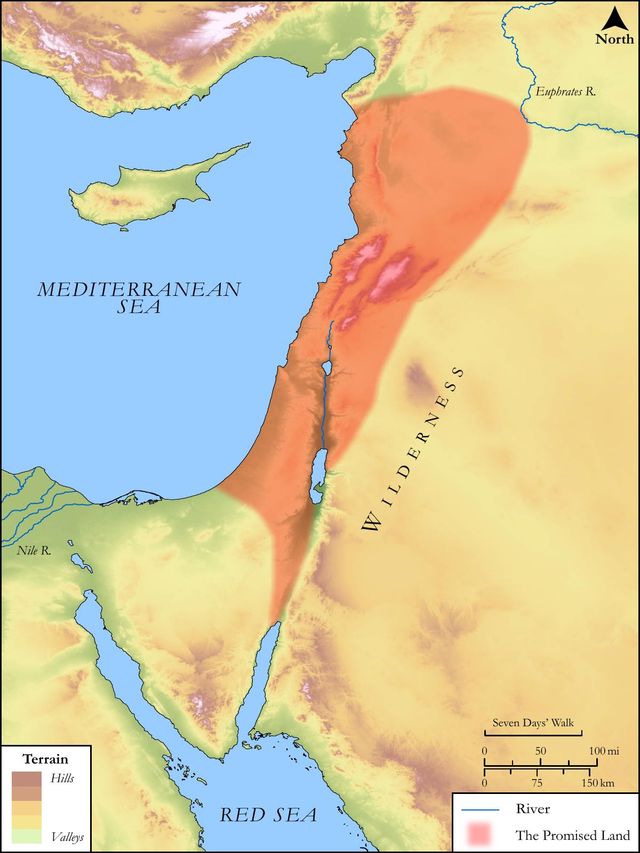
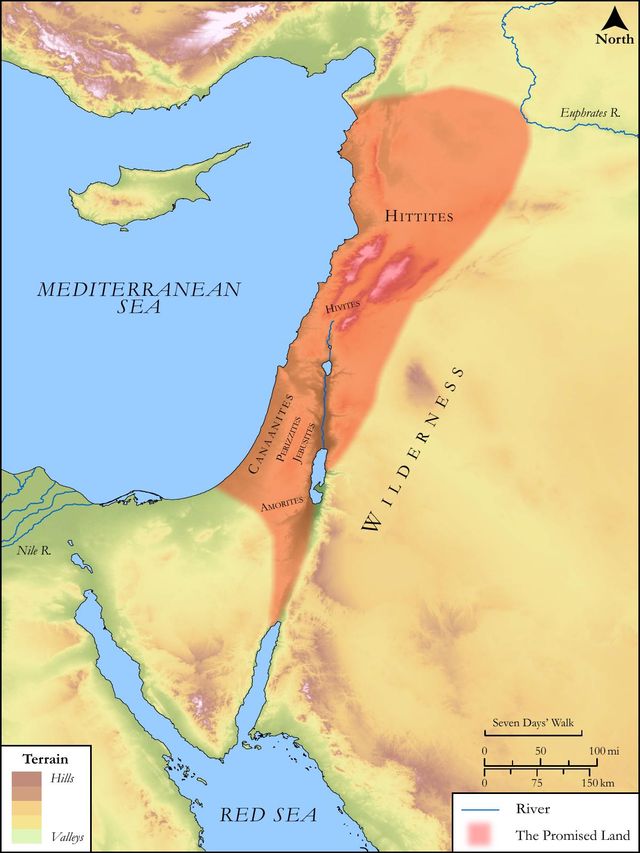
See on the biblical-era maps

Study this verse
Public-domain commentary
Matthew Henry
From his Commentary on the Whole Bible. Henry comments on passages, not single verses — this entry covers Exodus 23:20–33. His three-level outline is real structure in the source text, so it is rendered as structure.
Three gracious promises are here made to Israel, to engage them to their duty and encourage them in it; and each of the promises has some needful precepts and cautions joined to it.
I.It is here promised that they should be guided and kept in their way through the wilderness to the land of promise:
Behold, I send an angel before thee (Exo 23:20), my angel (Exo 23:23), a created angel, say some, a minister of God's providence, employed in conducting and protecting the camp of Israel; that it might appear that God took a particular care of them, he appointed one of his chief servants to make it his business to attend them, and see that they wanted for nothing. Others suppose it to be the Son of God, the angel of the covenant; for the Israelites in the wilderness are said to tempt Christ; and we may as well suppose him God's messenger, and the church's Redeemer, before his incarnation, as the Lamb slain from the foundation of the world. And we may the rather think he was pleased to undertake the deliverance and guidance of Israel because they were typical of his great undertaking. It is promised that this blessed angel should keep them in the way, though it lay through a wilderness first, and afterwards through their enemies' country; thus God's spiritual Israel shall be kept through the wilderness of this earth, and from the insults of the gates of hell. It is also promised that he should bring them into the place which God had not only designed but prepared for them: and thus Christ has prepared a place for his followers, and will preserve them to it, for he is faithful to him that appointed him. The precept joined with this promise is that they be observant of, and obedient to, this angel whom God would send before them (Exo 23:21): "Beware of him, and obey his voice in every thing; provoke him not in any thing, for it is at your peril if you do, he will visit your iniquity." Note,
1.Christ is the author of salvation to those only that obey him. The word of command is Hear you him, Mat 17:5. Observe what he hath commanded, Mat 28:20.
2.Our necessary dependence upon the divine power and goodness should awe us into obedience. We do well to take heed of provoking our protector and benefactor, because if our defence depart from us, and the streams of his goodness be cut off, we are undone. Therefore, "Beware of him, and carry it towards him with all possible reverence and caution. Fear the Lord, and his goodness." 3. Christ will be faithful to those who are faithful to him, and will espouse their cause who adhere to his: I will be an adversary to thine adversaries, Exo 23:22. The league shall be offensive and defensive, like that with Abraham, I will bless him that blesseth thee, and curse him that curseth thee. Thus is God pleased to twist his interests and friendships with his people's.
II.It is promised that they should have a comfortable settlement in the land of Canaan, which they hoped now (though it proved otherwise) within a few months to be in the possession of, Exo 23:24-26. Observe,
1.How reasonable the conditions of this promise are - only that they should serve their own God, who was indeed the only true God, and not the gods of the nations, which were no gods at all, and which they had no reason at all to have any respect for. They must not only not worship their gods, but they must utterly overthrow them, in token of their great abhorrence of idolatry, their resolution never to worship idols themselves, and their care to prevent any other from worshipping them; as the converted conjurors burnt their books, Act 19:19.
2.How rich the particulars of this promise are.
(1.)The comfort of their food. He shall bless thy bread and thy water; and God's blessing will make bread and water more refreshing and nourishing than a feast of fat things and wines on the lees without that blessing.
(2.)The continuance of their health: "I will take sickness away, either prevent it or remove it. Thy land shall not be visited with epidemical diseases, which are very dreadful, and sometimes have laid countries waste." (3.) The increase of their wealth. Their cattle should not be barren, nor cast their young, which is mentioned as an instance of prosperity, Job 21:10. (4.) The prolonging of their lives to old age: "The number of thy days I will fulfil, and they shall not be cut off in the midst by untimely deaths." Thus hath godliness the promise of the life that now is.
III.It is promised that they should conquer and subdue their enemies, the present occupants of the land of Canaan, who must be driven out to make room for them. This God would do,
1.Effectually by his power (Exo 23:17, Exo 23:18); not so much by the sword and bow of Israel as by the terrors which he would strike into the Canaanites. Though they were so obstinate as not to be willing to submit to Israel, resign their country, and retire elsewhere, which they might have done, yet they were so dispirited that they were not able to stand before them. This completed their ruin; such power had the devil in them that they would resist, but such power had God over them that they could not. I will send my fear before thee; and those that fear will soon flee. Hosts of hornets made way for the hosts of Israel; such mean creatures can God make use of for the chastising of his people's enemies, as in the plagues of Egypt. When God pleases, hornets can drive out Canaanites, as well as lions could, Jos 24:12.
2.He would do it gradually, in wisdom (Exo 23:29, Exo 23:30), not all at once, but by little and little. As the Canaanites had kept possession till Israel had grown into a people, so there should still be some remains of them till Israel should grow so numerous as to replenish the whole. Note, The wisdom of God is to be observed in the gradual advances of the church's interests. It is in real kindness to the church that its enemies are subdued by little and little; for thus we are kept upon our guard, and in a continual dependence upon God. Corruptions are thus driven out of the hearts of God's people; not all at once, but by little and little; the old man is crucified, and therefore dies slowly. God, in his providence, often delays mercies, because we are not ready for them. Canaan has room enough to receive Israel, but Israel is not numerous enough to occupy Canaan. We are not straitened in God; if we are straitened, it is in ourselves. The land of Canaan is promised them (Exo 23:31) in its utmost extent, which yet they were not possessed of till the days of David; and by their sins they soon lost possession. The precept annexed to this promise is that they should not make any friendship, nor have any familiarity, with idolaters, Exo 23:32, Exo 23:33. Idolaters must not so much as sojourn in their land, unless they renounced their idolatry. Thus they must avoid the reproach of intimacy with the worshippers of false gods and the danger of being drawn to worship with them. By familiar converse with idolaters, their dread and detestation of the sin would wear off; they would think it no harm, in compliment to their friends, to pay some respect to their gods, and so by degrees would be drawn into the fatal snare. Note, Those that would be kept from bad courses must keep from bad company; it is dangerous living in a bad neighbourhood; others' sins will be our snares, if we look not well to ourselves. We must always look upon our greatest danger to be from those that would cause us to sin against God. Whatever friendship is pretended, that is really our worst enemy that draws us from our duty.
Continue studying Exodus 23:21 across the web’s major study libraries — every link below opens this exact verse, chapter, or book on the destination site.
Read & Compare
 BibleGatewayThis verse in more than 200 translations and 70 languages.
 Bible.comThe YouVersion reader — hundreds of translations, reading plans, and highlights.
 ESV.orgCrossway's official English Standard Version reader.
 NET BibleThe NET translation with 60,000+ translators' notes on every rendering decision.
 STEP BibleTyndale House's free study tool — original text, vocabulary, and scholarly resources.
 BibliaLogos Bible Software's free web reader.
 USCCBThe New American Bible (Revised Edition) with the U.S. bishops' study notes.
Commentaries
 BibleHub CommentariesDozens of classic commentaries on this verse, gathered on one page.
 StudyLightMore than 100 commentary sets — the largest collection on the web.
 BibleRefPlain-English commentary on what this verse means, verse by verse.
 Enduring WordDavid Guzik's free commentary on this chapter, widely used by Bible teachers.
 Bible Study ToolsVerse commentary alongside Greek and Hebrew study aids.
Original Language & Research
- BibleHub InterlinearThe verse word by word — original language, transliteration, and English.
- BibleHub LexiconEvery word's original-language definition and Strong's entry.
 Blue Letter BibleDeep-study tools — Strong's numbers, concordance, and word studies.
 SefariaThe Hebrew text with Rashi and centuries of Jewish commentary.
Sermons, Hymns & Audio


TrulyRandomVerse is not affiliated with these sites and doesn’t control their content. They’re linked because they’re genuinely useful.
Summary
Exodus 23:21 delivers a profound warning and an imperative command concerning the divine messenger God promises to send ahead of Israel on their journey to the Promised Land. This verse highlights the unparalleled authority of this Angel, who uniquely embodies God's very presence and character, thereby making absolute obedience to him essential and any transgression against him unforgivable by his hand. It underscores the severe consequences of rebellion against divine guidance and the deep identification of this messenger with the Almighty Himself.
Context
ShowHideLiterary Context
Exodus 23:21 is a pivotal verse within the "Book of the Covenant" (Exodus 20:22-23:33), a comprehensive legal and moral code given by God to Israel immediately following the Ten Commandments at Mount Sinai. This section meticulously details the statutes and ordinances that would govern the newly formed nation, preparing them for their life in the land God had promised. Specifically, Exodus 23:20-33 outlines God's solemn promises of divine protection, guidance, and ultimate victory over their enemies, all contingent upon Israel's faithful obedience. Verse 20 introduces the divine messenger: "Behold, I send an Angel before thee, to keep thee in the way, and to bring thee into the place which I have prepared." Verse 21 then elaborates on the nature and immense authority of this Angel, emphasizing the critical necessity of absolute submission to him due to God's unique presence residing within him. The subsequent verses continue to detail the blessings of obedience and the severe consequences of disobedience, particularly concerning the conquest of Canaan and interactions with its inhabitants.
Historical & Cultural Context
The giving of the Book of the Covenant occurred at Mount Sinai, a foundational moment where Israel formally entered into a covenant relationship with Yahweh (Exodus 19-24). Having been miraculously delivered from Egyptian bondage (Exodus 14), Israel was now a nascent nation on the precipice of entering a land promised to their patriarchs (Genesis 12:1-3). Their arduous journey through the wilderness was fraught with both natural perils and formidable human adversaries. In this critical context, God's promise to send a divine guide was not merely a spiritual assurance but a practical and existential necessity for their survival and success. The concept of a divine messenger or "Angel of the Lord" (often understood as a pre-incarnate manifestation of Christ or a unique divine agent) was not new to Israel, for the angel of the LORD had found Hagar in the wilderness and called to Abraham out of heaven. However, God's specific declaration that "my name is in him" elevated this particular messenger to an unparalleled status. In ancient thought, a "name" represented the very essence, character, reputation, and authority of an individual. For God to place His name "in" the Angel profoundly signified that this Angel acted with God's full authority and embodied His very presence, rendering defiance of the Angel equivalent to direct defiance of God Himself. This understanding was absolutely crucial for a people who were to learn to walk in absolute and unwavering obedience to their sovereign God.
Key Themes
ShowHideExodus 23:21 significantly contributes to several overarching themes within the book of Exodus and the Pentateuch. Firstly, it underscores the theme of Divine Guidance and Presence, illustrating God's commitment to actively lead and protect His people through a tangible manifestation of His presence. This echoes earlier instances of God's leading, such as the pillar of cloud and fire (Exodus 13:21-22). Secondly, it highlights the theme of Divine Authority and Sovereignty, emphasizing that God's chosen representative carries His full power and prerogatives, including the authority to judge and to withhold pardon. This reinforces the absolute nature of God's rule over His people. Thirdly, the verse powerfully conveys the theme of Obedience and its Consequences, presenting a stark choice between blessing and judgment. Disobedience to this divine messenger is equated with rebellion against God Himself, leading to severe, unpardoned transgressions. This theme is foundational to the entire covenant relationship, where adherence to God's commands is paramount for Israel's well-being and success in the land (Deuteronomy 28).
Exposition and Analysis
ShowHideKey Word Analysis
ShowHideThis imperative verb (H8104) carries the profound sense of "to hedge about (as with thorns), i.e. guard; generally, to protect, attend to, etc." It implies a vigilant and attentive posture, not merely passive awareness but an active heedfulness to the Angel's presence and commands. The nuance here is one of reverent caution, recognizing the immense authority and potential danger of disrespecting the one being sent. It's a call to actively protect oneself from the severe consequences of disobedience by carefully observing and guarding the Angel's instructions.
The verb (H5375) means "to lift, in a great variety of applications, literal and figurative, absolute and relative; accept, advance, arise... forgive, furnish... pardon." In this context, it refers to the divine act of removing, bearing away, or forgiving sin. The stark statement "he will not pardon your transgressions" is a severe warning. Because God's name (His very essence and authority) is in the Angel, the Angel possesses the divine prerogative to forgive or not to forgive. This indicates that the Angel's judgment is final and absolute, directly reflecting God's own unyielding justice when provoked or deliberately disobeyed. It underscores the extreme gravity of sin committed against such a direct divine manifestation.
In ancient Hebrew culture, a "name" (H8034) was far more than a mere label; it encapsulated the very essence, character, reputation, authority, and presence of an individual. It is described as "an appellation, as a mark or memorial of individuality; by implication honor, authority, character." When God declares, "my name is in him," it signifies that this Angel is uniquely identified with God's own being. The Angel is not merely a messenger but acts as God's representative, embodying His power, holiness, and divine prerogatives, including the authority to judge and to withhold pardon. This phrase elevates the Angel's status to one of unparalleled divine authority, making interaction with the Angel equivalent to interaction with God Himself.
Verse Breakdown
ShowHide"Beware of him, and obey his voice"
This dual command emphasizes both an internal posture of reverent caution and an external act of submission. "Beware" (from shâmar) suggests a watchful, careful respect, acknowledging the Angel's immense authority and the potential, severe consequences of disrespect. "Obey his voice" (from shâmaʻ and qôwl) demands active listening and immediate compliance with the Angel's instructions, indicating that the Angel will communicate God's will directly and audibly to the people.
"provoke him not"
The Hebrew verb (מָרַר, mârar' H4843) means "to be (causatively, make) bitter... provoke, vex." This phrase warns against any act of opposition, resistance, testing, or rebellion against the Angel's authority. It speaks to the extreme danger of presuming upon God's patience or directly challenging His appointed representative, which would be an act of direct rebellion against God Himself, leading to bitterness for the one who provokes.
"for he will not pardon your transgressions"
This clause presents the severe and inevitable consequence of disobedience and provocation. The Angel, acting with full divine authority, will not overlook or forgive acts of rebellion. This highlights the Angel's role as an executor of divine justice, not merely a guide. It underscores the absolute seriousness of sin when committed against a direct manifestation of God's presence and will, implying that such defiance crosses a line beyond which divine mercy will not extend.
"for my name [is] in him"
This is the foundational and ultimate reason for all the preceding commands and warnings. The phrase signifies a profound and unique identification: the Angel is not just a messenger but one in whom God's very essence, character, and authority reside. To defy the Angel is to defy God; to obey the Angel is to obey God. This unique indwelling of God's "name" grants the Angel the power to forgive or to withhold forgiveness, a prerogative belonging solely to God, making him a divine agent of judgment and mercy.
Literary Devices
ShowHideExodus 23:21 primarily functions as a Warning/Admonition, directly instructing the Israelites on how to interact with the divine messenger. The imperative verbs "Beware," "obey," and "provoke not" are direct, forceful, and urgent, underscoring the seriousness of the commands and the gravity of the situation. There is a powerful use of Metonymy in the phrase "for my name [is] in him." Here, "name" stands metonymically for God's entire being, character, authority, and active presence. It is not merely a label but the full manifestation of who God is, uniquely residing within the Angel. This device powerfully conveys the Angel's divine authority and unique identification with God without explicitly stating that the Angel is God, yet implying a profound and unparalleled spiritual union. Furthermore, the passage employs clear Cause and Effect reasoning: the cause (provoking the Angel) directly leads to the severe effect (no pardon for transgressions), which is then justified by a further, ultimate cause (God's name being in the Angel). This logical structure reinforces the inevitability of divine judgment for deliberate disobedience against God's direct representative.
Theological and Thematic Connections
ShowHideExodus 23:21 profoundly illustrates the theme of divine authority and the absolute necessity of obedience to God's revealed will. The Angel, uniquely imbued with God's very "name," serves as a tangible manifestation of God's active presence and direct involvement in the lives of His people. This passage teaches that God's guidance is not optional, and His representatives carry immense weight and divine prerogative. To disregard this divine messenger is to disregard God Himself, leading to severe, unpardoned consequences. This highlights God's intrinsic holiness and unwavering justice, emphasizing that while He is merciful, He is also righteous and will not tolerate deliberate rebellion against His direct commands or His chosen agents. The passage also foreshadows the concept of divine embodiment and representation, where God's presence and authority are uniquely vested in an individual for the specific purpose of leading His people and executing His will.
Reflection and Application
ShowHideExodus 23:21 serves as a timeless and potent reminder that God's guidance and commands are never to be taken lightly. For believers today, the "voice" of God is primarily found in His inspired and authoritative Word, the Bible, and supremely embodied in the person of Jesus Christ. Just as ancient Israel was solemnly commanded to "beware" and "obey" the Angel, we are called to approach God's written Word with profound reverence, diligent study, and an unwavering commitment to active obedience. The stern warning against "provoking" the Angel resonates deeply with New Testament admonitions against grieving the Holy Spirit (Ephesians 4:30) or hardening our hearts against God's truth and convicting voice (Hebrews 3:7-8). The consequence of unpardoned transgression underscores the profound seriousness of sin and the ultimate, desperate need for divine grace and atonement. This verse challenges us to critically examine our posture towards God's commands: do we treat them as mere suggestions, optional advice, or as authoritative declarations from the One in whom all power, justice, and mercy reside? Our spiritual journey, much like Israel's physical journey through the wilderness, absolutely requires humble submission to divine guidance for true flourishing, protection, and deliverance from the devastating consequences of rebellion.
Questions for Reflection
ShowHideFAQ
ShowHideWho is "him" in Exodus 23:21, and why is he so important?
ShowHideThe "him" refers to the Angel whom God promises to send before Israel to lead and protect them on their journey to the Promised Land, as introduced in Exodus 23:20. This is no ordinary angel. The declaration "for my name [is] in him" signifies that this Angel uniquely embodies God's presence, authority, and character. In ancient Hebrew thought, a "name" represented the very essence, reputation, and power of a person. Therefore, this Angel acts with God's full divine prerogative, making him a direct representative and manifestation of Yahweh Himself. Many biblical scholars identify this figure as the "Angel of the Lord," often understood as a pre-incarnate appearance of Jesus Christ, or at least a very special divine agent uniquely identified with God's own being. His importance lies in his role as God's personal guide, the executor of His will, and the dispenser of His judgment and mercy.
Why will "he not pardon your transgressions"? Doesn't God pardon?
ShowHideThe statement "he will not pardon your transgressions" emphasizes the severe and unyielding consequences of deliberate rebellion against this divine messenger. While God is indeed a God of abundant mercy, grace, and pardon (as powerfully revealed in Exodus 34:6-7), this specific warning highlights the extreme gravity of sin when committed against a direct, authoritative manifestation of God's presence. Because God's "name" (His very essence and authority) is in the Angel, the Angel's judgment is effectively God's judgment. To provoke this Angel is to directly provoke God Himself. In such a context of direct, willful, and persistent defiance against God's own representative, the Angel is empowered to execute divine justice without compromise, withholding the pardon that might otherwise be offered. This underscores that there are limits to God's patience and mercy when faced with persistent, defiant disobedience that directly challenges His authority.
What does "for my name [is] in him" truly mean?
ShowHideThis phrase is profoundly significant and central to understanding the Angel's unique status. In biblical understanding, a "name" represents the full character, authority, reputation, and very essence of a person. When God declares that His name is "in" the Angel, it means that the Angel is uniquely and intimately identified with God Himself. The Angel is not merely a messenger carrying a message; he embodies God's very presence and acts with God's full divine authority and power. This implies that the Angel possesses divine attributes and prerogatives, such as the power to forgive or to withhold forgiveness, which are typically reserved for God alone. It signifies a unique, intimate union between God and this specific Angel, making any interaction with the Angel equivalent to interacting with God Himself. This concept powerfully foreshadows the ultimate and perfect embodiment of God's name, character, and presence in Jesus Christ, as described in passages like Colossians 2:9.
Christ-Centered Fulfillment
ShowHideExodus 23:21, with its profound declaration that God's "name [is] in him," finds its ultimate, most complete, and glorious fulfillment in the person of Jesus Christ. The Angel of the Lord, who embodies God's presence and acts with divine authority, serves as a powerful prefigurement of the Son of God. Jesus is not merely a messenger from God; He is God Himself, the eternal Word who became flesh and dwelt among us (John 1:1, John 1:14). In Him, the entire fullness of the Godhead dwells bodily (Colossians 2:9). Just as the ancient Israelites were commanded to "beware" and "obey" the Angel because God's name was in him, so believers today are called to absolute submission, reverence, and faith towards Jesus. He is the ultimate divine guide, the Good Shepherd who perfectly leads His sheep (John 10:11, John 10:27-28). Furthermore, while the Angel in Exodus would "not pardon your transgressions" if provoked by rebellion, Jesus, the true Lamb of God (John 1:29), is the one who ultimately bore the transgressions of humanity, offering complete forgiveness and reconciliation to all who believe in Him. He is the only name under heaven given among men by which we must be saved (Acts 4:12), and through His blood, we have redemption and the forgiveness of sins (Ephesians 1:7). Thus, the immense authority and unique divine identification hinted at in Exodus 23:21 are perfectly and redemptively realized in Christ, who is the radiance of God's glory and the exact imprint of His nature (Hebrews 1:3), and to whom all authority in heaven and on earth has been given (Matthew 28:18).