


Joshua 24:19
Bible text: King James Version (1769 Blayney text) · Public domain
Bible text: King James Version with Strong's numbers · Public domain
Bible text: Berean Standard Bible · Public domain
Bible text: American Standard Version (1901) · Public domain
Bible text: World English Bible, Messianic edition · Public domain
Bible text: Geneva Bible (1599) · Public domain
Bible text: Young's Literal Translation · Public domain
- וַיֹּאמֶרvai·Yo·merand he saidH559Conj-w ¦ V-Qal-ConsecImperf-3msVerb Qal Consecutive Imperfect 3rd Singular Masculineוַandיֹּאמֶרhe said
- יְהוֹשֻׁעַye·ho·Shu·a'JoshuaH3091N-proper-mNoun Proper Masculine
- אֶל'eltoH413PrepPreposition
- הָעָםha·'Amthe peopleH5971Art ¦ N-msNoun Singular Masculine Absoluteהָtheעָםpeople
- לֹאlo'notH3808NegParticle Negative
- תוּכְלוּtu·khe·Luyou will be ableH3201V-Qal-Imperf-2mpVerb Qal Imperfect 2nd Plural Masculine
- לַעֲבֹדla·'a·Vodto serveH5647Prep-l ¦ V-Qal-InfVerb Qal Infinitive Constructלַtoעֲבֹדserve
- אֶת'et<obj.>H853DirObjMParticle Object Indicator
- יְהוָהYah·wehYahwehH3068N-properNoun Proper Title
- כִּיkiforH3588PrtParticle Conditional
- אֱלֹהִים'E·lo·Him[is] a GodH430N-mpNoun Plural Masculine Absolute
- קְדֹשִׁיםke·do·ShimholyH6918Adj-mpAdjective Plural Masculine Absolute
- הוּאHu'heH1931Pro-3msPronoun Personal 3rd Singular Masculine
- אֵל'el[is] a GodH410N-msNoun Singular Masculine Absolute
- קַנּוֹאka·No'jealousH7072Adj-msAdjective Singular Masculine Absolute
- הוּאHu'heH1931Pro-3msPronoun Personal 3rd Singular Masculine
- לֹאlo'notH3808NegParticle Negative
- יִשָּׂאyi·Sa'he will forgiveH5375V-Qal-Imperf-3msVerb Qal Imperfect 3rd Singular Masculine
- לְפִשְׁעֲכֶםle·fish·'a·Khemto your transgressionH6588Prep-l ¦ N-msc ¦ 2mpNoun Singular Masculine Constructלְtoפִשְׁעֲtransgressionכֶםyour
- וּלְחַטֹּאותֵיכֶםu·le·cha·to·tei·Khemand <to> your sinsH2403Conj-w ¦ Prep-l ¦ N-fpc ¦ 2mpNoun Plural Feminine Constructוּandלְ<to>חַטֹּאותֵיsinsכֶםyour
English is a literal word-by-word gloss of the Hebrew, not the KJV's wording. Why?
This is the original text the KJV's translators worked from — each Hebrew word with its own literal English meaning in this verse, prepared by scholars at Tyndale House, Cambridge. The KJV translates whole sentences, not word by word, so its wording differs: one Hebrew word can become several English words, and the KJV may choose “the LORD” where the gloss reads “Yahweh”. Both are faithful — they answer different questions. For the KJV's own rendering, switch to the KJV text.
Details
See on the biblical-era map
Study this verse
Public-domain commentary
Matthew Henry
From his Commentary on the Whole Bible. Henry comments on passages, not single verses — this entry covers Joshua 24:15–28. His four-level outline is real structure in the source text, so it is rendered as structure.
Never was any treaty carried on with better management, nor brought to a better issue, than this of Joshua with the people, to engage them to serve God. The manner of his dealing with them shows him to have been in earnest, and that his heart was much upon it, to leave them under all possible obligations to cleave to him, particularly the obligation of a choice and of a covenant.
I.Would it be any obligation upon them if they made the service of God their choice? - he here puts them to their choice, not as if it were antecedently indifferent whether they served God or nor, or as if they were at liberty to refuse his service, but because it would have a great influence upon their perseverance in religion if they embraced it with the reason of men and with the resolution of men. These two things he here brings them to.
1.He brings them to embrace their religion rationally and intelligently, for it is a reasonable service. The will of man is apt to glory in its native liberty, and, in a jealousy for the honour of this, adheres with most pleasure to that which is its own choice and is not imposed upon it; therefore it is God's will that this service should be, not our chance, or a force upon us, but our choice. Accordingly,
(1.)Joshua fairly puts the matter to their choice, Jos 24:15. Here,
[1.]He proposes the candidates that stand for the election. The Lord, Jehovah, on one side, and on the other side either the gods of their ancestors, which would pretend to recommend themselves to those that were fond of antiquity, and that which was received by tradition from their fathers, or the gods of their neighbours, the Amorites, in whose land they dwelt, which would insinuate themselves into the affections of those that were complaisant and fond of good fellowship.
[2.]He supposes there were those to whom, upon some account or other, it would seem evil to serve the Lord. There are prejudices and objections which some people raise against religion, which, with those that are inclined to the world and the flesh, have great force. It seems evil to them, hard and unreasonable, to be obliged to deny themselves, mortify the flesh, take up their cross, etc. But, being in a state of probation, it is fit there should be some difficulties in the way, else there were no trial.
[3.]He refers it to themselves: "Choose you whom you will serve, choose this day, now that the matter is laid thus plainly before you, speedily bring it to a head, and do not stand hesitating." Elijah, long after this, referred the decision of the controversy between Jehovah and Baal to the consciences of those with whom he was treating, Kg1 18:21. Joshua's putting the matter here to this issue plainly intimates two things: - First, That it is the will of God we should every one of us make religion our serious and deliberate choice. Let us state the matter impartially to ourselves, weigh things in an even balance, and then determine for that which we find to be really true and good. Let us resolve upon a life of serious godliness, not merely because we know no other way, but because really, upon search, we find no better. Secondly, That religion has so much self-evident reason and righteousness on its side that it may safely be referred to every man that allows himself a free thought either to choose or refuse it; for the merits of the cause are so plain that no considerate man can do otherwise but choose it. The case is so clear that it determines itself. Perhaps Joshua designed, by putting them to their choice, thus to try if there were any among them who, upon so fair an occasion given, would show a coolness and indifference towards the service of God, whether they would desire time to consider and consult their friends before they gave in an answer, and if any such should appear he might set a mark upon them, and warn the rest to avoid them.
[4.]He directs their choice in this matter by an open declaration of his own resolutions: "But as for me and my house, whatever you do, we will serve the Lord, and I hope you will all be of the same mind." Here he resolves, First, For himself: As for me, I will serve the Lord. Note, The service of God is nothing below the greatest of men; it is so far from being a diminution and disparagement to princes and those of the first rank to be religious that it is their greatest honour, and adds the brightest crown of glory to them. Observe how positive he is: "I will serve God." It is no abridgment of our liberty to bind ourselves with a bond to God. Secondly, For his house, that is, his family, his children and servants, such as were immediately under his eye and care, his inspection and influence. Joshua was a ruler, a judge in Israel, yet he did not make his necessary application to public affairs an excuse for the neglect of family religion. Those that have the charge of many families, as magistrates and ministers, must take special care of their own (Ti1 3:4, Ti1 3:5): I and my house will serve God. 1. "Not my house, without me." He would not engage them to that work which he would not set his own hand to. As some who would have their children and servants good, but will not be so themselves; that is, they would have them go to heaven, but intend to go to hell themselves. 2. "Not I, without my house." He supposes he might be forsaken by his people, but in his house, where his authority was greater and more immediate, there he would over-rule. Note, When we cannot bring as many as we would to the service of God we must bring as many as we can, and extend our endeavours to the utmost sphere of our activity; if we cannot reform the land, let us put away iniquity far from our own tabernacle. 3. "First I, and then my house." Note, Those that lead and rule in other things should be first in the service of God, and go before in the best things. Thirdly, He resolves to do this whatever others did. Though all the families of Israel should revolt from God, and serve idols, yet Joshua and his family will stedfastly adhere to the God of Israel. Note, Those that resolve to serve God must not mind being singular in it, nor be drawn by the crowd to forsake his service. Those that are bound for heaven must be willing to swim against the stream, and must not do as the most do, but as the best do.
(2.)The matter being thus put to their choice, they immediately determine it by a free, rational, and intelligent declaration, for the God of Israel, against all competitors whatsoever, Jos 24:16-18. Here,
[1.]They concur with Joshua in his resolution, being influenced by the example of so great a man, who had been so great a blessing to them (Jos 24:18): We also will serve the Lord. See how much good great men might do, if they were but zealous in religion, by their influence on their inferiors.
[2.]They startle at the thought of apostatizing from God (Jos 24:16): God forbid; the word intimates the greatest dread and detestation imaginable. "Far be it, far be it from us, that we or ours should ever forsake the Lord to serve other gods. We must be perfectly lost to all sense of justice, gratitude, and honour, ere we can harbour the least thought of such a thing." Thus must our hearts rise against all temptations to desert the service of God. Get thee behind me, Satan.
[3.]They give very substantial reasons for their choice, to show that they did not make it purely in compliance to Joshua, but from a full conviction of the reasonableness and equity of it. They make this choice for, and in consideration, First, Of the many great and very kind things God had done for them, bringing them out of Egypt through the wilderness into Canaan, Jos 24:17, Jos 24:18. Thus they repeat to themselves Joshua's sermon, and then express their sincere compliance with the intentions of it. Secondly, Of the relation they stood in to God, and his covenant with them: "We will serve the Lord (Jos 24:18), for he is our God, who has graciously engaged himself by promise to us, and to whom we have by solemn vow engaged ourselves."
2.He brings them to embrace their religion resolutely, and to express a full purpose of heart to cleave to the Lord. Now that he has them in a good mind he follows his blow, and drives the nail to the head, that it might, if possible, be a nail in a sure place. Fast bind, fast find.
(1.)In order to this he sets before them the difficulties of religion, and that in it which might be thought discouraging (Jos 24:19, Jos 24:20): You cannot serve the Lord, for he is a holy God, or, as it is in the Hebrew, he is the holy Gods, intimating the mystery of the Trinity, three in one; holy, holy, holy, holy Father, holy Son, holy Spirit. He will not forgive. And, if you forsake him, he will do you hurt. Certainly Joshua does not intend hereby to deter them from the service of God as impracticable and dangerous. But,
[1.]He perhaps intends to represent here the suggestions of seducers, who tempted Israel from their God, and from the service of him; with such insinuations as these, that he was a hard master, his work impossible to be done, and he not to be pleased, and, if displeased, implacable and revengeful, - that he would confine their respects to himself only, and would not suffer them to show the least kindness for any other, - and that herein he was very unlike the gods of the nations, which were easy, and neither holy nor jealous. It is probable that this was then commonly objected against the Jewish religion, as it has all along been the artifice of Satan every since he tempted our first parents thus to misrepresent God and his laws, as harsh and severe; and Joshua by his tone and manner of speaking might make them perceive he intended it as an objection, and would put it to them how they would keep their ground against the force of it. Or,
[2.]He thus expresses his godly jealousy over them, and his fear concerning them, that, notwithstanding the profession they now made of zeal for God and his service, they would afterwards draw back, and if they did they would find him just and jealous to avenge it. Or,
[3.]He resolves to let them know the worst of it, and what strict terms they must expect to stand upon with God, that they might sit down and count the cost. "You cannot serve the Lord, except you put away all other gods for he is holy and jealous, and will by no means admit a rival, and therefore you must be very watchful and careful, for it is at your peril if you desert his service; better you had never known it." Thus, though our Master has assured us that his yoke is easy, yet lest, upon the presumption of this, we should grow remiss and careless, he has also told us that the gate is strait, and the way narrow, that leads to life, that we may therefore strive to enter, and not seek only. "You cannot serve God and Mammon; therefore, if you resolve to serve God, you must renounce all competitors with him. You cannot serve God in your own strength, nor will he forgive your transgressions for any righteousness of your own; but all the seed of Israel must be justified and must glory in the Lord alone as their righteousness and strength," Isa 45:24, Isa 45:25. They must therefore come off from all confidence in their own sufficiency, else their purposes would be to no purpose. Or,
[4.]Joshua thus urges on them the seeming discouragements which lay in their way, that he might sharpen their resolutions, and draw from them a promise yet more express and solemn that they would continue faithful to God and their religion. He draws it form them that they might catch at it the more earnestly and hold it the faster.
(2.)Notwithstanding this statement of the difficulties of religion, they declare a firm and fixed resolution to continue and persevere therein (Jos 24:21): "Nay, but we will serve the Lord. We will think never the worse of him for his being a holy and jealous God, nor for his confining his servants to worship himself only. Justly will he consume those that forsake him, but we never will forsake him; not only we have a good mind to serve him, and we hope we shall, but we are at a point, we cannot bear to hear any entreaties to leave him or to turn from following after him (Rut 1:16); in the strength of divine grace we are resolved that we will serve the Lord." This resolution they repeat with an explication (Jos 24:24): "The Lord our God will we serve, not only be called his servants and wear his livery, but our religion shall rule us in every thing, and his voice will we obey." And in vain do we call him Master and Lord, if we do not the things which he saith, Luk 6:46. This last promise they make in answer to the charge Joshua gave them (Jos 24:23), that, in order to their perseverance, they should,
[1.]Put away the images and relics of the strange gods, and not keep any of the tokens of those other lovers in their custody, if they resolved their Maker should be their husband; they promise, in this, to obey his voice.
[2.]That they should incline their hearts to the God of Israel, use their authority over their own hearts to engage them for God, not only to set their affections upon him, but to settle them so. These terms they agree to, and thus, as Joshua explains the bargain, they strike it: The Lord our God will we serve.
II.The service of God being thus made their deliberate choice, Joshua binds them to it by a solemn covenant, Jos 24:25.
Moses had twice publicly ratified this covenant between God and Israel, at Mount Sinai (Ex. 24) and in the plains of Moab, Deu 29:1. Joshua had likewise done it once (Jos 8:31, etc.) and now the second time. It is here called a statute and an ordinance, because of the strength and perpetuity of its obligation, and because even this covenant bound them to no more than what they were antecedently bound to by the divine command. Now, to give it the formalities of a covenant, 1. He calls witnesses, no other than themselves (Jos 24:22): You are witnesses that you have chosen the Lord. He promises himself that they would never forget the solemnities of this day; but, if hereafter they should break this covenant, he assures them that the professions and promises they had now made would certainly rise up in judgment against them and condemn them; and they agreed to it: "We are witnesses; let us be judged out of our own mouths if ever we be false to our God." 2. He put it in writing, and inserted it, as we find it here, in the sacred canon: He wrote it in the book of the law (Jos 24:26), in that original which was laid up in the side of the ark, and thence, probably, it was transcribed into the several copies which the princes had for the use of each tribe. There it was written, that their obligation to religion by the divine precept, and that by their own promise, might remain on record together. 3. He erected a memorandum of it, for the benefit of those who perhaps were not conversant with writings, Jos 24:26, Jos 24:27. He set up a great stone under an oak, as a monument of this covenant, and perhaps wrote an inscription upon it (by which stones are made to speak) signifying the intention of it. When he says, It hath heard what was past, he tacitly upbraids the people with the hardness of their hearts, as if this stone had heard to as good purpose as some of them; and, if they should forget what was no done, this stone would so far preserve the remembrance of it as to reproach them for their stupidity and carelessness, and be a witness against them.
The matter being thus settled, Joshua dismissed this assembly of the grandees of Israel (Jos 24:28), and took his last leave of them, well satisfied in having done his part, by which he had delivered his soul; if they perished, their blood would be upon their own heads.
Historical interpretation
Historical reception
1 surviving comment on this verse from the historical church.
You will not be able to serve the Lord: This was not said by way of discouraging them; but rather to make them more earnest and resolute, by setting before them the greatness of the undertaking, and the courage and constancy necessary to go through with it.
Continue studying Joshua 24:19 across the web’s major study libraries — every link below opens this exact verse, chapter, or book on the destination site.
Read & Compare
 BibleGatewayThis verse in more than 200 translations and 70 languages.
 Bible.comThe YouVersion reader — hundreds of translations, reading plans, and highlights.
 ESV.orgCrossway's official English Standard Version reader.
 NET BibleThe NET translation with 60,000+ translators' notes on every rendering decision.
 STEP BibleTyndale House's free study tool — original text, vocabulary, and scholarly resources.
 BibliaLogos Bible Software's free web reader.
 USCCBThe New American Bible (Revised Edition) with the U.S. bishops' study notes.
Commentaries
 BibleHub CommentariesDozens of classic commentaries on this verse, gathered on one page.
 StudyLightMore than 100 commentary sets — the largest collection on the web.
 BibleRefPlain-English commentary on what this verse means, verse by verse.
 Enduring WordDavid Guzik's free commentary on this chapter, widely used by Bible teachers.
 Bible Study ToolsVerse commentary alongside Greek and Hebrew study aids.
Original Language & Research
- BibleHub InterlinearThe verse word by word — original language, transliteration, and English.
- BibleHub LexiconEvery word's original-language definition and Strong's entry.
 Blue Letter BibleDeep-study tools — Strong's numbers, concordance, and word studies.
 SefariaThe Hebrew text with Rashi and centuries of Jewish commentary.
Sermons, Hymns & Audio


TrulyRandomVerse is not affiliated with these sites and doesn’t control their content. They’re linked because they’re genuinely useful.
Summary
Joshua 24:19 presents a profound and challenging declaration from Joshua to the Israelites at Shechem, immediately following their confident pledge to serve the LORD. Far from denying God's capacity for forgiveness, this verse functions as a sobering rhetorical test, asserting that the people, in their human weakness and propensity for sin, are inherently incapable of serving such a perfectly holy and exclusively jealous God on their own terms or with a divided heart. It underscores the immense gravity of their covenant commitment, demanding absolute purity and singular devotion from a God who will not tolerate unrepentant or covenant-breaking sin.
Context
ShowHideLiterary Context
Joshua 24:19 is a pivotal statement within Joshua's farewell address, often termed the Covenant Renewal Ceremony at Shechem. This chapter serves as the theological culmination of the book of Joshua, bringing the narrative of Israel's entry into and settlement of the Promised Land to a close. Joshua, now old and near death, gathers all the tribes of Israel, recounting God's faithful acts from Abraham through the Exodus, the wilderness wanderings, and the conquest of Canaan. This historical review culminates in his poignant challenge in Joshua 24:15, "choose you this day whom ye will serve." The people's enthusiastic response to serve the LORD is then met by Joshua's stark warning in verse 19, which acts as a rhetorical counter-challenge, forcing them to confront the true implications and rigorous demands of serving a holy and jealous God, rather than making a superficial vow. The verses immediately following Joshua 24:19 depict the people's renewed affirmation and the subsequent formalization of the covenant, including the setting up of a stone memorial.
Historical & Cultural Context
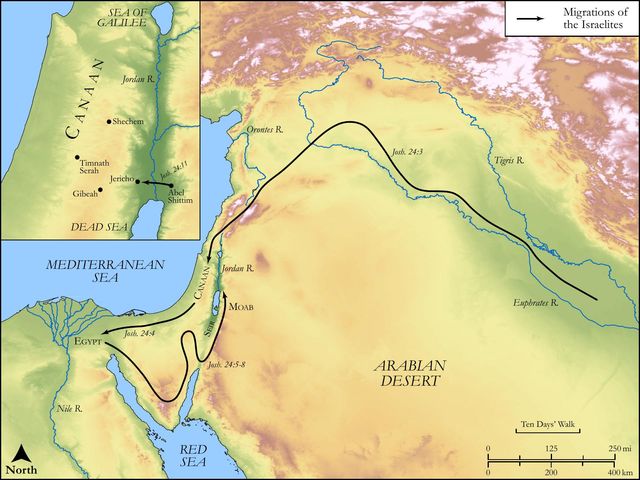
The setting at Shechem is profoundly significant. It was an ancient cultic site, rich in Israelite history, where Abraham first built an altar upon entering Canaan (Genesis 12:6-7), Jacob buried his foreign gods (Genesis 35:4), and where the covenant was renewed after the conquest, with blessings and curses proclaimed from Mount Gerizim and Mount Ebal (Deuteronomy 27). This gathering represents a critical juncture for the nascent nation, transitioning from a generation shaped by the wilderness and conquest to one responsible for maintaining fidelity in the settled land. The surrounding Canaanite cultures were predominantly polytheistic and often syncretistic, making the call for exclusive devotion to Yahweh a radical and counter-cultural demand. Joshua's warning about God's holiness and jealousy directly addresses the ever-present temptation for Israel to assimilate and adopt the idolatrous practices of their neighbors, which would constitute a profound betrayal of their covenant with the LORD.
Key Themes
ShowHideJoshua 24:19 powerfully encapsulates several overarching themes central to the book of Joshua and the broader Old Testament narrative. Foremost is the Covenant Faithfulness of God, starkly contrasted with the anticipated Covenant Unfaithfulness of Israel. Joshua's historical recounting emphasizes God's unwavering commitment, while his warning highlights Israel's inherent propensity to stray. The verse also deeply explores the Character of God, particularly His Absolute Holiness and Exclusive Jealousy. God is presented as utterly separate from sin, demanding a corresponding purity from His people. His "jealousy" is not human envy but a righteous zeal for His own honor and the singular devotion of His covenant people, making any form of idolatry or divided loyalty an intolerable affront, as seen in the first two commandments of the Decalogue. Furthermore, the verse underscores the Seriousness of Sin and the Demands of True Service. Joshua's statement about not forgiving transgressions, while not a denial of God's mercy, serves as a stark warning against presumptuous or unrepentant sin, emphasizing that serving such a God requires profound commitment, purity of heart, and a constant turning away from evil, rather than a superficial or conditional allegiance.
Exposition and Analysis
ShowHideKey Word Analysis
ShowHideThis term (H6918) signifies separation, distinctness, and purity. When applied to God, it denotes His absolute moral perfection, His transcendence, and His complete separation from all that is common, profane, or sinful. God's holiness is the foundation of His character, demanding a corresponding separation and purity from those who approach Him and serve Him. It implies that His presence cannot coexist with unholiness, and His service cannot be defiled by impurity.
This attribute (H7072), often misunderstood as a negative human emotion, describes God's fervent zeal for His own honor and His exclusive right to the worship and devotion of His covenant people. It is a righteous jealousy that cannot tolerate rivals or divided loyalties. God's jealousy is a protective love for His covenant relationship with Israel, ensuring that His people remain faithful to Him alone and do not turn to other gods. It underscores His demand for singular allegiance and His intolerance of idolatry or spiritual adultery.
This primitive root (H3201) means "to be able, literally (can, could) or morally (may, might)." In Joshua 24:19, the KJV translates it as "cannot serve," implying a negative particle preceding it. Joshua's use of this word in the negative is not an absolute statement of Israel's inherent inability to perform any act of service, but rather a rhetorical challenge. It highlights that they cannot serve God on their own terms, with a divided heart, or without genuine repentance for their sins, because their human capacity is insufficient to meet the perfect standard of a holy and jealous God. It forces the people to recognize the immense difficulty and the high demands of true service to Yahweh.
Verse Breakdown
ShowHide"And Joshua said unto the people, Ye cannot serve the LORD:"
This opening clause is Joshua's direct, challenging response to the people's confident declaration in Joshua 24:18 that they would serve the LORD. It immediately introduces a note of sober realism, questioning their understanding of what true service to Yahweh entails. It is a rhetorical device designed to make them ponder the gravity of their commitment, implying that their human strength and fickle hearts are insufficient for the task.
"for he [is] an holy God;"
This provides the first foundational reason for Joshua's warning. God's absolute holiness means He is utterly pure, morally perfect, and set apart from all sin and imperfection. His nature demands purity from those who approach Him and serve Him. Any attempt to serve Him while harboring sin or impurity is a contradiction to His very being and an affront to His character.
"he [is] a jealous God;"
This offers the second, equally crucial reason. God's jealousy is His righteous zeal for His exclusive worship and the singular devotion of His people. He will not share His glory or His people's allegiance with any other god or idol. This attribute means that divided loyalties, syncretism, or any form of spiritual infidelity are an affront to His character and will not be tolerated within the covenant relationship.
"he will not forgive your transgressions nor your sins."
This concluding statement is the stark consequence of attempting to serve a holy and jealous God without genuine repentance and exclusive devotion. It is not a blanket denial of God's capacity for forgiveness (which is abundantly clear elsewhere in the Old Testament, e.g., Numbers 14:18), but rather a warning against unrepentant, presumptuous, or covenant-breaking sin. In the context of Israel's historical tendency toward idolatry and rebellion, it underscores that God's holiness and jealousy mean He will not overlook deliberate and persistent disobedience that violates the covenant. Such unrepentant sin would incur His judgment, not His forgiveness.
Literary Devices
ShowHideJoshua 24:19 employs several powerful literary devices to convey its urgent message. The most prominent is Rhetorical Challenge, where Joshua's statement, "Ye cannot serve the LORD," is not an absolute impossibility but a provocative assertion designed to make the people reconsider the depth of their commitment and the profound character of God. This challenges their perhaps naive confidence. There is also clear Juxtaposition between the people's enthusiastic, confident declaration to serve God and Joshua's immediate, sobering counter-statement, which highlights the vast gulf between human intention and divine expectation. The verse also uses Repetition with the phrase "he is," emphasizing God's unchanging and formidable attributes: "he is an holy God; he is a jealous God." This repetition underscores the immutability of God's nature and the non-negotiable demands it places on His covenant people. Finally, the statement "he will not forgive your transgressions nor your sins" functions as a form of Conditional Hyperbole or a Warning of Inevitable Consequence. It is not an absolute theological statement denying God's forgiveness in all circumstances, but rather a severe warning that unrepentant, deliberate, and covenant-breaking sin, especially given God's holy and jealous nature, will not be overlooked or pardoned, leading to judgment.
Theological and Thematic Connections
ShowHideJoshua 24:19 stands as a profound theological statement on the character of God and the nature of true worship. It unequivocally asserts God's absolute holiness and His exclusive demand for devotion, challenging any notion of casual or superficial allegiance. This verse reveals that God's holiness is not merely an abstract quality but an active force that demands purity and separation from sin in those who serve Him. His "jealousy" is a righteous zeal that protects the integrity of the covenant relationship, ensuring that His people do not turn to idols or divided loyalties. The warning about unforgiveness, therefore, is not a contradiction of God's mercy but a stark reminder that deliberate, unrepentant sin, particularly covenant infidelity, severs the relationship and incurs divine judgment. It forces Israel, and by extension all believers, to confront the profound gap between human capability and divine expectation, highlighting the impossibility of serving such a God purely by human strength or with a compromised heart. This inherently points to the need for divine grace and a transformed heart.
Reflection and Application
ShowHideJoshua 24:19 serves as an enduring spiritual mirror for every believer, challenging the sincerity and depth of our commitment to God. In a world that often encourages compromise and divided loyalties, Joshua's words remind us that the God we serve is utterly unique, demanding our wholehearted devotion, not merely a portion. His holiness calls us to a life of purity and separation from sin, while His jealousy for our affection warns against any form of idolatry—whether it be the pursuit of wealth, status, pleasure, or even self-reliance—that displaces Him from the throne of our hearts. This verse compels us to examine our motivations, our priorities, and the true object of our worship. It exposes the futility of attempting to serve God on our own terms or with a lukewarm spirit, prompting us to acknowledge our inherent weakness and our constant need for God's transforming grace to truly live a life pleasing to Him. It is a call to radical, uncompromised, and authentic faith.
Questions for Reflection
ShowHideFAQ
ShowHideDoes Joshua 24:19 mean that God never forgives sins?
ShowHideNo, absolutely not. Joshua 24:19 does not teach that God is unwilling or unable to forgive sins in general. The Old Testament is replete with examples of God's mercy and forgiveness for His repentant people (e.g., Psalm 103:3, Nehemiah 9:17). Instead, Joshua's statement is a powerful rhetorical warning, emphasizing the severe consequences of unrepentant, deliberate, and covenant-breaking sin, particularly in light of God's holy and jealous nature. It highlights that God will not tolerate a casual approach to sin or a superficial commitment to the covenant. If Israel were to persistently rebel and engage in idolatry without repentance, God, in His holiness and justice, would not simply overlook their transgressions. It underscores that forgiveness is conditional upon genuine repentance and a turning away from sin, and that a holy God cannot be trifled with.
Christ-Centered Fulfillment
ShowHideJoshua 24:19, with its stark declaration of humanity's inherent inability to perfectly serve a holy and jealous God, profoundly foreshadows the ultimate necessity of Christ. Joshua's warning exposes the inherent weakness and sinfulness of humanity, demonstrating that no one, by their own strength or resolve, can meet God's perfect standard of holiness and exclusive devotion. This human inability points directly to the need for a divine solution. Jesus Christ is the only one who perfectly fulfilled the demands of a holy and jealous God, living a life of absolute obedience and singular devotion (Hebrews 4:15). Furthermore, it is through His atoning sacrifice on the cross that the "unforgivable transgressions" of humanity can indeed be forgiven. Jesus, as the Lamb of God who takes away the sin of the world, bore the full wrath of God against sin, thereby making a way for sinful humanity to be reconciled to a holy God (2 Corinthians 5:21). In Christ, believers are not only forgiven but also empowered by the Holy Spirit to live lives of genuine service and devotion, enabling them to truly "serve the LORD" in a way that was impossible under the Old Covenant's demands without perfect obedience (Romans 8:3-4). Thus, Joshua's warning ultimately serves as a powerful testament to the indispensable grace and transformative power found in Jesus, who alone enables us to stand before a holy and jealous God.