


Exodus 23:20
Bible text: King James Version (1769 Blayney text) · Public domain
Bible text: Berean Standard Bible · Public domain
Bible text: American Standard Version (1901) · Public domain
Bible text: World English Bible, Messianic edition · Public domain
Bible text: Geneva Bible (1599) · Public domain
Bible text: Young's Literal Translation · Public domain
- הִנֵּהhi·Nehhere!H2009PrtParticle Interjection
- אָנֹכִי'a·no·KhiIH595Pro-1csPronoun Personal 1st Singular common gender
- שֹׁלֵחַsho·Le·ach[am] about to sendH7971V-Qal-Prtcpl-msVerb Qal Participle Singular Masculine Absolute
- מַלְאָךְmal·'oKhan angelH4397N-msNoun Singular Masculine Absolute
- לְפָנֶיךָle·fa·Nei·kha<to> before youH6440Prep-l ¦ N-mpc ¦ 2msNoun Plural Masculine Constructלְ<to>פָנֶיbeforeךָyou
- לִשְׁמָרְךָlish·ma·re·Khato guard youH8104Prep-l ¦ V-Qal-Inf ¦ 2msVerb Qal Infinitive Constructלִtoשְׁמָרְguardךָyou
- בַּדָּרֶךְba·Da·rekhon the journeyH1870Prep-b ¦ N-csNoun Singular common gender Absoluteבַּon theדָּרֶךְjourney
- וְלַהֲבִיאֲךָve·la·ha·Vi·'a·khaand to bring youH935Conj-w ¦ Prep-l ¦ V-Hiphil-Inf ¦ 2msVerb Hiphil Infinitive Constructוְandלַtoהֲבִיאֲbringךָyou
- אֶל'elintoH413PrepPreposition
- הַמָּקוֹםha·ma·Komthe placeH4725Art ¦ N-msNoun Singular Masculine Absoluteהַtheמָּקוֹםplace
- אֲשֶׁר'a·SherwhichH834RelParticle Relative
- הֲכִנֹתִיha·khi·No·tiI have preparedH3559V-Hiphil-Perf-1csVerb Hiphil Perfect 1st Singular common gender
English is a literal word-by-word gloss of the Hebrew, not the KJV's wording. Why?
This is the original text the KJV's translators worked from — each Hebrew word with its own literal English meaning in this verse, prepared by scholars at Tyndale House, Cambridge. The KJV translates whole sentences, not word by word, so its wording differs: one Hebrew word can become several English words, and the KJV may choose “the LORD” where the gloss reads “Yahweh”. Both are faithful — they answer different questions. For the KJV's own rendering, switch to the KJV text.
Details
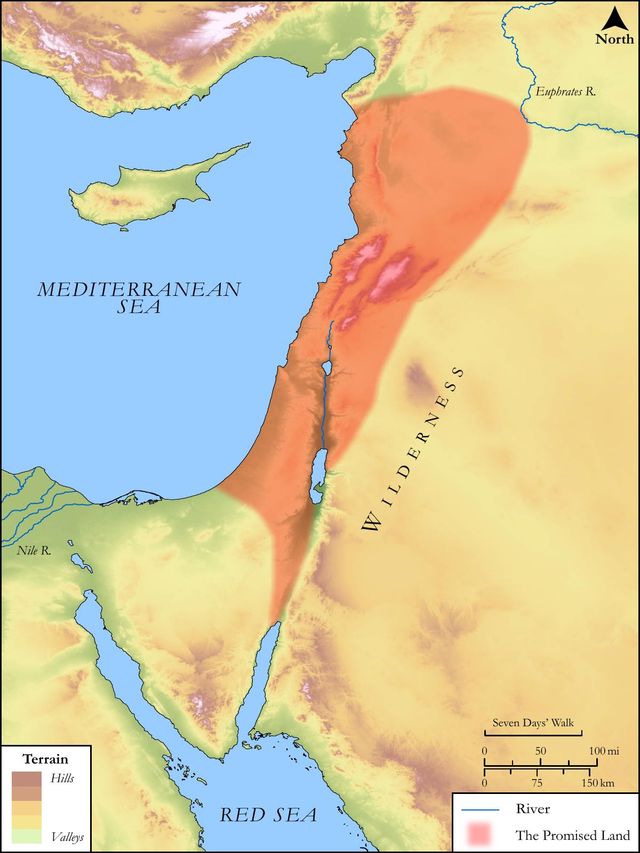
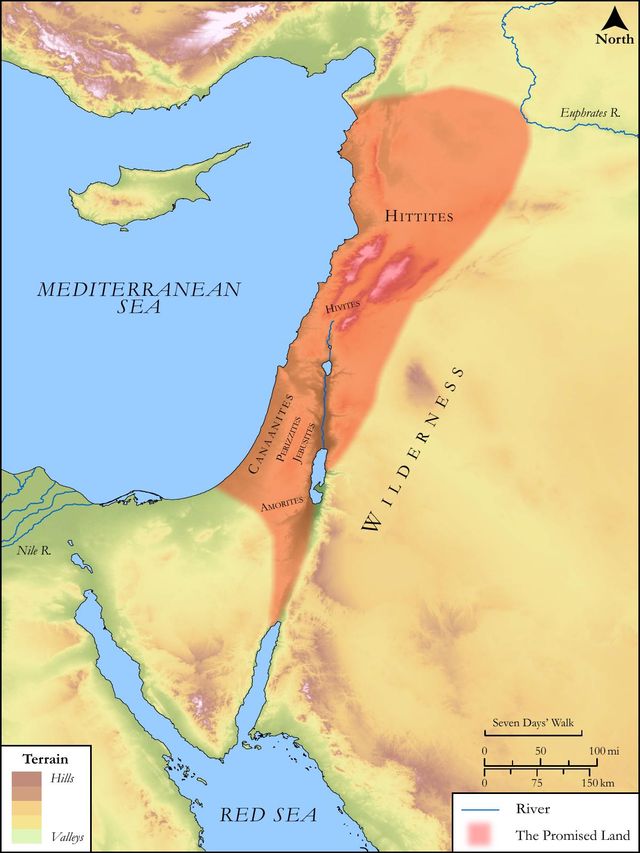
See on the biblical-era maps

Study this verse
Public-domain commentary
Matthew Henry
From his Commentary on the Whole Bible. Henry comments on passages, not single verses — this entry covers Exodus 23:20–33. His three-level outline is real structure in the source text, so it is rendered as structure.
Three gracious promises are here made to Israel, to engage them to their duty and encourage them in it; and each of the promises has some needful precepts and cautions joined to it.
I.It is here promised that they should be guided and kept in their way through the wilderness to the land of promise:
Behold, I send an angel before thee (Exo 23:20), my angel (Exo 23:23), a created angel, say some, a minister of God's providence, employed in conducting and protecting the camp of Israel; that it might appear that God took a particular care of them, he appointed one of his chief servants to make it his business to attend them, and see that they wanted for nothing. Others suppose it to be the Son of God, the angel of the covenant; for the Israelites in the wilderness are said to tempt Christ; and we may as well suppose him God's messenger, and the church's Redeemer, before his incarnation, as the Lamb slain from the foundation of the world. And we may the rather think he was pleased to undertake the deliverance and guidance of Israel because they were typical of his great undertaking. It is promised that this blessed angel should keep them in the way, though it lay through a wilderness first, and afterwards through their enemies' country; thus God's spiritual Israel shall be kept through the wilderness of this earth, and from the insults of the gates of hell. It is also promised that he should bring them into the place which God had not only designed but prepared for them: and thus Christ has prepared a place for his followers, and will preserve them to it, for he is faithful to him that appointed him. The precept joined with this promise is that they be observant of, and obedient to, this angel whom God would send before them (Exo 23:21): "Beware of him, and obey his voice in every thing; provoke him not in any thing, for it is at your peril if you do, he will visit your iniquity." Note,
1.Christ is the author of salvation to those only that obey him. The word of command is Hear you him, Mat 17:5. Observe what he hath commanded, Mat 28:20.
2.Our necessary dependence upon the divine power and goodness should awe us into obedience. We do well to take heed of provoking our protector and benefactor, because if our defence depart from us, and the streams of his goodness be cut off, we are undone. Therefore, "Beware of him, and carry it towards him with all possible reverence and caution. Fear the Lord, and his goodness." 3. Christ will be faithful to those who are faithful to him, and will espouse their cause who adhere to his: I will be an adversary to thine adversaries, Exo 23:22. The league shall be offensive and defensive, like that with Abraham, I will bless him that blesseth thee, and curse him that curseth thee. Thus is God pleased to twist his interests and friendships with his people's.
II.It is promised that they should have a comfortable settlement in the land of Canaan, which they hoped now (though it proved otherwise) within a few months to be in the possession of, Exo 23:24-26. Observe,
1.How reasonable the conditions of this promise are - only that they should serve their own God, who was indeed the only true God, and not the gods of the nations, which were no gods at all, and which they had no reason at all to have any respect for. They must not only not worship their gods, but they must utterly overthrow them, in token of their great abhorrence of idolatry, their resolution never to worship idols themselves, and their care to prevent any other from worshipping them; as the converted conjurors burnt their books, Act 19:19.
2.How rich the particulars of this promise are.
(1.)The comfort of their food. He shall bless thy bread and thy water; and God's blessing will make bread and water more refreshing and nourishing than a feast of fat things and wines on the lees without that blessing.
(2.)The continuance of their health: "I will take sickness away, either prevent it or remove it. Thy land shall not be visited with epidemical diseases, which are very dreadful, and sometimes have laid countries waste." (3.) The increase of their wealth. Their cattle should not be barren, nor cast their young, which is mentioned as an instance of prosperity, Job 21:10. (4.) The prolonging of their lives to old age: "The number of thy days I will fulfil, and they shall not be cut off in the midst by untimely deaths." Thus hath godliness the promise of the life that now is.
III.It is promised that they should conquer and subdue their enemies, the present occupants of the land of Canaan, who must be driven out to make room for them. This God would do,
1.Effectually by his power (Exo 23:17, Exo 23:18); not so much by the sword and bow of Israel as by the terrors which he would strike into the Canaanites. Though they were so obstinate as not to be willing to submit to Israel, resign their country, and retire elsewhere, which they might have done, yet they were so dispirited that they were not able to stand before them. This completed their ruin; such power had the devil in them that they would resist, but such power had God over them that they could not. I will send my fear before thee; and those that fear will soon flee. Hosts of hornets made way for the hosts of Israel; such mean creatures can God make use of for the chastising of his people's enemies, as in the plagues of Egypt. When God pleases, hornets can drive out Canaanites, as well as lions could, Jos 24:12.
2.He would do it gradually, in wisdom (Exo 23:29, Exo 23:30), not all at once, but by little and little. As the Canaanites had kept possession till Israel had grown into a people, so there should still be some remains of them till Israel should grow so numerous as to replenish the whole. Note, The wisdom of God is to be observed in the gradual advances of the church's interests. It is in real kindness to the church that its enemies are subdued by little and little; for thus we are kept upon our guard, and in a continual dependence upon God. Corruptions are thus driven out of the hearts of God's people; not all at once, but by little and little; the old man is crucified, and therefore dies slowly. God, in his providence, often delays mercies, because we are not ready for them. Canaan has room enough to receive Israel, but Israel is not numerous enough to occupy Canaan. We are not straitened in God; if we are straitened, it is in ourselves. The land of Canaan is promised them (Exo 23:31) in its utmost extent, which yet they were not possessed of till the days of David; and by their sins they soon lost possession. The precept annexed to this promise is that they should not make any friendship, nor have any familiarity, with idolaters, Exo 23:32, Exo 23:33. Idolaters must not so much as sojourn in their land, unless they renounced their idolatry. Thus they must avoid the reproach of intimacy with the worshippers of false gods and the danger of being drawn to worship with them. By familiar converse with idolaters, their dread and detestation of the sin would wear off; they would think it no harm, in compliment to their friends, to pay some respect to their gods, and so by degrees would be drawn into the fatal snare. Note, Those that would be kept from bad courses must keep from bad company; it is dangerous living in a bad neighbourhood; others' sins will be our snares, if we look not well to ourselves. We must always look upon our greatest danger to be from those that would cause us to sin against God. Whatever friendship is pretended, that is really our worst enemy that draws us from our duty.
Historical interpretation
Two Centuries of Reception
3 surviving comments on this verse. Each one is dated, so this reads as a timeline rather than a list.
Select a marker to jump to its quote. Markers stagger vertically where authors wrote within a few decades of each other.
He called him an angel indeed, because of the greatness of the powers which he was to exercise and because of his prophetic office, while announcing the will of God. He is called Joshua (also Jesus), because it was a type of his own future name.
For Joshua was to introduce the people into the land of promise, not Moses. Now he called him an angel on account of the magnitude of the mighty deeds which he was to achieve (which mighty deeds Joshua the son of Nun did, as you can yourselves read) and on account of his office of prophet announcing the divine will. Similarly the Spirit, speaking in the person of the Father, calls the forerunner of Christ, John, a future angel, through the prophet: “Behold, I send my angel before your”—that is, Christ’s—“face, who shall prepare your way before you.”
Consider these words. Let the Jew, not to speak of the Manichaean, say what other angel he can find in Scripture to whom these words apply, but this leader who was to bring the people into the land of promise. Then let him inquire who it was that succeeded Moses and brought in the people. He will find that it was Jesus and that this was not his name at first but after his name was changed. It follows that he who said, “My name is in him” is the true Jesus, the leader who brings his people into the inheritance of eternal life, according to the New Testament, of which the Old was a figure. No event or action could have a more distinctly prophetical character than this, where the very name is itself a prediction.
Continue studying Exodus 23:20 across the web’s major study libraries — every link below opens this exact verse, chapter, or book on the destination site.
Read & Compare
 BibleGatewayThis verse in more than 200 translations and 70 languages.
 Bible.comThe YouVersion reader — hundreds of translations, reading plans, and highlights.
 ESV.orgCrossway's official English Standard Version reader.
 NET BibleThe NET translation with 60,000+ translators' notes on every rendering decision.
 STEP BibleTyndale House's free study tool — original text, vocabulary, and scholarly resources.
 BibliaLogos Bible Software's free web reader.
 USCCBThe New American Bible (Revised Edition) with the U.S. bishops' study notes.
Commentaries
 BibleHub CommentariesDozens of classic commentaries on this verse, gathered on one page.
 StudyLightMore than 100 commentary sets — the largest collection on the web.
 BibleRefPlain-English commentary on what this verse means, verse by verse.
 Enduring WordDavid Guzik's free commentary on this chapter, widely used by Bible teachers.
 Bible Study ToolsVerse commentary alongside Greek and Hebrew study aids.
Original Language & Research
- BibleHub InterlinearThe verse word by word — original language, transliteration, and English.
- BibleHub LexiconEvery word's original-language definition and Strong's entry.
 Blue Letter BibleDeep-study tools — Strong's numbers, concordance, and word studies.
 SefariaThe Hebrew text with Rashi and centuries of Jewish commentary.
Sermons, Hymns & Audio


TrulyRandomVerse is not affiliated with these sites and doesn’t control their content. They’re linked because they’re genuinely useful.
Summary
Exodus 23:20 delivers a profound divine promise from God to the nation of Israel, assuring them of His active, personal, and supernatural guidance and protection as they embark on the perilous journey from Sinai into the Promised Land. This verse encapsulates God's unwavering commitment to His covenant people, guaranteeing that His appointed messenger, embodying His very presence and authority, will lead them safely through the wilderness and establish them securely in the specific territory He has meticulously ordained for them, thereby demonstrating His faithfulness and sovereign care over their destiny.
Context
ShowHideLiterary Context
Exodus 23:20 is strategically positioned within the "Book of the Covenant" (Exodus 20:22-23:33), which immediately follows the monumental giving of the Ten Commandments at Mount Sinai. Having established the foundational moral and civil laws that would govern Israel's life as a holy nation, God transitions from legal statutes to a series of divine promises and warnings. This particular chapter details various principles of justice, ethical conduct, and religious observances, such as the Sabbath and the annual feasts. The promises of divine assistance for the conquest and settlement of Canaan, contingent upon Israel's obedience, serve as a powerful conclusion to this legal section, providing both encouragement and a clear framework for their future. This verse, therefore, acts as a pivotal assurance of God's direct and personal involvement in the practical fulfillment of His covenant promises, serving as a capstone to the legal directives and a bridge to the narrative of their journey.
Historical & Cultural Context
At this pivotal point in their history, the Israelites were a newly liberated people, having recently escaped centuries of slavery in Egypt and witnessed God's mighty acts of deliverance, including the miraculous parting of the Red Sea. They were encamped at the base of Mount Sinai, a place of profound divine revelation and covenant-making. Ahead lay the daunting prospect of a wilderness journey, fraught with natural dangers and hostile tribes, and the ultimate challenge of conquering the well-established nations inhabiting Canaan, the land God had promised to their patriarchs, Abraham, Isaac, and Jacob (e.g., Genesis 12:7). In this context of uncertainty, impending conflict, and the need for sustained provision, the promise of God sending "an Angel before thee" was not merely a spiritual assurance but a tangible guarantee of supernatural leadership and protection against formidable enemies and the harsh realities of desert travel. It underscored that their success would not be by their might, but by God's direct and powerful intervention, echoing His previous guidance via the pillar of cloud and fire (e.g., Exodus 13:21-22).
Key Themes
ShowHideExodus 23:20 contributes significantly to several major theological and narrative themes prevalent in the book of Exodus and the broader Pentateuch. Firstly, it reinforces the theme of Divine Presence and Guidance, emphasizing that God does not merely give laws but actively leads and accompanies His people. Secondly, it highlights Covenant Faithfulness, demonstrating God's unwavering commitment to fulfill the promises made to Abraham regarding the land and a numerous offspring. Thirdly, the verse speaks to Divine Sovereignty and Providence, asserting that God has a specific, pre-ordained "place" for His people and will meticulously orchestrate events to bring them into it, regardless of the obstacles. Finally, the identity of the "Angel" introduces the theme of Divine Mediation, hinting at a unique divine agent through whom God's authority and presence are manifested, a concept that finds its ultimate fulfillment in Christ.
Exposition and Analysis
ShowHideKey Word Analysis
ShowHideFrom an unused root meaning to despatch as a deputy, this term refers to a messenger, specifically, of God, i.e., an angel (also a prophet, priest, or teacher). In this context, the "Angel" is no ordinary messenger. Subsequent verses (Exodus 23:21-22) reveal this Angel possesses divine authority, as God states, "My name is in him," and warns that the Angel "will not pardon your transgressions." This strongly suggests a unique, divine manifestation, often interpreted by theologians as the Angel of the Lord (a pre-incarnate appearance of Christ) or a divine being uniquely embodying God's presence and authority, distinct from created angels.
A primitive root, properly meaning to hedge about (as with thorns), i.e., guard; generally, to protect, attend to, etc. This verb signifies "to guard," "to watch over," "to preserve," or "to protect." It implies active vigilance and protective custody. The Angel's role is not passive observation but active safeguarding, ensuring Israel remains on the correct path and is shielded from harm, both physical and spiritual, throughout their journey. This word emphasizes God's steadfast and intentional care and diligent oversight.
A primitive root, properly meaning to be erect (i.e., stand perpendicular); hence (causatively) to set up, in a great variety of applications, whether literal (establish, fix, prepare, apply), or figurative (appoint, render sure, proper or prosperous). This verb means "to establish," "to fix," "to make ready," or "to prepare." It conveys the idea of something being firmly set in place, divinely ordained, and brought into existence through careful planning. The "place" (Canaan) was not a random destination but a divinely appointed and pre-ordained inheritance, meticulously prepared by God for His people, underscoring His sovereignty and purposeful design.
Verse Breakdown
ShowHide"Behold, I send an Angel before thee"
This opening phrase immediately draws attention to a significant divine initiative. "Behold" (Hebrew, hinneh') serves as an exclamation, emphasizing the importance and certainty of the promise. God Himself declares His intention to dispatch a special "Angel" or "Messenger" to go ahead of Israel. This signifies God's personal and active involvement in their journey, providing direct leadership and a visible manifestation of His presence, going before them to clear the way and confront obstacles.
"to keep thee in the way"
The primary function of this divine Angel is to "keep" or "guard" Israel. This refers to both guiding them on the correct path, preventing them from straying into error or danger (moral and physical), and protecting them from the various threats—enemies, wilderness perils, and spiritual temptations—they would encounter. It speaks to God's comprehensive provision for their safety, their adherence to His will, and their preservation as His covenant people.
"and to bring thee into the place which I have prepared"
The ultimate purpose and culmination of the Angel's mission is to lead Israel to their divinely appointed destination. This "place" is the Promised Land of Canaan, which God had already "prepared" or ordained for them. This clause highlights God's faithfulness to His covenant promises, His sovereign planning, and His ability to bring His people into the full inheritance He has set apart for them. It underscores the certainty of their arrival and settlement, emphasizing that their destiny is not left to chance but is the result of divine design and execution.
Literary Devices
ShowHideExodus 23:20 employs several powerful literary devices to convey its profound message. Divine Promise is central, as God explicitly declares His intention to act on Israel's behalf, providing unwavering assurance and demonstrating His faithfulness to His covenant. The phrase "I send an Angel" is an instance of Personification or more accurately, Divine Embodiment, where God's active presence and guidance are made concrete and accessible through a distinct, divine messenger. This Angel functions as a powerful Symbol of God's immanent presence, protective care, and sovereign authority. The entire verse also serves as Foreshadowing, hinting at the deeper theological truth that God's ultimate guidance and redemption would come through a divine "Messenger" (Christ) who would lead His people to an eternal "prepared place." The use of "Behold" (Hebrew, hinneh') acts as an Exclamation, drawing immediate and urgent attention to the gravity and certainty of the divine declaration, inviting the hearer to pay close heed to this significant assurance.
Theological and Thematic Connections
ShowHideExodus 23:20 powerfully articulates God's commitment to active, personal leadership and protection for His people, a theme that resonates throughout biblical theology from Genesis to Revelation. It underscores the concept of divine providence, where God not only has a grand plan but also actively intervenes in the lives of His chosen ones to ensure its fulfillment. The identity of the "Angel" as a divine manifestation foreshadows the ultimate revelation of God's presence in Christ, who is the perfect embodiment of God's will and presence. This verse teaches us that God's promises are always accompanied by His empowering and guiding presence, enabling His people to navigate challenges and inherit their destiny, not by their own strength or wisdom, but by His sovereign guidance and unfailing care. It establishes a foundational truth about God's intimate involvement in the journey of faith.
Reflection and Application
ShowHideExodus 23:20 offers profound comfort and direction for believers navigating their own journeys of faith in the contemporary world. Just as God promised to lead and protect Israel through the wilderness to their prepared inheritance, He continues to guide and guard His followers today, leading us toward our ultimate spiritual inheritance in Christ. This verse reminds us that we are never left to our own devices in the face of life's complexities, uncertainties, and dangers. The Holy Spirit, our divine Helper and Guide, illuminates our path, convicts us of sin, empowers us for righteous living, and intercedes for us, ensuring we remain "in the way" of God's will and purpose. We are called to cultivate a posture of deep trust and active obedience, knowing that God has a specific purpose and destination for each of our lives, and He is faithful to bring us into it, even through challenging circumstances and formidable opposition. Our confidence rests not in our ability to discern the way perfectly or to overcome obstacles by our own might, but in the faithful presence of our God who goes before us, prepares the way, and guarantees our arrival.
Questions for Reflection
ShowHideFAQ
ShowHideWho is "the Angel" in Exodus 23:20, and why is this significant?
ShowHideWhile the Hebrew word mal'akh simply means "messenger," the immediate context of Exodus 23:20-22 strongly suggests this is no ordinary angel. God says, "My name is in him" (Exodus 23:21), indicating a unique divine identity or manifestation. This Angel has the authority to pardon or not pardon transgressions, a prerogative belonging only to God. Many biblical scholars interpret this "Angel of the Lord" (a specific designation often used in the Old Testament) as a pre-incarnate appearance of Jesus Christ, the second person of the Trinity, or a unique divine being who fully embodies God's presence and authority. This significance highlights God's personal and direct involvement in leading His people, making His presence palpable, authoritative, and ultimately, redemptive.
How does God "prepare" a place for His people, both in the Old Testament and for believers today?
ShowHideIn the Old Testament, God "prepared" the land of Canaan for Israel through His sovereign decrees, His unbreakable promises to the patriarchs (e.g., Genesis 12:1-3), and by orchestrating historical events to make it ready for their inheritance. This involved both physical provision and the removal of obstacles. For believers today, God continues to "prepare" a "place" in multiple, profound senses. Spiritually, He prepares us for His purposes through sanctification, equipping us for good works (Ephesians 2:10), and guiding our steps in our earthly pilgrimage. Ultimately, Jesus Himself spoke of going to "prepare a place" for His followers in His Father's house (John 14:2-3), referring to our eternal dwelling with Him in heaven. This demonstrates God's meticulous planning, faithful provision, and ultimate destination for both our earthly journey and our eternal destiny.
Is the promise of divine guidance and protection in Exodus 23:20 still relevant for believers today?
ShowHideAbsolutely. While the specific context was Israel's physical journey to Canaan, the underlying principles of God's character and His relationship with His people are timeless and universally applicable. God's faithfulness, His desire to guide, and His unwavering commitment to protect His own remain unchanged. For New Testament believers, this promise is profoundly fulfilled through the indwelling Holy Spirit, who acts as our divine Counselor, Helper, and Guide into all truth (John 16:13) and empowers us to walk in God's ways. We are also assured of God's providential care and protection against spiritual enemies and the trials of life (Ephesians 6:10-18). Just as He led Israel to their earthly inheritance, He leads us toward our spiritual inheritance and ultimate redemption in Christ, ensuring our safe passage to our eternal home.
Christ-Centered Fulfillment
ShowHideExodus 23:20 finds its ultimate and most profound fulfillment in the person and redemptive work of Jesus Christ. The "Angel" sent by God, bearing His very name and authority, powerfully foreshadows the pre-incarnate Christ, the divine Son who is the ultimate "Messenger" of God, the very Word made flesh. He is the one through whom God's presence is truly revealed and His will perfectly executed. Just as the Angel led Israel through the wilderness, Jesus, the Good Shepherd, leads His flock through the wilderness of this world, providing divine guidance and protection (John 10:11). He is the "Way, the Truth, and the Life" (John 14:6), ensuring that His followers remain "in the way" of salvation and righteousness, never straying from the path to eternal life. Furthermore, the "place which I have prepared" finds its ultimate reality not merely in an earthly land, but in the heavenly dwelling that Christ Himself has gone to prepare for His disciples (John 14:2-3). Through His atoning sacrifice on the cross and His glorious resurrection, Jesus brings His people into the true "rest" of God, an eternal inheritance that far surpasses the earthly Canaan, securing our place in the new heavens and new earth (Revelation 21:1-4). Thus, Christ is the divine Guide, the faithful Protector, and the ultimate Fulfiller of God's eternal promise, leading us to our eternal home.