


Exodus 33:2
Bible text: King James Version (1769 Blayney text) · Public domain
Bible text: King James Version with Strong's numbers · Public domain
Bible text: Berean Standard Bible · Public domain
Bible text: American Standard Version (1901) · Public domain
Bible text: World English Bible, Messianic edition · Public domain
Bible text: Geneva Bible (1599) · Public domain
Bible text: Young's Literal Translation · Public domain
- וְשָׁלַחְתִּיve·sha·lach·Tiand I will sendH7971Conj-w ¦ V-Qal-ConsecPerf-1csVerb Qal Consecutive Perfect 1st Singular common genderוְandשָׁלַחְתִּיI will send
- לְפָנֶיךָle·fa·Nei·kha<to> before youH6440Prep-l ¦ N-mpc ¦ 2msNoun Plural Masculine Constructלְ<to>פָנֶיbeforeךָyou
- מַלְאָךְmal·'Akhan angelH4397N-msNoun Singular Masculine Absolute
- וְגֵרַשְׁתִּיve·ge·rash·Tiand I will drive outH1644Conj-w ¦ V-Piel-ConsecPerf-1csVerb Piel Consecutive Perfect 1st Singular common genderוְandגֵרַשְׁתִּיI will drive out
- אֶת'et<obj.>H853DirObjMParticle Object Indicator
- הַכְּנַעֲנִיha·ke·na·'a·Nithe Canaanite[s]H3669Art ¦ N-msNoun Gentilic Singular Masculine AbsoluteהַtheכְּנַעֲנִיCanaanite[s]
- הָאֱמֹרִיha·'e·mo·Rithe Amorite[s]H567Art ¦ N-msNoun Gentilic Singular Masculine AbsoluteהָtheאֱמֹרִיAmorite[s]
- וְהַחִתִּיve·ha·chi·Tiand the Hittite[s]H2850Conj-w ¦ Art ¦ N-msNoun Gentilic Singular Masculine AbsoluteוְandהַtheחִתִּיHittite[s]
- וְהַפְּרִזִּיve·hap·pe·ri·Ziand the Perizzite[s]H6522Conj-w ¦ Art ¦ N-msNoun Gentilic Singular Masculine AbsoluteוְandהַtheפְּרִזִּיPerizzite[s]
- הַחִוִּיha·chi·Vithe Hivite[s]H2340Art ¦ N-msNoun Gentilic Singular Masculine AbsoluteהַtheחִוִּיHivite[s]
- וְהַיְבוּסִיve·hay·vu·Siand the Jebusite[s]H2983Conj-w ¦ Art ¦ N-msNoun Gentilic Singular Masculine AbsoluteוְandהַtheיְבוּסִיJebusite[s]
English is a literal word-by-word gloss of the Hebrew, not the KJV's wording. Why?
This is the original text the KJV's translators worked from — each Hebrew word with its own literal English meaning in this verse, prepared by scholars at Tyndale House, Cambridge. The KJV translates whole sentences, not word by word, so its wording differs: one Hebrew word can become several English words, and the KJV may choose “the LORD” where the gloss reads “Yahweh”. Both are faithful — they answer different questions. For the KJV's own rendering, switch to the KJV text.
Details
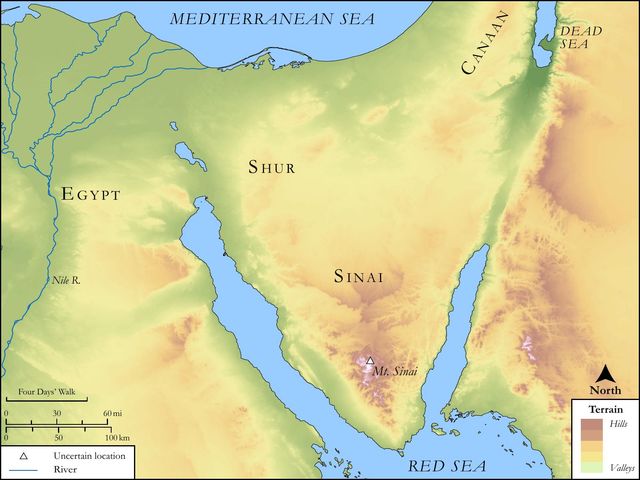
See on the biblical-era maps

Study this verse
Public-domain commentary
Matthew Henry
From his Commentary on the Whole Bible. Henry comments on passages, not single verses — this entry covers Exodus 33:1–6. His two-level outline is real structure in the source text, so it is rendered as structure.
Here is, I. The message which God sent by Moses to the children of Israel, signifying the continuance of the displeasure against them, and the bad terms they yet stood upon with God. This he must let them know for their further mortification. 1. He applies to them a mortifying name, by giving them their just character - a stiff-necked people, Exo 33:3, Exo 33:5. "Go," says God to Moses, "go and tell them that they are so." He that knows them better than they know themselves says so of them. God would have brought them under the yoke of his law, and into the bond of his covenant, but their necks were too stiff to bow to them. God would have cured them of their corrupt and crooked dispositions, and have set them straight; but they were wilful and obstinate, and hated to be reformed, and would not have God to reign over them. Note, God judges of men by the temper of their minds. We know what man does; God knows what he is: we know what proceeds from man; God knows what is in man, and nothing is more displeasing to him than stiff-neckedness, as nothing in children is more offensive to their parents and teachers than stubbornness. 2. He tells them what they deserved, that he should come into the midst of them in a moment, and consume them, Exo 33:5. Had he dealt with them according to their sins, he had taken them away with a swift destruction. Note, Those whom God pardons must be made to know what their sin deserved, and how miserable they would have been if they had been unpardoned, that God's mercy may be the more magnified. 3. He bids them depart and go up hence to the land of Canaan, Exo 33:1. This mount Sinai, where they now were, was the place appointed for the setting up of God's tabernacle and solemn worship among them; this was not yet done, so that in bidding them depart hence God intimates that it should not be done - "Let them go forward as they are;" and so it was very expressive of God's displeasure. 4. He turns them over to Moses, as the people whom he had brought up out of the land of Egypt, and leaves it to him to lead them to Canaan. 5. Though he promises to make good his covenant with Abraham, in giving them Canaan, yet he denies them the extraordinary tokens of his presence, such as they had hitherto been blessed with, and leaves them under the common conduct of Moses their prince, and the common convoy of a guardian angel: "I will send an angel before thee, for thy protector, otherwise the evil angels would soon destroy thee; but I will not go up in the midst of thee, lest I consume thee" (Exo 33:2, Exo 33:3); not as if an angel would be more patient and compassionate than God, but their affronts given to an angel would not be so provoking as those given to the shechinah, or divine Majesty itself. Note, The greater the privileges we enjoy the greater is our danger if we do not improve them and live up to them. 6. He speaks as one that was at a loss what course to take with them. Justice said, "Cut them off, and consume them." Mercy said, "How shall I give thee up, Ephraim?" Hos 11:8. Well, says God, put off thy ornaments, that I may know what to do with thee; that is, "Put thyself into the posture of a penitent, that the dispute may be determined in thy favour, and mercy may rejoice against judgment," Exo 33:5. Note, Calls to repentance are plain indications of mercy designed. If the Lord were pleased to kill us, justice knows what to do with a stiff-necked people: but God has no pleasure in the death of those that die; let them return and repent, and then mercy, which otherwise is at a loss, knows what to do.
II.The people's melancholy reception of this message; it was evil tidings to them to hear that they should not have God's special presence with them, and therefore,
1.They mourned (Exo 33:4), mourned for their sin which had provoked God to withdraw from them, and mourned for this as the sorest punishment of their sin. When 3000 of them were at one time laid dead upon the spot by the Levites' sword, we do not find that they mourned for this (hoping that it would help to expiate the guilt); but when God denied them his favourable presence then they mourned and were in bitterness. Note, Of all the bitter fruits and consequences of sin, that which true penitents most lament, and dread most, is God's departure from them. God had promised that, notwithstanding their sin, he would give them the land flowing with milk and honey. but they could have small joy of that if they had not God's presence with them. Canaan itself would be no pleasant land without that; therefore, if they want that, they mourn.
2.In token of great shame and humiliation, those that were undressed did not put on their ornaments (Exo 33:4), and those that were dressed stripped themselves of their ornaments, by the mount; or, as some read it, at a distance from the mount (Exo 33:6), standing afar off like the publican, Luk 18:13. God bade them lay aside their ornaments (Exo 33:5), and they did so, both to show, in general, their deep mourning, and, in particular, to take a holy revenge upon themselves for giving their ear-rings to make the golden calf of. Those that would part with their ornaments for the maintenance of their sin could do no less than lay aside their ornaments in token of their sorrow and shame for it. When the Lord God calls to weeping and mourning we must comply with the call, and not only fast from pleasant bread (Dan 10:3), but lay aside our ornaments; even those that are decent enough at other times are unseasonably worn on days of humiliation or in times of public calamity, Isa 3:18.
Continue studying Exodus 33:2 across the web’s major study libraries — every link below opens this exact verse, chapter, or book on the destination site.
Read & Compare
 BibleGatewayThis verse in more than 200 translations and 70 languages.
 Bible.comThe YouVersion reader — hundreds of translations, reading plans, and highlights.
 ESV.orgCrossway's official English Standard Version reader.
 NET BibleThe NET translation with 60,000+ translators' notes on every rendering decision.
 STEP BibleTyndale House's free study tool — original text, vocabulary, and scholarly resources.
 BibliaLogos Bible Software's free web reader.
 USCCBThe New American Bible (Revised Edition) with the U.S. bishops' study notes.
Commentaries
 BibleHub CommentariesDozens of classic commentaries on this verse, gathered on one page.
 StudyLightMore than 100 commentary sets — the largest collection on the web.
 BibleRefPlain-English commentary on what this verse means, verse by verse.
 Enduring WordDavid Guzik's free commentary on this chapter, widely used by Bible teachers.
 Bible Study ToolsVerse commentary alongside Greek and Hebrew study aids.
Original Language & Research
- BibleHub InterlinearThe verse word by word — original language, transliteration, and English.
- BibleHub LexiconEvery word's original-language definition and Strong's entry.
 Blue Letter BibleDeep-study tools — Strong's numbers, concordance, and word studies.
 SefariaThe Hebrew text with Rashi and centuries of Jewish commentary.
Sermons, Hymns & Audio


TrulyRandomVerse is not affiliated with these sites and doesn’t control their content. They’re linked because they’re genuinely useful.
Summary
Exodus 33:2 reveals God's unwavering commitment to His covenant promises, even in the immediate aftermath of Israel's grievous sin with the golden calf. Despite the people's unfaithfulness, God assures Moses that He will send a divine messenger to lead them into the Promised Land and will sovereignly dispossess the formidable nations inhabiting it, thereby fulfilling His ancient pledge to Abraham. This verse highlights God's faithfulness and His provision for His people's journey and inheritance, even as it subtly introduces a nuanced mode of His presence.
Context
ShowHideLiterary Context
This verse is situated at a pivotal moment in the Exodus narrative, directly following the devastating incident of the golden calf idolatry in Exodus 32. After Moses' fervent intercession for the people and God's initial declaration to destroy them, the Lord instructs Moses to lead the people from Mount Horeb towards the Promised Land in Exodus 33:1. Crucially, Exodus 33:3 reveals God's initial reluctance to go with them personally due to their "stiff-necked" nature, fearing His holy presence might consume them on the way. Therefore, Exodus 33:2 represents a divine concession: God will still ensure their journey and the land's conquest, but through a delegated "angel" rather than His direct, manifest presence, a point Moses would later challenge and passionately plead against in Exodus 33:15. The verse sets the stage for the intense negotiation between God and Moses regarding divine presence.
Historical & Cultural Context
At this point, the Israelites are encamped at the foot of Mount Horeb (Sinai), having recently received the Law and witnessed God's powerful, awe-inspiring presence. The golden calf incident was a profound act of rebellion and idolatry, a direct breach of the covenant they had just entered into with God, jeopardizing their relationship with Yahweh and their very destiny as His chosen people. The listing of the six Canaanite tribes—Canaanite, Amorite, Hittite, Perizzite, Hivite, and Jebusite—underscores the formidable opposition Israel would face in conquering the land. These tribes represented the established inhabitants of the region, known for their strongholds and often abhorrent idolatrous practices, including child sacrifice. God's promise to "drive out" these nations was a reaffirmation of His ancient covenant promise to Abraham in Genesis 12:7 and Genesis 15:18-21, demonstrating His sovereign power and unwavering faithfulness to His word, even amidst His people's profound unfaithfulness.
Key Themes
ShowHideThis verse resonates with several key themes prevalent in Exodus and the broader Pentateuch. Foremost is the theme of Divine Faithfulness to Covenant, as God reiterates His commitment to the Abrahamic covenant despite Israel's recent transgression. It also highlights Divine Sovereignty and Power, demonstrating God's absolute authority to dispossess nations and fulfill His purposes, irrespective of human obstacles. The mention of the "angel" introduces the theme of Mediated Presence, a critical development after the golden calf incident, where God's holiness necessitates a buffer between Himself and a sinful people, setting up Moses' subsequent intercession for God's direct presence in Exodus 33:12-17. Finally, the enumeration of the tribes underscores the theme of Conquest and Inheritance, emphasizing God's active role in securing the Promised Land for His people, a recurring promise throughout the book, as seen in Exodus 23:23.
Exposition and Analysis
ShowHideKey Word Analysis
ShowHideA primitive root meaning "to send away, for, or out" in a great variety of applications. In this context, it emphasizes God's deliberate and active dispatching of a divine agent. It signifies God's initiative and sovereign action in providing guidance and assistance for Israel's journey, demonstrating that the fulfillment of His promises rests on His power, not human effort.
From an unused root meaning "to despatch as a deputy," this term denotes a "messenger." While it can refer to human messengers, it specifically points here to a divine, celestial being. This "angel" acts as God's representative, carrying out His will to lead Israel and clear the land, serving as a manifestation of God's delegated authority and presence, rather than His direct, unmediated presence.
A primitive root meaning "to drive out from a possession," "to expel," or "to expatriate." Its use here highlights God's forceful, decisive, and sovereign action in dispossessing the existing inhabitants of Canaan. This verb underscores that the conquest of the land is not merely a military endeavor for Israel but a divinely ordained act of expulsion, ensuring the fulfillment of God's covenant promise to give the land to His chosen people.
Verse Breakdown
ShowHide"And I will send an angel before thee;"
This clause initiates God's renewed promise to Moses and Israel. Despite their recent idolatry, God reaffirms His commitment to their journey by pledging to dispatch a divine "angel" or "messenger." This angel is designated to go "before" them, signifying leadership, protection, and the clearing of the path. This provision ensures that Israel will not be left to their own devices in the perilous wilderness and the daunting task of conquest, highlighting God's continued care and provision even in the face of their unfaithfulness.
"and I will drive out the Canaanite, the Amorite, and the Hittite, and the Perizzite, the Hivite, and the Jebusite:"
This segment specifies the divine task of the angel and, ultimately, God Himself. It enumerates six of the primary ethnic groups inhabiting the land of Canaan, which God had promised to Abraham's descendants. By explicitly naming these formidable nations, God underscores the comprehensive nature of the promised dispossession. This part of the verse powerfully reaffirms God's sovereign power over all nations and His unwavering faithfulness to His covenant, demonstrating that His plans for Israel's inheritance would not be thwarted by their sin or by the strength of their enemies.
Literary Devices
ShowHideThe verse employs several significant literary devices that enrich its meaning. Enumeration is prominently featured with the explicit listing of six distinct Canaanite tribes (Canaanite, Amorite, Hittite, Perizzite, Hivite, and Jebusite). This detailed naming emphasizes the comprehensive nature of God's promise to clear the land and highlights the formidable, diverse opposition Israel would face, underscoring the absolute necessity of divine intervention for the conquest. The repeated use of "I will" ("I will send," "I will drive out") exemplifies Divine Fiat, showcasing God's absolute authority, power, and resolve to accomplish His will through declarative statements. Furthermore, the "angel" can be understood as a form of Synecdoche or Metonymy, representing God's delegated power and presence, which stands in stark contrast to His full, personal, and potentially consuming presence. This nuanced distinction sets the stage for Moses' subsequent intercession for God's personal presence in the following verses, highlighting the tension between God's holiness and His commitment to His people.
Theological and Thematic Connections
ShowHideExodus 33:2 profoundly illustrates God's enduring faithfulness and mercy, even in the face of profound human unfaithfulness. Despite Israel's egregious sin with the golden calf, God does not abandon His covenant promises to lead them to the Promised Land and dispossess its inhabitants. This demonstrates that God's covenant is ultimately upheld by His unchangeable character and sovereign will, not by the perfect obedience of His people. The sending of an "angel" signifies God's commitment to His plan, even if the mode of His presence is adjusted due to Israel's sin and His holiness. This highlights the tension between God's justice and His mercy, and the ongoing need for divine mediation to bridge the gap between a holy God and a sinful people.
Reflection and Application
ShowHideExodus 33:2 offers profound encouragement for believers today, serving as a powerful reminder of God's steadfast character. It assures us that even when we stumble, fail, or betray God's trust through our disobedience, His fundamental promises and purposes for our lives remain unshakeable. Our unfaithfulness may indeed impact the mode or experience of His presence and blessing, leading to seasons where His guidance feels less direct or His blessings seem deferred. However, it does not nullify His ultimate commitment to His covenant. We can take immense heart in knowing that God is faithful to guide us through life's wildernesses and to empower us to overcome the "inhabitants"—the obstacles, persistent sins, spiritual strongholds, or personal challenges—that stand between us and His promised blessings and spiritual inheritance. This verse calls us to trust in His sovereign power to clear our path and to continue seeking His presence and guidance with humility and repentance, knowing that He is true to His word, even when we are not.
Questions for Reflection
ShowHideFAQ
ShowHideWhy did God send an "angel" instead of going Himself?
ShowHideGod's initial reluctance to go personally with Israel, as stated in Exodus 33:3, was due to their "stiff-necked" and rebellious nature, particularly after the golden calf incident. God's holiness is so absolute that His unmediated presence in close proximity to such a sinful people might lead Him to "consume them on the way." Sending an angel was a divine concession, a way for God to fulfill His promise of guidance and conquest without directly exposing the people to the full, unmediated intensity of His holiness, which their sin had made dangerous. It served as a stark reminder of the severity of their sin and the awesome holiness of God, while still demonstrating His unwavering commitment to His covenant and His people's ultimate destiny.
Who were the specific tribes mentioned in this verse?
ShowHideThe verse explicitly lists six tribes: the Canaanite, the Amorite, the Hittite, the Perizzite, the Hivite, and the Jebusite. These were prominent groups inhabiting the land that God had promised to Abraham's descendants, as detailed in earlier covenant passages like Genesis 15:18-21. Their enumeration here emphasizes the comprehensive nature of the conquest God promised and the formidable, diverse opposition Israel would face. It underscores the necessity of divine intervention to dispossess them and clear the land for Israel's inheritance, highlighting God's sovereign power over all the nations of the earth.
Christ-Centered Fulfillment
ShowHideWhile the "angel" in Exodus 33:2 represents a divine messenger sent to lead Israel, this provision ultimately points to the greater, perfect fulfillment found in Jesus Christ. Unlike a delegated agent, Christ is the very embodiment of God's personal presence, the "Angel of the Lord" who is God Himself, the Word made flesh dwelling among us (John 1:14). He is the ultimate leader and mediator who not only goes before His people but with them, perfectly bridging the chasm between a holy God and sinful humanity through His atoning sacrifice (Hebrews 9:15). Where the angel in Exodus was a temporary solution due to Israel's sin, Christ perfectly reconciles humanity to God, making true fellowship possible without the threat of consumption. He doesn't merely drive out physical enemies from a land but conquers the ultimate adversaries: sin, death, and the powers of darkness, triumphing over them on the cross (Colossians 2:15). Through His redemptive work, believers are not merely led to a physical land but are granted access to the spiritual inheritance of God's kingdom and the promise of eternal life (Ephesians 1:11). Furthermore, Christ's ascension and the sending of the Holy Spirit ensure God's personal, abiding presence within every believer (John 14:16-17), guaranteeing our ultimate entry into the heavenly Canaan, the eternal rest that remains for the people of God (Hebrews 4:9-11).