


Exodus 33:1
- וַיְדַבֵּרvay·da·Berand he spokeH1696Conj-w ¦ V-Piel-ConsecImperf-3msVerb Piel Consecutive Imperfect 3rd Singular Masculineוַandיְדַבֵּרhe spoke
- יְהוָהYah·wehYahwehH3068N-properNoun Proper Title
- אֶל'eltoH413PrepPreposition
- מֹשֶׁהmo·ShehMosesH4872N-proper-mNoun Proper Masculine
- לֵךְlekhgoH1980V-Qal-Imp-2msVerb Qal Imperative 2nd Singular Masculine
- עֲלֵה'a·Lehgo upH5927V-Qal-Imp-2msVerb Qal Imperative 2nd Singular Masculine
- מִזֶּהmi·Zehfrom hereH2088Prep-m ¦ PrtParticle Demonstrativeמִfromזֶּהhere
- אַתָּה'a·TahyouH859Pro-2msPronoun Personal 2nd Singular Masculine
- וְהָעָםve·ha·'Amand the peopleH5971Conj-w ¦ Art ¦ N-msNoun Singular Masculine Absoluteוְandהָtheעָםpeople
- אֲשֶׁר'a·SherwhichH834RelParticle Relative
- הֶעֱלִיתָhe·'e·Li·tayou have brought upH5927V-Hiphil-Perf-2msVerb Hiphil Perfect 2nd Singular Masculine
- מֵאֶרֶץme·'E·retzfrom [the] land ofH776Prep-m ¦ N-fscNoun Singular Feminine Constructמֵfromאֶרֶץ[the] land of
- מִצְרָיִםmitz·Ra·yimEgyptH4714N-properNoun Proper Location
- אֶל'eltoH413PrepPreposition
- הָאָרֶץha·'A·retzthe landH776Art ¦ N-fsNoun Singular Feminine Absoluteהָtheאָרֶץland
- אֲשֶׁר'a·SherwhichH834RelParticle Relative
- נִשְׁבַּעְתִּיNish·ba'·tiI sworeH7650V-Niphal-Perf-1csVerb Niphal Perfect 1st Singular common gender
- לְאַבְרָהָםle·'av·ra·Hamto AbrahamH85Prep-l ¦ N-proper-mNoun Proper MasculineלְtoאַבְרָהָםAbraham
- לְיִצְחָקle·yitz·Chakto IsaacH3327Prep-l ¦ N-proper-mNoun Proper MasculineלְtoיִצְחָקIsaac
- וּלְיַעֲקֹבu·le·ya·'a·Koand to JacobH3290Conj-w ¦ Prep-l ¦ N-proper-mNoun Proper MasculineוּandלְtoיַעֲקֹבJacob
- לֵאמֹרle·Mor<to> sayingH559Prep-l ¦ V-Qal-InfVerb Qal Infinitive Constructלֵ<to>אמֹרsaying
- לְזַרְעֲךָle·zar·'a·Khato your offspringH2233Prep-l ¦ N-msc ¦ 2msNoun Singular Masculine Constructלְtoזַרְעֲoffspringךָyour
- אֶתְּנֶנָּה'et·te·Ne·nahI will give itH5414V-Qal-Imperf-1cs ¦ 3fsVerb Qal Imperfect 1st Singular common genderאֶתְּנֶI will giveנָּהit
English is a literal word-by-word gloss of the Hebrew, not the KJV's wording. Why?
This is the original text the KJV's translators worked from — each Hebrew word with its own literal English meaning in this verse, prepared by scholars at Tyndale House, Cambridge. The KJV translates whole sentences, not word by word, so its wording differs: one Hebrew word can become several English words, and the KJV may choose “the LORD” where the gloss reads “Yahweh”. Both are faithful — they answer different questions. For the KJV's own rendering, switch to the KJV text.
Details
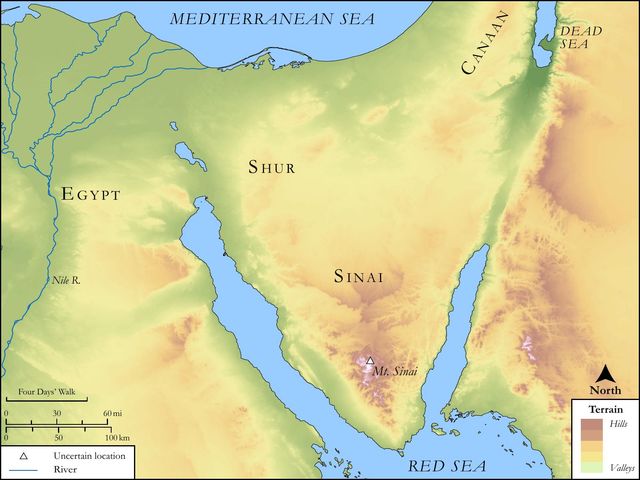
See on the biblical-era map

Study this verse
Public-domain commentary
Matthew Henry
From his Commentary on the Whole Bible. Henry comments on passages, not single verses — this entry covers Exodus 33:1–6. His two-level outline is real structure in the source text, so it is rendered as structure.
Here is, I. The message which God sent by Moses to the children of Israel, signifying the continuance of the displeasure against them, and the bad terms they yet stood upon with God. This he must let them know for their further mortification. 1. He applies to them a mortifying name, by giving them their just character - a stiff-necked people, Exo 33:3, Exo 33:5. "Go," says God to Moses, "go and tell them that they are so." He that knows them better than they know themselves says so of them. God would have brought them under the yoke of his law, and into the bond of his covenant, but their necks were too stiff to bow to them. God would have cured them of their corrupt and crooked dispositions, and have set them straight; but they were wilful and obstinate, and hated to be reformed, and would not have God to reign over them. Note, God judges of men by the temper of their minds. We know what man does; God knows what he is: we know what proceeds from man; God knows what is in man, and nothing is more displeasing to him than stiff-neckedness, as nothing in children is more offensive to their parents and teachers than stubbornness. 2. He tells them what they deserved, that he should come into the midst of them in a moment, and consume them, Exo 33:5. Had he dealt with them according to their sins, he had taken them away with a swift destruction. Note, Those whom God pardons must be made to know what their sin deserved, and how miserable they would have been if they had been unpardoned, that God's mercy may be the more magnified. 3. He bids them depart and go up hence to the land of Canaan, Exo 33:1. This mount Sinai, where they now were, was the place appointed for the setting up of God's tabernacle and solemn worship among them; this was not yet done, so that in bidding them depart hence God intimates that it should not be done - "Let them go forward as they are;" and so it was very expressive of God's displeasure. 4. He turns them over to Moses, as the people whom he had brought up out of the land of Egypt, and leaves it to him to lead them to Canaan. 5. Though he promises to make good his covenant with Abraham, in giving them Canaan, yet he denies them the extraordinary tokens of his presence, such as they had hitherto been blessed with, and leaves them under the common conduct of Moses their prince, and the common convoy of a guardian angel: "I will send an angel before thee, for thy protector, otherwise the evil angels would soon destroy thee; but I will not go up in the midst of thee, lest I consume thee" (Exo 33:2, Exo 33:3); not as if an angel would be more patient and compassionate than God, but their affronts given to an angel would not be so provoking as those given to the shechinah, or divine Majesty itself. Note, The greater the privileges we enjoy the greater is our danger if we do not improve them and live up to them. 6. He speaks as one that was at a loss what course to take with them. Justice said, "Cut them off, and consume them." Mercy said, "How shall I give thee up, Ephraim?" Hos 11:8. Well, says God, put off thy ornaments, that I may know what to do with thee; that is, "Put thyself into the posture of a penitent, that the dispute may be determined in thy favour, and mercy may rejoice against judgment," Exo 33:5. Note, Calls to repentance are plain indications of mercy designed. If the Lord were pleased to kill us, justice knows what to do with a stiff-necked people: but God has no pleasure in the death of those that die; let them return and repent, and then mercy, which otherwise is at a loss, knows what to do.
II.The people's melancholy reception of this message; it was evil tidings to them to hear that they should not have God's special presence with them, and therefore,
1.They mourned (Exo 33:4), mourned for their sin which had provoked God to withdraw from them, and mourned for this as the sorest punishment of their sin. When 3000 of them were at one time laid dead upon the spot by the Levites' sword, we do not find that they mourned for this (hoping that it would help to expiate the guilt); but when God denied them his favourable presence then they mourned and were in bitterness. Note, Of all the bitter fruits and consequences of sin, that which true penitents most lament, and dread most, is God's departure from them. God had promised that, notwithstanding their sin, he would give them the land flowing with milk and honey. but they could have small joy of that if they had not God's presence with them. Canaan itself would be no pleasant land without that; therefore, if they want that, they mourn.
2.In token of great shame and humiliation, those that were undressed did not put on their ornaments (Exo 33:4), and those that were dressed stripped themselves of their ornaments, by the mount; or, as some read it, at a distance from the mount (Exo 33:6), standing afar off like the publican, Luk 18:13. God bade them lay aside their ornaments (Exo 33:5), and they did so, both to show, in general, their deep mourning, and, in particular, to take a holy revenge upon themselves for giving their ear-rings to make the golden calf of. Those that would part with their ornaments for the maintenance of their sin could do no less than lay aside their ornaments in token of their sorrow and shame for it. When the Lord God calls to weeping and mourning we must comply with the call, and not only fast from pleasant bread (Dan 10:3), but lay aside our ornaments; even those that are decent enough at other times are unseasonably worn on days of humiliation or in times of public calamity, Isa 3:18.
Historical interpretation
Historical reception
1 surviving comment on this verse from the historical church.
Face to face: That is, in a most familiar manner. Though as we learn from this very chapter, Moses could not see the face of the Lord.
Continue studying Exodus 33:1 across the web’s major study libraries — every link below opens this exact verse, chapter, or book on the destination site.
Read & Compare
 BibleGatewayThis verse in more than 200 translations and 70 languages.
 Bible.comThe YouVersion reader — hundreds of translations, reading plans, and highlights.
 ESV.orgCrossway's official English Standard Version reader.
 NET BibleThe NET translation with 60,000+ translators' notes on every rendering decision.
 STEP BibleTyndale House's free study tool — original text, vocabulary, and scholarly resources.
 BibliaLogos Bible Software's free web reader.
 USCCBThe New American Bible (Revised Edition) with the U.S. bishops' study notes.
Commentaries
 BibleHub CommentariesDozens of classic commentaries on this verse, gathered on one page.
 StudyLightMore than 100 commentary sets — the largest collection on the web.
 BibleRefPlain-English commentary on what this verse means, verse by verse.
 Enduring WordDavid Guzik's free commentary on this chapter, widely used by Bible teachers.
 Bible Study ToolsVerse commentary alongside Greek and Hebrew study aids.
Original Language & Research
- BibleHub InterlinearThe verse word by word — original language, transliteration, and English.
- BibleHub LexiconEvery word's original-language definition and Strong's entry.
 Blue Letter BibleDeep-study tools — Strong's numbers, concordance, and word studies.
 SefariaThe Hebrew text with Rashi and centuries of Jewish commentary.
Sermons, Hymns & Audio


TrulyRandomVerse is not affiliated with these sites and doesn’t control their content. They’re linked because they’re genuinely useful.
Summary
Exodus 33:1 marks a pivotal moment in Israel's wilderness journey, occurring immediately after the catastrophic golden calf idolatry. In this verse, the LORD issues a direct and resolute command to Moses and the people to resume their trek towards the Promised Land. This divine directive powerfully reaffirms God's unyielding commitment to His ancient covenant promises, even in the face of His chosen nation's severe breach of faith and the profound strain placed upon their relationship.
Context
ShowHideLiterary Context
Exodus 33:1 directly follows the devastating events of Exodus chapter 32, where Israel's impatient idolatry with the golden calf provoked God's righteous anger and threatened the very existence of the nation. The LORD's initial declaration to consume the rebellious people and raise up a new nation through Moses (Exodus 32:10) was met with Moses' fervent and courageous intercession. This intercession culminated in God's decision to "relent from the disaster" (Exodus 32:14). Therefore, this verse signifies a crucial transition from divine judgment and intercession to a renewed, albeit complex and strained, divine directive for the journey to continue. The immediate backdrop is the profound tension regarding God's presence among them, explicitly addressed in Exodus 33:3, which underscores God's faithfulness to His promise despite the people's recent profound unfaithfulness.
Historical & Cultural Context
The Israelites, a nascent nation, had recently experienced a miraculous deliverance from centuries of oppressive bondage in Egypt, a land deeply immersed in polytheism and idol worship. Their journey through the wilderness was designed as a period of purification, covenant formation, and spiritual maturation, preparing them to enter the land promised to their patriarchs. The golden calf incident was not an isolated misstep but a profound regression to the very idolatry from which they had been liberated, reflecting a deep-seated cultural inclination towards tangible deities, a common practice in the ancient Near East. This act directly contravened the recently revealed commandments at Mount Sinai, particularly the foundational prohibition against idols (Exodus 20:4-6). The "land" itself was far more than a mere geographical destination; it represented the tangible fulfillment of an unconditional divine promise made to Abraham, Isaac, and Jacob, signifying God's unwavering faithfulness and the establishment of Israel as a distinct, holy nation under His direct rule. Their continued journey, despite their egregious rebellion, underscores the binding nature of God's sworn oath to His covenant partners.
Key Themes
ShowHideThis verse contributes significantly to several overarching themes within Exodus and the broader Pentateuch. Foremost is the theme of God's Unwavering Faithfulness to His Covenant Promises, particularly the Abrahamic Covenant. Despite Israel's profound failure, God's oath to give them the land remains immutable, highlighting His steadfast character. Another key theme is Divine Sovereignty and Purpose, demonstrating that God's ultimate plans for His people will prevail, guiding them towards their intended destiny regardless of immediate obstacles or human sin. The verse also implicitly introduces the Tension Between God's Presence and Human Sin, a theme that will be explicitly developed in subsequent verses (Exodus 33:3-5) and ultimately resolved through the establishment of the Tabernacle as a means for God to dwell among a sinful people. It also underscores the Consequences of Sin, as the people's rebellion, while not nullifying the promise, certainly complicated the journey and strained the relationship.
Exposition and Analysis
ShowHideKey Word Analysis
ShowHideThis word refers to (the) self-Existent or Eternal God, Jehovah, the Jewish national name of God. Its presence here emphasizes that the command comes from the sovereign, covenant-keeping God of Israel, whose character is immutable and whose promises are eternally binding. It underscores the divine authority behind the directive, highlighting that even after Israel's profound sin, the covenant God remains true to Himself and His word.
A primitive root meaning "to walk (literally or figuratively)," "to carry," "to come," or "to go." Here, it signifies "to set out" or "to journey." This imperative conveys the immediate and decisive action required of the Israelites. Despite their recent sin and the disruption it caused, God commands them to physically move forward, emphasizing that His ultimate plan for them to inherit the land remains in effect. It implies a continuation of the journey, not a pause or abandonment.
A primitive root meaning "to seven oneself," i.e., "to swear (as if by repeating a declaration seven times)." This powerful verb means "to swear an oath," often accompanied by a self-curse if the oath is broken. When God "swears," it underscores the absolute certainty, immutability, and unconditional nature of His promise. It highlights that the covenant with Abraham, Isaac, and Jacob was not merely a suggestion or a conditional agreement, but a solemn, binding commitment rooted in God's own character and integrity. This divine oath serves as the bedrock of Israel's hope, even in their unfaithfulness.
Verse Breakdown
ShowHide"And the LORD said unto Moses, Depart, [and] go up hence,"
This opening clause re-establishes divine initiative and authority immediately after the interlude of human sin and divine judgment. The direct command to Moses, "Depart, and go up hence," signifies God's unwavering purpose for Israel to continue their journey. Despite the severity of their rebellion, God's plan for them to inherit the land remains active, demonstrating His steadfastness and commitment to His covenantal promises, even when His people are undeserving. The phrase "go up hence" also carries a geographical connotation, as Canaan was geographically higher than the wilderness.
"thou and the people which thou hast brought up out of the land of Egypt,"
This phrase is significant as it subtly shifts the immediate responsibility for the people from God to Moses ("which thou hast brought up"). While God is the ultimate deliverer, this phrasing highlights Moses' leadership role and perhaps implies a temporary distancing of God's direct, intimate presence due to the people's sin (a theme further developed in subsequent verses). It also serves as a poignant reminder of their miraculous liberation from Egypt, emphasizing the depth of their ingratitude in the golden calf incident.
"unto the land which I sware unto Abraham, to Isaac, and to Jacob, saying,"
This clause explicitly states the destination and, more importantly, the divine basis for it. The "land" is not a random territory but the specific inheritance promised by God under solemn oath to the patriarchs. The repetition of the patriarchs' names underscores the historical continuity and the unconditional nature of this foundational covenant, revealing God's faithfulness across generations despite the present circumstances. It grounds the current command in an ancient, immutable divine commitment.
"Unto thy seed will I give it:"
This final declaration reaffirms the content of the ancient oath. The "seed" refers to the descendants of the patriarchs, meaning the current generation of Israelites. This phrase confirms that God's promise of the land is still valid for them, reinforcing the idea that God's ultimate plan for His people will prevail, even if their journey to it is fraught with challenges and consequences due to their sin. It is a powerful statement of divine grace and perseverance.
Literary Devices
ShowHideExodus 33:1 employs several significant literary devices that amplify its message. The most prominent is Command, as God directly issues an imperative to Moses and the people. The verbs "Depart" and "go up" are direct and forceful instructions, underscoring divine authority and the non-negotiable nature of God's will for Israel's continued journey. Furthermore, the verse utilizes rich Covenant Language through the explicit reference to God's solemn oath to Abraham, Isaac, and Jacob. This invocation of the patriarchal covenant serves as a powerful reminder of God's unwavering faithfulness and the foundational promises upon which Israel's identity and future are built. This covenantal grounding emphasizes that God's plan is rooted in His character, not human performance. The Repetition of the patriarchs' names (Abraham, Isaac, and Jacob) reinforces the historical depth and continuity of God's promise, grounding the present command in a long-standing divine commitment. This repetition also serves to highlight the enduring nature of God's word despite the transient failures of humanity.
Theological and Thematic Connections
ShowHideExodus 33:1 profoundly illustrates God's unwavering faithfulness to His covenant promises, even in the face of grievous human sin. Despite Israel's monumental act of idolatry with the golden calf, God does not revoke His oath to give them the Promised Land. This highlights a crucial theological principle: God's character and His word are immutable, providing a bedrock of hope that transcends human failure. While sin brings consequences and relational strain, it does not nullify God's ultimate redemptive plan. The verse also underscores the concept of divine sovereignty and purpose; God's plans for His people will ultimately prevail, guiding them towards their intended destiny regardless of immediate obstacles. It also introduces the tension between God's presence and His people's holiness, a theme that will be central to the subsequent chapters and the establishment of the Tabernacle, revealing God's intricate way of dwelling with His imperfect people.
Reflection and Application
ShowHideExodus 33:1 offers profound and enduring lessons for contemporary believers. It serves as a powerful reminder that even in our moments of greatest failure, rebellion, or perceived unworthiness, God's ultimate purposes for our lives and His promises to us do not evaporate. While our sin undoubtedly introduces consequences, strains our fellowship with Him, and may complicate our journey, God's faithfulness to His own character and His redemptive plan endures. This verse calls us to embrace a posture of continued obedience and forward movement, even when we feel undeserving or when the path ahead seems daunting due to past mistakes. It encourages us to trust in the immutability of God's word and His unwavering commitment to His covenant, knowing that His grace is sufficient to guide us through repentance and back into alignment with His divine will. Our journey of faith, much like Israel's, is marked by both divine guidance and human stumbling, yet God's call to "depart and go up" persists, inviting us to press on towards the spiritual inheritance He has prepared for us, confident in His enduring love and purpose.
Questions for Reflection
ShowHideFAQ
ShowHideWhy did God still command them to go to the Promised Land after the golden calf incident?
ShowHideGod commanded them to proceed to the Promised Land despite their egregious sin for several crucial reasons, primarily demonstrating His unwavering faithfulness to His covenant promises. The oath He "sware unto Abraham, to Isaac, and to Jacob" (Exodus 33:1) was unconditional and rooted in His own immutable character, not in Israel's performance. While their sin had severe consequences, including a temporary withdrawal of His direct, intimate presence in their midst (Exodus 33:3), God's ultimate plan for their inheritance of the land remained intact. This act underscores God's steadfastness and His commitment to His redemptive purposes, even when His people are unfaithful (2 Timothy 2:13). It also served as a testament to Moses' successful intercession, which averted immediate destruction and allowed the divine plan to continue, albeit with new stipulations regarding God's presence.
Christ-Centered Fulfillment
ShowHideExodus 33:1, with its profound emphasis on God's unwavering promise of a land despite Israel's profound unfaithfulness, finds its ultimate Christ-centered fulfillment in the person and redemptive work of Jesus Christ. The earthly Promised Land, a place of rest, inheritance, and God's dwelling, serves as a powerful foreshadowing of the spiritual rest and eternal inheritance offered to believers through Christ. While Israel's entry into Canaan was conditional upon their obedience and fraught with challenges due to their sin, the new covenant established through Jesus offers a spiritual inheritance that is secured not by our own imperfect obedience, but by His perfect obedience and atoning sacrifice. Jesus is the true "seed" of Abraham (Galatians 3:16) through whom all the promises of God find their definitive "Yes" and "Amen" (2 Corinthians 1:20). He leads His people not merely to a geographical land, but into the very presence of God, into a new creation and an eternal city with foundations, whose designer and builder is God (Hebrews 11:10). The tension in Exodus 33 regarding God's holy presence among a sinful people is perfectly resolved in Christ, who, as Immanuel, "God with us" (Matthew 1:23), perfectly bridges the chasm between a holy God and sinful humanity, making true fellowship possible and guaranteeing the ultimate fulfillment of God's promises to His redeemed people.