


Genesis 26:3
- גּוּרgursojournH1481V-Qal-Imp-2msVerb Qal Imperative 2nd Singular Masculine
- בָּאָרֶץba·'A·retzin the landH776Prep-b ¦ N-fsNoun Singular Feminine Absoluteבָּin theאָרֶץland
- הַזֹּאתha·Zot<the> thisH2063Art ¦ PrtParticle Demonstrativeהַ<the>זֹּאתthis
- וְאֶהְיֶהve·'eh·Yehso I may beH1961Conj-w ¦ V-Qal-ConjImperf-1csVerb Qal Conjunction+Imperfect 1st Singular common genderוְsoאֶהְיֶהI may be
- עִמְּךָ'i·me·Khawith youH5973Prep ¦ 2msPreposition Definiteעִמְּwithךָyou
- וַאֲבָרְכֶךָּva·'a·va·re·Khe·kaand I will bless youH1288Conj-w ¦ V-Piel-ConjImperf-1cs ¦ 2msVerb Piel Conjunction+Imperfect 1st Singular common genderוַandאֲבָרְכֶI will blessךָּyou
- כִּיkiforH3588PrtParticle Conditional
- לְךָle·Khato youPrep-l ¦ 2msSuffix Personal 2nd Singular Masculineלְtoךָyou
- וּלְזַרְעֲךָu·le·zar·'a·Khaand to your offspringH2233Conj-w ¦ Prep-l ¦ N-msc ¦ 2msNoun Singular Masculine Constructוּandלְtoזַרְעֲoffspringךָyour
- אֶתֵּן'e·TenI will giveH5414V-Qal-Imperf-1csVerb Qal Imperfect 1st Singular common gender
- אֶת'et<obj.>H853DirObjMParticle Object Indicator
- כָּלkolallH3605N-mscNoun Singular Masculine Construct
- הָאֲרָצֹתha·'a·ra·Tzotthe landsH776Art ¦ N-fpNoun Plural Feminine Absoluteהָtheאֲרָצֹתlands
- הָאֵלha·'El<the> theseH411Art ¦ PrtParticle Demonstrativeהָ<the>אֵלthese
- וַהֲקִמֹתִיva·ha·ki·mo·Tiand I will establishH6965Conj-w ¦ V-Hiphil-ConsecPerf-1csVerb Hiphil Consecutive Perfect 1st Singular common genderוַandהֲקִמֹתִיI will establish
- אֶת'et<obj.>H853DirObjMParticle Object Indicator
- הַשְּׁבֻעָהha·she·vu·'Ahthe oathH7621Art ¦ N-fsNoun Singular Feminine Absoluteהַtheשְּׁבֻעָהoath
- אֲשֶׁר'a·SherwhichH834RelParticle Relative
- נִשְׁבַּעְתִּיnish·Ba'·tiI sworeH7650V-Niphal-Perf-1csVerb Niphal Perfect 1st Singular common gender
- לְאַבְרָהָםle·'av·ra·Hamto AbrahamH85Prep-l ¦ N-proper-mNoun Proper MasculineלְtoאַבְרָהָםAbraham
- אָבִיךָ'a·Vi·khayour fatherH1N-msc ¦ 2msNoun Singular Masculine Constructאָבִיfatherךָyour
English is a literal word-by-word gloss of the Hebrew, not the KJV's wording. Why?
This is the original text the KJV's translators worked from — each Hebrew word with its own literal English meaning in this verse, prepared by scholars at Tyndale House, Cambridge. The KJV translates whole sentences, not word by word, so its wording differs: one Hebrew word can become several English words, and the KJV may choose “the LORD” where the gloss reads “Yahweh”. Both are faithful — they answer different questions. For the KJV's own rendering, switch to the KJV text.
Details
See on the biblical-era maps


Study this verse
Public-domain commentary
Matthew Henry
From his Commentary on the Whole Bible. Henry comments on passages, not single verses — this entry covers Genesis 26:1–5. His two-level outline is real structure in the source text, so it is rendered as structure.
Here, I. God tried Isaac by his providence. Isaac had been trained up in a believing dependence upon the divine grant of the land of Canaan to him and his heirs; yet now there is a famine in the land, Gen 26:1. What shall he think of the promise when the promised land will not find him bread? Is such a grant worth accepting, upon such terms, and after so long a time? Yes, Isaac will still cleave to the covenant; and the less valuable Canaan in itself seems to be the better he is taught to value it, 1. As a token of God's everlasting kindness to him; and, 2. As a type of heaven's everlasting blessedness. Note, The intrinsic worth of God's promises cannot be lessened in a believer's eye by any cross providences.
II.He directed him under this trial by his word.
Isaac finds himself straitened by the scarcity of provisions. Somewhere he must go for supply; it should seem, he set out for Egypt, whither his father went in the like strait, but he takes Gerar in his way, full of thoughts, no doubt, which way he had best steer his course, till God graciously appeared to him, and determined him, abundantly to his satisfaction.
1.God bade him stay where he was, and not go down into Egypt: Sojourn in this land, Gen 26:2, Gen 26:3. There was a famine in Jacob's days, and God bade him go down into Egypt (Gen 46:3, Gen 46:4), a famine in Isaac's days, and God bade him not to go down, a famine in Abraham's days, and God left him to his liberty, directing him neither way. This variety in the divine procedure (considering that Egypt was always a place of trial and exercise to God's people) some ground upon the different characters of these three patriarchs. Abraham was a man of very high attainments, and intimate communion with God; and to him all places and conditions were alike. Isaac was a very good man, but not cut out for hardship; therefore he is forbidden to go to Egypt. Jacob was inured to difficulties, strong and patient; and therefore he must go down into Egypt, that the trial of his faith might be to praise, and honour, and glory. Thus God proportions his people's trials to their strength.
2.He promised to be with him, and bless him, Gen 26:3. As we may go any where with comfort when God's blessing goes with us, so we may stay any where contentedly if that blessing rest upon us.
3.He renewed the covenant with him, which had so often been made with Abraham, repeating and ratifying the promises of the land of Canaan, a numerous issue, and the Messiah, Gen 26:3, Gen 26:4. Note, Those that must live by faith have need often to review, and repeat to themselves, the promises they are to live upon, especially when they are called to any instance of suffering or self-denial.
4.He recommended to him the good example of his father's obedience, as that which had preserved the entail of the covenant in his family (Gen 26:5): "Abraham obeyed my voice; do thou do so too, and the promise shall be sure to thee." Abraham's obedience is here celebrated, to his honour; for by it he obtained a good report both with God and men. A great variety of words is here used to express the divine will, to which Abraham was obedient (my voice, my charge, my commandments, my statutes, and my laws), which may intimate that Abraham's obedience was universal; he obeyed the original laws of nature, the revealed laws of divine worship, particularly that of circumcision, and all the extraordinary precepts God gave him, as that of quitting his country, and that (which some think is more especially referred to) of the offering up of his son, which Isaac himself had reason enough to remember. Note, Those only shall have the benefit and comfort of God's covenant with their godly parents that tread in the steps of their obedience.
Historical interpretation
Historical reception
1 surviving comment on this verse from the historical church.
Lest the good man think it was out of a wish for him to experience the hardship of famine that God gave this direction not allowing him to go into Egypt, God said, Don’t be distressed; don’t be concerned—stay here: “I will be with you.” You have the supplier of all good things, so entertain no concern. After all, I the Lord of all will be with you—and not only that, but “I will bless you.” That is to say, I will make you prosperous and provide you with blessing from myself. What could be more blessed than this good man in receiving such a wonderful promise from God, “I will be with you and bless you?” … But how will I bless you? “To you and your descendants I will give this land.” You think you are visiting these parts as a stranger and nomad; know that to you and your descendants all this land will be given. That you may have confidence, realize that “the oath I swore to your father Abraham” I will fulfill in you.Observe God’s considerateness; he did not simply say, “The covenant I made with your father, nor the promises I made”; instead, what? “The oath I swore.” “I assured him with an oath,” he is saying, “and I must put my oath into effect and bring it to fulfillment.” Do you see God’s loving kindness? His words are uttered not with a view to his own dignity but out of considerateness of our limitations.
Continue studying Genesis 26:3 across the web’s major study libraries — every link below opens this exact verse, chapter, or book on the destination site.
Read & Compare
 BibleGatewayThis verse in more than 200 translations and 70 languages.
 Bible.comThe YouVersion reader — hundreds of translations, reading plans, and highlights.
 ESV.orgCrossway's official English Standard Version reader.
 NET BibleThe NET translation with 60,000+ translators' notes on every rendering decision.
 STEP BibleTyndale House's free study tool — original text, vocabulary, and scholarly resources.
 BibliaLogos Bible Software's free web reader.
 USCCBThe New American Bible (Revised Edition) with the U.S. bishops' study notes.
Commentaries
 BibleHub CommentariesDozens of classic commentaries on this verse, gathered on one page.
 StudyLightMore than 100 commentary sets — the largest collection on the web.
 BibleRefPlain-English commentary on what this verse means, verse by verse.
 Enduring WordDavid Guzik's free commentary on this chapter, widely used by Bible teachers.
 Bible Study ToolsVerse commentary alongside Greek and Hebrew study aids.
Original Language & Research
- BibleHub InterlinearThe verse word by word — original language, transliteration, and English.
- BibleHub LexiconEvery word's original-language definition and Strong's entry.
 Blue Letter BibleDeep-study tools — Strong's numbers, concordance, and word studies.
 SefariaThe Hebrew text with Rashi and centuries of Jewish commentary.
Sermons, Hymns & Audio


TrulyRandomVerse is not affiliated with these sites and doesn’t control their content. They’re linked because they’re genuinely useful.
Summary
records a profound divine encounter where God reaffirms His covenant promises to Isaac, echoing the blessings and land inheritance first sworn to Abraham. This pivotal verse underscores God's unwavering faithfulness, His intimate presence with His chosen, and the enduring continuity of His redemptive plan across generations, ensuring the ultimate fulfillment of His solemn oath. It establishes Isaac's role as the next recipient of the covenant, even amidst challenging circumstances, highlighting divine provision and guidance.
Context
ShowHideLiterary Context
This verse is situated early in Genesis 26, a chapter primarily dedicated to Isaac's experiences, mirroring many of Abraham's earlier trials and blessings. The narrative opens with a severe famine, reminiscent of the one that drove Abraham to Egypt in a previous generation. God's direct command to Isaac in Genesis 26:2 to "Go not down into Egypt; dwell in the land which I shall tell thee of" sets the immediate stage for the promises of Genesis 26:3. This divine intervention prevents Isaac from repeating his father's mistake and emphasizes God's specific guidance for His covenant people to remain in the promised land, trusting in His provision despite scarcity. The subsequent verses detail Isaac's obedience, his deceptive act regarding Rebekah (again, echoing Abraham), and his eventual prosperity, all under the umbrella of God's promised presence and blessing.
Historical & Cultural Context
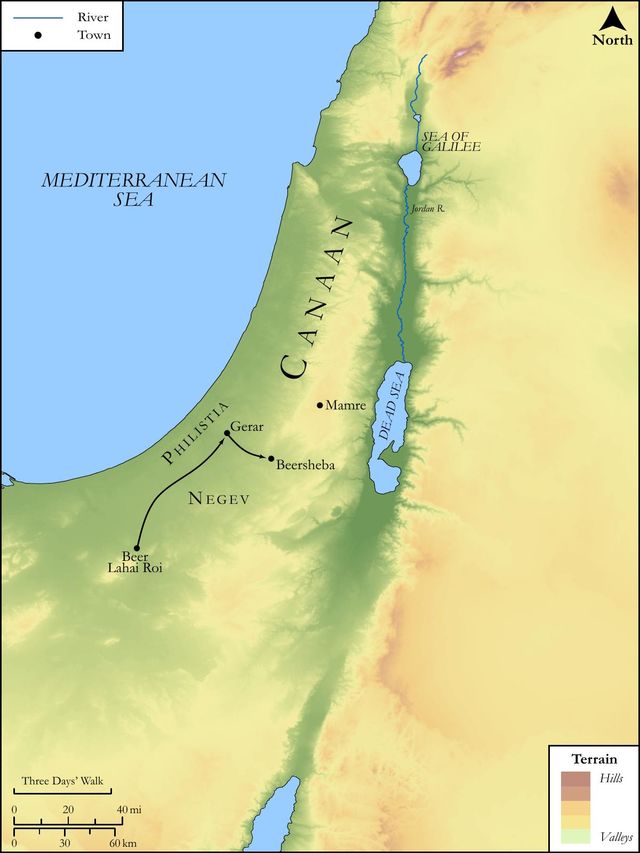
The setting is the land of Canaan, specifically Gerar, a Philistine territory, during a period of severe famine. In the ancient Near East, famine was a common and devastating threat, often prompting migrations to more fertile regions like Egypt, known for its reliable Nile-fed agriculture. The concept of "sojourning" (living as a temporary resident or alien) was common for nomadic pastoralists like Isaac, who moved with their flocks. However, God's command to "sojourn in this land" (Canaan) rather than migrate to Egypt carried significant theological weight. It underscored the unique, divinely designated status of Canaan as the promised land, a place where God's covenant promises would unfold. The cultural practice of solemn oaths, often accompanied by rituals, was deeply ingrained, making God's declaration, "I will perform the oath which I sware unto Abraham thy father," a profoundly binding and reassuring statement within that cultural framework.
Key Themes
ShowHideGenesis 26:3 powerfully contributes to several overarching themes in Genesis and the broader biblical narrative. The primary theme is Divine Faithfulness and Covenant Continuity, as God explicitly reaffirms the Abrahamic covenant to Isaac, demonstrating His unchanging character and commitment across generations. This verse also highlights God's Active Presence and Providence, with the promise "I will be with thee" assuring Isaac of divine companionship and protection even in hardship. The theme of The Land Promise is central, as God reiterates the gift of "all these countries" (Canaan) to Isaac and his "seed," emphasizing its significance as the physical inheritance for the covenant people. Finally, the Seed of Promise theme is advanced, pointing to the lineage through whom God's redemptive purposes would ultimately be fulfilled, a concept that finds its ultimate expression in the person of Christ.
Exposition and Analysis
ShowHideGenesis 26:3 records God's direct address to Isaac, echoing and reaffirming the covenant promises made to his father, Abraham. The verse is a rich tapestry of divine command, promise, and covenantal assurance.
Key Word Analysis
ShowHideThis word (H1481) means "to turn aside from the road (for a lodging or any other purpose), i.e., sojourn (as a guest); also to shrink, fear (as in a strange place); also to gather for hostility (as afraid)." In this context, it emphasizes Isaac's status as a temporary resident, a pilgrim in a land not yet fully possessed by his family. It implies a state of dependence on God for provision and protection, rather than establishing permanent roots or seeking security through his own means, especially in the face of famine.
This term (H1288) signifies "to kneel; by implication to bless God (as an act of adoration), and (vice-versa) man (as a benefit)." Here, it refers to God bestowing favor, prosperity, protection, and fruitfulness upon Isaac. The divine blessing is comprehensive, encompassing material well-being, spiritual favor, and the assurance of God's active involvement in Isaac's life, enabling him to thrive even in adverse conditions.
This noun (H7621) refers to "something sworn, i.e., an oath." It denotes a solemn, binding declaration, often invoked with divine witness, making it unbreakable. God's reference to the "oath which I sware unto Abraham thy father" highlights the absolute reliability and unconditional nature of His covenant promises. It underscores that His word is immutable and His commitment to His covenant is steadfast, providing an unshakeable foundation for Isaac's faith.
Verse Breakdown
ShowHide"Sojourn in this land"
This is God's direct, imperative command to Isaac. Despite the severe famine prompting thoughts of migration to Egypt, God explicitly instructs Isaac to remain within the land of Canaan. This command is a test of Isaac's obedience and trust, demanding that he rely on God's supernatural provision rather than human ingenuity or external solutions. It signifies God's desire for His covenant people to abide within the sphere of His specific promises and presence.
"and I will be with thee, and will bless thee"
This foundational promise assures Isaac of God's constant, intimate companionship and protective care. "I will be with thee" is a recurring covenantal formula throughout Scripture, signifying God's personal relationship with His chosen and His commitment to never abandon them. This divine presence is the ultimate guarantee of the subsequent blessing, which encompasses prosperity, protection, fruitfulness, and overall well-being, enabling Isaac to flourish even amidst scarcity.
"for unto thee, and unto thy seed, I will give all these countries"
Here, God explicitly reiterates the central land promise of the Abrahamic covenant. "All these countries" refers to the entire geographical expanse of Canaan. This promise is not just for Isaac personally but extends definitively to his "seed" (descendants), emphasizing the generational nature of the covenant. This land serves as the tangible inheritance and the future homeland for the nation that will descend from Isaac.
"and I will perform the oath which I sware unto Abraham thy father"
This powerful declaration underscores God's absolute reliability and the unconditional nature of His covenant. God's promises are not contingent upon human merit or performance but are founded on His unchanging character and solemn, sworn oath. By invoking the oath made to Abraham, God assures Isaac that the covenant is a divinely guaranteed reality, not subject to human failure or external circumstances. "Perform" highlights God's active commitment to bring His word to fruition across generations.
Literary Devices
ShowHideThe verse employs several significant literary devices. Repetition is prominent, as God reiterates promises first made to Abraham, emphasizing the continuity and unchanging nature of His covenant. This serves as a powerful reassurance to Isaac and to the reader. The phrase "I will be with thee" functions as a Covenant Formula, a concise expression of God's commitment to His people, signifying His protective presence and active involvement. The entire declaration is an act of Divine Speech, highlighting God's direct, personal communication with His chosen patriarch, underscoring His sovereignty and intimate relationship with His people. The reference to the "oath" serves as a form of Legal Language, lending gravity and irrevocability to the divine promises, appealing to a culturally understood concept of binding agreements. Finally, the promise of "all these countries" and "thy seed" involves Symbolism, where the physical land and descendants represent the broader scope of God's blessing and the fulfillment of His redemptive plan for a chosen people.
Theological and Thematic Connections
ShowHideGenesis 26:3 is a profound testament to God's immutable faithfulness and the enduring nature of His covenant promises. It demonstrates that God's redemptive plan is generational, extending His blessings and commitments from Abraham to Isaac, and by extension, to all who would follow in the lineage of faith. The promise of God's presence ("I will be with thee") is a foundational theological truth, highlighting His immanence and active involvement in the lives of His people, providing comfort and assurance. The reiteration of the land promise underscores its significance not merely as a geographical inheritance but as a tangible sign of God's blessing and a foreshadowing of the ultimate spiritual inheritance in Christ. This verse reinforces the concept of divine sovereignty, as God directs Isaac's path and ensures the fulfillment of His sworn word regardless of external circumstances like famine.
Reflection and Application
ShowHideGenesis 26:3 offers profound encouragement and practical guidance for contemporary believers. Isaac's situation, facing famine yet commanded to remain in the land, challenges us to trust God's specific instructions, even when they seem counter-intuitive or demand a step of faith beyond our comfort zone. It reminds us that God's provision is not dependent on our circumstances or our own efforts, but on His sovereign power and unwavering faithfulness to His promises. Like Isaac, we are called to live as pilgrims, trusting in God's presence ("I will be with thee") as our ultimate security and source of blessing, knowing that He is actively at work to "perform" His word in our lives. This verse fosters a deep confidence that God's covenant with His people is generational and enduring, providing hope and a firm foundation for our faith even in times of uncertainty or hardship. It encourages us to prioritize obedience to God's revealed will, believing that His way, though sometimes challenging, always leads to His intended blessing and fulfillment.
Questions for Reflection
ShowHideFAQ
ShowHideWhy did God instruct Isaac to "sojourn in this land" during a famine instead of migrating?
ShowHideGod's instruction for Isaac to remain in Canaan during the famine was a crucial test of faith and an act of divine preservation, underscoring that God's provision was not dependent on Isaac's efforts to find sustenance elsewhere, but on His own sovereign power and faithfulness to the covenant. By staying, Isaac demonstrated trust in God's ability to sustain him in the promised land, reinforcing the spiritual significance of remaining within the sphere of God's direct command and blessing. This also prevented Isaac from potentially compromising his covenant identity or becoming entangled in foreign customs, as Abraham had experienced in Egypt.
How does God's reaffirmation of the oath to Isaac demonstrate His character?
ShowHideGod's reaffirmation of the oath to Isaac profoundly demonstrates His immutable faithfulness, trustworthiness, and the unconditional nature of His covenant. It showcases that God's promises are not fleeting or dependent on human merit, but are grounded in His unchanging character and divine integrity. This act reinforces His reliability as a covenant-keeping God, providing a firm and unshakeable foundation for the faith of Isaac and all subsequent generations who would inherit the promises. It underscores that God is true to His word, even across generations, and that His purposes will be accomplished.
Christ-Centered Fulfillment
ShowHideGenesis 26:3 finds its ultimate Christ-centered fulfillment primarily through the promise of "thy seed" and the universal extension of blessing. While initially referring to Isaac's physical descendants and the nation of Israel, the New Testament, particularly Paul's exposition in Galatians, clarifies that the singular "Seed" to whom the promises were ultimately directed is Christ. Through Jesus, the spiritual blessings of the Abrahamic covenant—God's presence, His comprehensive blessing, and the inheritance of a spiritual kingdom—are extended not only to Israel but to all nations, fulfilling the original promise that "in thy seed shall all the nations of the earth be blessed" (Genesis 22:18). Christ is the true heir of the promise, and through faith in Him, believers from every tribe and tongue become spiritual heirs, sharing in the divine promises and inheriting the eternal "land" of God's presence and kingdom (Hebrews 11:8-10). Thus, the covenant promises to Abraham and Isaac are fully realized and universalized in the person and redemptive work of Jesus Christ, who embodies God's faithfulness and brings ultimate blessing.