


Genesis 26:2
- וַיֵּרָאvai·ye·Ra'and he appearedH7200Conj-w ¦ V-Niphal-ConsecImperf-3msVerb Niphal Consecutive Imperfect 3rd Singular Masculineוַandיֵּרָאhe appeared
- אֵלָיו'e·Lavto himH413Prep ¦ 3msPreposition Definiteאֵלָיtoוhim
- יְהוָהYah·wehYahwehH3068N-properNoun Proper Title
- וַיֹּאמֶרvai·Yo·merand he saidH559Conj-w ¦ V-Qal-ConsecImperf-3msVerb Qal Consecutive Imperfect 3rd Singular Masculineוַandיֹּאמֶרhe said
- אַל'almay notH408NegParticle Negative
- תֵּרֵדte·Redyou go downH3381V-Qal-Imperf-2msVerb Qal Imperfect 2nd Singular Masculine
- מִצְרָיְמָהmitz·Ra·ye·mahEgypt towardsH4714N-proper ¦ SfxNoun Proper LocationמִצְרָיְמָEgyptהtowards
- שְׁכֹןshe·KhondwellH7931V-Qal-Imp-2msVerb Qal Imperative 2nd Singular Masculine
- בָּאָרֶץba·'A·retzin the landH776Prep-b ¦ N-fsNoun Singular Feminine Absoluteבָּin theאָרֶץland
- אֲשֶׁר'a·SherwhichH834RelParticle Relative
- אֹמַר'o·MarI will sayH559V-Qal-Imperf-1csVerb Qal Imperfect 1st Singular common gender
- אֵלֶיךָ'e·Lei·khato youH413Prep ¦ 2msPreposition Definiteאֵלֶיtoךָyou
English is a literal word-by-word gloss of the Hebrew, not the KJV's wording. Why?
This is the original text the KJV's translators worked from — each Hebrew word with its own literal English meaning in this verse, prepared by scholars at Tyndale House, Cambridge. The KJV translates whole sentences, not word by word, so its wording differs: one Hebrew word can become several English words, and the KJV may choose “the LORD” where the gloss reads “Yahweh”. Both are faithful — they answer different questions. For the KJV's own rendering, switch to the KJV text.
Details
See on the biblical-era maps


Study this verse
Public-domain commentary
Matthew Henry
From his Commentary on the Whole Bible. Henry comments on passages, not single verses — this entry covers Genesis 26:1–5. His two-level outline is real structure in the source text, so it is rendered as structure.
Here, I. God tried Isaac by his providence. Isaac had been trained up in a believing dependence upon the divine grant of the land of Canaan to him and his heirs; yet now there is a famine in the land, Gen 26:1. What shall he think of the promise when the promised land will not find him bread? Is such a grant worth accepting, upon such terms, and after so long a time? Yes, Isaac will still cleave to the covenant; and the less valuable Canaan in itself seems to be the better he is taught to value it, 1. As a token of God's everlasting kindness to him; and, 2. As a type of heaven's everlasting blessedness. Note, The intrinsic worth of God's promises cannot be lessened in a believer's eye by any cross providences.
II.He directed him under this trial by his word.
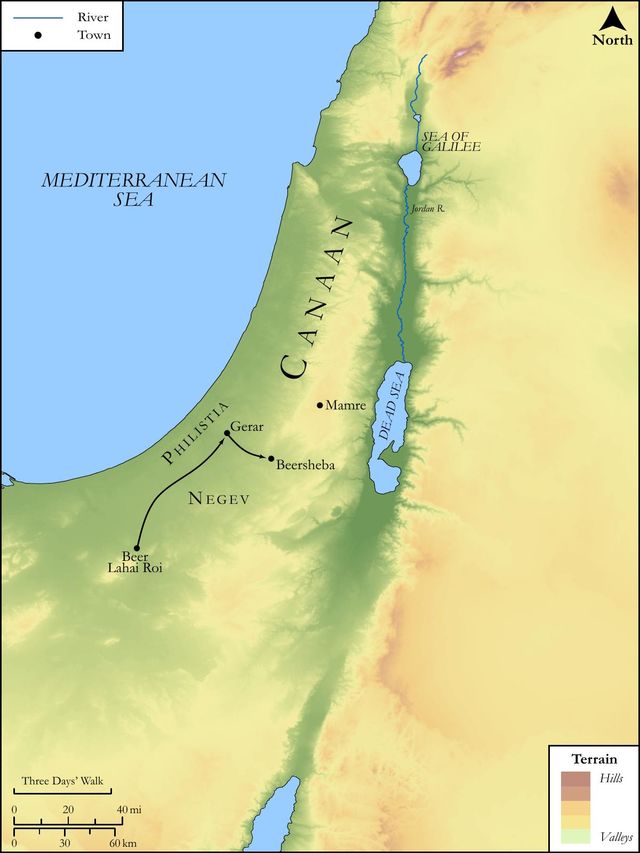
Isaac finds himself straitened by the scarcity of provisions. Somewhere he must go for supply; it should seem, he set out for Egypt, whither his father went in the like strait, but he takes Gerar in his way, full of thoughts, no doubt, which way he had best steer his course, till God graciously appeared to him, and determined him, abundantly to his satisfaction.
1.God bade him stay where he was, and not go down into Egypt: Sojourn in this land, Gen 26:2, Gen 26:3. There was a famine in Jacob's days, and God bade him go down into Egypt (Gen 46:3, Gen 46:4), a famine in Isaac's days, and God bade him not to go down, a famine in Abraham's days, and God left him to his liberty, directing him neither way. This variety in the divine procedure (considering that Egypt was always a place of trial and exercise to God's people) some ground upon the different characters of these three patriarchs. Abraham was a man of very high attainments, and intimate communion with God; and to him all places and conditions were alike. Isaac was a very good man, but not cut out for hardship; therefore he is forbidden to go to Egypt. Jacob was inured to difficulties, strong and patient; and therefore he must go down into Egypt, that the trial of his faith might be to praise, and honour, and glory. Thus God proportions his people's trials to their strength.
2.He promised to be with him, and bless him, Gen 26:3. As we may go any where with comfort when God's blessing goes with us, so we may stay any where contentedly if that blessing rest upon us.
3.He renewed the covenant with him, which had so often been made with Abraham, repeating and ratifying the promises of the land of Canaan, a numerous issue, and the Messiah, Gen 26:3, Gen 26:4. Note, Those that must live by faith have need often to review, and repeat to themselves, the promises they are to live upon, especially when they are called to any instance of suffering or self-denial.
4.He recommended to him the good example of his father's obedience, as that which had preserved the entail of the covenant in his family (Gen 26:5): "Abraham obeyed my voice; do thou do so too, and the promise shall be sure to thee." Abraham's obedience is here celebrated, to his honour; for by it he obtained a good report both with God and men. A great variety of words is here used to express the divine will, to which Abraham was obedient (my voice, my charge, my commandments, my statutes, and my laws), which may intimate that Abraham's obedience was universal; he obeyed the original laws of nature, the revealed laws of divine worship, particularly that of circumcision, and all the extraordinary precepts God gave him, as that of quitting his country, and that (which some think is more especially referred to) of the offering up of his son, which Isaac himself had reason enough to remember. Note, Those only shall have the benefit and comfort of God's covenant with their godly parents that tread in the steps of their obedience.
Historical interpretation
Historical reception
1 surviving comment on this verse from the historical church.
Now it is likely that Isaac also made for there on account of his intention to continue on from there into Egypt; for proof of this, listen to what Scripture says: “God appeared to him and said, ‘Don’t go down into Egypt.’ ” I do not want you to make that long journey, he is saying, but to stay here. Instead of allowing you to experience that hardship, I am going to put into effect the promise made to your father; the promises to him will be fulfilled in you, and you will experience the pledges to him. “Don’t go down into Egypt but dwell in the land that I show you, and be a sojourner in that land.”
Continue studying Genesis 26:2 across the web’s major study libraries — every link below opens this exact verse, chapter, or book on the destination site.
Read & Compare
 BibleGatewayThis verse in more than 200 translations and 70 languages.
 Bible.comThe YouVersion reader — hundreds of translations, reading plans, and highlights.
 ESV.orgCrossway's official English Standard Version reader.
 NET BibleThe NET translation with 60,000+ translators' notes on every rendering decision.
 STEP BibleTyndale House's free study tool — original text, vocabulary, and scholarly resources.
 BibliaLogos Bible Software's free web reader.
 USCCBThe New American Bible (Revised Edition) with the U.S. bishops' study notes.
Commentaries
 BibleHub CommentariesDozens of classic commentaries on this verse, gathered on one page.
 StudyLightMore than 100 commentary sets — the largest collection on the web.
 BibleRefPlain-English commentary on what this verse means, verse by verse.
 Enduring WordDavid Guzik's free commentary on this chapter, widely used by Bible teachers.
 Bible Study ToolsVerse commentary alongside Greek and Hebrew study aids.
Original Language & Research
- BibleHub InterlinearThe verse word by word — original language, transliteration, and English.
- BibleHub LexiconEvery word's original-language definition and Strong's entry.
 Blue Letter BibleDeep-study tools — Strong's numbers, concordance, and word studies.
 SefariaThe Hebrew text with Rashi and centuries of Jewish commentary.
Sermons, Hymns & Audio


TrulyRandomVerse is not affiliated with these sites and doesn’t control their content. They’re linked because they’re genuinely useful.
Summary
During a severe famine that threatened the very survival of his family, the LORD directly appeared to Isaac. In this divine encounter, God issued a clear and authoritative command: Isaac was not to seek refuge in Egypt, a common recourse during times of scarcity, but rather to remain in the specific land that God would designate. This direct instruction served as a profound test of Isaac's faith and obedience, simultaneously reaffirming God's sovereign control over the lives of His covenant people and His unwavering commitment to the promises made to Abraham, even amidst challenging and uncertain circumstances.
Context
ShowHideLiterary Context
Genesis 26:2 is strategically placed within the narrative of Isaac, the second patriarch, immediately following the introduction of a severe famine in the land of Gerar (Genesis 26:1). This mirrors a similar crisis faced by Isaac's father, Abraham, who also encountered famine and subsequently migrated to Egypt (Genesis 12:10). The divine appearance to Isaac here is profoundly significant, as it marks one of the few direct, personal encounters Isaac has with God in the Genesis narrative, distinguishing His specific guidance for Isaac from Abraham's previous path. It sets the stage for the reaffirmation of the Abrahamic covenant specifically through Isaac, ensuring the continuation of the lineage and the fulfillment of the promises within the divinely appointed land. The subsequent verses detail Isaac's obedience and the blessings that follow, contrasting with the complications that arose from Abraham's sojourn in Egypt.
Historical & Cultural Context
Famines were a recurring and devastating reality in the ancient Near East, often caused by drought or agricultural failure. Egypt, with its fertile Nile Delta, served as a traditional granary and a common refuge for those facing starvation in Canaan, as evidenced by Abraham's journey and later by Jacob's family in the time of Joseph (Genesis 42). The command to "Go not down into Egypt" thus challenges a deeply ingrained cultural and practical response to famine. Furthermore, the patriarchal lifestyle was semi-nomadic, moving with flocks and herds, but always with an awareness of the "land" promised by God. Dwelling in a specific land was not merely a matter of survival but intrinsically linked to the covenant promises of offspring and territory (Genesis 12:7). God's directive ensured Isaac remained within the sphere of His direct provision and protection, distinct from the pagan influences of Egypt.
Key Themes
ShowHideThis verse contributes to several overarching themes in Genesis and the broader biblical narrative. Firstly, it highlights the theme of Divine Guidance and Sovereignty, demonstrating God's active and personal involvement in the lives of His chosen people, directing their paths even in crisis. Secondly, it underscores the theme of Covenant Faithfulness, as God reiterates and reinforces His land promise to Isaac, ensuring the covenant line remains within the promised territory, crucial for the future nation of Israel. Thirdly, it presents a clear test of Faith and Obedience, calling Isaac to trust God's unconventional command over human logic or conventional solutions. Finally, it implicitly touches upon the theme of Distinction and Purity, as God's prohibition against going to Egypt may have also served to protect Isaac and his household from the moral and spiritual corruption prevalent in Egyptian society, preserving the unique identity of the covenant people. These themes are foundational to understanding God's relationship with His people throughout salvation history, from Abraham's call in Genesis 12:1-3 to the giving of the Law and the establishment of Israel as a distinct nation.
Exposition and Analysis
ShowHideKey Word Analysis
ShowHideThis is the personal, covenant name of God, often transliterated as Yahweh. It emphasizes God's self-existence, eternal nature, and His unwavering faithfulness to His promises. The use of "LORD" here signifies that the one appearing to Isaac is not merely a divine messenger or an abstract force, but the very God who made the covenant with Abraham, establishing a personal and authoritative relationship with Isaac.
Meaning "to see" or "to be seen." In the Niphal stem (as here, vayyera), it denotes a direct, often visual, manifestation of God (a theophany). This was not a dream or an internal prompting, but a tangible and undeniable encounter, underscoring the clarity, authority, and personal nature of God's communication to Isaac. It implies a divine initiative to make Himself known and to deliver a specific command.
Meaning "to reside," "to permanently stay," or "to settle." This word carries significant theological weight, often used in relation to God's dwelling among His people (e.g., the Tabernacle, the Temple). Here, it is a command for Isaac to establish a lasting presence in the land God designates. It implies stability, security, and a rootedness in God's promised territory, directly contrasting with the temporary, opportunistic sojourn in Egypt.
Verse Breakdown
ShowHide"And the LORD appeared unto him,"
This opening clause immediately establishes the divine initiative and the extraordinary nature of the encounter. The use of "LORD" (Yahweh) emphasizes the covenant God, the same God who called Abraham. The verb "appeared" (Hebrew: vayyera) signifies a direct, personal, and often visible manifestation of God, a theophany. This was not a dream or a vision, but a clear, undeniable encounter, leaving no doubt in Isaac's mind about the source or authority of the subsequent message. It highlights God's active involvement and personal interest in Isaac's life.
"and said, Go not down into Egypt;"
Following the divine appearance, God issues a direct and unambiguous command. The phrase "Go not down into Egypt" is a prohibition, directly counter to the common, logical human response to famine in the ancient Near East. Egypt, with its fertile Nile Delta, was the traditional granary of the region. This command tests Isaac's faith, requiring him to forgo a seemingly practical solution in favor of divine instruction. It also serves to protect Isaac from the potential moral and spiritual compromises associated with Egyptian culture, as seen in Abraham's previous experience (Genesis 12:10-20).
"dwell in the land which I shall tell thee of:"
This second part of the divine directive is a positive command, specifying where Isaac should be. The instruction to "dwell in the land" is crucial, as the land was a central component of the Abrahamic covenant (Genesis 12:7; Genesis 15:18). God's promise to "tell thee of" the specific land implies ongoing guidance and a dynamic relationship. This command reinforces God's commitment to fulfilling His promises through Isaac within the divinely appointed territory, emphasizing reliance on God's provision rather than human ingenuity or external resources. It underscores the importance of remaining within the sphere of God's direct blessing and covenant faithfulness.
Literary Devices
ShowHideThe verse effectively employs several literary devices to convey its profound message. Theophany is central, as "the LORD appeared unto him" signifies a direct, personal manifestation of God, lending immense authority and weight to the ensuing command. This divine appearance sets a solemn and significant tone for the interaction. There is a clear Command and Prohibition, with God explicitly stating "Go not down into Egypt" (prohibition) and "dwell in the land which I shall tell thee of" (command). This directness underscores God's sovereignty and Isaac's required obedience. The narrative also uses Contrast between Egypt and "the land which I shall tell thee of." Egypt represents worldly reliance, human solutions, and potential moral compromise, while the unnamed "land" symbolizes divine provision, covenant faithfulness, and the sphere of God's blessing. This contrast highlights the choice between trusting human wisdom and submitting to divine wisdom. Finally, there is subtle Foreshadowing, as Isaac's obedience in staying in the land, despite famine, foreshadows God's continued faithfulness and the eventual fulfillment of the land promise to his descendants, leading to the establishment of Israel.
Theological and Thematic Connections
ShowHideThis divine encounter with Isaac profoundly illustrates God's active and personal engagement with His covenant people, guiding them through specific challenges and ensuring the preservation of His promises. It underscores that God's guidance is not always intuitive or comfortable, often calling for radical trust and obedience against human reasoning or natural inclination, especially in times of crisis. The command to remain in the land, despite famine, is a direct act of covenant preservation, ensuring the patriarch remains within the sphere of God's specific promises for the future of His people, thereby demonstrating God's sovereignty over natural circumstances and His power to provide and sustain.
Reflection and Application
ShowHideFor believers today, Genesis 26:2 offers profound lessons on trusting God's unconventional guidance, especially during adversity. Just as Isaac was called to obey God's word despite the severe famine, we are encouraged to trust God's wisdom above our own logic, popular opinion, or the seemingly "safer" worldly solutions. Our true security and lasting blessing are found not in seeking refuge in what the world offers, but in remaining within God's revealed will and relying on His unfailing promises, even when circumstances seem dire. This narrative reminds us that God's presence and provision are not limited by outward circumstances, and He personally cares for His children, guiding them through life's challenges. It calls us to cultivate a posture of radical dependence on God, believing that His way is always the best way, leading to ultimate flourishing and the fulfillment of His purposes in our lives.
Questions for Reflection
ShowHideFAQ
ShowHideWhy did God forbid Isaac from going to Egypt when Abraham had gone there during a famine?
ShowHideWhile Abraham did go to Egypt during a famine (Genesis 12:10), his visit led to significant complications, including his deception regarding Sarah and Pharaoh's subsequent rebuke (Genesis 12:11-20). God's specific command to Isaac not to go to Egypt demonstrates His direct, tailored guidance for each patriarch, learning from past experiences. This prohibition likely served multiple purposes: to prevent similar moral compromises, to protect Isaac and his household from the corrupting influences of Egyptian polytheism and culture, and crucially, to reinforce His covenant promise that Isaac and his descendants should remain rooted in the land God had chosen for them. It highlights that God's will is precise and may differ even for those in seemingly similar circumstances, always with the ultimate goal of preserving His covenant people and promises.
What does "the LORD appeared unto him" signify about God's communication?
ShowHideThe Hebrew phrase vayyera elav (וַיֵּרָא אֵלָיו), translated as "the LORD appeared unto him," indicates a direct, personal, and often visible manifestation of God, known as a theophany. This was not a mere dream, an inner prompting, or a prophetic vision, but a tangible and undeniable encounter. It signifies the clarity, authority, and undeniable nature of the divine instruction given to Isaac, leaving no doubt about the source or the command. Such direct appearances underscore God's profound personal engagement with His chosen individuals, emphasizing the critical importance and absolute truth of the message conveyed. It demonstrates God's initiative in revealing Himself and His will to His people.
Christ-Centered Fulfillment
ShowHideGenesis 26:2 profoundly foreshadows Christ, revealing aspects of God's redemptive plan that culminate in Him. God's direct appearance and specific guidance to Isaac, preserving him within the promised land despite famine, points to Christ as the ultimate embodiment of God's personal presence and perfect guidance for His people. Just as Isaac's obedience to remain in the land was an act of faith in God's provision, so too is our faith in Christ the means by which we enter into and remain in the true "land" of God's promises—His eternal kingdom. Christ, through His perfect obedience to the Father's will (Philippians 2:8), fulfills the covenant promises and provides ultimate sustenance, even in the "famines" of life (John 6:35). He is the true "dwelling place" for all who believe (John 14:23), ensuring His people are preserved and brought into the eternal inheritance, not through worldly refuge but through divine direction found in Him. He is the Way, the Truth, and the Life (John 14:6), leading us to the Father and to the true promised land, a city with foundations whose architect and builder is God (Hebrews 11:10).