


Genesis 12:7
Bible text: King James Version (1769 Blayney text) · Public domain
Bible text: King James Version with Strong's numbers · Public domain
Bible text: Berean Standard Bible · Public domain
Bible text: American Standard Version (1901) · Public domain
Bible text: World English Bible, Messianic edition · Public domain
Bible text: Geneva Bible (1599) · Public domain
Bible text: Young's Literal Translation · Public domain
- וַיֵּרָאvai·ye·Ra'and he appearedH7200Conj-w ¦ V-Niphal-ConsecImperf-3msVerb Niphal Consecutive Imperfect 3rd Singular Masculineוַandיֵּרָאhe appeared
- יְהוָהYah·wehYahwehH3068N-properNoun Proper Title
- אֶל'eltoH413PrepPreposition
- אַבְרָם'av·RamAbramH87N-proper-mNoun Proper Masculine
- וַיֹּאמֶרvai·Yo·merand he saidH559Conj-w ¦ V-Qal-ConsecImperf-3msVerb Qal Consecutive Imperfect 3rd Singular Masculineוַandיֹּאמֶרhe said
- לְזַרְעֲךָle·Zar·'a·khato your offspringH2233Prep-l ¦ N-msc ¦ 2msNoun Singular Masculine Constructלְtoזַרְעֲoffspringךָyour
- אֶתֵּן'e·TenI will giveH5414V-Qal-Imperf-1csVerb Qal Imperfect 1st Singular common gender
- אֶת'et<obj.>H853DirObjMParticle Object Indicator
- הָאָרֶץha·'A·retzthe landH776Art ¦ N-fsNoun Singular Feminine Absoluteהָtheאָרֶץland
- הַזֹּאתha·Zot<the> thisH2063Art ¦ PrtParticle Demonstrativeהַ<the>זֹּאתthis
- וַיִּבֶןvai·Yi·venand he builtH1129Conj-w ¦ V-Qal-ConsecImperf-3msVerb Qal Consecutive Imperfect 3rd Singular Masculineוַandיִּבֶןhe built
- שָׁםshamthereH8033AdvAdverb
- מִזְבֵּחַmiz·Be·achan altarH4196N-msNoun Singular Masculine Absolute
- לַיהוָהla·Yah·wehto YahwehH3068Prep-l ¦ N-properNoun Proper TitleלַtoיהוָהYahweh
- הַנִּרְאֶהha·nir·'Ehwho had appearedH7200Art ¦ V-Niphal-Prtcpl-msVerb Niphal Participle Singular Masculine Absoluteהַwhoנִּרְאֶהhad appeared
- אֵלָיו'e·Lavto himH413Prep ¦ 3msPreposition Definiteאֵלָיtoוhim
English is a literal word-by-word gloss of the Hebrew, not the KJV's wording. Why?
This is the original text the KJV's translators worked from — each Hebrew word with its own literal English meaning in this verse, prepared by scholars at Tyndale House, Cambridge. The KJV translates whole sentences, not word by word, so its wording differs: one Hebrew word can become several English words, and the KJV may choose “the LORD” where the gloss reads “Yahweh”. Both are faithful — they answer different questions. For the KJV's own rendering, switch to the KJV text.
Details
See on the biblical-era maps


Study this verse
Public-domain commentary
Matthew Henry
From his Commentary on the Whole Bible. Henry comments on passages, not single verses — this entry covers Genesis 12:6–9. His three-level outline is real structure in the source text, so it is rendered as structure.
One would have expected that Abram having had such an extraordinary call to Canaan some great event should have followed upon his arrival there, that he would have been introduced with all possible marks of honour and respect, and that the kings of Canaan should immediately have surrendered their crowns to him, and done him homage. But no; he comes not with observation, little notice is taken of him, for still God will have him to live by faith, and to look upon Canaan, even when he was in it, as a land of promise; therefore observe here,
I.How little comfort he had in the land he came to; for,
1.He had it not to himself: The Canaanite was then in the land. He found the country peopled and possessed by Canaanites, who were likely to be but bad neighbours and worse landlords; and, for aught that appears, he could not have ground to pitch his tent on but by their permission. Thus the accursed Canaanites seemed to be in better circumstances than blessed Abram. Note, The children of this world have commonly more of it than God's children.
2.He had not a settlement in it. He passed through the land, Gen 12:6. He removed to a mountain, Gen 12:8. He journeyed, going on still, Gen 12:9. Observe here,
(1.)Sometimes it is the lot of good men to be unsettled, and obliged often to remove their habitation. Holy David had his wanderings, his flittings, Psa 56:8.
(2.)Our removes in this world are often into various conditions. Abram sojourned, first in a plain (Gen 12:6), then in a mountain, Gen 12:8. God has set the one over-against the other.
(3.)All good people must look upon themselves as strangers and sojourners in this world, and by faith sit loose to it as a strange country. So Abram did, Heb 11:8-14.
(4.)While we are here in this present state, we must be journeying, and going on still from strength to strength, as having not yet attained.
II.How much comfort he had in the God he followed; when he could have little satisfaction in converse with the Canaanites whom he found there, he had abundance of pleasure in communion with that God who brought him thither, and did not leave him. Communion with God is kept up by the word and by prayer, and by these, according to the methods of that dispensation, Abram's communion with God was kept up in the land of his pilgrimage.
1.God appeared to Abram, probably in a vision, and spoke to him good words and comfortable words: Unto thy seed will I give this land. Note,
(1.)No place nor condition of life can shut us out from the comfort of God's gracious visits. Abram is a sojourner, unsettled among Canaanites; and yet here also he meets with him that lives and sees him. Enemies may part us and our tents, us and our altars, but not us and our God. Nay,
(2.)With respect to those that faithfully follow God in a way of duty, though he lead them from their friends, he will himself make up that loss by his gracious appearances to them.
(3.)God's promises are sure and satisfying to all those who conscientiously observe and obey his precepts; and those who, in compliance with God's call, leave or lose any thing that is dear to them, shall be sure of something else abundantly better in lieu of it. Abram had left the land of his nativity: "Well," says God, "I will give thee this land," Mat 19:29.
(4.)God reveals himself and his favours to his people by degrees; before he had promised to show him this land, now to give it to him: as grace is growing, so is comfort.
(5.)It is comfortable to have land of God's giving, not by providence only, but by promise.
(6.)Mercies to the children are mercies to the parents. "I will give it, not to thee, but to thy seed;" it is a grant in reversion to his seed, which yet, it should seem, Abram understood also as a grant to himself of a better land in reversion, of which this was a type; for he looked for a heavenly country, Heb 11:16.
2.Abram attended on God in his instituted ordinances. He built an altar unto the Lord who appeared to him, and called on the name of the Lord, Gen 12:7, Gen 12:8. Now consider this,
(1.)As done upon a special occasion. When God appeared to him, then and there he built an altar, with an eye to the God who appeared to him. Thus he returned God's visit, and kept up his correspondence with heaven, as one that resolved it should not fail on his side; thus he acknowledged, with thankfulness, God's kindness to him in making him that gracious visit and promise; and thus he testified his confidence in and dependence upon the word which God had spoken. Note, An active believer can heartily bless God for a promise the performance of which he does not yet see, and build an altar to the honour of God who appears to him, though he does not yet appear for him.
(2.)As his constant practice, whithersoever he removed. As soon as Abram had got to Canaan, though he was but a stranger and sojourner there, yet he set up, and kept up, the worship of God in his family; and wherever he had a tent God had an altar, and that an altar sanctified by prayer. For he not only minded the ceremonial part of religion, the offering of sacrifice, but made conscience of the natural duty of seeking to his God, and calling on his name, that spiritual sacrifice with which God is well pleased. He preached concerning the name of the Lord, that is, he instructed his family and neighbours in the knowledge of the true God and his holy religion. The souls he had gotten in Haran, being discipled, must be further taught. Note, Those that would approve themselves the children of faithful Abram, and would inherit the blessing of Abram, must make conscience of keeping up the solemn worship of God, particularly in their families, according to the example of Abram. The way of family worship is a good old way, is no novel invention, but the ancient usage of all the saints. Abram was very rich and had a numerous family, was now unsettled and in the midst of enemies, and yet, wherever he pitched his tent, he built an altar. Wherever we go, let us not fail to take our religion along with us.
Historical interpretation
Historical reception
1 surviving comment on this verse from the historical church.
Please note that the same Moses says in another passage that God appeared to Abraham. Yet the same Moses hears from God that no man can see God and live. If God cannot be seen, how did God appear? If he appeared, how is it that he cannot be seen? For John says similarly, “No one has ever seen God.” And the apostle Paul says, “Whom no man has seen or can see.” But certainly Scripture does not lie; therefore God was really seen. Accordingly this can only mean that it was not the Father, who never has been seen, that was seen, but the Son, who willed to descend and to be seen, for the simple reason that he has descended. In fact, he is the “image of the invisible God,” that our limited human nature and frailty might in time grow accustomed to see God the Father in him who is the Image of God, that is, in the Son of God. Gradually and by degrees, human frailty had to be strengthened by means of the Image for the glory of being able one day to see God the Father.
Continue studying Genesis 12:7 across the web’s major study libraries — every link below opens this exact verse, chapter, or book on the destination site.
Read & Compare
 BibleGatewayThis verse in more than 200 translations and 70 languages.
 Bible.comThe YouVersion reader — hundreds of translations, reading plans, and highlights.
 ESV.orgCrossway's official English Standard Version reader.
 NET BibleThe NET translation with 60,000+ translators' notes on every rendering decision.
 STEP BibleTyndale House's free study tool — original text, vocabulary, and scholarly resources.
 BibliaLogos Bible Software's free web reader.
 USCCBThe New American Bible (Revised Edition) with the U.S. bishops' study notes.
Commentaries
 BibleHub CommentariesDozens of classic commentaries on this verse, gathered on one page.
 StudyLightMore than 100 commentary sets — the largest collection on the web.
 BibleRefPlain-English commentary on what this verse means, verse by verse.
 Enduring WordDavid Guzik's free commentary on this chapter, widely used by Bible teachers.
 Bible Study ToolsVerse commentary alongside Greek and Hebrew study aids.
Original Language & Research
- BibleHub InterlinearThe verse word by word — original language, transliteration, and English.
- BibleHub LexiconEvery word's original-language definition and Strong's entry.
 Blue Letter BibleDeep-study tools — Strong's numbers, concordance, and word studies.
 SefariaThe Hebrew text with Rashi and centuries of Jewish commentary.
Sermons, Hymns & Audio


TrulyRandomVerse is not affiliated with these sites and doesn’t control their content. They’re linked because they’re genuinely useful.
Summary
Genesis 12:7 records a pivotal moment in the life of Abram, marking the LORD's direct appearance to him in the land of Canaan. In this encounter, God explicitly reiterates and expands His earlier promises, specifically guaranteeing the land to Abram's future descendants. Abram's immediate and profound response is an act of worship, as he constructs an altar to the LORD, commemorating this divine revelation and reaffirming his devotion.
Context
ShowHideLiterary Context
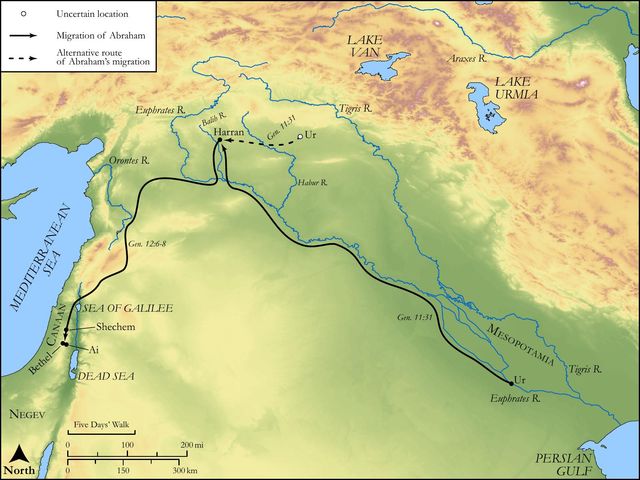
This verse is deeply embedded within the foundational narrative of the Abrahamic covenant. It immediately follows Abram's obedient departure from Haran, a journey undertaken solely on the basis of God's initial, sweeping call in Genesis 12:1-3. Having arrived in Canaan and traversed to the significant site of Shechem, near the terebinth of Moreh as mentioned in Genesis 12:6, Abram is now physically present in the land God promised to show him. This direct appearance of the LORD serves as a divine affirmation of Abram's obedience and a tangible confirmation of God's presence and commitment to His unfolding plan, solidifying the initial, more general call with a specific land promise. It sets the stage for future covenantal interactions and Abram's continued journey of faith within the promised territory.
Historical & Cultural Context
In the lands of the patriarchs, land ownership was central to identity, security, and prosperity. Promises of land were highly significant, often associated with divine favor and dynastic continuity. The act of building an altar was a common practice, signifying a place of worship, sacrifice, and a memorial to a significant event or divine encounter. It also served as a public declaration of allegiance to a deity. Abram, as a nomadic sojourner in a foreign land, was surrounded by various pagan cults and their altars. His construction of an altar to the LORD, the one true God, was a counter-cultural act, marking the land as consecrated to Yahweh and serving as a visible testament to his faith in a polytheistic environment. Shechem itself was a strategic and ancient cultic site, making God's appearance there particularly significant for establishing His claim over the land and its future inhabitants.
Key Themes
ShowHideGenesis 12:7 powerfully contributes to several overarching themes in the book of Genesis and the broader biblical narrative. Firstly, it underscores the theme of Divine Initiative and Revelation, as God sovereignly chooses to appear and speak to Abram, demonstrating His active involvement in human history. Secondly, it lays the cornerstone for the Land Promise, a central component of the Abrahamic Covenant, which will be elaborated upon throughout Genesis and become a defining aspect of Israel's national identity and destiny. This promise is intrinsically linked to the theme of Covenant, as God establishes a binding relationship with Abram and his descendants. Finally, Abram's immediate response of building an altar highlights the theme of Faith and Worship as a Proper Response to God's Word, demonstrating that genuine belief leads to acts of devotion and public acknowledgment of God's sovereignty, a pattern seen throughout the lives of the patriarchs, such as Jacob's similar response in Genesis 35:7.
Exposition and Analysis
ShowHideKey Word Analysis
ShowHideA primitive root meaning "to see," but here used reflexively or causatively as "to show oneself," "to be seen," or "to appear." This signifies a tangible, visible manifestation of God (a theophany) to Abram, not merely an internal impression or dream. It emphasizes the direct, personal, and undeniable nature of God's presence and communication, validating His earlier call and strengthening Abram's nascent faith.
Meaning "seed," "offspring," or "posterity." This term is crucial as it refers to Abram's future descendants, through whom the land promise and the broader covenant blessings will be realized. It points to a multitude of generations, establishing the dynastic and national scope of God's covenant with Abram, indicating that the promise is not just for Abram personally but for a lineage that will become a great nation.
A primitive root meaning "to build" (literally and figuratively), "to establish," or "to set up." Abram's act of building an altar is a deliberate, physical construction that serves as a public declaration of his faith, a memorial to the divine encounter, and a designated place for worship and communion with the LORD. It signifies his immediate, obedient, and worshipful response to God's direct revelation and promise.
Verse Breakdown
ShowHide"And the LORD appeared unto Abram,"
This clause immediately establishes the divine initiative. The LORD (Yahweh, H3068), the self-existent and eternal God, actively manifests Himself to Abram. This is a theophany, a visible manifestation of God, which underscores the reality and personal nature of God's relationship with Abram. It is a direct, undeniable encounter that confirms the divine origin of Abram's call and journey.
"and said, Unto thy seed will I give this land:"
Following the appearance, God speaks, reiterating and specifying the land promise. The phrase "Unto thy seed" (H2233) clarifies that the inheritance is not just for Abram but for his future descendants, establishing a dynastic promise. "This land" (H2063, H776) refers specifically to Canaan, where Abram currently stands as a sojourner. The verb "give" (H5414) is a strong declaration of divine bestowal, emphasizing God's sovereign power and faithfulness to fulfill His word, despite Abram's current childlessness and lack of land ownership.
"and there builded he an altar unto the LORD, who appeared unto him."
Abram's response is one of immediate and profound worship. The act of building an altar (H1129, H4196) serves as a memorial to the divine encounter, a public declaration of his allegiance to Yahweh, and a designated place for worship and communion. The repetition of "who appeared unto him" (H7200) emphasizes that Abram's worship is a direct, grateful response to the personal, tangible revelation of God, highlighting the reciprocal nature of the covenant relationship and Abram's obedient faith.
Literary Devices
ShowHideThe verse employs several significant literary devices. Theophany is central, as the phrase "the LORD appeared unto Abram" denotes a direct, visible manifestation of God, emphasizing divine initiative and the personal nature of God's interaction with humanity. This is immediately followed by Direct Speech, as God "said," allowing the covenant promise to be conveyed with absolute clarity and authority. The repetition of "who appeared unto him" at the end of the verse serves as a powerful instance of Repetition or Anaphora, reinforcing the profound impact of God's personal revelation on Abram and underscoring that Abram's act of worship is a direct and immediate response to this specific divine encounter. The entire verse functions as a Covenantal Marker, establishing a foundational element of the Abrahamic Covenant—the land promise—and illustrating the appropriate human response of worship and commitment.
Theological and Thematic Connections
ShowHideGenesis 12:7 is a cornerstone verse, solidifying the initial call of Abram with a specific land promise, thereby laying essential groundwork for God's redemptive plan. It profoundly illustrates God's active, personal involvement in human history through direct revelation (theophany), demonstrating His initiative in establishing a covenant relationship. The promise of "this land" to Abram's "seed" is not merely a geographical designation but a theological anchor, signifying the future inheritance of a chosen people and the physical stage upon which God's saving work will unfold. Abram's immediate and worshipful response of building an altar exemplifies the proper human posture before divine revelation: one of gratitude, public acknowledgment, and devotion, setting a precedent for faithful obedience throughout the biblical narrative. This verse thus connects God's sovereign election, the unfolding of His promises, and humanity's required response of faith and worship.
Reflection and Application
ShowHideGenesis 12:7 provides timeless principles for believers today. It reminds us that God is a God who initiates relationship and reveals Himself, often in unexpected ways and places. Just as He appeared to Abram in a foreign land to confirm His promises, so too does He make His presence known to us, often most profoundly when we are stepping out in faith or feeling like sojourners. Abram's immediate and unhesitating response of building an altar is a powerful call to worship and gratitude. It teaches us that when God reveals Himself or gives us a promise, our first and most fitting response should be one of devotion, publicly acknowledging His sovereignty and faithfulness in our lives. This act of worship also served as a memorial, reminding Abram of God's presence and promise. In our own lives, creating "altars" – whether physical spaces, regular practices of prayer, or intentional acts of service – can serve as tangible reminders of God's faithfulness and our commitment to Him. Furthermore, Abram received this promise while still a nomad, without a child or a deed to the land, encouraging us to trust God's promises even when their full realization is not yet visible, living by faith in His future provision.
Questions for Reflection
ShowHideFAQ
ShowHideWhat is the significance of God "appearing" to Abram in this verse?
ShowHideThe Hebrew verb ra'ah (H7200), translated as "appeared," indicates a direct, visible, and personal manifestation of God, known as a theophany. This is more than an inner voice or a dream; it signifies a tangible encounter that profoundly impacts Abram. Its significance lies in validating God's earlier call (Genesis 12:1), strengthening Abram's nascent faith, and underscoring the reality and personal nature of God's presence and communication with him at a crucial juncture in his journey into the promised land. It establishes a foundational moment of divine revelation and relationship.
Why is the land promise so central to the Abrahamic Covenant?
ShowHideThe promise of "this land" (Canaan) is a foundational element because it provides a tangible, geographical space for the fulfillment of God's promises regarding a great nation and a blessing to all peoples. It links God's chosen people, Israel, to a specific inheritance, serving as a physical manifestation of His faithfulness and a stage for His redemptive plan to unfold. This land would be where the nation of Israel would form, where God's law would be given, where the temple would be built, and ultimately, where the Messiah would be born and carry out His ministry. It is the physical anchor for the spiritual realities of the covenant, as seen in passages like Genesis 15:18.
What does Abram's act of building an altar signify?
ShowHideBuilding an altar was a common practice among the Canaanites, but for Abram, it was a multi-faceted act of profound spiritual significance. It served as an immediate act of worship and thanksgiving for God's direct appearance and renewed promise. It was also a memorial, marking the sacred space where God had revealed Himself and serving as a reminder of the covenant promise. Furthermore, it was a public declaration of his faith and allegiance to the LORD in a land filled with pagan altars, visibly setting apart this place for the worship of the one true God. It demonstrated Abram's immediate, faithful, and obedient response to divine revelation, establishing a pattern of worship that would continue throughout his journey.
Christ-Centered Fulfillment
ShowHideGenesis 12:7, with its promise of land to Abram's "seed," finds its ultimate and expansive fulfillment in Jesus Christ. While initially referring to the physical descendants of Abram and the literal land of Canaan, the New Testament clarifies that the true "seed" through whom all blessings flow is Christ Himself (Galatians 3:16). Through Christ, the promise of a physical inheritance is transformed and expanded into a spiritual and eternal inheritance, encompassing not just a specific land but the entire new heavens and new earth, where believers, both Jew and Gentile, become co-heirs with Christ (Romans 8:17). The land promise, therefore, foreshadows the eternal dwelling place of God's redeemed people, a "better country, that is, a heavenly one" (Hebrews 11:16), where Christ reigns as King over His universal kingdom. Abram's altar, built in response to God's appearance, prefigures the ultimate worship offered to God through Christ, who is both the appearing God and the ultimate sacrifice, making possible our access to a spiritual dwelling with God forever (Revelation 21:3).