


Exodus 3:17
- וָאֹמַרva·'o·Marand I have saidH559Conj-w ¦ V-Qal-ConsecImperf-1csVerb Qal Consecutive Imperfect 1st Singular common genderוָandאֹמַרI have said
- אַעֲלֶה'a·'a·LehI will bring upH5927V-Hiphil-Imperf-1csVerb Hiphil Imperfect 1st Singular common gender
- אֶתְכֶם'et·Khem<obj.> youH853DirObjM ¦ 2mpParticle Object Indicatorאֶתְ<obj.>כֶםyou
- מֵעֳנִיme·'o·Nifrom [the] affliction ofH6040Prep-m ¦ N-mscNoun Singular Masculine Constructמֵfromעֳנִי[the] affliction of
- מִצְרַיִםmitz·ra·YimEgyptH4714N-properNoun Proper Location
- אֶל'elintoH413PrepPreposition
- אֶרֶץ'E·retz[the] land ofH776N-fscNoun Singular Feminine Construct
- הַכְּנַעֲנִיha·ke·na·'a·Nithe Canaanite[s]H3669Art ¦ N-msNoun Gentilic Singular Masculine AbsoluteהַtheכְּנַעֲנִיCanaanite[s]
- וְהַחִתִּיve·Ha·chi·Tiand the Hittite[s]H2850Conj-w ¦ Art ¦ N-msNoun Gentilic Singular Masculine AbsoluteוְandהַtheחִתִּיHittite[s]
- וְהָאֱמֹרִיve·ha·'e·mo·Riand the Amorite[s]H567Conj-w ¦ Art ¦ N-msNoun Gentilic Singular Masculine AbsoluteוְandהָtheאֱמֹרִיAmorite[s]
- וְהַפְּרִזִּיve·hap·pe·ri·Ziand the Perizzite[s]H6522Conj-w ¦ Art ¦ N-msNoun Gentilic Singular Masculine AbsoluteוְandהַtheפְּרִזִּיPerizzite[s]
- וְהַחִוִּיve·ha·chi·Viand the Hivite[s]H2340Conj-w ¦ Art ¦ N-msNoun Gentilic Singular Masculine AbsoluteוְandהַtheחִוִּיHivite[s]
- וְהַיְבוּסִיve·hay·vu·Siand the Jebusite[s]H2983Conj-w ¦ Art ¦ N-msNoun Gentilic Singular Masculine AbsoluteוְandהַtheיְבוּסִיJebusite[s]
- אֶל'elintoH413PrepPreposition
- אֶרֶץ'E·retza landH776N-fsNoun Singular Feminine Absolute
- זָבַתza·Vatflowing ofH2100V-Qal-Prtcpl-fsVerb Qal Participle Singular Feminine Construct
- חָלָבcha·LavmilkH2461N-msNoun Singular Masculine Absolute
- וּדְבָשׁu·de·Vashand honeyH1706Conj-w ¦ N-msNoun Singular Masculine Absoluteוּandדְבָשׁhoney
English is a literal word-by-word gloss of the Hebrew, not the KJV's wording. Why?
This is the original text the KJV's translators worked from — each Hebrew word with its own literal English meaning in this verse, prepared by scholars at Tyndale House, Cambridge. The KJV translates whole sentences, not word by word, so its wording differs: one Hebrew word can become several English words, and the KJV may choose “the LORD” where the gloss reads “Yahweh”. Both are faithful — they answer different questions. For the KJV's own rendering, switch to the KJV text.
Details
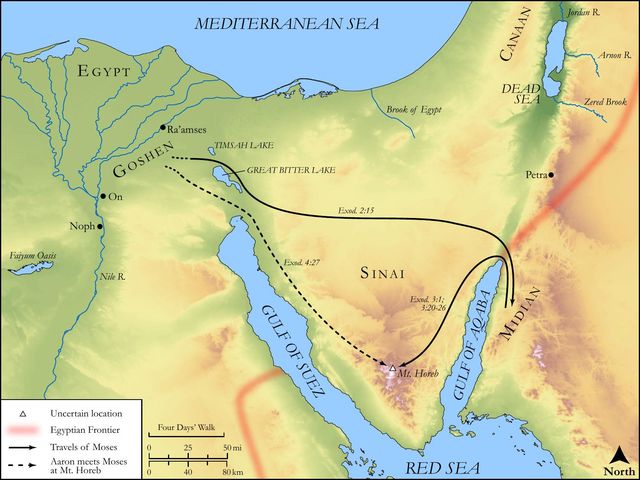
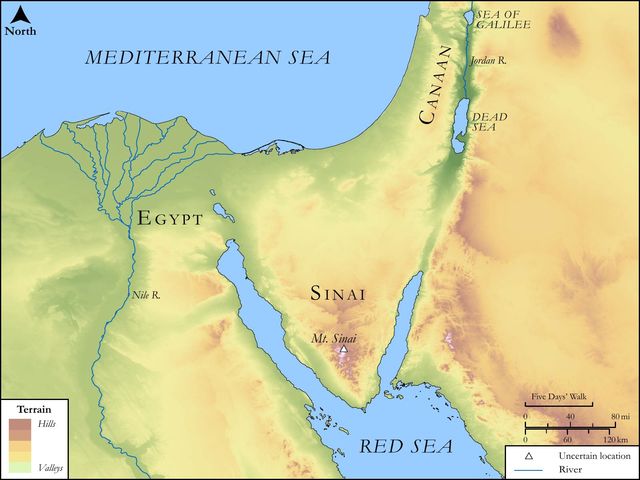
See on the biblical-era maps

Study this verse
Public-domain commentary
Matthew Henry
From his Commentary on the Whole Bible. Henry comments on passages, not single verses — this entry covers Exodus 3:16–22.
Moses is here more particularly instructed in his work, and informed beforehand of his success. 1. He must deal with the elders of Israel, and raise their expectation of a speedy removal to Canaan, Exo 3:16, Exo 3:17. He must repeat to them what God had said to him, as a faithful ambassador. Note, That which ministers have received of the Lord they must deliver to his people, and keep back nothing that is profitable. Lay an emphasis on that, Exo 3:17 : "I have said, I will bring you up; that is enough to satisfy them, I have said it:" hath he spoken, and will he not make it good? With us saying and doing are two things, but they are not so with God, for he is in one mind and who can turn him? "I have said it, and all the world cannot gainsay it. My counsel shall stand." His success with the elders of Israel would be good; so he is told (Exo 3:18): They shall hearken to thy voice, and not thrust thee away as they did forty years ago. He who, by his grace, inclines the heart, and opens the ear, could say beforehand, They shall hearken to thy voice, having determined to make them willing in this day of power. 2. He must deal with the king of Egypt (Exo 3:18), he and the elders of Israel, and in this they must not begin with a demand, but with a humble petition; that gentle and submissive method must be first tried, even with one who, it was certain, would not be wrought upon by it: We beseech thee, let us go. Moreover, they must only beg leave of Pharaoh to go as far as Mount Sinai to worship God, and say nothing to him of going quite away to Canaan; the latter would have been immediately rejected, but the former was a very modest and reasonable request, and his denying it was utterly inexcusable and justified them in the total deserting of his kingdom. If he would not give them leave to go and sacrifice at Sinai, justly did they go without leave to settle in Canaan. Note, The calls and commands which God sends to sinners are so highly reasonable in themselves, and delivered to them in such a gentle winning way, that the mouth of the disobedient must needs be for ever stopped. As to his success with Pharaoh, Moses is here told, (1.) That petitions, and persuasions, and humble remonstrances, would not prevail with him, no, nor a mighty hand stretched out in signs and wonders: I am sure he will not let you go, Exo 3:19. Note, God sends his messengers to those whose hardness and obstinacy he certainly knows and foresees, that it may appear he would have them turn and live. (2.) That plagues should compel him to it: I will smite Egypt, and then he will let you go, Exo 3:20. Note, Those will certainly be broken by the power of God's hand that will not bow to the power of his word; we may be sure that when God judges he will overcome. (3.) That his people should be more kind to them, and furnish them at their departure with abundance of plate and jewels, to their great enriching: I will give this people favour in the sight of the Egyptians, Exo 3:21, Exo 3:22. Note, [1.] God sometimes makes the enemies of his people, not only to be at peace with them, but to be kind to them. [2.] God has many ways of balancing accounts between the injured and the injurious, of righting the oppressed, and compelling those that have done wrong to make restitution; for he sits in the throne judging right.
Continue studying Exodus 3:17 across the web’s major study libraries — every link below opens this exact verse, chapter, or book on the destination site.
Read & Compare
 BibleGatewayThis verse in more than 200 translations and 70 languages.
 Bible.comThe YouVersion reader — hundreds of translations, reading plans, and highlights.
 ESV.orgCrossway's official English Standard Version reader.
 NET BibleThe NET translation with 60,000+ translators' notes on every rendering decision.
 STEP BibleTyndale House's free study tool — original text, vocabulary, and scholarly resources.
 BibliaLogos Bible Software's free web reader.
 USCCBThe New American Bible (Revised Edition) with the U.S. bishops' study notes.
Commentaries
 BibleHub CommentariesDozens of classic commentaries on this verse, gathered on one page.
 StudyLightMore than 100 commentary sets — the largest collection on the web.
 BibleRefPlain-English commentary on what this verse means, verse by verse.
 Enduring WordDavid Guzik's free commentary on this chapter, widely used by Bible teachers.
 Bible Study ToolsVerse commentary alongside Greek and Hebrew study aids.
Original Language & Research
- BibleHub InterlinearThe verse word by word — original language, transliteration, and English.
- BibleHub LexiconEvery word's original-language definition and Strong's entry.
 Blue Letter BibleDeep-study tools — Strong's numbers, concordance, and word studies.
 SefariaThe Hebrew text with Rashi and centuries of Jewish commentary.
Sermons, Hymns & Audio


TrulyRandomVerse is not affiliated with these sites and doesn’t control their content. They’re linked because they’re genuinely useful.
Summary
Exodus 3:17 records God's solemn and unwavering declaration to Moses at the burning bush, articulating His divine resolve to deliver the Israelites from their severe oppression in Egypt. This pivotal promise not only reaffirms God's covenant faithfulness to His people but also outlines their glorious future: a divinely ordained exodus leading to an abundant inheritance in a specific, fertile land, starkly contrasting their current state of affliction with a future of prosperity and rest.
Context
ShowHideLiterary Context
This verse is a direct continuation of God's profound self-revelation and commissioning of Moses in Exodus 3. Following God's declaration of His name, "I AM WHO I AM" (Exodus 3:14), and His explicit awareness of Israel's suffering (Exodus 3:7), He outlines His plan to intervene. Verse 17 serves as the concrete promise of the destination, providing Moses with a clear, tangible objective to present to the elders of Israel after God assures him of their receptiveness in Exodus 3:18. It sets the stage for the dramatic confrontation with Pharaoh and the subsequent exodus narrative that dominates the rest of the book.
Historical & Cultural Context
The Israelites had been enslaved in Egypt for centuries, their lives made bitter with hard labor in mortar and brick (Exodus 1:14). The mention of "affliction of Egypt" (עֹנִי מִצְרַיִם, 'onîy Mitsrayim') directly references this brutal reality. The land promised, Canaan, was not an empty wilderness but a region already inhabited by various peoples, including the Canaanites, Hittites, Amorites, Perizzites, Hivites, and Jebusites. These groups were known from existing ancient Near Eastern texts and archaeological findings, confirming their presence in the Levant. The promise of a "land flowing with milk and honey" was a powerful cultural idiom in the ancient world, signifying extraordinary fertility and abundance, contrasting sharply with the often-arid or labor-intensive agricultural practices of other regions, including parts of Egypt where irrigation was essential.
Key Themes
ShowHideExodus 3:17 is central to several overarching themes in the book of Exodus and the Pentateuch. It powerfully illustrates God's Covenant Faithfulness, as this promise of land directly echoes the covenant made with Abraham, Isaac, and Jacob (Genesis 12:7, Genesis 26:3, Genesis 35:12). It highlights Divine Deliverance and Sovereignty, showcasing God's active intervention to rescue His people from an impossible situation through His own power. The verse also introduces the theme of Inheritance and Rest, portraying the Promised Land as a place of divine provision and peace after centuries of toil. Finally, it underscores God's Compassion for the Oppressed, as His initiative to bring Israel out of "affliction" stems from His deep awareness of their suffering (Exodus 2:23-25).
Exposition and Analysis
ShowHideKey Word Analysis
ShowHideThis primitive root means "to say (used with great latitude)." Here, it signifies a definitive, authoritative declaration from God. It's not merely a suggestion or a wish, but a firm statement of divine intent and purpose, indicating a promise that will be fulfilled. The perfect tense implies a settled, unchangeable decree.
Derived from a root meaning "to be bowed down," this word denotes "depression" or "misery." It encapsulates the profound suffering, oppression, and hardship endured by the Israelites under Egyptian bondage, encompassing both physical toil and emotional distress. God's promise is to bring them out of this specific, deeply felt misery.
A primitive root meaning "to flow freely (as water), i.e. (specifically) to have a (sexual) flux; figuratively, to waste away; also to overflow." In this context, it describes the abundant, effortless outpouring of natural resources. It paints a picture of a land so fertile that milk and honey are not scarce commodities but flow freely, symbolizing a state of natural, unforced provision and prosperity.
Verse Breakdown
ShowHide"And I have said, I will bring you up out of the affliction of Egypt"
This opening clause establishes God as the sovereign initiator and executor of the deliverance. The perfect tense of "I have said" (Hebrew: ve'gam anochi amarti) emphasizes the certainty and divine decree of the promise. God is not merely reacting but actively orchestrating their liberation. The phrase "bring you up" (Hebrew: a'aleh etchem) signifies a transformative ascent from a state of deep oppression and misery ("affliction of Egypt") to freedom and a higher status, highlighting a complete and powerful rescue.
"unto the land of the Canaanites, and the Hittites, and the Amorites, and the Perizzites, and the Hivites, and the Jebusites"
This detailed enumeration of the existing inhabitants of the Promised Land underscores the geographical specificity and historical reality of God's promise. It indicates that the land is not vacant but is currently occupied by these distinct peoples. This specificity also foreshadows the future conquest and dispossession that will be necessary for Israel to inherit the land, emphasizing the miraculous nature of God's provision and His power to clear the way for His people.
"unto a land flowing with milk and honey"
This iconic phrase is a powerful metaphor and idiom for extraordinary fertility, abundance, and divine provision. "Milk" (Hebrew: chalav) represents the richness of pastoral life, indicating thriving herds and dairy products. "Honey" (Hebrew: devash) typically refers to date syrup or wild honey, symbolizing the sweetness and bounty of agricultural produce. Together, they paint a vivid picture of a land where sustenance is plentiful and easily obtained, a stark contrast to the harsh, forced labor and scarcity experienced in Egypt, promising a future of ease, blessing, and natural wealth.
Literary Devices
ShowHideExodus 3:17 is rich in literary devices that enhance its meaning and impact. The most prominent is the Idiom "a land flowing with milk and honey," which serves as a powerful Metaphor for unparalleled fertility, prosperity, and divine blessing. This evocative imagery immediately conveys a sense of abundance and ease, contrasting sharply with the "affliction of Egypt." The detailed Enumeration of the six Canaanite tribes (Canaanites, Hittites, Amorites, Perizzites, Hivites, and Jebusites) provides geographical specificity and historical grounding to God's promise, making the future inheritance tangible and real. This enumeration also implicitly sets up a Contrast between the current inhabitants and the future inheritors, highlighting God's sovereign power to dispossess and re-settle. Furthermore, the divine declaration "I have said" carries the weight of Divine Speech Act, emphasizing God's unwavering resolve and the certainty of His promise.
Theological and Thematic Connections
ShowHideExodus 3:17 is a cornerstone of biblical theology, powerfully affirming God's unwavering commitment to His covenant promises. It demonstrates His active involvement in human history, orchestrating the liberation of His people from oppression and leading them into a divinely prepared inheritance. This verse underscores the transformative nature of God's salvation, moving His people from a state of severe affliction to one of abundant blessing and rest. It highlights God's sovereignty over nations and His power to fulfill His purposes, even when faced with seemingly insurmountable obstacles, reinforcing the theme of divine faithfulness and the ultimate triumph of His redemptive plan.
Reflection and Application
ShowHideExodus 3:17 offers profound encouragement and a powerful reminder of God's character for believers today. Just as God saw the "affliction of Egypt" and promised a specific, abundant destination for Israel, He remains intimately aware of our struggles, whether they be spiritual bondage, personal hardships, or societal injustices. This verse assures us that God is not passive but actively intervenes, orchestrating deliverance and leading us into a place of spiritual rest and abundance in Christ. It calls us to trust in God's unwavering promises, even when our current circumstances seem bleak or insurmountable. Our faith is grounded in the God who "has said" and will bring us up, transforming our afflictions into opportunities for His glory and leading us into a future of peace and provision that far surpasses our present difficulties.
Questions for Reflection
ShowHideFAQ
ShowHideWhy does God list so many tribes inhabiting the Promised Land?
ShowHideGod lists these specific tribes—the Canaanites, Hittites, Amorites, Perizzites, Hivites, and Jebusites—to emphasize the concrete, geographical reality of the land He was promising to Israel. This detailed enumeration served multiple purposes: it underscored that the land was not an abstract concept but a real territory with existing inhabitants, highlighting the magnitude and miraculous nature of God's intervention in dispossessing these nations and giving the land to Israel. Furthermore, it demonstrated the fulfillment of His ancient promises to Abraham, which included the boundaries of the land and the peoples within it (Genesis 15:18-21). This specificity provided concrete assurance to Moses and the Israelites that God's plan was precise and achievable.
What is the significance of "a land flowing with milk and honey"?
ShowHideThe phrase "a land flowing with milk and honey" is a powerful biblical idiom signifying extraordinary fertility, prosperity, and natural abundance. It is a recurring motif throughout the Pentateuch, first appearing here in Exodus 3:8. "Milk" (Hebrew: chalav) represents the richness of pastoral life and dairy animals, indicating thriving herds and a plentiful food source. "Honey" (Hebrew: devash) typically refers to date syrup or wild honey, symbolizing bountiful agricultural produce and the sweetness of the land's fruit. This imagery contrasts sharply with the harsh, forced labor conditions of Egypt, portraying the Promised Land as a place of ease, provision, and natural blessing, where sustenance is readily available without oppressive toil. It symbolizes a place of divine favor and rest, where God's people would experience His abundant provision.
Christ-Centered Fulfillment
ShowHideExodus 3:17 finds its ultimate and profound fulfillment in Jesus Christ, who is the greater Moses, leading His people out of a far deeper affliction—the spiritual bondage of sin and death. Just as God promised a physical land of milk and honey to Israel, Christ offers a spiritual inheritance, ushering believers into the Kingdom of God, a realm of spiritual abundance, peace, and eternal rest. He is the true deliverer who brings us out of the "affliction" of a fallen world and into a new covenant, where the promises of God's presence, provision, and blessing are fully realized (Hebrews 4:9-10). Through His atoning sacrifice, Jesus has conquered the spiritual "Canaanites" of sin, death, and the devil, making a way for us to inherit spiritual blessings "in heavenly places in Christ" (Ephesians 1:3). This culminates in the new heavens and new earth, the ultimate "land flowing with milk and honey" where God dwells with His people forever, and "there will be no more death or mourning or crying or pain" (Revelation 21:1-4).