


Exodus 3:22
- וְשָׁאֲלָהve·sha·'a·Lahand she will askH7592Conj-w ¦ V-Qal-ConsecPerf-3fsVerb Qal Consecutive Perfect 3rd Singular Feminineוְandשָׁאֲלָהshe will ask
- אִשָּׁה'i·Shah[each] womanH802N-fsNoun Singular Feminine Absolute
- מִשְּׁכֶנְתָּהּmi·she·khen·Tahfrom [female] her neighborH7934Prep-m ¦ N-fsc ¦ 3fsNoun Singular Feminine Constructמִfromשְּׁכֶנְתָּ[female] neighborהּher
- וּמִגָּרַתu·mi·ga·Ratand from [the] [female] sojourner ofH1481Conj-w ¦ Prep-m ¦ V-Qal-Prtcpl-fsVerb Qal Participle Singular Feminine Constructוּandמִfromגָּרַת[the] [female] sojourner of
- בֵּיתָהּbei·Tahher houseH1004N-msc ¦ 3fsNoun Singular Masculine Constructבֵּיתָhouseהּher
- כְּלֵיke·leiarticles ofH3627N-mpcNoun Plural Masculine Construct
- כֶסֶףKhe·sefsilverH3701N-msNoun Singular Masculine Absolute
- וּכְלֵיu·khe·Leiand articles ofH3627Conj-w ¦ N-mpcNoun Plural Masculine Constructוּandכְלֵיarticles of
- זָהָבza·HavgoldH2091N-msNoun Singular Masculine Absolute
- וּשְׂמָלֹתu·se·ma·Lotand clothesH8071Conj-w ¦ N-fpNoun Plural Feminine Absoluteוּandשְׂמָלֹתclothes
- וְשַׂמְתֶּםve·sam·Temand you will put [them]H7760Conj-w ¦ V-Qal-ConsecPerf-2mpVerb Qal Consecutive Perfect 2nd Plural Masculineוְandשַׂמְתֶּםyou will put [them]
- עַל'alonH5921PrepPreposition
- בְּנֵיכֶםbe·nei·Khemyour sonsH1121N-mpc ¦ 2mpNoun Plural Masculine Constructבְּנֵיsonsכֶםyour
- וְעַלve·'aland onH5921Conj-w ¦ PrepPrepositionוְandעַלon
- בְּנֹתֵיכֶםbe·No·tei·Khemyour daughtersH1323N-fpc ¦ 2mpNoun Plural Feminine Constructבְּנֹתֵיdaughtersכֶםyour
- וְנִצַּלְתֶּםve·ni·tzal·Temand you will plunderH5337Conj-w ¦ V-Piel-ConsecPerf-2mpVerb Piel Consecutive Perfect 2nd Plural Masculineוְandנִצַּלְתֶּםyou will plunder
- אֶת'et<obj.>H853DirObjMParticle Object Indicator
- מִצְרָיִםmitz·Ra·yimEgyptH4713N-properNoun Proper Location
English is a literal word-by-word gloss of the Hebrew, not the KJV's wording. Why?
This is the original text the KJV's translators worked from — each Hebrew word with its own literal English meaning in this verse, prepared by scholars at Tyndale House, Cambridge. The KJV translates whole sentences, not word by word, so its wording differs: one Hebrew word can become several English words, and the KJV may choose “the LORD” where the gloss reads “Yahweh”. Both are faithful — they answer different questions. For the KJV's own rendering, switch to the KJV text.
Details
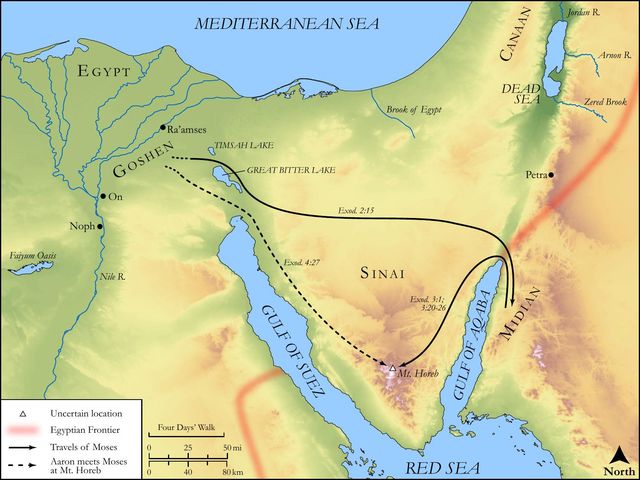
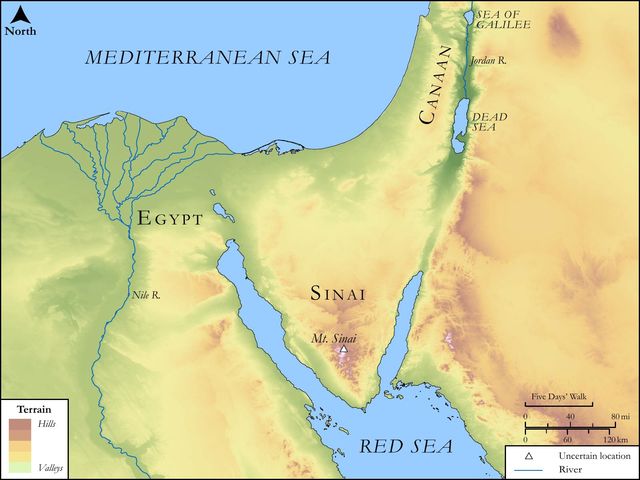
See on the biblical-era map

Study this verse
Public-domain commentary
Matthew Henry
From his Commentary on the Whole Bible. Henry comments on passages, not single verses — this entry covers Exodus 3:16–22.
Moses is here more particularly instructed in his work, and informed beforehand of his success. 1. He must deal with the elders of Israel, and raise their expectation of a speedy removal to Canaan, Exo 3:16, Exo 3:17. He must repeat to them what God had said to him, as a faithful ambassador. Note, That which ministers have received of the Lord they must deliver to his people, and keep back nothing that is profitable. Lay an emphasis on that, Exo 3:17 : "I have said, I will bring you up; that is enough to satisfy them, I have said it:" hath he spoken, and will he not make it good? With us saying and doing are two things, but they are not so with God, for he is in one mind and who can turn him? "I have said it, and all the world cannot gainsay it. My counsel shall stand." His success with the elders of Israel would be good; so he is told (Exo 3:18): They shall hearken to thy voice, and not thrust thee away as they did forty years ago. He who, by his grace, inclines the heart, and opens the ear, could say beforehand, They shall hearken to thy voice, having determined to make them willing in this day of power. 2. He must deal with the king of Egypt (Exo 3:18), he and the elders of Israel, and in this they must not begin with a demand, but with a humble petition; that gentle and submissive method must be first tried, even with one who, it was certain, would not be wrought upon by it: We beseech thee, let us go. Moreover, they must only beg leave of Pharaoh to go as far as Mount Sinai to worship God, and say nothing to him of going quite away to Canaan; the latter would have been immediately rejected, but the former was a very modest and reasonable request, and his denying it was utterly inexcusable and justified them in the total deserting of his kingdom. If he would not give them leave to go and sacrifice at Sinai, justly did they go without leave to settle in Canaan. Note, The calls and commands which God sends to sinners are so highly reasonable in themselves, and delivered to them in such a gentle winning way, that the mouth of the disobedient must needs be for ever stopped. As to his success with Pharaoh, Moses is here told, (1.) That petitions, and persuasions, and humble remonstrances, would not prevail with him, no, nor a mighty hand stretched out in signs and wonders: I am sure he will not let you go, Exo 3:19. Note, God sends his messengers to those whose hardness and obstinacy he certainly knows and foresees, that it may appear he would have them turn and live. (2.) That plagues should compel him to it: I will smite Egypt, and then he will let you go, Exo 3:20. Note, Those will certainly be broken by the power of God's hand that will not bow to the power of his word; we may be sure that when God judges he will overcome. (3.) That his people should be more kind to them, and furnish them at their departure with abundance of plate and jewels, to their great enriching: I will give this people favour in the sight of the Egyptians, Exo 3:21, Exo 3:22. Note, [1.] God sometimes makes the enemies of his people, not only to be at peace with them, but to be kind to them. [2.] God has many ways of balancing accounts between the injured and the injurious, of righting the oppressed, and compelling those that have done wrong to make restitution; for he sits in the throne judging right.
Historical interpretation
Sixteen Centuries of Reception
6 surviving comments on this verse. Each one is dated, so this reads as a timeline rather than a list.
Select a marker to jump to its quote. Markers stagger vertically where authors wrote within a few decades of each other.
He said to Moses, “Go and speak to Pharaoh, that he may let my people go, but I know that he will not let them go.…” He manifests his divinity by foreseeing what is to happen and also his love for man by offering to the free will of man an opportunity to repent.
The Egyptians put in a claim on the Hebrews for these gold and silver vessels. The Hebrews assert a counterclaim, alleging that by the bond of their respective fathers, attested by the written engagement of both parties, there were due to them the arrears of that laborious slavery of theirs for the bricks they had so painfully made and the cities and palaces which they had built.
The Lord commanded the Hebrews through Moses to take gold and silver vessels and garments from the Egyptians, and he added, “And you will despoil them.” The judgment implied in this command cannot be unjust. For it is a commandment of God. It was not to be judged but obeyed. For God knew how just his command was. It pertains to the servant obediently to do what was commanded.
Accordingly on the one hand the Egyptians deserved being deceived, and on the other the people of Israel were then situated at such a level of morality, because of the age of the human race, that it would not be unworthy of them to deceive an enemy. It therefore came about that God commanded them (or, rather, permitted them because of their desire) to ask of the Egyptians gold and silver implements which these seekers of a kingdom as yet earthly were gazing upon longingly, even though they were not going to return them, and to take them as if they were going to return them. God did not want to be unjust in the matter of the reward for such lengthy hardship and labor—a reward adapted to the level of such souls; nor did he want to be unjust in the matter of the punishments of the Egyptians, whom appropriately enough he caused to lose what they were under obligation to pay. And so God is not a deceiver.
Whether then the reason was what I have said, or whether in the secret appointment of God there was some unknown reason for his telling the people by Moses to borrow things from the Egyptians and to take them away with them, this remains certain. This was said for some good reason and Moses could not lawfully have done otherwise than God told him, leaving to God the reason of the command, while the servant’s duty is to obey.
Shall spoil: That is, you shall strip, and take away the goods of the Egyptians. This was not authorizing theft or injustice; but was a just disposal made by Him, who is the great lord and master of all things, in order to pay the children of Israel some part of what was due to them from the Egyptians for their labours.
Continue studying Exodus 3:22 across the web’s major study libraries — every link below opens this exact verse, chapter, or book on the destination site.
Read & Compare
 BibleGatewayThis verse in more than 200 translations and 70 languages.
 Bible.comThe YouVersion reader — hundreds of translations, reading plans, and highlights.
 ESV.orgCrossway's official English Standard Version reader.
 NET BibleThe NET translation with 60,000+ translators' notes on every rendering decision.
 STEP BibleTyndale House's free study tool — original text, vocabulary, and scholarly resources.
 BibliaLogos Bible Software's free web reader.
 USCCBThe New American Bible (Revised Edition) with the U.S. bishops' study notes.
Commentaries
 BibleHub CommentariesDozens of classic commentaries on this verse, gathered on one page.
 StudyLightMore than 100 commentary sets — the largest collection on the web.
 BibleRefPlain-English commentary on what this verse means, verse by verse.
 Enduring WordDavid Guzik's free commentary on this chapter, widely used by Bible teachers.
 Bible Study ToolsVerse commentary alongside Greek and Hebrew study aids.
Original Language & Research
- BibleHub InterlinearThe verse word by word — original language, transliteration, and English.
- BibleHub LexiconEvery word's original-language definition and Strong's entry.
 Blue Letter BibleDeep-study tools — Strong's numbers, concordance, and word studies.
 SefariaThe Hebrew text with Rashi and centuries of Jewish commentary.
Sermons, Hymns & Audio


TrulyRandomVerse is not affiliated with these sites and doesn’t control their content. They’re linked because they’re genuinely useful.
Summary
Exodus 3:22 presents a pivotal divine instruction given to Moses at the burning bush, outlining God's plan for the Israelite women to "borrow" valuable items—jewels of silver and gold, and raiment—from their Egyptian neighbors and those dwelling in their homes. This command was not an act of deceit but a divinely ordained transfer of wealth, serving as a just recompense for centuries of forced labor and a means to "spoil" the Egyptians, thereby fulfilling God's ancient promise to Abraham regarding his descendants departing with great substance.
Context
ShowHideLiterary Context
This verse is deeply embedded within the narrative of God's initial revelation to Moses at the burning bush. It immediately follows God's declaration in Exodus 3:21 that He would grant the Israelites favor in the sight of the Egyptians, ensuring they would not leave Egypt empty-handed. The preceding verses establish God's awareness of Israel's suffering and His resolute intention to deliver them, introducing Moses as His chosen instrument. This specific instruction about acquiring wealth serves as a practical, yet profoundly symbolic, preparatory step for the impending Exodus, demonstrating God's meticulous planning and sovereign control over every detail of their liberation. It sets the stage for the dramatic events that will unfold, culminating in Israel's departure with significant material possessions, contrasting sharply with their previous enslaved status.
Historical & Cultural Context
The ancient Near East, particularly Egypt, was a society where wealth was often concentrated in the hands of the elite, and precious metals and fine garments were significant markers of status and power. The Israelites had been enslaved for approximately 430 years, forced into brutal labor without recompense. This historical backdrop makes God's command for them to "spoil" the Egyptians a profound act of divine justice and restitution. It was culturally understood that a conquering power would take spoils from the vanquished, but here, God orchestrates a unique "spoiling" where the oppressed, through divine intervention, take from their oppressors. The mention of "neighbor" and "sojourner" suggests established, albeit unequal, relationships between Israelite and Egyptian households, making the "request" for items plausible under the extraordinary circumstances God would create.
Key Themes
ShowHideExodus 3:22 contributes significantly to several overarching themes in the book of Exodus and the broader Pentateuch. It powerfully underscores God's Divine Justice and Retribution, demonstrating His commitment to avenging the oppression of His people and bringing judgment upon their oppressors. It highlights God's Sovereignty and Provision, showing His ability to manipulate circumstances and incline the hearts of even His enemies to serve His purposes, ensuring His people are equipped for their journey. Furthermore, this act of "spoiling" directly fulfills God's covenant promise to Abraham in Genesis 15:13-14, where He foretold that Abraham's descendants would be afflicted but would eventually "come out with great substance." This verse thus reinforces the theme of God's Covenant Faithfulness and His meticulous fulfillment of His word.
Exposition and Analysis
ShowHideThe instruction in Exodus 3:22 is a precise divine directive, outlining the method by which Israel would depart Egypt with substantial wealth. God commands "every woman" to participate, indicating a widespread and systematic acquisition of valuables, ensuring that the entire community benefited from this act of divine recompense.
Key Word Analysis
ShowHideMeaning "a woman," often used in a wide sense. The emphasis on "every woman" (H802) underscores the comprehensive nature of this command, indicating that this was not a task for a select few, but a widespread, communal action involving all Israelite women. This highlights the collective nature of both their oppression and their divinely orchestrated liberation and enrichment.
Meaning "to inquire; by implication, to request; by extension, to demand." While "borrow" in English implies an intent to return, the Hebrew shâʼal carries a broader semantic range of "asking," "requesting," or even "demanding." In this specific context, given the divine command and the subsequent narrative where no repayment occurs, it signifies a divinely sanctioned demand or request that would be granted, often under divine influence or duress, rather than a conventional loan. It represents a righteous acquisition, not an act of deceit on Israel's part.
Meaning "something prepared, i.e., any apparatus (as an implement, utensil, dress, vessel or weapon)." This term is broad, encompassing various articles or vessels, not exclusively ornamental "jewels." When paired with "silver" (H3701) and "gold" (H2091), it refers to valuable items made of these precious metals, including utensils, ornaments, or other portable assets. This implies a significant transfer of material wealth beyond mere trinkets, equipping the Israelites with substantial resources for their journey and future.
Meaning "to snatch away, whether in a good or a bad sense; to deliver (self), escape, pluck, preserve, recover, rescue, rid, save, spoil, strip." Here, nâtsal refers to the act of taking possession of the Egyptians' goods, a divinely authorized plundering or stripping. It is not random looting but a righteous acquisition, a form of restitution for centuries of forced labor and a tangible sign of God's judgment upon Egypt. This act demonstrates God's power to deliver His people and turn the tables on their oppressors.
Verse Breakdown
ShowHide"But every woman shall borrow of her neighbour, and of her that sojourneth in her house,"
This opening clause specifies the agents ("every woman") and the targets ("her neighbour, and of her that sojourneth in her house"). It implies a close, albeit perhaps strained, relationship between the Israelite and Egyptian women, making the direct interaction and request feasible. The divine command ensures that these requests would be met, suggesting a supernatural inclination on the part of the Egyptians to comply.
"jewels of silver, and jewels of gold, and raiment:"
This enumerates the specific types of valuable items to be acquired. "Jewels" (KJV) refers to articles or vessels of precious metals, not just ornaments, indicating substantial wealth. "Raiment" (clothing) was also a significant form of wealth and a practical necessity in ancient societies. These items were portable and highly valuable, equipping the Israelites for their journey and future.
"and ye shall put [them] upon your sons, and upon your daughters;"
This clause specifies the immediate use of the acquired wealth. The adornment of their children with these precious items signifies their newfound freedom, dignity, and prosperity, marking a dramatic shift from their former status as impoverished slaves to a people enriched by God. It is a visible sign of God's blessing and a public display of their liberation.
"and ye shall spoil the Egyptians."
This concluding declaration states the ultimate outcome and divine intention behind the command. The Hebrew word nâtsal implies a forceful deliverance or stripping away. In this context, it refers to the act of taking possession of the Egyptians' goods, a rightful acquisition given their years of forced labor and God's impending judgment upon Egypt. This was not random looting but a divinely ordained act of restitution and a demonstration of God's sovereignty.
Literary Devices
ShowHideExodus 3:22 employs several significant literary devices. Irony is prominent, as the very people who oppressed Israel are now compelled by God to provide for their liberation, turning oppressors into unwitting benefactors. This highlights God's absolute control and ability to reverse human power dynamics. The verse also functions as Prophetic Fulfillment, directly echoing God's earlier promise to Abraham in Genesis 15:14 that his descendants would "come out with great substance." This demonstrates the continuity of God's plan across generations. Furthermore, the act of adorning "sons and daughters" with the acquired wealth serves as powerful Symbolism, representing Israel's transition from slavery and degradation to a state of freedom, dignity, and divine favor. The wealth itself symbolizes the recompense for their suffering and God's abundant provision.
Theological and Thematic Connections
ShowHideThis passage profoundly illustrates God's unwavering justice and His commitment to His covenant people. After centuries of brutal servitude, God orchestrates a means for Israel to receive restitution for their suffering and unpaid labor. This is a divinely commanded transfer of wealth, not theft, serving as a just payment and a powerful demonstration of God's judgment upon Egypt. It underscores God's absolute sovereignty over all circumstances, including the hearts of men, as He causes the Egyptians, who had previously oppressed the Israelites, to willingly part with their valuables. This act highlights God's miraculous ability to provide for His people, turning their oppressors into their benefactors and demonstrating His power to overturn human injustice. The acquired wealth was not merely for personal enrichment but served a greater, redemptive purpose, later being used for the construction of the Tabernacle, the portable sanctuary where God would dwell among His people in the wilderness, illustrating how God's provision often serves His kingdom purposes and the establishment of His covenant relationship.
Reflection and Application
ShowHideExodus 3:22 serves as a profound reminder that God is a God of justice who sees and responds to the afflictions of His people. He is not indifferent to suffering but actively intervenes to bring about recompense for the oppressed and to humble the oppressor. This verse encourages us to trust in God's sovereign provision, knowing that His plans are perfect, His timing is impeccable, and His justice will ultimately prevail. Just as the wealth taken from Egypt served to build the Tabernacle, a dwelling place for God among His people, we are reminded that God often provides resources, opportunities, and even unexpected blessings in our lives not merely for our personal comfort, but to further His kingdom and fulfill His divine purposes. We are called to discern how God's provision in our lives can be consecrated for His glory, whether through our time, talents, or material possessions. The historical fulfillment of this promise, recorded in Exodus 12:35-36, stands as a testament to God's faithfulness to His word.
Questions for Reflection
ShowHideFAQ
ShowHideWas Israel's "borrowing" from the Egyptians an act of deceit or theft?
ShowHideNo, it was not an act of deceit or theft. The Hebrew word sha'al (שָׁאַל), translated "borrow," carries a broader meaning of "to ask," "to request," or "to demand." In this context, it signifies a divinely ordained request that the Egyptians would grant under God's powerful influence, not a conventional loan with an intent to repay. This was God's act of justice, providing restitution for centuries of unpaid labor and fulfilling His promise to Abraham, a rightful acquisition rather than a fraudulent one. The Egyptians, under the duress of the plagues and the urgency of Israel's departure, were eager to see them go, leading them to comply with these requests, as detailed in Exodus 12:33-36.
Why did God command the Israelites to take wealth from the Egyptians?
ShowHideGod commanded this for several profound reasons: primarily, as divine recompense for over 400 years of brutal slavery and unpaid labor, serving as a just settlement for their suffering. Secondly, it was a powerful demonstration of His sovereignty and judgment over Egypt, humbling the oppressor and exalting His people. Thirdly, it was a direct fulfillment of His covenant promise to Abraham that his descendants would leave Egypt with "great substance" (Genesis 15:14). Finally, the wealth served a practical and spiritual purpose, later being consecrated and used for the construction of the Tabernacle, the portable sanctuary where God would dwell among His people (Exodus 25:2-7).
What was the ultimate purpose of the jewels, gold, and raiment taken from Egypt?
ShowHideWhile the items initially served to enrich the Israelites, adorn their children, and provide practical resources for their wilderness journey, their ultimate purpose was for the glory of God and the establishment of His covenant presence. A significant portion of the silver, gold, and fine materials acquired from the Egyptians was later consecrated and willingly offered by the Israelites for the construction of the Tabernacle, the portable sanctuary where God would dwell among His people in the wilderness (Exodus 35:4-9). This demonstrates how God's provision is often intended to further His kingdom purposes and facilitate worship and communion with Him.
Christ-Centered Fulfillment
ShowHideThe "spoiling" of the Egyptians by Israel in Exodus 3:22 profoundly foreshadows the greater spiritual "spoiling" accomplished by Christ. Just as Israel was liberated from physical bondage with the spoils of their oppressors, humanity is liberated from the bondage of sin and death through Christ's victory on the cross. The New Testament reveals that Christ, through His death and resurrection, disarmed and triumphed over the spiritual powers that held humanity captive. As Colossians 2:15 declares, He "spoiled principalities and powers, He made a show of them openly, triumphing over them in it." This victory means that the spiritual "wealth" of redemption, forgiveness, and eternal life, previously held captive by sin and death, is now freely given to those who believe. The material wealth taken from Egypt provided for Israel's journey and the building of the Tabernacle, symbolizing the spiritual resources and abundant blessings Christ provides for His church—His new covenant people—to journey through this world and build His eternal kingdom. Through Christ, we are not merely set free, but we are also richly endowed with every spiritual blessing in the heavenly places (Ephesians 1:3), enabling us to live lives that glorify God and participate in the building of His dwelling place among humanity, which is the Church itself (Ephesians 2:19-22).