


Exodus 3:13
- וַיֹּאמֶרvai·Yo·merand he saidH559Conj-w ¦ V-Qal-ConsecImperf-3msVerb Qal Consecutive Imperfect 3rd Singular Masculineוַandיֹּאמֶרhe said
- מֹשֶׁהmo·ShehMosesH4872N-proper-mNoun Proper Masculine
- אֶל'eltoH413PrepPreposition
- הָאֱלֹהִיםha·'E·lo·Him<the> GodH430Art ¦ N-mpNoun Plural Masculine Absoluteהָ<the>אֱלֹהִיםGod
- הִנֵּהhi·Nehhere!H2009PrtParticle Interjection
- אָנֹכִי'a·no·KhiIH595Pro-1csPronoun Personal 1st Singular common gender
- בָאva'[am] about to goH935V-Qal-Prtcpl-msVerb Qal Participle Singular Masculine Absolute
- אֶל'eltoH413PrepPreposition
- בְּנֵיbe·Nei[the] people ofH1121N-mpcNoun Plural Masculine Construct
- יִשְׂרָאֵלYis·ra·'ElIsraelH3478N-properNoun Proper Location
- וְאָמַרְתִּיve·'a·mar·Tiand I will sayH559Conj-w ¦ V-Qal-ConsecPerf-1csVerb Qal Consecutive Perfect 1st Singular common genderוְandאָמַרְתִּיI will say
- לָהֶםla·Hemto <the> themPrep-l ¦ 3mpSuffix Personal 3rd Plural Masculineלָto <the>הֶםthem
- אֱלֹהֵי'e·lo·Hei[the] God ofH430N-mpcNoun Plural Masculine Construct
- אֲבוֹתֵיכֶם'a·vo·tei·Khemyour ancestorsH1N-fpc ¦ 2mpNoun Plural Feminine Constructאֲבוֹתֵיancestorsכֶםyour
- שְׁלָחַנִיshe·la·Cha·nihe has sent meH7971V-Qal-Perf-3ms ¦ 1csVerb Qal Perfect 3rd Singular Masculineשְׁלָחַhe has sentנִיme
- אֲלֵיכֶם'a·lei·Khemto youH413Prep ¦ 2mpPreposition Definiteאֲלֵיtoכֶםyou
- וְאָמְרוּve·'a·me·ruand they will sayH559Conj-w ¦ V-Qal-ConsecPerf-3cpVerb Qal Consecutive Perfect 3rd Plural common genderוְandאָמְרוּthey will say
- לִיlito <the> mePrep-l ¦ 1csSuffix Personal 1st Singular common genderלִto <the>יme
- מַהmahwhat?H4100InterrogPronoun Interrogative
- שְּׁמוֹshe·Mo[is] his nameH8034N-msc ¦ 3msNoun Singular Masculine Constructשְּׁמ[is] nameוֹhis
- מָהmahwhat?H4100InterrogPronoun Interrogative
- אֹמַר'o·Marwill I sayH559V-Qal-Imperf-1csVerb Qal Imperfect 1st Singular common gender
- אֲלֵהֶם'a·le·Hemto themH413Prep ¦ 3mpPreposition Definiteאֲלֵtoהֶםthem
English is a literal word-by-word gloss of the Hebrew, not the KJV's wording. Why?
This is the original text the KJV's translators worked from — each Hebrew word with its own literal English meaning in this verse, prepared by scholars at Tyndale House, Cambridge. The KJV translates whole sentences, not word by word, so its wording differs: one Hebrew word can become several English words, and the KJV may choose “the LORD” where the gloss reads “Yahweh”. Both are faithful — they answer different questions. For the KJV's own rendering, switch to the KJV text.
Details
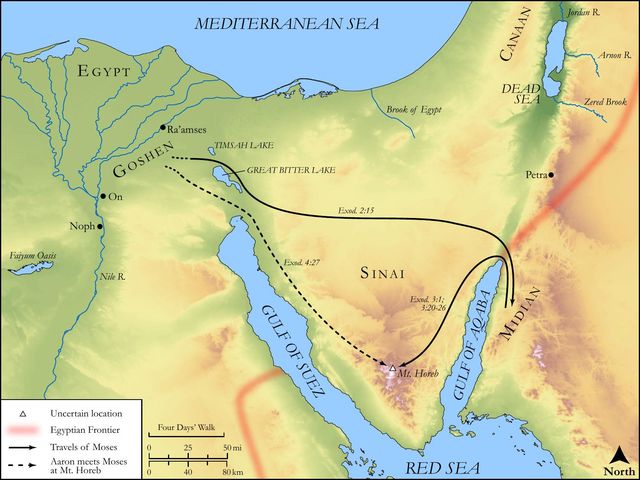
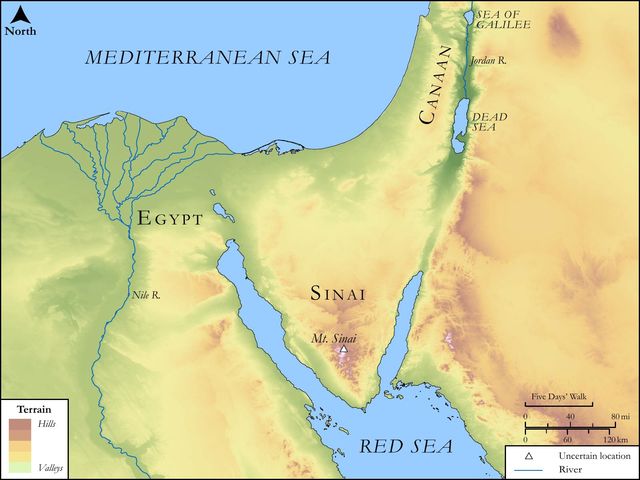
See on the biblical-era maps

Study this verse
Public-domain commentary
Matthew Henry
From his Commentary on the Whole Bible. Henry comments on passages, not single verses — this entry covers Exodus 3:11–15. His three-level outline is real structure in the source text, so it is rendered as structure.
God, having spoken to Moses, allows him also a liberty of speech, which he here improves; and,
I.He objects his own insufficiency for the service he was called to (Exo 3:11):
Who am I? He thinks himself unworthy of the honour, and not par negotio - equal to the task. He thinks he wants courage, and therefore cannot go to Pharaoh, to make a demand which might cost the demandant his head: he thinks he wants skill, and therefore cannot bring forth the children of Israel out of Egypt; they are unarmed, undisciplined, quite dispirited, utterly unable to help themselves; it is morally impossible to bring them out.
1.Moses was incomparably the fittest of any man living for this work, eminent for learning, wisdom, experience, valour, faith, holiness; and yet he says, Who am I? Note, The more fit any person is for service commonly the less opinion he has of himself: see Jdg 9:8, etc.
2.The difficulties of the work were indeed very great, enough to startle the courage and stagger the faith of Moses himself. Note, Even wise and faithful instruments may be much discouraged at the difficulties that lie in the way of the church's salvation.
3.Moses had formerly been very courageous when he slew the Egyptian, but now his heart failed him; for good men are not always alike bold and zealous.
4.Yet Moses is the man that does it at last; for God gives grace to the lowly. Modest beginnings are very good presages.
II.God answers this objection, Exo 3:12.
1.He promises him his presence: Certainly I will be with thee, and that is enough. Note, Those that are weak in themselves may yet do wonders, being strong in the Lord and in the power of his might; and those that are most diffident of themselves may be most confident in God. God's presence puts an honour upon the worthless, wisdom and strength into the weak and foolish, makes the greatest difficulties dwindle to nothing, and is enough to answer all objections.
2.He assures him of success, and that the Israelites should serve God upon this mountain. Note,
(1.)Those deliverances are most valuable which open to us a door of liberty to serve God.
(2.)If God gives us opportunity and a heart to serve him, it is a happy and encouraging earnest of further favours designed us.
III.He begs instructions for the executing of his commission, and has them, thoroughly to furnish him.
He desires to know by what name God would at this time make himself known, Exo 3:13.
1.He supposes the children of Israel would ask him, What is his name? This they would ask either,
(1.)To perplex Moses: he foresaw difficulty, not only in dealing with Pharaoh, to make him willing to part with them, but in dealing with them, to make them willing to remove. They would be scrupulous and apt to cavil, would bid him produce his commission, and probably this would be the trial: "Does he know the name of God? Has he the watch-word?" Once he was asked, Who made thee a judge? Then he had not his answer ready, and he would not be nonplussed so again, but would be able to tell in whose name he came. Or,
(2.)For their own information. It is to be feared that they had grown very ignorant in Egypt, by reason of their hard bondage, want of teachers, and loss of the sabbath, so that they needed to be told the first principles of the oracles of God. Or this question, What is his name? amounted to an enquiry into the nature of the dispensation they were now to expect: "How will God in it be known to us, and what may we depend upon from him?"
2.He desires instructions what answer to give them: "What shall I say to them? What name shall I vouch to them for the proof of my authority? I must have something great and extraordinary to say to them; what must it be? If I must go, let me have full instructions, that I may not run in vain." Note,
(1.)It highly concerns those who speak to people in the name of God to be well prepared beforehand.
(2.)Those who would know what to say must go to God, to the word of his grace and to the throne of his grace, for instructions, Eze 2:7; Eze 3:4, Eze 3:10, Eze 3:17.
(3.)Whenever we have any thing to do with God, it is desirable to know, and our duty to consider, what is his name.
IV.God readily gives him full instructions in this matter. Two names God would now be known by: -
1.A name that denotes what he is in himself (Exo 3:14): I am that I am. This explains his name Jehovah, and signifies,
(1.)That he is self-existent; he has his being of himself, and has no dependence upon any other: the greatest and best man in the world must say, By the grace of God I am what I am; but God says absolutely - and it is more than any creature, man or angel, can say - I am that I am. Being self-existent, he cannot but be self-sufficient, and therefore all-sufficient, and the inexhaustible fountain of being and bliss.
(2.)That he is eternal and unchangeable, and always the same, yesterday, today, and for ever; he will be what he will be and what he is; see Rev 1:8.
(3.)That we cannot by searching find him out. This is such a name as checks all bold and curious enquiries concerning God, and in effect says, Ask not after my name, seeing it is secret, Jdg 13:18; Pro 30:4. Do we ask what is God? Let it suffice us to know that he is what he is, what he ever was, and ever will be. How little a portion is heard of him! Job 26:14.
(4.)That he is faithful and true to all his promises, unchangeable in his word as well as in his nature, and not a man that he should lie. Let Israel know this, I AM hath sent me unto you.
2.A name that denotes what he is to his people. Lest that name I AM should amuse and puzzle them, he is further directed to make use of another name of God more familiar and intelligible: The Lord God of your fathers hath sent me unto you (Exo 3:15): Thus God had made himself know to him (Exo 3:6), and thus he must make him known to them,
(1.)That he might revive among them the religion of their fathers, which, it is to be feared, was much decayed and almost lost. This was necessary to prepare them for deliverance, Psa 80:19.
(2.)That he might raise their expectations of the speedy performance of the promises made unto their fathers. Abraham, Isaac, and Jacob, are particularly named, because with Abraham the covenant was first made, and with Isaac and Jacob often expressly renewed; and these three were distinguished from their brethren, and chosen to be the trustees of the covenant, when their brethren were rejected. God will have this to be his name for ever, and it has been, is, and will be, his name, by which his worshippers know him, and distinguish him from all false gods; see Kg1 18:36. Note, God's covenant-relation to his people is what he will be ever mindful of, what he glories in, and what he will have us never forget, but give him the glory of: if he will have this to be his memorial unto all generations, we have all the reason in the world to make it so with us, for it is a precious memorial.
Continue studying Exodus 3:13 across the web’s major study libraries — every link below opens this exact verse, chapter, or book on the destination site.
Read & Compare
 BibleGatewayThis verse in more than 200 translations and 70 languages.
 Bible.comThe YouVersion reader — hundreds of translations, reading plans, and highlights.
 ESV.orgCrossway's official English Standard Version reader.
 NET BibleThe NET translation with 60,000+ translators' notes on every rendering decision.
 STEP BibleTyndale House's free study tool — original text, vocabulary, and scholarly resources.
 BibliaLogos Bible Software's free web reader.
 USCCBThe New American Bible (Revised Edition) with the U.S. bishops' study notes.
Commentaries
 BibleHub CommentariesDozens of classic commentaries on this verse, gathered on one page.
 StudyLightMore than 100 commentary sets — the largest collection on the web.
 BibleRefPlain-English commentary on what this verse means, verse by verse.
 Enduring WordDavid Guzik's free commentary on this chapter, widely used by Bible teachers.
 Bible Study ToolsVerse commentary alongside Greek and Hebrew study aids.
Original Language & Research
- BibleHub InterlinearThe verse word by word — original language, transliteration, and English.
- BibleHub LexiconEvery word's original-language definition and Strong's entry.
 Blue Letter BibleDeep-study tools — Strong's numbers, concordance, and word studies.
 SefariaThe Hebrew text with Rashi and centuries of Jewish commentary.
Sermons, Hymns & Audio


TrulyRandomVerse is not affiliated with these sites and doesn’t control their content. They’re linked because they’re genuinely useful.
Summary
In Exodus 3:13, Moses, having received his divine commission to deliver Israel, anticipates the crucial question from the enslaved Israelites: "What is his name?" He astutely recognizes that for a people steeped in Egyptian polytheism, knowing the specific name of their God is paramount for understanding His unique essence, character, authority, and distinction from other deities. This pivotal inquiry by Moses sets the stage for one of the most profound divine self-revelations in the Old Testament, establishing the incomparable identity of the God of Israel.
Context
ShowHideLiterary Context
Exodus 3:13 is a pivotal moment within the broader narrative of God's call to Moses at the burning bush in Exodus 3. Following God's declaration to "send you to Pharaoh that you may bring my people, the children of Israel, out of Egypt" (Exodus 3:10), Moses raises a series of objections and questions. His initial protest, "Who am I that I should go to Pharaoh?" (Exodus 3:11), was met with God's foundational assurance of His unwavering presence: "I will be with you" (Exodus 3:12). Moses's question in verse 13 is his second objection, a practical and theological one, immediately preceding God's momentous revelation of His divine name, YHWH, in Exodus 3:14, which directly answers this inquiry. This dialogue highlights Moses's role as a mediator who understands the people's needs and God's patient engagement with human concerns.
Historical & Cultural Context
The Israelites had endured over 400 years of slavery in Egypt, a land saturated with a complex pantheon of gods and goddesses. Each Egyptian deity had a specific name, domain, and associated powers. In ancient Near Eastern cultures, a name was not merely a label but conveyed the essence, character, authority, and even the destiny of a person or deity. To know a god's name was to understand their nature, power, and sphere of influence, providing a basis for worship, invocation, or distinction. Moses, having grown up in Pharaoh's court and being familiar with Egyptian religious practices, understood that merely stating "the God of your fathers" would be insufficient for a people accustomed to specific divine identities and potentially skeptical after generations of oppression. They would require a clear, authoritative name to differentiate this God from the myriad of Egyptian deities and to grasp the weight of His command.
Key Themes
ShowHideThis verse contributes significantly to several key themes within Exodus and the Pentateuch. It underscores the theme of Divine Self-Revelation, as Moses's question directly precipitates God's profound disclosure of His unique name and character in Exodus 3:14. It also highlights the Continuity of God's Covenant, as Moses refers to "the God of your fathers," linking the present divine intervention to the historical relationship God had established with Abraham, Isaac, and Jacob (Exodus 3:6). Furthermore, the verse emphasizes the Importance of God's Name and Identity, showing that true faith and obedience are built upon knowing who God is—His nature, attributes, and covenant faithfulness—rather than merely knowing about Him. Moses's role here also foreshadows his future as a Mediator between God and Israel, as he articulates the people's anticipated need for clarity and understanding.
Exposition and Analysis
ShowHideMoses's question in Exodus 3:13 is a testament to his practical wisdom and theological insight, anticipating the deep need of the enslaved Israelites for a clear and authoritative identification of the God who was sending him. It is not a sign of doubt in God's power, but rather a pragmatic concern rooted in his understanding of the cultural and theological landscape of his time.
Key Word Analysis
ShowHideThis plural noun, derived from a primitive word, refers to "gods in the ordinary sense," but is "specifically used (in the plural thus, especially with the article) of the supreme God." It can also occasionally apply to magistrates or as a superlative. In this context, with the definite article, it unequivocally refers to the one, supreme God of Israel, highlighting His singular authority and majesty. Moses uses this term to connect with the ancestral faith, but also implies the need for a more specific identifier to distinguish this supreme God from the many gods of Egypt.
A primitive word meaning "father," used in both literal and figurative applications, including "fore-father." Here, it specifically refers to the patriarchs Abraham, Isaac, and Jacob, emphasizing the continuity of God's covenant relationship with His chosen people across generations. Moses's appeal to "the God of your fathers" aims to evoke a sense of heritage and divine faithfulness, grounding the present miraculous intervention in Israel's foundational history.
A primitive word denoting "an appellation, as a mark or memorial of individuality." It implies "honor, authority, character, renown, report." In ancient Near Eastern thought, a name was intrinsically linked to a person's essence and power. To know God's name was to know His character, His nature, and His authority. Moses's question about God's name is therefore a profound theological inquiry, seeking not just a label, but a revelation of God's very being that would establish His unique identity and credibility among the Israelites.
A primitive root meaning "to send away, for, or out (in a great variety of applications)." This verb underscores the divine commission given to Moses. God is not merely suggesting or advising; He is actively dispatching Moses with a specific mission. The Israelites' question about God's name is therefore also an inquiry into the authority and nature of the one who has "sent" Moses, validating the divine origin and power behind the impending liberation.
Verse Breakdown
ShowHide"And Moses said unto God, Behold, [when] I come unto the children of Israel, and shall say unto them, The God of your fathers hath sent me unto you;"
This opening clause sets the scene for Moses's anticipated encounter with the Israelites. Moses, in direct dialogue with God, articulates his understanding of the situation: he will present himself as God's messenger, proclaiming that the ancestral God has commissioned him. This statement reveals Moses's initial plan for communicating his divine mandate, rooted in the historical covenant relationship.
"and they shall say to me, What [is] his name?"
This is the core of Moses's concern and the pivotal question of the verse. Moses, with remarkable foresight, anticipates the Israelites' immediate and crucial inquiry. This question is not born of skepticism toward God's existence, but rather a profound cultural and theological need to identify and distinguish this God from the polytheistic environment of Egypt. For the Israelites, a name would convey essence, authority, and the very character of the deity.
"what shall I say unto them?"
This final clause is Moses's direct plea to God for the necessary information. It is a genuine request for divine instruction, highlighting Moses's dependence on God for the success of his mission. It underscores his recognition that he cannot proceed without a clear, authoritative answer that will satisfy the people's theological and practical need for divine identification. This question directly prompts God's momentous self-revelation in the subsequent verse.
Literary Devices
ShowHideThe passage employs several significant literary devices. Dialogue is central, as the exchange between Moses and God drives the narrative forward and reveals their respective characters and intentions. Moses's question functions as a form of Anticipation or Foreshadowing, as he accurately predicts the Israelites' crucial inquiry, thereby setting the stage for God's profound self-revelation in Exodus 3:14. The question "What is his name?" combined with "what shall I say unto them?" also functions as a Rhetorical Question in that it is designed to elicit a specific, crucial response from God, rather than merely expressing doubt. There is also a subtle Irony in Moses, who initially protested his inadequacy, now demonstrating a deep and astute understanding of the people's spiritual and cultural needs, thereby prompting God to reveal His most sacred name.
Theological and Thematic Connections
ShowHideExodus 3:13 is a foundational text concerning God's identity and His relationship with humanity. It underscores that God is not an abstract force but a personal, covenant-keeping God who desires to be known by His people. Moses's question highlights the ancient understanding that a name reveals character and authority, setting the stage for God's self-disclosure as YHWH, the "I AM," in the very next verse. This revelation distinguishes the God of Israel from all other deities, establishing His uniqueness, self-existence, and eternal faithfulness. The divine patience with Moses's persistent questions also demonstrates God's willingness to engage with human doubts and provide clarity, building a relationship of trust and understanding. This interaction affirms that true faith is rooted in knowing God for who He truly is, not merely in blind obedience.
Reflection and Application
ShowHideExodus 3:13 offers profound lessons for contemporary believers. Just as Moses, a divinely appointed leader, felt the weight of his commission and anticipated the practical and theological questions of the people, we too are called to engage thoughtfully with the world around us. In an increasingly secular or pluralistic society, people still ask, "Who is your God?" or "What is His name?" This verse reminds us that our faith is not based on an unnamed, abstract deity, but on the personal, covenant-keeping God who has revealed Himself. Understanding God's revealed name, YHWH (often translated as "I AM"), is foundational to our faith, signifying His eternal, self-existent, and unchanging nature. Our trust and worship are built upon His character and faithfulness, not merely on His actions. Furthermore, like Moses, we are called to be prepared to articulate who God is and what He has done, especially when confronted with skepticism or alternative worldviews. We must be ready to give a reason for the hope that is within us, anticipating and addressing the genuine inquiries of those who seek to understand the God we serve, always relying on God to provide the necessary answers and empower our witness.
Questions for Reflection
ShowHideFAQ
ShowHideWhy was knowing God's name so important in ancient cultures?
ShowHideIn ancient Near Eastern cultures, a name was far more than a mere label; it was believed to embody the essence, character, authority, and power of the person or deity it represented. To know a god's name was to understand their nature, their sphere of influence, and even to have a basis for invoking them or distinguishing them from other deities. For the Israelites, who had lived for centuries under Egyptian polytheism, knowing God's specific name would provide a clear, authoritative identity for the God who was sending Moses, distinguishing Him from the numerous Egyptian gods and establishing His unique claim to worship and obedience. This cultural understanding is crucial for appreciating the depth of Moses's question in Exodus 3:13.
Did Moses doubt God's power by asking "What is his name?"
ShowHideMoses's question was not an expression of doubt in God's power or existence. Instead, it was a practical, insightful, and theologically astute inquiry. Moses understood the cultural significance of a divine name and recognized that the enslaved Israelites, having been exposed to Egyptian polytheism, would need a specific, authoritative identification of the God sending him. His question was a request for the necessary revelation to effectively convey God's authority and establish His unique identity and credibility among the people, demonstrating his concern for the success of the mission and the people's understanding.
What does "the God of your fathers" signify in this context?
ShowHide"The God of your fathers" refers to the God of Abraham, Isaac, and Jacob, the patriarchs of the Israelite nation. This phrase, used by God Himself in Exodus 3:6, and echoed by Moses in Exodus 3:13, emphasizes the continuity of God's covenant relationship with His people across generations. It serves to remind the Israelites of their heritage and God's unwavering faithfulness to the promises made to their ancestors, grounding the current divine intervention in their rich historical and theological roots and affirming God's unchanging character.
Christ-Centered Fulfillment
ShowHideThe profound question posed by Moses in Exodus 3:13, seeking to know God's name and character, finds its ultimate and most complete fulfillment in the person of Jesus Christ. While God revealed His covenant name YHWH to Moses, signifying His eternal, self-existent nature ("I AM WHO I AM" in Exodus 3:14), Jesus, through His own emphatic "I AM" statements (e.g., Before Abraham was, I am), unequivocally declared His divine identity, echoing the very essence of the God who spoke from the burning bush. In Jesus, the abstract concept of God's name becomes incarnate and accessible. He is the visible image of the invisible God (Colossians 1:15), perfectly embodying God's nature, power, and redemptive purpose. Through His life, sacrificial death, and glorious resurrection, Jesus fully reveals the Father's love and establishes the new covenant, making God's name known and His presence powerfully felt. He is the one through whom we truly know God (John 14:9), and there is salvation in no other name (Acts 4:12). Thus, Moses's ancient inquiry is answered definitively in the person of Christ, who is the full and final revelation of God to humanity (Hebrews 1:1-3).