


Exodus 3:6
Bible text: King James Version (1769 Blayney text) · Public domain
Bible text: King James Version with Strong's numbers · Public domain
Bible text: Berean Standard Bible · Public domain
Bible text: American Standard Version (1901) · Public domain
Bible text: World English Bible, Messianic edition · Public domain
Bible text: Geneva Bible (1599) · Public domain
Bible text: Young's Literal Translation · Public domain
- וַיֹּאמֶרvai·Yo·merand he saidH559Conj-w ¦ V-Qal-ConsecImperf-3msVerb Qal Consecutive Imperfect 3rd Singular Masculineוַandיֹּאמֶרhe said
- אָנֹכִי'a·no·KhiIH595Pro-1csPronoun Personal 1st Singular common gender
- אֱלֹהֵי'e·lo·Hei[am] [the] God ofH430N-mpcNoun Plural Masculine Construct
- אָבִיךָ'a·Vi·khayour fatherH1N-msc ¦ 2msNoun Singular Masculine Constructאָבִיfatherךָyour
- אֱלֹהֵי'e·lo·Hei[the] God ofH430N-mpcNoun Plural Masculine Construct
- אַבְרָהָם'av·ra·HamAbrahamH85N-proper-mNoun Proper Masculine
- אֱלֹהֵי'e·lo·Hei[the] God ofH430N-mpcNoun Plural Masculine Construct
- יִצְחָקyitz·ChakIsaacH3327N-proper-mNoun Proper Masculine
- וֵאלֹהֵיve·lo·Heiand [the] God ofH430Conj-w ¦ N-mpcNoun Plural Masculine Constructוֵandאלֹהֵי[the] God of
- יַעֲקֹבya·'a·KoJacobH3290N-proper-mNoun Proper Masculine
- וַיַּסְתֵּרvai·yas·Terand he hidH5641Conj-w ¦ V-Hiphil-ConsecImperf-3msVerb Hiphil Consecutive Imperfect 3rd Singular Masculineוַandיַּסְתֵּרhe hid
- מֹשֶׁהmo·ShehMosesH4872N-proper-mNoun Proper Masculine
- פָּנָיוpa·Navhis faceH6440N-mpc ¦ 3msNoun Plural Masculine Constructפָּנָיfaceוhis
- כִּיkiforH3588PrtParticle Conditional
- יָרֵאya·Re'he was afraidH3372V-Qal-Perf-3msVerb Qal Perfect 3rd Singular Masculine
- מֵהַבִּיטme·ha·Bitfrom lookingH5027Prep-m ¦ V-Hiphil-InfVerb Hiphil Infinitive Constructמֵfromהַבִּיטlooking
- אֶל'eltoH413PrepPreposition
- הָאֱלֹהִיםha·'E·lo·Him<the> GodH430Art ¦ N-mpNoun Plural Masculine Absoluteהָ<the>אֱלֹהִיםGod
English is a literal word-by-word gloss of the Hebrew, not the KJV's wording. Why?
This is the original text the KJV's translators worked from — each Hebrew word with its own literal English meaning in this verse, prepared by scholars at Tyndale House, Cambridge. The KJV translates whole sentences, not word by word, so its wording differs: one Hebrew word can become several English words, and the KJV may choose “the LORD” where the gloss reads “Yahweh”. Both are faithful — they answer different questions. For the KJV's own rendering, switch to the KJV text.
Details
See on the biblical-era maps

Study this verse
Public-domain commentary
Matthew Henry
From his Commentary on the Whole Bible. Henry comments on passages, not single verses — this entry covers Exodus 3:1–6. His four-level outline is real structure in the source text, so it is rendered as structure.
The years of the life of Moses are remarkably divided into three forties: the first forty he spent as a prince in Pharaoh's court, the second a shepherd in Midian, the third a king in Jeshurun; so changeable is the life of men, especially the life of good men. He had now finished his second forty, when he received his commission to bring Israel out of Egypt. Note, Sometimes it is long before God calls his servants out of that work which of old he designed them for, and has been graciously preparing them for. Moses was born to be Israel's deliverer, and yet not a word is said of it to him till he is eighty years of age. Now obverve,
I.How this appearance of God to him found him employed.
He was keeping the flock (tending sheep) near mount Horeb, Exo 3:1. This was a poor employment for a man of his parts and education, yet he rests satisfied with it, and thus learns meekness and contentment to a high degree, for which he is more celebrated in sacred writ than for all his other learning. Note,
1.In the calling to which we are called we should abide, and not be given to change.
2.Even those that are qualified for great employments and services must not think it strange if they be confined to obscurity; it was the lot of Moses before them, who foresaw nothing to the contrary but that he should die, as he had lived a great while, a poor despicable shepherd. Let those that think themselves buried alive be content to shine like lamps in their sepulchres, and wait till God's time come for setting them on a candlestick. Thus employed Moses was, when he was honoured with this vision. Note,
(1.)God will encourage industry. The shepherds were keeping their flocks when they received the tidings of our Saviour's birth, Luk 2:8. Satan loves to find us idle; God is well pleased when he find us employed.
(2.)Retirement is a good friend to our communion with God. When we are alone, the Father is with us. Moses saw more of God in a desert than ever he had seen in Pharaoh's court.
II.What the appearance was.
To his great surprise he saw a bush burning, when he perceived no fire either from earth or heaven to kindle it, and, which was more strange, it did not consume, Exo 3:2. It was an angel of the Lord that appeared to him; some think, a created angel, who speaks in the language of him that sent him; others, the second person, the angel of the covenant, who is himself Jehovah. It was an extraordinary manifestation of the divine presence and glory; what was visible was produced by the ministry of an angel, but he heard God in it speaking to him.
1.He saw a flame of fire; for our God is a consuming fire. When Israel's deliverance out of Egypt was promised to Abraham, he saw a burning lamp, which signified the light of joy which that deliverance should cause (Gen 15:17); but now it shines brighter, as a flame of fire, for God in that deliverance brought terror and destruction to his enemies, light and heat to his people, and displayed his glory before all. See Isa 10:17.
2.This fire was not in a tall and stately cedar, but in a bush, a thorny bush, so the word signifies; for God chooses the weak and despised things of the world (such as Moses, now a poor shepherd), with them to confound the wise; he delights to beautify and crown the humble.
3.The bush burned, and yet was not consumed, an emblem of the church now in bondage in Egypt, burning in the brick-kilns, yet not consumed; perplexed, but not in despair; cast down, but not destroyed.
III.The curiosity Moses had to enquire into this extraordinary sight:
I will turn aside and see, Exo 3:3. He speaks as one inquisitive and bold in his enquiry; whatever it was, he would, if possible, know the meaning of it. Note, Things revealed belong to us, and we ought diligently to enquire into them.
IV.The invitation he had to draw near, yet with a caution not to come too near, nor rashly.
1.God gave him a gracious call, to which he returned a ready answer, Exo 3:4. When God saw that he took notice of the burning bush, and turned aside to see it, and left his business to attend it, then God called to him. If he had carelessly neglected it as an ignis fatuus - a deceiving meteor, a thing not worth taking notice of, it is probable that God would have departed, and said nothing to him; but, when he turned aside, God called to him. Note, Those that would have communion with God must attend upon him, and approach to him, in those ordinances wherein he is pleased to manifest himself, and his power and glory, though it be in a bush; they must come to the treasure, though in an earthen vessel. Those that seek God diligently shall find him, and find him their bountiful rewarder. Draw nigh to God, and he will draw nigh to you. God called him by name, Moses, Moses. This which he heard could not but surprise him much more than what he saw. The word of the Lord always went along with the glory of the Lord, for every divine vision was designed for divine revelation, Job 4:16, etc.; Job 32:14-15. Divine calls are then effectual,
(1.)When the Spirit of God makes them particular, and calls us by name. The word calls, Ho, every one! The Spirit, by the application of that, calls, Ho, such a one! I know thee by name, Exo 33:12.
(2.)When we return an obedient answer to them, as Moses here, "Here am I, what saith my Lord unto his servant? Here am I, not only to hear what is said, but to do what I am bidden."
2.God gave him a needful caution against rashness and irreverence in his approach,
(1.)He must keep his distance; draw near, but not too near; so near as to hear, but not so near as to pry. His conscience must be satisfied, but not his curiosity; and care must be taken that familiarity do not breed contempt. Note, In all our approaches to God, we ought to be deeply affected with the infinite distance there is between us and God, Ecc 5:2. Or this may be taken as proper to the Old Testament dispensation, which was a dispensation of darkness, bondage, and terror, from which the gospel happily frees us, giving us boldness to enter into the holiest, and inviting us to draw near.
(2.)He must express his reverence, and his readiness to obey: Put off thy shoes from off thy feet, as a servant. Putting off the shoe was then what putting off the hat is now, a token of respect and submission. "The ground, for the present, is holy ground, made so by this special manifestation of the divine presence, during the continuance of which it must retain this character; therefore tread not on that ground with soiled shoes." Keep thy foot, Ecc 5:1. Note, We ought to approach to God with a solemn pause and preparation; and, though bodily exercise alone profits little, yet we ought to glorify God with our bodies, and to express our inward reverence by a grave and reverent behaviour in the worship of God, carefully avoiding everything that looks light, and rude, and unbecoming the awfulness of the service.
V.The solemn declaration God made of his name, by which he would be known to Moses: I am the God of thy father, Exo 3:6.
1.He lets him know that it is God who speaks to him, to engage his reverence and attention, his faith and obedience; for this is enough to command all these: I am the Lord. Let us always hear the word as the word of God, Th1 2:13.
2.He will be known as the God of his father, his pious father Amram, and the God of Abraham, Isaac, and Jacob, his ancestors, and the ancestors of all Israel, for whom God was now about to appear. By this God designed,
(1.)To instruct Moses in the knowledge of another world, and to strengthen his belief of a future state. Thus it is interpreted by our Lord Jesus, the best expositor of scripture, who from this proves that the dead are raised, against the Sadducees. Moses, says he, showed it at the bush (Luk 20:37), that is, God there showed it to him, and in him to us, Mat 22:31, etc. Abraham was dead, and yet God is the God of Abraham; therefore Abraham's soul lives, to which God stands in relation; and, to make his soul completely happy, his body must live again in due time. This promise made unto the fathers, that God would be their God, must include a future happiness; for he never did anything for them in this world sufficient to answer to the vast extent and compass of that great word, but, having prepared for them a city, he is not ashamed to be called their God, Heb 11:16; and see Act 26:6, Act 26:7; Act 24:15.
(2.)To assure Moses of the fulfillment of all those particular promises made to the fathers. He may confidently expect this, for by these words it appears that God remembered his covenant, Exo 2:24. Note,
[1.]God's covenant-relation to us as our God is the best support in the worst of times, and a great encouragement to our faith in particular promises.
[2.]When we are conscious to ourselves of our own great unworthiness we may take comfort from God's relation to our fathers, Ch2 20:6.
VI.The solemn impression this made upon Moses:
He hid his face, as one both ashamed and afraid to look upon God. Now that he knew it was a divine light his eyes were dazzled with it; he was not afraid of a burning bush till he perceived that God was in it. Yea, though God called himself the God of his father, and a God in covenant with him, yet he was afraid. Note,
1.The more we see of God the more cause we shall see to worship him with reverence and godly fear.
2.Even the manifestations of God's grace and covenant-love should increase our humble reverence of him.
Historical interpretation
Four Centuries of Reception
11 surviving comments on this verse. Each one is dated, so this reads as a timeline rather than a list.
Select a marker to jump to its quote. Markers stagger vertically where authors wrote within a few decades of each other.
Then come unto him the Sadducees, which say there is no resurrection; and they asked him, saying, Master, Moses wrote unto us, If a man's brother die, and leave his wife behind him, and leave no children, that his brother should take his wife, and raise up seed unto his brother. Now there were seven brethren: and the first took a wife, and dying left no seed. And the second took her, and died, neither left he any seed: and the third likewise. And the seven had her, and left no seed: last of all the woman died also. In the resurrection therefore, when they shall rise, whose wife shall she be of them? for the seven had her to wife. And Jesus answering said unto them, Do ye not therefore err, because ye know not the scriptures, neither the power of God? For when they shall rise from the dead, they neither marry, nor are given in marriage; but are as the angels which are in heaven. And as touching the dead, that they rise: have ye not read in the book of Moses, how in the bush God spake unto him, saying, I am the God of Abraham, and the God of Isaac, and the God of Jacob? [Exodus 3:6] He is not the God of the dead, but the God of the living: ye therefore do greatly err.
The same day came to him the Sadducees, which say that there is no resurrection, and asked him, Saying, Master, Moses said, If a man die, having no children, his brother shall marry his wife, and raise up seed unto his brother. Now there were with us seven brethren: and the first, when he had married a wife, deceased, and, having no issue, left his wife unto his brother: Likewise the second also, and the third, unto the seventh. And last of all the woman died also. Therefore in the resurrection whose wife shall she be of the seven? for they all had her. Jesus answered and said unto them, Ye do err, not knowing the scriptures, nor the power of God. For in the resurrection they neither marry, nor are given in marriage, but are as the angels of God in heaven. But as touching the resurrection of the dead, have ye not read that which was spoken unto you by God, saying, I am the God of Abraham, and the God of Isaac, and the God of Jacob? God is not the God of the dead, but of the living. [Exodus 3:6] And when the multitude heard this, they were astonished at his doctrine.
And when forty years were expired, there appeared to him in the wilderness of mount Sina an angel of the Lord in a flame of fire in a bush. When Moses saw it, he wondered at the sight: and as he drew near to behold it, the voice of the Lord came unto him, Saying, I am the God of thy fathers, the God of Abrham, and the God of Isaac, and the God of Jacob. Then Moses trembled, and durst not behold. [Exodus 3:6]
For Abraham sets forth moral philosophy through obedience; his obedience was indeed so great, his adherence to orders so strict that when he heard the command “Go forth out of your country, and from your kindred, and out of your father’s house” he did not delay but did as he was told forthwith. And he did even more than that: on hearing that he was to sacrifice his son, he does not hesitate but complies with the command and, to give an example to those who should come after of the obedience in which moral philosophy consists, “he spared not his only son.” Isaac also is an exponent of natural philosophy when he digs wells and searches out the roots of things. And Jacob practices the inspective science in that he earned his name of Israel from his contemplation of the things of God, and saw the camps of heaven and beheld the house of God and the angel’s paths—the ladders reaching up from earth to heaven.
God has been recorded indeed to be the God “of Abraham, and the God of Isaac and the God of Jacob.” He indeed who wishes the light to belong to none other than men (because it is said, “The life was the light of men”) will think, according to this analogy, that the God of Abraham and the God of Isaac and the God of Jacob is the God of no one except these three fathers alone. But he is at least also the God of Elijah, and, as Judith says, the God of her father Simeon, and he is God of the Hebrews. Wherefore, according to the analogy, if nothing prevents him from being the God of others also, nothing prevents the light of men from also being the light of other creatures besides men.
If the God of the universe, having been made familiar to the saints, becomes their God, the being named the God of Abraham and the God of Isaac and the God of Jacob, by how much more will it be possible for the Holy Spirit, having been made familiar to the prophets, to be called their spirit, that the Spirit might thus be said to be the spirit of Elijah and the spirit of Isaiah?
And when the holy One called Moses from the bush he said thus to him: “I am the God of Abraham, of Isaac and of Jacob.” When Death heard this utterance, he trembled and feared and was terrified and perturbed and knew that he had not become king forever over the children of Adam. From the hour that he heard God saying to Moses, “I am the God of Abraham, of Isaac and of Jacob,” Death [struck] his hands together, for he learned that God is king of the dead and of the living and that it is appointed to the children of Adam to come forth from his darkness and arise with their bodies. And observe that our Redeemer Jesus also, when he repeated this utterance to the Sadducees, when they were disputing with him about the resurrection of the dead, thus said, “God is not [God] of the dead, for all are alive unto him.”
For the name of Divinity is given for the highest honor in the world, and with whomsoever God is well pleased, he applies it to him. But however, the names of God are many and are venerable, as he delivered his names to Moses, saying to him, “I am the God of your fathers, the God of Abraham and the God of Isaac and the God of Jacob. This is my name forever, and this is my memorial unto generations.” And he called his name “Ahiyah ashar Ahiyah,” “El Shaddai” and “Adonai Sabaoth.” By these names God is called. The great and honorable name of Godhead he withheld not from his righteous ones; even as, though he is the great king, without grudging he applied the great and honorable name of kingship to men who are his creatures.
Of the other titles, some are evidently names of his authority, others of his government of the world, and of this viewed under a twofold aspect: the one before, the other in, the incarnation. For instance, the Almighty, the King of Glory, or of the Ages, or of the Powers, or of the Beloved or of Kings. Or again, the Lord of Sabaoth, that is, of hosts, or of powers or of lords; these are clearly titles belonging to his authority. But the God either of salvation or of vengeance, or of peace, or of righteousness, or of Abraham, Isaac and Jacob, and of all the spiritual Israel that sees God—these belong to his government. For since we are governed by these three things, the fear of punishment, the hope of salvation and of glory besides, and the practice of the virtues by which these are attained, the name of the God of vengeance governs fear, and that of the God of salvation our hope, and that of the God of virtues our practice; that whoever attains to any of these may, as carrying God in himself, press on yet more unto perfection and to that affinity which arises out of virtues. Now these are names common to the Godhead, but the proper name of the unoriginate is “Father,” and that of the unoriginately begotten is “Son” and that of the unbegottenly proceeding or going forth is “the Holy Ghost.”
God gives witness and says, “I am the God of Abraham, the God of Isaac and the God of Jacob.” Were there not other patriarchs? Was not Noah a holy man before these, who alone in the whole human race together with his whole house deserved to be delivered from the flood, in whom and in his sons the church is represented? They escape the flood, with wood carrying them. And then afterwards [come] the great men whom we know, whom Holy Scripture commends, Moses faithful in all his house. And those three are named, as if they alone were deserving of him: “I am the God of Abraham, the God of Isaac and the God of Jacob; this is my name forever.”An enormous mystery! The Lord has the power to open both our mouths and your hearts that we may be able to speak as he has deigned to reveal and that you may be able to grasp as it is advantageous to you.
Therefore those patriarchs are three: Abraham, Isaac and Jacob. You already know that the sons of Jacob were twelve and from them are the people of Israel because Jacob himself is Israel and the people of Israel are the twelve tribes belonging to the twelve sons of Israel. Abraham, Isaac and Jacob, three fathers and one people. Three fathers, as it were, in the beginning of the people; three fathers in whom the people was prefigured. And the earlier people itself [is] the present people. For in the people of the Jews the people of the Christians was prefigured. There a figure, here the truth; there a shadow, here the body, as the apostle says, “Now these things happened to them in figure.” It is the apostle’s voice, and he says, “They were written for us, upon whom the end of the world has come.” Let your mind return to Abraham, Isaac and Jacob. In those three we find free women giving birth and bondwomen giving birth. We find there the progeny of free women; we find there also the progeny of bondwomen. The bondwoman signifies nothing good. “Cast out the bondwoman,” [Scripture] says, “and her son; for the son of the bondwoman will not be heir with the son of the free woman.” The apostle mentions this; and in these two sons of Abraham the apostle says was a figure of the two Testaments, Old and New. To the Old Testament belong the lovers of temporal things, the lovers of the world; to the New Testament belong the lovers of eternal life. Therefore that Jerusalem on earth was a shadow of the heavenly Jerusalem, the mother of us all, which is in heaven. And these are the apostle’s words. And about that city from which we are sojourners you know many things, you have already heard many things. Now we find something remarkable in these births, that is, in these offspring, in these procreations of free women and bondwomen, namely, four types of men. And in these four types of men is comprised the figure of the Christian people, so that what was said in regard to these three is not astonishing: “I am the God of Abraham, the God of Isaac and the God of Jacob.”
But the Savior also demonstrated the great ignorance of the Sadducees by bringing forward their own hierophant Moses, who was well and clearly acquainted with the resurrection of the dead. For he has set before us God, he says, as saying in the bush, “I am the God of Abraham, and the God of Isaac and the God of Jacob.” But of whom is he God, if, according to their argument, these have ceased to live? For he is the God of the living; and therefore certainly and altogether they will rise, when his almighty right hand brings them thereunto; and not them only but also all who are upon the earth.
Continue studying Exodus 3:6 across the web’s major study libraries — every link below opens this exact verse, chapter, or book on the destination site.
Read & Compare
 BibleGatewayThis verse in more than 200 translations and 70 languages.
 Bible.comThe YouVersion reader — hundreds of translations, reading plans, and highlights.
 ESV.orgCrossway's official English Standard Version reader.
 NET BibleThe NET translation with 60,000+ translators' notes on every rendering decision.
 STEP BibleTyndale House's free study tool — original text, vocabulary, and scholarly resources.
 BibliaLogos Bible Software's free web reader.
 USCCBThe New American Bible (Revised Edition) with the U.S. bishops' study notes.
Commentaries
 BibleHub CommentariesDozens of classic commentaries on this verse, gathered on one page.
 StudyLightMore than 100 commentary sets — the largest collection on the web.
 BibleRefPlain-English commentary on what this verse means, verse by verse.
 Enduring WordDavid Guzik's free commentary on this chapter, widely used by Bible teachers.
 Bible Study ToolsVerse commentary alongside Greek and Hebrew study aids.
Original Language & Research
- BibleHub InterlinearThe verse word by word — original language, transliteration, and English.
- BibleHub LexiconEvery word's original-language definition and Strong's entry.
 Blue Letter BibleDeep-study tools — Strong's numbers, concordance, and word studies.
 SefariaThe Hebrew text with Rashi and centuries of Jewish commentary.
Sermons, Hymns & Audio


TrulyRandomVerse is not affiliated with these sites and doesn’t control their content. They’re linked because they’re genuinely useful.
Summary
Exodus 3:6 records a pivotal moment of divine self-revelation to Moses at the burning bush, where God identifies Himself as the covenant-keeping God of Abraham, Isaac, and Jacob. This profound declaration establishes the continuity of God's faithfulness and promises across generations, while Moses' immediate response of hiding his face powerfully underscores the overwhelming holiness, majesty, and awe-inspiring nature of God's manifest presence.
Context
ShowHideLiterary Context
This verse is situated at the dramatic climax of Moses' encounter with God at the burning bush, following forty years of exile in Midian. The narrative in Exodus 3 begins with Moses tending his father-in-law Jethro's flock, leading them to Horeb, the mountain of God. There, he witnesses the extraordinary sight of a bush burning without being consumed, which prompts his curiosity. As Moses turns aside to investigate, God calls to him from the bush, instructing him to remove his sandals because the ground is holy. This immediate command establishes the sacredness of the encounter. God's self-identification in this verse then serves as the foundational assurance of His identity and authority before He delivers the momentous commission for Moses to liberate the Israelites from Egyptian bondage, a task Moses initially resists. The declaration also immediately precedes the revelation of God's ineffable name, "I AM THAT I AM," in Exodus 3:14, building upon the covenantal identity established here.
Historical & Cultural Context
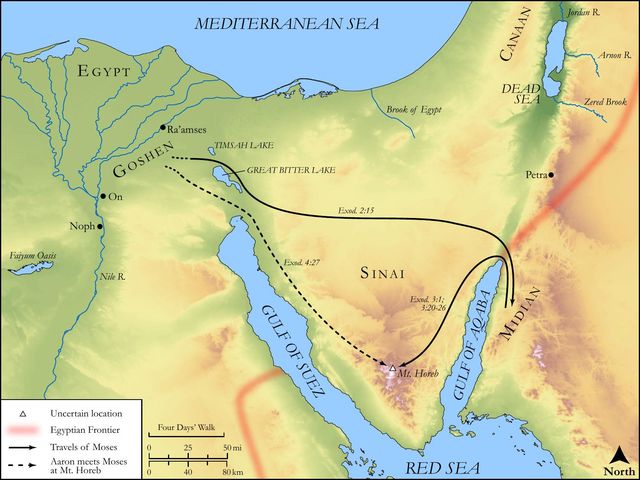
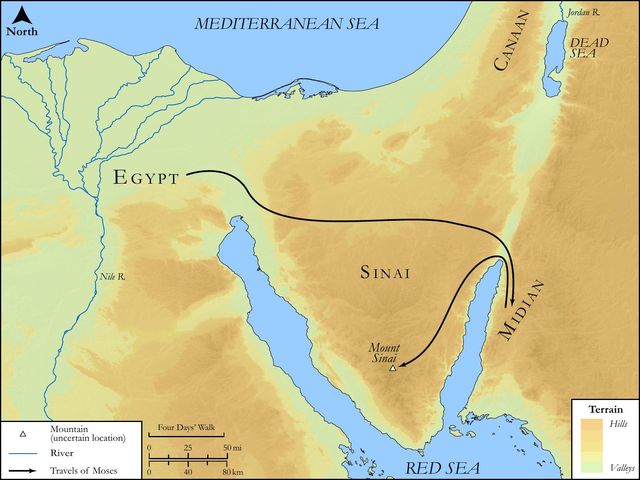
The setting is the wilderness of Midian, a region east of the Gulf of Aqaba, where Moses had fled after killing an Egyptian. This was a nomadic, pastoral environment. The act of removing sandals was a common sign of respect and reverence in Israel when entering a sacred space or in the presence of a superior, signifying humility and recognition of holiness. The identification of God as "the God of Abraham, Isaac, and Jacob" would have resonated deeply with Moses, who, despite his Egyptian upbringing, was aware of his Israelite heritage and the foundational promises made to these patriarchs. The Israelites had been enslaved in Egypt for centuries, and this declaration served to bridge the gap between God's ancient promises and their present suffering, assuring Moses that the God of their ancestors had not forgotten His covenant people.
Key Themes
ShowHideExodus 3:6 is central to several overarching themes in the book of Exodus and the Pentateuch. It powerfully introduces the theme of Divine Revelation, demonstrating that God is a God who actively discloses Himself to humanity, initiating contact and revealing His character and purposes. The emphasis on "the God of Abraham, Isaac, and Jacob" reinforces the theme of Covenant Faithfulness and Continuity, highlighting God's unwavering commitment to the promises made to the patriarchs (e.g., Genesis 12:1-3, Genesis 17:7). This verse also sets the stage for the theme of Divine Deliverance, as the God who remembers His covenant is now poised to act powerfully to rescue His people from oppression. Finally, Moses' reaction underscores the profound theme of God's Holiness and Transcendence, illustrating that the divine presence is utterly pure, majestic, and distinct from humanity, demanding reverence and awe, a theme consistently seen throughout the narrative of Exodus.
Exposition and Analysis
ShowHideKey Word Analysis
ShowHideThis plural form, H430, is used here with a singular verb, referring to the supreme God. It signifies the mighty, powerful, and sovereign Creator, the one true God who is distinct from all other deities. Its use here emphasizes the absolute authority and majesty of the Being speaking to Moses.
A primitive word meaning "father," refers to a literal and immediate ancestor. In this context, "thy father" refers to Moses' immediate paternal lineage, likely Amram (Exodus 6:20), but also broadly connects him to the patriarchal line, signifying a personal and ancestral connection to God's covenant.
A primitive root meaning "to fear," but also "to revere" or "to be held in reverence." Moses' fear is not mere terror but a profound, reverential awe in the face of God's overwhelming holiness and power, acknowledging the immense gap between the finite human and the infinite divine.
Verse Breakdown
ShowHide"Moreover he said, I [am] the God of thy father, the God of Abraham, the God of Isaac, and the God of Jacob."
This opening declaration is a profound statement of divine identity. By identifying Himself as "the God of thy father," the Lord establishes an immediate, personal connection with Moses, linking him directly to his familial and ancestral faith. The repeated phrase, "the God of Abraham, the God of Isaac, and the God of Jacob," emphatically declares that the God speaking to Moses is not a new or unknown deity, but the same faithful, covenant-keeping God who initiated and maintained a relationship with the patriarchs of Israel. This declaration serves as a powerful assurance to Moses that God's promises to His people, seemingly forgotten during their long enslavement, remain active and are now poised for fulfillment. It underscores God's unchanging nature, His commitment to His word, and His active remembrance of His covenant across generations. This sets the stage for God's subsequent revelation of His personal name, YHWH, in Exodus 3:14, which further solidifies His identity as the self-existent, covenant-keeping God.
"And Moses hid his face;"
Moses' immediate and visceral reaction of hiding his face is a profound act of humility and reverence. In the presence of the divine, it was customary to avert one's gaze, as direct sight of God was believed to be fatal or too overwhelming for human beings (Exodus 33:20). This action demonstrates Moses' recognition of God's absolute holiness and his own unworthiness in comparison.
"for he was afraid to look upon God."
This clause explains the reason for Moses' action. The "fear" (Hebrew: yârêʼ) here is not a terror of punishment but a deep, reverential awe and profound respect for the transcendent majesty and purity of God. It signifies a proper, humble posture before the Creator, acknowledging His infinite power and holiness. This response is a consistent pattern in Scripture when humans encounter the divine presence, highlighting the vast chasm between finite humanity and the infinite, holy God (e.g., Isaiah 6:5 and Revelation 1:17).
Literary Devices
ShowHideThe verse employs several significant literary devices. The most prominent is Repetition, specifically a form of Anaphora, with the repeated phrase "the God of Abraham, the God of Isaac, and the God of Jacob." This repetition serves to emphasize the continuity of God's covenant relationship across generations, reinforcing His unchanging nature and faithfulness. It creates a powerful, rhythmic declaration that underscores the historical depth of God's commitment. Symbolism is also present, with Moses' act of hiding his face symbolizing profound reverence, humility, and the human inability to fully comprehend or withstand the unmediated glory of God. The entire encounter at the burning bush, though not explicitly in this verse, serves as a powerful Theophany, a visible manifestation of God, which itself is a literary and theological device conveying God's active presence and self-disclosure in human history. The contrast between God's self-revelation and Moses' fearful response also highlights the Paradox of divine immanence (God speaking personally) and transcendence (God's unapproachable holiness).
Theological and Thematic Connections
ShowHideExodus 3:6 is a cornerstone for understanding God's character and His relationship with humanity. It fundamentally asserts God's immutability and covenant fidelity, demonstrating that His nature and His promises are unchanging across generations. The declaration that He is the God of Abraham, Isaac, and Jacob assures us that His plans are not thwarted by human circumstances or the passage of time, but steadfastly move towards their fulfillment. Furthermore, by identifying Himself with patriarchs who had long since died, God implicitly reveals Himself as the God of the living, maintaining an active and enduring relationship with His people beyond physical death, a concept later explicitly affirmed by Jesus. This passage also beautifully illustrates the tension and harmony between God's transcendence (His absolute holiness and otherness, prompting Moses' fear) and His immanence (His willingness to personally engage with humanity and intervene in history). Ultimately, it teaches that true knowledge of God comes through His gracious self-disclosure, not through human discovery or effort.
Reflection and Application
ShowHideExodus 3:6 serves as a profound reminder that the God we worship today is the same faithful, personal, and utterly holy God who has actively engaged with humanity throughout history. This passage calls us to approach God with deep reverence and humility, recognizing His supreme holiness and the vastness of His being. Just as Moses hid his face in awe, we are invited to cultivate a posture of worship that acknowledges God's transcendence and our dependence upon Him. It also encourages unwavering trust in His faithfulness, knowing that He is true to His promises across generations, even when circumstances seem bleak or His divine plans unfold slowly. Our faith is not a new invention but is deeply rooted in a rich spiritual heritage, connecting us to a long line of believers with whom God has faithfully covenanted. Understanding this continuity strengthens our assurance that God's work continues through His enduring covenant with His people, calling us to participate in His ongoing redemptive purposes.
Questions for Reflection
ShowHideFAQ
ShowHideWhy does God identify Himself by the names of Abraham, Isaac, and Jacob?
ShowHideGod identifies Himself by the names of Abraham, Isaac, and Jacob to profoundly emphasize His continuity and unwavering faithfulness to the covenant He established with them. This declaration serves to assure Moses that the God of his ancestors, the God of the foundational promises, is the same God who is now actively intervening to deliver His people. It demonstrates His unchanging character and His steadfast commitment to His word across generations, bridging the gap between ancient promises and the present reality of Israel's suffering and impending deliverance. This identification also sets the stage for the revelation of His personal name, YHWH, in Exodus 3:14, which further elaborates on His self-existent and covenantal nature.
What does Moses' reaction of hiding his face signify?
ShowHideMoses' reaction of hiding his face signifies profound reverence, humility, and awe in the overwhelming presence of God's absolute holiness and majesty. It is a common and appropriate biblical response to divine encounters, highlighting the immense gap between finite, sinful humanity and the infinite, pure, and powerful Creator. This "fear" is not merely terror, but a deep, respectful acknowledgment of God's transcendent nature and an act of submission to His divine authority. It underscores the sacredness of the moment and the unworthiness of humanity to directly gaze upon the divine glory (Exodus 33:20).
How does this verse relate to the concept of God being "the God of the living"?
ShowHideBy identifying Himself as the God of Abraham, Isaac, and Jacob, who had long since passed away, God implicitly reveals that He maintains an active, living relationship with His covenant people beyond physical death. This profound theological truth is later explicitly affirmed by Jesus Christ in Matthew 22:32 (and parallel passages in Mark 12:26-27 and Luke 20:37-38). When challenged by the Sadducees about the resurrection, Jesus quotes this very verse, stating, "He is not the God of the dead, but of the living," thereby using God's self-identification to Moses as irrefutable proof of the resurrection and the enduring life and relationship of His covenant people with Him.
Christ-Centered Fulfillment
ShowHideExodus 3:6 finds profound Christ-centered fulfillment, revealing the ultimate trajectory of God's covenant faithfulness and self-disclosure. The God who identifies Himself as the "God of Abraham, Isaac, and Jacob" is the same God who, in the fullness of time, sent His Son, Jesus Christ, to perfectly embody and fulfill every ancient promise. Jesus Himself directly references this passage in Matthew 22:32, affirming God's enduring covenant relationship with His people and the ultimate victory over death achieved through Christ's resurrection. The God who remembered His covenant with the patriarchs is the God who, through the Incarnation, drew intimately near to humanity, becoming the ultimate revelation of divine presence (John 1:14). In Christ, the new and living covenant is established, surpassing the old (Hebrews 8:6). Moses hid his face in fear and awe, but through Christ, believers are invited to approach God with confidence, for Jesus is the "way, the truth, and the life," through whom we have access to the Father (John 14:6 and Hebrews 4:16). The awe Moses experienced before the transcendent God is now transformed into worship of the God who is both transcendent and immanent, fully revealed in the person of Jesus Christ and dwelling within believers through the Holy Spirit (Ephesians 2:22).