


Old Testament · The Law · Book 2 of 66
Exodus
The LORD brings Israel out of bondage in Egypt by Moses, binds them to himself in covenant at Sinai, and comes to dwell among them in the tabernacle.
- 40 chapters
- 1,213 verses
- About 2.5 hours to read
- Moses & The Exodus, c. 1446 BC
- Sinai & The Law, c. 1446 BC
Exodus begins with Jacob’s sons in Egypt and ends with a cloud resting on a tent. Between the two the LORD keeps his word to the fathers. He hears Israel’s groaning and remembers “his covenant with Abraham, with Isaac, and with Jacob” (Exodus 2:24). He names himself to Moses at the burning bush, breaks Pharaoh by ten plagues, and brings his people out under the blood of the Passover lamb and through the sea on dry ground. At Sinai he gives them his law and makes them his people by covenant.
The order matters. The commandments begin with what God has already done: “I am the LORD thy God, which have brought thee out of the land of Egypt, out of the house of bondage” (20:2). The law is given to a people already redeemed. The tabernacle then shows what the redemption was for: “let them make me a sanctuary; that I may dwell among them” (25:8). Israel breaks the covenant with a golden calf before the work begins, but the LORD renews it, and the book closes with the cloud of his glory resting on the finished tent (40:34–35).
I am the LORD thy God, which have brought thee out of the land of Egypt, out of the house of bondage.
Exodus 20:2 KJV
Before you read
- Who wrote it
- Moses. The LORD tells him to write (Exodus 17:14; 34:27), and “Moses wrote all the words of the LORD” (24:4). Jesus cites the account of the bush from “the book of Moses” (Mark 12:26).
- When it happens
- From the generation after Joseph (Exodus 1:6–8) to the first day of the second year after Israel came out of Egypt, when the tabernacle was reared up (40:17). 1 Kings 6:1 counts 480 years from the exodus to the building of Solomon’s temple; that count is read in two ways.
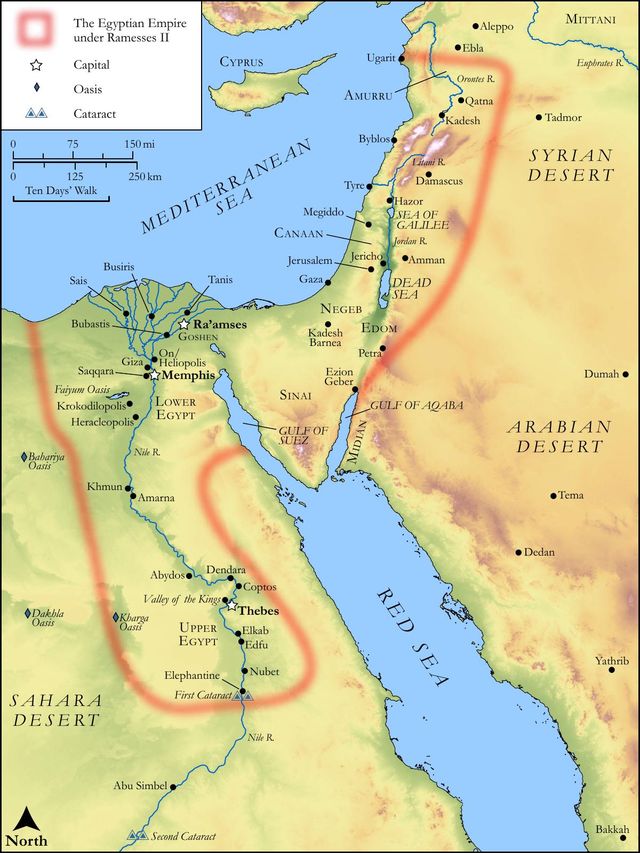
An earlier date, from the count in 1 Kings 6:1 The exodus came 480 years before Solomon began the temple in the fourth year of his reign, about 1446 BC. Jephthah’s three hundred years in the land fit that count, and Genesis already calls Goshen “the land of Rameses” in Joseph’s day.
A later date, from the city named Raamses Raamses, the store city Israel built, is taken to bear the name of the Pharaohs called Ramesses, which places the exodus in the thirteenth century BC. On this view the 480 years of 1 Kings 6:1 stand for twelve generations of forty years.
Grounds Exodus 1:111 Kings 6:1
- Where
- Egypt, where Israel dwelt in Goshen; then the wilderness from Succoth by the Red Sea to Rephidim; and from 19:1–2 to the end of the book, the camp before mount Sinai.
How Exodus is laid out
8 movements · 171 passages · 1,213 verses
Bondage, and a deliverer called
Chapters 1–4 · 100 verses
Jacob’s family multiplies in Egypt, and a new king who knew not Joseph sets taskmasters over them and orders their sons thrown into the river. Moses is drawn out of the water and raised by Pharaoh’s daughter, then flees to Midian. At the burning bush on Horeb the LORD gives his name, I AM, and sends Moses back with Aaron. The people believe.
17 passages
- 1:1–7 The Children of Israel Settle and Grow
- 1:8–14 The Israelites Oppressed
- 1:15–22 Pharaoh Attempts Genocide
- 2:1–10 The Birth of Moses
- 2:11–15 Moses Defends the Hebrews and Flees
- 2:16–22 Moses in Midian
- 2:23–25 God Hears Israel’s Groaning
- 3:1–6 Moses at the Burning Bush on Horeb
- 3:7–10 God Hears and Commissions Moses
- 3:11–12 Moses’ First Objection: Who Am I?
- 3:13–15 The Name of God ("I AM")
- 3:16–22 Instructions for the Elders and Prediction of Deliverance
- 4:1–9 Moses' First Objection: The Signs of Authority
- 4:10–17 Moses' Second Objection: Aaron Appointed Spokesman
- 4:18–23 The Return to Egypt
- 4:24–26 The Circumcision Crisis
- 4:27–31 The Leaders Meet and the People Believe
Let my people go
Chapters 5–11 · 184 verses
Pharaoh will not let Israel go, and doubles their labour. The LORD renews his promise: “I am the LORD.” Aaron’s rod swallows the magicians’ rods, and nine plagues follow: blood, frogs, lice, flies, murrain, boils, hail, locusts and darkness. Pharaoh bargains, but his heart is hardened after each, and Moses announces the death of every firstborn in Egypt.
The Passover and the sea
12:1–15:21 · 125 verses
Each household kills a lamb and strikes its blood on the doorposts, and the LORD passes over them when he smites Egypt’s firstborn at midnight. Israel goes out with unleavened dough, and the firstborn are set apart to the LORD. A pillar of cloud and fire leads them; Pharaoh pursues to the sea, the waters divide, and his army drowns. Moses and Miriam sing.
20 passages
- 12:1–13 Institution of the Passover and New Calendar
- 12:14–20 The Feast of Unleavened Bread
- 12:21–28 Moses Instructs Israel
- 12:29–36 The Tenth Plague and the Exodus
- 12:37–42 The Journey Begins
- 12:43–51 Regulations for Passover Participation
- 13:1–2 Sanctification of the Firstborn
- 13:3–10 The Ordinance of Unleavened Bread
- 13:11–16 Redemption of the Firstborn
- 13:17–22 God Guides Israel
- 14:1–4 God Directs Israel’s Encampment
- 14:5–9 Pharaoh Mobilizes His Army
- 14:10–14 Israel’s Fear and Moses’ Assurance
- 14:15–18 God Commands the Crossing
- 14:19–20 The Cloud Separates the Camps
- 14:21–26 The Sea Divided and Israel Crosses
- 14:27–31 The LORD Saves Israel at the Sea
- 15:1–12 The Song of Moses: Praise for Deliverance
- 15:13–19 Anticipation of the Conquest
- 15:20–21 Miriam and the Women Celebrate
Bread and water in the wilderness
15:22–18:27 · 85 verses
Three days out, the water at Marah is bitter until the LORD shows Moses a tree. In the wilderness of Sin the people murmur, and the LORD rains bread from heaven, a portion every day and a double portion before the sabbath. At Rephidim water comes from the smitten rock, and Amalek is beaten while Moses’ hands are held up. Jethro counsels Moses to appoint judges.
12 passages
- 15:22–27 The Trial at Marah and Provision at Elim
- 16:1–3 Israel Murmurs in the Wilderness
- 16:4–12 God Promises Manna and Quail
- 16:13–21 Quail and Manna Provided
- 16:22–30 Manna and the Institution of the Sabbath
- 16:31–36 A Memorial of God’s Provision
- 17:1–7 Israel Tests the Lord at Rephidim
- 17:8–16 War Against Amalek
- 18:1–6 Jethro Hears and Returns Moses' Family
- 18:7–12 Reunion and Shared Worship
- 18:13–23 Jethro Counsels Moses on Judging
- 18:24–27 Moses Appoints Judges and Jethro Departs
The covenant at Sinai
Chapters 19–24 · 169 verses
Israel camps before the mount, and the LORD offers to make them a peculiar treasure and a kingdom of priests. He comes down in fire and speaks the ten commandments; Moses receives the judgments of the book of the covenant. The people answer, “All that the LORD hath said will we do,” and are sprinkled with its blood. Moses goes up for forty days.
The pattern shown in the mount
Chapters 25–31 · 243 verses
The LORD asks for an offering, that they may make him a sanctuary, and shows Moses its pattern: the ark and mercy seat, table and candlestick, curtains, boards and veil, the altar and court, and the garments of Aaron and his sons. The incense altar, laver and oil follow. Bezaleel is filled with the Spirit, the sabbath is given as a sign, and Moses receives the two tables.
The calf and the covenant renewed
Chapters 32–34 · 93 verses
While Moses is on the mount, Aaron makes a golden calf. The LORD would consume the people; Moses intercedes, breaks the tables, and the Levites execute judgment. The LORD will send an angel but not go up among them. Moses pleads, “If thy presence go not with me, carry us not up hence,” and is heard. The LORD proclaims his name, renews the covenant, and Moses’ face shines.
13 passages
- 32:1–6 The Golden Calf is Made
- 32:7–14 The LORD Threatens to Destroy Israel
- 32:15–20 Moses Descends and Executes Judgment
- 32:21–29 Moses Confronts Aaron and Judges the Sin
- 32:30–35 Moses Intercedes for Israel
- 33:1–6 God Refuses to Accompany Israel
- 33:7–11 The Tent of Meeting Established
- 33:12–17 Moses Pleads for God's Presence
- 33:18–23 Moses Sees God's Glory
- 34:1–4 Preparation for Covenant Renewal
- 34:5–9 The Lord Proclaims His Name
- 34:10–27 Renewal of the Covenant Stipulations
- 34:28–35 Moses’ Shining Face and the Veil
The tabernacle raised and filled
Chapters 35–40 · 214 verses
The willing-hearted bring so much that they must be restrained from bringing. Bezaleel, Aholiab and every wise-hearted man make the tabernacle, its furniture and the priests’ garments, “as the LORD commanded Moses.” Moses sees the work and blesses them. On the first day of the second year the tabernacle is reared up, the cloud covers it, and the glory of the LORD fills it.
The words Exodus turns on
Serve and bring out run through the deliverance, know through the plagues, covenant through Sinai; tabernacle fills chapters 25–40, and the glory fills the tabernacle.
What Exodus teaches
ʻâbad · serve
From bondage to service
The Egyptians “made the children of Israel to serve with rigour” (1:13). The message Moses is to carry to Pharaoh uses the same verb: “Israel is my son, even my firstborn … Let my son go, that he may serve me” (4:22–23). The Hebrew word covers a bondman’s labour and a worshipper’s service, so the plagues settle whom Israel will serve. They are not set free to belong to no one; they pass from Pharaoh’s house to the LORD’s. At Sinai they are forbidden to bow down to other gods “nor serve them” (20:5), and the law later gives the ground of a Hebrew’s freedom: “they are my servants, which I brought forth out of the land of Egypt” (Leviticus 25:42).
yâdaʻ · know
Knowing the LORD
At the bush God gives Moses his name: “I AM THAT I AM” (3:14). Pharaoh’s answer to that name is “I know not the LORD” (5:2), and the plagues answer Pharaoh. Israel will know the LORD by what he does: “ye shall know that I am the LORD your God, which bringeth you out from under the burdens of the Egyptians” (6:7). Egypt will know him too (7:5). At the frogs Pharaoh hardens his own heart (8:15); at the boils the LORD hardens it (9:12), as he had said he would (4:21), and he gives the reason he raised Pharaoh up: “that my name may be declared throughout all the earth” (9:16), words Paul quotes in Romans 9:17. By chapter 18 a priest of Midian has heard: “Now I know that the LORD is greater than all gods” (18:11).
bᵉrîyth · covenant
A covenant with the redeemed
The covenant at Sinai rests on one already made. Before the plagues the LORD says, “I have remembered my covenant” (6:5). At the mount he speaks first of what he has done: “Ye have seen what I did unto the Egyptians, and how I bare you on eagles’ wings, and brought you unto myself” (19:4). Only then does he set terms: “if ye will obey my voice indeed, and keep my covenant, then ye shall be a peculiar treasure unto me” (19:5). Moses reads the book of the covenant, the people promise obedience, and he sprinkles them: “Behold the blood of the covenant, which the LORD hath made with you” (24:8). Before he comes down from the mount they have broken it with a molten calf (32:8), and it stands again only because the LORD says, “Behold, I make a covenant” (34:10).
shâkan · dwell
That I may dwell among them
The LORD gives his dwelling as the purpose of the exodus itself: “they shall know that I am the LORD their God, that brought them forth out of the land of Egypt, that I may dwell among them” (29:46). The tabernacle’s name, mishkân, comes from the verb to dwell. After the calf the LORD says, “I will not go up in the midst of thee” (33:3); Moses pleads, and the LORD answers, “My presence shall go with thee, and I will give thee rest” (33:14). The book ends with that promise kept. When the tent is raised, Moses cannot enter it, “because the cloud abode thereon, and the glory of the LORD filled the tabernacle” (40:35). Abode is the same verb as dwell.
Christ in Exodus
The New Testament reads the exodus as the pattern of Christ’s work. Paul writes, “For even Christ our passover is sacrificed for us” (1 Corinthians 5:7). The lamb was to be without blemish and none of its bones broken (Exodus 12:5; 12:46). When the soldiers did not break Jesus’ legs, John wrote that it was done “that the scripture should be fulfilled, A bone of him shall not be broken” (John 19:36). At the transfiguration Moses and Elias “spake of his decease which he should accomplish at Jerusalem” (Luke 9:31), and Luke’s word for decease is exodos.
Jesus names himself the true manna: “Moses gave you not that bread from heaven; but my Father giveth you the true bread from heaven” (John 6:32). Of the rock in the wilderness Paul says, “that Rock was Christ” (1 Corinthians 10:4). And the tabernacle, where the glory came to dwell, is answered when “the Word was made flesh, and dwelt among us” (John 1:14). John’s word for dwelt means to pitch a tent, and he adds, “we beheld his glory.”
People
By how many verses name them
- MosesSon of Amram and Jochebed; a brother of Aaron and Miriam; husband of Zipporah255
- AaronSon of Amram and Jochebed; a brother of Moses and Miriam; husband of Elisheba109
- Pharaoh101
- JacobSon of Isaac and Rebekah; a brother of Esau12
- JethroFather of Zipporah and Hobab10
- AbrahamSon of Terah; a brother of Nahor, Haran and Sarah9
- IsaacA son of Abraham and Sarah9
- JoshuaA son of Nun7
71 more are named.
Places
31 named
- EgyptThe house of bondage, where Israel served with rigour117
- Nile13
- SinaiThe mount where the LORD came down in fire10
- Amalek7
- MidianWhere Moses fled, married Zipporah, and kept Jethro’s flock5
- Red SeaDivided for Israel; it closed over Pharaoh’s chariots5
- Canaan3
- RephidimNo water to drink; then Amalek fought Israel here3
Where Exodus reaches
The passages it leans on, and the ones that lean on it
No bone of the Passover lamb was to be broken; John sees the word fulfilled at the cross.
By the sea of glass the victors sing “the song of Moses the servant of God, and the song of the Lamb.”
“An holy nation”: Peter gives Israel’s calling at Sinai to those called out of darkness in Christ.
The pattern shewed in the mount: Hebrews reads the tabernacle as the example and shadow of heavenly things.
Exodus 34:6 Psalms 86:15 Joel 2:13
The name proclaimed to Moses, prayed back by David and preached by Joel.
Books Exodus links to most
The Church Fathers on Exodus
553 quotations from 46 writers before AD 800 · the ten most quoted, in date order
- Origen253
- Ephrem373
- Ambrose397
- Chrysostom407
- Jerome420
- Augustine430
- Caesarius542
- Cassiodorus585
- Gregory604
- Bede735
Eusebius on the angel in the bush, whom Scripture also calls God and Lord.
And when an angel appears to Moses, Holy Scripture also makes it plain, saying, “The angel of the Lord appeared to him in a flame of fire in a bush.” But when it refers to the actual being who replies, it calls him God and Lord and no longer an angel. It is equally clear in its distinction between the angel and the Lord in the account of what happened at the Red Sea.
Chrysostom on the lamb’s unbroken bones, a type fulfilled at the cross.
That well-known prophecy likewise was fulfilled: “Not a bone of him shall you break.” For even if this was spoken with reference to the lamb among the Jews, the type preceded for the sake of truth and was, rather, fulfilled in this event.
Augustine read the crossing of the sea, as Paul did, as a figure of baptism.
This people of God, freed from a great and broad Egypt, is led, as through the Red Sea, that in baptism it may make an end of its enemies. For by the sacrament as it were of the Red Sea, that is by baptism consecrated with the blood of Christ, the pursuing Egyptians, the sins, are washed away.
Ephrem on the tabernacle as a model, made to give way to something lasting.
By saying [to him], “You shall make everything according to the model of the tabernacle that I will show you,” he first called it a model and a temporal tabernacle to indicate that it was transitory and that it would be replaced by the church, the perfect prototype which lasts forever. And so … they would esteem it because of its likeness to the heavenly tabernacle.
Keep studying
Articles