


Exodus 40:35
Bible text: King James Version (1769 Blayney text) · Public domain
Bible text: King James Version with Strong's numbers · Public domain
Bible text: Berean Standard Bible · Public domain
Bible text: American Standard Version (1901) · Public domain
Bible text: World English Bible, Messianic edition · Public domain
Bible text: Geneva Bible (1599) · Public domain
Bible text: Young's Literal Translation · Public domain
- וְלֹאve·lo'and notH3808Conj-w ¦ NegParticle Negativeוְandלֹאnot
- יָכֹלya·Kholhe was ableH3201V-Qal-Perf-3msVerb Qal Perfect 3rd Singular Masculine
- מֹשֶׁהmo·ShehMosesH4872N-proper-mNoun Proper Masculine
- לָבוֹאla·Vo'to goH935Prep-l ¦ V-Qal-InfVerb Qal Infinitive Constructלָtoבוֹאgo
- אֶל'elintoH413PrepPreposition
- אֹהֶל'O·hel[the] tent ofH168N-mscNoun Singular Masculine Construct
- מוֹעֵדmo·'EdmeetingH4150N-msNoun Singular Masculine Absolute
- כִּיkiforH3588PrtParticle Conditional
- שָׁכַןsha·Khanit had settled downH7931V-Qal-Perf-3msVerb Qal Perfect 3rd Singular Masculine
- עָלָיו'a·Lavover itH5921Prep ¦ 3msPreposition Definiteעָלָיoverוit
- הֶעָנָןhe·'a·Nanthe cloudH6051Art ¦ N-msNoun Singular Masculine Absoluteהֶtheעָנָןcloud
- וּכְבוֹדu·khe·Vodand [the] glory ofH3519Conj-w ¦ N-mscNoun Singular Masculine Constructוּandכְבוֹד[the] glory of
- יְהוָהYah·wehYahwehH3068N-properNoun Proper Title
- מָלֵאma·Le'it had filledH4390V-Qal-Perf-3msVerb Qal Perfect 3rd Singular Masculine
- אֶת'et<obj.>H853DirObjMParticle Object Indicator
- הַמִּשְׁכָּןha·mish·Kanthe tabernacleH4908Art ¦ N-msNoun Singular Masculine Absoluteהַtheמִּשְׁכָּןtabernacle
English is a literal word-by-word gloss of the Hebrew, not the KJV's wording. Why?
This is the original text the KJV's translators worked from — each Hebrew word with its own literal English meaning in this verse, prepared by scholars at Tyndale House, Cambridge. The KJV translates whole sentences, not word by word, so its wording differs: one Hebrew word can become several English words, and the KJV may choose “the LORD” where the gloss reads “Yahweh”. Both are faithful — they answer different questions. For the KJV's own rendering, switch to the KJV text.
Details
See on the biblical-era maps

Study this verse
Public-domain commentary
Matthew Henry
From his Commentary on the Whole Bible. Henry comments on passages, not single verses — this entry covers Exodus 40:34–38. His two-level outline is real structure in the source text, so it is rendered as structure.
As when, in the creation, God had finished this earth, which he designed for man's habitation, he made man, and put him in possession of it, so when Moses had finished the tabernacle, which was designed for God's dwelling-place among men, God came and took possession of it. The shechinah, the divine eternal Word, though not yet made flesh, yet, as a prelude to that event, came and dwelt among them, Joh 1:14. This was henceforward the place of his throne, and the place of the soles of his feet (Eze 43:7); here he resided, here he ruled. By the visible tokens of God's coming among them to take possession of the tabernacle he testified both the return of his favour to them, which they had forfeited by the golden calf (Exo 33:7), and his gracious acceptance of all the expense they had been at, and all the care and pains they had taken about the tabernacle. Thus God owned them, showed himself well pleased with what they had done, and abundantly rewarded them. Note, God will dwell with those that prepare him a habitation. The broken and contrite heart, the clean and holy heart, that is furnished for his service, and devoted to his honour, shall be his rest for ever; here will Christ dwell by faith, Eph 3:17. Where God has a throne and an altar in the soul, there is a living temple. And God will be sure to own and crown the operations of his own grace and the observance of his own appointments.
As God had manifested himself upon mount Sinai, so he did now in this newly-erected tabernacle. We read (Exo 24:16) that the glory of the Lord abode upon mount Sinai, which is said to be like devouring fire (Exo 40:17), and that the cloud covered it on the outside, and the glory of the Lord filled it within, to which, probably there is an allusion in Zac 2:5, where God promises to be a wall of fire round about Jerusalem (and the pillar of cloud was by night a pillar of fire) and the glory in the midst of her.
I.The cloud covered the tent.
That same cloud which, as the chariot or pavilion of the shechinah, had come up before them out of Egypt and led them hither, now settled upon the tabernacle and hovered over it, even in the hottest and clearest day; for it was none of those clouds which the sun scatters. This cloud was intended to be,
1.A token of God's presence constantly visible day and night (Exo 40:38) to all Israel, even to those that lay in the remotest corners of the camp, that they might never again make a question of it, Is the Lord among us, or is he not? That very cloud which had already been so pregnant with wonders in the Red Sea, and on mount Sinai, sufficient to prove God in it of a truth, was continually in sight of all the house of Israel throughout all their journeys; so that they were inexcusable if they believed not their own eyes.
2.A concealment of the tabernacle, and the glory of God in it. God did indeed dwell among them, but he dwelt in a cloud: Verily thou art a God that hidest, thyself. Blessed be God for the gospel of Christ, in which we all with open face behold as in a glass, not in a cloud, the glory of the Lord.
3.A protection of the tabernacle. They had sheltered it with one covering upon another, but, after all, the cloud that covered it was its best guard. Those that dwell in the house of the Lord are hidden there, and are safe under the divine protection, Psa 27:4, Psa 27:5. Yet this, which was then a peculiar favour to the tabernacle, is promised to every dwelling-place of mount Zion (Isa 4:5); for upon all the glory shall be a defence.
4.A guide to the camp of Israel in their march through the wilderness, Exo 40:36, Exo 40:37. While the cloud continued on the tabernacle, they rested; when it removed, they removed and followed it, as being purely under divine direction. This is spoken of more fully, Num 9:19; Psa 78:14; Psa 105:39. As before the tabernacle was set up the Israelites had the cloud for their guide, which appeared sometimes in one place and sometimes in another, but henceforward rested on the tabernacle and was to be found there only, so the church had divine revelation for its guide from the first, before the scriptures were written, but since the making up of that canon it rests in that as its tabernacle, and there only it is to be found, as in the creation the light which was made the first day, centered in the sun the fourth day. Blessed be God for the law and the testimony!
II.The glory of the Lord filled the tabernacle, Exo 40:34, Exo 40:35.
The shechinah now made an awful and pompous entry into the tabernacle, through the outer part of which it passed into the most holy place, as the presence-chamber, and there seated itself between the cherubim. It was in light and fire, and (for aught we know) no otherwise, that the shechinah made itself visible; for God is light; our God is a consuming fire. With these the tabernacle was now filled, yet, as before the bush was not consumed, so now the curtains were not so much as singed by this fire; for to those that have received the anointing the terrible majesty of God is not destroying. Yet so dazzling was the light, and so dreadful was the fire, that Moses was not able to enter into the tent of the congregation, at the door of which he attended, till the splendour had a little abated, and the glory of the Lord retired within the veil, Exo 40:35. This shows how terrible the glory and majesty of God are, and how unable the greatest and best of men are to stand before him. The divine light and fire, let forth in their full strength, will overpower the strongest heads and the purest hearts. But what Moses could not do, in that he was weak through the flesh, has been done by our Lord Jesus, whom God caused to draw near and approach, and who, as the forerunner, has for us entered, and has invited us to come boldly even to the mercy-seat. He was able to enter into the holy place not made with hands (Heb 9:24); nay, he is himself the true tabernacle, filled with the glory of God (Joh 1:14), even with the divine grace and truth prefigured by this fire and light. In him the shechinah took up its rest for ever, for in him dwells all the fulness of the godhead bodily. Blessed be God for Jesus Christ!
Continue studying Exodus 40:35 across the web’s major study libraries — every link below opens this exact verse, chapter, or book on the destination site.
Read & Compare
 BibleGatewayThis verse in more than 200 translations and 70 languages.
 Bible.comThe YouVersion reader — hundreds of translations, reading plans, and highlights.
 ESV.orgCrossway's official English Standard Version reader.
 NET BibleThe NET translation with 60,000+ translators' notes on every rendering decision.
 STEP BibleTyndale House's free study tool — original text, vocabulary, and scholarly resources.
 BibliaLogos Bible Software's free web reader.
 USCCBThe New American Bible (Revised Edition) with the U.S. bishops' study notes.
Commentaries
 BibleHub CommentariesDozens of classic commentaries on this verse, gathered on one page.
 StudyLightMore than 100 commentary sets — the largest collection on the web.
 BibleRefPlain-English commentary on what this verse means, verse by verse.
 Enduring WordDavid Guzik's free commentary on this chapter, widely used by Bible teachers.
 Bible Study ToolsVerse commentary alongside Greek and Hebrew study aids.
Original Language & Research
- BibleHub InterlinearThe verse word by word — original language, transliteration, and English.
- BibleHub LexiconEvery word's original-language definition and Strong's entry.
 Blue Letter BibleDeep-study tools — Strong's numbers, concordance, and word studies.
 SefariaThe Hebrew text with Rashi and centuries of Jewish commentary.
Sermons, Hymns & Audio


TrulyRandomVerse is not affiliated with these sites and doesn’t control their content. They’re linked because they’re genuinely useful.
Summary
Exodus 40:35 powerfully concludes the Tabernacle's construction and consecration, depicting the immediate and overwhelming consequence of God's manifest presence. Following the descent of the divine cloud and the filling of the Tabernacle with the glory of the LORD, Moses, despite his unique relationship with God, was utterly unable to enter the sacred space. This verse underscores the immense holiness and unapproachable majesty of God, signifying His acceptance of the Israelites' obedience in building His dwelling place and establishing a tangible, awe-inspiring reality of His presence among His people.
Context
ShowHideLiterary Context
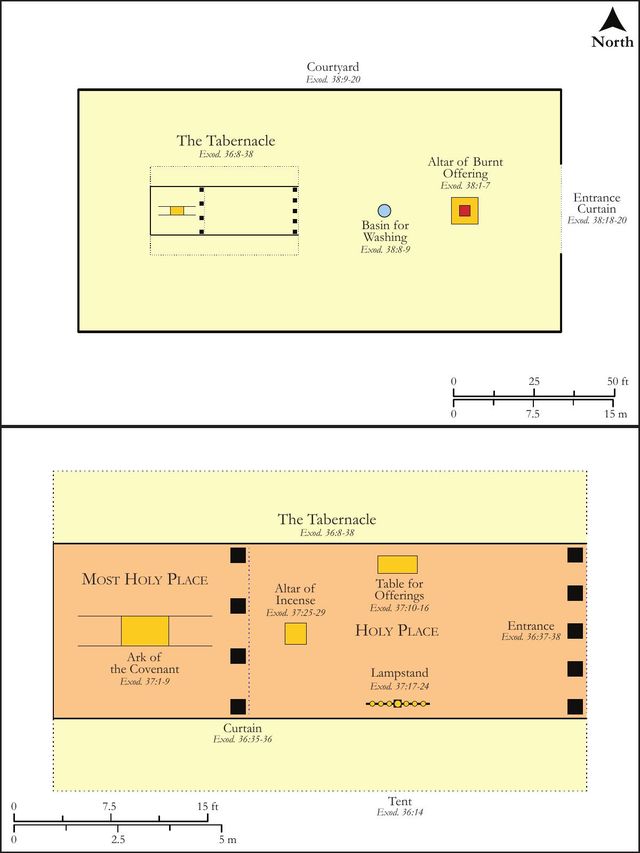
Exodus 40 marks the triumphant culmination of the Tabernacle's construction, following the detailed divine blueprints given to Moses on Mount Sinai. The preceding verses in Exodus 39 and the initial verses of Exodus 40 meticulously describe the completion, assembly, and anointing of the Tabernacle and its furnishings, culminating in the setting up of the Tent of Meeting on the first day of the first month. Exodus 40:34 specifically states that "the cloud covered the tent of the congregation, and the glory of the LORD filled the tabernacle," immediately preceding our verse. Thus, Exodus 40:35 highlights the profound, immediate, and awe-inspiring effect of this divine indwelling, demonstrating that God's presence was not merely symbolic but a tangible, unapproachable reality. The subsequent verses, Exodus 40:36-38, then transition to describe the cloud's role in guiding Israel throughout their wilderness journey, establishing the Tabernacle as the center of their spiritual and physical movement.
Historical & Cultural Context
The Tabernacle, or "dwelling place," was designed as a portable sanctuary, a physical representation of God's intention to dwell among His people, Israel, as they journeyed through the wilderness. This concept of divine indwelling was revolutionary among the nations, whose gods were often confined to specific temples or geographic locations. The Tabernacle, however, symbolized a mobile, intimate, and accessible (yet holy) presence of the one true God. The "cloud" and "glory" were familiar manifestations of God's presence to the Israelites, having been present with them since their exodus from Egypt, notably at Mount Sinai, where God's glory descended and made the mountain unapproachable (Exodus 19:16-24). The inability of Moses, God's chosen mediator and the one who had previously spoken to God "face to face" (Exodus 33:11), to enter the Tabernacle underscores the extreme holiness and transcendent nature of God. It established a clear boundary between the divine and the human, emphasizing that access to God's immediate presence required divine provision and strict adherence to His holy standards, a principle foundational to Israelite worship and law.
Key Themes
ShowHideThis verse powerfully contributes to several key themes within Exodus and the Pentateuch. Foremost is the theme of God's Presence and Dwelling (Shekinah), demonstrating God's faithfulness to His covenant promise to dwell among His people (Exodus 29:45-46). It also highlights the theme of Divine Holiness and Transcendence, as God's glory is so overwhelming that even Moses, His intimate servant, cannot approach it without mediation. This sets the stage for the elaborate sacrificial and priestly system detailed in Leviticus, which provides the divinely ordained means for sinful humanity to approach a holy God. The verse further emphasizes Obedience and Divine Acceptance, as the cloud and glory's descent signify God's approval of Israel's meticulous adherence to the Tabernacle blueprints. Finally, it foreshadows the ongoing need for Mediation and Atonement, pointing to the ultimate solution for human access to God's presence.
Exposition and Analysis
ShowHideKey Word Analysis
ShowHideThis word properly means "weight," but figuratively signifies splendor or copiousness. In a theological context, it refers to the visible, tangible manifestation of God's inherent worth, honor, splendor, and majesty. It signifies His radiant presence, power, and the awe-inspiring display of His divine attributes. When God's kâbôwd fills a space, it implies an overwhelming, uncontainable, and supremely holy presence that demands reverence and often renders human access impossible due to its intensity.
This primitive root means "to fill" or (intransitively) "to be full of," in a wide application (literally and figuratively). In Exodus 40:35, it denotes a complete saturation, indicating that the glory of the LORD permeated every part of the Tabernacle, leaving no empty space. This "filling" signifies the totality and intensity of God's indwelling presence, making the Tabernacle a crucible of divine holiness and the direct cause of its inaccessibility to Moses.
This word means "a residence" or "dwelling place." This term emphasizes the Tabernacle's fundamental purpose as the earthly abode where the transcendent God chose to "tabernacle" or dwell among His people. It signifies the fulfillment of God's promise to reside in their midst, making His presence concrete and central to Israel's identity and journey, a portable sanctuary for a mobile people.
Verse Breakdown
ShowHide"And Moses was not able to enter into the tent of the congregation"
This clause highlights the profound impact of God's presence. Moses, who had previously ascended Mount Sinai and communed directly with God, is now barred from entering the very structure he helped construct. This emphasizes the absolute holiness and unapproachable nature of God's glory when it fully indwells a space, establishing a clear boundary even for God's most intimate servant. It demonstrates that access to God's immediate presence is not based on human merit or even prophetic status, but on divine allowance and provision.
"because the cloud abode thereon"
The "cloud" is a recurring biblical motif signifying God's visible presence, often associated with His glory and guidance. Its "abiding" or resting upon the Tent of Meeting indicates a settled, continuous divine presence, not merely a fleeting visitation. This visible sign served as a constant reminder to Israel of God's immediate oversight and protection, but also His awesome, veiled majesty, providing a boundary and a visible representation of the divine presence.
"and the glory of the LORD filled the tabernacle"
This phrase describes the overwhelming, radiant manifestation of God's inherent splendor and power that permeated every part of the sacred dwelling. The "filling" implies a complete saturation, leaving no empty space, making the Tabernacle a crucible of divine holiness. It is this intense, unmediated glory that rendered the space inaccessible, underscoring God's transcendence and the sacredness of His dwelling place, a testament to His acceptance of the completed work.
Literary Devices
ShowHideExodus 40:35 employs several powerful literary devices to convey its profound theological message. Theophany is central, as the "cloud" and "glory of the LORD" represent a visible, tangible manifestation of God's presence, making His indwelling a concrete reality for the Israelites. This theophany is not merely a sign but an active force, as it directly prevents Moses from entering. Symbolism is also prominent, with the cloud symbolizing God's guidance, protection, and veiled majesty, while the glory symbolizes His inherent splendor, power, and holiness. The Tabernacle itself is a powerful symbol of God's desire to dwell with His people. The statement that Moses "was not able to enter" due to the overwhelming presence serves as a form of intense emphasis, highlighting the absolute, unapproachable nature of God's holiness. It underscores the vast chasm between finite humanity and infinite divinity, even for the most privileged of God's servants, thereby cultivating awe and reverence.
Theological and Thematic Connections
ShowHideExodus 40:35 profoundly communicates God's desire for intimate dwelling with His people, while simultaneously affirming His absolute holiness and unapproachable majesty. The inability of Moses to enter the Tabernacle, even after its perfect construction according to divine command, underscores that access to God's presence is not a right earned by human effort or obedience, but a privilege granted by divine grace and mediated through specific, holy means. This moment establishes the Tabernacle as the sacred center of Israel's life, where God's glory resides, demanding reverence and setting the stage for the sacrificial system necessary to bridge the gap between a holy God and sinful humanity. It foreshadows the ongoing need for a mediator and a perfect atonement to truly dwell in God's presence.
Reflection and Application
ShowHideExodus 40:35 offers a profound glimpse into the nature of God—His overwhelming holiness, His desire for dwelling, and the awe His presence inspires. While we no longer have a physical Tabernacle, the spiritual reality it represents is even more potent for believers today. This verse calls us to cultivate a deep sense of reverence for God, recognizing that His glory is still uncontainable and His holiness remains absolute. Our access to Him is not through a physical structure or our own merit, but through the perfect mediation of Jesus Christ. This truth should humble us, reminding us that any intimacy we share with God is purely by His grace. Furthermore, knowing that the Holy Spirit indwells believers means that our very bodies are now temples of the living God. This calls us to a life of sanctification, living in a manner worthy of the divine presence within us, honoring God in all we do, and recognizing the sacredness of our calling.
Questions for Reflection
ShowHideFAQ
ShowHideWhat is the "cloud" and "glory of the LORD" mentioned in this verse?
ShowHideThe "cloud" and "glory of the LORD" are visible manifestations of God's presence, often referred to as the Shekinah glory. The cloud (Hebrew: ʻânân) served as a physical, tangible sign of God's immediate presence, guidance, and protection for Israel throughout their wilderness journey, as seen from Exodus 13:21-22. The "glory of the LORD" (Hebrew: kâbôwd Yᵉhôvâh) refers to the radiant, awe-inspiring splendor and majesty of God Himself, a visible display of His inherent worth and power. When the glory "filled" the Tabernacle, it indicated God's complete and overwhelming indwelling, making the space intensely holy and unapproachable to human beings without divine provision.
Why was Moses, God's chosen leader, unable to enter the Tabernacle?
ShowHideMoses was unable to enter the Tabernacle because the glory of the LORD so completely filled it that it rendered the space unapproachable for any human, even God's most intimate servant. This was not a sign of Moses' unworthiness or a punishment, but rather a powerful demonstration of God's absolute holiness and transcendence. Just as Mount Sinai became unapproachable when God's glory descended upon it, so too did the Tabernacle. It underscored that human beings, even those in close communion with God, cannot stand in the unmediated presence of His full glory without divine provision. This emphasizes the need for a mediator and a way for sinful humanity to approach a holy God.
What happened after Moses was unable to enter the Tabernacle?
ShowHideFollowing this event, the cloud of the LORD continued to rest upon the Tabernacle by day, and a fire was in it by night. This cloud became the visible guide for the Israelites throughout their wilderness wanderings. Whenever the cloud lifted from the Tabernacle, the Israelites would set out on their journey; and wherever the cloud settled, there they would camp. This continuous divine guidance, described in Exodus 40:36-38, confirmed that the Tabernacle was indeed God's dwelling place and the center of His people's life and movement.
Christ-Centered Fulfillment
ShowHideExodus 40:35, with its depiction of God's overwhelming glory filling the Tabernacle and making it unapproachable, serves as a profound foreshadowing of Christ. The Tabernacle, a temporary dwelling place for God among His people, was a shadow of the ultimate reality found in Jesus. John 1:14 declares that "the Word became flesh and dwelt among us," using a Greek word (ἐσκήνωσεν, eskēnōsen) that literally means "tabernacled" or "pitched His tent." Jesus is the true Tabernacle, the ultimate meeting place where God's glory is fully revealed, not in a cloud or an earthly structure, but in human flesh. Unlike Moses, who could not enter the earthly tent, in Christ, God Himself entered human experience, making His glory approachable. Through His perfect life, atoning death, and resurrection, Jesus became the new and living way (Hebrews 10:19-20) by which humanity can now draw near to God's holy presence. The barrier that prevented Moses' entry was torn down by Christ's sacrifice, granting believers access to the Father by one Spirit (Ephesians 2:18). Furthermore, the indwelling of the Holy Spirit means that believers themselves become temples of the living God (1 Corinthians 3:16), fulfilling God's desire to dwell with His people in an even more intimate way, culminating in the eternal reality of the New Jerusalem where God's "tabernacle is with men, and he will dwell with them" (Revelation 21:3).