


2 Chronicles 5:14
Bible text: King James Version (1769 Blayney text) · Public domain
Bible text: Berean Standard Bible · Public domain
Bible text: American Standard Version (1901) · Public domain
Bible text: World English Bible, Messianic edition · Public domain
Bible text: Geneva Bible (1599) · Public domain
Bible text: Young's Literal Translation · Public domain
- וְלֹאve·lo'and notH3808Conj-w ¦ NegParticle Negativeוְandלֹאnot
- יָכְלוּya·khe·Luthey were ableH3201V-Qal-Perf-3cpVerb Qal Perfect 3rd Plural common gender
- הַכֹּהֲנִיםha·ko·ha·Nimthe priestsH3548Art ¦ N-mpNoun Plural Masculine Absoluteהַtheכֹּהֲנִיםpriests
- לַעֲמוֹדla·'a·Modto standH5975Prep-l ¦ V-Qal-InfVerb Qal Infinitive Constructלַtoעֲמוֹדstand
- לְשָׁרֵתle·sha·Retto serveH8334Prep-l ¦ V-Piel-InfVerb Piel Infinitive Constructלְtoשָׁרֵתserve
- מִפְּנֵיmi·pe·Nei<from> because ofH6440Prep-m ¦ N-mpcNoun Plural Masculine Constructמִ<from>פְּנֵיbecause of
- הֶעָנָןhe·'a·Nanthe cloudH6051Art ¦ N-msNoun Singular Masculine Absoluteהֶtheעָנָןcloud
- כִּיkiforH3588PrtParticle Conditional
- מָלֵאma·Le'it filledH4390V-Qal-Perf-3msVerb Qal Perfect 3rd Singular Masculine
- כְבוֹדkhe·Vod[the] glory ofH3519N-mscNoun Singular Masculine Construct
- יְהוָהYah·wehYahwehH3068N-properNoun Proper Title
- אֶת'et<obj.>H853DirObjMParticle Object Indicator
- בֵּיתbeit[the] house ofH1004N-mscNoun Singular Masculine Construct
- הָאֱלֹהִיםha·'E·lo·Him<the> GodH430Art ¦ N-mpNoun Plural Masculine Absoluteהָ<the>אֱלֹהִיםGod
English is a literal word-by-word gloss of the Hebrew, not the KJV's wording. Why?
This is the original text the KJV's translators worked from — each Hebrew word with its own literal English meaning in this verse, prepared by scholars at Tyndale House, Cambridge. The KJV translates whole sentences, not word by word, so its wording differs: one Hebrew word can become several English words, and the KJV may choose “the LORD” where the gloss reads “Yahweh”. Both are faithful — they answer different questions. For the KJV's own rendering, switch to the KJV text.
Details
See on the biblical-era maps
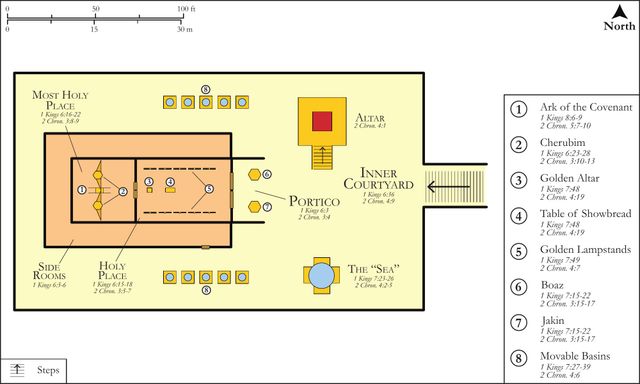
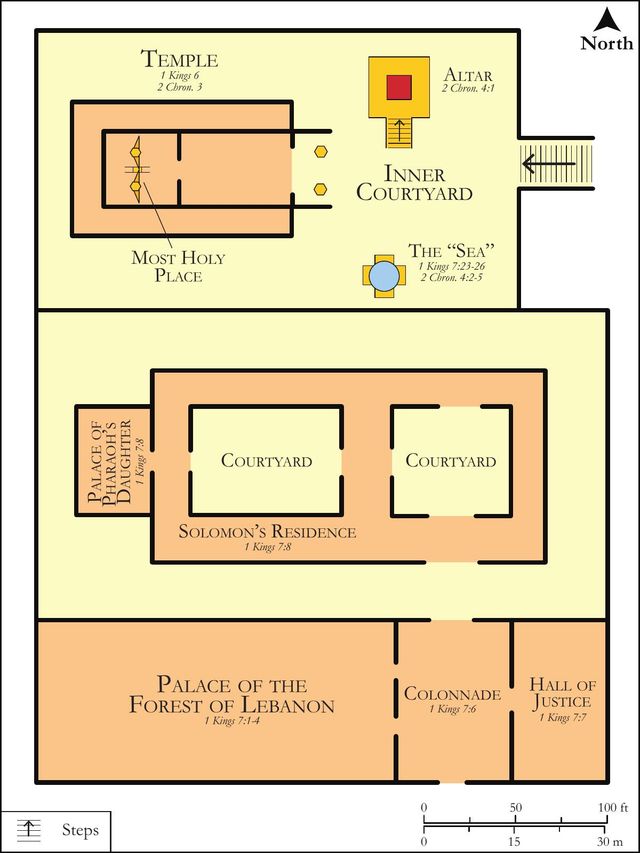
Study this verse
Public-domain commentary
Matthew Henry
From his Commentary on the Whole Bible. Henry comments on passages, not single verses — this entry covers 2 Chronicles 5:11–14. His three-level outline is real structure in the source text, so it is rendered as structure.
Solomon, and the elders of Israel, had done what they could to grace the solemnity of the introduction of the ark; but God, by testifying his acceptance of what they did, put the greatest honour upon it. The cloud of glory that filled the house beautified it more than all the gold with which it was overlaid or the precious stones with which it was garnished; and yet that was no glory in comparison with the glory of the gospel dispensation, Co2 3:8-10. Observe,
I.How God took possession of the temple: He filled it with a cloud, Ch2 5:13.
1.Thus he signified his acceptance of this temple to be the same to him that the tabernacle of Moses was, and assured them that he would be the same in it; for it was by a cloud that he made his public entry into that, Exo 40:34.
2.Thus he considered the weakness and infirmity of those to whom he manifested himself, who could not bear the dazzling lustre of the divine light: it would have overpowered them; he therefore spread his cloud upon it, Job 26:9. Christ revealed things unto his disciples as they were able to bear them, and in parables, which wrapped up divine things as in a cloud.
3.Thus he would affect all that worshipped in his courts with holy reverence and fear. Christ's disciples were afraid when they entered into a cloud, Luk 9:34.
4.Thus he would intimate the darkness of that dispensation, by reason of which they could not stedfastly look to the end of those things which were now abolished, Co2 3:13.
II.When he took possession of it.
1.When the priests had come out of the holy place, Ch2 5:11. This is the way of giving possession. All must come out, that the rightful owner may come in. Would we have God dwell in our hearts? We must leave room for him; let every thing else give way. We are here told that upon this occasion the whole family of the priests attended, and not any one particular course: All the priests that were present were sanctified (Ch2 5:11), because there was work enough for them all, when such a multitude of sacrifices were to be offered, and because it was fit that they should all be eye-witnesses of this solemnity and receive the impressions of it.
2.When the singers and musicians praised God, then the house was filled with a cloud. This is very observable; it was not when they offered sacrifices, but when they sang the praises of God, that God gave them this token of his favour; for the sacrifice of praise pleaseth the Lord better than that of an ox or bullock, Psa 69:31. All the singers and musicians were employed, those of all the three families; and, to complete the concert, 120 priests, with their trumpets, joined with them, all standing at the east end of the altar, on that side of the court which lay outmost towards the people, Ch2 5:12. And, when this part of the service began, the glory of God appeared. Observe,
(1.)It was when they were unanimous, when they were as one, to make one sound. The Holy God descended on the apostles when they met with one accord, Act 2:1-4. Where unity is the Lord commands the blessing.
(2.)It was when they were lively and hearty, and lifted up their voice to praise the Lord. Then we serve God acceptably when we are fervent in spirit serving him.
(3.)It was when they were, in their praises, celebrating the everlasting mercy and goodness of God. As there is one saying oftener repeated in scripture than this, his mercy endureth for ever (twenty-six times in one psalm, Ps. 136, and often elsewhere), so there is none more signally owned from heaven; for it was not the expression of some rapturous flights that the priests were singing when the glory of God appeared, but this plain song, He is good, and his mercy endureth for ever. God's goodness is his glory, and he is pleased when we give him the glory of it.
III.What was the effect of it.
The priests themselves could not stand to minister, by reason of the cloud (Ch2 5:14), which, as it was an evidence that the law made men priests that had infirmity, so (as bishop Patrick observes) it was a plain intimation that the Levitical priesthood should cease, and stand no longer to minister, when the Messiah should come, in whom the fulness of the godhead should dwell bodily. In him the glory of God dwelt among us, but covered with a cloud. The Word was made flesh; and when he comes to his temple, like a refiner's fire, who may abide the day of his coming? And who shall stand when he appeareth? Mal 3:1, Mal 3:2.
Continue studying 2 Chronicles 5:14 across the web’s major study libraries — every link below opens this exact verse, chapter, or book on the destination site.
Read & Compare
 BibleGatewayThis verse in more than 200 translations and 70 languages.
 Bible.comThe YouVersion reader — hundreds of translations, reading plans, and highlights.
 ESV.orgCrossway's official English Standard Version reader.
 NET BibleThe NET translation with 60,000+ translators' notes on every rendering decision.
 STEP BibleTyndale House's free study tool — original text, vocabulary, and scholarly resources.
 BibliaLogos Bible Software's free web reader.
 USCCBThe New American Bible (Revised Edition) with the U.S. bishops' study notes.
Commentaries
 BibleHub CommentariesDozens of classic commentaries on this verse, gathered on one page.
 StudyLightMore than 100 commentary sets — the largest collection on the web.
 BibleRefPlain-English commentary on what this verse means, verse by verse.
 Enduring WordDavid Guzik's free commentary on this chapter, widely used by Bible teachers.
 Bible Study ToolsVerse commentary alongside Greek and Hebrew study aids.
Original Language & Research
- BibleHub InterlinearThe verse word by word — original language, transliteration, and English.
- BibleHub LexiconEvery word's original-language definition and Strong's entry.
 Blue Letter BibleDeep-study tools — Strong's numbers, concordance, and word studies.
 SefariaThe Hebrew text with Rashi and centuries of Jewish commentary.
Sermons, Hymns & Audio


TrulyRandomVerse is not affiliated with these sites and doesn’t control their content. They’re linked because they’re genuinely useful.
Summary
2 Chronicles 5:14 powerfully culminates the dedication of Solomon's Temple, portraying an overwhelming manifestation of God's presence. Following the unified praise and worship of the Levites and priests, a thick cloud, the tangible symbol of divine glory, completely filled the sanctuary. This profound display rendered the officiating priests physically unable to continue their sacred duties, serving as an undeniable testament to God's acceptance of the Temple and His awe-inspiring, unapproachable holiness, which transcends human capacity to stand or minister in its immediate, unveiled presence.
Context
ShowHideLiterary Context
This verse provides the climactic moment of the Temple's dedication, meticulously detailed in 2 Chronicles 5. It immediately follows the solemn procession of the Ark of the Covenant into the Most Holy Place, and critically, the subsequent unified, harmonious worship of the Levites and priests. 2 Chronicles 5:12-13 explicitly describes the Levites, arrayed in fine linen, standing with trumpets, cymbals, and other instruments, joining with 120 priests sounding trumpets, all praising the LORD with one voice, declaring, "for he is good; for his mercy endureth for ever." It is precisely at this peak of corporate, obedient, and heartfelt worship that the cloud, a tangible sign of God's presence, descends and fills the house. Verse 14 then details the immediate and profound effect of this divine manifestation on the officiating priests, paralleling the account found in 1 Kings 8:10-11. This narrative sequence underscores a key theological point for the Chronicler: God's manifest presence and acceptance are a direct, sovereign response to faithful and unified worship.
Historical & Cultural Context
The construction of the Temple was a monumental undertaking, fulfilling King David's fervent desire and King Solomon's commission to establish a permanent dwelling place for Yahweh among His people, thereby replacing the portable Tabernacle. This pivotal event occurred around the mid-10th century BCE, marking a significant transition in Israelite worship from a nomadic, tent-based system to a grand, stationary edifice in Jerusalem, solidifying the city's role as the spiritual center. The "cloud" (Hebrew: 'anan) and "glory" (Hebrew: kavod) were deeply embedded symbols of God's presence within Israelite history, notably appearing at Mount Sinai during the giving of the Law (Exodus 24:16) and filling the Tabernacle upon its completion (Exodus 40:34-35). The priests' inability to stand was not a sign of divine displeasure or judgment, but rather an overwhelming, unapproachable holiness of God, a common reaction to profound divine encounters throughout biblical narrative, signifying that the sacred space was fully consecrated and permeated by God's majestic presence, rendering human activity secondary to divine manifestation.
Key Themes
ShowHideThe foremost theme is the Divine Presence and Glory of Yahweh. The cloud and glory serve as visible, tangible manifestations of God's majestic, weighty, and holy being, signifying His tangible acceptance and inhabitation of the Temple. This event powerfully affirms God's covenant faithfulness to dwell among His people, fulfilling His promises. Another crucial theme is Holiness and Awe. The priests' inability to minister underscores the unapproachable, overwhelming holiness of God, evoking a sense of profound reverence, humility, and even fear. It reminds humanity of God's incomparable greatness and the sacredness of His presence, before which no human can casually stand. Finally, the verse highlights God's Acceptance of Worship and Covenant Faithfulness. The filling of the Temple with God's glory was the ultimate sign that He had accepted the building, the Ark within it, and the worship offered by His people. This powerful affirmation of His covenant with Israel and His delight in their unified praise, as vividly depicted in 2 Chronicles 5:13, validates Solomon's monumental efforts and assures Israel of God's continued presence among them.
Exposition and Analysis
ShowHideKey Word Analysis
ShowHideThis term refers to those consecrated and set apart to officiate in sacred duties, mediating between God and His people. Their inability to "stand to minister" highlights the cessation of their divinely appointed function in the face of a direct, overwhelming divine presence. It underscores that even those specially authorized to approach God could not endure His unmediated glory.
This word primarily means "weight" or "heaviness," but in a theological context, it denotes the substantial, weighty, and visible manifestation of God's splendor, majesty, honor, and power. When God's kâbôwd fills a space, it signifies His full, powerful, and undeniable presence, often with an overwhelming effect on those who witness it, as seen in Exodus 40:34-35.
This primitive root signifies to "fill" or "be full of" in a comprehensive and pervasive sense. In this context, it emphasizes that God's glory was not merely present but completely saturated the entire "house of God" (Temple), leaving no space untouched. This indicates a complete divine occupation and consecration of the sanctuary, confirming its status as God's chosen dwelling place.
Verse Breakdown
ShowHide"So that the priests could not stand to minister by reason of the cloud"
This clause describes the immediate and profound impact of God's manifest presence. The priests, who were consecrated to perform specific liturgical functions within the Temple, were physically incapacitated. Their inability to "stand to minister" (Hebrew: 'âmad l'shârath, literally "to stand to serve") was not a sign of fear or punishment, but rather an overwhelming sense of awe and the sheer intensity of the divine presence. It signifies that the holiness of God was so absolute and consuming that even those specially appointed to mediate His presence could not maintain their functional roles. Their normal routines of service were suspended by the extraordinary reality of God's direct and potent manifestation.
"for the glory of the LORD had filled the house of God"
This explanatory clause provides the profound theological reason for the priests' incapacitation. The "cloud" was the visible sign, but the underlying reality was the kâbôwd—the weighty, majestic, and holy presence—of Yahweh (H3068, Yᵉhôvâh). The phrase "filled the house of God" (H1004, bayith; H430, 'ĕlôhîym) indicates a complete and pervasive saturation of the entire sanctuary, from the Holy Place to the Most Holy Place, with God's glory. This was the ultimate sign of divine acceptance and inhabitation, confirming that the Temple was indeed God's chosen dwelling place among His people, a fulfillment of His promise and a validation of Solomon's monumental effort.
Literary Devices
ShowHideThe verse employs several powerful literary devices to convey its profound theological message and evoke a sense of divine majesty. Theophany is central, as the "cloud" and "glory of the LORD" constitute a visible, tangible manifestation of God's presence, making the divine immediate and overwhelming. This Symbolism of the cloud as God's veiled yet potent presence is consistent throughout Scripture, evoking both mystery and majesty, while the "glory" symbolizes His inherent splendor. The phrase "could not stand to minister" functions as a form of Hyperbole, emphasizing the absolute and overwhelming nature of God's glory; it implies not just physical inability but a complete cessation of human activity and agency in the face of divine majesty. The verse also utilizes Cause and Effect, clearly linking the filling of the house with God's glory (the cause) to the priests' inability to minister (the effect), thereby powerfully underscoring the irresistible power and unapproachable holiness of God's presence. The overall effect is one of profound Awe and Reverence, compelling the reader to contemplate the incomparable greatness of God.
Theological and Thematic Connections
ShowHideThe overwhelming manifestation of God's glory in Solomon's Temple at its dedication serves as a powerful theological statement about God's immanence and transcendence. It affirms His willingness to dwell intimately among His people, yet simultaneously highlights His unapproachable holiness, infinite majesty, and utter otherness. This event establishes a profound pattern throughout biblical history: God's presence is often accompanied by signs that evoke awe, humility, and even fear, reminding humanity that His being is utterly distinct and superior to all creation. It underscores that true worship is not merely ritualistic performance but a profound response to the living God, whose presence can be so consuming as to suspend all human activity, demanding absolute reverence and submission. This moment in Israel's history was a tangible assurance of God's covenant faithfulness, His commitment to His chosen dwelling place, and His sovereign delight in the worship of His people.
Reflection and Application
ShowHideThe scene in 2 Chronicles 5:14 offers a profound and enduring lesson for believers today. While we no longer worship in a physical temple where God's glory visibly descends in a cloud, the principle of His overwhelming, sanctifying presence remains eternally true. This verse challenges us to consider the depth of our reverence in worship, both individually and corporately. Do we approach God with the awe and humility that His infinite holiness demands, recognizing that every act of worship is an entry into His sacred presence? Or do we treat worship as a mere routine, a performance, or a casual gathering? The priests' inability to stand reminds us that God's presence is not something to be managed, controlled, or even fully comprehended by human effort, but something before which we are utterly humbled, transformed, and compelled to surrender. It calls us to cultivate a spirit of profound reverence, recognizing that when we gather in His name, or when we encounter Him in personal devotion through His Word and Spirit, we are indeed entering into the presence of the Almighty God, whose glory is beyond measure. This encounter should lead to a cessation of our own agendas, a silencing of our self-importance, and a complete surrender to His divine majesty, allowing His presence to fill and transform us from the inside out.
Questions for Reflection
ShowHideFAQ
ShowHideWhat is the significance of the "cloud" and "glory of the LORD" in this verse?
ShowHideThe "cloud" and "glory of the LORD" are consistent biblical symbols of God's tangible, manifest presence, representing His divine unveiling. In this context, the cloud (Hebrew: 'anan) represents God's veiled presence, often associated with mystery, power, and guidance, as seen when the pillar of cloud guided Israel in the wilderness or covered Mount Sinai during the giving of the Law. The "glory of the LORD" (Hebrew: kavod) signifies the weighty, majestic, and awe-inspiring splendor of God Himself, His inherent radiance and substantial reality. When the glory filled the Temple, it was the ultimate, undeniable sign of God's acceptance and inhabitation of the sanctuary, confirming His covenant faithfulness and His delight in dwelling among His people. It was a visible, overwhelming affirmation that the Temple was now consecrated as His chosen dwelling place, rendering human effort secondary to divine manifestation.
Christ-Centered Fulfillment
ShowHideWhile 2 Chronicles 5:14 vividly describes God's glory filling a physical temple, its ultimate and profound fulfillment is found in the person of Jesus Christ, who is the true and eternal Temple of God. The Apostle John declares that Jesus is the Word made flesh, who "dwelt among us, and we beheld His glory, the glory as of the only begotten of the Father, full of grace and truth". In Christ, the invisible God became perfectly visible, and His glory was not merely a cloud or a transient light, but the very person of God incarnate, embodying divine majesty in human form. Just as the priests could not stand in the overwhelming presence of the Temple's glory, so too does the presence of Christ evoke ultimate reverence, humility, and surrender from all who encounter Him. Furthermore, through the once-for-all sacrifice of Christ on the cross, the veil of the Temple was torn (Matthew 27:51), signifying direct access to God's presence. Believers are now indwelt by the Holy Spirit, making their bodies a temple of the Holy Spirit and collectively forming a spiritual house in which God dwells. This means that the overwhelming, sanctifying presence of God is no longer confined to a single physical location but resides within His people, empowering them for service and calling them to live lives of profound awe and holiness, anticipating the glorious day when the new Jerusalem will have no need of a temple, for the Lord God Almighty and the Lamb are its temple.