


Exodus 33:11
- וְדִבֶּרve·di·Berand he spokeH1696Conj-w ¦ V-Piel-ConsecPerf-3msVerb Piel Consecutive Perfect 3rd Singular Masculineוְandדִבֶּרhe spoke
- יְהוָהYah·wehYahwehH3068N-properNoun Proper Title
- אֶל'eltoH413PrepPreposition
- מֹשֶׁהmo·ShehMosesH4872N-proper-mNoun Proper Masculine
- פָּנִיםpa·NimfaceH6440N-mpNoun Plural Masculine Absolute
- אֶל'eltoH413PrepPreposition
- פָּנִיםpa·NimfaceH6440N-mpNoun Plural Masculine Absolute
- כַּאֲשֶׁרka·'a·Sherjust asH834Prep-k ¦ RelParticle Relativeכַּjustאֲשֶׁרas
- יְדַבֵּרye·da·Berhe speaksH1696V-Piel-Imperf-3msVerb Piel Imperfect 3rd Singular Masculine
- אִישׁ'isha personH376N-msNoun Singular Masculine Absolute
- אֶל'eltoH413PrepPreposition
- רֵעֵהוּre·'E·huhis companionH7453N-msc ¦ 3msNoun Singular Masculine Constructרֵעֵcompanionהוּhis
- וְשָׁבve·Shavand he returnedH7725Conj-w ¦ V-Qal-ConsecPerf-3msVerb Qal Consecutive Perfect 3rd Singular Masculineוְandשָׁבhe returned
- אֶל'eltoH413PrepPreposition
- הַמַּחֲנֶהha·ma·cha·Nehthe campH4264Art ¦ N-fsNoun Singular Feminine Absoluteהַtheמַּחֲנֶהcamp
- וּמְשָׁרְתוֹu·me·Sha·re·Toand his servantH8334Conj-w ¦ V-Piel-Prtcpl-ms ¦ 3msVerb Piel Participle Singular Masculine Constructוּandמְשָׁרְתservantוֹhis
- יְהוֹשֻׁעַye·ho·Shu·a'JoshuaH3091N-proper-mNoun Proper Masculine
- בִּןbin[the] son ofH1121N-mscNoun Singular Masculine Construct
- נוּןnunNunH5126N-proper-mNoun Proper Masculine
- נַעַרNa·'ara young manH5288N-mscNoun Singular Masculine Construct
- לֹאlo'notH3808NegParticle Negative
- יָמִישׁya·Mishhe departedH4185V-Qal-Imperf-3msVerb Qal Imperfect 3rd Singular Masculine
- מִתּוֹךְmi·Tokhfrom [the] midst ofH8432Prep-m ¦ N-mscNoun Singular Masculine Constructמִfromתּוֹךְ[the] midst of
- הָאֹהֶלha·'O·helthe tentH168Art ¦ N-msNoun Singular Masculine Absoluteהָtheאֹהֶלtent
English is a literal word-by-word gloss of the Hebrew, not the KJV's wording. Why?
This is the original text the KJV's translators worked from — each Hebrew word with its own literal English meaning in this verse, prepared by scholars at Tyndale House, Cambridge. The KJV translates whole sentences, not word by word, so its wording differs: one Hebrew word can become several English words, and the KJV may choose “the LORD” where the gloss reads “Yahweh”. Both are faithful — they answer different questions. For the KJV's own rendering, switch to the KJV text.
Details
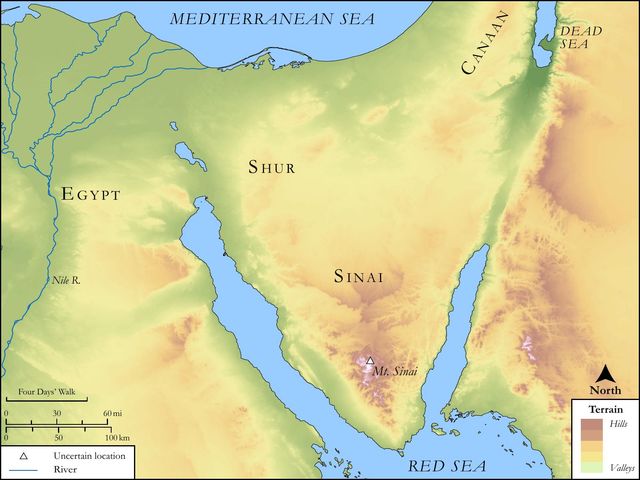
See on the biblical-era maps

Study this verse
Public-domain commentary
Matthew Henry
From his Commentary on the Whole Bible. Henry comments on passages, not single verses — this entry covers Exodus 33:7–11. His four-level outline is real structure in the source text, so it is rendered as structure.
Here is, I. One mark of displeasure put upon them for their further humiliation: Moses took the tabernacle, not his own tent for his family, but the tent wherein he gave audience, heard causes, and enquired of God, the guild-hall (as it were) of their camp, and pitched it without, afar off from the camp (Exo 33:7), to signify to them that they had rendered themselves unworthy of it, and that, unless peace was made, it would return to them no more. God would thus let them know that he was at variance with them: The Lord is far from the wicked. Thus the glory of the Lord departed from the temple when it was polluted with sin, Eze 10:4, Eze 11:23. Note, It is a sign that God is angry when he removes his tabernacle, for his ordinances are fruits of his favour and tokens of his presence; while we have them with us we have him with us. Perhaps this tabernacle was a plan, or model rather, of the tabernacle that was afterwards to be erected, a hasty draught from the pattern shown him in the mount, designed for direction to the workmen, and used, in the mean time, as a tabernacle of meeting between God and Moses about public affairs. This was set up at a distance, to affect the people with the loss of that glorious structure which, if they had not forsaken their own mercies for lying vanities, was to have been set up in the midst of them. Let them see what they had forfeited.
II.Many encouragements give them, notwithstanding, to hope that God would yet be reconciled to them.
1.Though the tabernacle was removed, yet every one that was disposed to seek the Lord was welcome to follow it, Exo 33:7. Private persons, as well as Moses, were invited and encouraged to apply to God, as intercessors upon this occasion. A place was appointed for them to go to without the camp, to solicit God's return to them. Thus when Ezra (a second Moses) interceded for Israel there were assembled to him many that trembled at God's word, Ezr 9:4. When God designs mercy, he stirs up prayer. He will be sought unto (Eze 36:37); and, thanks be to his name, he may be sought unto, and will not reject the intercession of the poorest. Every Israelite that sought the Lord was welcome to this tabernacle, as well as Moses the man of God.
2.Moses undertook to mediate between God and Israel. He went out to the tabernacle, the place of treaty, probably pitched between them and the mount (Exo 33:8), and he entered into the tabernacle, Exo 33:9. That cause could not but speed well which had so good a manager; when their judge (under God) becomes their advocate, and he who was appointed to be their law-giver is an intercessor for them, there is hope in Israel concerning this thing.
3.The people seemed to be in a very good mind and well disposed towards a reconciliation.
(1.)When Moses went out to go to the tabernacle, the people looked after him (Exo 33:8), in token of their respect to him whom before they had slighted, and their entire dependence upon his mediation. By this it appeared that they were very solicitous about this matter, desirous to be at peace with God and concerned to know what would be the issue. Thus the disciples looked after our Lord Jesus, when he ascended on high to enter into the holy place not made with hands, till a cloud received him out of their sight, as Moses here. And we must with an eye of faith follow him likewise thither, where he is appearing in the presence of God for us; then shall we have the benefit of his mediation.
(2.)When they saw the cloudy pillar, that symbol of God's presence, give Moses the meeting, they all worshipped, every man at his tent door, Exo 33:10. Thereby they signified,
[1.]Their humble adoration of the divine Majesty, which they will ever worship, and not gods of gold any more.
[2.]Their joyful thankfulness to God that he was pleased to show them this token for good, and give them hopes of a reconciliation; for, if he had been pleased to kill them, he would not have shown them such things as these, would not have raised them up such a mediator, nor given him such countenance.
[3.]Their hearty concurrence with Moses as their advocate in every thing he should promise for them, and their expectation of a comfortable and happy issue of this treaty. Thus must we worship God in our tents with an eye to Christ as the Mediator. Their worshipping in their tent doors declared plainly that they were not ashamed publicly to own their respect to God and Moses, as they had publicly worshipped the calf.
4.God was, in Moses, reconciling Israel to himself, and manifested himself very willing to be at peace.
(1.)God met Moses at the place of treaty, Exo 33:9. The cloudy pillar, which had withdrawn itself from the camp when it was polluted with idolatry, now returned to this tabernacle at some distance, coming back gradually. If our hearts go forth towards God to meet him he will graciously come down to meet us.
(2.)God talked with Moses (Exo 33:9), spoke to him face to face, as a man speaks to his friend (Exo 33:11), which intimates that God revealed himself to Moses, not only with greater clearness and evidence of divine light than to any other of the prophets, but also with greater expressions of particular kindness and grace. He spoke, not as a prince to a subject, but as a man to his friend, whom he loves, and with whom he takes sweet counsel. This was great encouragement to Israel, to see their advocate so great a favourite; and, that they might be encouraged by it, Moses turned again into the camp, to tell the people what hopes he had of bringing this business to a good issue, and that they might not despair if he should be long absent. But, because he intended speedily to return to the tabernacle of the congregation, he left Joshua there, for it was not fit that the place should be empty, so long as the cloud of glory stood at the door (v. 9); but, if God had any thing to say out of that cloud while Moses was absent, Joshua was there, ready to hear it.
Historical interpretation
Historical reception
3 surviving comments on this verse. Each one is dated, so this reads as a timeline rather than a list.
Select a marker to jump to its quote. Markers stagger vertically where authors wrote within a few decades of each other.
The whole life of the saints and of the blessed, the example of the Lord himself while he was with us in the flesh, are aids to us in this matter. Moses, through long perseverance in fasting and prayer, received the law and heard the words of God, “as a man is inclined to speak to his friend.”
[Daniel 2:22] "It is He who reveals deep and hidden things, and He knows what is placed in the darkness, and with Him is the light." A man to whom God makes profound revelations and who can say, "O the depth of the riches of the knowledge and wisdom of God!" (Romans 11:33), he it is who by the indwelling Spirit probes even into the deep things of God, and digs the deepest of wells in the depths of his soul. He is a man who has stirred up the whole earth, which is wont to conceal the deep waters, and he observes the command of God, saying: "Drink water from thy vessels and from the spring of thy wells" (Proverbs 5:15). As for the words which follow, "He knows what is placed in the darkness, and with Him is the light," the darkness signifies ignorance, and the light signifies knowledge and learning. Therefore as wrong cannot hide God away, so right encompasses and surrounds Him. Or else we should interpret the words to mean all the dark mysteries and deep things (concerning God), according to what we read in Proverbs: "He understands also the parable and the dark saying." (Proverbs 1:6, LXX) This in turn is equivalent to what we read in the Psalms: "Dark waters in the clouds of the sky" (Psalm 18:11). For one who ascends to the heights and forsakes the things of earth, and like the birds themselves seeks after the most rarified atmosphere and everything ethereal, he becomes like a cloud to which the truth of God penetrates and which habitually showers rain upon the saints. Replete with a plenitude of knowledge, he contains in his breast many dark waters enveloped with deep darkness, a darkness which only Moses can penetrate and speak with God face to face (Exodus 33:11), of Whom the Scripture says: "He hath made darkness His hiding-place" (Psalm 18:11).
Fasting these forty days and nights holy Moses too merited to speak with God, to stand and stay with him and to receive the precepts of the law from his hand. For although this human condition prevented him from seeing God, yet the grace of his fasting drew him into close contact with the Divinity. For to fast frequently is a portion of God’s virtues in ourselves, since God himself always fasts. He is more familiar, intimate and friendly with the person in whom he sees more of his works, as Scripture says: “And Moses spoke with God face to face like one speaking with his friend.”
Continue studying Exodus 33:11 across the web’s major study libraries — every link below opens this exact verse, chapter, or book on the destination site.
Read & Compare
 BibleGatewayThis verse in more than 200 translations and 70 languages.
 Bible.comThe YouVersion reader — hundreds of translations, reading plans, and highlights.
 ESV.orgCrossway's official English Standard Version reader.
 NET BibleThe NET translation with 60,000+ translators' notes on every rendering decision.
 STEP BibleTyndale House's free study tool — original text, vocabulary, and scholarly resources.
 BibliaLogos Bible Software's free web reader.
 USCCBThe New American Bible (Revised Edition) with the U.S. bishops' study notes.
Commentaries
 BibleHub CommentariesDozens of classic commentaries on this verse, gathered on one page.
 StudyLightMore than 100 commentary sets — the largest collection on the web.
 BibleRefPlain-English commentary on what this verse means, verse by verse.
 Enduring WordDavid Guzik's free commentary on this chapter, widely used by Bible teachers.
 Bible Study ToolsVerse commentary alongside Greek and Hebrew study aids.
Original Language & Research
- BibleHub InterlinearThe verse word by word — original language, transliteration, and English.
- BibleHub LexiconEvery word's original-language definition and Strong's entry.
 Blue Letter BibleDeep-study tools — Strong's numbers, concordance, and word studies.
 SefariaThe Hebrew text with Rashi and centuries of Jewish commentary.
Sermons, Hymns & Audio


TrulyRandomVerse is not affiliated with these sites and doesn’t control their content. They’re linked because they’re genuinely useful.
Summary
Exodus 33:11 offers an unparalleled glimpse into the profound intimacy between the LORD and Moses, describing their communication as direct and personal, "face to face, as a man speaketh unto his friend." This verse not only underscores Moses' unique standing as a prophet and mediator but also quietly introduces Joshua, the son of Nun, whose unwavering devotion and reverence for God's presence are powerfully demonstrated by his steadfast refusal to depart from the tent of meeting, signifying his spiritual readiness and preparation for future leadership.
Context
ShowHideLiterary Context
This verse is strategically placed within a pivotal narrative sequence following the catastrophic incident of the golden calf. The nation of Israel had deeply offended God, leading to His righteous anger and a threat to disinherit them, proposing instead to raise a new nation from Moses (Exodus 32:10). Moses, however, engaged in fervent intercession, appealing to God's covenant faithfulness and His reputation among the nations (Exodus 32:11-14). The immediate context in Exodus 33 involves God's initial declaration that He would send an angel to lead Israel, but would not go with them Himself due to their stubbornness (Exodus 33:3). Moses' subsequent plea for God's personal presence (Exodus 33:15) sets the stage for the intimate encounter described in verse 11. The "tabernacle" mentioned here is specifically the "tent of meeting" (Exodus 33:7), a provisional sanctuary erected outside the camp where Moses would commune with God and where the pillar of cloud would descend, visibly signaling God's presence.
Historical & Cultural Context
In the ancient Near East, direct, unmediated communication with a deity was an extraordinary claim, typically reserved for the most powerful rulers or revered priests, and even then, often conveyed through omens, dreams, or divinatory practices. The description of God speaking to Moses "face to face" therefore elevates Moses to an unprecedented status among prophets and leaders. This phrase does not imply a literal visual apprehension of God's full essence or glory, which God Himself explicitly stated no human could endure (Exodus 33:20), but rather signifies an unhindered, personal, and profoundly intimate dialogue, distinct from indirect forms of revelation. The "tent of meeting" served as a crucial, provisional sanctuary before the permanent Tabernacle (and later the Temple) was fully constructed, underscoring the nomadic phase of Israel's journey and God's willingness to meet His people even in temporary structures. Joshua's role as a "young man" and "servant" of Moses reflects the ancient practice of mentorship and apprenticeship, where future leaders were meticulously trained through close association and diligent service to their predecessors, learning by observation and participation.
Key Themes
ShowHideThis verse contributes significantly to several overarching themes within Exodus and the Pentateuch. It powerfully illustrates the theme of Divine Intimacy and Accessibility, showing God's desire for a personal relationship with His chosen servant, Moses, despite His transcendent holiness. It highlights Moses' Unique Mediatorial Role, establishing him as the preeminent prophet through whom God communicates directly with His people, a theme later reiterated in Numbers 12:6-8. Furthermore, the quiet devotion of Joshua introduces the theme of Faithful Discipleship and Preparation for Leadership, demonstrating that consistent presence in the Lord's presence and diligent service are foundational for those called to future responsibilities. The "tent of meeting" itself reinforces the theme of God's Dwelling Presence among His people, even in their wilderness wanderings, signifying His commitment to be with them.
Exposition and Analysis
ShowHideKey Word Analysis
ShowHideThis primitive root (H1696) primarily means "to arrange" but is figuratively used for "to speak." It denotes a purposeful, articulate communication, not merely an utterance but a declaration or command. When applied to God's interaction with Moses, it emphasizes the intentionality and clarity of the divine message, underscoring that God was actively and directly conveying His will and thoughts to Moses.
This word (H6440), often used in the plural, refers to the "face" as the part that turns or is presented. In the phrase "face to face" (panim el panim), it signifies directness, openness, and unmediated presence. While not implying a literal visual encounter with God's full essence, it conveys a profound level of personal interaction, where there is no veil, no intermediary, and no ambiguity in communication, akin to the candid exchange between two individuals.
This term (H7453) denotes an associate, companion, or intimate acquaintance. When used to describe God's relationship with Moses, it highlights an extraordinary bond of mutual trust, affection, and confidential dialogue. It portrays a relationship that transcends mere master-servant dynamics, suggesting a shared purpose and a deep, personal connection that is rare and highly privileged, echoing the unique relationship God had with Abraham, whom He called His "friend" (Isaiah 41:8).
Verse Breakdown
ShowHide"And the LORD spake unto Moses face to face"
This opening clause immediately establishes the extraordinary nature of Moses' relationship with God. It signifies a direct, unmediated, and profoundly personal communication, setting Moses apart from all other prophets and leaders in Israel's history. It emphasizes God's initiative in drawing near to Moses in a way that fostered unparalleled intimacy and clarity of divine revelation.
"as a man speaketh unto his friend"
This powerful simile further clarifies the quality of the "face to face" interaction. It evokes an image of candid, confidential, and close dialogue, devoid of formality, distance, or hidden agendas. It suggests a relationship built on deep trust, mutual understanding, and a shared bond, portraying the sovereign God as approachable and desiring genuine fellowship with His chosen servant, Moses.
"And he turned again into the camp"
This concise statement highlights Moses' immediate return to his duties as the leader of the Israelite camp. Despite the profound and intimate encounter with the divine, Moses did not linger in the exclusive presence of the tent of meeting but promptly resumed his practical responsibilities of leading a rebellious and needy people. This demonstrates his commitment to his divine commission and his essential role as mediator between God and Israel.
"but his servant Joshua, the son of Nun, a young man, departed not out of the tabernacle"
This final clause introduces Joshua, Moses' faithful attendant, and reveals a significant aspect of his character. His decision to remain in the tent of meeting after Moses' departure speaks volumes about his deep reverence for God's tangible presence, his eagerness to linger in that holy atmosphere, and his unwavering commitment to serving in the sacred space. This quiet, steadfast act foreshadows his future leadership, demonstrating qualities of perseverance, faithfulness, and a profound hunger for the divine presence that would uniquely prepare him to succeed Moses and lead Israel into the Promised Land.
Literary Devices
ShowHideExodus 33:11 is enriched by several powerful literary devices that enhance its meaning and impact. Simile is prominently employed in the phrase "as a man speaketh unto his friend," which vividly illustrates the unparalleled intimacy and directness of God's communication with Moses. This comparison makes the abstract concept of divine interaction relatable and underscores the personal nature of their bond. Contrast is evident in the differing actions of Moses and Joshua: Moses returns to the camp to fulfill his immediate leadership duties, while Joshua remains in the tent of meeting, demonstrating a distinct, personal devotion to God's presence. This contrast highlights Joshua's unique character and foreshadows his future role. Foreshadowing is also present in Joshua's steadfast presence in the tabernacle; his unwavering commitment to remaining in the place of divine encounter subtly prepares the reader for his eventual succession to Moses' leadership, emphasizing his spiritual readiness and profound commitment. Finally, the "tabernacle" itself functions as Symbolism, representing God's tangible presence among His people and serving as the focal point for divine encounter, revelation, and the sacred space where the covenant relationship is renewed.
Theological and Thematic Connections
ShowHideExodus 33:11 profoundly reveals the LORD's desire for intimate relationship with humanity, exemplified by His unique communion with Moses. It underscores that while God is transcendent and holy, He also desires to draw near to His people and communicate with them in personal and direct ways. Moses' experience sets a high standard for divine-human interaction, emphasizing the privilege of unhindered access to God's presence. Furthermore, Joshua's quiet devotion highlights the importance of spiritual hunger and consistent presence in places where God's glory is manifested, demonstrating that faithfulness in service and a longing for God's presence are essential for those called to lead and serve.
Reflection and Application
ShowHideThe profound intimacy between God and Moses, and the steadfast devotion of Joshua, offer powerful lessons for contemporary believers. While we may not experience "face to face" communication in the same way Moses did, this verse encourages us to cultivate a deep, personal, and intimate relationship with the Lord through consistent prayer, diligent study of His Word, and heartfelt worship. Moses' example teaches us the value of persistent intercession for others and the priority of seeking God's presence above all else. His willingness to return to the challenges of the camp after such a profound encounter reminds us that spiritual intimacy fuels practical service. Joshua's quiet, unwavering presence in the tent of meeting, even after his mentor departed, illustrates a personal hunger for God that transcends mere duty. It speaks to the importance of lingering in God's presence, cultivating a spirit of devotion, and being prepared for God's call through faithful service and a desire to be near Him. We are called to draw near to God, trusting that He will draw near to us (James 4:8).
Questions for Reflection
ShowHideFAQ
ShowHideWhat does "face to face" mean if no one can see God?
ShowHideThe phrase "face to face" (Hebrew: panim el panim) in Exodus 33:11 signifies an unparalleled level of direct, unmediated, and intimate communication, rather than a literal visual apprehension of God's full essence. God Himself states in Exodus 33:20 that "no man can see My face and live." Therefore, "face to face" emphasizes the clarity, openness, and personal nature of the dialogue between God and Moses, distinguishing it from revelations received through dreams, visions, or angelic messengers. It speaks to a profound closeness, trust, and understanding, as one would share with a trusted friend, rather than a physical encounter with God's unveiled glory.
Why is Joshua's presence in the tabernacle significant?
ShowHideJoshua's decision to remain in the "tent of meeting" (Exodus 33:7) after Moses departed is highly significant for several reasons. First, it demonstrates his deep reverence for God's presence and his personal hunger for divine encounter, even beyond his duties as Moses' servant. Second, it highlights his unwavering devotion and faithfulness, qualities essential for leadership. Third, it serves as a period of spiritual apprenticeship and preparation for his future role as Moses' successor. By consistently lingering in the place where God's glory was manifested, Joshua was being uniquely trained and consecrated for the immense responsibility of leading Israel into the Promised Land, as detailed in Joshua 1. His quiet perseverance speaks volumes about his character and readiness.
Christ-Centered Fulfillment
ShowHideExodus 33:11, with its depiction of unparalleled intimacy between God and Moses, finds its ultimate fulfillment in Jesus Christ. While Moses was a unique mediator and friend of God, he was still a human who could not fully reveal God's essence. Jesus, however, is the very "radiance of God's glory and the exact representation of His being" (Hebrews 1:3). He is the one through whom we truly see God, for "no one has ever seen God; the only God, who is at the Father's side, He has made Him known" (John 1:18). When Philip asked Jesus to show them the Father, Jesus replied, "Anyone who has seen Me has seen the Father" (John 14:9). Furthermore, the intimate friendship Moses shared with God is extended to all believers through Christ, who declares, "No longer do I call you servants... but I have called you friends, for all that I have heard from My Father I have made known to you" (John 15:15). The "tent of meeting," where God's presence dwelt, foreshadows Christ Himself, who "tabernacled among us" (John 1:14). Through His sacrifice, Christ has opened a new and living way for us to draw near to God's presence with confidence, not just in a temporary tent, but into the very throne room of grace (Hebrews 4:16, Hebrews 10:19-22). Joshua, who "departed not out of the tabernacle" and later led Israel into the Promised Land, serves as a powerful type of Christ, the true Joshua (Jesus is the Greek form of Joshua), who leads His people into the ultimate spiritual rest and eternal inheritance (Hebrews 4:8-10).