


Exodus 33:9
- וְהָיָהve·ha·Yahand it wasH1961Conj-w ¦ V-Qal-ConsecPerf-3msVerb Qal Consecutive Perfect 3rd Singular Masculineוְandהָיָהit was
- כְּבֹאke·Vo'when wentH935Prep-k ¦ V-Qal-InfVerb Qal Infinitive Constructכְּwhenבֹאwent
- מֹשֶׁהmo·ShehMosesH4872N-proper-mNoun Proper Masculine
- הָאֹהֱלָהha·'O·he·lahthe tent towardsH168Art ¦ N-ms ¦ SfxNoun Singular Masculine Absoluteהָtheאֹהֱלָtentהtowards
- יֵרֵדye·Redit came downH3381V-Qal-Imperf-3msVerb Qal Imperfect 3rd Singular Masculine
- עַמּוּד'a·Mud[the] pillar ofH5982N-mscNoun Singular Masculine Construct
- הֶעָנָןhe·'a·Nan<the> cloudH6051Art ¦ N-msNoun Singular Masculine Absoluteהֶ<the>עָנָןcloud
- וְעָמַדve·'a·Madand it stoodH5975Conj-w ¦ V-Qal-ConsecPerf-3msVerb Qal Consecutive Perfect 3rd Singular Masculineוְandעָמַדit stood
- פֶּתַחPe·tach[the] opening ofH6607N-mscNoun Singular Masculine Construct
- הָאֹהֶלha·'O·helthe tentH168Art ¦ N-msNoun Singular Masculine Absoluteהָtheאֹהֶלtent
- וְדִבֶּרve·di·Berand he spokeH1696Conj-w ¦ V-Piel-ConsecPerf-3msVerb Piel Consecutive Perfect 3rd Singular Masculineוְandדִבֶּרhe spoke
- עִם'imwithH5973PrepPreposition
- מֹשֶׁהmo·ShehMosesH4872N-proper-mNoun Proper Masculine
English is a literal word-by-word gloss of the Hebrew, not the KJV's wording. Why?
This is the original text the KJV's translators worked from — each Hebrew word with its own literal English meaning in this verse, prepared by scholars at Tyndale House, Cambridge. The KJV translates whole sentences, not word by word, so its wording differs: one Hebrew word can become several English words, and the KJV may choose “the LORD” where the gloss reads “Yahweh”. Both are faithful — they answer different questions. For the KJV's own rendering, switch to the KJV text.
Details
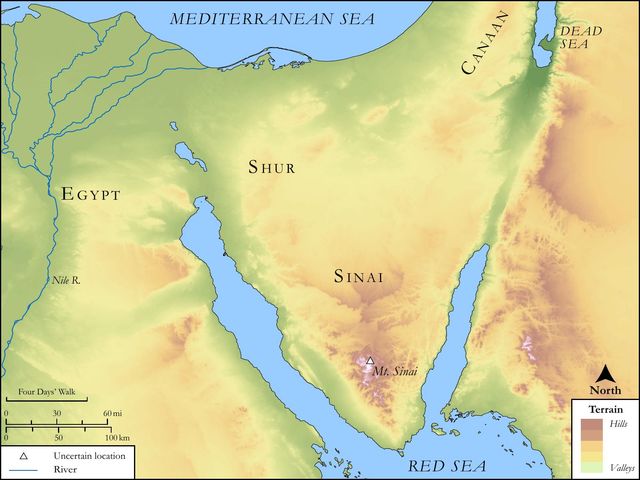
See on the biblical-era map

Study this verse
Public-domain commentary
Matthew Henry
From his Commentary on the Whole Bible. Henry comments on passages, not single verses — this entry covers Exodus 33:7–11. His four-level outline is real structure in the source text, so it is rendered as structure.
Here is, I. One mark of displeasure put upon them for their further humiliation: Moses took the tabernacle, not his own tent for his family, but the tent wherein he gave audience, heard causes, and enquired of God, the guild-hall (as it were) of their camp, and pitched it without, afar off from the camp (Exo 33:7), to signify to them that they had rendered themselves unworthy of it, and that, unless peace was made, it would return to them no more. God would thus let them know that he was at variance with them: The Lord is far from the wicked. Thus the glory of the Lord departed from the temple when it was polluted with sin, Eze 10:4, Eze 11:23. Note, It is a sign that God is angry when he removes his tabernacle, for his ordinances are fruits of his favour and tokens of his presence; while we have them with us we have him with us. Perhaps this tabernacle was a plan, or model rather, of the tabernacle that was afterwards to be erected, a hasty draught from the pattern shown him in the mount, designed for direction to the workmen, and used, in the mean time, as a tabernacle of meeting between God and Moses about public affairs. This was set up at a distance, to affect the people with the loss of that glorious structure which, if they had not forsaken their own mercies for lying vanities, was to have been set up in the midst of them. Let them see what they had forfeited.
II.Many encouragements give them, notwithstanding, to hope that God would yet be reconciled to them.
1.Though the tabernacle was removed, yet every one that was disposed to seek the Lord was welcome to follow it, Exo 33:7. Private persons, as well as Moses, were invited and encouraged to apply to God, as intercessors upon this occasion. A place was appointed for them to go to without the camp, to solicit God's return to them. Thus when Ezra (a second Moses) interceded for Israel there were assembled to him many that trembled at God's word, Ezr 9:4. When God designs mercy, he stirs up prayer. He will be sought unto (Eze 36:37); and, thanks be to his name, he may be sought unto, and will not reject the intercession of the poorest. Every Israelite that sought the Lord was welcome to this tabernacle, as well as Moses the man of God.
2.Moses undertook to mediate between God and Israel. He went out to the tabernacle, the place of treaty, probably pitched between them and the mount (Exo 33:8), and he entered into the tabernacle, Exo 33:9. That cause could not but speed well which had so good a manager; when their judge (under God) becomes their advocate, and he who was appointed to be their law-giver is an intercessor for them, there is hope in Israel concerning this thing.
3.The people seemed to be in a very good mind and well disposed towards a reconciliation.
(1.)When Moses went out to go to the tabernacle, the people looked after him (Exo 33:8), in token of their respect to him whom before they had slighted, and their entire dependence upon his mediation. By this it appeared that they were very solicitous about this matter, desirous to be at peace with God and concerned to know what would be the issue. Thus the disciples looked after our Lord Jesus, when he ascended on high to enter into the holy place not made with hands, till a cloud received him out of their sight, as Moses here. And we must with an eye of faith follow him likewise thither, where he is appearing in the presence of God for us; then shall we have the benefit of his mediation.
(2.)When they saw the cloudy pillar, that symbol of God's presence, give Moses the meeting, they all worshipped, every man at his tent door, Exo 33:10. Thereby they signified,
[1.]Their humble adoration of the divine Majesty, which they will ever worship, and not gods of gold any more.
[2.]Their joyful thankfulness to God that he was pleased to show them this token for good, and give them hopes of a reconciliation; for, if he had been pleased to kill them, he would not have shown them such things as these, would not have raised them up such a mediator, nor given him such countenance.
[3.]Their hearty concurrence with Moses as their advocate in every thing he should promise for them, and their expectation of a comfortable and happy issue of this treaty. Thus must we worship God in our tents with an eye to Christ as the Mediator. Their worshipping in their tent doors declared plainly that they were not ashamed publicly to own their respect to God and Moses, as they had publicly worshipped the calf.
4.God was, in Moses, reconciling Israel to himself, and manifested himself very willing to be at peace.
(1.)God met Moses at the place of treaty, Exo 33:9. The cloudy pillar, which had withdrawn itself from the camp when it was polluted with idolatry, now returned to this tabernacle at some distance, coming back gradually. If our hearts go forth towards God to meet him he will graciously come down to meet us.
(2.)God talked with Moses (Exo 33:9), spoke to him face to face, as a man speaks to his friend (Exo 33:11), which intimates that God revealed himself to Moses, not only with greater clearness and evidence of divine light than to any other of the prophets, but also with greater expressions of particular kindness and grace. He spoke, not as a prince to a subject, but as a man to his friend, whom he loves, and with whom he takes sweet counsel. This was great encouragement to Israel, to see their advocate so great a favourite; and, that they might be encouraged by it, Moses turned again into the camp, to tell the people what hopes he had of bringing this business to a good issue, and that they might not despair if he should be long absent. But, because he intended speedily to return to the tabernacle of the congregation, he left Joshua there, for it was not fit that the place should be empty, so long as the cloud of glory stood at the door (v. 9); but, if God had any thing to say out of that cloud while Moses was absent, Joshua was there, ready to hear it.
Continue studying Exodus 33:9 across the web’s major study libraries — every link below opens this exact verse, chapter, or book on the destination site.
Read & Compare
 BibleGatewayThis verse in more than 200 translations and 70 languages.
 Bible.comThe YouVersion reader — hundreds of translations, reading plans, and highlights.
 ESV.orgCrossway's official English Standard Version reader.
 NET BibleThe NET translation with 60,000+ translators' notes on every rendering decision.
 STEP BibleTyndale House's free study tool — original text, vocabulary, and scholarly resources.
 BibliaLogos Bible Software's free web reader.
 USCCBThe New American Bible (Revised Edition) with the U.S. bishops' study notes.
Commentaries
 BibleHub CommentariesDozens of classic commentaries on this verse, gathered on one page.
 StudyLightMore than 100 commentary sets — the largest collection on the web.
 BibleRefPlain-English commentary on what this verse means, verse by verse.
 Enduring WordDavid Guzik's free commentary on this chapter, widely used by Bible teachers.
 Bible Study ToolsVerse commentary alongside Greek and Hebrew study aids.
Original Language & Research
- BibleHub InterlinearThe verse word by word — original language, transliteration, and English.
- BibleHub LexiconEvery word's original-language definition and Strong's entry.
 Blue Letter BibleDeep-study tools — Strong's numbers, concordance, and word studies.
 SefariaThe Hebrew text with Rashi and centuries of Jewish commentary.
Sermons, Hymns & Audio


TrulyRandomVerse is not affiliated with these sites and doesn’t control their content. They’re linked because they’re genuinely useful.
Summary
Exodus 33:9 records a profoundly significant moment of divine condescension and intimate communion, as the visible manifestation of God's presence, the cloudy pillar, descends and positions itself at the entrance of the "tent of meeting" to allow the LORD to speak directly with Moses. This encounter, occurring immediately after Israel's grievous sin of the Golden Calf, powerfully underscores God's unwavering commitment to His covenant relationship and His unique, personal interaction with His chosen mediator, setting a crucial precedent for renewed guidance and the eventual restoration of His presence among His people.
Context
ShowHideLiterary Context
This pivotal interaction in Exodus 33:9 unfolds at a critical juncture in the narrative of Israel's wilderness journey, directly following the devastating sin of the Golden Calf in Exodus 32. The people's idolatry had provoked God's righteous wrath, leading to a temporary withdrawal of His direct, indwelling presence from the camp. In response, Moses had taken the "tent of meeting"—a provisional structure distinct from the later Tabernacle—and pitched it outside the camp. This act symbolized Israel's defilement and the necessary separation from God's immediate dwelling. Despite this separation, the preceding verses describe a strained but ongoing dialogue between God and Moses, particularly concerning the continuation of the journey without God's full, indwelling presence. Verse 9 thus marks a profound turning point, showcasing God's gracious initiative to restore intimate, direct communion with Moses, even as the broader issue of His presence with the entire nation remains a point of tension and negotiation. It sets the stage for Moses' intercession for Israel and God's subsequent revelation of His glory.
Historical & Cultural Context
The setting for this encounter is the Israelite encampment in the rugged Sinai wilderness, a period characterized by the nascent nation's profound reliance on divine provision and explicit guidance. The "cloudy pillar" was not a new phenomenon; it had been the consistent, visible, and dynamic manifestation of God's presence, leading the Israelites by day and illuminating their path by night since their departure from Egypt, as described in Exodus 13:21-22. Its specific descent to the door of the tent was an unmistakable sign of God's immediate, focused, and localized attention. In the ancient Near East, divine communication was often mediated through various means, but the direct, "mouth to mouth" conversation between God and Moses, as later emphasized in Numbers 12:8, was exceptionally rare and highlighted Moses' unparalleled role as God's chosen prophet and mediator. The "tent of meeting" itself, though temporary, functioned as a sacred space, a designated locus for divine encounter, reflecting the universal human need for a place to meet with the divine, yet uniquely emphasizing the God of Israel's accessibility to His chosen representative.
Key Themes
ShowHideExodus 33:9 powerfully contributes to several overarching themes within the book of Exodus and the Pentateuch. Central among these is the theme of God's Presence and Dwelling. The cloudy pillar's descent signifies God's active desire to be present with His people, even when their sin has created a barrier. This foreshadows the more permanent dwelling of God in the Tabernacle (as detailed in Exodus 40) and ultimately the Temple, emphasizing God's commitment to dwelling among His chosen people. Another significant theme is Divine Accessibility and Intimacy. Despite His transcendence, God reveals Himself as approachable, particularly to Moses, demonstrating a profound personal relationship that transcends typical human-divine interactions. This intimate communication sets Moses apart as a unique mediator. Finally, the passage highlights the theme of Mediation and Intercession. Moses' role as the one who enters the tent and speaks directly with God underscores his unique position as Israel's representative and intercessor, a role that becomes even more critical in the subsequent verses as he pleads for God's continued presence with the nation (see Exodus 33:12-16).
Exposition and Analysis
ShowHideKey Word Analysis
ShowHideThis term literally means "a tent (as clearly conspicuous from a distance)." In this context, it refers to the "tent of meeting" (Hebrew: 'ohel mo'ed'), a provisional structure Moses set up outside the camp. It signifies a designated, consecrated space for divine encounter, emphasizing its purpose as a place where God "meets" with His people, specifically with Moses. It underscores the intentionality of God's presence and communication, serving as a portable sanctuary that prefigures the more elaborate Tabernacle and, ultimately, the Temple.
This refers to "a cloud (as covering the sky), i.e., the nimbus or thunder-cloud." Combined with "pillar" (H5982, ʻammûwd), it describes the "cloudy pillar," the consistent, visible manifestation of God's presence and guidance for Israel throughout their wilderness journey. Its descent is a visible theophany, a tangible sign of God's immediate and focused presence, representing God's active involvement in the lives of His people, providing both direction and protection, and here, specifically indicating His readiness to engage in direct communication.
This primitive root means "to arrange; but used figuratively (of words), to speak." In this context, especially given the "mouth to mouth" description in Numbers 12:8, it implies a deep, personal, and direct conversation. It denotes an intimate form of communication, distinguishing Moses' relationship with God from that of other prophets who received visions or dreams. This direct address underscores the unique and unparalleled intimacy of their relationship, highlighting God's personal engagement with His chosen servant.
Verse Breakdown
ShowHide"And it came to pass, as Moses entered into the tabernacle,"
This opening clause establishes the setting and the intentional action of Moses. His entry into the "tent of meeting" signifies his role as the designated mediator and his personal, dedicated pursuit of God's presence. It highlights his unique access to God, even when the broader community was in a state of spiritual alienation due to their recent sin.
"the cloudy pillar descended, and stood [at] the door of the tabernacle,"
This describes the immediate, visible, and dramatic divine response to Moses' approach. The descent of the cloudy pillar, the very symbol of God's guiding and protective presence, to the entrance of the tent signifies God's readiness, eagerness, and condescension to meet Moses. It is a tangible manifestation of divine immanence, drawing near to humanity in a specific, localized, and unmistakable manner.
"and [the LORD] talked with Moses."
This climactic phrase reveals the ultimate purpose and profound outcome of the divine descent: direct, personal, and intimate communication. The Lord Himself, not an angel or an intermediary, engaged in conversation with Moses. This underscores the extraordinary nature of their relationship, characterized by an unparalleled level of intimacy and direct revelation, setting Moses apart as God's uniquely chosen confidant and spokesman for Israel.
Literary Devices
ShowHideThe passage employs several potent literary devices to convey its profound theological message. Theophany is central, with the "cloudy pillar" serving as a visible, tangible, and immediate manifestation of God's presence. This visual imagery reinforces God's active involvement and accessibility in the human realm. Anthropomorphism is also present, as "the LORD talked with Moses" describes God engaging in a human-like act of conversation. This emphasizes the intensely personal and relational aspect of the divine encounter, even while acknowledging God's supernatural nature. Furthermore, Symbolism is evident in the "tabernacle" itself, which functions as a sacred space, a designated point of communion between the transcendent God and humanity, representing God's desire to dwell among His people. The entire scene is a powerful narrative moment, highlighting a unique and intimate relationship between God and His servant Moses, setting a precedent for divine-human interaction and underscoring Moses' unparalleled role as mediator.
Theological and Thematic Connections
ShowHideExodus 33:9 powerfully illustrates God's enduring faithfulness and His profound desire for intimate relationship, even in the face of human failure. Despite Israel's recent egregious sin with the Golden Calf, God initiates renewed communication, demonstrating His grace and His commitment to His covenant people through His chosen mediator, Moses. This moment underscores the accessibility of God's presence to those who seek Him and the unique privilege of direct divine communication, which sets Moses apart. It also prefigures the ultimate dwelling of God among humanity, bridging the gap created by sin and pointing toward a more complete restoration of communion.
Reflection and Application
ShowHideExodus 33:9 serves as a timeless reminder of God's unwavering desire for personal communion with His people. Just as the cloudy pillar descended to meet Moses at the tent's entrance, God actively seeks to draw near to us, inviting us into His presence. This passage challenges us to cultivate a dedicated "tent of meeting" in our own lives—a sacred space and time set apart for intentional communion with God through prayer, meditation on His Word, and quiet listening. It assures us that even when we feel distant due to our failures, the distractions of the world, or the weight of our circumstances, God remains faithful, ready to meet us where we are, to speak to our hearts, and to guide our steps. Our diligent pursuit of His presence is consistently met with His abundant grace, His willingness to reveal Himself, and His desire to walk intimately with us through every season of life.
Questions for Reflection
ShowHideFAQ
ShowHideWhat was the "tabernacle" mentioned in Exodus 33:9, and how was it different from the later Tabernacle?
ShowHideThe "tabernacle" in Exodus 33:9 refers to the "tent of meeting" (Hebrew: 'ohel mo'ed'), a provisional and temporary structure that Moses set up outside the Israelite camp. This was distinct from the elaborate, divinely-designed Tabernacle whose detailed architectural specifications are given later in Exodus 25-31 and whose construction is described from Exodus 35-40. The temporary tent served as an immediate, accessible place for Moses to meet with God and for the people to seek the Lord, especially after the defilement of the camp by the Golden Calf sin. It prefigured the more permanent and holy dwelling place that would later be constructed according to God's precise instructions, serving as a crucial interim sacred space for divine encounter.
Why did the cloudy pillar descend to the door of the tabernacle?
ShowHideThe descent of the cloudy pillar, the visible manifestation of God's presence and guidance (as seen in Exodus 13:21), to the door of the tent of meeting was a clear, dramatic, and unmistakable sign of God's immediate and focused attention. It signified His readiness and eagerness to engage in direct, personal communication with Moses. In the context of Israel's recent rebellion and the subsequent withdrawal of God's full presence from the camp, this act underscored God's initiative to restore relationship and His willingness to draw near to His chosen leader. It was a tangible, unmistakable affirmation of divine presence for the specific purpose of intimate dialogue and continued guidance, demonstrating God's enduring faithfulness and desire to communicate despite human sin.
Christ-Centered Fulfillment
ShowHideExodus 33:9, with its vivid depiction of God's tangible presence and direct communication with Moses, finds its ultimate and most profound fulfillment in the person of Jesus Christ. The "cloudy pillar" descending to the "tent of meeting" powerfully foreshadows the incarnation, where God did not merely descend to a temporary tent but "became flesh and dwelt among us" (John 1:14), literally "tabernacled" or "pitched His tent" in human form. Jesus is the ultimate "tent of meeting," the very embodiment of God's presence, in whom "all the fullness of the Deity lives in bodily form" (Colossians 2:9). Furthermore, just as the Lord "talked with Moses" directly, Jesus is the definitive Word of God, the perfect and complete revelation of the Father, through whom God speaks to humanity most clearly and completely (Hebrews 1:1-2). He is the one mediator between God and humanity (1 Timothy 2:5), granting us access to the Father through His atoning sacrifice, far surpassing the access Moses had. Through Christ, believers now have confident access to God's presence and grace (Ephesians 2:18), experiencing a new covenant intimacy that fulfills and transcends the Old Testament encounters, making God's dwelling among His people a permanent reality.