


Exodus 33:10
- וְרָאָהve·ra·'Ahand it sawH7200Conj-w ¦ V-Qal-ConsecPerf-3msVerb Qal Consecutive Perfect 3rd Singular Masculineוְandרָאָהit saw
- כָלkholallH3605N-mscNoun Singular Masculine Construct
- הָעָםha·'Amthe peopleH5971Art ¦ N-msNoun Singular Masculine Absoluteהָtheעָםpeople
- אֶת'et<obj.>H853DirObjMParticle Object Indicator
- עַמּוּד'a·Mud[the] pillar ofH5982N-mscNoun Singular Masculine Construct
- הֶעָנָןhe·'a·Nan<the> cloudH6051Art ¦ N-msNoun Singular Masculine Absoluteהֶ<the>עָנָןcloud
- עֹמֵד'o·MedstandingH5975V-Qal-Prtcpl-msVerb Qal Participle Singular Masculine Absolute
- פֶּתַחPe·tach[the] opening ofH6607N-mscNoun Singular Masculine Construct
- הָאֹהֶלha·'O·helthe tentH168Art ¦ N-msNoun Singular Masculine Absoluteהָtheאֹהֶלtent
- וְקָםve·Kamand it aroseH6965Conj-w ¦ V-Qal-ConsecPerf-3msVerb Qal Consecutive Perfect 3rd Singular Masculineוְandקָםit arose
- כָּלkolallH3605N-mscNoun Singular Masculine Construct
- הָעָםha·'Amthe peopleH5971Art ¦ N-msNoun Singular Masculine Absoluteהָtheעָםpeople
- וְהִשְׁתַּחֲוּוּve·hish·ta·cha·Vuand they bowed downH7812Conj-w ¦ V-Hishtaphel-ConsecPerf-3cpVerb Hishtaphel Consecutive Perfect 3rd Plural common genderוְandהִשְׁתַּחֲוּוּthey bowed down
- אִישׁ'isheveryoneH376N-msNoun Singular Masculine Absolute
- פֶּתַחPe·tach[the] opening ofH6607N-mscNoun Singular Masculine Construct
- אָהֳלוֹ'o·ho·Lohis tentH168N-msc ¦ 3msNoun Singular Masculine Constructאָהֳלtentוֹhis
English is a literal word-by-word gloss of the Hebrew, not the KJV's wording. Why?
This is the original text the KJV's translators worked from — each Hebrew word with its own literal English meaning in this verse, prepared by scholars at Tyndale House, Cambridge. The KJV translates whole sentences, not word by word, so its wording differs: one Hebrew word can become several English words, and the KJV may choose “the LORD” where the gloss reads “Yahweh”. Both are faithful — they answer different questions. For the KJV's own rendering, switch to the KJV text.
Details
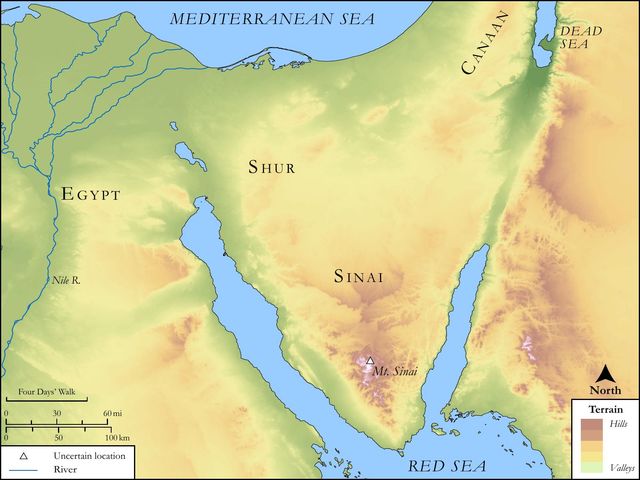
See on the biblical-era map

Study this verse
Public-domain commentary
Matthew Henry
From his Commentary on the Whole Bible. Henry comments on passages, not single verses — this entry covers Exodus 33:7–11. His four-level outline is real structure in the source text, so it is rendered as structure.
Here is, I. One mark of displeasure put upon them for their further humiliation: Moses took the tabernacle, not his own tent for his family, but the tent wherein he gave audience, heard causes, and enquired of God, the guild-hall (as it were) of their camp, and pitched it without, afar off from the camp (Exo 33:7), to signify to them that they had rendered themselves unworthy of it, and that, unless peace was made, it would return to them no more. God would thus let them know that he was at variance with them: The Lord is far from the wicked. Thus the glory of the Lord departed from the temple when it was polluted with sin, Eze 10:4, Eze 11:23. Note, It is a sign that God is angry when he removes his tabernacle, for his ordinances are fruits of his favour and tokens of his presence; while we have them with us we have him with us. Perhaps this tabernacle was a plan, or model rather, of the tabernacle that was afterwards to be erected, a hasty draught from the pattern shown him in the mount, designed for direction to the workmen, and used, in the mean time, as a tabernacle of meeting between God and Moses about public affairs. This was set up at a distance, to affect the people with the loss of that glorious structure which, if they had not forsaken their own mercies for lying vanities, was to have been set up in the midst of them. Let them see what they had forfeited.
II.Many encouragements give them, notwithstanding, to hope that God would yet be reconciled to them.
1.Though the tabernacle was removed, yet every one that was disposed to seek the Lord was welcome to follow it, Exo 33:7. Private persons, as well as Moses, were invited and encouraged to apply to God, as intercessors upon this occasion. A place was appointed for them to go to without the camp, to solicit God's return to them. Thus when Ezra (a second Moses) interceded for Israel there were assembled to him many that trembled at God's word, Ezr 9:4. When God designs mercy, he stirs up prayer. He will be sought unto (Eze 36:37); and, thanks be to his name, he may be sought unto, and will not reject the intercession of the poorest. Every Israelite that sought the Lord was welcome to this tabernacle, as well as Moses the man of God.
2.Moses undertook to mediate between God and Israel. He went out to the tabernacle, the place of treaty, probably pitched between them and the mount (Exo 33:8), and he entered into the tabernacle, Exo 33:9. That cause could not but speed well which had so good a manager; when their judge (under God) becomes their advocate, and he who was appointed to be their law-giver is an intercessor for them, there is hope in Israel concerning this thing.
3.The people seemed to be in a very good mind and well disposed towards a reconciliation.
(1.)When Moses went out to go to the tabernacle, the people looked after him (Exo 33:8), in token of their respect to him whom before they had slighted, and their entire dependence upon his mediation. By this it appeared that they were very solicitous about this matter, desirous to be at peace with God and concerned to know what would be the issue. Thus the disciples looked after our Lord Jesus, when he ascended on high to enter into the holy place not made with hands, till a cloud received him out of their sight, as Moses here. And we must with an eye of faith follow him likewise thither, where he is appearing in the presence of God for us; then shall we have the benefit of his mediation.
(2.)When they saw the cloudy pillar, that symbol of God's presence, give Moses the meeting, they all worshipped, every man at his tent door, Exo 33:10. Thereby they signified,
[1.]Their humble adoration of the divine Majesty, which they will ever worship, and not gods of gold any more.
[2.]Their joyful thankfulness to God that he was pleased to show them this token for good, and give them hopes of a reconciliation; for, if he had been pleased to kill them, he would not have shown them such things as these, would not have raised them up such a mediator, nor given him such countenance.
[3.]Their hearty concurrence with Moses as their advocate in every thing he should promise for them, and their expectation of a comfortable and happy issue of this treaty. Thus must we worship God in our tents with an eye to Christ as the Mediator. Their worshipping in their tent doors declared plainly that they were not ashamed publicly to own their respect to God and Moses, as they had publicly worshipped the calf.
4.God was, in Moses, reconciling Israel to himself, and manifested himself very willing to be at peace.
(1.)God met Moses at the place of treaty, Exo 33:9. The cloudy pillar, which had withdrawn itself from the camp when it was polluted with idolatry, now returned to this tabernacle at some distance, coming back gradually. If our hearts go forth towards God to meet him he will graciously come down to meet us.
(2.)God talked with Moses (Exo 33:9), spoke to him face to face, as a man speaks to his friend (Exo 33:11), which intimates that God revealed himself to Moses, not only with greater clearness and evidence of divine light than to any other of the prophets, but also with greater expressions of particular kindness and grace. He spoke, not as a prince to a subject, but as a man to his friend, whom he loves, and with whom he takes sweet counsel. This was great encouragement to Israel, to see their advocate so great a favourite; and, that they might be encouraged by it, Moses turned again into the camp, to tell the people what hopes he had of bringing this business to a good issue, and that they might not despair if he should be long absent. But, because he intended speedily to return to the tabernacle of the congregation, he left Joshua there, for it was not fit that the place should be empty, so long as the cloud of glory stood at the door (v. 9); but, if God had any thing to say out of that cloud while Moses was absent, Joshua was there, ready to hear it.
Continue studying Exodus 33:10 across the web’s major study libraries — every link below opens this exact verse, chapter, or book on the destination site.
Read & Compare
 BibleGatewayThis verse in more than 200 translations and 70 languages.
 Bible.comThe YouVersion reader — hundreds of translations, reading plans, and highlights.
 ESV.orgCrossway's official English Standard Version reader.
 NET BibleThe NET translation with 60,000+ translators' notes on every rendering decision.
 STEP BibleTyndale House's free study tool — original text, vocabulary, and scholarly resources.
 BibliaLogos Bible Software's free web reader.
 USCCBThe New American Bible (Revised Edition) with the U.S. bishops' study notes.
Commentaries
 BibleHub CommentariesDozens of classic commentaries on this verse, gathered on one page.
 StudyLightMore than 100 commentary sets — the largest collection on the web.
 BibleRefPlain-English commentary on what this verse means, verse by verse.
 Enduring WordDavid Guzik's free commentary on this chapter, widely used by Bible teachers.
 Bible Study ToolsVerse commentary alongside Greek and Hebrew study aids.
Original Language & Research
- BibleHub InterlinearThe verse word by word — original language, transliteration, and English.
- BibleHub LexiconEvery word's original-language definition and Strong's entry.
 Blue Letter BibleDeep-study tools — Strong's numbers, concordance, and word studies.
 SefariaThe Hebrew text with Rashi and centuries of Jewish commentary.
Sermons, Hymns & Audio


TrulyRandomVerse is not affiliated with these sites and doesn’t control their content. They’re linked because they’re genuinely useful.
Summary
Exodus 33:10 captures a pivotal moment of collective and deeply personal reverence as the Israelites witness the tangible manifestation of God's presence in the cloudy pillar, conspicuously positioned at the entrance of the Tent of Meeting. This spontaneous act of worship, performed by every individual from their tent door, signifies a profound posture of humility, submission, and renewed awe, acknowledging divine holiness and authority in the immediate aftermath of their grievous rebellion with the golden calf.
Context
ShowHideLiterary Context
This verse is strategically placed within a narrative sequence of profound crisis and divine re-engagement. Immediately preceding Exodus 33:10, Israel had committed the egregious sin of the golden calf, detailed in Exodus 32, provoking God's righteous anger and His threat to withdraw His personal presence, sending an angel instead, lest He consume them due to their "stiff-necked" nature (Exodus 33:3). In response, Moses moved the Tent of Meeting (also known as the "Tabernacle of the congregation" in the KJV) outside the camp, a stark physical symbol of the broken covenant and the people's unworthiness to host God's immediate presence within their midst (Exodus 33:7). This separation underscored the gravity of their sin and the inviolable nature of God's holiness. Therefore, Exodus 33:10 depicts the people's spontaneous and unified reaction to God's continued, albeit separated, manifestation of His presence to Moses, demonstrating their profound awareness of divine majesty and their desperate need for reconciliation.
Historical & Cultural Context
The "cloudy pillar" was not a new phenomenon but a long-established, visible sign of God's guiding and protecting presence, accompanying Israel since their miraculous departure from Egypt (Exodus 13:21). Its appearance at the Tent of Meeting's entrance, distinct from its previous position leading the entire camp, served as a potent and immediate reminder of the severe consequences of the golden calf incident. The act of "worshipping" from their "tent doors" was culturally significant in the ancient Near East, conveying a posture of deep humility, respect, and often, prostration before a superior. It acknowledged God's unapproachable holiness and their own unworthiness to draw near directly after their rebellion. This was not merely an internal sentiment but a physical act of prostration, a common and profound expression of reverence. The scene also highlights the individual's personal response within a collective act, as each person bowed from their own dwelling place, recognizing the divine presence that, by God's mercy, was still among them, albeit at a respectful distance.
Key Themes
ShowHideExodus 33:10 powerfully contributes to several overarching themes within the book of Exodus and the broader Pentateuch. Central among these is the theme of Divine Presence and Holiness. The cloudy pillar unequivocally signifies Yahweh's tangible, glorious presence among His people, yet its position outside the camp emphasizes His Transcendent Holiness and the necessary separation from human sin. The people's response highlights the theme of Human Response to Divine Revelation, demonstrating that true worship is characterized by humility, awe, and submission, particularly in the face of manifest divine glory. This scene also underscores the theme of Covenant Relationship and Reconciliation, as it shows God's continued, merciful interaction with His people through Moses, even after their infidelity, prompting their renewed recognition of His sovereignty and their need for His continued favor. It foreshadows the ongoing need for mediation and atonement to bridge the gap between a holy God and a sinful humanity, a theme profoundly developed throughout the sacrificial system detailed in Leviticus.
Exposition and Analysis
ShowHideKey Word Analysis
ShowHideThis verb emphasizes direct, visual perception. It signifies that the manifestation of God's presence was not a rumor or an indirect report but a clear, undeniable, and publicly witnessed event. The people's response was triggered by this immediate and undeniable sensory experience, leading to a unified and spontaneous act of reverence.
Referring to a column or a stand. In this context, it denotes the visible, upright column of cloud that symbolized God's presence. As a "pillar," it conveys stability, permanence, and a visible point of focus for the divine manifestation, serving as a tangible anchor for the people's perception of God's continued, though now separated, presence.
This verb literally means "to depress" or "to prostrate oneself." It describes a physical act of profound reverence, submission, and adoration, indicating a complete surrender to a superior authority. This is not merely an internal feeling but an outward, bodily expression of humility and awe, demonstrating the people's recognition of God's majesty and their own unworthiness.
Verse Breakdown
ShowHide"And all the people saw the cloudy pillar stand [at] the tabernacle door"
This opening clause establishes the universal observation of God's manifest presence. The "cloudy pillar," a familiar and potent symbol of Yahweh's glory and guidance, was conspicuously positioned at the entrance of the Tent of Meeting, which Moses had intentionally pitched outside the camp. This public display served as a powerful visual cue, confirming God's continued, though now spatially separated, interaction with Moses and, by extension, with the entire nation of Israel. It highlights the divine initiative in revealing His presence.
"and all the people rose up and worshipped"
This segment describes the immediate, unified, and spontaneous response of the entire Israelite community. Upon witnessing the divine manifestation, the people instinctively "rose up"—a gesture often associated with respect, readiness, or a shift in posture—and then immediately "worshipped." This indicates a corporate, deeply felt sense of awe and reverence, a spontaneous outpouring of homage triggered by the undeniable sight of God's majesty and holiness. It underscores the profound impact of God's presence on the human heart.
"every man [in] his tent door."
This final phrase adds a crucial layer of meaning, emphasizing both the individual and humble nature of the worship, even within the collective response. Each person worshipped from their own "tent door," signifying a posture of humility and acknowledging their distance from the sacred space due to their recent sin. It indicates that the worship was not merely a mass movement or a coerced act but a deeply personal and individual act of submission and adoration, performed from their private dwelling places, recognizing God's authority and holiness over every facet of their individual and collective lives.
Literary Devices
ShowHideExodus 33:10 masterfully employs several literary devices to convey its powerful message. Symbolism is profoundly evident, with the "cloudy pillar" serving as the preeminent symbol of God's tangible, glorious presence and His continued, albeit conditional, covenant faithfulness to Israel. The "tent door" also functions symbolically, representing the individual's personal space and, in this specific context, a place of humble, distanced worship, acknowledging the separation caused by sin yet still engaging in reverence. The verse also utilizes Contrast effectively, setting the people's current posture of humble, unified worship against their recent egregious rebellion with the golden calf. This highlights the transformative power of God's manifest presence and the people's capacity for repentance and re-alignment. Furthermore, the Repetition of the phrase "all the people" emphasizes the unified, universal nature of the response, underscoring that the awe and worship were not limited to a select few but encompassed the entire Israelite community, demonstrating a corporate recognition of divine authority.
Theological and Thematic Connections
ShowHideExodus 33:10 powerfully underscores the enduring themes of divine presence, unapproachable holiness, and the appropriate human response to God's manifest glory. Despite Israel's profound failure with the golden calf, God, in His boundless mercy and through Moses' fervent intercession, continued to make His presence known. The people's spontaneous worship from their tent doors signifies a crucial moment of corporate and individual humility, acknowledging God's unapproachable holiness and their own unworthiness, yet still compelled to worship by the sheer majesty of His visible presence. This act of prostration demonstrates a recognition of God's sovereignty and a turning back towards Him, even from a distance. It teaches us that true worship is a humble, reverent, and often spontaneous response to the reality of who God is, regardless of our past failures, and that God's presence, even when veiled or distant, still commands our utmost adoration.
Reflection and Application
ShowHideExodus 33:10 serves as a timeless and profound reminder of the appropriate response to God's manifest presence in our lives. Just as the Israelites were moved to spontaneous, humble worship by the visible cloudy pillar, so too should believers today cultivate a heart of profound awe and reverence when we perceive God's active presence and sovereign work in our lives, in the church, and in the world around us. This passage challenges us to deeply consider whether our worship, both in corporate gatherings and in our private devotion, is truly born out of a deep sense of God's majesty, His unblemished holiness, and His immeasurable grace, or if it has become routine, perfunctory, or self-focused. It calls us to adopt a posture of profound humility, recognizing our own sinfulness and limitations in the radiant light of His perfection, yet still drawing near in adoration and submission. The evocative image of "every man in his tent door" reminds us that genuine worship is not confined to formal rituals or sacred spaces but extends intimately to our private lives, our homes, and every aspect of our daily existence. It encourages a personal, deeply felt, and continuous connection with the divine, even when we feel a spiritual distance due to our shortcomings or the challenges of life.
Questions for Reflection
ShowHideFAQ
ShowHideWhy was the Tent of Meeting pitched "outside the camp," and what does that signify?
ShowHideMoses pitched the Tent of Meeting "outside the camp" as a direct and immediate consequence of Israel's egregious sin with the golden calf. In Exodus 33:3, God explicitly declared that He would not go up among the people in the camp, lest He consume them on the way due to their "stiff-necked" and rebellious nature. This physical separation profoundly symbolized the breach in fellowship between a holy God and His sinful people. It underscored God's inviolable holiness and the immense gravity of their rebellion, signifying that His immediate, intimate presence could not dwell amidst their unpurified sin. The Tent's new location outside the camp also became a designated place where Moses could meet with God on behalf of the people, serving as a temporary, intercessory bridge and a visible sign of God's continued, albeit distanced, willingness to interact with His people until reconciliation could be achieved.
What is the significance of "every man in his tent door" in the act of worship?
ShowHideThe phrase "every man in his tent door" carries significant meaning, highlighting both the individual and humble nature of the Israelites' worship in this specific context. While "all the people" collectively saw and rose up, their act of worship was performed from their private dwelling places, not by entering the sacred space of the Tent of Meeting itself. This signifies Humility and Acknowledgment of Distance: After the devastating golden calf incident, the people were acutely aware of their unworthiness and the profound barrier their sin had created between them and a holy God. Worshipping from their tent doors was a posture of profound humility, acknowledging that they could not directly approach the holy God. It also represents a Personal and Individual Response: This detail emphasizes that the worship was not merely a corporate ritual or a coerced mass movement but a deeply personal and individual act of reverence, with each person, from their own private space, bowing before the visible sign of God's majestic presence. Finally, it demonstrates Universal Participation: Despite the physical distance of the Tent of Meeting, this directive ensured that everyone in the camp, regardless of their tribal affiliation or social standing, could participate in this unified act of homage, demonstrating a collective yet individualized response to God's enduring majesty and authority.
Christ-Centered Fulfillment
ShowHideExodus 33:10, with its powerful portrayal of God's veiled presence in the cloudy pillar eliciting spontaneous worship from a humbled and distanced people, finds its ultimate and glorious fulfillment in the person and work of Jesus Christ. The "cloudy pillar" was a visible, yet inherently veiled and temporary, manifestation of God's glory, signifying His presence among His people while maintaining a necessary separation due to sin. In Christ, God's presence is no longer veiled or distant, but fully embodied, intimately accessible, and permanently dwelling among humanity. John 1:14 profoundly declares that "the Word became flesh and dwelt among us, and we have seen his glory, glory as of the only Son from the Father, full of grace and truth." Jesus is the true and ultimate "Tent of Meeting," the very dwelling place of God among humanity (John 2:19). His incarnation and subsequent atoning sacrifice on the cross completely remove the formidable barrier of sin that necessitated the Tent's placement outside the camp and the people's worship from a humble distance. Through His perfect life, sacrificial death, and victorious resurrection, Christ provides direct, unhindered access to God's holy presence, tearing the very veil that separated humanity from the Holy of Holies (Hebrews 10:19-20). Now, believers are no longer worshipping from a distant tent door; instead, we are indwelt by the Holy Spirit, the very Spirit of Christ, making every believer a living "tent" or temple for God's presence (John 14:16-17). Our worship is transformed from an external, distanced act to an internal, intimate communion, performed "in spirit and truth" (John 4:24), empowered by the indwelling Spirit and made possible by Christ's finished work, allowing us to draw near with bold confidence to the very throne of grace (Hebrews 4:16).