


Genesis 15:17
Bible text: King James Version (1769 Blayney text) · Public domain
Bible text: Berean Standard Bible · Public domain
Bible text: American Standard Version (1901) · Public domain
Bible text: World English Bible, Messianic edition · Public domain
Bible text: Geneva Bible (1599) · Public domain
Bible text: Young's Literal Translation · Public domain
- וַיְהִיvay·Hiand it wasH1961Conj-w ¦ V-Qal-ConsecImperf-3msVerb Qal Consecutive Imperfect 3rd Singular Masculineוַandיְהִיit was
- הַשֶּׁמֶשׁha·She·meshthe sunH8121Art ¦ N-csNoun Singular common gender Absoluteהַtheשֶּׁמֶשׁsun
- בָּאָהBa·'ahit had goneH935V-Qal-Perf-3fsVerb Qal Perfect 3rd Singular Feminine
- וַעֲלָטָהva·'a·la·Tahand darknessH5939Conj-w ¦ N-fsNoun Singular Feminine Absoluteוַandעֲלָטָהdarkness
- הָיָהha·Yahit wasH1961V-Qal-Perf-3msVerb Qal Perfect 3rd Singular Masculine
- וְהִנֵּהve·hi·Nehand there!H2009Conj-w ¦ PrtParticle Interjectionוְandהִנֵּהthere!
- תַנּוּרta·Nura fire pot ofH8574N-mscNoun Singular Masculine Construct
- עָשָׁן'a·ShansmokeH6227N-msNoun Singular Masculine Absolute
- וְלַפִּידve·la·Pidand a torch ofH3940Conj-w ¦ N-mscNoun Singular Masculine Constructוְandלַפִּידa torch of
- אֵשׁ'EshfireH784N-csNoun Singular common gender Absolute
- אֲשֶׁר'a·SherwhichH834RelParticle Relative
- עָבַר'a·Varit passedH5674V-Qal-Perf-3msVerb Qal Perfect 3rd Singular Masculine
- בֵּיןbeinbetweenH996Adj-mscAdjective Numerical Singular Masculine Construct
- הַגְּזָרִיםha·ge·za·Rimthe piecesH1506Art ¦ N-mpNoun Plural Masculine Absoluteהַtheגְּזָרִיםpieces
- הָאֵלֶּהha·'E·leh<the> theseH428Art ¦ PrtParticle Demonstrativeהָ<the>אֵלֶּהthese
English is a literal word-by-word gloss of the Hebrew, not the KJV's wording. Why?
This is the original text the KJV's translators worked from — each Hebrew word with its own literal English meaning in this verse, prepared by scholars at Tyndale House, Cambridge. The KJV translates whole sentences, not word by word, so its wording differs: one Hebrew word can become several English words, and the KJV may choose “the LORD” where the gloss reads “Yahweh”. Both are faithful — they answer different questions. For the KJV's own rendering, switch to the KJV text.
Details
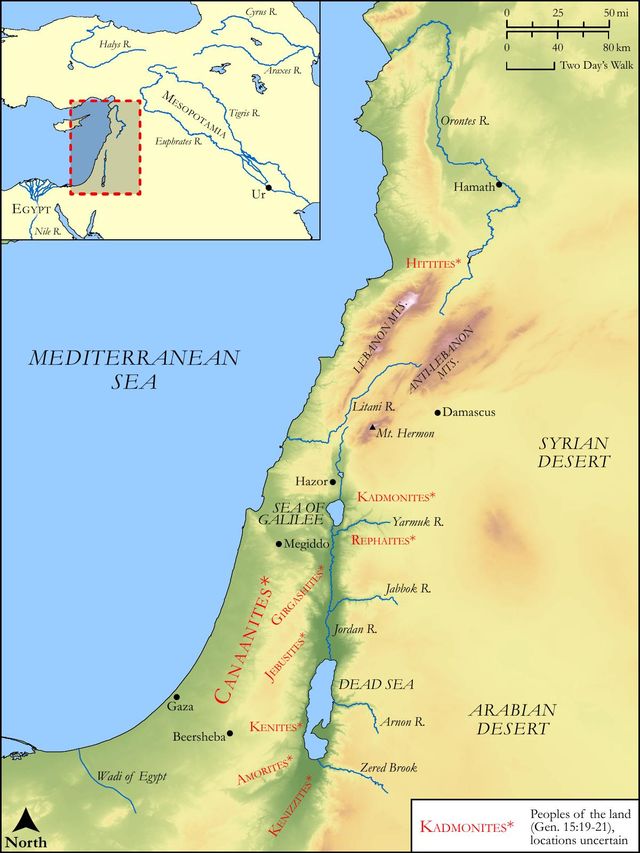
See on the biblical-era maps


Study this verse
Public-domain commentary
Matthew Henry
From his Commentary on the Whole Bible. Henry comments on passages, not single verses — this entry covers Genesis 15:17–21. His three-level outline is real structure in the source text, so it is rendered as structure.
Here is, I. The covenant ratified (Gen 15:17); the sign which Abram desired was given, at length, when the sun had gone down, so that it was dark; for that was a dark dispensation.
1.The smoking furnace signified the affliction of his seed in Egypt. They were there in the iron furnace (Deu 4:20), the furnace of affliction (Isa 48:10), labouring in the very fire. They were there in the smoke, their eyes darkened, that they could not see to the end of their troubles, and themselves at a loss to conceive what God would do with them. Clouds and darkness were round about them.
2.The burning lamp denotes comfort in this affliction; and this God showed to Abram, at the same time that he showed him the smoking furnace.
(1.)Light denotes deliverance out of the furnace; their salvation was as a lamp that burneth, Isa 62:1. When God came down to deliver them, he appeared in a bush that burned, and was not consumed, Exo 3:2.
(2.)The lamp denotes direction in the smoke. God's word was their lamp: this word to Abram was so, it was a light shining in a dark place. Perhaps this burning lamp prefigured the pillar of cloud and fire, which led them out of Egypt, in which God was.
(3.)The burning lamp denotes the destruction of their enemies who kept them so long in the furnace. See Zac 12:6. The same cloud that enlightened the Israelites troubled and burned the Egyptians.
3.The passing of these between the pieces was the confirming of the covenant God now made with him, that he might have strong consolation, being fully persuaded that what God promised he would certainly perform. It is probable that the furnace and lamp, which passed between the pieces, burnt and consumed them, and so completed the sacrifice, and testified God's acceptance of it, as of Gideon's (Jdg 6:21), Manoah's (Jdg 13:19, Jdg 13:20), and Solomon's, Ch2 7:1. So it intimates,
(1.)That God's covenants with man are made by sacrifice (Psa 50:5), by Christ, the great sacrifice: no agreement without atonement.
(2.)God's acceptance of our spiritual sacrifices is a token for good and an earnest of further favours. See Jdg 13:23. And by this we may know that he accepts our sacrifices if he kindle in our souls a holy fire of pious and devout affections in them.
II.The covenant repeated and explained:
In that same day, that day never to be forgotten, the Lord made a covenant with Abram, that is, gave a promise to Abram, saying, Unto thy seed have I given this land, Gen 15:18. Here is,
1.A rehearsal of the grant. He had said before, To thy seed will I give this land, Gen 12:7; Gen 13:15. But here he says, I have given it; that is,
(1.)I have given the promise of it, the charter is sealed and delivered, and cannot be disannulled. Note, God's promises are God's gifts, and are so to be accounted.
(2.)The possession is as sure, in due time, as if it were now actually delivered to them. What God has promised is as sure as if it were already done; hence, it is said, He that believes hath everlasting life (Joh 3:36), for he shall as surely go to heaven as if he were there already.
2.A recital of the particulars granted, such as is usual in the grants of lands. He specifies the boundaries of the land intended hereby to be granted, Gen 15:18. And then, for the greater certainty, as is usual in such cases, he mentions in whose tenure and occupation these lands now were. Ten several nations, or tribes, are here spoken of (Gen 15:19-21) that must be cast our, to make room for the seed of Abram. They were not possessed of all these countries when God brought them into Canaan. The bounds are fixed much narrower, Num 34:2, Num 34:3, etc. But,
(1.)In David's time, and Solomon's, their jurisdiction extended to the utmost of these limits, Ch2 9:26.
(2.)It was their own fault that they were not sooner and longer in possession of all these territories. They forfeited their right by their sins, and by their own sloth and cowardice kept themselves out of possession.
(3.)The land granted is here described in its utmost extent because it was to be a type of the heavenly inheritance, where there is room enough: in our father's house are many mansions. The present occupants are named, because their number, and strength, and long prescription, should be no hindrance to the accomplishment of this promise in its season, and to magnify God's love to Abram and his seed, in giving to that one nation the possessions of many nations, so precious were they in his sight, and so honourable, Isa 43:4.
Historical interpretation
Four Centuries of Reception
6 surviving comments on this verse. Each one is dated, so this reads as a timeline rather than a list.
Select a marker to jump to its quote. Markers stagger vertically where authors wrote within a few decades of each other.
Abraham thought, “Perhaps these kings will destroy each other, or other peoples might rise up and destroy them and empty out the land for us. Perhaps my seed will become strong and will go and slay its inhabitants and possess it, or maybe the land will swallow [its inhabitants] because of their deeds. Perhaps the [inhabitants] might go into exile into another land because of hunger or rumor or some such reason.” Abraham sought to know which of these [would happen], but he had no doubts whatsoever.Then God, who knew what he sought, showed him what he did not seek in addition to what he did seek. For by the offering that Abraham made [when] the birds came down and he chased them away, God clearly showed him that his descendants would sin and be oppressed but would be saved through the prayers of their righteous ones. And by the pot of fire that came down, God made known that even if all their righteous ones should come to an end, deliverance from heaven would come to them. By the three-year-old calf and the three-year-old ram and the three-year-old goat [God showed him] that either they would be delivered after three generations or that kings, priests and prophets would soon arise from among his descendants. By the limbs of the animals that Abraham cut in two [God] depicted their many tribes, and by the bird that Abraham did not cut in two [God] signified their unity.
What is clearly stated in the text can be expounded as follows. When the sun was already near setting, a flame emerged, and there appeared a smoking oven and fiery torches “that passed between the two parts of the divided animals,” burning and lighting up the place, to allow the patriarch to see what was happening and to reveal in a more divine manner the mysteries to be searched out. It should be noted that a fire did not appear only after the covenant had been made, but the gift of the law through Moses took place itself in the midst of a fire. Fire could be seen, and, without being able to see the one who was speaking, the giving of the commandments could be heard. What is suggested here is perhaps something like this. As the law contains rewards and punishments, it was given in the midst of fire to indicate that it brings burning to some and illumination to others. In fact, fire has a twofold power: it illuminates, and at the same time it burns. The gift of the law, then, burns those who abandon it and enlightens those who observe it. So too here, torches and smoke appeared; now smoke is the result and as it were the consequence of a fire that has been lit. Moreover, a flame had appeared first. We conclude, then, that one who is defining what is to be done and what is not to be done in a matter this difficult requires the light of God and also fear, symbolized by the furnace, so as to accomplish everything in accordance with right reason.
When it is added, “And when the sun was now setting there was a flame, and lo, a smoking furnace, and lamps of fire, which passed through between those pieces,” this signifies that at the end of the world the carnal shall be judged by fire. The affliction of the city of God, such as never was before, which is expected to take place under Antichrist, was prefigured by Abraham’s horror of great darkness about the going down of the sun. When the end of the world draws nigh, so at the going down of the sun, that is, at the very end of the world, there is signified by that fire the day of judgment, which separates the carnal who are to be saved by fire from the carnal who are to be condemned in the fire. And then the covenant made with Abraham particularly sets forth the land of Canaan and names eleven tribes in it from the river of Egypt even to the great river Euphrates. It is not then from the great river of Egypt, that is, the Nile, but from a small one that separates Egypt from Palestine, where the city of Rhinocorura is.
Notice, brothers, that what is called a fiery torch passing between those pieces is also not said to have touched the turtledove and pigeon. That evening signified the end of the world. Those animals, as we already said, showed a type of all the nations who believe in Christ. Because those nations have in them not only spiritual people, as was already said, that is, not only good people but even the wicked, for this reason the animals were divided and the fiery torch passed through them. According to what the apostle says, “The day of the Lord will declare it, since it will be revealed in fire,” and so forth. That burning, smoking oven and fiery torch prefigured the day of judgment, and for this reason fear and a darksome horror settled upon blessed Abraham. Therefore we have realized that “if the just man scarcely will be saved,” on the day of judgment, “where will the impious and the sinner appear?” That burning, smoking oven signified judgment day: the day of judgment, I repeat, on which “there will be the weeping and the gnashing of teeth.” On that day there will be wailing and lamenting and repentance that is too late, when the foundations of the mountains will be moved and the earth will burn down to hell.
Therefore, in order that we may not come to this torture of soul, let us awake while there is time for correction and like good, profitable servants seek the will of our Lord. Then when that dreadful day of judgment comes, which is dreaded exceedingly even by the good and was signified by that burning, smoking oven, we will not be tormented in hell by avenging flames in company with carnal people. These souls were signified by the animals, because they can be divided by various contentious desires. Let us rather show the simplicity of the pigeon and the chastity of the turtledove, so that we may be raised to heaven on the spiritual wings of virtue. According to the apostle’s words, “We shall be caught up together with them in clouds to meet the Lord in the air, and so we shall ever be with the Lord” with the help of our Lord Jesus Christ, to whom is honor and glory together with the Father and the Holy Spirit world without end. Amen.
So when the sun had set, a dense darkness came over, and a smoking furnace appeared, and a blazing torch passed between the pieces. This darkness and the fire furnace occurring after the sunset signifies that at the end of the world, the carnal will be judged by fire. For just as the affliction of the City of God, such as never was before and is expected to come under the Antichrist, is signified by the frightening darkness upon Abraham at sunset, that is, as the end of the age approaches; so at sunset, that is, at the end itself, it is signified by this fire that the day of judgment will save the carnal through fire and condemn them in fire.
Continue studying Genesis 15:17 across the web’s major study libraries — every link below opens this exact verse, chapter, or book on the destination site.
Read & Compare
 BibleGatewayThis verse in more than 200 translations and 70 languages.
 Bible.comThe YouVersion reader — hundreds of translations, reading plans, and highlights.
 ESV.orgCrossway's official English Standard Version reader.
 NET BibleThe NET translation with 60,000+ translators' notes on every rendering decision.
 STEP BibleTyndale House's free study tool — original text, vocabulary, and scholarly resources.
 BibliaLogos Bible Software's free web reader.
 USCCBThe New American Bible (Revised Edition) with the U.S. bishops' study notes.
Commentaries
 BibleHub CommentariesDozens of classic commentaries on this verse, gathered on one page.
 StudyLightMore than 100 commentary sets — the largest collection on the web.
 BibleRefPlain-English commentary on what this verse means, verse by verse.
 Enduring WordDavid Guzik's free commentary on this chapter, widely used by Bible teachers.
 Bible Study ToolsVerse commentary alongside Greek and Hebrew study aids.
Original Language & Research
- BibleHub InterlinearThe verse word by word — original language, transliteration, and English.
- BibleHub LexiconEvery word's original-language definition and Strong's entry.
 Blue Letter BibleDeep-study tools — Strong's numbers, concordance, and word studies.
 SefariaThe Hebrew text with Rashi and centuries of Jewish commentary.
Sermons, Hymns & Audio


TrulyRandomVerse is not affiliated with these sites and doesn’t control their content. They’re linked because they’re genuinely useful.
Summary
Genesis 15:17 dramatically culminates God's covenant ratification with Abram, presenting a profound theophany where divine manifestations—a smoking furnace and a burning lamp—symbolically represent God Himself passing between the divided animal pieces. This unique act unequivocally seals God's unconditional promise to Abram, demonstrating His unwavering commitment and sole responsibility for the covenant's fulfillment, thereby establishing the foundational assurance for the future of Israel and the ultimate blessing of all nations through Abram's lineage.
Context
ShowHideLiterary Context
This verse marks the climactic moment of the covenant ceremony initiated in Genesis 15:9-11. Prior to this, Abram expresses his concern about not having an heir, despite God's repeated promises of numerous descendants (Genesis 15:2-3). God responds by reiterating His promise, declaring Abram's descendants will be as countless as the stars (Genesis 15:5). Abram's belief in God's promise is then "counted to him for righteousness" (Genesis 15:6), setting the stage for the formal covenant. The preceding verses describe Abram preparing the animals for the ritual, driving away birds of prey, and then falling into a deep, terrifying darkness, a prelude to the divine encounter. The immediate narrative flow emphasizes God's initiative and sovereign action in establishing this covenant.
Historical & Cultural Context
The covenant ceremony described in Genesis 15 reflects the practice of covenant cutting, which Scripture records again in the days of Jeremiah. In such ceremonies, animals would be cut in half and laid out, forming a pathway. Typically, both parties entering the covenant would walk between the divided pieces, symbolically invoking a self-maledictory oath: "May I become like these pieces if I fail to keep my part of the covenant." This solemn act underscored the gravity of the agreement and the severe consequences of breaking it. However, the unique aspect of Genesis 15:17 is that only God, represented by the symbolic manifestations, passes through the pieces, not Abram. This deviation from the norm profoundly highlights the unilateral and unconditional nature of this specific covenant, setting it apart from typical human agreements.
Key Themes
ShowHideGenesis 15 is replete with foundational theological themes. Central among them is the unconditional nature of God's covenant with Abram, emphasized by God alone passing through the pieces. This highlights God's sovereignty and faithfulness, as He takes sole responsibility for the covenant's fulfillment, independent of human performance. The chapter also reinforces the theme of divine promise, particularly concerning land and descendants, which are foundational to Israel's identity and future. Furthermore, Abram's faith being "counted as righteousness" (Genesis 15:6) introduces the crucial theme of justification by faith, a concept pivotal throughout biblical theology. Finally, the imagery of the "smoking furnace" and "burning lamp" contributes to the theme of divine presence and revelation, often appearing in fire and smoke, signifying both God's awesome holiness and His guiding light.
Exposition and Analysis
ShowHideKey Word Analysis
ShowHideMeaning "a fire-pot; furnace, oven." In this context, the "smoking furnace" represents a powerful, often formidable, aspect of God's presence. It evokes imagery of intense heat, judgment, and affliction, possibly foreshadowing the future suffering of Israel in Egypt, a period of hardship and refining. It also connects to the awe-inspiring, sometimes terrifying, manifestation of God's holiness.
Meaning "a flambeau, lamp or flame." The "burning lamp" signifies light, guidance, and the illuminating, life-giving aspect of God's presence. It speaks to God's faithfulness, His watchful eye, and His promise to lead His people through darkness, providing direction and assurance. It represents the benevolent, covenant-keeping dimension of God's character.
A primitive root meaning "to cross over; used very widely of any transition." Here, it specifically denotes the movement of the divine manifestations between the divided animal pieces. The significance lies in who passes: only God. This action underscores the unilateral nature of the covenant, where God alone assumes the responsibility and the self-maledictory oath, ensuring its fulfillment by His own power and faithfulness.
Verse Breakdown
ShowHide"And it came to pass, that, when the sun went down, and it was dark"
This sets the solemn and dramatic stage for the divine encounter. The descent into darkness signifies the approaching night, but also symbolically deepens the sense of awe and mystery surrounding God's impending manifestation. It emphasizes Abram's passive role, as he is in a "deep sleep" (Genesis 15:12) during this pivotal moment, highlighting that this covenant is entirely God's initiative.
"behold a smoking furnace"
This is the first of two distinct divine manifestations. The "smoking furnace" is a powerful symbol, evoking images of intense heat, divine judgment, and affliction. It is often interpreted as a prefigurement of Israel's future bondage in Egypt, a period of severe trials and suffering for Abram's descendants before they inherit the promised land. It also recalls the formidable, awe-inspiring presence of God, similar to the smoke and fire on Mount Sinai.
"and a burning lamp"
The second divine manifestation, contrasting with the furnace. The "burning lamp" symbolizes light, guidance, and God's illuminating, faithful presence. It signifies God's promise to lead His people, to be a light in their darkness, and to faithfully fulfill His covenant. This imagery is reminiscent of the pillar of fire that guided the Israelites through the wilderness, providing direction and assurance.
"that passed between those pieces"
This is the crucial action that ratifies the covenant. In covenant cutting, as Jeremiah later records of the princes of Judah, both parties would walk between the divided animal pieces, signifying that the one who broke the covenant would suffer the same fate. However, here, only the divine manifestations—representing God Himself—pass through. This singular action profoundly underscores the unilateral and unconditional nature of the Abrahamic covenant. God alone takes on the responsibility and the self-maledictory oath, guaranteeing the covenant's fulfillment by His own immutable character and power, independent of Abram's performance.
Literary Devices
ShowHideGenesis 15:17 is rich in literary devices that amplify its theological significance. The primary device is Symbolism, where the "smoking furnace" and "burning lamp" are not literal representations of God but powerful visual metaphors for His multifaceted presence and character. The furnace symbolizes God's awesome holiness, His capacity for judgment, and perhaps Foreshadowing of the future affliction of Israel in Egypt. The lamp, conversely, symbolizes God's illuminating guidance, His faithfulness, and His life-giving presence. Together, they represent the full spectrum of God's interaction with humanity—both terrifying and comforting, both judging and guiding. The entire scene is a Theophany, a visible manifestation of God to humankind, designed to convey divine truth in a tangible way. The Dramatic Irony is also present, as Abram is in a deep sleep, unaware of the profound implications of God's unilateral action, which secures his future and the future of his descendants without any contribution from him.
Theological and Thematic Connections
ShowHideGenesis 15:17 provides a foundational theological truth about the nature of God's covenants and His character. The unilateral act of God passing through the divided pieces, while Abram sleeps, profoundly emphasizes that the Abrahamic covenant is entirely God's initiative and responsibility. This is not a conditional agreement dependent on human performance, but an unconditional promise rooted in God's sovereign will and immutable faithfulness. The "smoking furnace" and "burning lamp" are powerful symbols of God's awesome and multifaceted presence—both the consuming fire of His holiness and the guiding light of His promises. This scene assures Abram, and all believers, that God's word is utterly reliable and His redemptive plan will be accomplished, not by human effort, but by His own power and commitment.
Reflection and Application
ShowHideGenesis 15:17 offers profound comfort and assurance for believers today. It underscores God's unwavering faithfulness and the absolute reliability of His promises. Just as God unilaterally bound Himself to Abram, taking full responsibility for the covenant's fulfillment, He similarly binds Himself to His people through His New Covenant in Christ. We can trust that God will fulfill every word He has spoken, even when circumstances seem dark, trials loom, or our own faithfulness falters. This passage reminds us that our hope is not in our own strength, merit, or ability to keep promises, but solely in God's sovereign and steadfast commitment. It calls us to rest in the certainty of God's character, knowing that He is both the initiator and the guarantor of His redemptive plan, which culminates in Christ. This divine commitment frees us from the burden of earning God's favor and invites us into a life of grateful response to His unmerited grace.
Questions for Reflection
ShowHideFAQ
ShowHideWhat is the significance of the "smoking furnace" and "burning lamp"?
ShowHideThe "smoking furnace" and "burning lamp" are symbolic manifestations of God's presence, representing different facets of His character and interaction with humanity. The "smoking furnace" (Hebrew: tannûwr) typically symbolizes God's awesome and formidable presence, often associated with judgment, affliction, or the trials His people will endure, such as Israel's future bondage in Egypt. It evokes the solemnity and consuming holiness of God. The "burning lamp" (Hebrew: lappîyd), in contrast, represents God's illuminating presence, guidance, and faithfulness, akin to a light in darkness. It signifies His promise to lead, preserve, and provide direction for His people. Together, they depict the multifaceted nature of God's engagement with humanity—both awe-inspiring and comforting, both refining and guiding.
Why did only God (represented by the symbols) pass between the pieces, and not Abram?
ShowHideIn covenant cutting, as Jeremiah later records, both parties would typically walk between the divided animal pieces, signifying that the same destructive fate would befall either party if they broke the agreement. However, in Genesis 15:17, only God, represented by the smoking furnace and burning lamp, passes through. This unique deviation from custom signifies the unilateral and unconditional nature of the Abrahamic covenant. God alone takes on the responsibility and the self-maledictory oath for its fulfillment, demonstrating that His promises are based entirely on His own faithfulness, power, and immutable character, not on Abram's performance or ability to keep his end of the bargain. It underscores that this covenant is a gift of divine grace.
Does this event imply that God himself was literally a furnace and a lamp?
ShowHideNo, the "smoking furnace" and "burning lamp" are symbolic manifestations or a theophany of God's presence, not literal descriptions of His being. They are a visible, tangible way for Abram to perceive God's participation in the covenant, using imagery that conveys His power, holiness, and unwavering commitment. This is similar to other biblical anthropomorphic or symbolic descriptions of God (e.g., God as a "rock" or "shield"), designed to help humans grasp divine realities through familiar earthly concepts without defining God's infinite nature. The imagery communicates the effect of God's presence and action, not His literal form.
Christ-Centered Fulfillment
ShowHideThe unilateral covenant established in Genesis 15:17 finds its ultimate fulfillment and deepest meaning in Jesus Christ. Just as God alone passed through the divided pieces, taking full responsibility for the covenant's ratification and its accompanying curse, so too did Christ bear the full burden of the broken covenant on the cross, becoming the sole guarantor of the New Covenant. His perfect obedience and atoning sacrifice fulfilled all the righteous requirements of God's law, making salvation a unilateral gift based entirely on His finished work, not on human merit or performance. Through Christ, the ultimate "seed" of Abraham (Galatians 3:16), the promise that "all the families of the earth shall be blessed" (Genesis 12:3) is realized, extending the covenant blessings of justification by faith to all who believe, Jew and Gentile alike (Romans 4:9-12). This demonstrates God's eternal and unchanging commitment to redeem humanity, secured not by our promises, but by the perfect fidelity and sacrifice of His Son, who is the "Amen, the faithful and true witness" (Revelation 3:14).