


Judges 13:20
Bible text: King James Version (1769 Blayney text) · Public domain
Bible text: King James Version with Strong's numbers · Public domain
Bible text: Berean Standard Bible · Public domain
Bible text: American Standard Version (1901) · Public domain
Bible text: World English Bible, Messianic edition · Public domain
Bible text: Geneva Bible (1599) · Public domain
Bible text: Young's Literal Translation · Public domain
- וַיְהִיvay·Hiand it wasH1961Conj-w ¦ V-Qal-ConsecImperf-3msVerb Qal Consecutive Imperfect 3rd Singular Masculineוַandיְהִיit was
- בַעֲלוֹתva·'a·Lotwhen went upH5927Prep-b ¦ V-Qal-InfVerb Qal Infinitive Constructבַwhenעֲלוֹתwent up
- הַלַּהַבha·La·havthe flameH3851Art ¦ N-msNoun Singular Masculine Absoluteהַtheלַּהַבflame
- מֵעַלme·'Alfrom onH5921Prep-m ¦ PrepPrepositionמֵfromעַלon
- הַמִּזְבֵּחַha·miz·Be·achthe altarH4196Art ¦ N-msNoun Singular Masculine Absoluteהַtheמִּזְבֵּחַaltar
- הַשָּׁמַיְמָהha·sha·May·mahthe heavens towardsH8064Art ¦ N-mp ¦ SfxNoun Plural Masculine Absoluteהַtheשָּׁמַיְמָheavensהtowards
- וַיַּעַלvai·Ya·'aland he went upH5927Conj-w ¦ V-Qal-ConsecImperf-3msVerb Qal Consecutive Imperfect 3rd Singular Masculineוַandיַּעַלhe went up
- מַלְאַךְmal·'akh[the] angel ofH4397N-mscNoun Singular Masculine Construct
- יְהוָהYah·wehYahwehH3068N-properNoun Proper Title
- בְּלַהַבbe·La·havin [the] flame ofH3851Prep-b ¦ N-mscNoun Singular Masculine Constructבְּinלַהַב[the] flame of
- הַמִּזְבֵּחַha·miz·Be·achthe altarH4196Art ¦ N-msNoun Singular Masculine Absoluteהַtheמִּזְבֵּחַaltar
- וּמָנוֹחַu·ma·No·achand ManoahH4495Conj-w ¦ N-proper-mNoun Proper MasculineוּandמָנוֹחַManoah
- וְאִשְׁתּוֹve·'ish·Toand his wifeH802Conj-w ¦ N-fsc ¦ 3msNoun Singular Feminine Constructוְandאִשְׁתּwifeוֹhis
- רֹאִיםro·'Im[were] lookingH7200V-Qal-Prtcpl-mpVerb Qal Participle Plural Masculine Absolute
- וַיִּפְּלוּvai·yi·pe·Luand they fellH5307Conj-w ¦ V-Qal-ConsecImperf-3mpVerb Qal Consecutive Imperfect 3rd Plural Masculineוַandיִּפְּלוּthey fell
- עַל'alonH5921PrepPreposition
- פְּנֵיהֶםpe·nei·Hemtheir facesH6440N-mpc ¦ 3mpNoun Plural Masculine Constructפְּנֵיfacesהֶםtheir
- אָרְצָה'A·re·tzah[the] ground towardsH776N-fs ¦ SfxNoun Singular Feminine Absoluteאָרְצָ[the] groundהtowards
English is a literal word-by-word gloss of the Hebrew, not the KJV's wording. Why?
This is the original text the KJV's translators worked from — each Hebrew word with its own literal English meaning in this verse, prepared by scholars at Tyndale House, Cambridge. The KJV translates whole sentences, not word by word, so its wording differs: one Hebrew word can become several English words, and the KJV may choose “the LORD” where the gloss reads “Yahweh”. Both are faithful — they answer different questions. For the KJV's own rendering, switch to the KJV text.
Details
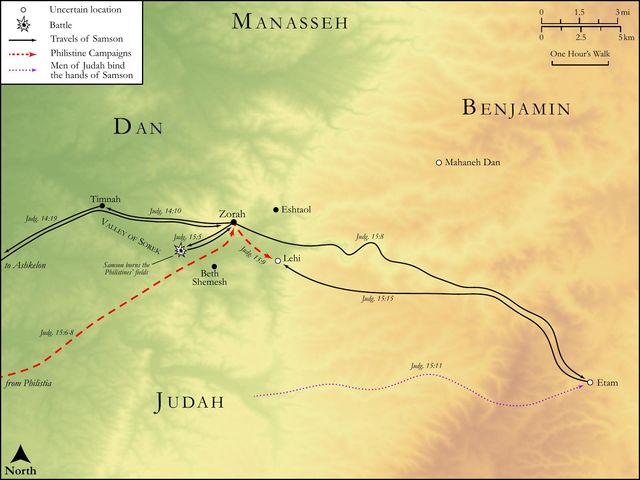
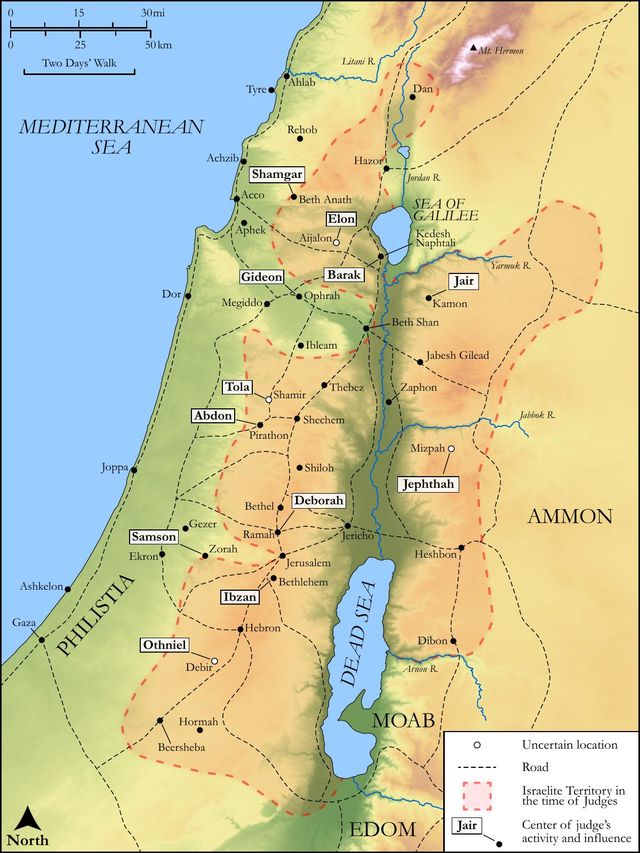
See on the biblical-era maps
Study this verse
Public-domain commentary
Matthew Henry
From his Commentary on the Whole Bible. Henry comments on passages, not single verses — this entry covers Judges 13:15–23. His four-level outline is real structure in the source text, so it is rendered as structure.
We have here an account,
I.Of what further passed between Manoah and the angel at this interview.
It was in kindness to him that while the angel was with him it was concealed from him that he was an angel; for, had he known it, it would have been such a terror to him that he durst not have conversed with him as he did (Jdg 13:16): He knew not that he was an angel. So Christ was in the world, and the world knew him not. Verily thou art a God that hidest thyself. We could not bear the sight of the divine glory unveiled. God having determined to speak to us by men like ourselves, prophets and ministers, even when he spoke by his angels, or by his Son, they appeared in the likeness of men, and were taken but for men of God. Now,
1.The angel declined to accept his treat, and appointed him to turn it into a sacrifice. Manoah, being desirous to show some token of respect and gratitude to this venerable stranger who had brought them these glad tidings, begged he would take some refreshment with him (Jdg 13:15): We will soon make ready a kid for thee. Those that welcome the message will be kind to the messengers for his sake that sends them, Th1 5:13. But the angel told him (Jdg 13:16) he would not eat of his bread, any more than he would of Gideon's, but, as there, directed him to offer it to God, Jdg 6:20, Jdg 6:21. Angels need not meat nor drink; but the glorifying of God is their meat and drink, and it was Christ's, Joh 4:34. And we in some measure do the will of God as they do it if, though we cannot live without meat and drink, yet we eat and drink to the glory of God, and so turn even our common meals into sacrifices.
2.The angel declined telling him his name, and would not so far gratify his curiosity. Manoah desired to know his name (Jdg 13:17), and of what tribe he was, not as if he doubted the truth of his message, but that they might return his visit, and be better acquainted with him (it is good to increase and improve our acquaintance with good men and good ministers); and he has a further design: "That when thy sayings come to pass, we may do thee honour, celebrate thee as a true prophet, and recommend others to thee for divine instructions, - that we may call the child that shall be born after thy name, and so do thee honour, - or that we may send thee a present, honouring one whom God has honoured." But the angel denies his request with something of a check to his curiosity (Jdg 13:18): Why askest thou thus after my name? Jacob himself could not prevail for this favour, Gen 32:29. Note, We have not what we ask when we ask we know not what. Manoah's request was honestly meant and yet was denied. God told Moses his name (Exo 3:13, Exo 3:14), because there was a particular occasion for his knowing it, but here there was no occasion. What Manoah asked for instruction in his duty he was readily told (Jdg 13:12, Jdg 13:13), but what he asked to gratify his curiosity was denied. God has in his word given us full directions concerning our duty, but never designed to answer all the enquiries of a speculative head. He gives him a reason for his refusal: It is secret. The names of angels were not as yet revealed, to prevent the idolizing of them. After the captivity, when the church was cured of idolatry, angels made themselves known to Daniel by their names, Michael and Gabriel; and to Zacharias the angel told his name unasked (Luk 1:19): I am Gabriel. But here it is secret, or it is wonderful, too wonderful for us. One of Christ's names is Wonderful, Isa 9:6. His name was long a secret, but by the gospel it is brought to light: Jesus a Saviour. Manoah must not ask because he must not know. Note,
(1.)There are secret things which belong not to us, and which we must content ourselves to be in the dark about while we are here in this world.
(2.)We must therefore never indulge a vain curiosity in our enquiries concerning these things, Col 2:18. Nescire velle quae Magister maximus docere non vult erudita inscitia est - To be willingly ignorant of those things which our great Master refuses to teach us is to be at once ignorant and wise.
3.The angel assisted and owned their sacrifice, and, at parting, gave them to understand who he was. He had directed them to offer their burnt-offering to the Lord, Jdg 13:16. Praises offered up to God are the most acceptable entertainment of the angels; see Rev 22:9, worship God. And Manoah, having so good a warrant, though he was no priest and had no altar, turned his meat into a meat offering, and offered it upon a rock to the Lord (Jdg 13:19), that is, he brought and laid it to be offered. "Lord, here it is, do what thou pleasest with it." Thus we must bring our hearts to God as living sacrifices, and submit them to the operation of his Spirit. All things being now ready,
(1.)The angel did wondrously, for his name was Wonderful. Probably the wonder he did was the same with what he had done for Gideon, he made fire to come either down from heaven or up out of the rock to consume the sacrifice.
(2.)He ascended up towards heaven in the flame of the sacrifice, Jdg 13:20. By this it appeared that he was not, as they thought, a mere man, but a messenger immediately from heaven. Thence certainly he descended, for thither he ascended, Joh 3:13; Joh 6:62. This signified God's acceptance of the offering and intimates to what we owe the acceptance of all our offerings, even to the mediation of the angel of the covenant, that other angel, who puts much incense to the prayers of saints and so offers them before the throne, Rev 8:3. Prayer is the ascent of the soul to God. But it is Christ in the heart by faith that makes it an offering of a sweet-smelling savour: without him our services are offensive smoke, but, in him, acceptable flame. We may apply it to Christ's sacrifice of himself for us; he ascended in the flame of his own offering, for by his own blood he entered in once into the holy place, Heb 9:12. While the angel did this, it is twice said (Jdg 13:19, Jdg 13:20) that Manoah and his wife looked on. This is a proof of the miracle: the matter of fact was true, for out of the mouth of these two eye-witnesses the report of it is established. The angel did all that was done in the sacrifice; they did but look on; yet doubtless, when the angel ascended towards heaven, their hearts ascended with him in thanksgiving for the promise which came thence and in expectation of the performance to come thence too. Yet, when the angel has ascended, they dared not, as those that were the witnesses of Christ's ascension, stand gazing up into heaven, but in holy fear and reverence they fell on their faces to the ground. And now,
[1.]They knew that it was an angel, Jdg 13:21. It was plain it was not the body of a man they saw, since it was not chained to the earth, nor prejudiced by fire; but ascended, and ascended in flame, and therefore with good reason they conclude it was an angel; for he maketh his angels spirits, and his ministers a flame of fire.
[2.]But he did not any more appear to them; it was for a particular occasion, now over, that he was sent, not to settle a constant correspondence, as with prophets. They must remember and observe what the angel had said and not expect to hear more.
II.We have an account of the impressions which this vision made upon Manoah and his wife.
While the angel did wondrously, they looked on, and said nothing (so it becomes us carefully to observe the wondrous works of God, and to be silent before him); but when he had gone, having finished his work, they had time to make their reflections.
1.In Manoah's reflection upon it there is great fear, Jdg 13:22. He had spoken with great assurance of the son they should shortly be the joyful parents of (Jdg 13:8, Jdg 13:12), and yet is now put into such a confusion by that very thing which should have strengthened and encouraged his faith that he counts upon nothing but their being both cut off immediately: We shall surely die. It was a vulgar opinion generally received among the ancient Jews that it was present death to see God or an angel; and this notion quite overcome his faith for the present, as it did Gideon's, Jdg 6:22.
2.In his wife's reflection upon it there is great faith, Jdg 13:23. Here the weaker vessel was the stronger believer, which perhaps was the reason why the angel chose once and again to appear to her. Manoah's heart began to fail him, but his wife, as a help meet for him, encouraged him. Two are better than one, for, if one fall into dejections and despondencies, the other will help to raise him up. Yoke-fellows should piously assist each other's faith and joy as there is occasion. None could argue better than Manoah's wife does here: We shall surely die, said her husband; "Nay," said she, "we need not fear that; let us never turn that against us which is really for us. We shall not die unless God be pleased to kill us: our death must come from his hand and his pleasure. Now the tokens of his favour which we have received forbid us to think that he designs our destruction. Had he thought fit to kill us,
(1.)He would not have accepted our sacrifice, and signified to us his acceptance of it by turning it to ashes, Psa 20:3, margin. The sacrifice was the ransom of our lives, and the fire fastening upon that was a plain indication of the turning away of his wrath from us. The sacrifice of the wicked is an abomination, but you see ours is not so.
(2.)He would not have shown us all these things, these strange sights, now at a time when there is little or no open vision (Sa1 3:1), nor would he have given these exceedingly great and precious promises of a son that shall be a Nazarite and a deliverer of Israel - he would not have told us such things as these if he had been pleased to kill us. We need not fear the withering of those roots out of which such a branch is yet to spring." Note, Hereby it appears that God designs not the death of sinners that he has accepted the great sacrifice which Christ offered up for their salvation, has put them in a way of obtaining his favour, and has assured them of it upon their repentance. Had he been pleased to kill them, he would not have done so. And let those good Christians who have had communion with God in the word and prayer, to whom he has graciously manifested himself, and who have had reason to think God has accepted their works, take encouragement thence in a cloudy and dark day. "God would not have done what he has done for my soul if he had designed to forsake me, and leave me to perish at last; for his work is perfect, nor will he mock his people with his favours." Learn to reason as Manoah's wife did, "If God had designed me to perish under his wrath, he would not have given me such distinguishing tokens of his favour." O woman! great is thy faith.
Historical interpretation
Historical reception
1 surviving comment on this verse from the historical church.
For if an angel is able to use air, mist, cloud, fire, and any other natural substance or physical species; and a person [is able] to use, face, tongue, hand, pen, letters, or any other means for the purpose of communicating the secret things of his own mind: in a word, if, though he is human, he sends human messengers, and he says to one, “Go,” and he goes; and to another, “Come,” and he comes; and to his servant, “Do this,” and he does it”; with how much greater and more effectual power does God—to whom, as Lord, all things are subject—use both angel and man in order to declare whatever pleases him?
Continue studying Judges 13:20 across the web’s major study libraries — every link below opens this exact verse, chapter, or book on the destination site.
Read & Compare
 BibleGatewayThis verse in more than 200 translations and 70 languages.
 Bible.comThe YouVersion reader — hundreds of translations, reading plans, and highlights.
 ESV.orgCrossway's official English Standard Version reader.
 NET BibleThe NET translation with 60,000+ translators' notes on every rendering decision.
 STEP BibleTyndale House's free study tool — original text, vocabulary, and scholarly resources.
 BibliaLogos Bible Software's free web reader.
 USCCBThe New American Bible (Revised Edition) with the U.S. bishops' study notes.
Commentaries
 BibleHub CommentariesDozens of classic commentaries on this verse, gathered on one page.
 StudyLightMore than 100 commentary sets — the largest collection on the web.
 BibleRefPlain-English commentary on what this verse means, verse by verse.
 Enduring WordDavid Guzik's free commentary on this chapter, widely used by Bible teachers.
 Bible Study ToolsVerse commentary alongside Greek and Hebrew study aids.
Original Language & Research
- BibleHub InterlinearThe verse word by word — original language, transliteration, and English.
- BibleHub LexiconEvery word's original-language definition and Strong's entry.
 Blue Letter BibleDeep-study tools — Strong's numbers, concordance, and word studies.
 SefariaThe Hebrew text with Rashi and centuries of Jewish commentary.
Sermons, Hymns & Audio


TrulyRandomVerse is not affiliated with these sites and doesn’t control their content. They’re linked because they’re genuinely useful.
Summary
Judges 13:20 culminates the divine encounter between Manoah, his barren wife, and the Angel of the LORD, who had previously announced Samson's miraculous birth. As Manoah's sacrificial offering ascends in flame from the altar, the divine messenger is spectacularly revealed, ascending with the fire toward heaven. This awe-inspiring theophany serves as undeniable confirmation of the divine origin of the message concerning Samson's unique Nazirite calling and future role in delivering Israel, prompting Manoah and his wife to fall prostrate in profound reverence and worship.
Context
ShowHideLiterary Context
Judges 13:20 marks the dramatic climax of the initial, pivotal encounter between Manoah, his wife, and the Angel of the LORD. The chapter begins by establishing Israel's renewed oppression by the Philistines and the barrenness of Manoah's wife, setting the stage for divine intervention. The Angel's first appearance promises a son, Samson, who will be a Nazirite from birth and begin Israel's deliverance. Manoah, upon hearing his wife's account, prays for the "man of God" to return for further instruction, highlighting his earnest desire for divine guidance. The Angel reappears, reiterating the Nazirite instructions. Manoah, still unaware of his visitor's divine identity, insists on preparing a meal, but the Angel redirects him to offer a burnt offering to the LORD. This verse details the miraculous consumption of the offering and the Angel's supernatural departure, immediately preceding Manoah's fearful realization and his wife's subsequent reassurance, as recorded in Judges 13:21-23.
Historical & Cultural Context
The book of Judges recounts a tumultuous period in Israel's history following the conquest of Canaan, characterized by a cyclical pattern of apostasy, foreign oppression, and divine deliverance through charismatic leaders known as "judges." This specific narrative unfolds during the oppressive Philistine domination, underscoring Israel's desperate need for a deliverer. Sacrificial offerings were fundamental to Israelite worship under the Mosaic Law, serving various purposes including atonement, thanksgiving, and communion with God. The acceptance of a sacrifice, often indicated by fire from heaven or a supernatural sign, was a powerful affirmation of divine approval and presence, as vividly illustrated in the dedication of the tabernacle in Leviticus 9:24 or Elijah's contest on Mount Carmel in 1 Kings 18:38. The act of falling on one's face was a universally recognized gesture of profound reverence, submission, and fear in the presence of a superior, especially a divine being, signifying acknowledgment of overwhelming majesty and holiness.
Key Themes
ShowHideThis verse profoundly illustrates several core themes within Judges 13 and the broader biblical narrative. Firstly, it showcases Divine Revelation and Theophany, as the Angel of the LORD's true identity is spectacularly unveiled, confirming God's direct and personal intervention in human affairs, particularly in raising a deliverer for Israel. This dramatic unveiling underscores that God is not a distant deity but one who actively communicates and intervenes. Secondly, it emphasizes the Divine Acceptance of Sacrifice, where the Angel's ascent in the flame signifies God's approval of the offering and, by extension, His validation of the message regarding Samson's birth and destiny. This echoes earlier instances of divine acceptance, such as God's favorable regard for Abel's offering in Genesis 4:4. Lastly, the immediate response of Manoah and his wife—falling on their faces—powerfully conveys Awe, Reverence, and Humility in the face of God's manifest glory and power, a common and appropriate biblical response to encounters with the divine, as seen with Moses at the burning bush in Exodus 3:6.
Exposition and Analysis
ShowHideKey Word Analysis
ShowHideFrom an unused root meaning "to despatch as a deputy," this term refers to a messenger, specifically of God. While it can denote a created angelic being, in contexts like Judges 13, the "Angel of the LORD" often functions with divine authority, speaks as God, and receives worship, leading many theologians to interpret these appearances as a pre-incarnate manifestation of Jesus Christ (a Christophany). Here, the Angel's supernatural departure highlights a divine nature far exceeding that of a mere created messenger.
From the root "to be," this is the self-existent or eternal God, the Jewish national name of God, Jehovah. The combination "Angel of the LORD" (mal'akh Yahweh) is highly significant, indicating a figure intimately connected with and embodying the divine presence and authority of Yahweh Himself.
A primitive root meaning "to go up," "to ascend," or "to rise." In this verse, it describes the Angel's miraculous departure, not merely walking away, but supernaturally rising with the very flame of the sacrifice. This extraordinary ascent serves as a powerful visual sign of the Angel's divine nature, demonstrating his ability to transcend the earthly realm and return to the heavenly. It confirms that he is not bound by human limitations and that his message originates from the highest divine authority.
A primitive root meaning "to fall" in a wide variety of applications. Here, it describes Manoah and his wife's immediate and profound physical response to the Angel's departure. Their act of falling prostrate on their faces signifies overwhelming awe, reverence, humility, and fear in the presence of the divine. It is a posture of worship and submission, acknowledging the immense holiness and power of the being they had just encountered.
Verse Breakdown
ShowHide"For it came to pass, when the flame went up toward heaven from off the altar"
This clause establishes the setting for the divine revelation. The "flame going up toward heaven" is a natural, yet symbolically significant, phenomenon of a burnt offering, representing the offering's consumption and its ascent to God. In this instance, it becomes the extraordinary vehicle for a supernatural event, transcending the ordinary act of sacrifice.
"that the angel of the LORD ascended in the flame of the altar"
This is the pivotal moment of divine revelation and theophany. The Angel of the LORD, previously perceived by Manoah and his wife as a mere "man of God" (a prophet or human messenger), unveils his true, divine identity by supernaturally ascending within the very smoke and fire of the sacrifice. This miraculous act confirms his supernatural origin, the divine authority behind his message, and signifies God's direct involvement and profound approval of the impending birth of Samson and his future mission.
"And Manoah and his wife looked on [it], and fell on their faces to the ground"
This describes the immediate and profound reaction of Manoah and his wife to this astonishing display of divine power and majesty. Their act of falling prostrate on their faces signifies overwhelming awe, profound reverence, deep humility, and a holy fear in the presence of the divine. It is a posture of worship and submission, acknowledging the immense holiness, power, and transcendent nature of the being they had just encountered, a common biblical response to such direct encounters with God.
Literary Devices
ShowHideJudges 13:20 is rich in Symbolism and functions as a powerful Theophany (or Christophany). The flame of the altar, while representing divine acceptance and consumption of the sacrifice, also becomes the literal vehicle for the divine messenger's departure, profoundly symbolizing the Angel's supernatural nature and direct connection to the heavenly realm. The ascent itself is a powerful symbol of divine power, transcendence, and a return to the celestial sphere, providing visual confirmation that the messenger is not of this world. The entire scene constitutes a Theophany, a visible manifestation of God, or more specifically, a Christophany, given the identity of the "Angel of the LORD" in many Old Testament contexts. The dramatic nature of the revelation, occurring precisely at the moment of sacrifice, significantly heightens the sense of divine intervention and absolute authority. There is also an element of Dramatic Irony, as Manoah and his wife initially treat their visitor as a mere human, only to have his true, divine identity spectacularly revealed, underscoring their prior ignorance and the profound, awe-inspiring nature of their encounter.
Theological and Thematic Connections
ShowHideJudges 13:20 stands as a profound testament to God's active, personal involvement in human history and His unwavering faithfulness to His redemptive plan. The spectacular ascension of the Angel of the LORD not only confirms the divine origin of the promise concerning Samson but also underscores that God is not a distant, disengaged deity. Rather, He is one who personally intervenes, reveals His sovereign purposes, and provides undeniable signs to those He calls. This moment of revelation transforms Manoah and his wife's understanding, shifting their posture from mere hospitality to profound worship, thereby demonstrating the appropriate human response to encountering the living God. It highlights that divine encounters often come with a clear confirmation of God's word, strengthening faith and dispelling doubt, even in the face of seemingly impossible circumstances like barrenness and national oppression.
Reflection and Application
ShowHideJudges 13:20 profoundly invites us to contemplate the reality of God's active presence in our lives and the appropriate posture of our hearts when confronted with His truth and power. Just as Manoah and his wife were granted an undeniable sign of God's direct involvement and the divine origin of His promise, we too are called to cultivate spiritual discernment, recognizing God's hand in our circumstances and His voice in His Word. This passage challenges us to move beyond a casual or intellectual understanding of God to a deep, reverent awe that acknowledges His sovereignty, holiness, and transcendent majesty. When God reveals Himself or confirms His promises, whether through dramatic signs or quiet conviction, our response should mirror that of Manoah and his wife: humility, worship, and a renewed commitment to trust in His unfailing word, even when the path ahead seems uncertain or requires miraculous intervention. It reminds us that God's plans are often initiated in unexpected ways and confirmed through extraordinary means, building our faith and calling us to a deeper, more intimate relationship with Him.
Questions for Reflection
ShowHideFAQ
ShowHideWho was the "Angel of the LORD" that appeared to Manoah and his wife?
ShowHideThe "Angel of the LORD" (Hebrew: mal'akh Yahweh) is a unique and highly significant figure in the Old Testament. While the term "angel" (mal'akh) can refer to a created angelic being, in numerous instances, as in Judges 13, this specific figure acts with divine authority, speaks as God, and even receives worship. This has led a substantial body of biblical scholars and theologians to interpret these appearances as a Christophany—a pre-incarnate manifestation of Jesus Christ. This understanding highlights Christ's eternal nature and His active involvement in God's redemptive plan throughout salvation history, long before His incarnation in Bethlehem. His supernatural ascent in the flame further underscores His divine identity and direct connection to the heavenly realm, clearly distinguishing Him from any ordinary created being.
Why did the Angel of the LORD ascend in the flame of the altar?
ShowHideThe Angel's ascent in the flame served multiple critical purposes, each layered with theological significance. Firstly, it was an undeniable sign of divine acceptance of the sacrifice offered by Manoah and his wife. In ancient Israelite worship, fire from the LORD consuming an offering was a clear and powerful indicator of God's approval and presence (e.g., Leviticus 9:24). Secondly, and perhaps most dramatically, it served as a conclusive revelation of the Angel's true, divine identity. Manoah and his wife had previously perceived him as merely a "man of God" (a prophet or human messenger), but his supernatural departure in the flame proved he was far more—a divine being. This spectacular exit confirmed the divine origin and absolute certainty of the message concerning Samson's birth and destiny, leaving no room for doubt about the miraculous promise God had given. It was a powerful, visual affirmation of God's direct and miraculous intervention in their lives and in the history of Israel.
What is the significance of Manoah and his wife falling on their faces to the ground?
ShowHideThe act of falling on one's face to the ground is a profound and common biblical gesture signifying deep reverence, overwhelming awe, profound humility, and worship in the presence of a divine being. It expresses utter submission, acknowledging the immense power, holiness, and majesty of God. In this context, it demonstrates Manoah and his wife's immediate, instinctive, and appropriate response to the terrifying and glorious revelation of the Angel of the LORD's true identity. It reflects a posture of profound humility and a holy fear of the Lord, recognizing that they had encountered the living God Himself. This reaction is entirely consistent with other biblical encounters with the divine, such as Moses at the burning bush (Exodus 3:6) or the disciples' response to the Transfiguration (Matthew 17:6).
Christ-Centered Fulfillment
ShowHideJudges 13:20, with its dramatic Christophany of the Angel of the LORD ascending in the flame, powerfully foreshadows the ultimate revelation and redemptive work of Jesus Christ. The "Angel of the LORD," understood as a pre-incarnate manifestation of Christ, demonstrates His eternal nature and active involvement in God's plan of salvation long before His incarnation in Bethlehem. His supernatural ascent from the altar in Judges 13:20 points forward to Christ's ultimate sacrifice on the cross, which was perfectly accepted by God as the final atonement for sin (Hebrews 9:26-28). This Old Testament ascent also anticipates His glorious bodily ascension into heaven, as recorded in Acts 1:9-11, which marked His triumphant return to the Father's right hand. Just as the flame signified divine acceptance of the offering and the Angel's return to the heavenly realm, so too Christ's death was the perfect sacrifice, accepted by God, and His ascension confirmed His victory over sin and death, establishing His reign. This Old Testament encounter, where God reveals Himself to initiate a deliverer for Israel, finds its ultimate fulfillment in Jesus, the true Lamb of God who takes away the sin of the world, who not only delivered Israel from physical oppression but all humanity from the bondage of sin and death. The awe and worship of Manoah and his wife in the presence of this divine manifestation anticipate the universal worship due to the risen and ascended Christ, to whom all authority in heaven and on earth has been given (Matthew 28:18).