


Genesis 4:4
Bible text: King James Version (1769 Blayney text) · Public domain
Bible text: Berean Standard Bible · Public domain
Bible text: American Standard Version (1901) · Public domain
Bible text: World English Bible, Messianic edition · Public domain
Bible text: Geneva Bible (1599) · Public domain
Bible text: Young's Literal Translation · Public domain
- וְהֶבֶלve·He·veland AbelH1893Conj-w ¦ N-proper-mNoun Proper MasculineוְandהֶבֶלAbel
- הֵבִיאhe·Vi'he broughtH935V-Hiphil-Perf-3msVerb Hiphil Perfect 3rd Singular Masculine
- גַםgamalsoH1571AdvAdverb
- הוּאhu'heH1931Pro-3msPronoun Personal 3rd Singular Masculine
- מִבְּכֹרוֹתmi·be·kho·Rotsome of [the] firstborn<s> ofH1060Prep-m ¦ N-fpcNoun Plural Feminine Constructמִsome ofבְּכֹרוֹת[the] firstborn<s> of
- צֹאנוֹtzo·Nohis flockH6629N-csc ¦ 3msNoun Singular common gender Constructצֹאנflockוֹhis
- וּמֵחֶלְבֵהֶןu·me·chel·ve·Henand some of their fat<s>H2459Conj-w ¦ Prep-m ¦ N-mpc ¦ 3fpNoun Plural Masculine Constructוּandמֵsome ofחֶלְבֵfat<s>הֶןtheir
- וַיִּשַׁעvai·Yi·sha'and he lookedH8159Conj-w ¦ V-Qal-ConsecImperf-3msVerb Qal Consecutive Imperfect 3rd Singular Masculineוַandיִּשַׁעhe looked
- יְהוָהYah·wehYahwehH3068N-properNoun Proper Title
- אֶל'eltoH413PrepPreposition
- הֶבֶלHe·velAbelH1893N-proper-mNoun Proper Masculine
- וְאֶלve·'eland toH413Conj-w ¦ PrepPrepositionוְandאֶלto
- מִנְחָתוֹmin·cha·Tohis offeringH4503N-fsc ¦ 3msNoun Singular Feminine Constructמִנְחָתofferingוֹhis
English is a literal word-by-word gloss of the Hebrew, not the KJV's wording. Why?
This is the original text the KJV's translators worked from — each Hebrew word with its own literal English meaning in this verse, prepared by scholars at Tyndale House, Cambridge. The KJV translates whole sentences, not word by word, so its wording differs: one Hebrew word can become several English words, and the KJV may choose “the LORD” where the gloss reads “Yahweh”. Both are faithful — they answer different questions. For the KJV's own rendering, switch to the KJV text.
Details
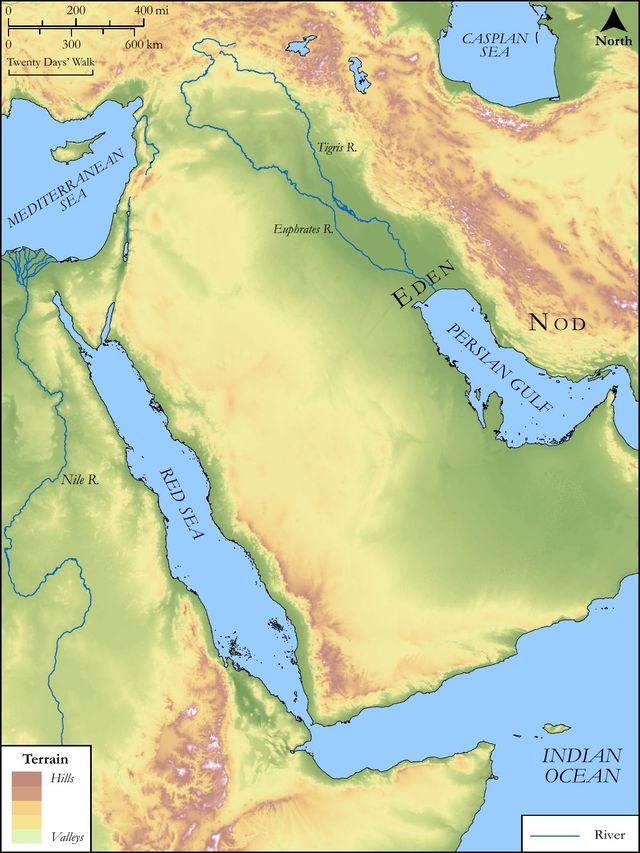
See on the biblical-era maps


Study this verse
Public-domain commentary
Matthew Henry
From his Commentary on the Whole Bible. Henry comments on passages, not single verses — this entry covers Genesis 4:3–5. His three-level outline is real structure in the source text, so it is rendered as structure.
Here we have, I. The devotions of Cain and Abel. In process of time, when they had made some improvement in their respective callings (Heb. At the end of days, either at the end of the year, when they kept their feast of in-gathering or perhaps an annual fast in remembrance of the fall, or at the end of the days of the week, the seventh day, which was the sabbath) - at some set time, Cain and Abel brought to Adam, as the priest of the family, each of them an offering to the Lord, for the doing of which we have reason to think there was a divine appointment given to Adam, as a token of God's favour to him and his thoughts of love towards him and his, notwithstanding their apostasy. God would thus try Adam's faith in the promise and his obedience to the remedial law; he would thus settle a correspondence again between heaven and earth, and give shadows of good things to come. Observe here, 1. That the religious worship of God is no novel invention, but an ancient institution. It is that which was from the beginning (Jo1 1:1); it is the good old way, Jer 6:16. The city of our God is indeed that joyous city whose antiquity is of ancient days, Isa 23:7. Truth got the start of error, and piety of profaneness. 2. That is a good thing for children to be well taught when they are young, and trained up betimes in religious services, that when they come to be capable of acting for themselves they may, of their own accord, bring an offering to God. In this nurture of the Lord parents must bring up their children, Gen 18:19; Eph 6:4. 3. That we should every one of us honour God with what we have, according as he has prospered us. According as their employments and possessions were, so they brought their offering. See Co1 16:1, Co1 16:2. Our merchandize and our hire, whatever they are, must be holiness to the Lord, Isa 23:18. He must have his dues of it in works of piety and charity, the support of religion and the relief of the poor. Thus we must now bring our offering with an upright heart; and with such sacrifices God is well pleased. 4. That hypocrites and evil doers may be found going as far as the best of God's people in the external services of religion. Cain brought an offering with Abel; nay, Cain's offering is mentioned first, as if he were the more forward of the two. A hypocrite may possibly hear as many sermons, say as many prayers, and give as much alms, as a good Christian, and yet, for want of sincerity, come short of acceptance with God. The Pharisee and the publican went to the temple to pray, Luk 18:10.
II.The different success of their devotions.
That which is to be aimed at in all acts of religion is God's acceptance: we speed well if we attain this, but in vain do we worship if we miss of it, Co2 5:9. Perhaps, to a stander-by, the sacrifices of Cain and Abel would have seemed both alike good. Adam accepted them both, but God, who sees not as man sees, did not. God had respect to Abel and to his offering, and showed his acceptance of it, probably by fire from heaven; but to Cain and his offering he had not respect. We are sure there was a good reason for this difference; the Governor of the world, though an absolute sovereign, does not act arbitrarily in dispensing his smiles and frowns.
1.There was a difference in the characters of the persons offering. Cain was a wicked man, led a bad life, under the reigning power of the world and the flesh; and therefore his sacrifice was an abomination to the Lord (Pro 15:8), a vain oblation, Isa 1:13. God had no respect to Cain himself, and therefore no respect to his offering, as the manner of the expression intimates. But Abel was a righteous man; he is called righteous Abel (Mat 23:35); his heart was upright and his life was pious; he was one of those whom God's countenance beholds (Psa 11:7) and whose prayer is therefore his delight, Pro 15:8. God had respect to him as a holy man, and therefore to his offering as a holy offering. The tree must be good, else the fruit cannot be pleasing to the heart-searching God.
2.There was a difference in the offerings they brought. It is expressly said (Heb 11:4), Abel's was a more excellent sacrifice than Cain's: either (1.) In the nature of it. Cain's was only a sacrifice of acknowledgment offered to the Creator; the meat-offerings of the fruit of the ground were no more, and, for aught I know, they might be offered in innocency. But Abel brought a sacrifice of atonement, the blood whereof was shed in order to remission, thereby owning himself a sinner, deprecating God's wrath, and imploring his favour in a Mediator. Or, (2.) In the qualities of the offering. Cain brought of the fruit of the ground, any thing that came next to hand, what he had not occasion for himself or what was not marketable. But Abel was curious in the choice of his offering: not the lame, nor the lean, nor the refuse, but the firstlings of the flock - the best he had, and the fat thereof - the best of those best. Hence the Hebrew doctors give it for a general rule that every thing that is for the name of the good God must be the goodliest and best. It is fit that he who is the first and best should have the first and best of our time, strength, and service.
3.The great difference was this, that Abel offered in faith, and Cain did not. There was a difference in the principle upon which they went. Abel offered with an eye to God's will as his rule, and God's glory as his end, and in dependence upon the promise of a Redeemer; but Cain did what he did only for company's sake, or to save his credit, not in faith, and so it turned into sin to him. Abel was a penitent believer, like the publican that went away justified: Cain was unhumbled; his confidence was within himself; he was like the Pharisee who glorified himself, but was not so much as justified before God.
III.Cain's displeasure at the difference God made between his sacrifice and Abel's.
Cain was very wroth, which presently appeared in his very looks, for his countenance fell, which bespeaks not so much his grief and discontent as his malice and rage. His sullen churlish countenance, and a down-look, betrayed his passionate resentments: he carried ill-nature in his face, and the show of his countenance witnessed against him. This anger bespeaks,
1.His enmity to God, and the indignation he had conceived against him for making such a difference between his offering and his brother's. He should have been angry at himself for his own infidelity and hypocrisy, by which he had forfeited God's acceptance; and his countenance should have fallen in repentance and holy shame, as the publican's, who would not lift up so much as his eyes to heaven, Luk 18:13. But, instead of this, he flies out against God, as if he were partial and unfair in distributing his smiles and frowns, and as if he had done him a deal of wrong. Note, It is a certain sign of an unhumbled heart to quarrel with those rebukes which we have, by our own sin, brought upon ourselves. The foolishness of man perverteth his way, and then, to make bad worse, his heart fretteth against the Lord, Pro 19:3.
2.His envy of his brother, who had the honour to be publicly owned. Though his brother had no thought of having any slur put upon him, nor did now insult over him to provoke him, yet he conceived a hatred of him as an enemy, or, which is equivalent, a rival. Note,
(1.)It is common for those who have rendered themselves unworthy of God's favour by their presumptuous sins to have indignation against those who are dignified and distinguished by it. The Pharisees walked in this way of Cain, when they neither entered into the kingdom of God themselves nor suffered those that were entering to go in, Luk 11:52. Their eye is evil, because their master's eye and the eye of their fellow-servants are good.
(2.)Envy is a sin that commonly carries with it both its own discovery, in the paleness of the looks, and its own punishment, in the rottenness of the bones.
Historical interpretation
Seven Centuries of Reception
9 surviving comments on this verse. Each one is dated, so this reads as a timeline rather than a list.
Select a marker to jump to its quote. Markers stagger vertically where authors wrote within a few decades of each other.
(60) Why Cain after some days offers up the first-fruits of his fruits, but when it is said that "Abel offered up first-fruits of the first-born of his flock and of the fat," "after some days" is not added? (#Ge 4:3-4). Moses here intimates the difference between a lover of himself, and one who is thoroughly devoted to God; for the one took to himself the first-fruits of his fruits, and very impiously looked upon God as worthy only of the secondary and inferior offerings; for the expression, "after some days," implies that he did not do so immediately; and when it is said that he offered of the fruits, that intimates that he did not offer of the best fruits which he had, and herein displays his iniquity. But the other, without any delay, offered up the first-born and eldest of all his flocks, in order that in this the Father might not be treated unworthily.
(61) Why, when he had begun with Cain, he still mentions him here in the second place, when he says: "And God had respect unto Abel and unto his offerings; but unto Cain and unto his sacrifices he paid no attention?" (#Ge 4:5). In the first place, because the good man, who is by nature first, is not at first perceived by the outward senses of any man except in his own turn, and by people of virtuous conduct. Secondly, because the good and the wicked man are two distinct characters; he accepts the good man, seeing that he is a lover of what is good, and an eager student of virtue; but he rejects and regards with aversion the wicked man, presuming that he will be prone to that side by the order of nature. Therefore he says here with exceeding fitness, that God had regard, not to the offerings, but to those who offered them, rather than to the gifts themselves; for men have regard to and regulate their approbation by the abundance and richness of offerings, but God looks at the sincerity of the soul, having no regard to ambition or illusion of any kind.
Every kind of honour and happiness was bestowed upon you, and then was fulfilled that which is written, "My beloved ate and drank, and was enlarged and became fat, and kicked." [Deuteronomy 32:15] Hence flowed emulation and envy, strife and sedition, persecution and disorder, war and captivity. So the worthless rose up against the honoured, those of no reputation against such as were renowned, the foolish against the wise, the young against those advanced in years. For this reason righteousness and peace are now far departed from you, inasmuch as every one abandons the fear of God, and has become blind in His faith, neither walks in the ordinances of His appointment, nor acts a part becoming a Christian, but walks after his own wicked lusts, resuming the practice of an unrighteous and ungodly envy, by which death itself entered into the world. [Wisdom 2:24]
For thus it is written: "And it came to pass after certain days, that Cain brought of the fruits of the earth a sacrifice unto God; and Abel also brought of the firstlings of his sheep, and of the fat thereof. And God had respect to Abel and to his offerings, but Cain and his sacrifices He did not regard. And Cain was deeply grieved, and his countenance fell. And God said to Cain, Why are you grieved, and why is your countenance fallen? If you offer rightly, but do not divide rightly, have you not sinned? Be at peace: your offering returns to yourself, and you shall again possess it. And Cain said to Abel his brother, Let us go into the field. And it came to pass, while they were in the field, that Cain rose up against Abel his brother, and slew him." [Genesis 4:3-8] You see, brethren, how envy and jealousy led to the murder of a brother. Through envy, also, our father Jacob fled from the face of Esau his brother [Genesis 27:41-45]. Envy made Joseph be persecuted unto death, and to come into bondage. [Genesis 37:18-28] Envy compelled Moses to flee from the face of Pharaoh king of Egypt, when he heard these words from his fellow-countryman, "Who made you a judge or a ruler over us? Will you kill me, as you killed the Egyptian yesterday?" [Exodus 2:14] On account of envy, Aaron and Miriam had to make their abode without the camp. [Numbers 12:14-15] Envy brought down Dathan and Abiram alive to Hades, through the sedition which they excited against God's servant Moses. [Numbers 16:33] Through envy, David not only underwent the hatred of foreigners, but was also persecuted by Saul king of Israel. [1 Samuel 21:10-15]
Abel was very discerning in his choice of offerings, whereas Cain showed no such discernment. Abel selected and offered the choicest of his firstborn and of his fat ones, while Cain either offered young grains or certain fruits that are found at the same time as the young grains. Even if his offering had been smaller than that of his brother, it would have been as acceptable as the offering of his brother, had he not brought it with such carelessness. They made their offerings alternately; one offered a lamb of his flock, the other the fruits of the earth. But because Cain had taken such little regard for the first offering that he offered, God refused to accept it in order to teach Cain how he was to make an offering.
Cain was angry because the offering of his brother had been accepted. Cain became angry on account of the fire that had come down and distinguished between the offerings. His face became gloomy because there was laughter in the eyes of his parents and his sisters when his offering was rejected. They had seen that Cain’s offering had been placed in the midst of the fire and yet the fire did not touch it.
There were two reasons for his annoyance: not just that he alone had been rejected but also that his brother’s gift had been accepted.
It was not idly or in vain that in beginning this sermon we taught your good selves that our Lord does not recognize differences in appearance but takes account of intentions and rewards the will. Here, too, to be sure, notice this happening. Accordingly, let us attend with precision, dearly beloved, to the text and see what Scripture says about Cain on the one hand and Abel on the other, and let us not pass it by heedlessly. I mean, Sacred Scripture says nothing idly or by chance; instead, even if it happens to be a syllable or a single jot, it has some treasure concealed in it. Such, after all, is the nature of all things spiritual. So what does the text say? "In the course of time Cain brought an offering of the fruits of the earth to the Lord, and Abel also for his part brought an offering of the firstborn of his flock, and in fact the fattest of them." The meaning of the verse is clear even from the reading to those already capable of following more closely. But since we should exercise our concern in general for everyone (spiritual teaching, after all, recognizes no distinction), come now, let us expose the meaning of the words more clearly and rehearse these same words again. "Cain," the text says, "brought an offering of the fruits of the earth to the Lord"; then, wanting to teach us about Abel as well, Sacred Scripture says that he for his part also brought his offering [155] from his occupation and his shepherding. "He, for his part, also brought an offering," the text says, remember, "of the firstborn of his flock, and in fact the fattest of them." Notice how it hints to us of the piety of this man's attitude, and the fact that he did not casually offer any one of his sheep, but "one of the firstborn," that is, from the valuable and special ones. In Cain's case, on the contrary, nothing of the kind is suggested; rather, the fact that he brought "an offering of the fruits of the earth," as if to say, whatever came to hand, without any display of zeal or precise care.
I repeat, and I shall not cease to make the point: God accepts our offerings not because he needs what we have to offer but because he wants our gratitude to be demonstrated through them as well. In other words, the person who makes an offering to God and offers him something of his own, and who calls to mind the difference in nature and the fact that a human being has been granted such a great honor, should give as good an account of himself as possible and offer the choicest gifts. But notice in this case, I ask you, dearly beloved: here you have the opportunity to contemplate what behooves you, namely, that the person who through indifference betrayed his own welfare duly pays the penalty. I mean, it wasn't a case of one man having a teacher and the other having a counsellor and adviser: each had instructions from his own conscience, and being moved by the intelligence supplied to the human race from above he proceeded to make his offering, such as it was; but the difference in attitude that emerged and the mediocrity of choice caused one man's offering to be acceptable and the other's to be spurned.
"God took notice of Abel and his conscience. Aftthis case is fulfilled the saying in the gospel that the first will be last and the last first.'-~ I mean, see how the one who enjoyed priority belonging to the firstborn and consequently made his offering first was shown to be inferior to his brother since he made it unworthily: as both presented their offerings, Sacred Scripture says, "God took notice of Abel and his gifts." What does that mean, "He took notice"? He accepted, he approved of the attitude, he rewarded the choice, he was satisfied (so to say) with what was done. You see, we speak about God and presume to open our mouth about that pure nature, yet being human we would have no choice but to understand these things through language. Notice, however, this remarkable feature: "God took notice of Abel and his gifts," the text says; it calls the offering of sheep gifts on account of the importance, the choice quality, the untainted appearance of what was offered. Accordingly, God took notice of him for the reason that he had made the offering with a pure intention, and of his gifts for the reason not only that they were free of imperfection but that they were in every respect clearly precious, both from the viewpoint of the offerer's intention and from the fact of their being the firstborn and in fact specially selected from them, among the fattest of them and the very prize ones.
[The pagans say, "The Christians] censure the ceremonies of sacrifice, the victims, incense and the rest, which are used in temple worship. Yet the same ceremonies of sacrifice were originated by themselves or by the god they worship, in primitive times, when a god was assumed to need their offerings of first fruits." This question is evidently derived from that passage in our Scriptures that tells of Cain making an offering to God of the fruits of the earth and Abel of the firstlings of his flocks. We answer that the conclusion to be drawn from it is that sacrifice is a very ancient custom, because our true and sacred Books warn us that it is not to be offered except to the one true God. But God does not need sacrifices, as is most clearly expressed in the same sacred Books: "I said to the Lord, thou art my God, for thou hast no need of my goods," because in accepting or refusing or receiving them he is looking only to man's good. God does not derive any benefit from our worship, but we do.
Abel also offered from the firstborn of his flock and their fat. For the Lord, interceding with the Father on behalf of the saints, offers their vows to Him according to the form of the assumed humanity, that is, good works and the fat of inner love. For these are indeed the firstborn of his flock and their fat. The Lord looks upon Abel, saying: This is my beloved Son in whom I am well pleased (Matt. XVII, 5). He looks also upon his gifts, because the life of the elect which he offers to Him gratefully, God the Father accepts, and as if by fire from heaven He ignites his sacrifice, because He inflames with the power of His spirit those who have taken care to mortify themselves for the Lord, so that they may more abundantly burn in the heavenly regions, indeed so that they may become wholly heavenly. But to Cain and his gifts, He does not look, because rebuking the carnal works of the Jews, He says through the prophet: To what purpose is the multitude of your sacrifices to me? says the Lord: I am full of the burnt offerings of rams and the fat of fed beasts; and I delight not in the blood of bullocks, or of lambs, or of goats (Isa. I, 11). And a little later: Your hands are full of blood. Wash yourselves, be clean, that is, through faith in the grace of Christ. Cain is enraged against his brother's piety, nor does he, rebuked by the Lord, repent from his fury conceived out of envy. How much the Jews raged against the Lord and the grace of the New Testament out of jealousy, how many times they persisted malignantly in their undertakings when corrected or admonished by Him, is sufficiently revealed by the Gospel history. They fittingly correspond to what is said of Cain, for their countenance fell: for they could not gaze upon the glory of the Lord with unveiled face. For they had lost that joy of divine grace, of which the righteous, glorying, say: The light of your countenance has been signed upon us, O Lord; You have put gladness in my heart (Ps. IV, 7).
And the Lord looked with favor upon Abel and his offering, but upon Cain and his offering He did not look with favor. For it does not say: And the Lord looked with favor upon the offerings of Abel and then upon him; but upon the offerings of Cain and then upon him He did not look with favor. It first testifies that the person of the offerer was accepted or not accepted by God, then the gifts were regarded or not regarded. For men are often appeased by the gifts of those with whom they were offended; but God, who is the discerner of thoughts and intentions of the heart, is pleased by no gift more than the pious devotion of the offerer: when He has approved the purity of our mind, then He will also accept the vows of our prayers or works.
Continue studying Genesis 4:4 across the web’s major study libraries — every link below opens this exact verse, chapter, or book on the destination site.
Read & Compare
 BibleGatewayThis verse in more than 200 translations and 70 languages.
 Bible.comThe YouVersion reader — hundreds of translations, reading plans, and highlights.
 ESV.orgCrossway's official English Standard Version reader.
 NET BibleThe NET translation with 60,000+ translators' notes on every rendering decision.
 STEP BibleTyndale House's free study tool — original text, vocabulary, and scholarly resources.
 BibliaLogos Bible Software's free web reader.
 USCCBThe New American Bible (Revised Edition) with the U.S. bishops' study notes.
Commentaries
 BibleHub CommentariesDozens of classic commentaries on this verse, gathered on one page.
 StudyLightMore than 100 commentary sets — the largest collection on the web.
 BibleRefPlain-English commentary on what this verse means, verse by verse.
 Enduring WordDavid Guzik's free commentary on this chapter, widely used by Bible teachers.
 Bible Study ToolsVerse commentary alongside Greek and Hebrew study aids.
Original Language & Research
- BibleHub InterlinearThe verse word by word — original language, transliteration, and English.
- BibleHub LexiconEvery word's original-language definition and Strong's entry.
 Blue Letter BibleDeep-study tools — Strong's numbers, concordance, and word studies.
 SefariaThe Hebrew text with Rashi and centuries of Jewish commentary.
Sermons, Hymns & Audio


TrulyRandomVerse is not affiliated with these sites and doesn’t control their content. They’re linked because they’re genuinely useful.
Summary
Abel's offering of the "firstlings of his flock and of the fat thereof" to the Lord was an act met with divine favor and acceptance. This pivotal verse contrasts sharply with the rejection of Cain's offering, establishing early biblical principles of worship that emphasize the worshiper's heart, the quality of the gift, and God's sovereign discernment. It lays foundational groundwork for understanding acceptable sacrifice and the nature of a righteous walk with God from the very dawn of human history outside Eden.
Context
ShowHideLiterary Context
This verse is an integral part of the narrative immediately following the expulsion from the Garden of Eden, detailing the first acts of worship by humanity's second generation. It directly succeeds Genesis 4:3, which describes Cain's offering of agricultural produce. The juxtaposition of Cain's and Abel's offerings, and their divergent receptions, sets up the ensuing drama of fratricide in Genesis 4:8, demonstrating the immediate and devastating consequences of unrighteousness and rejected worship. The narrative highlights the burgeoning human struggle with sin and God's interaction with a fallen world, establishing patterns of divine judgment and grace that resonate throughout the biblical story.
Historical & Cultural Context
In the earliest stages of human history, as depicted in Genesis, the act of offering sacrifices was a primary means of approaching God. While formal sacrificial systems were yet to be codified (as they would be in the Mosaic Law), the practice likely stemmed from an innate human recognition of God's sovereignty and a desire for communion or propitiation, perhaps even from divine instruction given to Adam and Eve. The distinction between a "tiller of the ground" (Cain) and a "keeper of sheep" (Abel) in Genesis 4:2 reflects the nascent division of labor in early human societies. The concept of offering "firstlings" and "fat" would later become central to Israelite worship, signifying the offering of the best, a principle later given in the law of Moses, where the fat of the sacrifice is reserved for the LORD and the firstborn of the flock is hallowed to Him, as a sign of respect and devotion.
Key Themes
ShowHideGenesis 4:4 powerfully introduces several enduring biblical themes. Foremost is the Nature of Acceptable Worship, demonstrating that God's acceptance is not merely of the act but of the heart and faith of the worshiper, a truth later articulated in passages like 1 Samuel 16:7. It also highlights Divine Discernment and Sovereignty, as God unilaterally accepts one offering and rejects another, underscoring His absolute prerogative and righteous judgment. Furthermore, the narrative subtly introduces the theme of Blood Sacrifice and Atonement, as Abel's animal sacrifice, offered by faith, prefigures the later emphasis on the necessity of shed blood for the remission of sins, a concept central to the Old Covenant's sacrificial system and ultimately fulfilled in Christ. This verse also contributes to the broader theme of Righteousness by Faith, as the New Testament explicitly attributes Abel's acceptance to his faith in Hebrews 11:4.
Exposition and Analysis
ShowHideKey Word Analysis
ShowHideThis term refers to the firstborn of man or beast, and abstractly, to primogeniture or birthright. In the context of an offering, it signifies the initial, and typically most valuable, produce of the flock. Abel's choice to bring "firstlings" indicates a deliberate act of offering the prime, not merely a convenient or leftover portion, demonstrating a heart of reverence and devotion to God.
Literally meaning "fat," this word also figuratively denotes the richest or choice part of something. When applied to an animal sacrifice, the fat was considered the most desirable portion, often associated with vitality and richness. Its inclusion in Abel's offering underscores the concept of giving God the very best, a principle that would later be codified in the Mosaic Law, where the fat was often explicitly designated as the Lord's portion (e.g., Leviticus 3:16).
This is the covenant name of God, often rendered "Jehovah" or "the Lord," signifying the self-Existent or Eternal One. Its use here emphasizes that the interaction is with the personal, relational God who enters into covenant with humanity and exercises His sovereign will in discerning worship. It highlights the profound personal nature of God's interaction with Abel and His discerning gaze.
This primitive root means "to gaze at or about," "to inspect," "consider," or "compassionate." In this context, it implies a careful, approving gaze, a divine turning of attention that signifies acceptance, favor, and approval. The verb conveys God's deliberate and positive acknowledgment of Abel and his offering, indicating a favorable disposition towards both the worshiper and his gift.
Verse Breakdown
ShowHide"And Abel, he also brought of the firstlings of his flock and of the fat thereof."
This clause describes the specific nature of Abel's offering. The phrase "he also brought" subtly links his action to Cain's preceding offering, yet the subsequent description reveals a profound difference. Abel's selection of "firstlings" (the firstborn or earliest produce) and "the fat thereof" (the richest, choicest part) signifies a deliberate act of presenting the prime, indicating a heart of reverence, devotion, and a commitment to giving God the very best. This was not a casual or convenient offering, but one of intentional quality and sacrifice.
"And the LORD had respect unto Abel and to his offering:"
This concluding clause reveals God's response to Abel's worship. The Hebrew verb "had respect" (שָׁעָה, shâʻâh) implies a careful, approving gaze, a divine turning of attention that signifies acceptance and favor. Crucially, the text states that God had respect "unto Abel" first, and then "to his offering." This order suggests that God's acceptance was primarily directed toward the worshiper himself, indicating that the state of the heart, the character, and the faith of the individual precede and determine the acceptability of the gift. It is Abel's righteous standing before God, demonstrated by his faith, that makes his offering pleasing.
Literary Devices
ShowHideThe passage employs Juxtaposition by placing Abel's acceptable offering immediately after Cain's rejected one, highlighting the contrast in their gifts and God's response. This contrast serves to emphasize the crucial elements of acceptable worship. Synecdoche is present in "firstlings of his flock and of the fat thereof," where specific, choice parts of the animal stand for the entire, best possible offering. This detail is not merely descriptive but Symbolic, representing the worshiper's devotion, the quality of their faith, and the principle of giving God the absolute best. The divine "respect" (or lack thereof) functions as a form of Divine Judgment or Divine Affirmation, demonstrating God's active involvement and discernment in human affairs, establishing a foundational theological principle that God sees beyond the outward act to the heart.
Theological and Thematic Connections
ShowHideGenesis 4:4 establishes foundational principles for understanding acceptable worship and humanity's relationship with God. It teaches that true worship is not merely ritualistic but flows from a heart of faith, reverence, and a desire to give God one's very best. God's discerning gaze penetrates beyond the outward act to the inward disposition of the worshiper, making the state of the giver paramount to the acceptance of the gift. This divine discernment underscores God's sovereignty and His demand for genuine, heartfelt devotion, setting a precedent for all future interactions between humanity and the divine. The nature of Abel's offering, involving the shedding of blood, also subtly introduces the theme of atonement, hinting at the necessity of sacrifice for approaching a holy God.
Reflection and Application
ShowHideGenesis 4:4 serves as a timeless mirror reflecting the essence of our worship. It compels us to look beyond the outward forms of our religious practices and examine the true posture of our hearts. Are we offering God our "firstlings" and "fat"—our best, our prime, our most valued resources, time, and talents—or merely what is convenient, leftover, or requires minimal sacrifice? This verse challenges us to cultivate a faith-filled heart that genuinely seeks to honor God above all else, recognizing that He desires not just our gifts, but us. Our worship, whether in corporate gatherings, private devotion, or daily obedience, is truly acceptable when it flows from a deep reverence for God, a trusting faith in His character, and a sincere desire to give Him the glory due His name.
Questions for Reflection
ShowHideFAQ
ShowHideWhy was Abel's offering accepted while Cain's was not?
ShowHideWhile Genesis 4 does not explicitly detail Cain's fault, the New Testament provides the definitive answer: Hebrews 11:4 states that "By faith Abel offered unto God a more excellent sacrifice than Cain." This indicates that the crucial difference lay in the heart and attitude of the worshiper. Abel's offering was rooted in faith and obedience, likely understanding and adhering to a divine expectation, whereas Cain's lacked this essential element of faith, perhaps being offered out of mere duty, pride, or a lack of understanding regarding God's terms for approach. God's acceptance was primarily of Abel himself, and then his offering, emphasizing that the worshiper's righteous standing before God is paramount.
What is the significance of "firstlings of his flock and of the fat thereof"?
ShowHideThese phrases denote the highest quality and most valuable portions of the animal. "Firstlings" represent the firstborn, which were often considered sacred and a sign of God's blessing, signifying the initial and best produce. "Fat" was considered the richest, most desirable part of the animal, often associated with vitality and richness. By offering these, Abel demonstrated his devotion, generosity, and commitment to giving God his absolute best, not merely a portion. This principle of offering the choicest parts would later be enshrined in the Mosaic Law, where the fat was explicitly designated as the Lord's (Leviticus 3:16).
Does this verse imply that God prefers animal sacrifices over other forms of worship?
ShowHideNot necessarily that God prefers animal sacrifices over all other forms, but rather that He values the quality of heart and faith behind the offering. Abel's animal sacrifice, particularly involving the shedding of blood, was offered "by faith," suggesting it aligned with God's revealed will or an intuitive understanding of the need for atonement in a fallen world. The core message is about the worshiper's disposition and obedience to God's terms. While the specific type of offering might change throughout redemptive history, the principle of giving one's best in faith and reverence remains universal to all forms of acceptable worship.
What does it mean that "the LORD had respect unto Abel and to his offering"?
ShowHideThis means God looked favorably upon Abel and his gift; He approved and accepted them. The Hebrew verb implies a careful, approving gaze, a divine turning of attention that signifies acceptance and favor. The order is significant: God respected Abel first, then his offering. This emphasizes that the state of the giver's heart, their character, and their relationship with God are foundational to the acceptance of their worship. It underscores that God values the person more than the performance, and a righteous heart makes the offering acceptable.
Christ-Centered Fulfillment
ShowHideAbel's offering, a blood sacrifice given "by faith," stands as a profound foreshadowing of the ultimate sacrifice of Jesus Christ. Abel's righteousness, attested to in Hebrews 11:4, was a righteousness imputed through faith, prefiguring the justification by faith that is fully realized in Christ's atoning work (Romans 3:25). The innocent blood shed by Abel's offering, and indeed by Abel himself (whose blood "cries from the ground" in Genesis 4:10), anticipates the "better blood" of Christ. This "better blood" speaks not of judgment and vengeance, but of grace, forgiveness, and a new covenant of peace, as Hebrews 12:24 powerfully declares, "to Jesus the mediator of a new covenant, and to the sprinkled blood that speaks a better word than the blood of Abel." Thus, Abel's acceptable sacrifice, offered in faith, points forward to the perfect, once-for-all sacrifice of Christ, which alone truly cleanses from sin and grants access to God.