


Exodus 12:51
Bible text: King James Version (1769 Blayney text) · Public domain
Bible text: Berean Standard Bible · Public domain
Bible text: American Standard Version (1901) · Public domain
Bible text: World English Bible, Messianic edition · Public domain
Bible text: Geneva Bible (1599) · Public domain
Bible text: Young's Literal Translation · Public domain
- וַיְהִיvay·Hiand it wasH1961Conj-w ¦ V-Qal-ConsecImperf-3msVerb Qal Consecutive Imperfect 3rd Singular Masculineוַandיְהִיit was
- בְּעֶצֶםbe·'E·tzemon [the] substance ofH6106Prep-b ¦ N-fscNoun Singular Feminine Constructבְּonעֶצֶם[the] substance of
- הַיּוֹםhai·Yomthe dayH3117Art ¦ N-msNoun Singular Masculine Absoluteהַtheיּוֹםday
- הַזֶּהha·Zeh<the> thisH2088Art ¦ PrtParticle Demonstrativeהַ<the>זֶּהthis
- הוֹצִיאho·Tzi'he brought outH3318V-Hiphil-Perf-3msVerb Hiphil Perfect 3rd Singular Masculine
- יְהוָהYah·wehYahwehH3068N-properNoun Proper Title
- אֶת'et<obj.>H853DirObjMParticle Object Indicator
- בְּנֵיbe·Nei[the] people ofH1121N-mpcNoun Plural Masculine Construct
- יִשְׂרָאֵלYis·ra·'ElIsraelH3478N-properNoun Proper Location
- מֵאֶרֶץme·'E·retzfrom [the] land ofH776Prep-m ¦ N-fscNoun Singular Feminine Constructמֵfromאֶרֶץ[the] land of
- מִצְרַיִםmitz·Ra·yimEgyptH4714N-properNoun Proper Location
- עַל'alonH5921PrepPreposition
- צִבְאֹתָםtziv·'o·Tamtheir hostsH6635N-fpc ¦ 3mpNoun Plural Feminine Constructצִבְאֹתָhostsםtheir
English is a literal word-by-word gloss of the Hebrew, not the KJV's wording. Why?
This is the original text the KJV's translators worked from — each Hebrew word with its own literal English meaning in this verse, prepared by scholars at Tyndale House, Cambridge. The KJV translates whole sentences, not word by word, so its wording differs: one Hebrew word can become several English words, and the KJV may choose “the LORD” where the gloss reads “Yahweh”. Both are faithful — they answer different questions. For the KJV's own rendering, switch to the KJV text.
Details
See on the biblical-era maps

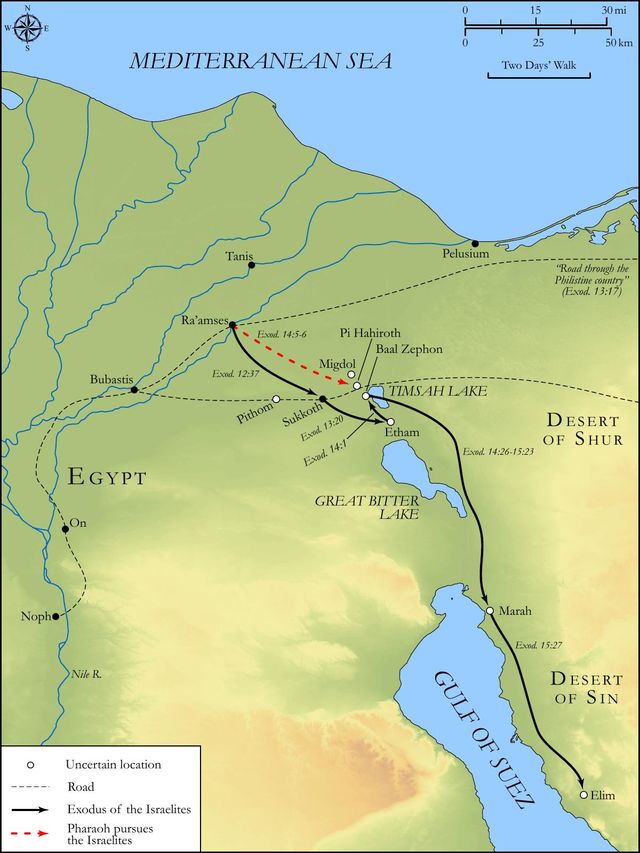
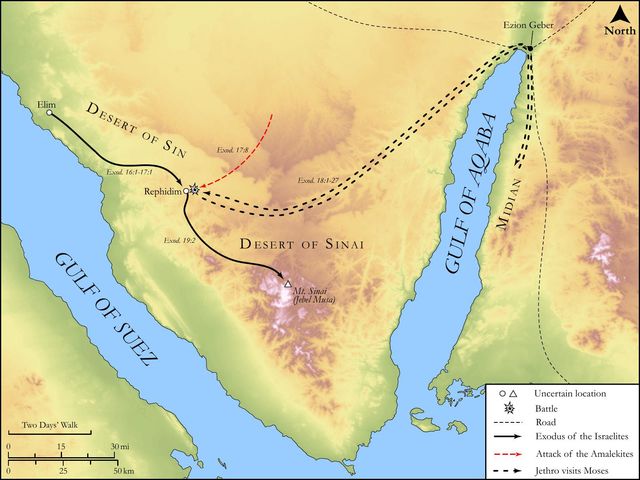
Study this verse
Public-domain commentary
Matthew Henry
From his Commentary on the Whole Bible. Henry comments on passages, not single verses — this entry covers Exodus 12:43–51. His two-level outline is real structure in the source text, so it is rendered as structure.
Some further precepts are here given concerning the passover, as it should be observed in times to come.
I.All the congregation of Israel must keep it, Exo 12:47.
All that share in God's mercies should join in thankful praises for them. Though it was observed in families apart, yet it is looked upon as the act of the whole congregation; for the smaller communities constituted the greater. The New Testament passover, the Lord's supper, ought not to be neglected by any who are capable of celebrating it. He is unworthy the name of an Israelite that can contentedly neglect the commemoration of so great a deliverance.
1.No stranger that was uncircumcised might be admitted to eat of it, Exo 12:43, Exo 12:45, Exo 12:48. None might sit at the table but those that came in by the door; nor may any now approach to the improving ordinance of the Lord's supper who have not first submitted to the initiating ordinance of baptism. We must be born again by the word ere we can be nourished by it. Nor shall any partake of the benefit of Christ's sacrifice, or feast upon it, who are not first circumcised in heart, Col 2:11.
2.Any stranger that was circumcised might be welcome to eat of the passover, even servants, Exo 12:44. If, by circumcision, they would make themselves debtors to the law in its burdens, they were welcome to share in the joy of its solemn feasts, and not otherwise. Only it is intimated (Exo 12:48) that those who were masters of families must not only be circumcised themselves, but have all their males circumcised too. If in sincerity, and with that zeal which the thing required and deserves, we give up ourselves to God, we shall, with ourselves, give up all we have to him, and do our utmost that all ours may be his too. Here is an early indication of favour to the poor Gentiles, that the stranger, if circumcised, stands upon the same level with the home-born Israelite. One law for both, Exo 12:49. This was a mortification to the Jews, and taught them that it was their dedication to God, not their descent from Abraham, that entitled them to their privileges. A sincere proselyte was as welcome to the passover as a native Israelite, Isa 56:6, Isa 56:7.
II.In one house shall it be eaten (Exo 12:46), for good-fellowship sake, that they might rejoice together, and edify one another in the eating of it. None of it must be carried to another place, nor left to another time; for God would not have them so taken up with care about their departure as to be indisposed to take the comfort of it, but to leave Egypt, and enter upon a wilderness, with cheerfulness, and, in token of that, to eat a good hearty meal. The papists' carrying their consecrated host from house to house is not only superstitious in itself, but contrary to this typical law of the passover, which directed that no part of the lamb should be carried abroad.
The chapter concludes with a repetition of the whole matter, that the children of Israel did as they were bidden, and God did for them as he promised (Exo 12:50, Exo 12:51); for he will certainly be the author of salvation to those that obey him.
Continue studying Exodus 12:51 across the web’s major study libraries — every link below opens this exact verse, chapter, or book on the destination site.
Read & Compare
 BibleGatewayThis verse in more than 200 translations and 70 languages.
 Bible.comThe YouVersion reader — hundreds of translations, reading plans, and highlights.
 ESV.orgCrossway's official English Standard Version reader.
 NET BibleThe NET translation with 60,000+ translators' notes on every rendering decision.
 STEP BibleTyndale House's free study tool — original text, vocabulary, and scholarly resources.
 BibliaLogos Bible Software's free web reader.
 USCCBThe New American Bible (Revised Edition) with the U.S. bishops' study notes.
Commentaries
 BibleHub CommentariesDozens of classic commentaries on this verse, gathered on one page.
 StudyLightMore than 100 commentary sets — the largest collection on the web.
 BibleRefPlain-English commentary on what this verse means, verse by verse.
 Enduring WordDavid Guzik's free commentary on this chapter, widely used by Bible teachers.
 Bible Study ToolsVerse commentary alongside Greek and Hebrew study aids.
Original Language & Research
- BibleHub InterlinearThe verse word by word — original language, transliteration, and English.
- BibleHub LexiconEvery word's original-language definition and Strong's entry.
 Blue Letter BibleDeep-study tools — Strong's numbers, concordance, and word studies.
 SefariaThe Hebrew text with Rashi and centuries of Jewish commentary.
Sermons, Hymns & Audio


TrulyRandomVerse is not affiliated with these sites and doesn’t control their content. They’re linked because they’re genuinely useful.
Summary
Exodus 12:51 serves as the climactic declaration of Israel's liberation, stating that "the selfsame day" the LORD precisely and powerfully led the children of Israel out of the land of Egypt "by their armies." This verse powerfully underscores God's unwavering faithfulness to His ancient promises, His absolute sovereignty over all creation, and His meticulous orchestration of Israel's definitive exodus from centuries of bondage, marking the birth of a nation redeemed by divine might.
Context
ShowHideLiterary Context
Exodus 12:51 functions as the grand conclusion to the detailed narrative of the Passover and the tenth plague. It immediately follows the devastating judgment on Egypt's firstborn, which finally broke Pharaoh's stubborn resistance and led him to urgently command the Israelites to depart (Exodus 12:31-33). The verse acts as a summary statement, confirming the immediate and complete fulfillment of God's promise to bring His people out. It bridges the narrative from the night of the Passover to the actual departure, setting the stage for the subsequent accounts of Israel's wilderness journey and the divine guidance provided by the pillar of cloud and fire, detailed in Exodus 13.
Historical & Cultural Context
For over four centuries, the descendants of Jacob had resided in Egypt, eventually enduring brutal and dehumanizing slavery under successive Pharaohs (Exodus 1:8-14). Their liberation was not merely a political or social event but the direct fulfillment of a divine covenant made with Abraham centuries earlier, promising that his offspring would be enslaved in a foreign land but would eventually be brought out with great possessions (Genesis 15:13-14). The emphatic phrase "the selfsame day" powerfully counters any notion of a gradual, negotiated, or accidental release, highlighting the sudden, decisive, and divinely appointed nature of their exodus. Furthermore, the description of a vast, formerly enslaved population departing "by their armies" (or "divisions") is culturally and historically remarkable, as slaves typically fled in disarray. This organized departure underscores God's power to bring order out of chaos and to transform a downtrodden people into a disciplined host, ready to embark on a journey that would forge their national and spiritual identity.
Key Themes
ShowHideThis verse powerfully contributes to several overarching themes within Exodus and the Pentateuch. It highlights Divine Sovereignty and Power, unequivocally declaring that the LORD, not human effort or chance, was the sole agent of Israel's liberation. It underscores God's Faithfulness to His Covenant Promises, demonstrating that His word, spoken centuries prior, is utterly reliable and fulfilled with precise timing. The theme of Redemption and Liberation is central, as Israel is transformed from a people in bondage to a free nation, establishing a foundational paradigm for salvation throughout biblical history. Finally, the mention of "armies" introduces the theme of Divine Order and Purpose, revealing God's meticulous planning and His ability to organize and prepare His people for their future role as His covenant nation, a disciplined "host" under His command, as seen in Exodus 6:26.
Exposition and Analysis
ShowHideExodus 12:51 succinctly encapsulates the momentous culmination of the Exodus event, emphasizing God's direct, precise, and powerful involvement in the liberation of His people.
Key Word Analysis
ShowHideThis word, meaning "bone" or "essence," is used here in the phrase "the selfsame day" (literally "the bone of the day"). It conveys the idea of the very substance, exactness, or core of something. In this context, it emphasizes the precise, exact, and immediate timing of the Exodus, highlighting God's punctuality and the fulfillment of His word to the very hour, underscoring divine precision rather than a general timeframe.
This is the tetragrammaton, God's personal covenant name, often rendered "the LORD" in English translations. Its use here emphasizes that it was not a generic deity, human effort, or a natural phenomenon, but the faithful, self-existent, covenant-keeping God of Israel who personally intervened to deliver His people. It signifies His active presence, unwavering commitment to His promises, and His unique relationship with Israel.
This term, often translated as "host," "army," or "divisions," refers to a mass of persons, especially those organized for war or service. In the context of "by their armies," it implies a disciplined, orderly departure, not a panicked flight of disorganized slaves. This speaks to God's leadership and the transformation of a people from bondage into a structured, purposeful nation under His command, foreshadowing their future role as "the armies of the LORD" in the wilderness and in conquering Canaan.
Verse Breakdown
ShowHide"And it came to pass the selfsame day,"
This phrase emphasizes the immediate, exact, and punctual fulfillment of God's timing. The Exodus occurred precisely when God ordained it, after 430 years to the day, underscoring divine faithfulness and precision in the unfolding of His plan.
"[that] the LORD did bring"
This is the central affirmation of the verse, identifying the active agent of deliverance. The liberation of Israel was not a result of human strength, negotiation, or chance, but solely by God's sovereign power and direct intervention. It was His initiative, His doing, and His mighty hand that accomplished this unparalleled feat.
"the children of Israel out of the land of Egypt"
This identifies both the beneficiaries of this divine act—God's chosen people, the descendants of Abraham, Isaac, and Jacob—and the place from which they were liberated—the land where they had endured centuries of brutal slavery and oppression. It marks a definitive separation from their past bondage.
"by their armies."
This crucial detail highlights the orderly and disciplined nature of their departure. Despite being a vast multitude of former slaves, they moved out not in chaotic disarray or as a fleeing mob, but in organized divisions, under divine leadership. This reflects God's ability to bring order out of chaos and to prepare His people for their journey to the Promised Land and their future purpose as His covenant nation.
Literary Devices
ShowHideThe verse employs emphatic repetition of the phrase "the selfsame day" (compare Exodus 12:41), which serves to underscore the divine precision and punctuality of the Exodus, highlighting God's faithfulness to His exact timing. The declaration "the LORD did bring" is a powerful statement of divine agency, leaving no doubt about the singular source of Israel's liberation and emphasizing God's absolute sovereignty. Furthermore, the imagery of "armies" being used to describe a people who were recently slaves creates a striking contrast or paradox, powerfully illustrating God's transformative power and the new identity He bestowed upon them as a disciplined, purposeful nation under His command.
Theological and Thematic Connections
ShowHideExodus 12:51 is profoundly rich in theological truth, serving as a foundational narrative for Israel's identity and understanding of God. It unequivocally declares God's absolute control over history, nations, and human circumstances, emphasizing that He is not merely an observer but the active orchestrator of deliverance, demonstrating His power over Egypt, the mightiest empire of that age. This event is the grand fulfillment of God's promises made to Abraham centuries earlier, specifically that his descendants would be enslaved but then brought out with great possessions. This verse serves as a powerful testament to God's unwavering faithfulness to His word, regardless of the passage of time or the apparent impossibility of the situation. It defines Israel as a redeemed people, set free from bondage by God's mighty hand, establishing a paradigm of divine liberation that resonates throughout biblical history, from physical deliverance to spiritual salvation. The departure "by their armies" indicates God's meticulous planning and His ability to bring order to a chaotic situation, showing that God's deliverance is not haphazard but purposeful, preparing His people for their journey to the Promised Land and their role as His covenant nation.
Cross-References:
Reflection and Application
ShowHideExodus 12:51 offers profound insights for contemporary believers, reminding us of God's character and His ongoing work in our lives. The emphasis on "the selfsame day" is a powerful reminder that God's plans unfold according to His perfect schedule, not ours. When we face delays, uncertainties, or seemingly impossible situations, this verse encourages us to trust in God's precise timing, knowing He is never late and always on time, bringing His purposes to pass exactly as He intends. Just as God delivered Israel from physical slavery, He continues to deliver His people from various forms of bondage today—whether from the grip of sin, destructive habits, oppressive circumstances, or spiritual darkness. This verse calls us to acknowledge His active role as our deliverer and to rely on His power rather than our own strength or ingenuity. The Exodus defined Israel's identity as a redeemed people. Similarly, our redemption through Christ defines who we are. We are called to live as a people set free, not for aimless wandering, but for purposeful living under God's guidance, moving in "orderly divisions" towards His kingdom purposes, reflecting the divine order He establishes in our lives.
Questions for Reflection
ShowHideFAQ
ShowHideWhy is the KJV's "selfsame day" emphasized so strongly?
ShowHideThe phrase "the selfsame day" (Hebrew: 'etsem hayyom hazeh) is used to convey absolute precision and exactness. It means "on the very essence of that day" or "on that very day itself." This emphasis highlights God's meticulous fulfillment of His prophecy to Abraham (Genesis 15:13-14) regarding the duration of Israel's affliction and their subsequent deliverance. It underscores that the Exodus was not a random event but a divinely orchestrated, punctual act of God's faithfulness, occurring precisely when He intended, down to the exact day after 430 years (Exodus 12:40-41).
What does "by their armies" mean for a group of former slaves?
ShowHideThe Hebrew word tzâbâʼ (צְבָאוֹת) refers to organized groups, divisions, or hosts, often with military connotations. For a people who had been enslaved and dispossessed, this phrase is highly significant. It implies that the Israelites did not flee in chaotic disarray or as a panicked mob. Instead, under God's leadership, they departed in an orderly, disciplined manner, perhaps arranged by tribes or families, ready for the journey ahead. This demonstrates God's power to transform a downtrodden people into a purposeful, organized nation, reflecting His divine order and their new identity as "the armies of the LORD" (Exodus 6:26, Exodus 7:4).
Is this just a historical event, or does it have ongoing relevance?
ShowHideWhile the Exodus is a pivotal historical event for Israel, its theological and thematic relevance extends far beyond. It serves as the foundational narrative of God's character as a deliverer, covenant-keeper, and sovereign Lord. It establishes the pattern of redemption from bondage, foreshadowing God's greater spiritual deliverance through Jesus Christ. For believers today, it provides assurance of God's faithfulness, His power to bring order out of chaos, and His ability to free us from various forms of spiritual, emotional, or physical oppression, reminding us that He is still the God who delivers. The Exodus account also serves as a powerful reminder of God's call to live as a redeemed people, set apart for His purposes, just as Israel was called to be a holy nation.
Christ-Centered Fulfillment
ShowHideThe physical deliverance of Israel from Egyptian slavery, as declared in Exodus 12:51, profoundly foreshadows the spiritual deliverance from the bondage of sin and death accomplished by Jesus Christ. Just as Israel was enslaved and helpless under Pharaoh's tyranny, humanity is enslaved by sin, unable to free itself (Romans 6:17). Jesus's life, sacrificial death, and glorious resurrection constitute the "greater Exodus," freeing all who believe in Him from sin's dominion and its ultimate consequence, eternal death (Colossians 1:13-14). The Exodus was predicated on the sacrifice of the Passover lamb, whose blood protected Israel from the angel of death. Jesus is revealed as "the Lamb of God who takes away the sin of the world" (John 1:29), our ultimate Passover Lamb whose shed blood provides salvation and protection from eternal death, making us new creations in Him (1 Corinthians 5:7). Furthermore, just as the Exodus occurred "the selfsame day" according to God's precise timing, Christ's atoning work happened "in the fullness of time" (Galatians 4:4), according to God's perfect, divinely ordained plan. His death and resurrection were not accidental but meticulously executed. Finally, Israel's departure "by their armies" signified their new identity as God's redeemed people, preparing for a covenant relationship and a journey of purpose. Through Christ, believers are brought into a new covenant, becoming "a chosen race, a royal priesthood, a holy nation, a people for his own possession" (1 Peter 2:9), no longer slaves to sin but children of God, marching forth as His spiritual army, unified in purpose and disciplined by His Spirit, moving together under His leadership towards the ultimate Promised Land.