


Matthew 25:34
Bible text: King James Version (1769 Blayney text) · Public domain
Bible text: King James Version with Strong's numbers · Public domain
Bible text: Berean Standard Bible · Public domain
Bible text: American Standard Version (1901) · Public domain
Bible text: World English Bible, Messianic edition · Public domain
Bible text: Geneva Bible (1599) · Public domain
Bible text: Young's Literal Translation · Public domain
- ΤότεToteThenG5119ADVAdverb
- ἐρεῖereiwill sayG4483V-FAI-3SVerb Future Active Indicative 3rd Singular
- ὁhotheG3588T-NSMDefinite article Nominative Singular Masculine
- βασιλεὺςbasileusKingG935N-NSM-TNoun Nominative Singular Masculine Title
- τοῖςtoisto thoseG3588T-DPMDefinite article Dative Plural Masculine
- ἐκekonG1537PREPPreposition
- δεξιῶνdexiōn[the] right handG1188A-GPNAdjective Genitive Plural Neuter
- αὐτοῦ·autouof HimG846P-GSMPersonal pronoun Genitive Singular Masculine
- δεῦτεdeuteComeG1205INJInterjection
- οἱhoiyou who [are]G3588T-VPMDefinite article Vocative Plural Masculine
- εὐλογημένοιeulogēmenoiblessedG2127V-RPP-VPMVerb Perfect Passive Participle Vocative Plural Masculine
- τοῦtouof theG3588T-GSMDefinite article Genitive Singular Masculine
- πατρόςpatrosFatherG3962N-GSM-TNoun Genitive Singular Masculine Title
- μουmouof mineG3165P-1GSPersonal pronoun Genitive 1st Singular
- κληρονομήσατεklēronomēsatedo inheritG2816V-AAM-2PVerb Aorist Active Imperative 2nd Plural
- τὴνtēntheG3588T-ASFDefinite article Accusative Singular Feminine
- ἡτοιμασμένηνhētoimasmenēnpreparedG2090V-RPP-ASFVerb Perfect Passive Participle Accusative Singular Feminine
- ὑμῖνhuminfor youG4771P-2DPPersonal pronoun Dative 2nd Plural
- βασιλείανbasileiankingdomG932N-ASFNoun Accusative Singular Feminine
- ἀπὸapofrom [the]G575PREPPreposition
- καταβολῆςkatabolēsfoundationG2602N-GSFNoun Genitive Singular Feminine
- κόσμουkosmouof [the] worldG2889N-GSMNoun Genitive Singular Masculine
English is a literal word-by-word gloss of the Greek, not the KJV's wording. Why?
This is the original text the KJV's translators worked from — each Greek word with its own literal English meaning in this verse, prepared by scholars at Tyndale House, Cambridge. The KJV translates whole sentences, not word by word, so its wording differs: one Greek word can become several English words, and the KJV may choose “charity” where the gloss reads “love”. Both are faithful — they answer different questions. For the KJV's own rendering, switch to the KJV text.
Details
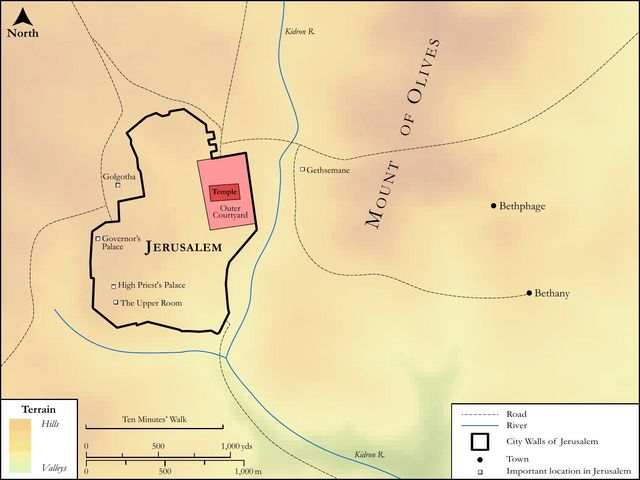
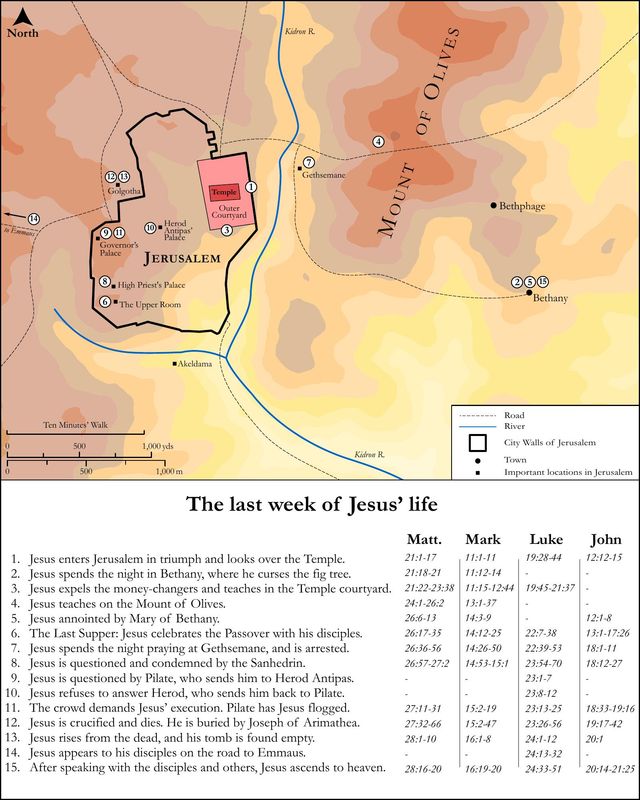
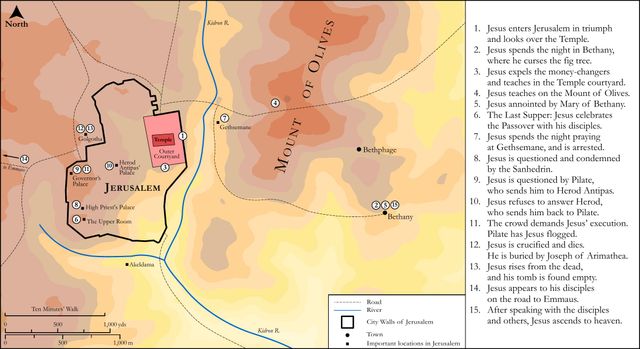
See on the biblical-era maps
Study this verse
Historical interpretation
Ten Centuries of Reception
11 surviving comments on this verse. Each one is dated, so this reads as a timeline rather than a list.
Select a marker to jump to its quote. Markers stagger vertically where authors wrote within a few decades of each other.
For the Saints who have wrought right works, shall receive in recompense of their right works the King's right hand, at which is rest and glory; but the wicked for their evil and sinister deeds have fallen to the left hand, that is, into the misery of torments. Then shall the King say to those who are on his right hand, Come, that in whatsoever they are behind they may make it up when they are more perfectly united to Christ. He adds, ye blessed of my Father, to show how eminendy blessed they were, being of old blessed of the Lord, which made heaven and earth. (Ps. 115:15.)
Then, in order that thou mayest see in another way also the justice of the sentence, He first praises them that have done right, and saith, "Come, ye blessed of my Father, inherit the kingdom prepared for you before the foundation of the world. For I was an hungered, and ye gave me meat," and all that follows. For that they may not say, we had it not, He condemns them by their fellow-servants; like as the virgins by the virgins, and the servant that was drunken and gluttonous by the faithful servant, and him that buried his talent, by them that brought the two, and each one of them that continue in sin, by them that have done right.
And here, however, it is of an equal; for he compares rich with rich, and poor with poor. And not in this way only doth He show the sentence justly passed, by their fellow-servants having done what was right when in the same circumstances, but also by their not being obedient so much as in these things in which poverty was no hindrance; as, for instance, in giving drink to the thirsty, in looking upon him that is in bonds, in visiting the sick. And when He had commended them that had done right, He shows how great was originally His bond of love towards them. For, "Come," saith He, "ye blessed of my Father, inherit the kingdom prepared for you from the foundation of the world." To how many good things is this same equivalent, to be blessed, and blessed of the Father? And wherefore were they counted worthy of such great honors? What is the cause? "I was an hungered, and ye gave me meat; I was thirsty, and ye gave me drink;" and what follows.
Of what honor, of what blessedness are these words? And He said not, Take, but, "Inherit," as one's own, as your Father's, as yours, as due to you from the first. For, before you were, saith He, these things had been prepared, and made ready for you, forasmuch as I knew you would be such as you are.
And in return for what do they receive such things? For the covering of a roof, for a garment, for bread, for cold water, for visiting, for going into the prison. For indeed in every case it is for what is needed; and sometimes not even for that. For surely, as I have said, the sick and he that is in bonds seeks not for this only, but the one to be loosed, the other to be delivered from his infirmity. But He, being gracious, requires only what is within our power, or rather even less than what is within our power, leaving to us to exert our generosity in doing more.
(Hom. lxxix.) To this most sweet section of Scripture which we cease not continually to ponder, let us now listen with all attention and compunction of spirit, for Christ does indeed clothe this discourse with more terrors and vividness. He does not accordingly say of this as of the others, The kingdom of heaven is like, but shows of Himself by direct revelation, saying, When the Son of man shall come in his majesty.
For all his Angels shall be with him to bear witness to the things wherein they have administered to men's salvation at His bidding.
Or, He calls the one sheep and the other goats, to denote the unprofitableness of the one, and the fruitfulness of the other, for sheep are greatly productive in fleece, milk, and lambs.
Then He separates them in place.
Observe that He says not 'Receive,' but possess, or inherit, as duo to you from of old.
For what the Saints obtain the boon of this heavenly kingdom He shows when He adds, I was an hungred, and ye gave me to eat.
But if they are His brethren, why does He call them the least? Because they are lowly, poor, and outcast. By these He means not only the monks who have retired to the mountains, but every believer though he should be secular, though an hungred, or the like, yet He would have him obtain merciful succours, for baptism and communication of the Divine mysteries makes him a brother.
Observe how they had failed in mercifulness, not in one or two respects only, but in all; not only did they not feed Him when He was hungry, but they did not even visit Him when He was sick, which was easier. And look how light things He enjoins; He said not, I was in prison, and ye did not set me free, but, and ye visited me not. Also His hunger required no costly dainties, but necessary food. Each of these counts then is enough for their punishment. First, the slightness of His prayer, viz. for bread; secondly, the destitution of Him who sought it, for He was poor; thirdly, the natural feelings of compassion, for He was a man; fourthly, the expectation of His promise, for He promised a kingdom; fifthly, the greatness of Him who received, for it is God who receives in the poor man; sixthly, the preeminent honour, in that He condescended to take of men; and, seventhly, the righteousness of so bestowing it, for what He takes from us is our own. But avarice blinds men to all these considerations.
Thus convicted by the words of the Judge, they make answer submissively, Lord, when saw we thee &c.
He who was within two days to celebrate the passover, to be delivered to the cross, and mocked by men, fitly now holds out the glory of His triumph, that He may overbalance the offences that were to follow by the promise of reward. And it is to be noted, that He who shall be seen in majesty is the Son of Man.
Also the goat is a salacious animal, and was the offering for sins in the Law; and He says not 'she goats' which can produce young, and come up shorn from the washing. (Song of Solomon 4:2.)
This prepared for you from the foundation, of the world, is to be understood as of the foreknowledge of God, with whom things to come are as already done.
It were indeed free to us to understand that it is Christ in every poor man whom we feed when he is hungry, or give drink to when he is thirsty, and so of other things; but when He says, In that ye have done it to one of the least of these my brethren, He seems tome not to speak of the poor generally, but of the poor in spirit, those to whom He pointed and said, Whosoever shall do the will of my Father which is in heaven, the same is my brother. (Matt. 12:50.)
(Verse 34 onwards) Come, you blessed of my Father, inherit the kingdom prepared for you from the foundation of the world. For I was hungry and you gave Me food; I was thirsty and you gave Me drink; I was a stranger and you took Me in; I was naked and you clothed Me; I was sick and you visited Me; I was in prison and you came to Me.' Then the righteous will answer Him, saying, 'Lord, when did we see You hungry and feed You, or thirsty and give You drink? When did we see you as a guest, and welcome you? Or naked, and clothe you? When did we see you sick, or in prison, and visit you? And the king will answer and say to them, 'Truly I say to you, as you did it to one of the least of these my brothers, you did it to me.' This should be understood according to God's foreknowledge, in whom the future has already happened.
(in Joan. Tr. 21.) The wicked and they also who shall be set on His right hand shall see Him in human shape, for He shall appear in the judgment in that form which He took on Him from us; but it shall be afterwards that He shall be seen in the form of God, for which all the believers long.
(de Civ. Dei, xx. 24.) He shall come down with the Angels whom He shall call from heavenly places to hold judgment.
(Serm. 351, 8.) Or, by Angels here He means men who shall judge with Christ; for Angels are messengers, and such we rightly understand all who have brought tidings of heavenly salvation to men.
(de Civ. Dei, xx. 24.) This gathering shall be executed by the ministry of Angels, as it is said in the Psalm, Gather to him his saints. (Ps. 50:5.)
(de Civ. Dei, xx. 9.) Besides that kingdom of which He will say in the end, Inherit the kingdom prepared for you, though in a very inferior manner, the present Church is also called His kingdom, in the which we are yet in conflict with the enemy until we come to that kingdom of peace, where we shall reign without an enemy.
(Serm. 351. 8.) But one will say, I desire not to reign, it is enough for me that I be saved. Wherein they are deceived, first, because there is no salvation for those whose iniquity abounds; and, secondly, because if there be any difference between those that reign, and those that do not reign, yet must all be within the same kingdom, lest they be esteemed for foes or aliens, and perish while the others reign. Thus all the Romans inherit the kingdom of Rome, though all do not reign in it.
(de Civ. Dei, xxi. 10.) It is hence clear, that the same fire will be appropriated to the punishment of men and of dæmons. If then it inflicts pain by corporeal touch, so as to produce bodily torment, how will there be in it any punishment for the evil spirits, unless the dæmons have, as some have thought, bodies composed of gross and fluid air. But if any man asserts that the dæmons have no bodies, we would not pugnaciously contend the point. For why may we not say, that truly, though wonderfully, even incorporeal spirit can feel pain of corporeal fire? If the spirits of men, though themselves incorporeal, can be now inclosed in bodily limbs, they can then be inseparably attached to the bonds of body. The dæmons then will be united to a body of material fire, though themselves immaterial, drawing punishment from their body, not giving life to it. And that fire being material will torture such bodies as ours with their spirits; but the dæmons are spirits without bodies.
(de Civ. Dei, xx. 1.) He is now treating of the last judgment, when Christ shall come from heaven to judge the quick and dead. This day of the Divine judgment we call the Last Day, that is, the end of time; for we cannot tell through how many days that judgment will be prolonged; but day, as is the use of holy Scripture, is put for time. And we therefore call it the last or latest judgment, because He both now judges and has judged from the beginning of the human race, when He thrust forth the first man from the tree of life, and spared not the Angels that sinned. But in that final judgment both men and Angels shall be judged together, when the Divine power shall bring each man's good and evil deeds in review before his memory, and one intuitive glance shall present them to the perception, so that at once we shall be condemned or acquitted in our consciences.
These words overthrow the error of those who said that the Lord should not continue in the same form of a servant. By his majesty, He means His divinity, in which He is equal to the Father and the Holy Spirit.
And all nations shall be gathered before Him. These words prove that the resurrection of men shall be real.
And it is to be noted, that the Lord here enumerates six works of mercy which whoso shall study to accomplish shall be entitled to the kingdom prepared for the chosen from the foundation of the world.
(Mor. xxvi. 27.) These, to whom as they stand on His right hand the Judge at His coming shall say, I was an hungred &c. are they who are judged on the side of the elect, and who reign; who wash away the stains of their life with tears; who redeem former sins by good deeds following; who, whatever unlawful thing they have at any time done, have covered it from the Judge's eyes by a cloak of alms. Others indeed there are who are not judged, yet reign, who have gone even beyond the precepts of the Law in the perfection of their virtue.
(ubi sup.) They to whom this is said are the wicked believers, who are judged and perish; others, being unbelievers, are not judged and perish; for there is no examination of the condition of such as appear before the face of an impartial Judge already condemned by their unbelief; but those who hold the profession of the faith, but have not the works of their profession, are convicted that they may be condemned. These at least hear the words of their Judge, because they have at least kept the words of His faith. The others hear no words of their Judge pronouncing sentence of condemnation, because they have not paid Him honour even in word. For a prince who governs an earthly kingdom punishes after a different manner the rebellion of a subject and the hostile attempts of an enemy; in the former case, he recurs to his prerogative; against an enemy he takes arms, and does not ask what penalty the law attaches to his crime.
After the parables concerning the end of the world the Lord proceeds to describe the manner of the judgment to come.
Or, they are called blessed, to whom an eternal blessing is due for their good deserts. He calls it the kingdom of His Father, ascribing the dominion of the kingdom to Him by whom Himself the King was begotten. For by His royal power, with which He shall be exalted alone in that day, He shall pronounce the sentence of judgment, Then shall the King say.
Mystically, He who with the bread of the word and the drink of wisdom refreshes the soul hungering and thirsting after righteousness, or admits into the home of our mother the Church him who is wandering in heresy or sin, or who strengthens the weak in faith, such an one discharges the obligations of true love.
Lord, when sate we thee &c. This they say not because they distrust the Lord's words, but they are in amaze at so great exaltation, and at the greatness of their own glory; or because the good which they have done will seem to them to be so small according to that of the Apostle, For the sufferings of this present time are not worthy to be compared to the glory that shall be revealed in us. (Rom. 8:18.)
He does not give honor or punishment until He has first judged. For He loves mankind and teaches us to do the same as well, not to punish until we have made a careful examination. In this way those who are punished after the judgement will have no cause for complaint. He calls the saints blessed as they have been accepted by the Father. He considers them to be inheritors of the kingdom to show that God makes them participants in His own glory as His sons. For He did not say, "receive", but rather inherit, as a man would say of his father’s estate. By the least brethren He means either His own disciples or, simply, all the poor. For every poor man is Christ’s brother for the very reason that Christ, too, spent His life in poverty. See also God’s righteousness, how He acclaims the saints; and see the good disposition of their mind, how they deny, with befitting modesty, that they have cared for Him. But the Lord accepts as for Himself the things that were done for the poor.
(non occ.) Under the figure of a sheep in Scripture is signified simplicity and innocence. Beautifully then in this place are the elect denoted by sheep.
Continue studying Matthew 25:34 across the web’s major study libraries — every link below opens this exact verse, chapter, or book on the destination site.
Read & Compare
 BibleGatewayThis verse in more than 200 translations and 70 languages.
 Bible.comThe YouVersion reader — hundreds of translations, reading plans, and highlights.
 ESV.orgCrossway's official English Standard Version reader.
 NET BibleThe NET translation with 60,000+ translators' notes on every rendering decision.
 STEP BibleTyndale House's free study tool — original text, vocabulary, and scholarly resources.
 BibliaLogos Bible Software's free web reader.
 USCCBThe New American Bible (Revised Edition) with the U.S. bishops' study notes.
Commentaries
 BibleHub CommentariesDozens of classic commentaries on this verse, gathered on one page.
 StudyLightMore than 100 commentary sets — the largest collection on the web.
 BibleRefPlain-English commentary on what this verse means, verse by verse.
 Enduring WordDavid Guzik's free commentary on this chapter, widely used by Bible teachers.
 Bible Study ToolsVerse commentary alongside Greek and Hebrew study aids.
Original Language & Research
- BibleHub InterlinearThe verse word by word — original language, transliteration, and English.
- BibleHub LexiconEvery word's original-language definition and Strong's entry.
 Blue Letter BibleDeep-study tools — Strong's numbers, concordance, and word studies.
 CNTR CollationThe earliest Greek manuscripts of this verse, collated letter by letter.
Sermons, Hymns & Audio


TrulyRandomVerse is not affiliated with these sites and doesn’t control their content. They’re linked because they’re genuinely useful.
Summary
Matthew 25:34 captures the climactic moment of the final judgment, where the sovereign King, Jesus Christ, graciously invites the righteous, positioned at His right hand, to enter into their eternal inheritance. This invitation is extended to those divinely blessed by the Father, beckoning them to receive the kingdom that was meticulously prepared for them even before the very beginning of creation, underscoring God's eternal purpose and unwavering faithfulness.
Context
ShowHideLiterary Context
This verse is situated within the profound eschatological discourse delivered by Jesus on the Mount of Olives, commonly known as the Olivet Discourse, spanning Matthew 24-25. Specifically, Matthew 25:34 serves as the pivotal invitation within the Parable of the Sheep and the Goats (Matthew 25:31-46). This parable immediately follows the Parable of the Ten Virgins (Matthew 25:1-13) and the Parable of the Talents (Matthew 25:14-30), all of which emphasize readiness, faithfulness, and accountability in anticipation of the Son of Man's return. The parable culminates in a vivid depiction of the Son of Man's glorious return as King and Judge, separating humanity into two distinct groups based on their actions, particularly their compassionate service to "the least of these."
Historical & Cultural Context
The imagery of a king sitting on a throne to render judgment was a familiar concept in the ancient Near East, where monarchs held ultimate judicial authority. The distinction between the "right hand" and "left hand" was deeply ingrained in Jewish and Roman culture. The right hand symbolized honor, favor, authority, and blessing (as seen in Psalm 110:1 or Acts 7:55), while the left often signified disfavor or condemnation. The concept of an "inheritance" (Greek: klēronomia) was also significant, often referring to the land promised to Israel (Genesis 12:7) or a portion of a family's estate passed down through generations. Jesus' use of this imagery would have resonated powerfully with His audience, conveying the ultimate divine judgment and the nature of eternal blessing.
Key Themes
ShowHideMatthew 25:34 contributes significantly to several overarching themes within Matthew's Gospel and the broader biblical narrative. Firstly, it highlights Divine Sovereignty and Predestination, emphasizing that the kingdom was "prepared for you from the foundation of the world," aligning with the idea of God's eternal plan for salvation (Ephesians 1:4). Secondly, it underscores Jesus' Authority as King and Judge, presenting Him not merely as a teacher but as the ultimate arbiter of human destiny, a theme prevalent in Matthew 24 and Matthew 25. Thirdly, the verse speaks to the Nature of True Discipleship, where genuine faith is evidenced by compassionate action, particularly towards the vulnerable, as detailed in the subsequent verses of the parable (Matthew 25:35-40). Finally, it powerfully proclaims the Promise of Eternal Inheritance and Blessedness, assuring believers of a secure place in God's eternal kingdom, a theme echoed throughout the New Testament (1 Peter 1:3-5).
Exposition and Analysis
ShowHideKey Word Analysis
ShowHideFrom G935, meaning a sovereign. In this context, "the King" unequivocally refers to Jesus Christ, who returns in glory as the ultimate ruler and judge. This title emphasizes His supreme authority and rightful dominion over all creation, establishing His divine prerogative to separate and invite.
From G2127, meaning to speak well of, religiously to bless, thank, or invoke a benediction upon, prosper. Here, it signifies those upon whom God the Father has bestowed divine favor and spiritual prosperity. Their blessedness is not self-generated but originates from God's gracious disposition towards them.
From G2816, meaning to be an heir to, to obtain by inheritance. This word conveys the idea of receiving an allotted portion or possession by right, not by earning. It underscores that the kingdom is a gift, a rightful claim granted by the Father to His children, rather than a reward for works.
From G2090, meaning to prepare, provide, or make ready. This term highlights the intentionality, forethought, and completeness of God's work. The kingdom is not something that needs to be built or achieved by humans; rather, it has been meticulously made ready by God Himself, awaiting its rightful heirs.
Verse Breakdown
ShowHide"Then shall the King say unto them on his right hand,"
This phrase sets the scene for the final judgment. "Then" (Greek: tóte) indicates a specific, decisive moment in the future. "The King" (Jesus Christ) assumes His judicial role. Those "on his right hand" are the "sheep" from the preceding verses, symbolically representing the righteous, those favored and approved by the King, distinct from those on His left.
"Come, ye blessed of my Father,"
This is a direct, gracious, and authoritative invitation. "Come" (Greek: deûte) is an urgent call to enter. The recipients are identified as "blessed of my Father," emphasizing that their favored status and the subsequent inheritance are not earned but are a direct result of God the Father's sovereign grace and divine blessing. It highlights the trinitarian nature of salvation, with the Father blessing and the Son inviting.
"inherit the kingdom prepared for you from the foundation of the world:"
This clause reveals the nature and origin of the promised reward. "Inherit the kingdom" signifies receiving eternal life and co-reigning with Christ, a secure and rightful possession. The profound truth is that this kingdom was "prepared for you from the foundation of the world," indicating God's eternal plan and foreknowledge. This preparation demonstrates God's unchanging purpose and love for His chosen ones, predating human existence and any human merit.
Literary Devices
ShowHideMatthew 25:34 employs several powerful literary devices. Imagery is prominent with the vivid depiction of the King on His throne and the separation of humanity to His "right hand" (favor) and "left hand" (disfavor), a visual metaphor for divine judgment. The phrase "the kingdom prepared for you from the foundation of the world" utilizes Hyperbole to emphasize the eternal nature and divine intentionality of God's plan, stretching back to the very beginning of time. There is also clear Symbolism in the "right hand" representing honor, divine approval, and eternal blessedness. The entire passage functions as a Divine Pronouncement, an authoritative declaration from the King Himself, carrying the weight of ultimate truth and destiny.
Theological and Thematic Connections
ShowHideMatthew 25:34 is a profound theological statement on God's eternal plan, divine election, and the nature of the eschatological kingdom. It reveals that salvation and entrance into God's eternal dwelling are not an afterthought but were purposed by God "from the foundation of the world." This highlights God's sovereign initiative and meticulous preparation for His people, emphasizing that their blessedness is entirely a gift of grace from the Father. The verse also underscores the intimate relationship between the Father and the Son in the work of salvation and judgment, with the Son executing the Father's pre-ordained will. It implicitly connects the King's invitation to the character of those invited, whose lives reflect the love and compassion that are the fruit of genuine faith, making them fit heirs of such a glorious inheritance.
Reflection and Application
ShowHideMatthew 25:34 offers immense comfort and profound challenge to believers. The comfort lies in the assurance of God's eternal, unwavering plan for His people, a plan conceived and meticulously prepared "from the foundation of the world." This truth anchors our hope, reminding us that our ultimate destiny with God is secure, rooted in His sovereign love and not dependent on our fluctuating performance. It encourages us to live with an eternal perspective, fixing our gaze on the coming kingdom and the glorious return of Christ. The challenge, however, comes from the broader context of the Parable of the Sheep and the Goats, where the King's invitation is extended to those whose faith is evidenced by their compassionate service to "the least of these." This calls us to a life of active love, mercy, and justice, recognizing that our treatment of others, especially the vulnerable, is a direct reflection of our relationship with Christ. It compels us to examine our priorities and ensure that our lives are characterized by genuine, fruit-bearing faith.
Questions for Reflection
ShowHideFAQ
ShowHideWhat does "from the foundation of the world" mean in this context?
ShowHideThe phrase "from the foundation of the world" (Greek: apo katabolēs kósmou) signifies that God's plan for the kingdom and for the salvation of His people is not an afterthought or a reactive measure, but an eternal, pre-ordained purpose. It emphasizes God's foreknowledge, sovereignty, and intentionality. Before creation even began, God had already purposed to establish this kingdom and to invite His chosen ones into it. This highlights the immutability and certainty of His divine plan for redemption, as also seen in Ephesians 1:4 where believers are chosen in Christ "before the foundation of the world."
Christ-Centered Fulfillment
ShowHideMatthew 25:34 finds its ultimate Christ-centered fulfillment in Jesus Himself, who is both the King who issues the invitation and the very means by which entrance into the kingdom is made possible. He is the Son of Man who comes in glory (Matthew 25:31), the divine Judge who separates humanity, and the one whose atoning sacrifice on the cross secured the "blessedness" and the "inheritance" for all who believe. The kingdom "prepared from the foundation of the world" is intrinsically linked to Christ, for it is through His life, death, and resurrection that humanity is reconciled to God and granted access to this eternal realm. He is the heir of all things (Hebrews 1:2), and those who are "in Christ" become co-heirs with Him (Romans 8:17). Thus, the invitation to "inherit the kingdom" is an invitation to share in Christ's own glorious reign and eternal fellowship with the Father, a fulfillment of God's ancient promise made possible solely through the work of the Lamb of God (John 1:29).