


Exodus 23:22
- כִּיkithatH3588PrtParticle Conditional
- אִם'imexceptH518PrtParticle Conditional
- שָׁמֹעַsha·Mo·a'carefully <to listen>H8085V-Qal-InfAbsVerb Qal Infinitive Absolute
- תִּשְׁמַעtish·Ma'you will listenH8085V-Qal-Imperf-2msVerb Qal Imperfect 2nd Singular Masculine
- בְּקֹלוֹbe·ko·Loto his voiceH6963Prep-b ¦ N-msc ¦ 3msNoun Singular Masculine Constructבְּtoקֹלvoiceוֹhis
- וְעָשִׂיתָve·'a·Si·taand you will doH6213Conj-w ¦ V-Qal-ConsecPerf-2msVerb Qal Consecutive Perfect 2nd Singular Masculineוְandעָשִׂיתָyou will do
- כֹּלkolallH3605N-msNoun Singular Masculine Absolute
- אֲשֶׁר'a·SherthatH834RelParticle Relative
- אֲדַבֵּר'a·da·BerI will sayH1696V-Piel-Imperf-1csVerb Piel Imperfect 1st Singular common gender
- וְאָיַבְתִּיve·'a·yav·Tiand I will be an enemy toH340Conj-w ¦ V-Qal-ConsecPerf-1csVerb Qal Consecutive Perfect 1st Singular common genderוְandאָיַבְתִּיI will be an enemy to
- אֶת'et<obj.>H853DirObjMParticle Object Indicator
- אֹיְבֶיךָ'o·ye·Vei·khayour enemiesH341V-Qal-Prtcpl-mp ¦ 2msVerb Qal Participle Plural Masculine Constructאֹיְבֶיenemiesךָyour
- וְצַרְתִּיve·tzar·Tiand I will be a foe toH6696Conj-w ¦ V-Qal-ConsecPerf-1csVerb Qal Consecutive Perfect 1st Singular common genderוְandצַרְתִּיI will be a foe to
- אֶת'et<obj.>H853DirObjMParticle Object Indicator
- צֹרְרֶיךָtzo·re·Rei·khayour opposersH6887V-Qal-Prtcpl-mp ¦ 2msVerb Qal Participle Plural Masculine Constructצֹרְרֶיopposersךָyour
English is a literal word-by-word gloss of the Hebrew, not the KJV's wording. Why?
This is the original text the KJV's translators worked from — each Hebrew word with its own literal English meaning in this verse, prepared by scholars at Tyndale House, Cambridge. The KJV translates whole sentences, not word by word, so its wording differs: one Hebrew word can become several English words, and the KJV may choose “the LORD” where the gloss reads “Yahweh”. Both are faithful — they answer different questions. For the KJV's own rendering, switch to the KJV text.
Details
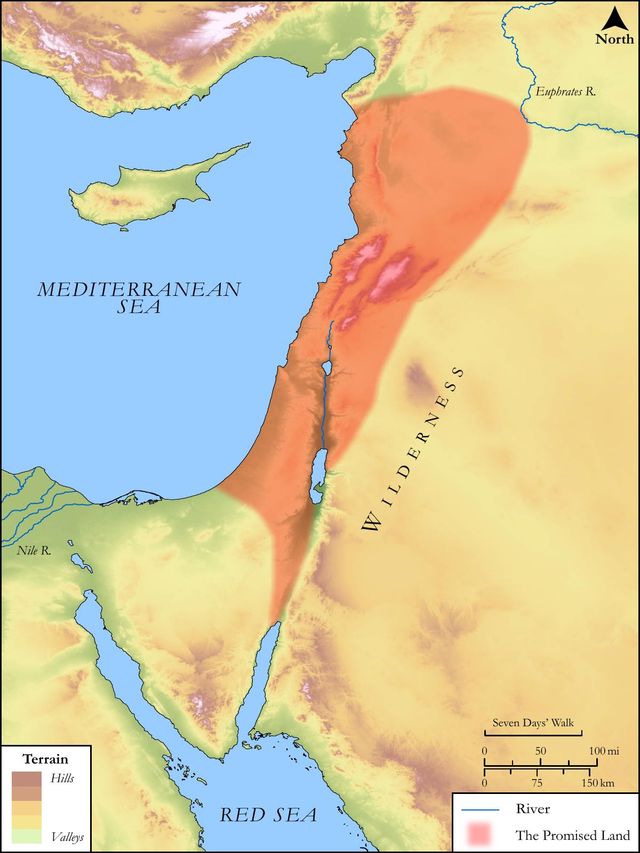
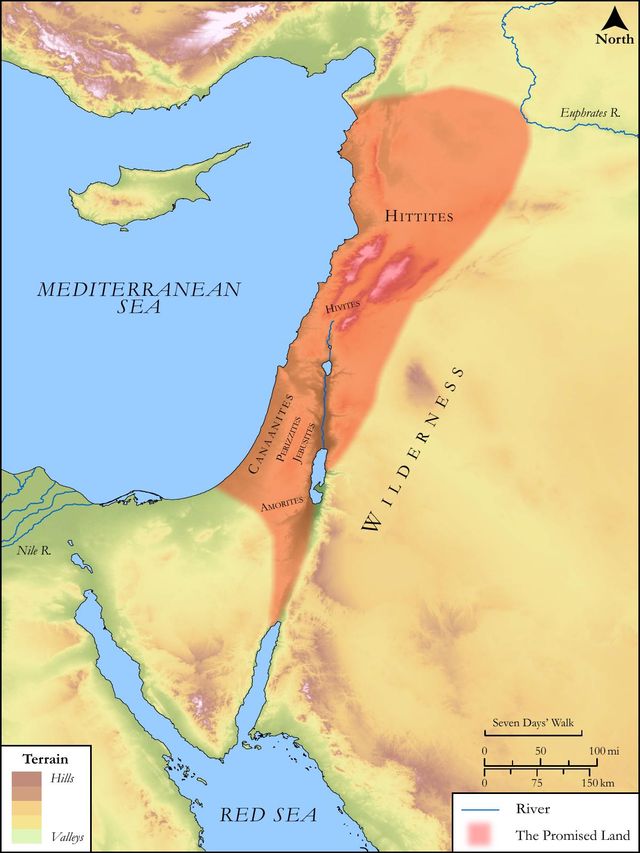
See on the biblical-era map

Study this verse
Public-domain commentary
Matthew Henry
From his Commentary on the Whole Bible. Henry comments on passages, not single verses — this entry covers Exodus 23:20–33. His three-level outline is real structure in the source text, so it is rendered as structure.
Three gracious promises are here made to Israel, to engage them to their duty and encourage them in it; and each of the promises has some needful precepts and cautions joined to it.
I.It is here promised that they should be guided and kept in their way through the wilderness to the land of promise:
Behold, I send an angel before thee (Exo 23:20), my angel (Exo 23:23), a created angel, say some, a minister of God's providence, employed in conducting and protecting the camp of Israel; that it might appear that God took a particular care of them, he appointed one of his chief servants to make it his business to attend them, and see that they wanted for nothing. Others suppose it to be the Son of God, the angel of the covenant; for the Israelites in the wilderness are said to tempt Christ; and we may as well suppose him God's messenger, and the church's Redeemer, before his incarnation, as the Lamb slain from the foundation of the world. And we may the rather think he was pleased to undertake the deliverance and guidance of Israel because they were typical of his great undertaking. It is promised that this blessed angel should keep them in the way, though it lay through a wilderness first, and afterwards through their enemies' country; thus God's spiritual Israel shall be kept through the wilderness of this earth, and from the insults of the gates of hell. It is also promised that he should bring them into the place which God had not only designed but prepared for them: and thus Christ has prepared a place for his followers, and will preserve them to it, for he is faithful to him that appointed him. The precept joined with this promise is that they be observant of, and obedient to, this angel whom God would send before them (Exo 23:21): "Beware of him, and obey his voice in every thing; provoke him not in any thing, for it is at your peril if you do, he will visit your iniquity." Note,
1.Christ is the author of salvation to those only that obey him. The word of command is Hear you him, Mat 17:5. Observe what he hath commanded, Mat 28:20.
2.Our necessary dependence upon the divine power and goodness should awe us into obedience. We do well to take heed of provoking our protector and benefactor, because if our defence depart from us, and the streams of his goodness be cut off, we are undone. Therefore, "Beware of him, and carry it towards him with all possible reverence and caution. Fear the Lord, and his goodness." 3. Christ will be faithful to those who are faithful to him, and will espouse their cause who adhere to his: I will be an adversary to thine adversaries, Exo 23:22. The league shall be offensive and defensive, like that with Abraham, I will bless him that blesseth thee, and curse him that curseth thee. Thus is God pleased to twist his interests and friendships with his people's.
II.It is promised that they should have a comfortable settlement in the land of Canaan, which they hoped now (though it proved otherwise) within a few months to be in the possession of, Exo 23:24-26. Observe,
1.How reasonable the conditions of this promise are - only that they should serve their own God, who was indeed the only true God, and not the gods of the nations, which were no gods at all, and which they had no reason at all to have any respect for. They must not only not worship their gods, but they must utterly overthrow them, in token of their great abhorrence of idolatry, their resolution never to worship idols themselves, and their care to prevent any other from worshipping them; as the converted conjurors burnt their books, Act 19:19.
2.How rich the particulars of this promise are.
(1.)The comfort of their food. He shall bless thy bread and thy water; and God's blessing will make bread and water more refreshing and nourishing than a feast of fat things and wines on the lees without that blessing.
(2.)The continuance of their health: "I will take sickness away, either prevent it or remove it. Thy land shall not be visited with epidemical diseases, which are very dreadful, and sometimes have laid countries waste." (3.) The increase of their wealth. Their cattle should not be barren, nor cast their young, which is mentioned as an instance of prosperity, Job 21:10. (4.) The prolonging of their lives to old age: "The number of thy days I will fulfil, and they shall not be cut off in the midst by untimely deaths." Thus hath godliness the promise of the life that now is.
III.It is promised that they should conquer and subdue their enemies, the present occupants of the land of Canaan, who must be driven out to make room for them. This God would do,
1.Effectually by his power (Exo 23:17, Exo 23:18); not so much by the sword and bow of Israel as by the terrors which he would strike into the Canaanites. Though they were so obstinate as not to be willing to submit to Israel, resign their country, and retire elsewhere, which they might have done, yet they were so dispirited that they were not able to stand before them. This completed their ruin; such power had the devil in them that they would resist, but such power had God over them that they could not. I will send my fear before thee; and those that fear will soon flee. Hosts of hornets made way for the hosts of Israel; such mean creatures can God make use of for the chastising of his people's enemies, as in the plagues of Egypt. When God pleases, hornets can drive out Canaanites, as well as lions could, Jos 24:12.
2.He would do it gradually, in wisdom (Exo 23:29, Exo 23:30), not all at once, but by little and little. As the Canaanites had kept possession till Israel had grown into a people, so there should still be some remains of them till Israel should grow so numerous as to replenish the whole. Note, The wisdom of God is to be observed in the gradual advances of the church's interests. It is in real kindness to the church that its enemies are subdued by little and little; for thus we are kept upon our guard, and in a continual dependence upon God. Corruptions are thus driven out of the hearts of God's people; not all at once, but by little and little; the old man is crucified, and therefore dies slowly. God, in his providence, often delays mercies, because we are not ready for them. Canaan has room enough to receive Israel, but Israel is not numerous enough to occupy Canaan. We are not straitened in God; if we are straitened, it is in ourselves. The land of Canaan is promised them (Exo 23:31) in its utmost extent, which yet they were not possessed of till the days of David; and by their sins they soon lost possession. The precept annexed to this promise is that they should not make any friendship, nor have any familiarity, with idolaters, Exo 23:32, Exo 23:33. Idolaters must not so much as sojourn in their land, unless they renounced their idolatry. Thus they must avoid the reproach of intimacy with the worshippers of false gods and the danger of being drawn to worship with them. By familiar converse with idolaters, their dread and detestation of the sin would wear off; they would think it no harm, in compliment to their friends, to pay some respect to their gods, and so by degrees would be drawn into the fatal snare. Note, Those that would be kept from bad courses must keep from bad company; it is dangerous living in a bad neighbourhood; others' sins will be our snares, if we look not well to ourselves. We must always look upon our greatest danger to be from those that would cause us to sin against God. Whatever friendship is pretended, that is really our worst enemy that draws us from our duty.
Continue studying Exodus 23:22 across the web’s major study libraries — every link below opens this exact verse, chapter, or book on the destination site.
Read & Compare
 BibleGatewayThis verse in more than 200 translations and 70 languages.
 Bible.comThe YouVersion reader — hundreds of translations, reading plans, and highlights.
 ESV.orgCrossway's official English Standard Version reader.
 NET BibleThe NET translation with 60,000+ translators' notes on every rendering decision.
 STEP BibleTyndale House's free study tool — original text, vocabulary, and scholarly resources.
 BibliaLogos Bible Software's free web reader.
 USCCBThe New American Bible (Revised Edition) with the U.S. bishops' study notes.
Commentaries
 BibleHub CommentariesDozens of classic commentaries on this verse, gathered on one page.
 StudyLightMore than 100 commentary sets — the largest collection on the web.
 BibleRefPlain-English commentary on what this verse means, verse by verse.
 Enduring WordDavid Guzik's free commentary on this chapter, widely used by Bible teachers.
 Bible Study ToolsVerse commentary alongside Greek and Hebrew study aids.
Original Language & Research
- BibleHub InterlinearThe verse word by word — original language, transliteration, and English.
- BibleHub LexiconEvery word's original-language definition and Strong's entry.
 Blue Letter BibleDeep-study tools — Strong's numbers, concordance, and word studies.
 SefariaThe Hebrew text with Rashi and centuries of Jewish commentary.
Sermons, Hymns & Audio


TrulyRandomVerse is not affiliated with these sites and doesn’t control their content. They’re linked because they’re genuinely useful.
Summary
Exodus 23:22 presents a pivotal conditional promise within the "Book of the Covenant," assuring the nascent nation of Israel of God's active, personal, and powerful protection against their adversaries. This divine pledge is contingent upon their wholehearted and comprehensive obedience to His voice and all His revealed commands. It underscores the profound theological principle that Israel's security, prosperity, and success in the Promised Land were directly tied to their covenant faithfulness, with God Himself committing to engage in battle on their behalf against any who opposed them.
Context
ShowHideLiterary Context
Exodus 23:22 is strategically positioned within the "Book of the Covenant" (Exodus 20-23), a foundational legal and ethical corpus delivered by God to Moses at Mount Sinai. This collection of statutes, judgments, and ordinances elaborates upon the Ten Commandments, providing the detailed framework for Israel's covenant relationship with Yahweh in their civil, social, and religious life. Immediately preceding this verse, God promises to send His angel to guide and guard Israel on their journey to the Promised Land, specifically commanding them to "pay careful attention to him and obey his voice" (Exodus 23:20-21). Verse 22 then broadens this specific command to encompass general obedience to "all that I speak," extending the promise of divine assistance and protection beyond the angel's guidance to God's broader covenantal requirements. This characteristic "if...then" structure is central to covenant theology, where blessings are explicitly contingent upon faithfulness, establishing a clear cause-and-effect relationship between Israel's actions and God's response.
Historical & Cultural Context
At the time these words were spoken, Israel was encamped at Mount Sinai, having recently experienced a miraculous deliverance from centuries of Egyptian bondage. They stood as a nascent nation, divinely liberated but facing a perilous journey through the wilderness and the formidable task of conquering and settling the land of Canaan, which was inhabited by numerous, often hostile, and idolatrous peoples. The concept of a suzerainty treaty, prevalent in the Ancient Near East, provides a crucial backdrop for understanding this covenant. In such treaties, a great king (suzerain) would establish terms with a lesser king or vassal, promising protection and blessings in exchange for unwavering loyalty and obedience. Here, Yahweh functions as the Divine Suzerain, establishing His covenant with Israel as His chosen vassal nation. The promise to be an "enemy unto thine enemies" was not merely a theological abstract but a practical necessity for a people facing formidable military and spiritual opposition as they sought to inherit the land God had promised their forefathers, as evidenced by their encounters with aggressive groups like the Amalekites and the various Canaanite tribes.
Key Themes
ShowHideExodus 23:22 contributes significantly to several overarching themes within the Book of Exodus and the Pentateuch. Foremost is the theme of Covenant Faithfulness and its Consequences, emphasizing that Israel's well-being and success are directly tied to their obedience to God's commands. This verse illustrates the principle of Conditional Blessings, where divine favor and protection are not automatic but are predicated on human responsiveness to God's revealed will. It also powerfully portrays God as the Divine Warrior or Divine Protector, who actively engages in the battles of His people. This theme is foundational to Israel's understanding of Yahweh, who had already demonstrated His power in the Exodus from Egypt and His victory over Pharaoh. The promise here reinforces God's Sovereignty and Omnipotence, demonstrating His ability and willingness to overcome any opposition that threatens His covenant purposes for His people. This divine commitment to fight for Israel is a recurring motif, seen in passages like Deuteronomy 20:4 and throughout the historical books.
Exposition and Analysis
ShowHideKey Word Analysis
ShowHideThe Hebrew verb שָׁמַע (H8085, shâmaʻ) means more than simply "to hear." It implies a deep, attentive listening that leads to understanding and, crucially, responsive action. In this context, "obey his voice" signifies not just passive reception of God's commands but an active, intentional commitment to live in accordance with them. The repetition in "shalt indeed obey" (a literal translation of the Hebrew infinitive absolute construction) intensifies the demand, emphasizing the absolute necessity of wholehearted and consistent obedience that translates into practical living.
The Hebrew word אוֹיֵב (H341, ʼôyêb) is an active participle meaning "hating" and functions as a noun for "adversary," "enemy," or "foe." In this context, it refers to those who are hostile to Israel. God's promise to be an "enemy" to their enemies signifies His direct, personal, and powerful engagement against those who oppose His covenant people. It describes God taking on an adversarial role Himself, indicating active intervention and warfare on Israel's behalf.
The Hebrew term צָרַר (H6887, tsârar) is a primitive root meaning "to cramp," literally or figuratively. It conveys the idea of causing distress, besieging, or being in a strait. By promising to be an "adversary unto thine adversaries," God pledges to confront and overcome those who seek to constrict, oppress, or bring distress upon His obedient people, ensuring their freedom and flourishing. This word reinforces the active, oppressive nature of Israel's foes and God's powerful response to their attempts to hinder His people.
Verse Breakdown
ShowHide"But if thou shalt indeed obey his voice"
This opening clause establishes the absolute and foundational condition for the ensuing divine promise. The emphatic "indeed obey" (a powerful Hebrew infinitive absolute construction) highlights the critical importance of Israel's full, active, and consistent adherence to God's commands, whether delivered directly or through His appointed messenger, the angel mentioned in the preceding verses. It is a profound call for responsive listening that translates directly into intentional and comprehensive action, emphasizing the quality and totality of their obedience.
"and do all that I speak"
This phrase expands and reinforces the scope of the required obedience, moving beyond just "hearing" to "doing." It's not merely about acknowledging or even obeying specific instructions, but about comprehensively living out every command, statute, and principle God reveals. The word "all" signifies the totality of God's revealed will, emphasizing that partial, selective, or superficial obedience is insufficient to secure the full measure of His promised protection and blessings.
"then I will be an enemy unto thine enemies"
This is the first part of God's reciprocal promise, contingent upon Israel's faithfulness. If Israel fulfills their covenant obligations, God pledges to actively intervene on their behalf. He will personally become an "enemy" to those who are enemies of His people, taking on an adversarial role against their human and spiritual foes. This signifies divine intervention in a way that goes beyond mere defense to active, offensive opposition, demonstrating God's commitment to His covenant.
"and an adversary unto thine adversaries"
This second phrase functions as a synonymous parallelism, reiterating and intensifying the previous promise. God's commitment to fight for Israel is not casual or passive; He will be a direct and potent "adversary" to any who oppose, distress, or seek to confine His people. The repetition underscores the certainty, thoroughness, and comprehensive nature of God's protective and offensive action on behalf of His covenant people, assuring them of His unwavering support.
Literary Devices
ShowHideExodus 23:22 powerfully employs several literary devices to convey its profound message. The most prominent is the Conditional Clause, structured as an "if...then" statement, which is fundamental to the covenantal framework of the Old Testament. This structure clearly delineates the cause-and-effect relationship between Israel's obedience and God's promised action, highlighting the reciprocal nature of the covenant. Parallelism is strikingly evident in the repeated structure of God's promise: "I will be an enemy unto thine enemies, and an adversary unto thine adversaries." This synonymous parallelism reinforces the certainty and totality of God's commitment to defend His people, using two distinct but related terms ("enemy" and "adversary") to convey the same powerful idea of divine opposition. Furthermore, Anthropomorphism is employed as God is described in human-like terms, taking on the role of an "enemy" and "adversary." This device helps human readers grasp God's active, personal, and relational involvement in the affairs of His people, illustrating His willingness to engage in conflict on their behalf. The use of the infinitive absolute in "shalt indeed obey" also serves as an Intensification, emphasizing the absolute necessity and thoroughness of the required obedience, underscoring its non-negotiable nature.
Theological and Thematic Connections
ShowHideThis verse profoundly articulates God's character as a faithful covenant partner and a divine warrior. It reveals that God is not a distant, disengaged deity but one who actively intervenes in His people's circumstances, taking their battles as His own. The promise of divine intervention against adversaries is a powerful demonstration of God's sovereignty, His omnipotence, and His unwavering commitment to uphold His covenant promises. It underscores the theological truth that true security, victory, and flourishing come not from human might, strategic alliances, or military prowess, but from faithful, comprehensive obedience to God. This principle of conditional blessing, where divine favor and protection are inextricably linked to human responsiveness and alignment with God's will, is a recurring and central theme throughout the Old Testament, showcasing God's justice, His holiness, and His desire for a people who walk in obedient fellowship with Him.
Reflection and Application
ShowHideWhile the specific covenant context of Exodus 23:22 belongs to ancient Israel, the underlying principle of God's active involvement in the lives of His obedient people remains profoundly relevant for believers today. Though our salvation is secured by grace through faith in Jesus Christ and not by works, our ongoing walk of discipleship and our experience of God's protective hand are often deeply intertwined with our willingness to hear and obey His voice. This verse encourages us to cultivate a posture of responsive listening to God's Word and the Holy Spirit's guidance, trusting that as we align our lives with His will, He will indeed contend with our spiritual and even earthly adversaries. It calls us to surrender our battles to Him, recognizing that He is our ultimate defender and advocate, capable of overcoming any opposition we face. This promise fosters a deep trust in God's power and faithfulness, empowering us to live courageously and with spiritual confidence in a world often filled with hostility, knowing that the Lord Himself fights for us.
Questions for Reflection
ShowHideFAQ
ShowHideIs this promise still relevant for Christians today?
ShowHideYes, while the immediate covenant context of Exodus 23:22 applies to ancient Israel under the Old Covenant, the underlying principle of God's faithfulness to those who obey Him remains eternally true. For Christians, our salvation is by grace through faith in Jesus Christ, not by works (Ephesians 2:8-9). However, our discipleship, our experience of God's blessings, and our ability to stand firm against spiritual opposition are often directly linked to our obedience to God's revealed will. God still fights for His people, though the nature of the "enemies" may often be spiritual principalities and powers, as described in Ephesians 6:12. When we obey Christ, we can trust that God is actively working on our behalf, providing protection and victory over the spiritual forces of darkness and the challenges of this world.
Who are "thine enemies" and "thine adversaries" in this context?
ShowHideIn the immediate historical context of Exodus, "thine enemies" and "thine adversaries" primarily refer to the literal nations and peoples who would oppose Israel's entry into and settlement of the Promised Land. This included the various Canaanite tribes, the Amalekites (who attacked Israel in the wilderness, as seen in Exodus 17:8-16), and any other hostile forces that would seek to prevent God's purposes for His people. More broadly, it encompasses any individual or group that stands in opposition to God's will and His covenant people. For the Christian, while literal human enemies may exist, the primary "adversaries" are often spiritual forces, the temptations of the flesh, and the systems of the world that oppose God's kingdom.
Christ-Centered Fulfillment
ShowHideExodus 23:22 finds its ultimate and most profound fulfillment in the person and work of Jesus Christ. While the Old Covenant promise of divine protection was conditional upon Israel's obedience, Christ perfectly fulfilled this condition on humanity's behalf. He is the perfectly obedient Son, who "humbled himself by becoming obedient to the point of death, even death on a cross" (Philippians 2:8). Through His sinless life and perfect obedience, Christ secured the ultimate victory over our greatest enemies: sin, death, and the devil. The New Testament declares that through His resurrection and ascension, Christ "disarmed the powers and authorities, he made a public spectacle of them, triumphing over them by the cross" (Colossians 2:15). For believers, united with Christ by faith, God's promise to be an "enemy unto thine enemies" is realized in Christ's decisive victory and His ongoing intercession for us as our High Priest. We are called to "love Him by keeping His commandments" (John 14:15), not to earn salvation, but as a grateful response to His grace and as a means of experiencing His continued protection and power in our lives. The Holy Spirit empowers us to walk in this obedience, enabling us to overcome spiritual adversaries because "the one who is in you is greater than the one who is in the world" (1 John 4:4). Thus, the promise of God fighting for His people is fully realized in the person and work of Jesus Christ, our victorious Lord and Defender, who has already secured the triumph over all that opposes us.