


Exodus 23:29
- לֹאlo'notH3808NegParticle Negative
- אֲגָרְשֶׁנּוּ'a·ga·re·She·nuI will drive out itH1644V-Piel-Imperf-1cs ¦ 3msVerb Piel Imperfect 1st Singular common genderאֲגָרְשֶׁI will drive outנּוּit
- מִפָּנֶיךָmi·pa·Nei·khafrom before youH6440Prep-m ¦ N-mpc ¦ 2msNoun Plural Masculine Constructמִfromפָּנֶיbeforeךָyou
- בְּשָׁנָהbe·sha·Nahin a yearH8141Prep-b ¦ N-fsNoun Singular Feminine Absoluteבְּinשָׁנָהa year
- אֶחָת'e·ChatoneH259Adj-fsAdjective Numerical Singular Feminine Absolute
- פֶּןpenlestH6435PrtParticle Conditional
- תִּהְיֶהtih·Yehit should becomeH1961V-Qal-Imperf-3fsVerb Qal Imperfect 3rd Singular Feminine
- הָאָרֶץha·'A·retzthe landH776Art ¦ N-fsNoun Singular Feminine Absoluteהָtheאָרֶץland
- שְׁמָמָהshe·ma·Maha wasteH8077N-fsNoun Singular Feminine Absolute
- וְרַבָּהve·ra·Bahand it will become manyH7231Conj-w ¦ V-Qal-ConsecPerf-3fsVerb Qal Consecutive Perfect 3rd Singular Feminineוְandרַבָּהit will become many
- עָלֶיךָ'a·Lei·khaon youH5921Prep ¦ 2msPreposition Definiteעָלֶיonךָyou
- חַיַּתchai·Yat[the] animal[s] ofH2416N-fscNoun Singular Feminine Construct
- הַשָּׂדֶהha·sa·Dehthe fieldH7704Art ¦ N-msNoun Singular Masculine Absoluteהַtheשָּׂדֶהfield
English is a literal word-by-word gloss of the Hebrew, not the KJV's wording. Why?
This is the original text the KJV's translators worked from — each Hebrew word with its own literal English meaning in this verse, prepared by scholars at Tyndale House, Cambridge. The KJV translates whole sentences, not word by word, so its wording differs: one Hebrew word can become several English words, and the KJV may choose “the LORD” where the gloss reads “Yahweh”. Both are faithful — they answer different questions. For the KJV's own rendering, switch to the KJV text.
Details
See on the biblical-era map

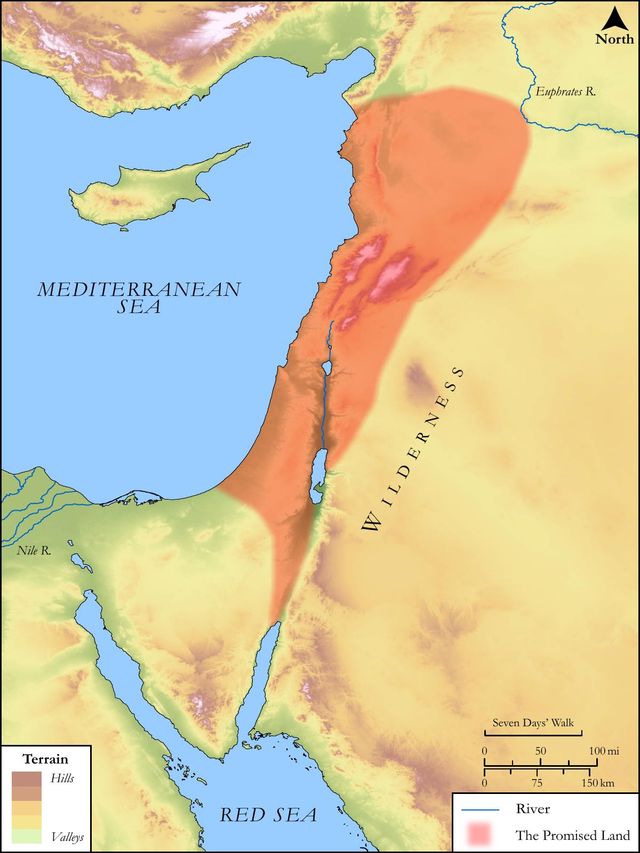
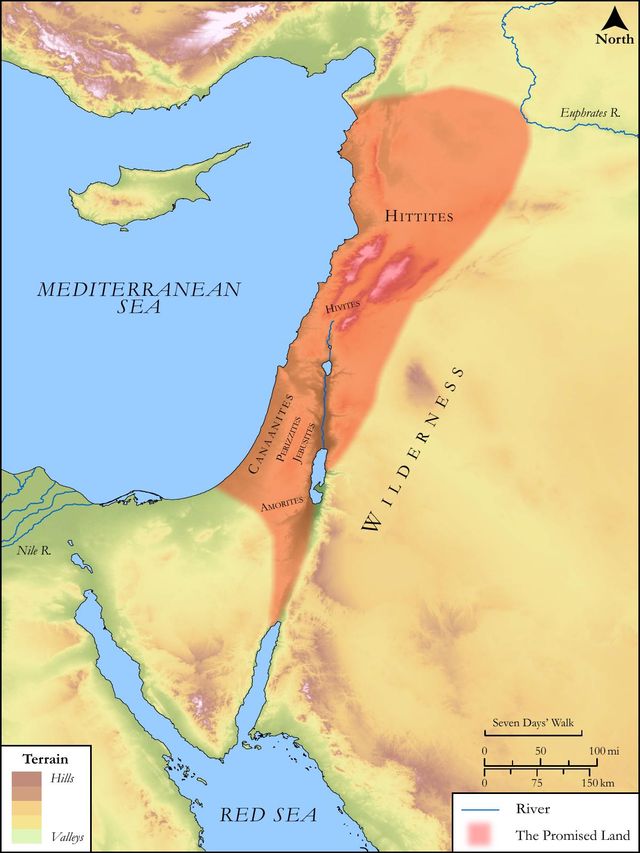
Study this verse
Public-domain commentary
Matthew Henry
From his Commentary on the Whole Bible. Henry comments on passages, not single verses — this entry covers Exodus 23:20–33. His three-level outline is real structure in the source text, so it is rendered as structure.
Three gracious promises are here made to Israel, to engage them to their duty and encourage them in it; and each of the promises has some needful precepts and cautions joined to it.
I.It is here promised that they should be guided and kept in their way through the wilderness to the land of promise:
Behold, I send an angel before thee (Exo 23:20), my angel (Exo 23:23), a created angel, say some, a minister of God's providence, employed in conducting and protecting the camp of Israel; that it might appear that God took a particular care of them, he appointed one of his chief servants to make it his business to attend them, and see that they wanted for nothing. Others suppose it to be the Son of God, the angel of the covenant; for the Israelites in the wilderness are said to tempt Christ; and we may as well suppose him God's messenger, and the church's Redeemer, before his incarnation, as the Lamb slain from the foundation of the world. And we may the rather think he was pleased to undertake the deliverance and guidance of Israel because they were typical of his great undertaking. It is promised that this blessed angel should keep them in the way, though it lay through a wilderness first, and afterwards through their enemies' country; thus God's spiritual Israel shall be kept through the wilderness of this earth, and from the insults of the gates of hell. It is also promised that he should bring them into the place which God had not only designed but prepared for them: and thus Christ has prepared a place for his followers, and will preserve them to it, for he is faithful to him that appointed him. The precept joined with this promise is that they be observant of, and obedient to, this angel whom God would send before them (Exo 23:21): "Beware of him, and obey his voice in every thing; provoke him not in any thing, for it is at your peril if you do, he will visit your iniquity." Note,
1.Christ is the author of salvation to those only that obey him. The word of command is Hear you him, Mat 17:5. Observe what he hath commanded, Mat 28:20.
2.Our necessary dependence upon the divine power and goodness should awe us into obedience. We do well to take heed of provoking our protector and benefactor, because if our defence depart from us, and the streams of his goodness be cut off, we are undone. Therefore, "Beware of him, and carry it towards him with all possible reverence and caution. Fear the Lord, and his goodness." 3. Christ will be faithful to those who are faithful to him, and will espouse their cause who adhere to his: I will be an adversary to thine adversaries, Exo 23:22. The league shall be offensive and defensive, like that with Abraham, I will bless him that blesseth thee, and curse him that curseth thee. Thus is God pleased to twist his interests and friendships with his people's.
II.It is promised that they should have a comfortable settlement in the land of Canaan, which they hoped now (though it proved otherwise) within a few months to be in the possession of, Exo 23:24-26. Observe,
1.How reasonable the conditions of this promise are - only that they should serve their own God, who was indeed the only true God, and not the gods of the nations, which were no gods at all, and which they had no reason at all to have any respect for. They must not only not worship their gods, but they must utterly overthrow them, in token of their great abhorrence of idolatry, their resolution never to worship idols themselves, and their care to prevent any other from worshipping them; as the converted conjurors burnt their books, Act 19:19.
2.How rich the particulars of this promise are.
(1.)The comfort of their food. He shall bless thy bread and thy water; and God's blessing will make bread and water more refreshing and nourishing than a feast of fat things and wines on the lees without that blessing.
(2.)The continuance of their health: "I will take sickness away, either prevent it or remove it. Thy land shall not be visited with epidemical diseases, which are very dreadful, and sometimes have laid countries waste." (3.) The increase of their wealth. Their cattle should not be barren, nor cast their young, which is mentioned as an instance of prosperity, Job 21:10. (4.) The prolonging of their lives to old age: "The number of thy days I will fulfil, and they shall not be cut off in the midst by untimely deaths." Thus hath godliness the promise of the life that now is.
III.It is promised that they should conquer and subdue their enemies, the present occupants of the land of Canaan, who must be driven out to make room for them. This God would do,
1.Effectually by his power (Exo 23:17, Exo 23:18); not so much by the sword and bow of Israel as by the terrors which he would strike into the Canaanites. Though they were so obstinate as not to be willing to submit to Israel, resign their country, and retire elsewhere, which they might have done, yet they were so dispirited that they were not able to stand before them. This completed their ruin; such power had the devil in them that they would resist, but such power had God over them that they could not. I will send my fear before thee; and those that fear will soon flee. Hosts of hornets made way for the hosts of Israel; such mean creatures can God make use of for the chastising of his people's enemies, as in the plagues of Egypt. When God pleases, hornets can drive out Canaanites, as well as lions could, Jos 24:12.
2.He would do it gradually, in wisdom (Exo 23:29, Exo 23:30), not all at once, but by little and little. As the Canaanites had kept possession till Israel had grown into a people, so there should still be some remains of them till Israel should grow so numerous as to replenish the whole. Note, The wisdom of God is to be observed in the gradual advances of the church's interests. It is in real kindness to the church that its enemies are subdued by little and little; for thus we are kept upon our guard, and in a continual dependence upon God. Corruptions are thus driven out of the hearts of God's people; not all at once, but by little and little; the old man is crucified, and therefore dies slowly. God, in his providence, often delays mercies, because we are not ready for them. Canaan has room enough to receive Israel, but Israel is not numerous enough to occupy Canaan. We are not straitened in God; if we are straitened, it is in ourselves. The land of Canaan is promised them (Exo 23:31) in its utmost extent, which yet they were not possessed of till the days of David; and by their sins they soon lost possession. The precept annexed to this promise is that they should not make any friendship, nor have any familiarity, with idolaters, Exo 23:32, Exo 23:33. Idolaters must not so much as sojourn in their land, unless they renounced their idolatry. Thus they must avoid the reproach of intimacy with the worshippers of false gods and the danger of being drawn to worship with them. By familiar converse with idolaters, their dread and detestation of the sin would wear off; they would think it no harm, in compliment to their friends, to pay some respect to their gods, and so by degrees would be drawn into the fatal snare. Note, Those that would be kept from bad courses must keep from bad company; it is dangerous living in a bad neighbourhood; others' sins will be our snares, if we look not well to ourselves. We must always look upon our greatest danger to be from those that would cause us to sin against God. Whatever friendship is pretended, that is really our worst enemy that draws us from our duty.
Continue studying Exodus 23:29 across the web’s major study libraries — every link below opens this exact verse, chapter, or book on the destination site.
Read & Compare
 BibleGatewayThis verse in more than 200 translations and 70 languages.
 Bible.comThe YouVersion reader — hundreds of translations, reading plans, and highlights.
 ESV.orgCrossway's official English Standard Version reader.
 NET BibleThe NET translation with 60,000+ translators' notes on every rendering decision.
 STEP BibleTyndale House's free study tool — original text, vocabulary, and scholarly resources.
 BibliaLogos Bible Software's free web reader.
 USCCBThe New American Bible (Revised Edition) with the U.S. bishops' study notes.
Commentaries
 BibleHub CommentariesDozens of classic commentaries on this verse, gathered on one page.
 StudyLightMore than 100 commentary sets — the largest collection on the web.
 BibleRefPlain-English commentary on what this verse means, verse by verse.
 Enduring WordDavid Guzik's free commentary on this chapter, widely used by Bible teachers.
 Bible Study ToolsVerse commentary alongside Greek and Hebrew study aids.
Original Language & Research
- BibleHub InterlinearThe verse word by word — original language, transliteration, and English.
- BibleHub LexiconEvery word's original-language definition and Strong's entry.
 Blue Letter BibleDeep-study tools — Strong's numbers, concordance, and word studies.
 SefariaThe Hebrew text with Rashi and centuries of Jewish commentary.
Sermons, Hymns & Audio


TrulyRandomVerse is not affiliated with these sites and doesn’t control their content. They’re linked because they’re genuinely useful.
Summary
Exodus 23:29 reveals God's strategic wisdom and profound care for the Israelites as they prepared to inherit the Promised Land. This verse, embedded within the covenant stipulations given at Mount Sinai, outlines a crucial aspect of their conquest: the dispossessing of the indigenous inhabitants would not be an instantaneous act. God, in His divine foresight, planned a gradual expulsion to prevent the land from becoming desolate and subsequently overrun by wild animals, thereby ensuring Israel's safety, successful settlement, and ability to cultivate their new inheritance in a sustainable manner.
Context
ShowHideLiterary Context
Exodus 23:29 is situated within a significant section of the Book of the Covenant (Exodus 20:22-23:33), which details the laws and promises God established with Israel at Mount Sinai. Specifically, it falls within the concluding promises related to Israel's entry into and settlement of Canaan (Exodus 23:20-33). Following a series of ethical, social, and cultic laws, this passage shifts focus to God's active role in the conquest. Verses 20-23 promise divine assistance through an angel who would lead them and drive out the nations. Verses 24-26 outline blessings for obedience, including health and prosperity, contingent upon their faithfulness. Then, verses 27-28 reiterate God's power to send terror and hornets to prepare the way, ensuring victory over their adversaries. Verse 29, however, introduces a vital caveat to this promise of conquest, explaining how the dispossessing would occur—not all at once—and providing the practical reasons for this phased approach, thus demonstrating God's meticulous planning for Israel's well-being and successful establishment in the land.
Historical & Cultural Context
At the time of this divine pronouncement, the Israelites were a nomadic people, recently delivered from slavery in Egypt, encamped at the base of Mount Sinai. They were on the cusp of transitioning from a wilderness existence to settling an agrarian society in a land already inhabited by various established peoples, including the Canaanites, Hittites, Hivites, Perizzites, Girgashites, Amorites, and Jebusites (as mentioned in Exodus 23:23). The challenge of suddenly depopulating a vast territory and immediately re-establishing agricultural and civic infrastructure was immense. An empty land would quickly revert to wilderness, becoming unmanageable and dangerous. Wild animals, deprived of human population and cultivation, would proliferate, posing a significant threat to the new settlers, their livestock, and their ability to farm and thrive. God's plan, therefore, accounts for the practical realities of land management, ecological balance, and the safety of a transitioning population, ensuring that His promise of inheritance would be realized in a sustainable and secure manner, rather than through chaotic, immediate upheaval.
Key Themes
ShowHideThis verse significantly contributes to several overarching themes within Exodus and the Pentateuch. It highlights God's Sovereignty and Providence, demonstrating His meticulous control not only over the grand narrative of salvation but also over the practical details of Israel's settlement. It underscores the theme of Divine Wisdom, revealing that God's plans are not arbitrary but are perfectly calibrated to ensure the flourishing of His people, even if His timing differs from human expectation. The verse also implicitly touches upon Covenant Faithfulness, as God's promise to drive out the nations is a fulfillment of His covenant with Abraham (Genesis 15:18-21), yet the method of fulfillment is tailored to Israel's capacity and safety. Furthermore, it emphasizes God's Protection and Care for His chosen people, ensuring their physical security and successful establishment in the land He promised them, preventing chaos and danger that a sudden depopulation would bring, as further detailed in Deuteronomy 7:22.
Exposition and Analysis
ShowHideKey Word Analysis
ShowHideThis primitive root signifies "to drive out from a possession; especially to expatriate or divorce; cast up (out), divorced (woman), drive away (forth, out), expel, [idiom] surely put away, trouble, thrust out." In the context of Exodus 23:29, it refers to God's act of expelling the existing inhabitants of Canaan before Israel. The explicit negation "I will not drive them out... in one year" emphasizes that while God is the active agent of expulsion, His method is strategic and gradual, not immediate, for Israel's benefit.
This feminine noun, derived from a root meaning "to be appalled, to be desolated, to be devastated, to be laid waste," describes the dire state of the land if suddenly emptied of its inhabitants. It implies not merely an empty space, but one that would become wild, untamed, overgrown, and unproductive—a wilderness prone to ecological imbalance. God's concern is for the land's habitability and Israel's long-term ability to cultivate and prosper within it.
By contraction from a root meaning "to be abundant," this word signifies "to abound (in quantity, size, age, number, rank, quality); (in) abound(-undance, -ant, -antly), captain, elder, enough, exceedingly, full, great(-ly, man, one), increase." Here, it speaks of the unrestrained increase of "the beast of the field." Without human settlement, cultivation, and hunting, the wild animal populations would rapidly grow in number, overwhelming the new, sparse Israelite population and making the land dangerous and difficult to manage. It highlights the practical threat posed by an ecological imbalance that God actively seeks to prevent.
Verse Breakdown
ShowHide"I will not drive them out from before thee in one year"
This initial clause establishes the divine timing and method of conquest. God, as the sovereign Lord, explicitly states His intention for a gradual, not instantaneous, expulsion of the Canaanite nations. This reveals a deliberate, strategic plan that prioritizes Israel's long-term well-being over immediate gratification, demonstrating God's wisdom in managing the transition and ensuring a sustainable inheritance for His people.
"lest the land become desolate"
This phrase provides the first practical reason for the gradual conquest. If the land were suddenly emptied of its inhabitants, it would quickly revert to an uncultivated, wild state. Fields would become overgrown, irrigation systems would fail, and existing infrastructure would decay. Such desolation would make it incredibly difficult for the Israelites, a people transitioning to agriculture, to settle, cultivate, and thrive in their new inheritance, potentially hindering the very purpose of their entry into Canaan.
"and the beast of the field multiply against thee"
This second practical reason highlights a direct and immediate threat to Israel's safety and prosperity. A desolate, unmanaged land would become a breeding ground for wild animals. These "beasts of the field" (e.g., lions, bears, wolves, wild boars, etc.) would pose a significant danger to the sparse Israelite population, their livestock, and their crops, hindering their ability to establish stable communities and agricultural practices. God's plan is thus a protective measure, ensuring His people's security, successful settlement, and ability to prosper without being overwhelmed by the natural consequences of a sudden demographic void.
Literary Devices
ShowHideThe passage employs several literary devices to convey God's strategic wisdom and protective care. Divine Foresight is paramount, as God anticipates the practical challenges Israel would face if the conquest were immediate, revealing a plan that extends far beyond human short-sightedness. This also demonstrates Anthropomorphism, where God is portrayed with human-like wisdom and strategic planning, making His actions relatable and understandable to the Israelites, emphasizing His deliberate and rational approach. The phrase "lest the land become desolate, and the beast of the field multiply against thee" uses clear Cause and Effect to explain the rationale behind the gradual expulsion, explicitly linking the potential negative consequences to the divine decision. Furthermore, there is an element of Paradox in God's "delay" being a profound form of blessing and protection; what might seem like a slow process is, in fact, the most beneficial and secure path. The specific mention of "the beast of the field" also functions as Metonymy, representing the broader challenges and dangers associated with an unmanaged wilderness, including the loss of agricultural productivity and the threat to human and animal life.
Theological and Thematic Connections
ShowHideExodus 23:29 profoundly illustrates God's meticulous providence, sovereign wisdom, and unwavering commitment to His covenant people. It underscores that God's plans are not arbitrary but are carefully calibrated to ensure the ultimate good and flourishing of those He calls. His timing, though often not immediate, is always perfect, designed to prepare both the circumstances and His people for the fulfillment of His promises. This verse teaches us about divine patience and the reality that significant transformations, whether national or personal, often unfold gradually, with God orchestrating every detail to prevent chaos, ensure sustainable growth, and enable His people to truly inhabit and steward the blessings He bestows. It is a testament to God's holistic care, considering not only spiritual but also practical and ecological realities.
Reflection and Application
ShowHideExodus 23:29 offers a powerful lesson in trusting God's timing and process. In a world that often demands instant results and immediate gratification, this verse reminds us that God's wisdom frequently manifests through incremental progress. We may pray for immediate deliverance from trials, instant sanctification, or sudden breakthroughs in our circumstances, but God, in His infinite foresight, often works "by little and little." This gradual unfolding is not a sign of His slowness or inability, but rather His profound care, preparing the "land" of our lives (our character, circumstances, and relationships) to sustain the blessings He intends. Just as He protected Israel from the physical dangers of a desolate land and multiplying beasts, He protects us from spiritual and practical dangers we might not even perceive in our haste for immediate results. It encourages us to cultivate patience, to persevere through seasons of waiting, and to believe that God's method is always perfectly designed for our ultimate good and the fulfillment of His purposes in us, ensuring our spiritual and practical flourishing.
Questions for Reflection
ShowHideFAQ
ShowHideWhy did God not drive out the inhabitants immediately if He was all-powerful?
ShowHideGod's decision not to drive out the inhabitants immediately was not due to a lack of power, but rather a profound demonstration of His strategic wisdom and providential care for Israel. As Exodus 23:29 explicitly states, an immediate expulsion would have led to the land becoming desolate. A desolate land would quickly be overrun by wild animals ("the beast of the field"), posing a significant threat to the sparse Israelite population and making it difficult for them to cultivate and settle the land effectively. God's plan ensured a sustainable and safe transition for His people into their inheritance, allowing them time to grow in number and capacity to properly manage and inhabit the land. This gradual approach is also clearly articulated in Deuteronomy 7:22.
What "beasts of the field" were a concern for the Israelites?
ShowHideThe "beast of the field" refers to various wild animals native to the region of Canaan that would have posed a significant threat to a new, relatively small, and transitioning population. This would have included large predators such as lions (which were present in the ancient Near East), bears, wolves, and possibly wild boars or other large, dangerous animals that could endanger human life, livestock, and destroy crops. Without the established human populations to manage the land, control animal populations through hunting, and maintain agricultural spaces, these beasts would have multiplied rapidly, making settlement perilous and agricultural development nearly impossible for the Israelites. God's foresight prevented this ecological imbalance from overwhelming His people.
Christ-Centered Fulfillment
ShowHideExodus 23:29, with its emphasis on God's gradual, strategic work for the good of His people, finds profound Christ-centered fulfillment in the establishment and expansion of God's kingdom and the process of sanctification in the believer. Just as God did not instantly clear the land for Israel, the kingdom of God did not arrive in its fullness with a single, overwhelming act, but was inaugurated by Christ's first coming and continues to expand "by little and little" through the ages, as illustrated by parables like the mustard seed and the leaven. Moreover, the process of sanctification in a believer's life is rarely an instantaneous, complete transformation. Rather, it is a lifelong journey where Christ, through the power of the Holy Spirit, gradually drives out the "old self" and cultivates the "new creation" (2 Corinthians 5:17). The "beasts of the field" that threaten to overrun the desolate land can be seen as spiritual enemies—sinful desires, temptations, and the schemes of the adversary (Ephesians 6:11-12)—which Christ, our ultimate Protector and Good Shepherd (John 10:11), progressively subdues within us, ensuring that our hearts, the "land" of our lives, become a fruitful dwelling for His Spirit, not a desolate wilderness vulnerable to spiritual attack. This gradual work ensures our spiritual maturity and capacity to bear fruit for His glory (Galatians 5:22-23).