


Matthew 13:33
Bible text: King James Version (1769 Blayney text) · Public domain
Bible text: King James Version with Strong's numbers · Public domain
Bible text: Berean Standard Bible · Public domain
Bible text: American Standard Version (1901) · Public domain
Bible text: World English Bible, Messianic edition · Public domain
Bible text: Geneva Bible (1599) · Public domain
Bible text: Young's Literal Translation · Public domain
- ἌλληνAllēnAnotherG243A-ASFAdjective Accusative Singular Feminine
- παραβολὴνparabolēnparableG3850N-ASFNoun Accusative Singular Feminine
- ἐλάλησενelalēsenspoke HeG2980V-AAI-3SVerb Aorist Active Indicative 3rd Singular
- αὐτοῖς·autoisto themG846P-DPMPersonal pronoun Dative Plural Masculine
- ὁμοίαhomoiaLikeG3664A-NSFAdjective Nominative Singular Feminine
- ἐστὶνestinisG1510V-PAI-3SVerb Present Active Indicative 3rd Singular
- ἡhētheG3588T-NSFDefinite article Nominative Singular Feminine
- βασιλείαbasileiakingdomG932N-NSFNoun Nominative Singular Feminine
- τῶνtōnof theG3588T-GPMDefinite article Genitive Plural Masculine
- οὐρανῶνouranōnheavensG3772N-GPMNoun Genitive Plural Masculine
- ζύμῃzumēto leavenG2219N-DSFNoun Dative Singular Feminine
- ἣνhēnwhichG3739R-ASFRelative pronoun Accusative Singular Feminine
- λαβοῦσαlabousahaving takenG2983V-2AAP-NSFVerb 2nd Aorist Active Participle Nominative Singular Feminine
- γυνὴgunēa womanG1135N-NSFNoun Nominative Singular Feminine
- ἐνέκρυψενenekrupsenhidG1470V-AAI-3SVerb Aorist Active Indicative 3rd Singular
- εἰςeisinG1519PREPPreposition
- ἀλεύρουaleurouof flourG224N-GSNNoun Genitive Singular Neuter
- σάταsatameasuresG4568N-APNNoun Accusative Plural Neuter
- τρίαtriathreeG5140A-APNAdjective Accusative Plural Neuter
- ἕωςhe'ōsuntilG2193PREPPreposition
- οὗhouof itG3739R-GSMRelative pronoun Genitive Singular Masculine
- ἐζυμώθηezumōthēwas leavenedG2220V-API-3SVerb Aorist Passive Indicative 3rd Singular
- ὅλονholonallG3650A-NSNAdjective Nominative Singular Neuter
English is a literal word-by-word gloss of the Greek, not the KJV's wording. Why?
This is the original text the KJV's translators worked from — each Greek word with its own literal English meaning in this verse, prepared by scholars at Tyndale House, Cambridge. The KJV translates whole sentences, not word by word, so its wording differs: one Greek word can become several English words, and the KJV may choose “charity” where the gloss reads “love”. Both are faithful — they answer different questions. For the KJV's own rendering, switch to the KJV text.
Details
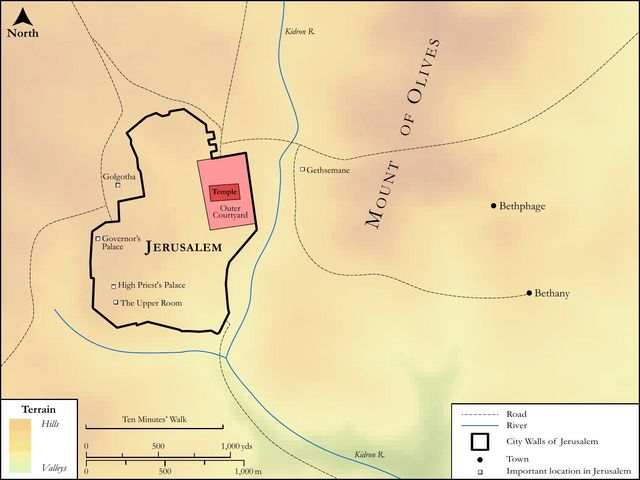
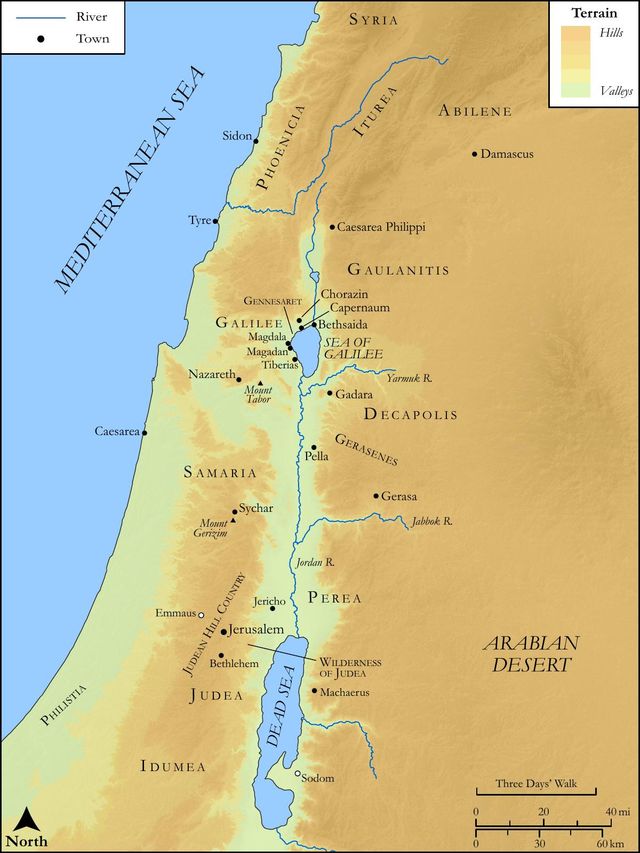
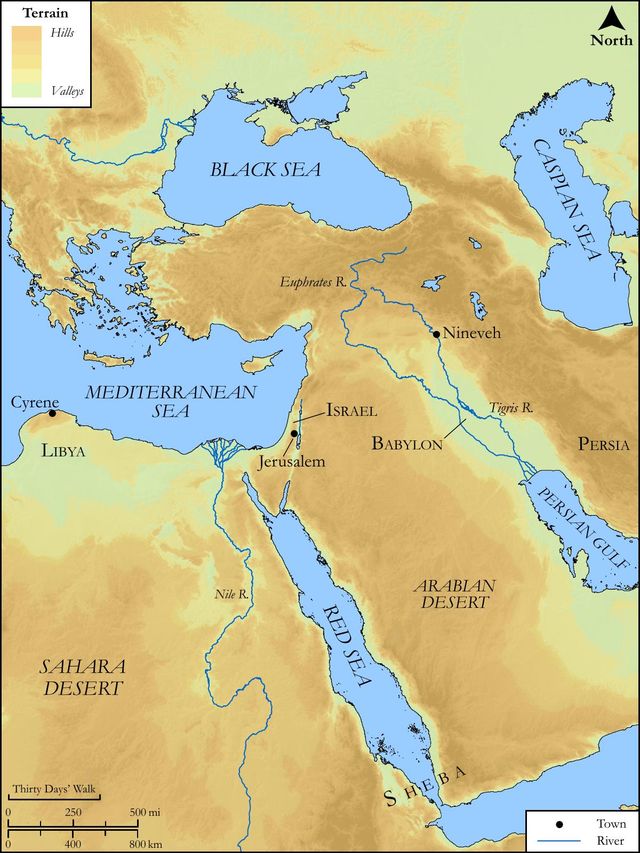
See on the biblical-era maps
Study this verse
Public-domain commentary
Matthew Henry
From his Commentary on the Whole Bible. Henry comments on passages, not single verses — this entry covers Matthew 13:24–43. His four-level outline is real structure in the source text, so it is rendered as structure.
In these verses, we have, I. Another reason given why Christ preached by parables, Mat 13:34, Mat 13:35. All these things he spoke in parables, because the time was not yet come for the more clear and plain discoveries of the mysteries of the kingdom. Christ, to keep the people attending and expecting, preached in parables, and without a parable spake he not unto them; namely, at this time and in this sermon. Note, Christ tries all ways and methods to do good to the souls of men, and to make impressions upon them; if men will not be instructed and influenced by plain preaching, he will try them with parables; and the reason here given is, That the scripture might be fulfilled. The passage here quoted for it, is part of the preface to that historical Psa 78:2, I will open my mouth in a parable. What the Psalmist David, or Asaph, says there of his narrative, is accommodated to Christ's sermons; and that great precedent would serve to vindicate this way of preaching from the offence which some took at it. Here is, 1. The matter of Christ's preaching; he preached things which had been kept secret from the foundation of the world. The mystery of the gospel had been hid in God, in his councils and decrees, from the beginning of the world. Eph 3:9. Compare Rom 16:25; Co1 2:7; Col 1:26. If we delight in the records of ancient things, and in the revelation of secret things, how welcome should the gospel be to us, which has in it such antiquity and such mystery! It was from the foundation of the world wrapt up in types and shadows, which are now done away; and those secret things are now become such things revealed as belong to us and to our children, Deu 29:29. 2. The manner of Christ's preaching; he preached by parables; wise sayings, but figurative, and which help to engage attention and a diligent search. Solomon's sententious dictates, which are full of similitudes, are called proverbs, or parables; it is the same word; but in this, as in other things, Behold a greater than Solomon is here, in whom are hid treasures of wisdom.
II.The parable of the tares, and the exposition of it; they must be taken together, for the exposition explains the parable and the parable illustrates the exposition.
Observe, 1. The disciples' request to their Master to have this parable expounded to them (Mat 13:36); Jesus sent the multitude away; and it is to be feared many of them went away no wiser than they came; they had heard a sound of words, and that was all. It is sad to think how many go away from sermons without the word of grace in their hearts. Christ went into the house, not so much for his own repose, as for particular converse with his disciples, whose instruction he chiefly intended in all his preaching. He was ready to do good in all places; the disciples laid hold on the opportunity, and they came to him. Note, Those who would be wise for every thing else, must be wise to discern and improve their opportunities, especially of converse with Christ, of converse with him alone, in secret meditation and prayer. It is very good, when we return from the solemn assembly, to talk over what we have heard there, and by familiar discourse to help one another to understand and remember it, and to be affected with it; for we lose the benefit of many a sermon by vain and unprofitable discourse after it. See Luk 24:32; Deu 6:6, Deu 6:7. It is especially good, if it may be, to ask of the ministers of the word the meaning of the word, for their lips should keep knowledge, Mal 2:7. Private conference would contribute much to our profiting by public preaching. Nathan's Thou art the man, was that which touched David to the heart.
The disciples' request to their Master was, Declare unto us the parable of the tares. This implied an acknowledgement of their ignorance, which they were not ashamed to make. It is probable they apprehended the general scope of the parable, but they desired to understand it more particularly, and to be assured that they took it right. Note, Those are rightly disposed for Christ's teaching, that are sensible of their ignorance, and sincerely desirous to be taught. He will teach the humble (Psa 25:8, Psa 25:9), but will for this be enquired of. If any man lack instruction, let him ask it of God. Christ had expounded the foregoing parable unasked, but for the exposition of this they ask him. Note, The mercies we have received must be improved, both for direction what to pray for, and for our encouragement in prayer. The first light and the first grace are given in a preventing way, further degrees of both which must be daily prayed for.
2.The exposition Christ gave of the parable, in answer to their request; so ready is Christ to answer such desires of his disciples. Now the drift of the parable is, to represent to us the present and future state of the kingdom of heaven, the gospel church: Christ's care of it, the devil's enmity against it, the mixture that there is in it of good and bad in the other world. Note, The visible church is the kingdom of heaven; though there be many hypocrites in it, Christ rules in it as a King; and there is a remnant in it, that are the subjects and heirs of heaven, from whom, as the better part, it is denominated: the church is the kingdom of heaven upon earth.
Let us go over the particulars of the exposition of the parable.
(1.)He that sows the good seed is the Son of man. Jesus Christ is the Lord of the field, the Lord of the harvest, the Sower of good seed. When he ascended on high, he gave gifts to the world; not only good ministers, but other good men. Note, Whatever good seed there is in the world, it all comes from the hand of Christ, and is of his sowing: truths preached, graces planted, souls sanctified, are good seed, and all owing to Christ. Ministers are instruments in Christ's hand to sow good seed; are employed by him and under him, and the success of their labours depends purely upon his blessing; so that it may well be said, It is Christ, and no other, that sows the good seed; he is the Son of man, one of us, that his terror might not make us afraid; the Son of man, the Mediator, and that has authority.
(2.)The field is the world; the world of mankind, a large field, capable of bringing forth good fruit; the more is it to be lamented that it brings forth so much bad fruit: the world here is the visible church, scattered all the world over, not confined to one nation. Observe, In the parable it is called his field; the world is Christ's field, for all things are delivered unto him of the Father: whatever power and interest the devil has in the world, it is usurped and unjust; when Christ comes to take possession, he comes whose right it is; it is his field, and because it is his he took care to sow it with good seed.
(3.)The good seed are the children of the kingdom, true saints. They are,
[1.]The children of the kingdom; not in profession only, as the Jews were (Mat 8:12), but in sincerity; Jews inwardly, Israelites indeed, incorporated in faith and obedience to Jesus Christ the great King of the church.
[2.]They are the good seed, precious as seed, Psa 126:6. The seed is the substance of the field; so the holy seed, Isa 6:13. The seed is scattered, so are the saints; dispersed, here one and there another, though in some places thicker sown than in others. The seed is that from which fruit is expected; what fruit of honour and service God has from this world he has from the saints, whom he has sown unto himself in the earth, Hos 2:23.
(4.)The tares are the children of the wicked one. Here is the character of sinners, hypocrites, and all profane and wicked people.
[1.]They are the children of the devil, as a wicked one. Though they do not own his name, yet they bear his image, do his lusts, and from him they have their education; he rules over them, he works in them, Eph 2:2; Joh 8:44.
[2.]They are tares in the field of this world; they do no good, they do hurt; unprofitable in themselves, and hurtful to the good seed, both by temptation and persecution: they are weeds in the garden, have the same rain, and sunshine, and soil, with the good plants, but are good for nothing: the tares are among the wheat. Note, God has so ordered it, that good and bad should be mixed together in this world, that the good may be exercised, the bad left inexcusable, and a difference made between earth and heaven.
(5.)The enemy that sowed the tares is the devil; a sworn enemy to Christ and all that is good, to the glory of the good God, and the comfort and happiness of all good men. He is an enemy to the field of the world, which he endeavours to make his own, by sowing his tares in it. Ever since he became a wicked spirit himself, he has been industrious to promote wickedness, and has made it his business, aiming therein to counterwork Christ.
Now concerning the sowing of the tares, observe in the parable,
[1.]That they were sown while men slept. Magistrates slept, who by their power, ministers slept, who by their preaching, should have prevented this mischief. Note, Satan watches all opportunities, and lays hold of all advantages, to propagate vice and profaneness. The prejudice he does to particular persons is when reason and conscience sleep, when they are off their guard; we have therefore need to be sober, and vigilant. It was in the night, for that is the sleeping time. Note, Satan rules in the darkness of this world; that gives him an opportunity to sow tares, Psa 104:20. It was while men slept; and there is no remedy but men must have some sleeping time. Note, It is as impossible for us to prevent hypocrites being in the church, as it is for the husbandman, when he is asleep, to hinder an enemy from spoiling his field.
[2.]The enemy, when he had sown the tares, went his way (Mat 13:25), that it might not be known who did it. Note, When Satan is doing the greatest mischief, he studies most to conceal himself; for his design is in danger of being spoiled if he be seen in it; and therefore, when he comes to sow tares, he transforms himself into an angel of light, Co2 11:13, Co2 11:14. He went his way, as if he had done no harm; such is the way of the adulterous woman, Pro 30:20. Observe, Such is the proneness of fallen man to sin, that if the enemy sow the tares, he may even go his way, they will spring up of themselves and do hurt; whereas, when good seed is sown, it must be tended, watered, and fenced, or it will come to nothing.
[3.]The tares appeared not till the blade sprung up, and brought forth fruit, Mat 13:26. There is a great deal of secret wickedness in the hearts of men, which is long hid under the cloak of a plausible profession, but breaks out at last. As the good seed, so the tares, lie a great while under the clods, and at first springing up, it is hard to distinguish them; but when a trying time comes, when fruit is to be brought forth, when good is to be done that has difficulty and hazard attending it, then you will return and discern between the sincere and the hypocrite: then you may say, This is wheat, and that is tares.
[4.]The servants, when they were aware of it, complained to their master (Mat 13:27); Sir, didst thou not sow good seed in thy field? No doubt he did; whatever is amiss in the church, we are sure it is not of Christ: considering the seed which Christ sows, we may well ask, with wonder, Whence should these tares come? Note, The rise of errors, the breaking out of scandals, and the growth of profaneness, are matter of great grief to all the servants of Christ; especially to his faithful ministers, who are directed to complain of it to him whose the field is. It is sad to see such tares, such weeds, in the garden of the Lord; to see the good soil wasted, the good seed choked, and such a reflection cast on the name and honour of Christ, as if his field were no better than the field of the slothful, all grown over with thorns.
[5.]The Master was soon aware whence it was (Mat 13:28); An enemy has done this. He does not lay the blame upon the servants; they could not help it, but had done what was in their power to prevent it. Note, The ministers of Christ, that are faithful and diligent, shall not be judged of Christ, and therefore should not be reproached by men, for the mixtures of bad with good, hypocrites with the sincere, in the field of the church. It must needs be that such offences will come; and they shall not be laid to our charge, if we do our duty, though it have not the desired success. Though they sleep, if they do not love sleep; though tares be sown, if they do not sow them nor water them, nor allow of them, the blame shall not lie at their door.
[6.]The servants were very forward to have these tares rooted up. "Wilt thou that we go and do it presently?" Note, The over-hasty and inconsiderate zeal of Christ's servants, before they have consulted with their Master, is sometimes ready, with the hazard of the church, to root out all that they presume to be tares: Lord, wilt thou that we call for fire from heaven?
[7.]The Master very wisely prevented this (Mat 13:29); Nay, lest while ye gather up the tares, ye root up also the wheat with them. Note, It is not possible for any man infallibly to distinguish between tares and wheat, but he may be mistaken; and therefore such is the wisdom and grace of Christ, that he will rather permit the tares, than any way endanger the wheat. It is certain, scandalous offenders are to be censured, and we are to withdraw from them; those who are openly the children of the wicked one, are not to be admitted to special ordinances; yet it is possible there may be a discipline, either so mistaken in its rules, or so over-nice in the application of them, as may prove vexatious to many that are truly godly and conscientious. Great caution and moderation must be used in inflicting and continuing church censures, lest the wheat be trodden down, if not plucked up. The wisdom from above, as it is pure, so it is peaceable, and those who oppose themselves must not be cut off, but instructed, and with meekness, Ti2 2:25. The tares, if continued under the means of grace, may become good corn; therefore have patience with them.
(6.)The harvest is the end of the world, Mat 13:39. This world will have an end; though it continue long, it will not continue always; time will shortly be swallowed up in eternity. At the end of the world, there will be a great harvest-day, a day of judgment; at harvest all is ripe and ready to be cut down: both good and bad are ripe at the great-day, Rev 6:11. It is the harvest of the earth, Rev 14:15. At harvest the reapers cut down all before them; not a field, not a corner, is left behind; so at the great day all must be judged (Rev 20:12, Rev 20:13); God has set a harvest (Hos 6:11), and it shall not fail, Gen 8:22. At harvest every man reaps as he sowed; every man's ground, and seed, and skill, and industry, will be manifested: see Gal 6:7, Gal 6:8. Then they who sowed precious seed, will come again with rejoicing (Psa 126:5, Psa 126:6), with the joy of harvest (Isa 9:3); when the sluggard, who would not plough by reason of cold, shall beg, and have nothing (Pro 20:4); shall cry, Lord, Lord, but in vain; when the harvest of those who sowed to the flesh, shall be a day of grief, and of desperate sorrow, Isa 17:11.
(7.)The reapers are the angels: they shall be employed, in the great day, in executing Christ's righteous sentences, both of approbation and condemnation, as ministers of his justice, Mat 25:31. The angels are skilful, strong, and swift, obedient servants to Christ, holy enemies to the wicked, and faithful friends to all the saints, and therefore fit to be thus employed. He that reapeth receiveth wages, and the angels will not be unpaid for their attendance; for he that soweth, and he that reapeth, shall rejoice together (Joh 4:36); that is joy in heaven in the presence of the angels of God.
(8.)Hell-torments are the fire, into which the tares shall then be cast, and in which they shall be burned. At the great day a distinction will be made, and with it a vast difference; it will be a notable day indeed.
[1.]The tares will then be gathered out: The reapers (whose primary work it is to gather in the corn) shall be charged first to gather out the tares. Note, Though good and bad are together in this world undistinguished, yet at the great day they shall be parted; no tares shall then be among the wheat; no sinners among the saints: then you shall plainly discern between the righteous and the wicked, which here sometimes it is hard to do, Mal 3:18; Mal 4:1. Christ will not bear always, Psa 50:1, etc. They shall gather out of his kingdom all wicked things that offend, and all wicked persons that do iniquity: when he begins, he will make a full end. All those corrupt doctrines, worships, and practices, which have offended, have been scandals to the church, and stumbling-blocks to men's consciences, shall be condemned by the righteous Judge in that day, and consumed by the brightness of his coming; all the wood, hay, and stubble (Co1 3:12); and then woe to them that do iniquity, that make a trade of it, and persist in it; not only those in the last age of Christ's kingdom upon earth, but those in every age. Perhaps here is an allusion to Zep 1:3, I will consume the stumbling-blocks with the wicked.
[2.]They will then be bound in bundles, Mat 13:30. Sinners of the same sort will be bundled together in the great day: a bundle of atheists, a bundle of epicures, a bundle of persecutors, and a great bundle of hypocrites. Those who have been associates in sin, will be so in shame and sorrow; and it will be an aggravation of their misery, as the society of glorified saints will add to their bliss. Let us pray, as David, Lord, gather not my soul with sinners (Psa 26:9), but let it be bound in the bundle of life, with the Lord our God, Sa1 25:29.
[3.]They will be cast into a furnace of fire; such will be the end of wicked, mischievous people, that are in the church as tares in the field; they are fit for nothing but fire; to it they shall go, it is the fittest place for them. Note, Hell is a furnace of fire, kindled by the wrath of God, and kept burning by the bundles of tares cast into it, who will be ever in the consuming, but never consumed. But he slides out of the metaphor into a description of those torments that are designed to be set forth by it: There shall be weeping, and gnashing of teeth; comfortless sorrow, and an incurable indignation at God, themselves, and one another, will be the endless torture of damned souls. Let us therefore, knowing these terrors of the Lord, be persuaded not to do iniquity.
(9.)Heaven is the barn into which all God's wheat shall be gathered in that harvest-day. But gather the wheat into my barn: so it is in the parable, Mat 13:30. Note,
[1.]In the field of this world good people are the wheat, the most precious grain, and the valuable part of the field.
[2.]This wheat shall shortly be gathered, gathered from among the tares and weeds: all gathered together in a general assembly, all the Old Testament saints, all the New Testament saints, not one missing. Gather my saints together unto me, Psa 50:5.
[3.]All God's wheat shall be lodged together in God's barn: particular souls are housed at death as a shock of corn (Job 5:26), but the general in-gathering will be at the end of time: God's wheat will then be put together, and no longer scattered; there will be sheaves of corn, as well as bundles of tares: they will then be secured, and no longer exposed to wind and weather, sin and sorrow: no longer afar off, and at a great distance, in the field, but near, in the barn. Nay, heaven is a garner (Mat 3:12), in which the wheat will not only be separated from the tares of ill companions, but sifted from the chaff of their own corruptions.
In the explanation of the parable, this is gloriously represented (Mat 13:43); Then shall the righteous shine forth as the sun in the kingdom of their Father. First, It is their present honour, that God is their Father. Now are we the sons of God (Jo1 3:2); our Father in heaven is King there. Christ, when he went to heaven, went to his Father, and our Father, Joh 20:17. It is our Father's house, nay, it is our Father's palace, his throne, Rev 3:21. Secondly, The honour in reserve for them is, that they shall shine forth as the sun in that kingdom. Here they are obscure and hidden (Col 3:3), their beauty is eclipsed by their poverty, and the meanness of their outward condition; their own weaknesses and infirmities, and the reproach and disgrace cast upon them, cloud them; but then they shall shine forth as the sun from behind a dark cloud; at death they shall shine forth to themselves; at the great day they will shine forth publicly before all the world, their bodies will be made like Christ's glorious body: they shall shine by reflection, with a light borrowed from the Fountain of light; their sanctification will be perfected, and their justification published; God will own them for his children, and will produce the record of all their services and sufferings for his name: they shall shine as the sun, the most glorious of all visible beings. The glory of the saints is in the Old Testament compared to that of the firmament and the stars, but here to that of the sun; for life and immortality are brought to a much clearer light by the gospel, than under the law. Those who shine as lights in this world, that God may be glorified, shall shine as the sun in the other world, that they may be glorified. Our Saviour concludes, as before, with a demand of attention; Who hath ears to hear, let him hear. These are things which it is our happiness to hear of, and our duty to hearken to.
III.Here is the parable of the grain of mustard-seed, Mat 13:31, Mat 13:32.
The scope of this parable is to show, that the beginnings of the gospel would be small, but that its latter end would greatly increase. In this way the gospel church, the kingdom of God among us, would be set up in the world; in this way the work of grace in the heart, the kingdom of God within us, would be carried on in particular persons.
Now concerning the work of the gospel, observe,
1.That it is commonly very weak and small at first, like a grain of mustard-seed, which is one of the least of all seeds. The kingdom of the Messiah, which was now in the setting up, made but a small figure; Christ and the apostles, compared with the grandees of the world, appeared like a grain of mustard-seed, the weak things of the world. In particular places, the first breaking out of the gospel light is but as the dawning of the day; and in particular souls, it is at first the day of small things, like a bruised reed. Young converts are like lambs that must be carried in his arms, Isa 40:11. There is a little faith, but there is much lacking in it (Th1 3:10), and the groanings such as cannot be uttered, they are so small; a principle of spiritual life, and some motion, but scarcely discernible.
2.That yet it is growing and coming on. Christ's kingdom strangely got ground; great accessions were made to it; nations were born at once, in spite of all the oppositions it met with from hell and earth. In the soul where grace is true it will grow really, though perhaps insensibly. A grain of mustard-seed is small, but however it is seed, and has in it a disposition to grow. Grace will be getting ground, shining more and more, Pro 4:18. Gracious habits confirmed, actings quickened, and knowledge more clear, faith more confirmed, love more inflamed; here is the seed growing.
3.That it will at last come to a great degree of strength and usefulness; when it is grown to some maturity, it becomes a tree, much larger in those countries than in ours. The church, like the vine brought out of Egypt, has taken root, and filled the earth, Psa 80:9-11. The church is like a great tree, in which the fowls of the air do lodge; God's people have recourse to it for food and rest, shade and shelter. In particular persons, the principle of grace, if true, will persevere and be perfected at last: growing grace will be strong grace, and will bring much to pass. Grown Christians must covet to be useful to others, as the mustard-seed when grown is to the birds; that those who dwell near or under their shadow may be the better for them, Hos 14:7.
IV.Here is the parable of the leaven, Mat 13:33.
The scope of this is much the same with that of the foregoing parable, to show that the gospel should prevail and be successful by degrees, but silently and insensibly; the preaching of the gospel is like leaven, and works like leaven in the hearts of those who receive it.
1.A woman took this leaven; it was her work. Ministers are employed in leavening places, in leavening souls, with the gospel. The woman is the weaker vessel, and we have this treasure in such vessels.
2.The leaven was hid in three measures of meal. The heart is, as the meal, soft and pliable; it is the tender heart that is likely to profit by the word: leaven among corn unground does not work, nor does the gospel in souls unhumbled and unbroken for sin: the law grinds the heart, and then the gospel leavens it. It is three measures of meal, a great quantity, for a little leaven leaveneth the whole lump. The meal must be kneaded, before it receive the leaven; our hearts, as they must be broken, so they must be moistened, and pains taken with them to prepare them for the word, that they may receive the impressions of it. The leaven must be hid in the heart (Psa 119:11), not so much for secrecy (for it will show itself) as for safety; our inward thought must be upon it, we must lay it up, as Mary laid up the sayings of Christ, Luk 2:51. When the woman hides the leaven in the meal, it is with an intention that it should communicate its taste and relish to it; so we must treasure up the word in our souls, that we may be sanctified by it, Joh 17:17.
3.The leaven thus hid in the dough, works there, it ferments; the word is quick and powerful, Heb 4:12. The leaven works speedily, so does the word, and yet gradually. What a sudden change did Elijah's mantle make upon Elisha! Kg1 19:20. It works silently and insensibly (Mar 4:26), yet strongly and irresistibly: it does its work without noise, for so is the way of the Spirit, but does it without fail. Hide but the leaven in the dough, and all the world cannot hinder it from communicating its taste and relish to it, and yet none sees how it is done, but by degrees the whole is leavened.
(1.)Thus it was in the world. The apostles, by their preaching, hid a handful of leaven in the great mass of mankind, and it had a strange effect; it put the world into a ferment, and in a sense turned it upside down (Act 17:6), and by degrees made a wonderful change in the taste and relish of it: the savour of the gospel was manifested in every place, Co2 2:14; Rom 15:19. It was thus effectual, not by outward force, and therefore not by any such force resistible and conquerable, but by the Spirit of the Lord of hosts, who works, and none can hinder.
(2.)Thus it is in the heart. When the gospel comes into the soul,
[1.]It works a change, not in the substance; the dough is the same, but in the quality; it makes us to savour otherwise than we have done, and other things to savour with us otherwise than they used to do, Rom 8:5.
[2.]It works a universal change; it diffuses itself into all the powers and faculties of the soul, and alters the property even of the members of the body, Rom 6:13.
[3.]This change is such as makes the soul to partake of the nature of the word, as the dough does of the leaven. We are delivered into it as into a mould (Rom 6:17), changed into the same image (Co2 3:18), like the impression of the seal upon the wax. The gospel savours of God, and Christ, and free grace, and another world, and these things now relish with the soul. It is a word of faith and repentance, holiness and love, and these are wrought in the soul by it. This savour is communicated insensibly, for our life is hid; but inseparably, for grace is a good part that shall never be taken away from those who have it. When the dough is leavened, then to the oven with it; trials and afflictions commonly attend this change; but thus saints are fitted to be bread for our Master's table.
Historical interpretation
Seven Centuries of Reception
13 surviving comments on this verse. Each one is dated, so this reads as a timeline rather than a list.
Select a marker to jump to its quote. Markers stagger vertically where authors wrote within a few decades of each other.
Or otherwise; The Lord compares Himself to leaven; for leaven is produced from meal, and communicates the power that it has received to a heap of its own kind. The woman, that is the Synagogue, taking this leaven hides it, that is by the sentence of death; but it working in the three measures of meal, that is equally in the Law, the Prophets, and the Gospels, makes all one; so that what the Law ordains, that the Prophets announce, that is fulfilled in the developements of the Gospels. But many, as I remember, have thought that the three measures refer to the calling of the three nations, out of Shem, Ham, and Japhet. But I hardly think that the reason of the thing will allow this interpretation; for though these three nations have indeed been called, yet in them Christ is shown and not hidden, and in so great a multitude of unbelievers the whole cannot be said to be leavened.
Yeast comes from flour and returns the potency it received to the batch of its own kind. The Lord compared himself with this yeast. It was taken in hand by the woman, that is, the synagogue, and buried with the judgment of death, affirming that the law and the prophets are dissolved in the gospel. This yeast, covered with three measures of flour in equal parts—that is, the law, the prophets and the gospel—makes everything one, so that what the law established and the prophets proclaimed is completed by the added ingredient of the gospel. Everything, possessing the same contents and potency, is brought about through the Spirit of God, so that there is no disunity in what is fermented in equal parts.
Many seem to believe that the three measures of flour refer not only to the sign of faith—that is, the unity of the Father and the Son and the Holy Spirit—but also to the calling of the three nations out of Shem, Ham and Japheth. But I do not know whether reason will permit us to draw this conclusion, for, although the calling of all nations is equal, Christ is not buried in them but manifested to them, and the whole batch is not fermented in so great a multitude of unbelievers. However, in the Father and the Son and the Holy Spirit, without the need of yeast applied from without, all things are one in Christ.
The same thing the Lord sets forth in this parable of the leaven, as much as to say to His disciples, As leaven changes into its own kind much wheat-flour, so shall ye change the whole world. Note here the wisdom of the Saviour; He first brings instances from nature, proving that as the one is possible so is the other. And He says not simply 'put,' but hid; as much as to say, So ye, when ye shall be cast down by your enemies, then ye shall overcome them. And so leaven is kneaded in, without being destroyed, but gradually changes all things into its own nature; so shall it come to pass with your preaching. Fear ye not then because I said that many tribulations shall come upon you, for so shall ye shine forth, and shall overcome them all. He says, three measures, to signity a great abundance; that definite number standing for an indefinite quantity.
After this He adds the leaven to this similitude, saying, "The Kingdom of Heaven is like unto leaven, which a woman took, and hid in three measures of meal, until the whole was leavened."
For as this converts the large quantity of meal into its own quality, even so shall ye convert the whole world.
And see His wisdom, in that He brings in things natural, implying that as the one cannot fail to take place, so neither the other. For say not this to me: "What shall we be able to do, twelve men, throwing ourselves upon so vast a multitude?" Nay, for this very thing most of all makes your might conspicuous, that ye mix with the multitude and are not put to flight. As therefore the leaven then leavens the lump when it comes close to the meal, and not simply close, but so as to be actually mixed with it (for He said not, "put," simply, but "hid"); so also ye, when ye cleave to your enemies, and are made one with them, then shall ye get the better of them. And as the leaven, though it be buried, yet is not destroyed, but by little and little transmutes all into its own condition; of like sort will the event be here also, with respect to the gospel. Fear ye not then, because I said there would be much injurious dealing: for even so shall ye shine forth, and get the better of all.
But by "three measures," here, He meant many, for He is wont to take this number for a multitude.
And marvel not, if discoursing about the kingdom, He made mention of a little seed and of leaven; for He was discoursing with men inexperienced and ignorant, and such as needed to be led on by those means. For so simple were they, that even after all this, they required a good deal of explanation.
Where now are the children of the Greeks? Let them learn Christ's power, seeing the verity of His deeds, and on either ground let them adore Him, that He both foretold so great a thing, and fulfilled it. Yea, for it is He that put the power into the leaven. With this intent He mingled also with the multitude those who believe on Him, that we might impart unto the rest of our wisdom. Let no one therefore reprove us for being few. For great is the power of the gospel, and that which hath been once leavened, becomes leaven again for what remains. And as a spark, when it hath caught in timber, makes what hath been burnt up already increase the flame, and so proceeds to the rest; even so the gospel likewise. But He said not fire, but "leaven." Why might this be? Because in that case the whole effect is not of the fire, but partly of the timber too that is kindled, but in this the leaven doth the whole work by itself.
Now if twelve men leavened the whole world, imagine how great our baseness, in that when we being so many are not able to amend them that remain; we, who ought to be enough for ten thousand worlds, and to become leaven to them.
The 'satum' is a kind of measure in use in Palestine containing one modius and a half.
Or otherwise; The woman who takes the leaven and hides it, seems to me to be the Apostolic preaching, or the Church gathered out of divers nations. She takes the leaven, that is, the understanding of the Scriptures, and hides it in three measures of meal, that the three, spirit, soul, and body, may be brought into one, and may not differ among themselves. Or otherwise; We read in Plato that there are three parts in the soul, reason, anger, and desire; (R. P. iv. 439. λογιστιχὸν, ἐχιδνμπτιχὸυ, θνμοειδὲς) so we also if we have received the evangelic leaven of Holy Scripture, may possess in our reason prudence, in our anger hatred against vice, in our desire love of the virtues, and this will all come to pass by the Evangelic teaching which our mother Church has held out to us. I will further mention an interpretation of some; that the woman is the Church, who has mingled the faith of man in three measures of meal, namely, belief in the Father, the Son, and the Holy Spirit; which when it has fermented into one lump, brings us not to a threefold God, but to the knowledge of one Divinity. This is a pious interpretation; but parables and doubtful solutions of dark things, can never bestow authority on dogmas.
(Verse 33.) And he spoke another parable to them. The kingdom of heaven is like leaven, which a woman took and hid in three measures of meal, until it was all leavened. The stomachs of different people are different: some are pleased with bitter, some with sweet, some with more harsh, and some with more gentle foods. Therefore, as we have already said, the Lord presents various parables, so that there may be different remedies according to the varieties of wounds. That woman, who took the leaven and hid it in three measures of flour until it was all leavened, seems to me to be the apostolic preaching or the Church, which is gathered from diverse nations. She takes the leaven, namely the knowledge and understanding of the Scriptures, and hides it in three measures of flour, so that the spirit, soul, and body, brought together as one, do not disagree with one another; but when two or three come together, they obtain from the Father whatever they ask for (Matthew 18). This place is being discussed, and in another way. We read in Plato, and the common teaching of philosophers is that there are three passions in the human soul: the rational, which we can interpret as reason; the spirited, which we can call full of anger or irascible; the appetitive, which we name concupiscible. And that philosopher thinks that our reason dwells in the brain, anger in the gall, and desire in the liver. And so, if we accept the fermentum of the Evangelical holy Scriptures, about which it was said above, the three human passions will be brought together into one, so that we may possess prudence in reasoning: in anger, hatred against vices; in desire, longing for virtues; and all this will be accomplished through the Gospel teaching, which our mother Church has provided for us. I will also mention a third interpretation for some, so that the curious reader may choose from among many what pleases them: They interpret this woman and the Church itself, which has mixed the faith of man with enough flour for the belief of the Father, and of the Son, and of the Holy Spirit. And when it has been fermented into one, it leads us not to the threefold God, but to the knowledge of one divinity. Likewise, three sown grains of wheat, while there is not a different nature in each, draw substances toward unity. Indeed, pius quidem sensus, but never can the understanding of parables and the interpretation of obscure enigmas proceed to the authority of doctrines. Now, the sown grain is a measure, according to the custom of the province of Palestine, holding one and a half modius. Other things are said about this parable, but it is not the purpose of this material to speak about everything.
The woman who took the yeast and mixed it with three measures of flour until the whole batch of dough was fermented signifies to me either the apostolic preaching or the church, which is made up of different nations. She takes the yeast—namely, the knowledge and understanding of the Scriptures—and mixes it with three measures of flour so that the spirit, soul and body blended into one might not differ from each other but intermingle, obtaining from the Father whatever they ask for. This point is examined also elsewhere. We read in Plato, and it is the teaching of famous philosophers, that there are three passions in the human soul: one, which we may interpret as rational; another, which we call full of anger or irascible; a third, which we call desire. This great philosopher believed that our rational part resides in the brain, anger in the gall bladder and desire in the liver. Therefore, if we accept the evangelical yeast of sacred Scripture that we spoke about, the three passions of the human soul are blended into one, so that in reason we possess prudence, in anger we possess hatred toward vice, in desire the aspiration for virtue. And this all happens through the gospel teaching that holy mother, the church, offers us.
He calls Greeks, Jews and Samaritans “three measures of meal,” for when the leaven had been cast into these three it brought about one same nature and fatness in all of them. For human beings, divided from one another, were brought into the same state by my teaching, in its working. The apostle also speaks in the same way, for “in Christ Jesus” there is neither “Greek” nor “Jew” and so on.
(Quæst. Ev. i. 12.) Or, The leaven signifies love, because it causes activity and fermentation; by the woman He means wisdom. By the three measures He intends either those three things in man, with the whole heart, with the whole soul, with the whole mind; or the three degrees of fruitfulness, the hundred-fold, the sixty-fold, the thirty-fold, or those three kinds of men, Noe, Daniel, and Job.
(ubi sup.) The birds lodge in its branches, when holy souls that raise themselves aloft from thoughts of earth on the wings of the virtues, breathe again from the troubles of this life in their words and comfortings.
He says, Until the whole was leavened, because that love implanted in our mind ought to grow until it changes the whole soul into its own perfection; which is begun here, but is completed hereafter.
. He calls the apostles leaven as well as a grain of mustard seed. For just as the leaven, although it is small, transforms to itself all the flour, so you will transform the whole world, though you are few. Some understand the leaven to be the preaching; the three measures are the three faculties of the soul — the abilities to reason, to be stirred into action, and to desire — and the woman is the soul which hides the preaching within all three of its faculties, so that it is all mixed together, leavened, and sanctified. So every part of us must be leavened and transformed into that which is more Godlike. For He says, "till it was all leavened."
Continue studying Matthew 13:33 across the web’s major study libraries — every link below opens this exact verse, chapter, or book on the destination site.
Read & Compare
 BibleGatewayThis verse in more than 200 translations and 70 languages.
 Bible.comThe YouVersion reader — hundreds of translations, reading plans, and highlights.
 ESV.orgCrossway's official English Standard Version reader.
 NET BibleThe NET translation with 60,000+ translators' notes on every rendering decision.
 STEP BibleTyndale House's free study tool — original text, vocabulary, and scholarly resources.
 BibliaLogos Bible Software's free web reader.
 USCCBThe New American Bible (Revised Edition) with the U.S. bishops' study notes.
Commentaries
 BibleHub CommentariesDozens of classic commentaries on this verse, gathered on one page.
 StudyLightMore than 100 commentary sets — the largest collection on the web.
 BibleRefPlain-English commentary on what this verse means, verse by verse.
 Enduring WordDavid Guzik's free commentary on this chapter, widely used by Bible teachers.
 Bible Study ToolsVerse commentary alongside Greek and Hebrew study aids.
Original Language & Research
- BibleHub InterlinearThe verse word by word — original language, transliteration, and English.
- BibleHub LexiconEvery word's original-language definition and Strong's entry.
 Blue Letter BibleDeep-study tools — Strong's numbers, concordance, and word studies.
 CNTR CollationThe earliest Greek manuscripts of this verse, collated letter by letter.
Sermons, Hymns & Audio


TrulyRandomVerse is not affiliated with these sites and doesn’t control their content. They’re linked because they’re genuinely useful.
Summary
The Parable of the Leaven, found in Matthew 13:33, is a concise yet profound illustration offered by Jesus to describe the internal, pervasive, and transformative nature of the Kingdom of Heaven. Following the Parable of the Mustard Seed, this short narrative emphasizes that God's spiritual reign, though starting subtly and operating often unseen, possesses an irresistible power to permeate and transform everything it touches, much like a small amount of leaven quietly but thoroughly works its way through a large quantity of dough until the entire batch is changed.
Context
ShowHideLiterary Context
This parable is strategically placed within Matthew's "Parable Discourse" in Matthew 13, where Jesus delivers seven parables designed to unveil various facets of the Kingdom of Heaven. It immediately follows the Parable of the Mustard Seed, which highlights the Kingdom's humble beginnings and visible, outward growth. The Parable of the Leaven serves as a complementary teaching, focusing on the Kingdom's internal, unseen, and pervasive influence. Together, these parables provide a comprehensive picture of the Kingdom's development from its inception to its ultimate consummation, spoken to a crowd seeking understanding of God's sovereign plan.
Historical & Cultural Context
Leaven (yeast) was a common household staple in ancient Israel, essential for baking bread. Its properties were well understood: a small amount, when mixed with flour and water, would cause the entire dough to rise and ferment. The "three measures of meal" (Greek: sata tria) refers to a significant quantity, approximately three seahs, which is about 50 pounds (22-23 kg) of flour. This amount would yield a very large batch of bread, enough to feed a substantial number of people or a large family for an extended period, thus emphasizing the vast scope of the leaven's influence. The act of a "woman" taking and hiding the leaven was a typical domestic chore, making the parable relatable to Jesus' audience. While leaven often carries negative connotations in other biblical contexts, symbolizing sin or corruption (e.g., the "leaven of the Pharisees" in Matthew 16:6), here it is used neutrally to illustrate its physical property of pervasive transformation.
Key Themes
ShowHideThe central theme of the Parable of the Leaven is the pervasive and transformative growth of the Kingdom of Heaven. Like the leaven, the Kingdom's influence, though starting small and operating quietly, is destined to permeate and change everything it encounters, whether in individual lives or broader society. This highlights the hidden nature of the Kingdom's work, as the leaven is "hid" within the meal, signifying that God's spiritual reign often operates subtly and internally, rather than through overt displays of power. Despite its unseen process, the parable underscores the completeness of the transformation, indicated by the phrase "till the whole was leavened." This points to the ultimate effectiveness and thoroughness of the Kingdom's work, which will culminate in a complete renewal. The "woman" can be interpreted as an agent of the Kingdom, perhaps representing God's active work or the Church's role in spreading the Gospel.
Exposition and Analysis
ShowHideKey Word Analysis
ShowHideThis term refers to ferment or yeast. In this parable, its significance lies not in its common negative symbolic association with sin or corruption in other biblical texts (e.g., 1 Corinthians 5:6), but purely in its physical property: its ability to spread, permeate, and transform a large mass of dough from within. Jesus uses this everyday phenomenon to illustrate the pervasive and transformative power of the Kingdom of Heaven.
Meaning "to conceal in" or "incorporate with." This word highlights the subtle, often unseen, and internal nature of the Kingdom's work. The leaven is not placed on top of the meal but is thoroughly mixed in, suggesting that the Kingdom's influence works from the inside out, gradually permeating and changing the whole. This contrasts with the visible, external growth described in the Parable of the Mustard Seed.
This word signifies "complete" in extent, amount, time, or degree. Its use here emphasizes the ultimate and comprehensive reach of the leavening process. The transformation is not partial or superficial but thorough and complete, indicating the eventual triumph and all-encompassing influence of the Kingdom of Heaven. It assures that the work initiated will be brought to full completion.
Verse Breakdown
ShowHide"Another parable spake he unto them;"
This introductory phrase signals that Jesus is continuing his discourse on the Kingdom of Heaven, offering another illustrative story to clarify its nature to his disciples and the listening crowd. It reinforces the didactic purpose of the parables.
"The kingdom of heaven is like unto leaven,"
This is the central simile of the parable, directly comparing the Kingdom of Heaven to leaven. It immediately sets the stage for understanding the Kingdom's characteristics through the familiar action of yeast in dough, focusing on its pervasive and transformative power rather than its moral quality.
"which a woman took, and hid in three measures of meal,"
This clause introduces the agent and the scope of the leavening process. The "woman" represents the active agent through whom the Kingdom's influence is introduced and integrated. "Three measures of meal" (a vast quantity) underscores the immense scale of what is to be transformed, implying the world or humanity at large. The act of "hiding" emphasizes the internal, often unnoticed, method of the Kingdom's operation.
"till the whole was leavened."
This concluding phrase highlights the inevitable and complete outcome. The leavening process, though gradual and hidden, is depicted as entirely effective, resulting in the full transformation of the entire mass. This points to the ultimate and comprehensive triumph of God's Kingdom, which will thoroughly permeate and renew all that it touches.
Literary Devices
ShowHideThe Parable of the Leaven is a prime example of a Parable, a short, illustrative story that uses familiar earthly scenarios to convey profound spiritual truths about the Kingdom of God. Jesus frequently employed parables to teach, allowing listeners to grasp complex concepts through relatable imagery. The core of this parable is a Simile, explicitly stating that "The kingdom of heaven is like unto leaven," drawing a direct comparison between the abstract concept of the Kingdom and the concrete, observable action of leaven. Furthermore, the parable is rich in Symbolism. The leaven symbolizes the pervasive, transformative, and often hidden influence of the Kingdom of Heaven. The woman represents the active agent, whether God Himself, the Church, or individual believers, who introduce and integrate the Kingdom's principles into the world. The three measures of meal symbolize the vastness of humanity or the world that is to be permeated and transformed by the Kingdom's influence, indicating its universal scope.
Theological and Thematic Connections
ShowHideThe Parable of the Leaven offers profound theological insights into the nature of God's Kingdom. It teaches that the Kingdom of Heaven is not primarily an external, political, or overtly forceful movement, but rather an internal, spiritual reality that works from within. Its growth is organic, often unseen, and yet irresistibly pervasive. This internal transformation, initiated by divine agency (represented by the woman), is destined to permeate every aspect of existence, leading to a complete and thorough renewal. This speaks to the quiet power of the Gospel to transform individual hearts, families, communities, and ultimately, the entire world, demonstrating God's sovereign plan to establish His reign fully and comprehensively. The parable encourages faith in God's subtle yet powerful work, reminding us that even small beginnings can lead to vast, complete transformation.
Reflection and Application
ShowHideThe Parable of the Leaven offers immense encouragement and a clear call to action for believers today. It reminds us that the Kingdom of God, though often operating in ways unseen and uncelebrated by the world, possesses an inherent, unstoppable power to transform. Our individual acts of faithfulness, compassion, and justice, no matter how small they may seem, are like the hidden leaven—they contribute to a larger, pervasive influence that can bring about profound change in hearts, homes, and communities. This parable encourages patience and perseverance in the quiet, consistent work of living out the Gospel, trusting that God's Spirit is actively at work, permeating and transforming the "meal" of the world. It challenges us to consider how we are allowing the Kingdom to "leaven" our own lives, and subsequently, how we are serving as agents of that leavening in our spheres of influence, confident that the "whole" will ultimately be transformed according to God's perfect plan.
Questions for Reflection
ShowHideFAQ
ShowHideWhy is leaven, which often symbolizes sin in the Bible, used positively here to represent the Kingdom of Heaven?
ShowHideThe apparent paradox of leaven's symbolism is resolved by understanding that biblical symbols are often multi-faceted and derive their meaning from their immediate context. While leaven is indeed used negatively in many passages to represent corruption, sin, or false teaching (e.g., Exodus 12:15, 1 Corinthians 5:6-8, Galatians 5:9), in the Parable of the Leaven, Jesus focuses exclusively on its physical property: its remarkable ability to permeate and transform an entire mass of dough from within. The emphasis is on the pervasive influence and transformative power of the leaven, not its moral quality. Just as a tiny bit of yeast can silently and effectively change a huge amount of flour, so too the Kingdom of Heaven, though starting small and operating subtly, will inevitably and completely permeate and transform the world. This parable highlights the Kingdom's internal, organic growth and its ultimate triumph, using a common household item as a neutral illustration of a powerful process.
Christ-Centered Fulfillment
ShowHideThe Parable of the Leaven finds its ultimate fulfillment in the person and work of Jesus Christ. The "kingdom of heaven" that Jesus describes is not merely an abstract concept but a present reality inaugurated by His first advent. Christ Himself is the "leaven" that was "hidden" in the "meal" of humanity through His incarnation, taking on flesh and dwelling among us (John 1:14). His life, death, and resurrection were the decisive acts that introduced the transformative power of God's reign into the world. Through His Spirit, whom He sent after His ascension, Christ continues to "leaven" the world, working silently and powerfully within individual hearts and throughout society. The Gospel, the good news of Christ's finished work, is the primary means by which this leavening occurs, spreading from Jerusalem to the ends of the earth through the witness of His followers (Acts 1:8). The "whole" being "leavened" points to the eschatological hope of a renewed creation, where all things will ultimately be reconciled to God through Christ (Colossians 1:19-20), and every knee will bow to Him (Philippians 2:9-11). Thus, the parable is a powerful testament to Christ's ongoing, pervasive, and ultimately victorious work in establishing His Kingdom.