


Exodus 23:30
Bible text: King James Version (1769 Blayney text) · Public domain
Bible text: Berean Standard Bible · Public domain
Bible text: American Standard Version (1901) · Public domain
Bible text: World English Bible, Messianic edition · Public domain
Bible text: Geneva Bible (1599) · Public domain
Bible text: Young's Literal Translation · Public domain
- מְעַטme·'AtlittleH4592N-msNoun Singular Masculine Absolute
- מְעַטme·'AtlittleH4592N-msNoun Singular Masculine Absolute
- אֲגָרְשֶׁנּוּ'a·ga·re·She·nuI will drive out itH1644V-Piel-Imperf-1cs ¦ 3msVerb Piel Imperfect 1st Singular common genderאֲגָרְשֶׁI will drive outנּוּit
- מִפָּנֶיךָmi·pa·Nei·khafrom before youH6440Prep-m ¦ N-mpc ¦ 2msNoun Plural Masculine Constructמִfromפָּנֶיbeforeךָyou
- עַד'aduntilH5704PrepPreposition
- אֲשֶׁר'a·SherthatH834RelParticle Relative
- תִּפְרֶהtif·Rehyou will be fruitfulH6509V-Qal-Imperf-2msVerb Qal Imperfect 2nd Singular Masculine
- וְנָחַלְתָּve·na·chal·Taand you will possessH5157Conj-w ¦ V-Qal-ConsecPerf-2msVerb Qal Consecutive Perfect 2nd Singular Masculineוְandנָחַלְתָּyou will possess
- אֶת'et<obj.>H853DirObjMParticle Object Indicator
- הָאָרֶץha·'A·retzthe landH776Art ¦ N-fsNoun Singular Feminine Absoluteהָtheאָרֶץland
English is a literal word-by-word gloss of the Hebrew, not the KJV's wording. Why?
This is the original text the KJV's translators worked from — each Hebrew word with its own literal English meaning in this verse, prepared by scholars at Tyndale House, Cambridge. The KJV translates whole sentences, not word by word, so its wording differs: one Hebrew word can become several English words, and the KJV may choose “the LORD” where the gloss reads “Yahweh”. Both are faithful — they answer different questions. For the KJV's own rendering, switch to the KJV text.
Details
See on the biblical-era maps
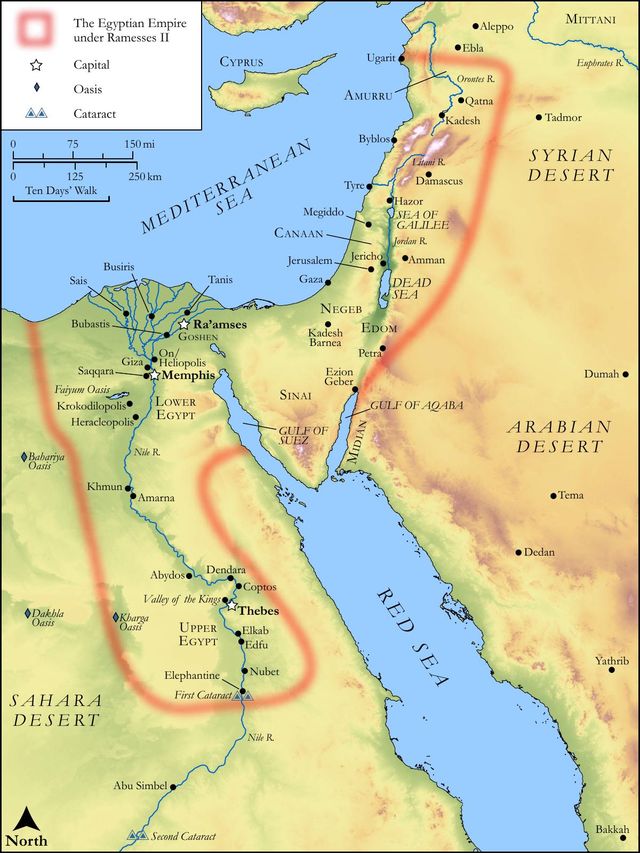
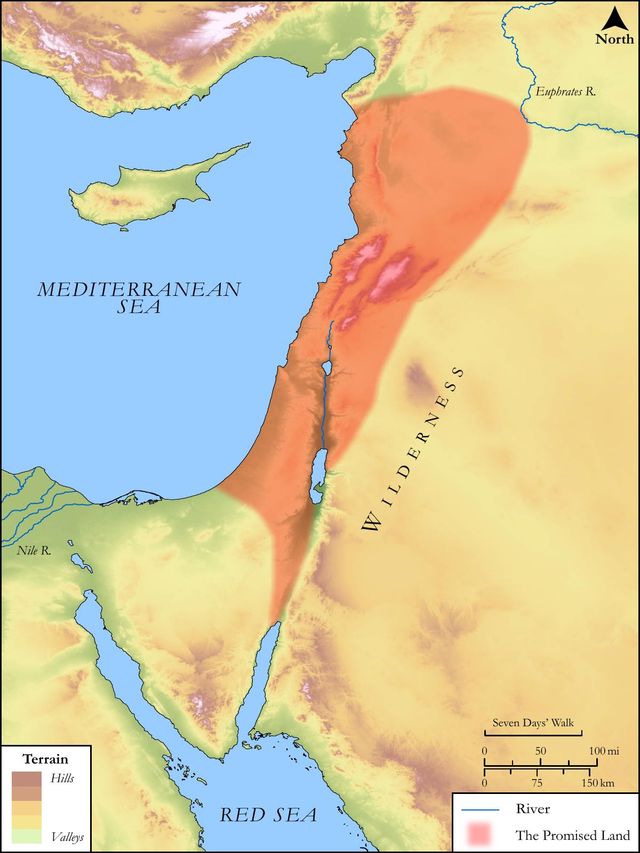
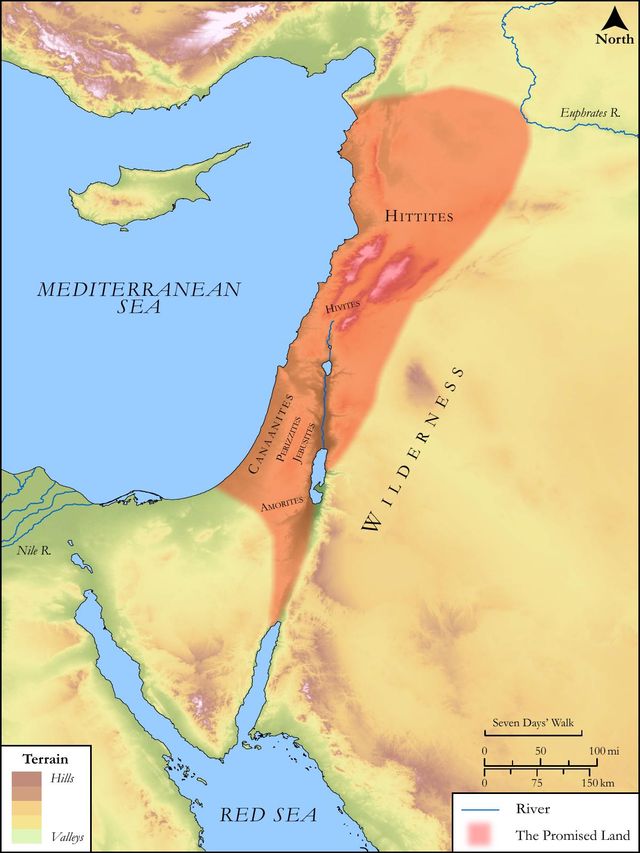
Study this verse
Public-domain commentary
Matthew Henry
From his Commentary on the Whole Bible. Henry comments on passages, not single verses — this entry covers Exodus 23:20–33. His three-level outline is real structure in the source text, so it is rendered as structure.
Three gracious promises are here made to Israel, to engage them to their duty and encourage them in it; and each of the promises has some needful precepts and cautions joined to it.
I.It is here promised that they should be guided and kept in their way through the wilderness to the land of promise:
Behold, I send an angel before thee (Exo 23:20), my angel (Exo 23:23), a created angel, say some, a minister of God's providence, employed in conducting and protecting the camp of Israel; that it might appear that God took a particular care of them, he appointed one of his chief servants to make it his business to attend them, and see that they wanted for nothing. Others suppose it to be the Son of God, the angel of the covenant; for the Israelites in the wilderness are said to tempt Christ; and we may as well suppose him God's messenger, and the church's Redeemer, before his incarnation, as the Lamb slain from the foundation of the world. And we may the rather think he was pleased to undertake the deliverance and guidance of Israel because they were typical of his great undertaking. It is promised that this blessed angel should keep them in the way, though it lay through a wilderness first, and afterwards through their enemies' country; thus God's spiritual Israel shall be kept through the wilderness of this earth, and from the insults of the gates of hell. It is also promised that he should bring them into the place which God had not only designed but prepared for them: and thus Christ has prepared a place for his followers, and will preserve them to it, for he is faithful to him that appointed him. The precept joined with this promise is that they be observant of, and obedient to, this angel whom God would send before them (Exo 23:21): "Beware of him, and obey his voice in every thing; provoke him not in any thing, for it is at your peril if you do, he will visit your iniquity." Note,
1.Christ is the author of salvation to those only that obey him. The word of command is Hear you him, Mat 17:5. Observe what he hath commanded, Mat 28:20.
2.Our necessary dependence upon the divine power and goodness should awe us into obedience. We do well to take heed of provoking our protector and benefactor, because if our defence depart from us, and the streams of his goodness be cut off, we are undone. Therefore, "Beware of him, and carry it towards him with all possible reverence and caution. Fear the Lord, and his goodness." 3. Christ will be faithful to those who are faithful to him, and will espouse their cause who adhere to his: I will be an adversary to thine adversaries, Exo 23:22. The league shall be offensive and defensive, like that with Abraham, I will bless him that blesseth thee, and curse him that curseth thee. Thus is God pleased to twist his interests and friendships with his people's.
II.It is promised that they should have a comfortable settlement in the land of Canaan, which they hoped now (though it proved otherwise) within a few months to be in the possession of, Exo 23:24-26. Observe,
1.How reasonable the conditions of this promise are - only that they should serve their own God, who was indeed the only true God, and not the gods of the nations, which were no gods at all, and which they had no reason at all to have any respect for. They must not only not worship their gods, but they must utterly overthrow them, in token of their great abhorrence of idolatry, their resolution never to worship idols themselves, and their care to prevent any other from worshipping them; as the converted conjurors burnt their books, Act 19:19.
2.How rich the particulars of this promise are.
(1.)The comfort of their food. He shall bless thy bread and thy water; and God's blessing will make bread and water more refreshing and nourishing than a feast of fat things and wines on the lees without that blessing.
(2.)The continuance of their health: "I will take sickness away, either prevent it or remove it. Thy land shall not be visited with epidemical diseases, which are very dreadful, and sometimes have laid countries waste." (3.) The increase of their wealth. Their cattle should not be barren, nor cast their young, which is mentioned as an instance of prosperity, Job 21:10. (4.) The prolonging of their lives to old age: "The number of thy days I will fulfil, and they shall not be cut off in the midst by untimely deaths." Thus hath godliness the promise of the life that now is.
III.It is promised that they should conquer and subdue their enemies, the present occupants of the land of Canaan, who must be driven out to make room for them. This God would do,
1.Effectually by his power (Exo 23:17, Exo 23:18); not so much by the sword and bow of Israel as by the terrors which he would strike into the Canaanites. Though they were so obstinate as not to be willing to submit to Israel, resign their country, and retire elsewhere, which they might have done, yet they were so dispirited that they were not able to stand before them. This completed their ruin; such power had the devil in them that they would resist, but such power had God over them that they could not. I will send my fear before thee; and those that fear will soon flee. Hosts of hornets made way for the hosts of Israel; such mean creatures can God make use of for the chastising of his people's enemies, as in the plagues of Egypt. When God pleases, hornets can drive out Canaanites, as well as lions could, Jos 24:12.
2.He would do it gradually, in wisdom (Exo 23:29, Exo 23:30), not all at once, but by little and little. As the Canaanites had kept possession till Israel had grown into a people, so there should still be some remains of them till Israel should grow so numerous as to replenish the whole. Note, The wisdom of God is to be observed in the gradual advances of the church's interests. It is in real kindness to the church that its enemies are subdued by little and little; for thus we are kept upon our guard, and in a continual dependence upon God. Corruptions are thus driven out of the hearts of God's people; not all at once, but by little and little; the old man is crucified, and therefore dies slowly. God, in his providence, often delays mercies, because we are not ready for them. Canaan has room enough to receive Israel, but Israel is not numerous enough to occupy Canaan. We are not straitened in God; if we are straitened, it is in ourselves. The land of Canaan is promised them (Exo 23:31) in its utmost extent, which yet they were not possessed of till the days of David; and by their sins they soon lost possession. The precept annexed to this promise is that they should not make any friendship, nor have any familiarity, with idolaters, Exo 23:32, Exo 23:33. Idolaters must not so much as sojourn in their land, unless they renounced their idolatry. Thus they must avoid the reproach of intimacy with the worshippers of false gods and the danger of being drawn to worship with them. By familiar converse with idolaters, their dread and detestation of the sin would wear off; they would think it no harm, in compliment to their friends, to pay some respect to their gods, and so by degrees would be drawn into the fatal snare. Note, Those that would be kept from bad courses must keep from bad company; it is dangerous living in a bad neighbourhood; others' sins will be our snares, if we look not well to ourselves. We must always look upon our greatest danger to be from those that would cause us to sin against God. Whatever friendship is pretended, that is really our worst enemy that draws us from our duty.
Continue studying Exodus 23:30 across the web’s major study libraries — every link below opens this exact verse, chapter, or book on the destination site.
Read & Compare
 BibleGatewayThis verse in more than 200 translations and 70 languages.
 Bible.comThe YouVersion reader — hundreds of translations, reading plans, and highlights.
 ESV.orgCrossway's official English Standard Version reader.
 NET BibleThe NET translation with 60,000+ translators' notes on every rendering decision.
 STEP BibleTyndale House's free study tool — original text, vocabulary, and scholarly resources.
 BibliaLogos Bible Software's free web reader.
 USCCBThe New American Bible (Revised Edition) with the U.S. bishops' study notes.
Commentaries
 BibleHub CommentariesDozens of classic commentaries on this verse, gathered on one page.
 StudyLightMore than 100 commentary sets — the largest collection on the web.
 BibleRefPlain-English commentary on what this verse means, verse by verse.
 Enduring WordDavid Guzik's free commentary on this chapter, widely used by Bible teachers.
 Bible Study ToolsVerse commentary alongside Greek and Hebrew study aids.
Original Language & Research
- BibleHub InterlinearThe verse word by word — original language, transliteration, and English.
- BibleHub LexiconEvery word's original-language definition and Strong's entry.
 Blue Letter BibleDeep-study tools — Strong's numbers, concordance, and word studies.
 SefariaThe Hebrew text with Rashi and centuries of Jewish commentary.
Sermons, Hymns & Audio


TrulyRandomVerse is not affiliated with these sites and doesn’t control their content. They’re linked because they’re genuinely useful.
Summary
Exodus 23:30 presents a pivotal divine promise to the Israelites, outlining God's strategic and gradual plan for their successful conquest and full inheritance of the Promised Land. This verse assures them that the process of dispossessing the existing inhabitants will unfold incrementally, precisely timed to correspond with Israel's population growth and their increasing capacity to occupy and manage the vast territory. It profoundly illustrates God's sovereign wisdom, patience, and unwavering faithfulness in bringing His covenantal promises to fruition, ensuring a sustainable and complete possession for His people.
Context
ShowHideLiterary Context
This verse is deeply embedded within the "Book of the Covenant" (Exodus 20:22-23:33), a foundational legal and covenantal text delivered by Yahweh to Israel at Mount Sinai immediately following the Ten Commandments. Specifically, Exodus 23:30 serves as a crucial clarification and expansion of God's promises regarding the conquest of Canaan. It directly follows and explains the rationale behind the divine strategy articulated in Exodus 23:28 and Exodus 23:29. While God promises to send terror and hornets to drive out the inhabitants, Exodus 23:29 explicitly states, "I will not drive them out before thee in one year; lest the land become desolate, and the beast of the field multiply against thee." This sets the immediate stage for the "little by little" approach of verse 30, underscoring God's foresight in preventing the land from becoming wild and unmanageable. The "them" refers to the various nations listed earlier in Exodus 23:23, including the Amorites, Hittites, Perizzites, Canaanites, Hivites, and Jebusites.
Historical & Cultural Context
The setting for the giving of the Book of the Covenant is Mount Sinai, a pivotal juncture where Israel transitioned from a recently liberated slave population into a nascent nation formally covenanted with Yahweh. At this point, though numerous, their population was not yet sufficient to immediately occupy and govern the entire expanse of the Promised Land, which was already inhabited by well-established city-states and various tribal groups. Among the nations, conquest narratives often depicted swift, total annihilation or subjugation. However, God's strategy for Israel, as revealed here, was distinct: a method of divine assistance coupled with a gradual, population-driven expansion. This approach was profoundly practical, preventing the land from reverting to wilderness and becoming overrun by wild animals. More deeply, it was pedagogical, designed to teach Israel deep reliance on God's timing, provision, and faithfulness. The promise of the land itself was foundational to God's covenant with Abraham (Genesis 15:18), and its fulfillment, even if incremental, highlighted God's unwavering commitment to His covenant people across generations.
Key Themes
ShowHideExodus 23:30 contributes significantly to several overarching themes within the Book of Exodus and the Pentateuch. It powerfully illustrates the theme of Divine Sovereignty and Providence, demonstrating God's meticulous control over the historical process and His foresight in orchestrating events for His people's good. The verse also highlights God's Faithfulness to His Covenant Promises, particularly the land promise made to Abraham, showing that God will indeed fulfill His word, even if His methods and timing differ from human expectations. Furthermore, it introduces the theme of Divine Gradualism, revealing that God often works progressively, aligning His powerful interventions with the growth and readiness of His people. This concept is intrinsically linked to the theme of Israel's Growth and Readiness, emphasizing that their demographic increase is a necessary prerequisite for fully inhabiting and stewarding the promised inheritance, as clearly articulated in Exodus 23:29. Ultimately, the verse underscores God's Wisdom and Care for His people, ensuring their sustainable well-being and successful establishment in the land.
Exposition and Analysis
ShowHideKey Word Analysis
ShowHideThis phrase, a repetition of H4592 (מְעָט), literally means "a little, a little." As an emphatic adverbial repetition, it profoundly underscores the gradual, incremental, and progressive nature of God's action. It signifies a measured, consistent advancement rather than a sudden, overwhelming expulsion. This divine pacing is not indicative of weakness, but rather of profound wisdom, ensuring Israel's capacity aligns perfectly with the pace of the conquest, preventing desolation.
Derived from H1644 (גָּרַשׁ), a primitive root meaning "to drive out from a possession; especially to expatriate or divorce; cast up (out), divorced (woman), drive away (forth, out), expel, [idiom] surely put away, trouble, thrust out." In this context, it denotes God's active, decisive, and forceful expulsion of the Canaanite inhabitants from the land. It emphasizes God's direct agency and power in clearing the way for Israel's inheritance, highlighting that this is a divine work, not merely a human military endeavor.
(פָּרָה), a primitive root meaning "to bear fruit (literally or figuratively); bear, bring forth (fruit), (be, cause to be, make) fruitful, grow, increase." This word directly refers to the growth and expansion of Israel's population. It highlights the direct correlation between Israel's demographic increase and their ability to fully inhabit and manage the vast territory. God's strategic plan is intrinsically linked to the flourishing and numerical expansion of His people, ensuring they can sustainably possess the land.
Verse Breakdown
ShowHide"By little and little I will drive them out from before thee"
This opening clause reveals both God's active agency and His chosen methodology for the conquest. The strong declaration, "I will drive them out," is a divine promise of direct intervention, assuring Israel that the ultimate victory and dispossession of the Canaanite nations are God's work. The repeated phrase "by little and little" specifies the pace of this divine action, emphasizing a controlled, progressive expulsion rather than an immediate, overwhelming one. This gradualism is a deliberate, wise strategy, not a limitation of divine power, designed for Israel's benefit.
"until thou be increased"
This segment highlights the crucial condition and underlying purpose of the gradual conquest. The temporal conjunction "until" indicates a direct link between the pace of God's action and Israel's demographic growth. God will only dispossess the inhabitants at a rate that allows Israel to multiply sufficiently to occupy the land without it becoming desolate and overrun by wild animals, a practical concern explicitly detailed in Exodus 23:29. This demonstrates God's profound practical wisdom and His tender care for His people's well-being and the long-term sustainability of their inheritance.
"and inherit the land"
This final phrase articulates the ultimate goal and glorious outcome of God's strategic plan. The "land" refers specifically to the Promised Land of Canaan, which was the central and foundational promise of the Abrahamic covenant. To "inherit" signifies taking full, rightful possession and secure ownership. This is the culmination of God's promise, a complete and secure possession of the territory, achieved through the synergistic interplay of divine power and human readiness, ensuring Israel's lasting dwelling.
Literary Devices
ShowHideExodus 23:30 masterfully employs several impactful literary devices to convey its profound message. The most prominent is Divine Accommodation, where God's omnipotent plan for conquest is wisely tailored to Israel's practical capacity and demographic growth. This strategy, explicitly explained in Exodus 23:29, prevents the land from becoming desolate and unmanageable, showcasing God's profound wisdom in adapting His powerful intervention to the limitations and developmental needs of His people. The Repetition of "little and little" (מְעַט מְעַט, mᵉʻaṭ mᵉʻaṭ) serves as an emphatic adverbial phrase, powerfully highlighting the deliberate, gradual, and incremental nature of the process. This repetition reinforces the idea of divine patience and strategic timing, assuring Israel that while the process might be slow, it is certain and purposeful. Furthermore, the verse functions as a direct Promise within the broader framework of Covenant Language found throughout the Book of the Covenant. It is a divine assurance, a declaration of Yahweh's unwavering commitment to His covenant with Israel, guaranteeing the ultimate fulfillment of the land promise, albeit on His terms and timing. The logical progression within the verse, moving from God's active intervention ("I will drive them out") to a necessary human condition ("until thou be increased") and culminating in the promised outcome ("and inherit the land"), creates a clear and purposeful narrative flow that underscores God's methodical and intentional work.
Theological and Thematic Connections
ShowHideExodus 23:30 beautifully illustrates God's sovereign wisdom, profound patience, and unwavering faithfulness in fulfilling His promises. It reveals that divine providence often operates not through instantaneous, overwhelming acts, but through a process of gradual unfolding, meticulously aligning God's mighty acts with His people's growth, readiness, and capacity. This principle of "divine gradualism" prevents chaos, ensures sustainable blessing, and teaches that God's timing is perfect, even when it differs from human desires for immediate results. It underscores a symbiotic relationship between God's action and human responsibility: God sovereignly drives out, but Israel must grow and expand to effectively occupy and steward the land. This dynamic teaches reliance on God's power while fostering human development and cooperation.
Reflection and Application
ShowHideExodus 23:30 offers profound and enduring lessons for the contemporary believer, reminding us that God's transformative work in our lives, both individually and corporately, often unfolds "by little and little." We frequently yearn for instant solutions, immediate sanctification, and swift breakthroughs, yet God, in His infinite wisdom and perfect love, often orchestrates a process of gradual growth, patient refinement, and progressive spiritual maturity. This verse calls us to cultivate a deep well of patience and an unwavering trust in God's perfect timing, even when progress seems painstakingly slow, challenges persist, or the full realization of His promises appears distant. It encourages us to embrace the process of becoming, recognizing that God is actively equipping us, expanding our spiritual capacity, and meticulously preparing us for the full inheritance of His blessings and the complete fulfillment of His purposes. Just as ancient Israel needed to increase in number and strength to fully occupy the physical land, we too must grow in faith, deepen in character, and expand in our knowledge of Christ to fully step into the spiritual territory and abundant life God has prepared for us. This journey requires perseverance, an abiding reliance on divine strength, and a humble willingness to cooperate with God's patient, redemptive work, confident that He is faithfully driving out spiritual obstacles and preparing the way for our ultimate flourishing in Him.
Questions for Reflection
ShowHideFAQ
ShowHideWhy didn't God just drive out all the inhabitants of Canaan at once?
ShowHideGod explicitly provides a practical and compassionate reason for His gradual approach in Exodus 23:29: "I will not drive them out before thee in one year; lest the land become desolate, and the beast of the field multiply against thee." This reveals God's profound practical wisdom and His careful consideration for Israel's well-being. If the land were cleared too quickly, Israel's population would not be large enough to effectively occupy, cultivate, and manage the entire territory. This would lead to the land becoming wild, uncultivated, and potentially overrun by dangerous wild animals, making it exceedingly difficult for Israel to establish a stable and thriving society. God's "by little and little" approach ensured a sustainable and manageable inheritance, perfectly aligning His divine power with Israel's capacity to grow and flourish over time.
Does this verse imply that God's promises are conditional on human effort or growth?
ShowHideGod's promise to give Israel the land was fundamentally unconditional, rooted in His sovereign covenant with Abraham (Genesis 15:18). However, the pace and method of the fulfillment of that promise were indeed tied to Israel's growth and readiness. The declaration "I will drive them out" is a testament to God's sovereign and unfailing action, but the subsequent phrase "until thou be increased" indicates a divine accommodation to human reality and capacity. It is not that Israel's growth earns the land, but rather that their growth enables them to fully receive, occupy, and steward the land that God is graciously giving them. This highlights God's profound wisdom in how He brings His promises to fruition, often involving a partnership where His omnipotent power works in conjunction with our development, maturity, and increasing capacity to receive and steward His blessings.
Christ-Centered Fulfillment
ShowHideExodus 23:30, with its profound promise of gradual conquest and the ultimate inheritance of a physical land, finds its most glorious and ultimate fulfillment in Jesus Christ and His work. The physical inheritance of Canaan by Israel serves as a powerful type and shadow of the spiritual inheritance offered to all believers in Christ. Just as ancient Israel was commanded to "increase" in number and strength to fully occupy their promised land, so too are believers in the New Covenant called to grow in Christ, progressively inheriting the fullness of His kingdom and the immeasurable spiritual blessings that are eternally ours in Him (Ephesians 1:3). Christ, as the true and greater Joshua, leads His people not into a physical territory, but into the expansive spiritual dominion of God's kingdom. He accomplishes the "driving out" of spiritual enemies—sin, death, and the powers of darkness—not in one swift moment for our experience, but "by little and little" through the ongoing, progressive work of sanctification in the believer's life and the global expansion of His church throughout the world (Colossians 2:15). Our growth in Christ, our "increase" in faith, knowledge, and Christlikeness, allows us to more fully experience, comprehend, and steward the vast spiritual territory of grace, truth, and divine purpose that God has prepared for us. This spiritual inheritance culminates not merely in a land, but in the eternal possession of the new heavens and new earth, where Christ reigns supreme and believers inherit all things as co-heirs with Him (Revelation 21:7).