


Exodus 23:33
Bible text: King James Version (1769 Blayney text) · Public domain
Bible text: Berean Standard Bible · Public domain
Bible text: American Standard Version (1901) · Public domain
Bible text: World English Bible, Messianic edition · Public domain
Bible text: Geneva Bible (1599) · Public domain
Bible text: Young's Literal Translation · Public domain
- לֹאlo'notH3808NegParticle Negative
- יֵשְׁבוּye·she·Vuthey will dwellH3427V-Qal-Imperf-3mpVerb Qal Imperfect 3rd Plural Masculine
- בְּאַרְצְךָbe·'ar·tze·Khain your landH776Prep-b ¦ N-fsc ¦ 2msNoun Singular Feminine Constructבְּinאַרְצְlandךָyour
- פֶּןpenlestH6435PrtParticle Conditional
- יַחֲטִיאוּya·cha·Ti·'uthey should cause to sinH2398V-Hiphil-Imperf-3mpVerb Hiphil Imperfect 3rd Plural Masculine
- אֹתְךָ'o·te·Kha<obj.> youH853DirObjM ¦ 2msParticle Object Indicatorאֹתְ<obj.>ךָyou
- לִיLito <the> mePrep-l ¦ 1csSuffix Personal 1st Singular common genderלִto <the>יme
- כִּיkiforH3588PrtParticle Conditional
- תַעֲבֹדta·'a·Vodyou will serveH5647V-Qal-Imperf-2msVerb Qal Imperfect 2nd Singular Masculine
- אֶת'et<obj.>H853DirObjMParticle Object Indicator
- אֱלֹהֵיהֶם'e·Lo·hei·Hemtheir godsH430N-mpc ¦ 3mpNoun Plural Masculine Constructאֱלֹהֵיgodsהֶםtheir
- כִּיkiforH3588PrtParticle Conditional
- יִהְיֶהyih·Yehit will becomeH1961V-Qal-Imperf-3msVerb Qal Imperfect 3rd Singular Masculine
- לְךָle·Khafor <the> youPrep-l ¦ 2msSuffix Personal 2nd Singular Masculineלְfor <the>ךָyou
- לְמוֹקֵשׁle·mo·Kesh<into> a snareH4170Prep-l ¦ N-msNoun Singular Masculine Absoluteלְ<into>מוֹקֵשׁa snare
English is a literal word-by-word gloss of the Hebrew, not the KJV's wording. Why?
This is the original text the KJV's translators worked from — each Hebrew word with its own literal English meaning in this verse, prepared by scholars at Tyndale House, Cambridge. The KJV translates whole sentences, not word by word, so its wording differs: one Hebrew word can become several English words, and the KJV may choose “the LORD” where the gloss reads “Yahweh”. Both are faithful — they answer different questions. For the KJV's own rendering, switch to the KJV text.
Details
See on the biblical-era maps

Study this verse
Public-domain commentary
Matthew Henry
From his Commentary on the Whole Bible. Henry comments on passages, not single verses — this entry covers Exodus 23:20–33. His three-level outline is real structure in the source text, so it is rendered as structure.
Three gracious promises are here made to Israel, to engage them to their duty and encourage them in it; and each of the promises has some needful precepts and cautions joined to it.
I.It is here promised that they should be guided and kept in their way through the wilderness to the land of promise:
Behold, I send an angel before thee (Exo 23:20), my angel (Exo 23:23), a created angel, say some, a minister of God's providence, employed in conducting and protecting the camp of Israel; that it might appear that God took a particular care of them, he appointed one of his chief servants to make it his business to attend them, and see that they wanted for nothing. Others suppose it to be the Son of God, the angel of the covenant; for the Israelites in the wilderness are said to tempt Christ; and we may as well suppose him God's messenger, and the church's Redeemer, before his incarnation, as the Lamb slain from the foundation of the world. And we may the rather think he was pleased to undertake the deliverance and guidance of Israel because they were typical of his great undertaking. It is promised that this blessed angel should keep them in the way, though it lay through a wilderness first, and afterwards through their enemies' country; thus God's spiritual Israel shall be kept through the wilderness of this earth, and from the insults of the gates of hell. It is also promised that he should bring them into the place which God had not only designed but prepared for them: and thus Christ has prepared a place for his followers, and will preserve them to it, for he is faithful to him that appointed him. The precept joined with this promise is that they be observant of, and obedient to, this angel whom God would send before them (Exo 23:21): "Beware of him, and obey his voice in every thing; provoke him not in any thing, for it is at your peril if you do, he will visit your iniquity." Note,
1.Christ is the author of salvation to those only that obey him. The word of command is Hear you him, Mat 17:5. Observe what he hath commanded, Mat 28:20.
2.Our necessary dependence upon the divine power and goodness should awe us into obedience. We do well to take heed of provoking our protector and benefactor, because if our defence depart from us, and the streams of his goodness be cut off, we are undone. Therefore, "Beware of him, and carry it towards him with all possible reverence and caution. Fear the Lord, and his goodness." 3. Christ will be faithful to those who are faithful to him, and will espouse their cause who adhere to his: I will be an adversary to thine adversaries, Exo 23:22. The league shall be offensive and defensive, like that with Abraham, I will bless him that blesseth thee, and curse him that curseth thee. Thus is God pleased to twist his interests and friendships with his people's.
II.It is promised that they should have a comfortable settlement in the land of Canaan, which they hoped now (though it proved otherwise) within a few months to be in the possession of, Exo 23:24-26. Observe,
1.How reasonable the conditions of this promise are - only that they should serve their own God, who was indeed the only true God, and not the gods of the nations, which were no gods at all, and which they had no reason at all to have any respect for. They must not only not worship their gods, but they must utterly overthrow them, in token of their great abhorrence of idolatry, their resolution never to worship idols themselves, and their care to prevent any other from worshipping them; as the converted conjurors burnt their books, Act 19:19.
2.How rich the particulars of this promise are.
(1.)The comfort of their food. He shall bless thy bread and thy water; and God's blessing will make bread and water more refreshing and nourishing than a feast of fat things and wines on the lees without that blessing.
(2.)The continuance of their health: "I will take sickness away, either prevent it or remove it. Thy land shall not be visited with epidemical diseases, which are very dreadful, and sometimes have laid countries waste." (3.) The increase of their wealth. Their cattle should not be barren, nor cast their young, which is mentioned as an instance of prosperity, Job 21:10. (4.) The prolonging of their lives to old age: "The number of thy days I will fulfil, and they shall not be cut off in the midst by untimely deaths." Thus hath godliness the promise of the life that now is.
III.It is promised that they should conquer and subdue their enemies, the present occupants of the land of Canaan, who must be driven out to make room for them. This God would do,
1.Effectually by his power (Exo 23:17, Exo 23:18); not so much by the sword and bow of Israel as by the terrors which he would strike into the Canaanites. Though they were so obstinate as not to be willing to submit to Israel, resign their country, and retire elsewhere, which they might have done, yet they were so dispirited that they were not able to stand before them. This completed their ruin; such power had the devil in them that they would resist, but such power had God over them that they could not. I will send my fear before thee; and those that fear will soon flee. Hosts of hornets made way for the hosts of Israel; such mean creatures can God make use of for the chastising of his people's enemies, as in the plagues of Egypt. When God pleases, hornets can drive out Canaanites, as well as lions could, Jos 24:12.
2.He would do it gradually, in wisdom (Exo 23:29, Exo 23:30), not all at once, but by little and little. As the Canaanites had kept possession till Israel had grown into a people, so there should still be some remains of them till Israel should grow so numerous as to replenish the whole. Note, The wisdom of God is to be observed in the gradual advances of the church's interests. It is in real kindness to the church that its enemies are subdued by little and little; for thus we are kept upon our guard, and in a continual dependence upon God. Corruptions are thus driven out of the hearts of God's people; not all at once, but by little and little; the old man is crucified, and therefore dies slowly. God, in his providence, often delays mercies, because we are not ready for them. Canaan has room enough to receive Israel, but Israel is not numerous enough to occupy Canaan. We are not straitened in God; if we are straitened, it is in ourselves. The land of Canaan is promised them (Exo 23:31) in its utmost extent, which yet they were not possessed of till the days of David; and by their sins they soon lost possession. The precept annexed to this promise is that they should not make any friendship, nor have any familiarity, with idolaters, Exo 23:32, Exo 23:33. Idolaters must not so much as sojourn in their land, unless they renounced their idolatry. Thus they must avoid the reproach of intimacy with the worshippers of false gods and the danger of being drawn to worship with them. By familiar converse with idolaters, their dread and detestation of the sin would wear off; they would think it no harm, in compliment to their friends, to pay some respect to their gods, and so by degrees would be drawn into the fatal snare. Note, Those that would be kept from bad courses must keep from bad company; it is dangerous living in a bad neighbourhood; others' sins will be our snares, if we look not well to ourselves. We must always look upon our greatest danger to be from those that would cause us to sin against God. Whatever friendship is pretended, that is really our worst enemy that draws us from our duty.
Continue studying Exodus 23:33 across the web’s major study libraries — every link below opens this exact verse, chapter, or book on the destination site.
Read & Compare
 BibleGatewayThis verse in more than 200 translations and 70 languages.
 Bible.comThe YouVersion reader — hundreds of translations, reading plans, and highlights.
 ESV.orgCrossway's official English Standard Version reader.
 NET BibleThe NET translation with 60,000+ translators' notes on every rendering decision.
 STEP BibleTyndale House's free study tool — original text, vocabulary, and scholarly resources.
 BibliaLogos Bible Software's free web reader.
 USCCBThe New American Bible (Revised Edition) with the U.S. bishops' study notes.
Commentaries
 BibleHub CommentariesDozens of classic commentaries on this verse, gathered on one page.
 StudyLightMore than 100 commentary sets — the largest collection on the web.
 BibleRefPlain-English commentary on what this verse means, verse by verse.
 Enduring WordDavid Guzik's free commentary on this chapter, widely used by Bible teachers.
 Bible Study ToolsVerse commentary alongside Greek and Hebrew study aids.
Original Language & Research
- BibleHub InterlinearThe verse word by word — original language, transliteration, and English.
- BibleHub LexiconEvery word's original-language definition and Strong's entry.
 Blue Letter BibleDeep-study tools — Strong's numbers, concordance, and word studies.
 SefariaThe Hebrew text with Rashi and centuries of Jewish commentary.
Sermons, Hymns & Audio


TrulyRandomVerse is not affiliated with these sites and doesn’t control their content. They’re linked because they’re genuinely useful.
Summary
Exodus 23:33 concludes the Book of the Covenant with a profound divine injunction to Israel on the verge of entering the Promised Land. It unequivocally forbids the Israelites from allowing the indigenous inhabitants to remain settled among them, not primarily for territorial dominion, but as a critical safeguard for Israel's spiritual purity and exclusive devotion to Yahweh. God, with prescient wisdom, foresaw that continued cohabitation would inevitably lead to spiritual syncretism and idolatry, which He powerfully describes as a deceptive and destructive "snare." This warning underscores the paramount importance of spiritual separation and unwavering loyalty to prevent moral corruption and the forfeiture of divine blessing.
Context
ShowHideLiterary Context
This verse serves as the climactic and final prohibition within the "Book of the Covenant" (found in Exodus 20:22-23:33), a comprehensive collection of civil, social, and religious laws delivered by God to Moses immediately following the Ten Commandments. It naturally follows earlier instructions in Exodus 23 concerning Israel's conduct in the land, including warnings against making covenants with the inhabitants and serving their gods. The preceding verses, particularly Exodus 23:23-24, explicitly state God's intention to drive out the nations and Israel's responsibility to destroy their altars and sacred pillars. Thus, Exodus 23:33 acts as a critical, concluding caveat, emphasizing that the success of the conquest and the continued enjoyment of divine blessing in the land are entirely contingent upon Israel's absolute spiritual fidelity and their avoidance of the corrupting influences inherent in Canaanite religious practices. It sets the strict conditions for the covenant relationship about to be ratified in Exodus 24.
Historical & Cultural Context
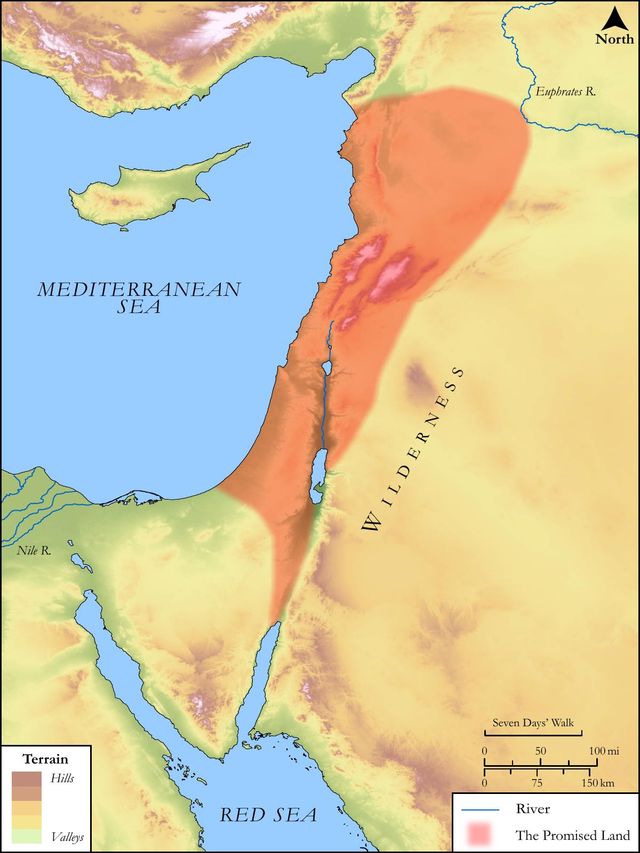
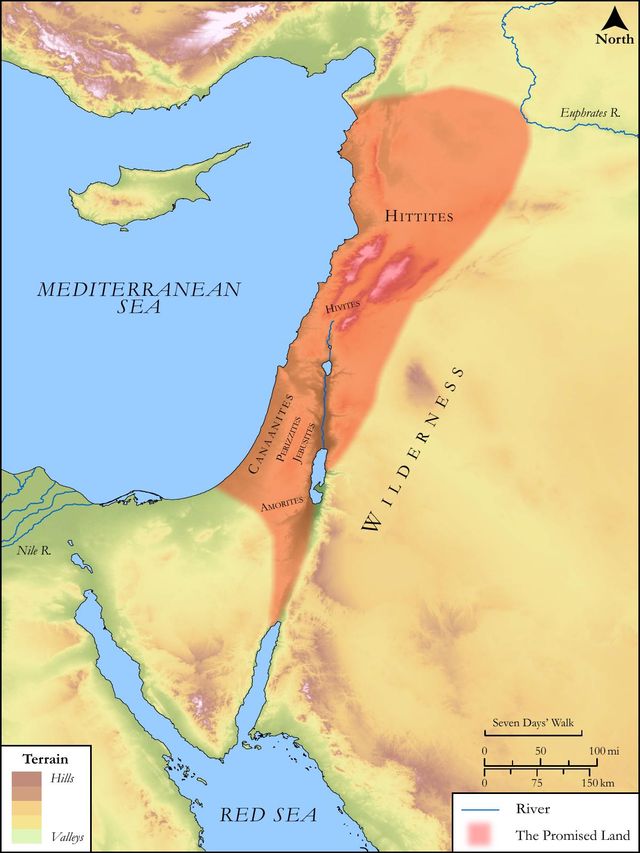
At this juncture in the Exodus narrative, the Israelites are poised to transition from being nomadic wilderness wanderers to a settled nation in Canaan. This land was already inhabited by various pagan peoples, including the Hittites, Girgashites, Amorites, Canaanites, Perizzites, Hivites, and Jebusites, as explicitly listed in Exodus 23:23. These indigenous cultures practiced a polytheistic religion, worshipping a pantheon of deities such as Baal, Asherah, and Molech, often through rituals that involved cultic prostitution, child sacrifice, and various forms of divination. God's command for separation was not rooted in ethnic prejudice but in a profound understanding of the spiritual and moral dangers posed by such close proximity and cultural intermingling. Having recently been delivered from the pervasive idolatry of Egypt and having already demonstrated a propensity for spiritual wandering (as tragically evidenced by the incident of the Golden Calf in Exodus 32), Israel was particularly vulnerable to syncretism. The divine imperative was to preserve their unique identity as a holy nation, consecrated to Yahweh alone, and to prevent the spiritual contamination that would inevitably arise from adopting the gods and practices of the surrounding nations, thereby undermining their sacred covenant relationship.
Key Themes
ShowHideExodus 23:33 powerfully contributes to several overarching themes within Exodus and the broader Pentateuch. Foremost among these is the theme of exclusive worship and monotheism, reinforcing the First Commandment's prohibition against other gods (Exodus 20:3). It underscores God's holiness and jealousy for His people's undivided devotion, viewing idolatry not merely as a ritualistic error but as a profound act of betrayal against the covenant. The verse also highlights the theme of spiritual purity and separation, emphasizing that Israel's distinct identity as a "kingdom of priests and a holy nation" (Exodus 19:6) necessitated a clear demarcation from the corrupting influences of paganism. Furthermore, it speaks to the theme of consequences of disobedience, portraying idolatry as a "snare" that inevitably leads to spiritual bondage and ruin, thereby linking obedience to blessing and disobedience to judgment, a principle reiterated throughout Deuteronomy and the historical books. This verse serves as a foundational warning that echoes throughout Israel's subsequent history, explaining their repeated cycles of apostasy and judgment.
Exposition and Analysis
ShowHideKey Word Analysis
ShowHideThis primitive root signifies "to sit down, to remain, to inhabit, to settle." In the context of Exodus 23:33, the prohibition against allowing them to "dwell" implies more than mere transient presence; it denotes the establishment of permanent, settled cohabitation. This suggests a level of integration and assimilation that would inevitably lead to shared cultural and, critically, shared religious practices. God's command is not simply about physical expulsion but about preventing the conditions that would foster spiritual compromise and the dilution of Israel's distinct identity as a people set apart for Yahweh.
This primitive root means "to miss the mark, to err, to incur guilt, to offend." When God warns "lest they make thee sin against me," it directly points to the consequence of failing to obey the command for separation. The "sin" in view here is specifically idolatry and apostasy—the act of turning away from the exclusive worship of Yahweh to serve other gods. This reveals God's profound jealousy for His people's singular devotion and His understanding that prolonged exposure to pagan practices would inevitably lead Israel to violate the foundational first and second commandments given at Sinai (Exodus 20:3-6).
This noun, derived from a root meaning "to lay a trap," refers to a noose or a trap used for catching animals. In its metaphorical application in Exodus 23:33, it powerfully conveys the insidious, deceptive, and destructive nature of idolatry. It is not an obvious, overt danger but a hidden one that, once sprung, leads to spiritual captivity, entanglement, and ruin. The imagery suggests a loss of freedom, a state of entrapment from which escape is difficult, and impending doom for those who succumb to its subtle allure.
Verse Breakdown
ShowHide"They shall not dwell in thy land,"
This is a direct, unequivocal divine command prohibiting the Israelites from permitting the indigenous inhabitants of Canaan to remain settled among them. It signifies a necessary and complete separation, not just of territory, but of presence and influence, to prevent spiritual contamination and the erosion of Israel's covenant identity.
"lest they make thee sin against me:"
This clause articulates the divine rationale and the primary concern behind the prohibition. God's concern is not political or economic, but fundamentally theological and spiritual. He foresees that the continued presence and influence of pagan peoples would inevitably lead Israel to adopt their idolatrous practices, thereby violating their covenant obligations and directly offending the Lord who delivered them.
"for if thou serve their gods,"
This introduces a conditional statement, explicitly linking the act of serving foreign deities to the preceding warning. It clarifies the specific "sin" God is concerned about—the worship and devotion to gods other than Yahweh, which was the central and most pervasive temptation presented by the Canaanite cultures. This highlights the absolute nature of God's demand for exclusive worship.
"it will surely be a snare unto thee."
This final, powerful declaration describes the inevitable and dire consequence of spiritual compromise and idolatry. Serving other gods is not merely a minor transgression but a dangerous, deceptive trap. It underscores the insidious nature of false worship, which may promise benefits or freedom but ultimately leads to spiritual bondage, destruction, and the loss of God's favor and protection, entangling those who fall into it.
Literary Devices
ShowHideExodus 23:33 employs several potent literary devices to convey its urgent and non-negotiable message. The most prominent is Metaphor, specifically the vivid use of the term "snare" (môwqêsh). This imagery transforms the abstract concept of idolatry into a concrete, tangible danger, akin to a hidden trap set for unsuspecting prey. It powerfully emphasizes the insidious, deceptive, and ultimately destructive nature of false worship, which entices with promises but ultimately leads to spiritual capture and ruin. The verse also functions as a clear Conditional Statement ("for if thou serve their gods, it will surely be a snare unto thee"), which rhetorically establishes a direct cause-and-effect relationship between Israel's potential disobedience (serving other gods) and its dire, predictable consequence (becoming ensnared). This structure highlights divine justice and the inevitable outcome of spiritual compromise. Furthermore, the entire verse serves as a direct and authoritative Divine Warning, a solemn pronouncement from God that underscores His protective care for Israel and His absolute demand for exclusive worship. The stern, prohibitive language ("They shall not dwell...") reinforces the seriousness and non-negotiable nature of this foundational command.
Theological and Thematic Connections
ShowHideExodus 23:33 is foundational to understanding God's unwavering demand for exclusive worship and His commitment to preserving the holiness of His covenant people. It articulates a core theological truth: idolatry is not merely a ritualistic error but a profound betrayal of covenant fidelity, leading to spiritual entanglement and ruin. This verse establishes the principle that God's people must be set apart, distinct from the world's corrupting influences, because spiritual compromise inevitably leads to moral decay and a broken relationship with the Holy God. It highlights God's "jealousy" (as described in Exodus 20:5), not as a human flaw, but as a divine attribute that passionately guards His unique relationship with His chosen people, desiring their complete devotion for their own good and flourishing. The "snare" imagery underscores that what seems attractive or harmless on the surface is, in reality, a deceptive trap designed to lead away from life and into spiritual death.
Reflection and Application
ShowHideWhile Christians today are not called to physically drive out nations or engage in territorial conquest, the profound spiritual principles embedded in Exodus 23:33 remain timeless and critically relevant. This verse serves as a powerful reminder that our spiritual environment profoundly shapes our devotion to God. Just as Israel was warned against the insidious "snare" of pagan influences, believers are called to exercise radical discernment regarding the influences we permit into our lives—whether they be relationships, media, ideologies, ambitions, or even seemingly benign cultural trends—that might subtly or overtly draw our hearts away from Christ. Modern idolatry often manifests not in physical statues, but in the worship of self, success, wealth, pleasure, comfort, or even the approval of others, anything that displaces God from His rightful supremacy in our lives. The call is to cultivate a holy separation, not from people, but from the ungodly values and practices of the world system, ensuring that our primary allegiance remains unwavering to the one true God. This requires intentional guarding of our hearts and minds, recognizing that spiritual compromise, however small it may seem, can quickly become a destructive snare that hinders our walk with God, diminishes our spiritual vitality, and ultimately compromises our witness.
Questions for Reflection
ShowHideFAQ
ShowHideWhy was God so strict about the Israelites not dwelling with the Canaanites?
ShowHideGod's strict command for the Israelites not to "dwell" with the Canaanites was not an act of ethnic cleansing or prejudice, but a profound theological and spiritual imperative. The primary reason, as stated in Exodus 23:33, was "lest they make thee sin against me: for if thou serve their gods, it will surely be a snare unto thee." The Canaanite cultures were deeply entrenched in polytheism, idolatry, and morally corrupt practices, including child sacrifice, cultic prostitution, and divination (Deuteronomy 18:9-12). God knew that prolonged cohabitation would inevitably lead to syncretism—the blending of their worship of Yahweh with the worship of Canaanite deities—and the adoption of their immoral practices. This would defile Israel's unique identity as a holy nation, undermine their covenant relationship with God (established in Exodus 19:5-6), and ultimately lead to their spiritual ruin and loss of divine blessing. God's command was an act of divine protection, safeguarding His chosen people from spiritual corruption and preserving the purity of His worship.
How does the concept of "snare" apply to believers today?
ShowHideThe concept of a "snare" (Hebrew: môwqêsh), as used in Exodus 23:33, remains highly relevant for believers today, though its manifestation has changed. A snare is a hidden trap, and in our modern context, spiritual snares are subtle temptations or influences that, while seemingly harmless or even attractive, can lead us away from God. These can include: the pursuit of wealth or material possessions above spiritual priorities (Matthew 6:24), the allure of worldly success or status that compromises integrity, the addiction to pleasure or entertainment that dulls our spiritual senses, or even relationships that encourage sin or pull us away from Christ (2 Corinthians 6:14). Anything that takes precedence over God in our hearts or leads us to compromise our faith can become a "snare," leading to spiritual entanglement, loss of freedom, and a diminished relationship with God. The Apostle Paul echoes this ancient warning, urging believers to "flee from idolatry" in all its forms (1 Corinthians 10:14), recognizing that modern idols can be anything that replaces God's rightful place in our lives.
Christ-Centered Fulfillment
ShowHideExodus 23:33, with its stern warning against spiritual compromise and the insidious "snare" of idolatry, finds its ultimate fulfillment and transformation in Christ. While Old Testament Israel was called to a physical separation from pagan nations to preserve their unique identity and covenant purity, the New Covenant calls believers to a spiritual separation from the world's ungodly values and systems, not from its people. Jesus Himself prayed that His disciples would be "in the world but not of the world" (John 17:15-16), establishing a new paradigm for holiness. The ultimate "snare" that entraps all humanity is sin and death, a profound spiritual bondage from which no law or human effort could truly liberate. Christ, through His sacrificial death on the cross and victorious resurrection, has decisively broken the power of this ultimate snare, offering true freedom and new life to all who believe (Colossians 2:13-15). Furthermore, the Old Testament warning against serving other gods is fulfilled in the New Testament's call to exclusive devotion to Christ as Lord, recognizing that He alone is worthy of our worship and allegiance (Philippians 2:9-11). The indwelling Holy Spirit now empowers believers to resist the spiritual "snares" of modern idolatry—covetousness, materialism, self-worship, and any false god—and to live a life of holiness and singular devotion, making us a "holy nation" and a "people for God's own possession" in a spiritual, not merely ethnic, sense (1 Peter 2:9). Thus, the protective command of Exodus 23:33 is transcended and perfected in Christ, who not only warns against the snare but provides the means of escape and the power for true spiritual freedom and an uncompromised life of worship.