


Exodus 23:24
Bible text: King James Version (1769 Blayney text) · Public domain
Bible text: King James Version with Strong's numbers · Public domain
Bible text: Berean Standard Bible · Public domain
Bible text: American Standard Version (1901) · Public domain
Bible text: World English Bible, Messianic edition · Public domain
Bible text: Geneva Bible (1599) · Public domain
Bible text: Young's Literal Translation · Public domain
- לֹאlo'notH3808NegParticle Negative
- תִשְׁתַּחֲוֶהtish·ta·cha·Vehyou must bow downH7812V-Hithpael-Imperf-2msVerb Hithpael Imperfect 2nd Singular Masculine
- לֵאלֹהֵיהֶםle·lo·hei·Hemto their godsH430Prep-l ¦ N-mpc ¦ 3mpNoun Plural Masculine Constructלֵtoאלֹהֵיgodsהֶםtheir
- וְלֹאve·Lo'and notH3808Conj-w ¦ NegParticle Negativeוְandלֹאnot
- תָעָבְדֵםta·'a·ve·Demyou must be enticed to serve themH5647V-Hophal-Imperf-2ms ¦ 3mpVerb Hophal Imperfect 2nd Singular Masculineתָעָבְדֵyou must be enticed to serveםthem
- וְלֹאve·Lo'and notH3808Conj-w ¦ NegParticle Negativeוְandלֹאnot
- תַעֲשֶׂהta·'a·Sehyou must makeH6213V-Qal-Imperf-2msVerb Qal Imperfect 2nd Singular Masculine
- כְּמַעֲשֵׂיהֶםke·ma·'a·sei·Hemlike their worksH4639Prep-k ¦ N-mpc ¦ 3mpNoun Plural Masculine Constructכְּlikeמַעֲשֵׂיworksהֶםtheir
- כִּיkiforH3588PrtParticle Conditional
- הָרֵסha·Rescompletely <tear down>H2040V-Piel-InfVerb Piel Infinitive Construct
- תְּהָרְסֵםte·Ha·re·Semyou will tear down themH2040V-Piel-Imperf-2ms ¦ 3mpVerb Piel Imperfect 2nd Singular Masculineתְּהָרְסֵyou will tear downםthem
- וְשַׁבֵּרve·sha·Berand totally <shatter>H7665Conj-w ¦ V-Piel-InfVerb Piel Infinitive Constructוְandשַׁבֵּרtotally <shatter>
- תְּשַׁבֵּרte·sha·Beryou will shatter into piecesH7665V-Piel-Imperf-2msVerb Piel Imperfect 2nd Singular Masculine
- מַצֵּבֹתֵיהֶםma·tze·vo·tei·Hemtheir sacred pillarsH4676N-fpc ¦ 3mpNoun Plural Feminine Constructמַצֵּבֹתֵיsacred pillarsהֶםtheir
English is a literal word-by-word gloss of the Hebrew, not the KJV's wording. Why?
This is the original text the KJV's translators worked from — each Hebrew word with its own literal English meaning in this verse, prepared by scholars at Tyndale House, Cambridge. The KJV translates whole sentences, not word by word, so its wording differs: one Hebrew word can become several English words, and the KJV may choose “the LORD” where the gloss reads “Yahweh”. Both are faithful — they answer different questions. For the KJV's own rendering, switch to the KJV text.
Details
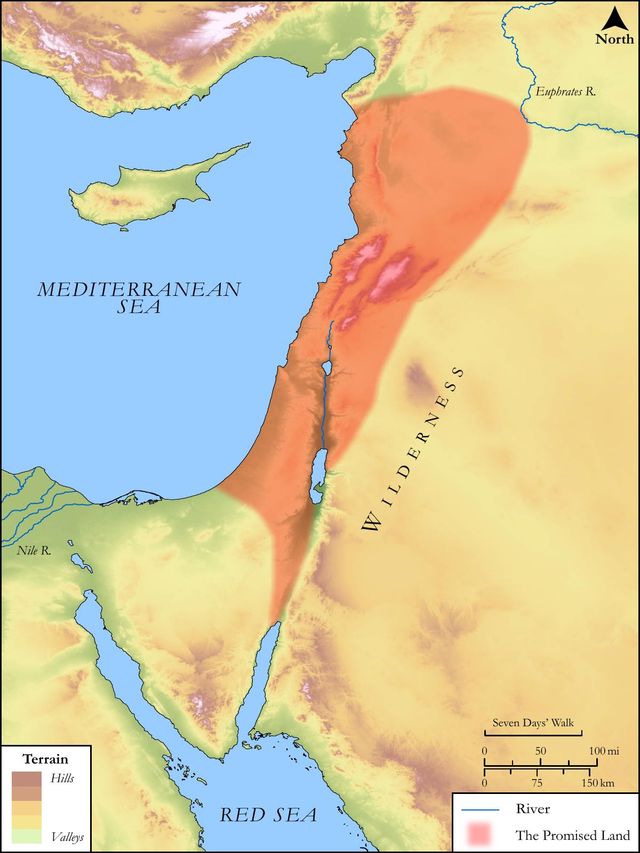
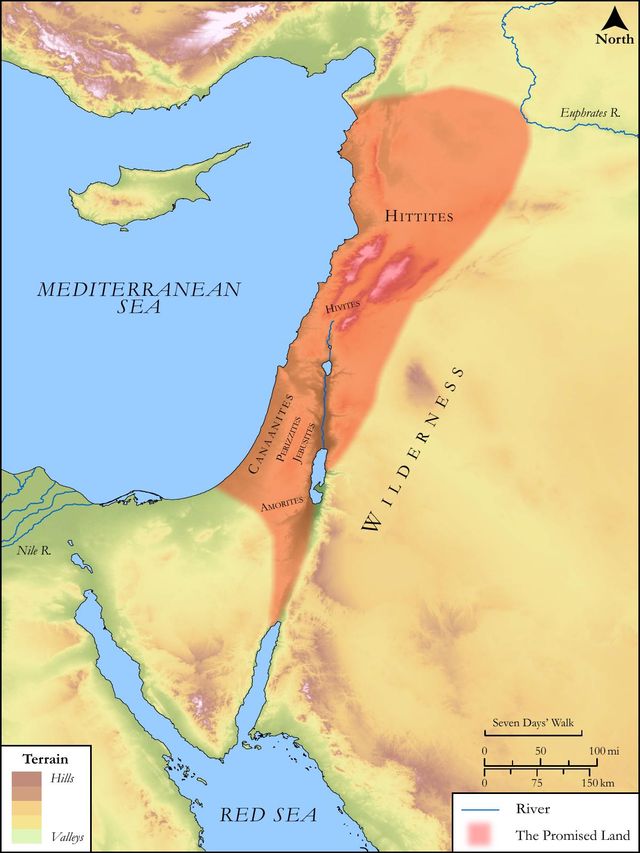
See on the biblical-era maps

Study this verse
Public-domain commentary
Matthew Henry
From his Commentary on the Whole Bible. Henry comments on passages, not single verses — this entry covers Exodus 23:20–33. His three-level outline is real structure in the source text, so it is rendered as structure.
Three gracious promises are here made to Israel, to engage them to their duty and encourage them in it; and each of the promises has some needful precepts and cautions joined to it.
I.It is here promised that they should be guided and kept in their way through the wilderness to the land of promise:
Behold, I send an angel before thee (Exo 23:20), my angel (Exo 23:23), a created angel, say some, a minister of God's providence, employed in conducting and protecting the camp of Israel; that it might appear that God took a particular care of them, he appointed one of his chief servants to make it his business to attend them, and see that they wanted for nothing. Others suppose it to be the Son of God, the angel of the covenant; for the Israelites in the wilderness are said to tempt Christ; and we may as well suppose him God's messenger, and the church's Redeemer, before his incarnation, as the Lamb slain from the foundation of the world. And we may the rather think he was pleased to undertake the deliverance and guidance of Israel because they were typical of his great undertaking. It is promised that this blessed angel should keep them in the way, though it lay through a wilderness first, and afterwards through their enemies' country; thus God's spiritual Israel shall be kept through the wilderness of this earth, and from the insults of the gates of hell. It is also promised that he should bring them into the place which God had not only designed but prepared for them: and thus Christ has prepared a place for his followers, and will preserve them to it, for he is faithful to him that appointed him. The precept joined with this promise is that they be observant of, and obedient to, this angel whom God would send before them (Exo 23:21): "Beware of him, and obey his voice in every thing; provoke him not in any thing, for it is at your peril if you do, he will visit your iniquity." Note,
1.Christ is the author of salvation to those only that obey him. The word of command is Hear you him, Mat 17:5. Observe what he hath commanded, Mat 28:20.
2.Our necessary dependence upon the divine power and goodness should awe us into obedience. We do well to take heed of provoking our protector and benefactor, because if our defence depart from us, and the streams of his goodness be cut off, we are undone. Therefore, "Beware of him, and carry it towards him with all possible reverence and caution. Fear the Lord, and his goodness." 3. Christ will be faithful to those who are faithful to him, and will espouse their cause who adhere to his: I will be an adversary to thine adversaries, Exo 23:22. The league shall be offensive and defensive, like that with Abraham, I will bless him that blesseth thee, and curse him that curseth thee. Thus is God pleased to twist his interests and friendships with his people's.
II.It is promised that they should have a comfortable settlement in the land of Canaan, which they hoped now (though it proved otherwise) within a few months to be in the possession of, Exo 23:24-26. Observe,
1.How reasonable the conditions of this promise are - only that they should serve their own God, who was indeed the only true God, and not the gods of the nations, which were no gods at all, and which they had no reason at all to have any respect for. They must not only not worship their gods, but they must utterly overthrow them, in token of their great abhorrence of idolatry, their resolution never to worship idols themselves, and their care to prevent any other from worshipping them; as the converted conjurors burnt their books, Act 19:19.
2.How rich the particulars of this promise are.
(1.)The comfort of their food. He shall bless thy bread and thy water; and God's blessing will make bread and water more refreshing and nourishing than a feast of fat things and wines on the lees without that blessing.
(2.)The continuance of their health: "I will take sickness away, either prevent it or remove it. Thy land shall not be visited with epidemical diseases, which are very dreadful, and sometimes have laid countries waste." (3.) The increase of their wealth. Their cattle should not be barren, nor cast their young, which is mentioned as an instance of prosperity, Job 21:10. (4.) The prolonging of their lives to old age: "The number of thy days I will fulfil, and they shall not be cut off in the midst by untimely deaths." Thus hath godliness the promise of the life that now is.
III.It is promised that they should conquer and subdue their enemies, the present occupants of the land of Canaan, who must be driven out to make room for them. This God would do,
1.Effectually by his power (Exo 23:17, Exo 23:18); not so much by the sword and bow of Israel as by the terrors which he would strike into the Canaanites. Though they were so obstinate as not to be willing to submit to Israel, resign their country, and retire elsewhere, which they might have done, yet they were so dispirited that they were not able to stand before them. This completed their ruin; such power had the devil in them that they would resist, but such power had God over them that they could not. I will send my fear before thee; and those that fear will soon flee. Hosts of hornets made way for the hosts of Israel; such mean creatures can God make use of for the chastising of his people's enemies, as in the plagues of Egypt. When God pleases, hornets can drive out Canaanites, as well as lions could, Jos 24:12.
2.He would do it gradually, in wisdom (Exo 23:29, Exo 23:30), not all at once, but by little and little. As the Canaanites had kept possession till Israel had grown into a people, so there should still be some remains of them till Israel should grow so numerous as to replenish the whole. Note, The wisdom of God is to be observed in the gradual advances of the church's interests. It is in real kindness to the church that its enemies are subdued by little and little; for thus we are kept upon our guard, and in a continual dependence upon God. Corruptions are thus driven out of the hearts of God's people; not all at once, but by little and little; the old man is crucified, and therefore dies slowly. God, in his providence, often delays mercies, because we are not ready for them. Canaan has room enough to receive Israel, but Israel is not numerous enough to occupy Canaan. We are not straitened in God; if we are straitened, it is in ourselves. The land of Canaan is promised them (Exo 23:31) in its utmost extent, which yet they were not possessed of till the days of David; and by their sins they soon lost possession. The precept annexed to this promise is that they should not make any friendship, nor have any familiarity, with idolaters, Exo 23:32, Exo 23:33. Idolaters must not so much as sojourn in their land, unless they renounced their idolatry. Thus they must avoid the reproach of intimacy with the worshippers of false gods and the danger of being drawn to worship with them. By familiar converse with idolaters, their dread and detestation of the sin would wear off; they would think it no harm, in compliment to their friends, to pay some respect to their gods, and so by degrees would be drawn into the fatal snare. Note, Those that would be kept from bad courses must keep from bad company; it is dangerous living in a bad neighbourhood; others' sins will be our snares, if we look not well to ourselves. We must always look upon our greatest danger to be from those that would cause us to sin against God. Whatever friendship is pretended, that is really our worst enemy that draws us from our duty.
Continue studying Exodus 23:24 across the web’s major study libraries — every link below opens this exact verse, chapter, or book on the destination site.
Read & Compare
 BibleGatewayThis verse in more than 200 translations and 70 languages.
 Bible.comThe YouVersion reader — hundreds of translations, reading plans, and highlights.
 ESV.orgCrossway's official English Standard Version reader.
 NET BibleThe NET translation with 60,000+ translators' notes on every rendering decision.
 STEP BibleTyndale House's free study tool — original text, vocabulary, and scholarly resources.
 BibliaLogos Bible Software's free web reader.
 USCCBThe New American Bible (Revised Edition) with the U.S. bishops' study notes.
Commentaries
 BibleHub CommentariesDozens of classic commentaries on this verse, gathered on one page.
 StudyLightMore than 100 commentary sets — the largest collection on the web.
 BibleRefPlain-English commentary on what this verse means, verse by verse.
 Enduring WordDavid Guzik's free commentary on this chapter, widely used by Bible teachers.
 Bible Study ToolsVerse commentary alongside Greek and Hebrew study aids.
Original Language & Research
- BibleHub InterlinearThe verse word by word — original language, transliteration, and English.
- BibleHub LexiconEvery word's original-language definition and Strong's entry.
 Blue Letter BibleDeep-study tools — Strong's numbers, concordance, and word studies.
 SefariaThe Hebrew text with Rashi and centuries of Jewish commentary.
Sermons, Hymns & Audio


TrulyRandomVerse is not affiliated with these sites and doesn’t control their content. They’re linked because they’re genuinely useful.
Summary
Exodus 23:24, a pivotal command within the "Book of the Covenant," lays down an uncompromising directive for ancient Israel as they stood poised to enter the Promised Land. It unequivocally prohibits any form of allegiance, worship, or participation in the practices of the Canaanite deities. Beyond mere avoidance, the verse mandates the aggressive and complete destruction of all physical manifestations of pagan religion—their altars, sacred pillars, and carved images. This divine injunction powerfully underscores Yahweh's exclusive claim on Israel's worship, serving as an essential safeguard against spiritual corruption and syncretism, thereby ensuring the purity and integrity of their unique covenant relationship with the one true God.
Context
ShowHideLiterary Context
Exodus 23:24 is strategically placed within the "Book of the Covenant" (Exodus 20:22–23:33), which serves as an elaboration and application of the foundational principles encapsulated in the Ten Commandments. Following the declaration of God's unique covenant relationship with Israel and the initial statutes concerning worship and justice, this section transitions to the practical implications of Israel's impending entry into Canaan. Verses 23:20-33 detail God's solemn promises of angelic guidance, protection, and victory contingent upon Israel's unwavering obedience, alongside stern warnings against disobedience. Specifically, Exodus 23:20-25 outlines the blessings of divine presence and prosperity, while Exodus 23:26-33 details the gradual conquest and the absolute necessity of separating from the idolatrous practices of the land's inhabitants. This particular verse, therefore, functions as a crucial, non-negotiable command within the broader framework of maintaining covenant purity and exclusive devotion to Yahweh in their new homeland.
Historical & Cultural Context
The command in Exodus 23:24 was issued to the Israelites on the very cusp of their entry into Canaan, a land saturated with polytheistic cultures. The indigenous Canaanite religions were characterized by the worship of a vast pantheon of deities, prominently including Baal (the storm and fertility god), Asherah (his consort, often represented by sacred poles), and numerous local gods associated with specific places or phenomena. Their cultic practices frequently involved rituals anathema to Yahweh's holiness, such as cultic prostitution, child sacrifice (e.g., to Molech), and various forms of divination. The historical context reveals a stark and irreconcilable contrast between the ethical monotheism of Yahwism and the syncretistic, often morally depraved, practices of the surrounding nations. God's command was not merely a theological decree but a profoundly practical measure designed to preserve Israel's distinct identity as a holy nation and to prevent the spiritual and moral decay that would inevitably result from assimilation into Canaanite culture. The instruction to "utterly overthrow them, and quite break down their images" reflects the pervasive nature of idolatry in the land and the absolute necessity of its eradication for Israel's spiritual survival and the fulfillment of God's covenant promises regarding the Promised Land.
Key Themes
ShowHideThis verse powerfully contributes to several overarching theological and narrative themes within Exodus and the Pentateuch. Foremost among them is the theme of Exclusive Monotheism, asserting Yahweh's sole claim to Israel's worship and rejecting any form of polytheism or syncretism. It reinforces the First Commandment by demanding undivided allegiance. Secondly, it highlights the theme of Covenant Fidelity and Purity, emphasizing that Israel's relationship with God is conditional upon their obedience and separation from the defiling practices of the nations. The command to destroy idols underscores the theme of God's Holiness and Jealousy, revealing His intolerance for anything that diminishes His glory or competes for the devotion of His people. Finally, it speaks to the theme of Conquest and Dispossession, framing the physical eradication of idolatry as a necessary spiritual prerequisite for Israel's successful occupation and flourishing in the land, ensuring that the Promised Land would remain a domain consecrated to Yahweh.
Exposition and Analysis
ShowHideKey Word Analysis
ShowHideThis verb (H7812) signifies a profound act of reverence, prostration, or homage. It denotes the physical posture of worship and, by extension, the internal attitude of submission and adoration. In the context of "their gods," it explicitly forbids the act of worshiping any deity other than Yahweh, emphasizing the exclusive and singular nature of Israel's devotion to their covenant God. It encompasses both outward obeisance and inward veneration.
More than just passive worship, ʻâbad (H5647) implies active labor, service, or allegiance. It speaks to the dedication of one's life, resources, and efforts to a particular master or god. To "serve" other gods would mean to dedicate one's life, time, and energy to their rituals, practices, and demands, thereby diverting allegiance from Yahweh. This highlights that idolatry is not merely a belief system but a comprehensive way of life that impacts all actions, occupations, and forms of service.
This strong verb (H2040) means to pull down, demolish, or destroy completely. It is a forceful and uncompromising term, indicating that the destruction of pagan altars and places of worship was to be total and without reservation. The KJV's "utterly overthrow" captures the intensive nature of this root, signifying not just removal but a violent, complete dismantling. This was not a passive avoidance but an aggressive, divinely mandated act of dismantling the physical infrastructure of idolatry, leaving no room for future temptation or syncretism.
This feminine noun (H4676) refers to something stationed, specifically a column or memorial stone. By analogy, it often denotes an idol, a standing pillar, or a sacred stone used in pagan worship. These were not merely decorative but were objects of veneration and focal points for idolatrous rituals. The command to "quite break down their images" (using shâbar for "break down," H7665) emphasizes the thorough and complete pulverization of these physical representations of false gods, ensuring their utter desecration and removal from the land.
Verse Breakdown
ShowHide"Thou shalt not bow down to their gods"
This is the primary and fundamental prohibition, directly condemning any act of reverence, adoration, or prostration before any deity other than Yahweh. It directly reinforces the first commandment, establishing the absolute exclusivity of God's claim on Israel's worship and forbidding any form of spiritual compromise.
"nor serve them"
This expands the prohibition beyond mere worship to include any form of active allegiance, devotion, or practical service to these false gods. It implies abstaining from participation in their rituals, sacrifices, or any activities that would acknowledge their authority, power, or demands, thereby diverting one's life and energy from Yahweh.
"nor do after their works"
This clause forbids the adoption or imitation of the customs, practices, and moral behaviors associated with the Canaanite religions and their broader culture. This encompasses their ethical standards, social norms, and specific religious rites, many of which were anathema to God's holiness (e.g., child sacrifice, cultic prostitution, various forms of divination). It is a comprehensive rejection of syncretism, demanding a distinct and holy lifestyle for Israel.
"but thou shalt utterly overthrow them"
This marks a sharp and decisive transition from passive prohibitions to active, aggressive commands. "Them" here refers to the altars, sacred sites, and places of worship dedicated to these foreign gods. Israel was not merely to avoid these places but to actively and completely demolish them, leaving no trace of their existence.
"and quite break down their images"
This further specifies the target of destruction: the physical representations of the gods themselves—idols, standing pillars (matstsêbâh), carved images, or molten statues (massekah). The phrase "quite break down" (from Hebrew shâbar, H7665, meaning to burst, crush, destroy) emphasizes the thoroughness and completeness of the demolition, ensuring no vestige of pagan worship remained intact, thus preventing future temptation or spiritual contamination.
Literary Devices
ShowHideExodus 23:24 masterfully employs several potent literary devices to convey its imperative and uncompromising message. The most prominent is Parallelism and Antithesis, seen in the juxtaposition of three negative commands ("Thou shalt not bow down... nor serve them... nor do after their works") followed by two affirmative, forceful commands ("but thou shalt utterly overthrow them, and quite break down their images"). This structure creates a powerful Contrast between what is strictly forbidden and what is actively required, emphasizing both abstinence from idolatry and aggressive eradication of its physical manifestations. The use of strong, active verbs like "overthrow" (hâraç) and "break down" (shâbar) contributes to the intense Emphasis and underscores the uncompromising, total nature of the divine mandate. The verse itself functions as a direct Imperative, reflecting the authoritative voice of God and the non-negotiable terms of the covenant, leaving no room for ambiguity or partial obedience.
Theological and Thematic Connections
ShowHideThis verse stands as a foundational statement on the absolute exclusivity of Yahweh's claim on Israel's worship, demanding undivided allegiance and rejecting any form of syncretism. Theologically, it teaches that true worship requires both a complete abstention from false worship and an active, zealous commitment to God's standards, emphasizing the radical purity required of a people set apart for His holy purposes. The command to actively destroy idols reveals that idolatry is not merely a spiritual error or a harmless alternative, but a tangible affront to God's sovereignty, His holiness, and His jealous love for His people, necessitating a forceful and complete eradication of its symbols and practices. This principle extends beyond physical idols to any object, ideology, or pursuit that usurps God's rightful place as the supreme object of our devotion and trust.
Reflection and Application
ShowHideWhile contemporary believers are not called to physically dismantle pagan altars or smash carved images in the literal sense, the profound spiritual principles embedded in Exodus 23:24 remain profoundly relevant and urgently applicable for modern discipleship. This verse challenges us to a radical self-examination, prompting us to identify and confront any "gods" or "images" that subtly or overtly compete for the ultimate devotion of our hearts, minds, and lives. These may manifest as an idolatry of self, wealth, career, comfort, relationships, reputation, or even noble causes that, when elevated above God, displace Him from His rightful supremacy. The command to "utterly overthrow" and "quite break down" translates into a proactive, intentional, and often painful process of dismantling ungodly habits, rejecting worldly philosophies, renouncing allegiances that compromise our fidelity to Christ, and severing ties with anything that hinders our full devotion. It calls us to cultivate a counter-cultural holiness, living a life distinctively set apart from the prevailing values and practices of a world that often worships created things rather than the Creator. This active pursuit of spiritual purity is essential for maintaining the integrity of our covenant relationship with God and for living as His radiant witnesses in a broken and idol-prone world.
Questions for Reflection
ShowHideFAQ
ShowHideDoes this command apply to Christians today, given we don't encounter physical idols?
ShowHideWhile the direct command to physically destroy pagan altars and images was specific to ancient Israel entering Canaan, the underlying spiritual principle of exclusive devotion to God and the zealous rejection of idolatry is profoundly applicable to Christians today. The New Testament reinterprets idolatry not merely as the worship of physical statues but as anything that takes God's rightful place in our hearts and lives. This can include greed (which is explicitly called idolatry in Colossians 3:5), materialism, self-worship, the pursuit of power, pleasure, or even the adoration of created things above the Creator (Romans 1:25). We are exhorted to "flee from idolatry" (1 Corinthians 10:14) and to be transformed by the renewal of our minds, rather than conforming to the patterns of this world (Romans 12:2). Thus, the command to "overthrow" and "break down" becomes a spiritual mandate to dismantle anything in our lives that competes with our ultimate allegiance to Christ.
What does "do after their works" mean specifically in the context of Canaanite practices?
ShowHide"Do after their works" refers to adopting or imitating the rituals, customs, and moral behaviors associated with the Canaanite religions and their broader culture. These "works" encompassed a wide range of practices that were an abomination to Yahweh and fundamentally antithetical to His holiness. This included various forms of divination (e.g., fortune-telling, sorcery, spiritism), child sacrifice (often to Molech), cultic prostitution (sexual acts performed in the context of worship to promote fertility), and other morally corrupt behaviors that were integral to their worship and societal structure. The command was a comprehensive prohibition against syncretism, ensuring that Israel would not blend Yahweh worship with these unholy and defiling practices. Deuteronomy 18:9-12 provides a more detailed list of such detestable practices that Israel was strictly commanded to avoid.
Christ-Centered Fulfillment
ShowHideExodus 23:24, with its uncompromising demand for exclusive worship and the active dismantling of idolatry, finds its ultimate fulfillment and deepest meaning in the person and work of Jesus Christ. While ancient Israel repeatedly struggled with the pervasive temptation of idolatry, Jesus perfectly embodied undivided devotion to God, declaring with absolute clarity, "You shall worship the Lord your God, and him only shall you serve" (Matthew 4:10). He is the true Temple, the very presence of God dwelling among us (John 1:14), rendering all other forms of worship obsolete and all idols utterly powerless. Through His perfect life, atoning sacrifice, and glorious resurrection, Christ cleanses us from "dead works" (Hebrews 9:14), which encompass all forms of spiritual idolatry, enabling us to offer true worship "in spirit and truth" (John 4:23-24). Furthermore, Christ's triumph on the cross decisively disarmed the spiritual principalities and powers that often stand behind idolatrous systems, making "a public spectacle of them, triumphing over them in him" (Colossians 2:15)—a profound spiritual "overthrow" of the forces of darkness. As believers in Christ, we are the new Israel, a "holy nation" and a "people for his own possession" (1 Peter 2:9), empowered by the indwelling Holy Spirit to actively "put to death" the spiritual idols of our flesh and the world (Colossians 3:5-6), living lives of radical devotion and unwavering obedience to the one true God revealed in Jesus Christ.