


Numbers 24:9
Bible text: King James Version (1769 Blayney text) · Public domain
Bible text: Berean Standard Bible · Public domain
Bible text: American Standard Version (1901) · Public domain
Bible text: World English Bible, Messianic edition · Public domain
Bible text: Geneva Bible (1599) · Public domain
Bible text: Young's Literal Translation · Public domain
- כָּרַעka·Ra'it crouchedH3766V-Qal-Perf-3msVerb Qal Perfect 3rd Singular Masculine
- שָׁכַבsha·Khavit lay downH7901V-Qal-Perf-3msVerb Qal Perfect 3rd Singular Masculine
- כַּאֲרִיka·'a·Rilike a lionH738Prep-k ¦ N-msNoun Singular Masculine Absoluteכַּlikeאֲרִיa lion
- וּכְלָבִיאu·khe·la·Vi'and like a lionH3833Conj-w ¦ Prep-k ¦ N-msNoun Singular Masculine Absoluteוּandכְlikeלָבִיאa lion
- מִיmiwho?H4310InterrogPronoun Interrogative
- יְקִימֶנּוּye·ki·Me·nuwill he rouse itH6965V-Hiphil-Imperf-3ms ¦ 3msVerb Hiphil Imperfect 3rd Singular Masculineיְקִימֶwill he rouseנּוּit
- מְבָרֲכֶיךָme·va·ra·Khei·kha[those who] bless youH1288V-Piel-Prtcpl-mp ¦ 2msVerb Piel Participle Plural Masculine Constructמְבָרֲכֶי[those who] blessךָyou
- בָרוּךְva·Rukh[be] blessedH1288V-Qal-PassPrtcpl-msVerb Qal Participle Passive Singular Masculine Absolute
- וְאֹרְרֶיךָve·'o·re·Rei·khaand [those who] curse youH779Conj-w ¦ V-Qal-Prtcpl-mp ¦ 2msVerb Qal Participle Plural Masculine Constructוְandאֹרְרֶי[those who] curseךָyou
- אָרוּר'a·Rur[be] cursedH779V-Qal-PassPrtcpl-msVerb Qal Participle Passive Singular Masculine Absolute
English is a literal word-by-word gloss of the Hebrew, not the KJV's wording. Why?
This is the original text the KJV's translators worked from — each Hebrew word with its own literal English meaning in this verse, prepared by scholars at Tyndale House, Cambridge. The KJV translates whole sentences, not word by word, so its wording differs: one Hebrew word can become several English words, and the KJV may choose “the LORD” where the gloss reads “Yahweh”. Both are faithful — they answer different questions. For the KJV's own rendering, switch to the KJV text.
Details
See on the biblical-era map
Study this verse
Public-domain commentary
Matthew Henry
From his Commentary on the Whole Bible. Henry comments on passages, not single verses — this entry covers Numbers 24:1–9. His three-level outline is real structure in the source text, so it is rendered as structure.
The blessing itself which Balaam here pronounces upon Israel is much the same with the two we had in the foregoing chapter; but the introduction to it is different.
I.The method of proceeding here varies much in several instances.
1.Balaam laid aside the enchantments which he had hitherto depended on, used no spells, or charms, or magic arts, finding they did him no service; it was to no purpose to deal with the devil for a curse, when it was plain that God was determined immovably to bless, Num 24:1. Sooner or later God will convince men of their folly in seeking after lying vanities, which cannot profit. To what purpose should he seek for enchantment? He knew that God was out of the reach of them.
2.He did not now retire into a solitary place as before, but set his face directly towards the wilderness where Israel lay encamped; and, since there is no remedy, but they must be blessed, he will design nothing else, but will submit by compulsion.
3.Now the Spirit of God came upon him, that is, the Spirit of prophecy, as upon Saul to prevent him from taking David, Sa1 19:23. He spoke not his own sense, but the language of the Spirit that came upon him.
4.He used a different preface now from what he had used before (Num 24:3, Num 24:4), much like that of David (Sa2 23:1-3), yet savouring very much (as some think) of pride and vain-glory, taking all the praise of this prophecy to himself, and magnifying himself as one of the cabinet-council of heaven. Two things he boasts of: - (1.) The favour God did him in making known himself to him. He heard the words of God, and saw the vision of the Almighty. God himself had met him and spoken to him (Num 23:16), and with this he was greatly puffed up. Paul speaks with humility of his visions and revelations (Co2 12:1), but Balaam speaks of his with pride. (2.) His own power to receive and bear those revelations. He fell into a trance indeed, as other prophets did, but he had his eyes open. This he mentions twice; but the words in the original are not the same. The man whose eyes were shut, some think it may be read so (Num 24:3-9), but now having his eyes open, Num 24:4. When he attempted to curse Israel, he owns, he was in a mistake, but now he began to see his error, and yet still he remained blinded by covetousness and ambition, those foolish and hurtful lusts. Note, [1.] Those that oppose God and his people will sooner or later be made to see themselves wretchedly deceived. [2.] Many have their eyes open that have not their hearts open, are enlightened, but not sanctified; and that knowledge which puffs men up with pride will but serve to light them to hell, whither many go with their eyes open.
II.Yet the blessing is for substance the same with those before. Several things he admires in Israel: -
1.Their beauty (Num 24:5): How goodly are thy tents, O Jacob! Though they dwelt not in stately palaces, but in coarse and homely tents, and these, no doubt, sadly weather-beaten, yet Balaam sees a beauty in those tents, because of their admirable order, according to their tribes, Num 24:2. Nothing recommends religion more to the good opinion of those that look upon it at a distance than the unity and harmony of its professors, Psa 133:1. The amiableness of this people, and the great reputation they should gain among their neighbours, are compared (Num 24:6) to the beauty and sweetness of fruitful valleys and fine gardens, flourishing trees and fragrant spices. Note, Those whose eyes are open see the saints on the earth to be excellent ones, and their delight is accordingly in them. The righteous, doubtless, is more excellent than his neighbour. They are trees which the Lord has planted; that is their excellency. The branches of righteousness are the planting of the Lord. See Hos 14:5-7.
2.Their fruitfulness and increase. This may be intended by those similitudes (Num 24:6) of the valleys, gardens, and trees, as well as by those expressions (Num 24:7), He shall pour the water out of his buckets; that is, God shall water them with his blessing like rain from heaven, and then his seed shall be in many waters. Compare Hos 2:23, I will sow her unto me in the earth. And waters are in scripture put for peoples, and multitudes, and nations. This has been fulfilled in the wonderful increase of that nation and their vast multitude even in their dispersion.
3.Their honour and advancement. As the multitude of the people is the honour of the prince, so the magnificence of the prince is the honour of the people; Balaam therefore foretells that their king shall be higher than Agag. Agag, it is probable, was the most potent monarch in those parts; Balaam knew of none more considerable than he was; he rose above the rest of his neighbours. But Balaam foretells that Israel's chief commander, who, after Moses, was Joshua, should be more great and honourable than ever Agag was, and make a far better figure in history. Saul, their first king, triumphed over Agag, though, it is said, he came delicately.
4.Their power and victory, Num 24:8.
(1.)He looks back upon what they had done, or rather what had been done for them: God brought them forth out of Egypt; this he had spoken of before, Num 23:22. The wonders that attended their deliverance out of Egypt contributed more to their honour, and the terror of their adversaries, than any thing else, Jos 2:10. He that brought them out of Egypt will not fail to bring them into Canaan, for, as for God, his work is perfect.
(2.)He looks down upon their present strength. Israel hath, as it were, the strength of a unicorn, of which creature it is said (Job 39:9, Job 39:10), Will he be willing to serve thee, or abide by thy crib? Canst thou bind him with his band in the furrow? "No, Israel is too powerful to be checked or held in by my curses or thy armies." (3.) He looks forward to their future conquests: He shall eat up the nations his enemies; that is, "he shall not only destroy and devour them as easily and irresistibly as a lion does his prey, but he shall himself be strengthened, and fattened, and enriched, by their spoils."
5.Their courage and security: He lay down as a lion, as a great lion, Num 24:9. Now he does so in the plains of Moab, and asks no leave of the king of Moab, nor is he in fear of him; shortly will he do so in Canaan. When he has torn his prey, he will take his repose, quiet from the fear of evil, and bid defiance to all his neighbours; for who shall stir up a sleeping lion? It is observed of lions (as the learned bishop Patrick takes notice here) that they do not retire into places of shelter to sleep, but lie down any where, knowing that none dares meddle with them: thus secure were Israel in Canaan, chiefly in the days of David and Solomon; and thus is the righteous bold as a lion (Pro 28:1), not to assault others, but to repose themselves, because God maketh them to dwell in safety, Psa 4:8.
6.Their interest, and influence upon their neighbours. Their friends, and those in alliance with them, were happy: Blessed is he that blesseth thee; those that do them any kindness will certainly fare the better for it. But their enemies, and those in arms against them, were certainly miserable: Cursed is he that curseth thee; those that do them any injury do it at their peril; for God takes what is done to them, whether good or evil, as done to himself. Thus he confirms the blessing of Abraham (Gen 12:3), and speaks as if therefore he did at this time bless Israel, and not curse them, because he desired to share in the blessing of Israel's friends and dreaded the curse on Israel's enemies.
Continue studying Numbers 24:9 across the web’s major study libraries — every link below opens this exact verse, chapter, or book on the destination site.
Read & Compare
 BibleGatewayThis verse in more than 200 translations and 70 languages.
 Bible.comThe YouVersion reader — hundreds of translations, reading plans, and highlights.
 ESV.orgCrossway's official English Standard Version reader.
 NET BibleThe NET translation with 60,000+ translators' notes on every rendering decision.
 STEP BibleTyndale House's free study tool — original text, vocabulary, and scholarly resources.
 BibliaLogos Bible Software's free web reader.
 USCCBThe New American Bible (Revised Edition) with the U.S. bishops' study notes.
Commentaries
 BibleHub CommentariesDozens of classic commentaries on this verse, gathered on one page.
 StudyLightMore than 100 commentary sets — the largest collection on the web.
 BibleRefPlain-English commentary on what this verse means, verse by verse.
 Enduring WordDavid Guzik's free commentary on this chapter, widely used by Bible teachers.
 Bible Study ToolsVerse commentary alongside Greek and Hebrew study aids.
Original Language & Research
- BibleHub InterlinearThe verse word by word — original language, transliteration, and English.
- BibleHub LexiconEvery word's original-language definition and Strong's entry.
 Blue Letter BibleDeep-study tools — Strong's numbers, concordance, and word studies.
 SefariaThe Hebrew text with Rashi and centuries of Jewish commentary.
Sermons, Hymns & Audio


TrulyRandomVerse is not affiliated with these sites and doesn’t control their content. They’re linked because they’re genuinely useful.
Summary
Numbers 24:9 presents the climactic fourth oracle of Balaam, a divinely compelled declaration that portrays Israel as a formidable, sovereign lion at rest, whose security is unassailable and divinely guaranteed. Despite Balak's repeated attempts to induce a curse, Balaam is supernaturally constrained to pronounce an unwavering blessing, solidifying God's covenant faithfulness and affirming the foundational principle that those who bless God's chosen people will receive blessing, while those who curse them will incur divine judgment. This verse powerfully underscores God's absolute sovereignty over human intentions and His steadfast protection of His covenant nation.
Context
ShowHideLiterary Context
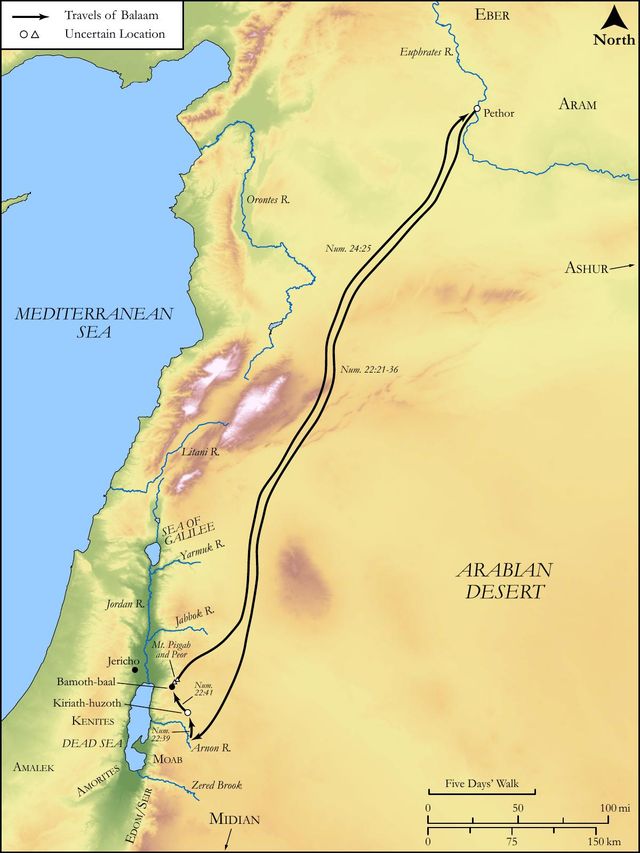
Numbers 24:9 is embedded within the series of four oracles delivered by Balaam, a non-Israelite prophet from Pethor, whom Balak, the king of Moab, hired to curse the advancing Israelites. This chapter marks the culmination of Balak's desperate, yet futile, attempts to thwart Israel's progress. Each time Balaam positions himself to pronounce a curse, the Spirit of God intervenes, compelling him to utter a blessing instead, much to Balak's increasing frustration and fury. This particular oracle, the fourth, builds upon the themes of Israel's unique divine favor, their secure dwelling, and their future triumph, bringing the prophetic declarations to a powerful crescendo. It serves as a theological statement on God's unassailable sovereignty, demonstrating His ability to transform intended maledictions into profound benedictions and prophetic insights into Israel's formidable destiny. The immediate narrative shows Balak's utter exasperation and Balaam's final, unsolicited prophecies concerning future messianic figures and the ultimate fate of various nations, further cementing God's overarching redemptive plan.
Historical & Cultural Context
The events of Numbers 24 transpire as the Israelites are encamped on the plains of Moab, poised on the cusp of entering the Promised Land after their forty years of wilderness wandering. Balak, as the reigning monarch of Moab, represents the indigenous peoples of Canaan and its surrounding regions who perceived Israel's approach as an existential threat. Among the nations of that day, the practice of divination and the employment of professional seers, like Balaam, were common and highly regarded. Kings frequently engaged such figures to secure spiritual advantage, whether through curses to weaken enemies or blessings to empower allies. The imagery of the lion was a pervasive and potent symbol among the nations, recognized as representing strength, royalty, courage, and formidable power, often associated with kings, deities, and national might. By depicting Israel as a lion, Balaam employs a culturally resonant metaphor that would have been immediately understood by Balak and his contemporaries as signifying supreme, unchallengeable authority and security. This context vividly highlights the stark contrast between human attempts to manipulate spiritual forces for political gain and the absolute, unyielding sovereignty of the God of Israel, who controls even the utterances of a foreign prophet.
Key Themes
ShowHideNumbers 24:9 profoundly contributes to several overarching themes within the book of Numbers and the broader Pentateuch. Firstly, it emphatically underscores the Divine Protection and Security of Israel. The vivid imagery of Israel "couching" and "laying down as a lion" conveys an unassailable strength and serene peace, implying that any attempt to disturb or harm them would be met with overwhelming, even disastrous, force. This highlights God's unwavering commitment to His covenant people, a theme consistently demonstrated throughout Israel's wilderness journey where God unfailingly provides and protects, as seen in the miraculous provision of manna and quail (Numbers 11:4-9) and the guiding presence of the cloud and fire (Numbers 9:15-23). Secondly, the verse emphasizes the Irrevocable Nature of God's Blessing. Despite Balak's persistent and desperate efforts to elicit a curse, God's blessing on Israel is fixed and cannot be undone by human machinations or demonic opposition. Balaam, a prophet renowned for his spiritual insight, could not bypass God's sovereign will, affirming the permanence of the divine covenant and God's faithfulness to His promises, as declared in Numbers 23:19. Finally, the latter part of the verse, "Blessed is he that blesseth thee, and cursed is he that curseth thee," reiterates a foundational principle first articulated to Abraham in Genesis 12:3. This establishes a universal law of divine retribution and reward, directly linking one's posture towards God's chosen people and His redemptive purposes to divine favor or judgment, thereby demonstrating God's justice and His active involvement in human affairs.
Exposition and Analysis
ShowHideKey Word Analysis
ShowHideThis primitive root signifies "to bend the knee; by implication, to sink, to prostrate." While it can denote weakness or submission, in this context, when applied to a lion, it describes a powerful creature in a state of secure repose, or perhaps poised for action, but without fear. It conveys a sense of settled, formidable presence, implying that Israel's position of strength is so absolute that they can afford to "couch" without vulnerability, resting in their divinely conferred might.
This term specifically refers to a lion, often with the connotation of a fiercer or older lion (or lioness). Its use alongside the more general term for lion ('ărîy) intensifies the imagery, emphasizing Israel's unparalleled might and regal status. The lion is a potent symbol of royalty, strength, and sovereignty, and in Scripture it is notably associated with the tribe of Judah, foreshadowing the Davidic monarchy and ultimately the Messiah. The double use underscores Israel's divinely endowed, unchallengeable power.
This primitive root means "to rise" or "to rouse up" (in various applications, literal, figurative, intensive, and causative). In the context of a sleeping great lion, it carries a strong connotation of extreme danger and folly to awaken such a creature. The rhetorical question, "who shall stir him up?", implies that any attempt to disturb this powerful, resting entity would be met with disastrous and certain consequences. It highlights Israel's invincibility under divine protection, serving as a dire warning to potential adversaries of the futility and peril of opposing God's chosen nation.
Verse Breakdown
ShowHide"He couched, he lay down as a lion, and as a great lion:"
This opening clause paints a vivid picture of Israel's state of secure power and regal authority. The use of two distinct terms for "lion" and the repetition of the action ("couched," "lay down") serve to intensify the imagery, underscoring Israel's formidable strength and unassailable position. This is not a lion preparing for battle, but one confidently at rest, implying that Israel's security is so absolute it does not need to constantly exert its power; its mere presence is enough to deter. It speaks to a divinely ordained peace and an unchallengeable status.
"who shall stir him up?"
This rhetorical question serves as a powerful declaration of Israel's invincibility. The implied answer is "no one" or, more accurately, "no one safely." It functions as a stark and ominous warning to any who would dare to oppose God's people, suggesting that such an act would be an act of supreme folly, akin to disturbing a sleeping, mighty predator. This question powerfully highlights the depth of divine protection that renders Israel untouchable by human or demonic forces, emphasizing the futility of any opposition.
"Blessed [is] he that blesseth thee, and cursed [is] he that curseth thee."
This concluding declaration reiterates a foundational covenant promise initially given to Abraham in Genesis 12:3. It establishes a universal and timeless principle of divine justice and reciprocity, making the treatment of Israel a direct reflection of one's posture towards God Himself. Those who align themselves with God's purposes for Israel will receive divine favor and blessing, while those who oppose them will incur divine judgment and a curse. This statement underscores the profound spiritual implications and eternal consequences of one's relationship with God's chosen people.
Literary Devices
ShowHideNumbers 24:9 is rich with literary artistry, primarily employing Metaphor, Rhetorical Question, and Parallelism. The central Metaphor of Israel as a "lion" and "great lion" is profoundly effective, immediately conveying strength, sovereignty, and regal authority. This animal imagery, common and powerful in the poetry of Scripture, elevates Israel's status to that of an unchallengeable power, not by their own might, but by divine endowment. The use of two distinct terms for lion ('ărîy and lâbîyʼ) intensifies this metaphor, creating a sense of escalating and undeniable power. Following this, the Rhetorical Question, "who shall stir him up?", serves to emphasize the invincibility of the divinely protected nation. It is a challenge that expects no answer, highlighting the futility and inherent danger of opposing Israel. Finally, the concluding statement, "Blessed [is] he that blesseth thee, and cursed [is] he that curseth thee," employs a clear form of Parallelism, specifically Antithetical Parallelism, where two opposing ideas are juxtaposed to underscore a profound moral and theological truth. This structure makes the divine principle clear, memorable, and impactful, reinforcing the absolute nature of God's blessings and curses.
Theological and Thematic Connections
ShowHideNumbers 24:9 stands as a profound theological statement on divine sovereignty, covenant faithfulness, and the immutable nature of God's promises. It vividly illustrates that God's plan for His people cannot be thwarted by human machinations or spiritual opposition; even a hired diviner like Balaam is compelled by the Spirit of God to speak truth, demonstrating that all creation, even those outside the covenant, are subject to God's ultimate control. The powerful imagery of the lion speaks to God's conferral of strength and regal authority upon Israel, positioning them as a formidable, unassailable entity under His watch. This divine protection extends beyond mere physical security to encompass the spiritual and covenantal well-being of the nation. The principle of blessing those who bless Israel and cursing those who curse them is not merely a historical promise but a timeless theological truth, revealing God's active involvement in human affairs and His unwavering commitment to upholding His covenant. It underscores the profound spiritual consequences of one's alignment with or opposition to God's purposes, echoing God's character as both righteous judge and faithful covenant keeper.
Reflection and Application
ShowHideNumbers 24:9 offers profound assurance and practical guidance for believers today. It serves as a powerful reminder that God is utterly sovereign over all circumstances, even when adversaries plot against His people or when life's challenges seem overwhelming. Just as God protected Israel from Balaam's curses, He continues to be our faithful protector and provider. Our security is not based on our strength or circumstances, but on God's unwavering commitment to His covenant and His children. This verse encourages us to rest in His power, knowing that if He is for us, no one can successfully stand against us. It also serves as a potent reminder of the principle that aligning ourselves with God's will and His people brings blessing, while opposing them invites divine judgment. This should motivate us to pray for, support, and stand with those who are persecuted for their faith, and to uphold God's righteous causes in the world, trusting that our actions, whether for good or ill, have eternal consequences. Our confidence should be in the "great Lion" who watches over us, allowing us to "couch" in peace, knowing that our ultimate security is found in Him alone.
Questions for Reflection
ShowHideFAQ
ShowHideWhy is Israel depicted as a lion in this verse?
ShowHideThe depiction of Israel as a "lion" and "great lion" is a powerful metaphor used to symbolize strength, sovereignty, and regal authority. Among the nations, the lion was a common emblem for kings and powerful nations, representing an unchallengeable force. For Israel, this imagery signifies their formidable and unassailable position, not due to their own inherent might, but because of God's divine protection and blessing. It foreshadows the future rise of the Davidic monarchy and is specifically associated with the tribe of Judah, from which the Messiah would come, as prophesied in Genesis 49:9. The lion "couching" or "lying down" further emphasizes a state of secure rest, implying that Israel is so strong and divinely protected that it can afford to be at peace, yet remains formidable to anyone who would dare to disturb it.
What is the significance of the rhetorical question, "who shall stir him up?"
ShowHideThis rhetorical question serves to powerfully emphasize Israel's invincibility under God's protection. The implied answer is "no one" or, more emphatically, "no one safely." It functions as a direct challenge and a dire warning to any potential adversaries, including Balak, that attempting to harm or disturb God's chosen people would be an act of extreme folly and would inevitably result in disastrous consequences. Just as disturbing a sleeping great lion would be perilous, so too is opposing a nation guarded by the Almighty. It highlights the futility of human or demonic efforts to thwart God's divine plan and underscores the absolute sovereignty of Yahweh over all creation and human affairs. This divine protection is a recurring theme throughout biblical history, seen in instances like God's deliverance of Israel from Egypt at the Red Sea (Exodus 14:13-14) and His continued faithfulness to His covenant people through all generations.
Christ-Centered Fulfillment
ShowHideNumbers 24:9 finds its ultimate and most profound fulfillment in the person and work of Jesus Christ. The imagery of Israel as a majestic, unassailable "lion" powerfully foreshadows the coming of the Messiah, who is explicitly identified in the New Testament as the Lion of the tribe of Judah, the King of kings and Lord of lords. Just as Balaam's prophecy declared Israel's secure and formidable position under God's protection, Christ embodies the ultimate divine strength and sovereignty. He is the one whom no one can "stir up" or ultimately defeat, having triumphed decisively over sin, death, and the powers of darkness through His sacrificial death and glorious resurrection (Colossians 2:15). Furthermore, the foundational principle "Blessed [is] he that blesseth thee, and cursed [is] he that curseth thee" finds its most perfect and universal application in relation to Christ. Those who receive Him and believe in His name are blessed with eternal life and the privilege of becoming children of God (John 1:12), while those who reject Him face eternal condemnation, for they have not believed in the name of the only Son of God (John 3:18). Our security and blessing are no longer derived from ethnic lineage but from our spiritual union with Christ, the true Lion of God, in whom we find an unshakeable peace, an eternal rest, and the confident assurance that no one can snatch us out of His mighty hand (John 10:28-29).