


Matthew 25:40
Bible text: King James Version (1769 Blayney text) · Public domain
Bible text: King James Version with Strong's numbers · Public domain
Bible text: Berean Standard Bible · Public domain
Bible text: American Standard Version (1901) · Public domain
Bible text: World English Bible, Messianic edition · Public domain
Bible text: Geneva Bible (1599) · Public domain
Bible text: Young's Literal Translation · Public domain
- ΚαὶKaiAndG2532CONJConjunction
- ἀποκριθεὶςapokritheisansweringG611V-AOP-NSMVerb Aorist Passive Deponent Participle Nominative Singular Masculine
- ὁhotheG3588T-NSMDefinite article Nominative Singular Masculine
- βασιλεὺςbasileusKingG935N-NSM-TNoun Nominative Singular Masculine Title
- ἐρεῖereiwill sayG4483V-FAI-3SVerb Future Active Indicative 3rd Singular
- αὐτοῖς·autoisto themG846P-DPMPersonal pronoun Dative Plural Masculine
- ἀμὴνamēnAmenG281INJ-HEBInterjection
- λέγωlegōI sayG3004V-PAI-1SVerb Present Active Indicative 1st Singular
- ὑμῖν·huminto youG4771P-2DPPersonal pronoun Dative 2nd Plural
- ἐφ᾽eph᾽to the extentG1909PREPPreposition
- ὅσονhosonas much asG3745K-ASNCorrelative pronoun Accusative Singular Neuter
- ἐποιήσατεepoiēsateyou did [it]G4160V-AAI-2PVerb Aorist Active Indicative 2nd Plural
- ἑνὶhenito oneG1520A-DSMAdjective Dative Singular Masculine
- τούτωνtoutōnof theseG3778D-GPMDemonstrative pronoun Genitive Plural Masculine
- τῶνtōntheG3588T-GPMDefinite article Genitive Plural Masculine
- ἀδελφῶνadelphōnbrothersG80N-GPMNoun Genitive Plural Masculine
- μουmouof MineG3165P-1GSPersonal pronoun Genitive 1st Singular
- τῶνtōnof theG3588T-GPMDefinite article Genitive Plural Masculine
- ἐλαχίστωνelachistōnleastG1646A-GPMAdjective Genitive Plural Masculine
- ἐμοὶemoito Me myselfG1473P-1DSPersonal pronoun Dative 1st Singular
- ἐποιήσατεepoiēsateyou did [it]G4160V-AAI-2PVerb Aorist Active Indicative 2nd Plural
English is a literal word-by-word gloss of the Greek, not the KJV's wording. Why?
This is the original text the KJV's translators worked from — each Greek word with its own literal English meaning in this verse, prepared by scholars at Tyndale House, Cambridge. The KJV translates whole sentences, not word by word, so its wording differs: one Greek word can become several English words, and the KJV may choose “charity” where the gloss reads “love”. Both are faithful — they answer different questions. For the KJV's own rendering, switch to the KJV text.
Details
See on the biblical-era maps

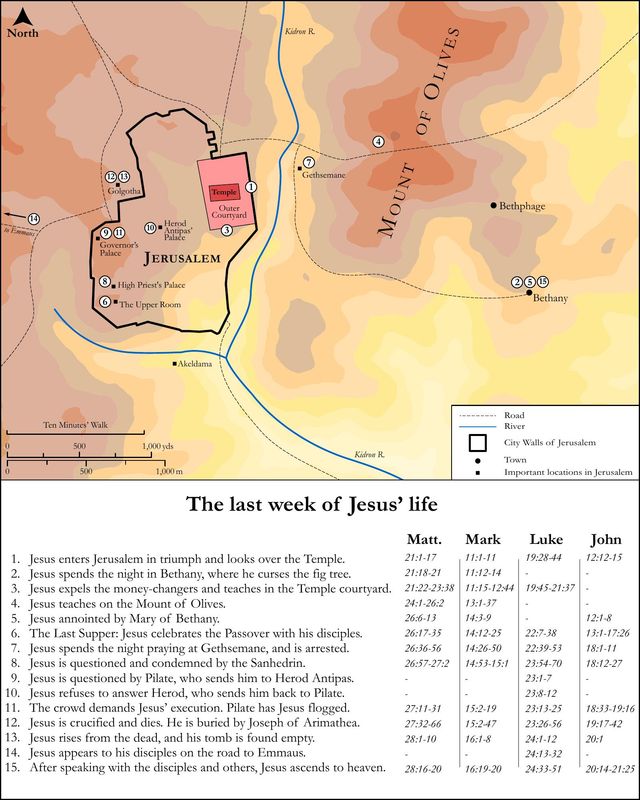
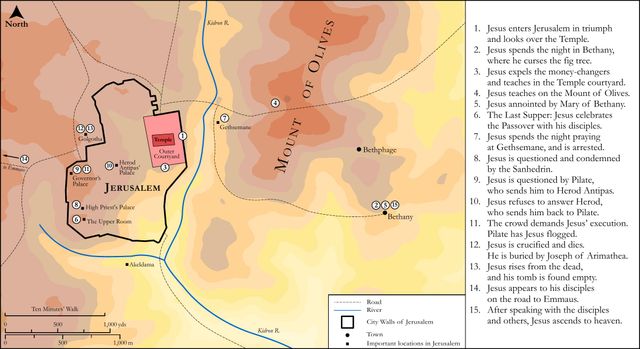
Study this verse
Historical interpretation
Ten Centuries of Reception
17 surviving comments on this verse. Each one is dated, so this reads as a timeline rather than a list.
Select a marker to jump to its quote. Markers stagger vertically where authors wrote within a few decades of each other.
It is from humility that they declare themselves unworthy of any praise for their good deeds, not that they are forgetful of what they have done. But He shows them His close sympathy with His own.
Then, in order that thou mayest see in another way also the justice of the sentence, He first praises them that have done right, and saith, "Come, ye blessed of my Father, inherit the kingdom prepared for you before the foundation of the world. For I was an hungered, and ye gave me meat," and all that follows. For that they may not say, we had it not, He condemns them by their fellow-servants; like as the virgins by the virgins, and the servant that was drunken and gluttonous by the faithful servant, and him that buried his talent, by them that brought the two, and each one of them that continue in sin, by them that have done right.
And here, however, it is of an equal; for he compares rich with rich, and poor with poor. And not in this way only doth He show the sentence justly passed, by their fellow-servants having done what was right when in the same circumstances, but also by their not being obedient so much as in these things in which poverty was no hindrance; as, for instance, in giving drink to the thirsty, in looking upon him that is in bonds, in visiting the sick. And when He had commended them that had done right, He shows how great was originally His bond of love towards them. For, "Come," saith He, "ye blessed of my Father, inherit the kingdom prepared for you from the foundation of the world." To how many good things is this same equivalent, to be blessed, and blessed of the Father? And wherefore were they counted worthy of such great honors? What is the cause? "I was an hungered, and ye gave me meat; I was thirsty, and ye gave me drink;" and what follows.
Of what honor, of what blessedness are these words? And He said not, Take, but, "Inherit," as one's own, as your Father's, as yours, as due to you from the first. For, before you were, saith He, these things had been prepared, and made ready for you, forasmuch as I knew you would be such as you are.
And in return for what do they receive such things? For the covering of a roof, for a garment, for bread, for cold water, for visiting, for going into the prison. For indeed in every case it is for what is needed; and sometimes not even for that. For surely, as I have said, the sick and he that is in bonds seeks not for this only, but the one to be loosed, the other to be delivered from his infirmity. But He, being gracious, requires only what is within our power, or rather even less than what is within our power, leaving to us to exert our generosity in doing more.
(Hom. lxxix.) To this most sweet section of Scripture which we cease not continually to ponder, let us now listen with all attention and compunction of spirit, for Christ does indeed clothe this discourse with more terrors and vividness. He does not accordingly say of this as of the others, The kingdom of heaven is like, but shows of Himself by direct revelation, saying, When the Son of man shall come in his majesty.
For all his Angels shall be with him to bear witness to the things wherein they have administered to men's salvation at His bidding.
Or, He calls the one sheep and the other goats, to denote the unprofitableness of the one, and the fruitfulness of the other, for sheep are greatly productive in fleece, milk, and lambs.
Then He separates them in place.
Observe that He says not 'Receive,' but possess, or inherit, as duo to you from of old.
For what the Saints obtain the boon of this heavenly kingdom He shows when He adds, I was an hungred, and ye gave me to eat.
But if they are His brethren, why does He call them the least? Because they are lowly, poor, and outcast. By these He means not only the monks who have retired to the mountains, but every believer though he should be secular, though an hungred, or the like, yet He would have him obtain merciful succours, for baptism and communication of the Divine mysteries makes him a brother.
Observe how they had failed in mercifulness, not in one or two respects only, but in all; not only did they not feed Him when He was hungry, but they did not even visit Him when He was sick, which was easier. And look how light things He enjoins; He said not, I was in prison, and ye did not set me free, but, and ye visited me not. Also His hunger required no costly dainties, but necessary food. Each of these counts then is enough for their punishment. First, the slightness of His prayer, viz. for bread; secondly, the destitution of Him who sought it, for He was poor; thirdly, the natural feelings of compassion, for He was a man; fourthly, the expectation of His promise, for He promised a kingdom; fifthly, the greatness of Him who received, for it is God who receives in the poor man; sixthly, the preeminent honour, in that He condescended to take of men; and, seventhly, the righteousness of so bestowing it, for what He takes from us is our own. But avarice blinds men to all these considerations.
Thus convicted by the words of the Judge, they make answer submissively, Lord, when saw we thee &c.
He who was within two days to celebrate the passover, to be delivered to the cross, and mocked by men, fitly now holds out the glory of His triumph, that He may overbalance the offences that were to follow by the promise of reward. And it is to be noted, that He who shall be seen in majesty is the Son of Man.
Also the goat is a salacious animal, and was the offering for sins in the Law; and He says not 'she goats' which can produce young, and come up shorn from the washing. (Song of Solomon 4:2.)
This prepared for you from the foundation, of the world, is to be understood as of the foreknowledge of God, with whom things to come are as already done.
It were indeed free to us to understand that it is Christ in every poor man whom we feed when he is hungry, or give drink to when he is thirsty, and so of other things; but when He says, In that ye have done it to one of the least of these my brethren, He seems tome not to speak of the poor generally, but of the poor in spirit, those to whom He pointed and said, Whosoever shall do the will of my Father which is in heaven, the same is my brother. (Matt. 12:50.)
(Verse 40, 41.) Amen, I say to you: as long as ((Also: when)) you did it to one of these, my least brothers, you did it to me. Then he will say to those on his left: Depart from me, you cursed, into the eternal fire prepared for the devil and his angels. For I was hungry and you gave me nothing to eat. I was thirsty and you gave me nothing to drink. I was a stranger and you did not welcome me. I was naked and you did not clothe me. I was sick and in prison and you did not visit me. Then they will answer him, saying: Lord, when did we see you hungry or thirsty or a stranger or naked or sick or in prison and did not minister to you? Then he will answer them, saying: Amen I say to you, as long as you did not do it to one of these least ones, neither did you do it to me. It was fitting for us to understand that in every poor person Christ, hungry, would be fed, thirsty would be given drink, a stranger would be brought into shelter, the naked would be clothed, the sick would be visited, the imprisoned would have the consolation of speaking with him. But from this that follows: As long as you did it to one of these least brothers of mine, you did it to me, it does not seem to me that he spoke generally about the poor, but about those who are poor in spirit, to whom he extends his hand and said: These are my brothers and my mother, who do the will of my Father (Mark 3:34-35; Luke 8:21).
(in Joan. Tr. 21.) The wicked and they also who shall be set on His right hand shall see Him in human shape, for He shall appear in the judgment in that form which He took on Him from us; but it shall be afterwards that He shall be seen in the form of God, for which all the believers long.
(de Civ. Dei, xx. 24.) He shall come down with the Angels whom He shall call from heavenly places to hold judgment.
(Serm. 351, 8.) Or, by Angels here He means men who shall judge with Christ; for Angels are messengers, and such we rightly understand all who have brought tidings of heavenly salvation to men.
(de Civ. Dei, xx. 24.) This gathering shall be executed by the ministry of Angels, as it is said in the Psalm, Gather to him his saints. (Ps. 50:5.)
(de Civ. Dei, xx. 9.) Besides that kingdom of which He will say in the end, Inherit the kingdom prepared for you, though in a very inferior manner, the present Church is also called His kingdom, in the which we are yet in conflict with the enemy until we come to that kingdom of peace, where we shall reign without an enemy.
(Serm. 351. 8.) But one will say, I desire not to reign, it is enough for me that I be saved. Wherein they are deceived, first, because there is no salvation for those whose iniquity abounds; and, secondly, because if there be any difference between those that reign, and those that do not reign, yet must all be within the same kingdom, lest they be esteemed for foes or aliens, and perish while the others reign. Thus all the Romans inherit the kingdom of Rome, though all do not reign in it.
(de Civ. Dei, xxi. 10.) It is hence clear, that the same fire will be appropriated to the punishment of men and of dæmons. If then it inflicts pain by corporeal touch, so as to produce bodily torment, how will there be in it any punishment for the evil spirits, unless the dæmons have, as some have thought, bodies composed of gross and fluid air. But if any man asserts that the dæmons have no bodies, we would not pugnaciously contend the point. For why may we not say, that truly, though wonderfully, even incorporeal spirit can feel pain of corporeal fire? If the spirits of men, though themselves incorporeal, can be now inclosed in bodily limbs, they can then be inseparably attached to the bonds of body. The dæmons then will be united to a body of material fire, though themselves immaterial, drawing punishment from their body, not giving life to it. And that fire being material will torture such bodies as ours with their spirits; but the dæmons are spirits without bodies.
(de Civ. Dei, xx. 1.) He is now treating of the last judgment, when Christ shall come from heaven to judge the quick and dead. This day of the Divine judgment we call the Last Day, that is, the end of time; for we cannot tell through how many days that judgment will be prolonged; but day, as is the use of holy Scripture, is put for time. And we therefore call it the last or latest judgment, because He both now judges and has judged from the beginning of the human race, when He thrust forth the first man from the tree of life, and spared not the Angels that sinned. But in that final judgment both men and Angels shall be judged together, when the Divine power shall bring each man's good and evil deeds in review before his memory, and one intuitive glance shall present them to the perception, so that at once we shall be condemned or acquitted in our consciences.
In Scetis there once went out an order that they should fast for a week, and then celebrate Easter. During the week some brothers happened to come into Egypt to visit Moses, and he cooked a little vegetable stew for them. The nearby hermits saw the smoke, and said to the clergy of the church, ‘What is that smoke? Moses must be disobeying the order, and cooking in his cell.’ The clergy said, ‘We will talk to him when he comes.’ On Saturday the clergy, who knew the greatness of his way of life, said to Moses in front of the whole congregation, ‘Moses, you have broken a commandment of men: but you have kept the commandments of God valiantly.’
Cassian said, ‘We came from Palestine to Egypt, and visited one of the hermits. After he had welcomed us, we asked him, “When you receive guests, why don’t you fast? In Palestine they do.” He answered, “Fasting is always possible but I cannot keep you here for ever. Fasting is useful and necessary, but we can choose to fast or not fast. God’s law demands from us perfect love. I receive Christ when I receive you, so I must do all I can to show you love. When I have said goodbye to you, I can take up my rule of fasting again. ‘The sons of the bridegroom cannot fast while the bridegroom is with them; when he is taken from them, then they can fast’ (Matt. 9:15).” ’
“I was hungry, and you gave me something to eat; I was thirsty, and you gave me something to drink.” [Jesus mentions] many other things, which we have recited. Having been given the faith, the righteous say, “Lord, when did see you hungry and fed you, thirsty, and gave you something to drink, naked and clothed you?” Other things also follow. What then, my most beloved? Does our Lord hunger and thirst? Is he who himself made everything in heaven and on earth, who feeds angels in heaven and every nation and race on earth, who needs nothing of an earthly character, as he is unfailing in his own nature, is this one naked? It is incredible to believe such a thing. Yet what must be confessed is easy to believe. For the Lord hungers not in his own nature but in his saints; the Lord thirsts not in his own nature but in his poor. The Lord who clothes everyone is not naked in his own nature but in his servants. The Lord who is able to heal all sicknesses and has already destroyed death itself is not diseased in his own nature but in his servants. Our Lord, the one who can liberate every person, is not in prison in his own nature but in his saints. Therefore, you see, my most beloved, that the saints are not alone. They suffer all these things because of the Lord. In the same way, because of the saints the Lord suffers all these things with them.
These words overthrow the error of those who said that the Lord should not continue in the same form of a servant. By his majesty, He means His divinity, in which He is equal to the Father and the Holy Spirit.
And all nations shall be gathered before Him. These words prove that the resurrection of men shall be real.
And it is to be noted, that the Lord here enumerates six works of mercy which whoso shall study to accomplish shall be entitled to the kingdom prepared for the chosen from the foundation of the world.
(Mor. xxvi. 27.) These, to whom as they stand on His right hand the Judge at His coming shall say, I was an hungred &c. are they who are judged on the side of the elect, and who reign; who wash away the stains of their life with tears; who redeem former sins by good deeds following; who, whatever unlawful thing they have at any time done, have covered it from the Judge's eyes by a cloak of alms. Others indeed there are who are not judged, yet reign, who have gone even beyond the precepts of the Law in the perfection of their virtue.
(ubi sup.) They to whom this is said are the wicked believers, who are judged and perish; others, being unbelievers, are not judged and perish; for there is no examination of the condition of such as appear before the face of an impartial Judge already condemned by their unbelief; but those who hold the profession of the faith, but have not the works of their profession, are convicted that they may be condemned. These at least hear the words of their Judge, because they have at least kept the words of His faith. The others hear no words of their Judge pronouncing sentence of condemnation, because they have not paid Him honour even in word. For a prince who governs an earthly kingdom punishes after a different manner the rebellion of a subject and the hostile attempts of an enemy; in the former case, he recurs to his prerogative; against an enemy he takes arms, and does not ask what penalty the law attaches to his crime.
But you, brothers, knowing both the rest of Lazarus and the punishment of the rich man, act diligently, seek intercessors for your sins, and secure the poor as advocates for yourselves on the day of judgment. For you now have many Lazaruses; they lie before your doors, and they need what falls daily from your table while you are already satisfied. The words of sacred scripture ought to instruct us to fulfill the commands of piety. Every day, if we seek Lazarus, we find him; every day, even if we do not seek him, we see Lazarus. Behold, the poor present themselves persistently, they ask of us, who will then come as intercessors for us. Certainly we ought to have asked them entirely, yet we are the ones being asked. Consider whether we ought to refuse what is requested of us, when those who ask are our patrons.
Therefore do not waste the times for mercy, do not neglect the remedies you have received. Before punishment, think about punishment. When you look upon any who are lowly in this world, even if some things of theirs seem reprehensible, do not despise them, because perhaps those whom weakness of character wounds, the medicine of poverty heals. If there are any such things of theirs that ought rightly to be reproved, turn these, if you wish, to the use of your own reward, so that from their very faults the increase of your piety may be accumulated, inasmuch as you give both bread and word equally, the bread of refreshment with the word of correction; and let those who sought one thing receive two forms of nourishment from you, while they are satisfied both outwardly with food and inwardly with discourse.
Therefore when a poor person is seen to be blameworthy, he ought to be admonished, not despised. But if he has nothing deserving of reproof, he ought to be greatly venerated as an intercessor. But behold, we see many people, and we do not know what merit each one has. Therefore all are to be venerated, and it is necessary that you humble yourself before all, the more so because you do not know which of them is Christ.
Learn therefore, brothers, to despise all temporal things; learn to scorn passing honor, to love eternal glory. Honor those whom you see as poor, and those whom you observe outwardly as despised by the world, consider them inwardly as friends of God. Share with them what you have, so that one day they may deign to share with you what they have. Consider what is said by the mouth of the teacher of the nations: "In this time let your abundance supply their want, that their abundance also may be a supplement to your want." Consider what Truth itself says in person: "As long as you did it to one of these my least brethren, you did it to me." Why are you slow to give, when what you extend to one lying on earth you give to him who sits in heaven?
There is a story well regarded and handed down to us by the account of our elders. A certain father of a household served with great zeal for hospitality along with his whole house; and while he received strangers at his table daily, one day a certain stranger came among others and was led to the table. And while the father of the household, from his custom of humility, wished to pour water on his hands, he turned and took the pitcher, but suddenly did not find the one on whose hands he had wished to pour water. And while he marveled at this occurrence to himself, that same night the Lord said to him through a vision: "On other days you received me in my members, but yesterday you received me in myself." Behold, coming to judgment, He will say: "What you did for one of my least ones, you did for me." Behold, before the judgment, when He is received through His members, He also visits His hosts through Himself; and yet we are sluggish toward the grace of hospitality. Consider, brothers, how great is the virtue of hospitality. Receive Christ at your tables, that you may be worthy to be received by Him at the eternal banquet. Offer now hospitality to Christ the stranger, that He may not disregard you as strangers at the judgment, but may receive you as His own into the kingdom.
But because examples rather than words more often stir the hearts of listeners to the love of God and neighbor, I am eager to relate to your charity what my son Epiphanius the deacon, who is present here, born in the province of Isauria, is accustomed to tell as a miracle that occurred in the neighboring land of Lycaonia. For he says that there was a certain monk named Martyrius, a man of very venerable life, who was traveling from his own monastery to visit another monastery over which a spiritual father presided. And so as he went on his way, he found a leper whom the elephantine disease had disfigured throughout his limbs with dense wounds, wanting to return to his lodging but unable to do so because of weariness. And this man said that he had his lodging on that very road where the same monk Martyrius was hastening to go. But the man of God, having pity on the weariness of this leper, immediately threw down and spread out on the ground the cloak with which he was clothed, and placed the leper upon it, and lifting him up wrapped all around in his cloak upon his shoulder, he carried him back with him. And when he was now approaching the doors of the monastery, the spiritual father of that monastery began to cry out with a loud voice: "Run, open the doors of the monastery quickly, because brother Martyrius is coming carrying the Lord." But immediately when Martyrius reached the entrance of the monastery, he who was thought to be a leper leaped from his neck, and appearing in that form in which the Redeemer of the human race is accustomed to be recognized by men, God and man Christ Jesus, he returned to heaven while Martyrius watched, and ascending he said to him: "Martyrius, you were not ashamed of me on earth; I will not be ashamed of you in heaven." And when this holy man had just entered the monastery, the father of the monastery said to him: "Brother Martyrius, where is he whom you were carrying?" To which he replied, saying: "If I had known who he was, I would have held his feet." Then the same Martyrius related that when he had carried him, he had not felt his weight at all. Nor is this surprising; for how could he feel weight, when he who was being carried was himself carrying the one who bore him?
In this matter we must consider how much fraternal compassion avails, how much the bowels of mercy join us to almighty God. For we draw near to him who is above all things precisely when we lower ourselves even beneath ourselves through compassion for our neighbor. In bodily matters, no one touches high things unless he stretches upward; but in spiritual matters it is certain that the more we are drawn down through compassion, the more truly we approach the heights. But behold, for our edification it is not enough for the Redeemer of the human race that he declared he would say at the last judgment: "Inasmuch as you did it to one of the least of these my brethren, you did it to me," unless he also showed in himself before the judgment what he had said; so that he might demonstrate that whoever now renders good works to the needy renders them especially to him for whose love he renders them. And the more anyone receives a greater reward, the more he does not despise even him who seems most deserving of contempt. For what in human flesh is more sublime than the flesh of Christ, which is exalted above the angels? And what in human flesh is more abject than the flesh of a leper, which is torn apart by swelling wounds and filled with exhaling stenches? But behold, he appeared in the form of a leper; and he who is to be revered above all things did not disdain to be seen as despised below all things. Why this, except to admonish us who are slower of understanding, that whoever hastens to stand before him who is in heaven should not refuse to be humbled on earth and to suffer with even the abject and despicable brethren?
After the parables concerning the end of the world the Lord proceeds to describe the manner of the judgment to come.
Or, they are called blessed, to whom an eternal blessing is due for their good deserts. He calls it the kingdom of His Father, ascribing the dominion of the kingdom to Him by whom Himself the King was begotten. For by His royal power, with which He shall be exalted alone in that day, He shall pronounce the sentence of judgment, Then shall the King say.
Mystically, He who with the bread of the word and the drink of wisdom refreshes the soul hungering and thirsting after righteousness, or admits into the home of our mother the Church him who is wandering in heresy or sin, or who strengthens the weak in faith, such an one discharges the obligations of true love.
Lord, when sate we thee &c. This they say not because they distrust the Lord's words, but they are in amaze at so great exaltation, and at the greatness of their own glory; or because the good which they have done will seem to them to be so small according to that of the Apostle, For the sufferings of this present time are not worthy to be compared to the glory that shall be revealed in us. (Rom. 8:18.)
. He does not give honor or punishment until He has first judged. For He loves mankind and teaches us to do the same as well, not to punish until we have made a careful examination. In this way those who are punished after the judgement will have no cause for complaint. He calls the saints "blessed" as they have been accepted by the Father. He considers them to be inheritors of the kingdom to show that God makes them participants in His own glory as His sons. For He did not say, "receive," but rather "inherit" as a man would his father’s estate. By "the least brethren" He means either His own disciples or, simply, all the poor. For every poor man is Christ’s brother for the very reason that Christ, too, spent His life in poverty. See also God’s righteousness, how He acclaims the saints; and see the good disposition of their mind, how they deny, with befitting modesty, that they have cared for Him. But the Lord accepts as for Himself the things that were done for the poor.
(non occ.) Under the figure of a sheep in Scripture is signified simplicity and innocence. Beautifully then in this place are the elect denoted by sheep.
Continue studying Matthew 25:40 across the web’s major study libraries — every link below opens this exact verse, chapter, or book on the destination site.
Read & Compare
 BibleGatewayThis verse in more than 200 translations and 70 languages.
 Bible.comThe YouVersion reader — hundreds of translations, reading plans, and highlights.
 ESV.orgCrossway's official English Standard Version reader.
 NET BibleThe NET translation with 60,000+ translators' notes on every rendering decision.
 STEP BibleTyndale House's free study tool — original text, vocabulary, and scholarly resources.
 BibliaLogos Bible Software's free web reader.
 USCCBThe New American Bible (Revised Edition) with the U.S. bishops' study notes.
Commentaries
 BibleHub CommentariesDozens of classic commentaries on this verse, gathered on one page.
 StudyLightMore than 100 commentary sets — the largest collection on the web.
 BibleRefPlain-English commentary on what this verse means, verse by verse.
 Enduring WordDavid Guzik's free commentary on this chapter, widely used by Bible teachers.
 Bible Study ToolsVerse commentary alongside Greek and Hebrew study aids.
Original Language & Research
- BibleHub InterlinearThe verse word by word — original language, transliteration, and English.
- BibleHub LexiconEvery word's original-language definition and Strong's entry.
 Blue Letter BibleDeep-study tools — Strong's numbers, concordance, and word studies.
 CNTR CollationThe earliest Greek manuscripts of this verse, collated letter by letter.
Sermons, Hymns & Audio


TrulyRandomVerse is not affiliated with these sites and doesn’t control their content. They’re linked because they’re genuinely useful.
Summary
Matthew 25:40 forms the climactic declaration in Jesus' Parable of the Sheep and the Goats, revealing the King's profound identification with the most vulnerable members of society. It unveils a startling truth: acts of compassion and service rendered to "the least of these" are not merely good deeds but are, in essence, direct acts of service and love offered to Christ Himself. This verse underscores the inseparable link between genuine faith and practical, tangible love for those in need, serving as a foundational principle for divine judgment.
Context
ShowHideLiterary Context
This verse is the powerful conclusion to the King's judgment of the "sheep" in the Parable of the Sheep and the Goats, found in Matthew 25:31-46. It immediately follows the King's commendation of the righteous for their acts of mercy (feeding the hungry, giving drink to the thirsty, welcoming the stranger, clothing the naked, visiting the sick and imprisoned). The subsequent verses (Matthew 25:41-46) describe the condemnation of the "goats" for their failure to perform these same acts, culminating in the King's parallel declaration that neglecting "the least of these" is neglecting Him. This parable itself is the final of three parables (the Ten Virgins in Matthew 25:1-13 and the Talents in Matthew 25:14-30) that Jesus delivers on the Mount of Olives, all focusing on the theme of readiness and faithful stewardship in anticipation of His second coming and the final judgment.
Historical & Cultural Context
Jesus' teachings in Matthew 25 reflect a deep engagement with Jewish ethical traditions, which emphasized care for the poor, the widow, and the orphan as a core expression of righteousness. The Old Testament prophets frequently condemned those who oppressed the vulnerable, and the Law provided specific provisions for their care (e.g., Deuteronomy 15:7-11). Among the Greeks and the Romans, while acts of charity existed, they were often motivated by a desire for social standing or reciprocal benefit. Jesus' teaching here, however, elevates compassion for the lowly to an ultimate criterion for eternal destiny, linking it directly to one's relationship with God. The concept of a final judgment where a divine King separates humanity based on their deeds was a familiar eschatological theme in Jewish thought, but Jesus' unique emphasis on identification with the "least" was revolutionary.
Key Themes
ShowHideMatthew 25:40 powerfully encapsulates several key themes prevalent throughout the Gospel of Matthew and Jesus' broader ministry. Firstly, it highlights the Kingdom of Heaven's ethics, where true righteousness is demonstrated not merely by religious observance but by tangible acts of love and mercy towards others, particularly the vulnerable. Secondly, it underscores the theme of Jesus' Messianic identity as the ultimate King and Judge, who possesses the authority to separate humanity and determine their eternal fate. Thirdly, it reveals the profound concept of Christ's identification with humanity, especially with those who are suffering or overlooked. This identification transforms seemingly ordinary acts of kindness into profoundly spiritual acts of worship. Finally, the verse contributes to the overarching theme of eschatological accountability, emphasizing that human actions in the present have eternal consequences, and that faithful stewardship includes compassionate service to others, as seen in the broader teachings on the Kingdom of Heaven and the final judgment.
Exposition and Analysis
ShowHideKey Word Analysis
ShowHideMeaning a sovereign, often derived from the notion of a foundation of power. In this context, "the King" unequivocally refers to Jesus Christ, the Son of Man, who is depicted sitting on His glorious throne in Matthew 25:31. This title emphasizes His supreme authority and divine prerogative to judge humanity.
The superlative of a word meaning "short," used as equivalent to mikrós (small). It denotes the smallest, weakest, most insignificant, or lowest in dignity. This term highlights the extreme vulnerability and often overlooked status of the individuals Jesus identifies with, emphasizing that even the most seemingly inconsequential acts of kindness towards them hold immense significance in the King's eyes.
Meaning a brother, literally or figuratively, near or remote. In this context, "my brethren" is a critical phrase that has been debated among scholars. It can refer specifically to Jesus' disciples or fellow believers who suffer persecution or hardship for their faith (as in Matthew 10:42), or it can refer more broadly to all humanity, particularly the poor and overlooked, whom Jesus identifies with. Regardless of the precise scope, the term signifies a deep, familial connection that Jesus claims with those who are in need.
Verse Breakdown
ShowHide"And the King shall answer and say unto them"
This opening clause sets the scene for a divine pronouncement. The "King" is Jesus, the Son of Man, who has just commended the righteous. His "answer" is not a response to a question, but rather a solemn declaration, emphasizing the authoritative and definitive nature of His judgment. It signifies the culmination of the separation process described in the preceding verses.
"Verily I say unto you"
This is a classic authoritative declaration by Jesus, often translated as "Truly, truly" or "Amen, I say to you." The Greek word amēn (G281, "verily") underscores the absolute truth and certainty of what follows. It demands attention and signifies a profound, unshakeable principle that Jesus is about to reveal, lending divine weight to His words.
"Inasmuch as ye have done [it] unto one of the least of these my brethren"
This clause establishes the condition and the recipients of the actions being judged. "Inasmuch as" (Greek epí hósos, G1909 + G3745) means "to the extent that" or "as long as," indicating that the actions are the basis for the King's pronouncement. The focus is on "one of the least" (G1520 + G1646), highlighting the most vulnerable, neglected, or powerless individuals. The phrase "my brethren" (G3450 + G80) signifies Jesus' personal and intimate connection to these overlooked ones, making their plight His own. The "it" refers to the acts of compassion detailed in the preceding verses (feeding, clothing, visiting, etc.).
"ye have done [it] unto me."
This is the profound and startling identification. The actions performed for "the least of these" are not merely good deeds for others, but are directly imputed to the King Himself. This statement reveals the ultimate spiritual significance of practical charity: service to the vulnerable is service to Christ. It transforms human relationships and acts of mercy into a direct encounter with the divine, making compassion for others an essential expression of love for God.
Literary Devices
ShowHideMatthew 25:40 employs several powerful literary devices. Identification is central, as Jesus explicitly states His personal connection with "the least of these," making their suffering and needs His own. This creates a profound sense of empathy and moral imperative for the audience. The verse also utilizes hyperbole or paradox by equating service to the most insignificant with service to the glorious King, elevating the status of the lowly and challenging conventional notions of power and importance. The structure of the statement, "Inasmuch as... ye have done it unto me," functions as a form of analogy or metaphor, drawing a direct parallel between two seemingly disparate actions (serving a human and serving God) to reveal a deeper spiritual truth. Finally, the entire parable, of which this verse is the climax, is an allegory, where the "sheep," "goats," and "King" represent spiritual realities and the judgment scene illustrates the ultimate consequences of one's life choices.
Theological and Thematic Connections
ShowHideMatthew 25:40 offers a profound theological insight into the nature of God's kingdom and the criteria for genuine discipleship. It asserts that true faith is not merely intellectual assent or ritualistic observance, but is inextricably linked to tangible acts of love and compassion for the most vulnerable members of society. This verse reveals Christ's radical solidarity with the poor, the sick, the imprisoned, and the outcast, making their needs His own. It challenges believers to see the face of Christ in every person, especially those suffering, and to understand that their response to human need is a direct reflection of their relationship with the divine King. This principle serves as a powerful reminder that the Kingdom of God is characterized by active, self-sacrificial love that extends aside of society.
Reflection and Application
ShowHideThis verse serves as a powerful and convicting mirror for every believer, challenging us to examine the authenticity of our faith through the lens of our actions. It compels us to move beyond passive belief to active, sacrificial love, reminding us that our spiritual health is deeply intertwined with our practical engagement with the suffering world around us. To truly follow Christ means to adopt His heart for the lowly, to see His image in those often overlooked, and to understand that every act of kindness, however small, offered to "the least of these" is a direct offering of worship to the King of Kings. It calls us to embody the gospel not just in our words, but in our hands and feet, transforming our compassion into concrete action, knowing that such service is not merely humanitarianism but a profound expression of our devotion to Jesus.
Questions for Reflection
ShowHideFAQ
ShowHideWho are "the least of these my brethren" that Jesus refers to?
ShowHideWhile scholars debate the precise scope, "the least of these my brethren" most broadly refers to all humanity, particularly the poor, the lowly, the vulnerable, the sick, the imprisoned, and those suffering any form of hardship or oppression. Some interpretations suggest a more specific reference to Jesus' disciples who suffer persecution for their faith, but the broader application aligns more closely with the universal nature of the acts of mercy described (feeding, clothing, visiting, etc.) and the inclusive love taught throughout Jesus' ministry. Regardless of the specific group, the core message remains: Christ identifies profoundly with those in greatest need, making their care a direct act of service to Him. This principle is foundational to understanding the Kingdom of God.
Christ-Centered Fulfillment
ShowHideMatthew 25:40 finds its ultimate Christ-centered fulfillment not only in Jesus' declaration but in His very life and redemptive work. Jesus, the glorious King, paradoxically became "the least" Himself, emptying Himself of divine prerogative to take on the form of a servant, born in humble circumstances, and identifying completely with humanity's suffering (as described in Philippians 2:6-8). He was the "man of sorrows, acquainted with grief" (Isaiah 53:3), who experienced hunger (Matthew 4:2), thirst (John 19:28), homelessness (Matthew 8:20), and ultimately, imprisonment and execution. His entire ministry was characterized by reaching out to the outcasts, the sick, the sinners, and the lowly, embodying the very compassion He commends. Therefore, when Jesus declares that acts done for "the least of these" are done for Him, He is not merely stating a principle; He is revealing His own incarnational identity and the very heart of His mission. Our service to the vulnerable is a participation in His ongoing work of redemption and restoration, a reflection of the love of God poured into our hearts through the Holy Spirit, enabling us to live out the new commandment to love one another.