


Matthew 25:31
- ὍτανHotanWhenG3752CONJConjunction
- δὲdethenG1161CONJConjunction
- ἔλθῃelthēmay comeG2064V-2AAS-3SVerb 2nd Aorist Active Subjunctive 3rd Singular
- ὁhotheG3588T-NSMDefinite article Nominative Singular Masculine
- υἱὸςhuiosSonG5207N-NSM-TNoun Nominative Singular Masculine Title
- τοῦtou<the>G3588T-GSMDefinite article Genitive Singular Masculine
- ἀνθρώπουanthrōpouof ManG444N-GSM-TNoun Genitive Singular Masculine Title
- ἐνeninG1722PREPPreposition
- τῇtēatheG3588T-DSFDefinite article Dative Singular Feminine
- δόξῃdoxēgloryG1391N-DSFNoun Dative Singular Feminine
- αὐτοῦautouof HimG846P-GSMPersonal pronoun Genitive Singular Masculine
- καὶkaiandG2532CONJConjunction
- πάντεςpantesallG3956A-NPMAdjective Nominative Plural Masculine
- οἱhoitheG3588T-NPMDefinite article Nominative Plural Masculine
- ἅγιοιhagioiholyG40A-NPMAdjective Nominative Plural Masculine
- ἄγγελοιangeloiangelsG32N-NPMNoun Nominative Plural Masculine
- μετ᾽met᾽withG3326PREPPreposition
- αὐτοῦautouHimG846P-GSMPersonal pronoun Genitive Singular Masculine
- τότεtotethenG5119ADVAdverb
- καθίσειkathiseiHe will sitG2523V-FAI-3SVerb Future Active Indicative 3rd Singular
- ἐπὶepiupon [the]G1909PREPPreposition
- θρόνουthronouthroneG2362N-GSMNoun Genitive Singular Masculine
- δόξηςdoxēsof gloryG1391N-GSFNoun Genitive Singular Feminine
- αὐτοῦautouof HimG846P-GSMPersonal pronoun Genitive Singular Masculine
English is a literal word-by-word gloss of the Greek, not the KJV's wording. Why?
This is the original text the KJV's translators worked from — each Greek word with its own literal English meaning in this verse, prepared by scholars at Tyndale House, Cambridge. The KJV translates whole sentences, not word by word, so its wording differs: one Greek word can become several English words, and the KJV may choose “charity” where the gloss reads “love”. Both are faithful — they answer different questions. For the KJV's own rendering, switch to the KJV text.
Details
See on the biblical-era map
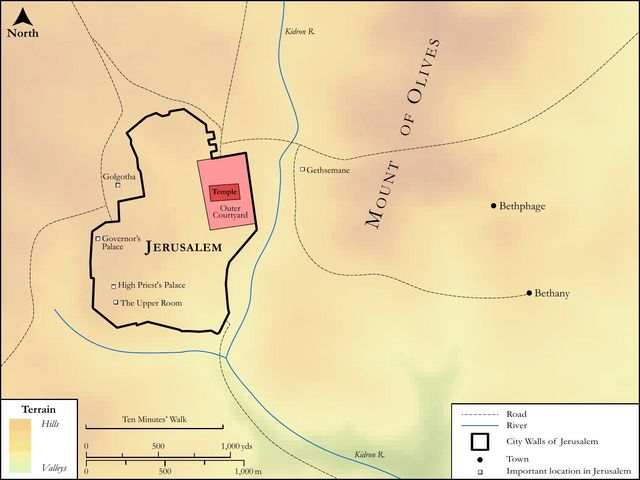
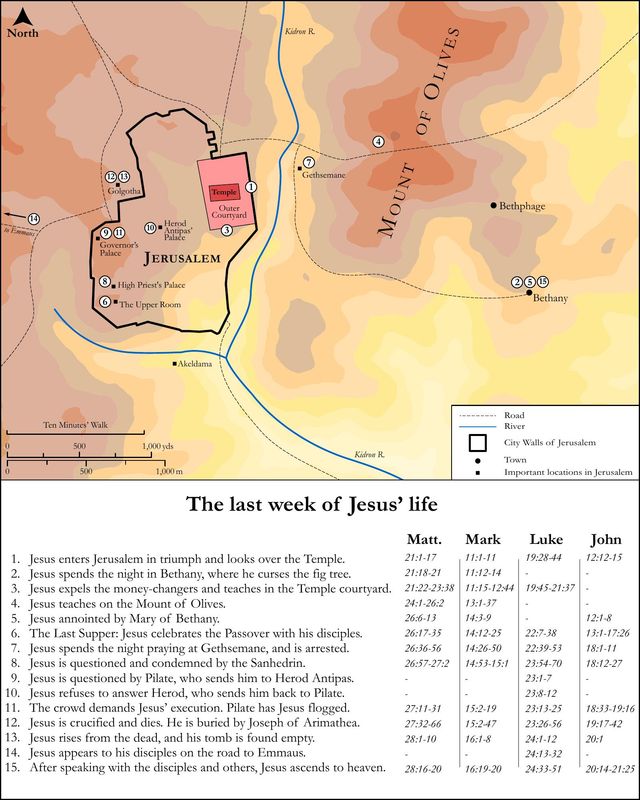
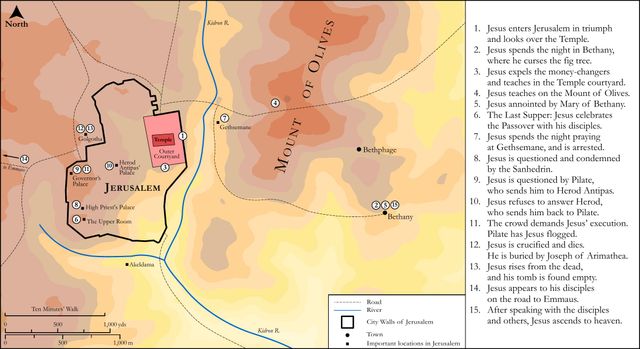
Study this verse
Historical interpretation
Ten Centuries of Reception
12 surviving comments on this verse. Each one is dated, so this reads as a timeline rather than a list.
Select a marker to jump to its quote. Markers stagger vertically where authors wrote within a few decades of each other.
If you are offended at this we have said, namely that a man shall be judged if he does not teach others, call to mind the Apostle's words, Woe is unto me if I preach not the Gospel. (1 Cor. 9:16.)
Or, He shall come again with glory, that His body may be such as when He was transfigured on the mount. His throne is either certain of the more perfect of the Saints, of whom it is written, For there are set thrones in judgment; (Ps. 122:5.) or certain Angelic Powers of whom it is said, Thrones or dominions. (Col. 1:16.)
"When the Son of Man shall come in His glory." For now is He come in dishonor, now in affronts and reproaches; but then shall He sit upon the throne of His glory.
And continually doth He make mention of glory. For since the cross was near, a thing that seemed to be matter of reproach, for this cause He raises up the hearer; and brings before his sight the judgment seat, and setteth round him all the world.
And not in this way only doth He make His discourse awful, but also by showing the Heavens opened. For all the angels will be present with Him, He saith, themselves also to bear witness, in how many things they had ministered, when sent by the Lord for the salvation of men.
And everything will help to render that day fearful. Then, "shall be gathered together," He saith, "all nations," that is, the whole race of men. "And He shall separate them one from another, as the shepherd his sheep." For now they are not separated, but all mingled together, but the division then shall be made with all exactness. And for a while it is by their place that He divides them, and makes them manifest; afterwards by the names He indicates the dispositions of each, calling the one kids, the other sheep, that He might indicate the unfruitfulness of the one, for no fruit will come from kids; and the great profit from the other, for indeed from sheep great is the profit, as well from the milk, as from the wool, and from the young, of all which things the kid is destitute.
But while the brutes have from nature their unfruitfulness, and fruitfulness, these have it from choice, wherefore some are punished, and the others crowned.
(Hom. lxxix.) To this most sweet section of Scripture which we cease not continually to ponder, let us now listen with all attention and compunction of spirit, for Christ does indeed clothe this discourse with more terrors and vividness. He does not accordingly say of this as of the others, The kingdom of heaven is like, but shows of Himself by direct revelation, saying, When the Son of man shall come in his majesty.
For all his Angels shall be with him to bear witness to the things wherein they have administered to men's salvation at His bidding.
Or, He calls the one sheep and the other goats, to denote the unprofitableness of the one, and the fruitfulness of the other, for sheep are greatly productive in fleece, milk, and lambs.
Then He separates them in place.
Observe that He says not 'Receive,' but possess, or inherit, as duo to you from of old.
For what the Saints obtain the boon of this heavenly kingdom He shows when He adds, I was an hungred, and ye gave me to eat.
But if they are His brethren, why does He call them the least? Because they are lowly, poor, and outcast. By these He means not only the monks who have retired to the mountains, but every believer though he should be secular, though an hungred, or the like, yet He would have him obtain merciful succours, for baptism and communication of the Divine mysteries makes him a brother.
Observe how they had failed in mercifulness, not in one or two respects only, but in all; not only did they not feed Him when He was hungry, but they did not even visit Him when He was sick, which was easier. And look how light things He enjoins; He said not, I was in prison, and ye did not set me free, but, and ye visited me not. Also His hunger required no costly dainties, but necessary food. Each of these counts then is enough for their punishment. First, the slightness of His prayer, viz. for bread; secondly, the destitution of Him who sought it, for He was poor; thirdly, the natural feelings of compassion, for He was a man; fourthly, the expectation of His promise, for He promised a kingdom; fifthly, the greatness of Him who received, for it is God who receives in the poor man; sixthly, the preeminent honour, in that He condescended to take of men; and, seventhly, the righteousness of so bestowing it, for what He takes from us is our own. But avarice blinds men to all these considerations.
Thus convicted by the words of the Judge, they make answer submissively, Lord, when saw we thee &c.
He who was within two days to celebrate the passover, to be delivered to the cross, and mocked by men, fitly now holds out the glory of His triumph, that He may overbalance the offences that were to follow by the promise of reward. And it is to be noted, that He who shall be seen in majesty is the Son of Man.
Also the goat is a salacious animal, and was the offering for sins in the Law; and He says not 'she goats' which can produce young, and come up shorn from the washing. (Song of Solomon 4:2.)
This prepared for you from the foundation, of the world, is to be understood as of the foreknowledge of God, with whom things to come are as already done.
It were indeed free to us to understand that it is Christ in every poor man whom we feed when he is hungry, or give drink to when he is thirsty, and so of other things; but when He says, In that ye have done it to one of the least of these my brethren, He seems tome not to speak of the poor generally, but of the poor in spirit, those to whom He pointed and said, Whosoever shall do the will of my Father which is in heaven, the same is my brother. (Matt. 12:50.)
(Verse 31 onwards) But when the Son of Man comes in his glory, and all the angels with him, then he will sit on the throne of his glory. And all the nations will be gathered before him, and he will separate them from one another, as a shepherd separates the sheep from the goats. And he will place the sheep on his right hand, but the goats on the left. Then the king will say to those on his right hand, 'After two days I will celebrate the Passover, be handed over to the cross, mocked by men, and be given vinegar and gall to drink, for he rightly precedes the glory of the triumpant, so that he may compensate for the scandals that will follow with the reward of his promise.' And it should be noted that the one who is to be seen in majesty is the Son of Man. And what follows: He will set the sheep on his right hand, but the goats on the left, understand this according to what you read elsewhere: The heart of the wise is in his right hand, but the heart of a fool is in his left (Eccl. 10:2). And above in this same Gospel: Let your left hand not know what your right hand does (Matt. 6:3). The sheep are commanded to stand on the right side of the righteous: the goats, that is, sinners, on the left, who are always offered for sin in the Law (Exod. 12). And he did not say, the goats, which can have offspring, and when they are shorn they come out of the bath, all with twin offspring, and there is none sterile among them (Canon 4); but the kids, a lustful and playful animal, and always eager for copulation.
Jesus rightly promises that the glory of the triumphant one [would follow] after two days in which he would celebrate the Passover and be consigned to the cross, mocked by humanity and given wine and gall to drink. Thus he will offset with the promised reward the blameworthy actions to follow. Clearly he who is to be seen in majesty is the Son of man.
(in Joan. Tr. 21.) The wicked and they also who shall be set on His right hand shall see Him in human shape, for He shall appear in the judgment in that form which He took on Him from us; but it shall be afterwards that He shall be seen in the form of God, for which all the believers long.
(de Civ. Dei, xx. 24.) He shall come down with the Angels whom He shall call from heavenly places to hold judgment.
(Serm. 351, 8.) Or, by Angels here He means men who shall judge with Christ; for Angels are messengers, and such we rightly understand all who have brought tidings of heavenly salvation to men.
(de Civ. Dei, xx. 24.) This gathering shall be executed by the ministry of Angels, as it is said in the Psalm, Gather to him his saints. (Ps. 50:5.)
(de Civ. Dei, xx. 9.) Besides that kingdom of which He will say in the end, Inherit the kingdom prepared for you, though in a very inferior manner, the present Church is also called His kingdom, in the which we are yet in conflict with the enemy until we come to that kingdom of peace, where we shall reign without an enemy.
(Serm. 351. 8.) But one will say, I desire not to reign, it is enough for me that I be saved. Wherein they are deceived, first, because there is no salvation for those whose iniquity abounds; and, secondly, because if there be any difference between those that reign, and those that do not reign, yet must all be within the same kingdom, lest they be esteemed for foes or aliens, and perish while the others reign. Thus all the Romans inherit the kingdom of Rome, though all do not reign in it.
(de Civ. Dei, xxi. 10.) It is hence clear, that the same fire will be appropriated to the punishment of men and of dæmons. If then it inflicts pain by corporeal touch, so as to produce bodily torment, how will there be in it any punishment for the evil spirits, unless the dæmons have, as some have thought, bodies composed of gross and fluid air. But if any man asserts that the dæmons have no bodies, we would not pugnaciously contend the point. For why may we not say, that truly, though wonderfully, even incorporeal spirit can feel pain of corporeal fire? If the spirits of men, though themselves incorporeal, can be now inclosed in bodily limbs, they can then be inseparably attached to the bonds of body. The dæmons then will be united to a body of material fire, though themselves immaterial, drawing punishment from their body, not giving life to it. And that fire being material will torture such bodies as ours with their spirits; but the dæmons are spirits without bodies.
(de Civ. Dei, xx. 1.) He is now treating of the last judgment, when Christ shall come from heaven to judge the quick and dead. This day of the Divine judgment we call the Last Day, that is, the end of time; for we cannot tell through how many days that judgment will be prolonged; but day, as is the use of holy Scripture, is put for time. And we therefore call it the last or latest judgment, because He both now judges and has judged from the beginning of the human race, when He thrust forth the first man from the tree of life, and spared not the Angels that sinned. But in that final judgment both men and Angels shall be judged together, when the Divine power shall bring each man's good and evil deeds in review before his memory, and one intuitive glance shall present them to the perception, so that at once we shall be condemned or acquitted in our consciences.
These words overthrow the error of those who said that the Lord should not continue in the same form of a servant. By his majesty, He means His divinity, in which He is equal to the Father and the Holy Spirit.
And all nations shall be gathered before Him. These words prove that the resurrection of men shall be real.
And it is to be noted, that the Lord here enumerates six works of mercy which whoso shall study to accomplish shall be entitled to the kingdom prepared for the chosen from the foundation of the world.
(Mor. xxvi. 27.) These, to whom as they stand on His right hand the Judge at His coming shall say, I was an hungred &c. are they who are judged on the side of the elect, and who reign; who wash away the stains of their life with tears; who redeem former sins by good deeds following; who, whatever unlawful thing they have at any time done, have covered it from the Judge's eyes by a cloak of alms. Others indeed there are who are not judged, yet reign, who have gone even beyond the precepts of the Law in the perfection of their virtue.
(ubi sup.) They to whom this is said are the wicked believers, who are judged and perish; others, being unbelievers, are not judged and perish; for there is no examination of the condition of such as appear before the face of an impartial Judge already condemned by their unbelief; but those who hold the profession of the faith, but have not the works of their profession, are convicted that they may be condemned. These at least hear the words of their Judge, because they have at least kept the words of His faith. The others hear no words of their Judge pronouncing sentence of condemnation, because they have not paid Him honour even in word. For a prince who governs an earthly kingdom punishes after a different manner the rebellion of a subject and the hostile attempts of an enemy; in the former case, he recurs to his prerogative; against an enemy he takes arms, and does not ask what penalty the law attaches to his crime.
After the parables concerning the end of the world the Lord proceeds to describe the manner of the judgment to come.
Or, they are called blessed, to whom an eternal blessing is due for their good deserts. He calls it the kingdom of His Father, ascribing the dominion of the kingdom to Him by whom Himself the King was begotten. For by His royal power, with which He shall be exalted alone in that day, He shall pronounce the sentence of judgment, Then shall the King say.
Mystically, He who with the bread of the word and the drink of wisdom refreshes the soul hungering and thirsting after righteousness, or admits into the home of our mother the Church him who is wandering in heresy or sin, or who strengthens the weak in faith, such an one discharges the obligations of true love.
Lord, when sate we thee &c. This they say not because they distrust the Lord's words, but they are in amaze at so great exaltation, and at the greatness of their own glory; or because the good which they have done will seem to them to be so small according to that of the Apostle, For the sufferings of this present time are not worthy to be compared to the glory that shall be revealed in us. (Rom. 8:18.)
Since the first coming of the Lord was not with glory but with dishonor and indignity, He says, When He shall come in His glory. For at the second coming He will come with glory, escorted by angels. First He will divide the saints from the sinners, delivering them from tribulations, and set them on His right, and then speak to them. He calls the saints sheep on account of their gentleness, and because they yield fruit and useful things for us, as do sheep, providing wool, which is divine and spiritual protection, and milk, which is the sustenance that is needed. The goats are the sinners, for they walk along the precipices and are unruly and fruitless.
(non occ.) Under the figure of a sheep in Scripture is signified simplicity and innocence. Beautifully then in this place are the elect denoted by sheep.
Continue studying Matthew 25:31 across the web’s major study libraries — every link below opens this exact verse, chapter, or book on the destination site.
Read & Compare
 BibleGatewayThis verse in more than 200 translations and 70 languages.
 Bible.comThe YouVersion reader — hundreds of translations, reading plans, and highlights.
 ESV.orgCrossway's official English Standard Version reader.
 NET BibleThe NET translation with 60,000+ translators' notes on every rendering decision.
 STEP BibleTyndale House's free study tool — original text, vocabulary, and scholarly resources.
 BibliaLogos Bible Software's free web reader.
 USCCBThe New American Bible (Revised Edition) with the U.S. bishops' study notes.
Commentaries
 BibleHub CommentariesDozens of classic commentaries on this verse, gathered on one page.
 StudyLightMore than 100 commentary sets — the largest collection on the web.
 BibleRefPlain-English commentary on what this verse means, verse by verse.
 Enduring WordDavid Guzik's free commentary on this chapter, widely used by Bible teachers.
 Bible Study ToolsVerse commentary alongside Greek and Hebrew study aids.
Original Language & Research
- BibleHub InterlinearThe verse word by word — original language, transliteration, and English.
- BibleHub LexiconEvery word's original-language definition and Strong's entry.
 Blue Letter BibleDeep-study tools — Strong's numbers, concordance, and word studies.
 CNTR CollationThe earliest Greek manuscripts of this verse, collated letter by letter.
Sermons, Hymns & Audio


TrulyRandomVerse is not affiliated with these sites and doesn’t control their content. They’re linked because they’re genuinely useful.
Summary
Matthew 25:31 introduces the climactic scene of Christ's return in glory, setting the stage for the final judgment of humanity. This verse vividly portrays the Son of Man, accompanied by all His holy angels, descending with unparalleled majesty to assume His rightful place upon a glorious throne, signifying His ultimate authority as King and Judge over all creation. It serves as a majestic prelude to the Parable of the Sheep and the Goats, emphasizing the certainty and grandeur of His second advent.
Context
ShowHideLiterary Context
Matthew 25:31 marks a pivotal transition within the Olivet Discourse, which spans chapters 24 and 25 of Matthew's Gospel. Preceding this verse are parables emphasizing vigilance and faithful stewardship, such as the Parable of the Ten Virgins and the Parable of the Talents. These narratives prepare the disciples for the Lord's return, focusing on the readiness required. Matthew 25:31 then shifts the focus from preparation to the event itself—the glorious return of Christ—and directly introduces the Parable of the Sheep and the Goats, which details the criteria and outcome of the final judgment. This verse, therefore, acts as a grand overture, establishing the identity of the Judge and the splendor of His arrival.
Historical & Cultural Context
For first-century Jewish audiences, the concept of a Messiah was deeply rooted in Old Testament prophecy, often depicting a triumphant, kingly figure who would establish an everlasting kingdom and execute judgment. Passages like Daniel 7:13-14 spoke of a "Son of Man" coming with the clouds of heaven to receive dominion, glory, and a kingdom. This expectation contrasted sharply with Jesus' first humble advent as a suffering servant. Matthew 25:31, therefore, resonates with the messianic hopes of a glorious, judging King, fulfilling prophecies that spoke of God's ultimate reign and the final reckoning. The imagery of a "throne" was universally understood as the seat of royal power and judicial authority in ancient Near Eastern cultures, reinforcing the gravity of the scene Jesus describes.
Key Themes
ShowHideThis verse powerfully contributes to several overarching themes in Matthew and the broader biblical narrative. Firstly, it underscores the certainty and nature of the Second Coming of Christ, portraying a visible, majestic, and definitive return of Jesus, contrasting sharply with His first humble appearance. Secondly, it highlights Christ's divine sovereignty and kingship, as He assumes His "throne of glory," asserting His ultimate authority over all nations and creation. This ties into the theme of the Kingdom of God, which Jesus consistently preached, now revealed in its full, consummated form. Thirdly, the verse introduces the theme of final judgment, establishing the identity of the Judge and the grand setting for the universal reckoning that will follow, as elaborated in Matthew 25:32-46. Finally, the accompanying "holy angels" emphasize the divine glory and majesty of the event, signifying the cosmic significance of Christ's return.
Exposition and Analysis
ShowHideKey Word Analysis
ShowHideThis term signifies splendor, majesty, and inherent divine radiance. When Jesus comes "in his glory," it means He will manifest His full divine power and inherent splendor, a stark contrast to His first humble advent. It speaks of the visible manifestation of God's presence and character.
This verb denotes movement, "to come or go." In this context, it signifies the active, decisive, and personal arrival of the Son of Man. It's not a passive event but a dynamic, intentional return with purpose and authority.
This word refers to a stately seat, implying power or, concretely, a potentate. The "throne of his glory" is not merely a chair but the symbol and actual seat of ultimate judicial and royal authority, from which Christ will administer justice and establish His eternal dominion.
Verse Breakdown
ShowHide"When the Son of man shall come in his glory"
This opening clause immediately identifies the central figure as "the Son of Man," a title Jesus frequently used for Himself, linking His humanity with the prophetic, divine authority seen in Daniel 7:13. His arrival is not in humility, but "in his glory," signifying a visible, powerful manifestation of His inherent divine splendor and majesty, a stark contrast to His first advent.
"and all the holy angels with him"
This phrase emphasizes the grandeur and cosmic significance of His return. The "holy angels" serve as His glorious retinue, attendants to His divine majesty, and agents in the execution of His will. Their presence underscores the universal and awe-inspiring nature of this event, demonstrating the vastness of His heavenly host.
"then shall he sit upon the throne of his glory"
This final clause depicts the Son of Man assuming His ultimate position of authority. To "sit upon the throne" is a clear act of enthronement, signifying the commencement of His reign and, crucially, His role as the supreme Judge. The "throne of his glory" is the seat from which He will administer righteous judgment to all nations, establishing His eternal kingdom and dominion.
Literary Devices
ShowHideMatthew 25:31 is rich in Imagery, painting a vivid and majestic picture of Christ's return. The phrase "Son of man shall come in his glory" immediately evokes a sense of awe and power, contrasting with the humble imagery of His first coming. The accompanying "all the holy angels" further amplifies this grand spectacle, creating a powerful visual of a divine procession. Symbolism is prominent, particularly in "the throne of his glory," which is not merely a physical seat but a potent symbol of ultimate authority, kingship, and judicial power. This verse also employs Anticipation and Foreshadowing, as it serves as the grand introduction to the Parable of the Sheep and the Goats (Matthew 25:31-46), setting the stage for the detailed description of the final judgment. The implied Contrast between Jesus' first advent (humble, suffering servant) and His second (glorious, reigning King and Judge) adds theological depth, highlighting the full scope of His redemptive and sovereign work.
Theological and Thematic Connections
ShowHideMatthew 25:31 is profoundly significant for understanding Christian eschatology and Christology. It affirms the biblical truth of Christ's literal, visible, and glorious return, a central tenet of Christian hope. This event is not merely a future possibility but a divine certainty, marking the culmination of God's redemptive plan and the full establishment of His kingdom. The Son of Man, who humbled Himself to become human and die on a cross, will return as the sovereign King and righteous Judge, fulfilling Old Testament prophecies of a Messiah who would reign in glory. His enthronement on the "throne of his glory" signifies His ultimate dominion over all creation and His rightful authority to judge humanity, not based on human merit, but on their response to Him, particularly as demonstrated by their compassion towards "the least of these" (Matthew 25:40). This passage underscores the seriousness of life and the eternal implications of our choices, calling believers to live in faithful anticipation and active service.
Reflection and Application
ShowHideMatthew 25:31 calls us to a profound reflection on the future and its implications for our present lives. The certainty of Christ's glorious return as King and Judge should inspire both awe and a deep sense of responsibility. For the believer, it offers immense hope and assurance that our Lord will ultimately triumph, bringing justice and establishing His eternal kingdom. This hope should motivate us to live with purpose, diligently stewarding the gifts and opportunities God has given us, knowing that our actions have eternal significance. It compels us to live in readiness, not out of fear, but out of love and eager anticipation for His appearing. Furthermore, recognizing Christ as the ultimate Judge should shape our understanding of righteousness and compassion, prompting us to actively serve those in need, as this is presented as a key criterion for judgment in the verses that follow. Our lives today are a preparation for that glorious, decisive day.
Questions for Reflection
ShowHideFAQ
ShowHideIs "Son of man" in Matthew 25:31 a title of humanity or divinity?
ShowHideThe title "Son of Man" (Greek: huios tou anthrōpou) as used by Jesus, particularly in this context, is a profound and multifaceted title that encompasses both His humanity and His divinity. While it clearly identifies Him with humanity, emphasizing His true human nature, it also carries deep Old Testament prophetic significance, especially from Daniel 7:13-14. In Daniel's vision, the "Son of Man" is a celestial, divine figure who comes with the clouds of heaven and is given everlasting dominion, glory, and a kingdom. Therefore, in Matthew 25:31, when Jesus refers to Himself as the "Son of Man" coming in glory to sit on a throne of glory, He is simultaneously affirming His identification with humanity and asserting His unique, divine authority as the prophesied King and Judge.
What is the significance of "all the holy angels" accompanying Him?
ShowHideThe presence of "all the holy angels" accompanying the Son of Man in His return signifies several crucial aspects of this event. Firstly, it underscores the divine majesty and cosmic grandeur of Christ's second coming. Angels are celestial beings who serve as God's messengers and attendants, and their vast number indicates the immense importance and universal scope of this event. Secondly, it highlights Christ's supreme authority and power; He is not returning alone but with a heavenly host, demonstrating His dominion over all spiritual realms. Thirdly, angels often serve as agents in the execution of God's will and judgment throughout scripture (e.g., Matthew 13:41). Their presence here suggests their active participation in the events of the final judgment, serving as His retinue and enforcers of His righteous decrees.
Christ-Centered Fulfillment
ShowHideMatthew 25:31, depicting the glorious return of the Son of Man to His throne of glory, finds its profound Christ-centered fulfillment in the entire redemptive narrative of Jesus. His first advent, marked by humility and self-emptying as described in Philippians 2:6-8, was essential to make this glorious second coming possible. It was through His obedient life, atoning death on the cross, and victorious resurrection that He secured the right to reign and judge. The "throne of his glory" is not merely a future seat but is intrinsically linked to His present exaltation, as He is currently seated at the right hand of God, exercising all authority in heaven and on earth (see Ephesians 1:20-22). The judgment He will administer, as foreshadowed in this verse and elaborated in the subsequent parable, is rooted in His perfect righteousness and His ultimate authority, which was granted to Him by the Father (as seen in John 5:22). Therefore, Matthew 25:31 is the glorious culmination of Christ's entire mission—from His incarnation to His ascension (Acts 1:9-11)—where His redemptive work is fully realized, and His rightful reign as King of kings and Lord of lords is universally acknowledged.