


Revelation 14:11
Bible text: King James Version (1769 Blayney text) · Public domain
Bible text: King James Version with Strong's numbers · Public domain
Bible text: Berean Standard Bible · Public domain
Bible text: American Standard Version (1901) · Public domain
Bible text: World English Bible, Messianic edition · Public domain
Bible text: Geneva Bible (1599) · Public domain
Bible text: Young's Literal Translation · Public domain
- καὶkaiAndG2532CONJConjunction
- ὁhotheG3588T-NSMDefinite article Nominative Singular Masculine
- καπνὸςkapnossmokeG2586N-NSMNoun Nominative Singular Masculine
- τοῦtouof theG3588T-GSMDefinite article Genitive Singular Masculine
- βασανισμοῦbasanismoutormentG929N-GSMNoun Genitive Singular Masculine
- αὐτῶνautōnof themG846P-GPMPersonal pronoun Genitive Plural Masculine
- εἰςeistoG1519PREPPreposition
- αἰῶναςaiōnasagesG165N-APMNoun Accusative Plural Masculine
- αἰώνωνaiōnōnof agesG165N-GPMNoun Genitive Plural Masculine
- ἀναβαίνειanabaineigoes upG305V-PAI-3SVerb Present Active Indicative 3rd Singular
- καὶkaiandG2532CONJConjunction
- οὐκouknotG3756PRT-NNegative Particle Negative
- ἔχουσινechousinhaveG2192V-PAI-3PVerb Present Active Indicative 3rd Plural
- ἀνάπαυσινanapausinrestG372N-ASFNoun Accusative Singular Feminine
- ἡμέραςhēmerasby dayG2250N-GSFNoun Genitive Singular Feminine
- καὶkaiandG2532CONJConjunction
- νυκτὸςnuktosnightG3571N-GSFNoun Genitive Singular Feminine
- οἱhoithoseG3588T-NPMDefinite article Nominative Plural Masculine
- προσκυνοῦντεςproskunountesworshipingG4352V-PAP-NPMVerb Present Active Participle Nominative Plural Masculine
- τὸtotheG3588T-ASNDefinite article Accusative Singular Neuter
- θηρίονthērionbeastG2342N-ASNNoun Accusative Singular Neuter
- καὶkaiandG2532CONJConjunction
- τὴνtēntheG3588T-ASFDefinite article Accusative Singular Feminine
- εἰκόναeikonaimageG1504N-ASFNoun Accusative Singular Feminine
- αὐτοῦautouof itG846P-GSNPersonal pronoun Genitive Singular Neuter
- καὶkaiandG2532CONJConjunction
- εἴeiifG1487CONDConjunction
- τιςtisanyoneG5100X-NSMIndefinite pronoun Nominative Singular Masculine
- λαμβάνειlambaneireceivesG2983V-PAI-3SVerb Present Active Indicative 3rd Singular
- τὸtotheG3588T-ASNDefinite article Accusative Singular Neuter
- χάραγμαcharagmamarkG5480N-ASNNoun Accusative Singular Neuter
- τοῦtouof theG3588T-GSNDefinite article Genitive Singular Neuter
- ὀνόματοςonomatosnameG3686N-GSNNoun Genitive Singular Neuter
- αὐτοῦautouof itG846P-GSNPersonal pronoun Genitive Singular Neuter
English is a literal word-by-word gloss of the Greek, not the KJV's wording. Why?
This is the original text the KJV's translators worked from — each Greek word with its own literal English meaning in this verse, prepared by scholars at Tyndale House, Cambridge. The KJV translates whole sentences, not word by word, so its wording differs: one Greek word can become several English words, and the KJV may choose “charity” where the gloss reads “love”. Both are faithful — they answer different questions. For the KJV's own rendering, switch to the KJV text.
Details
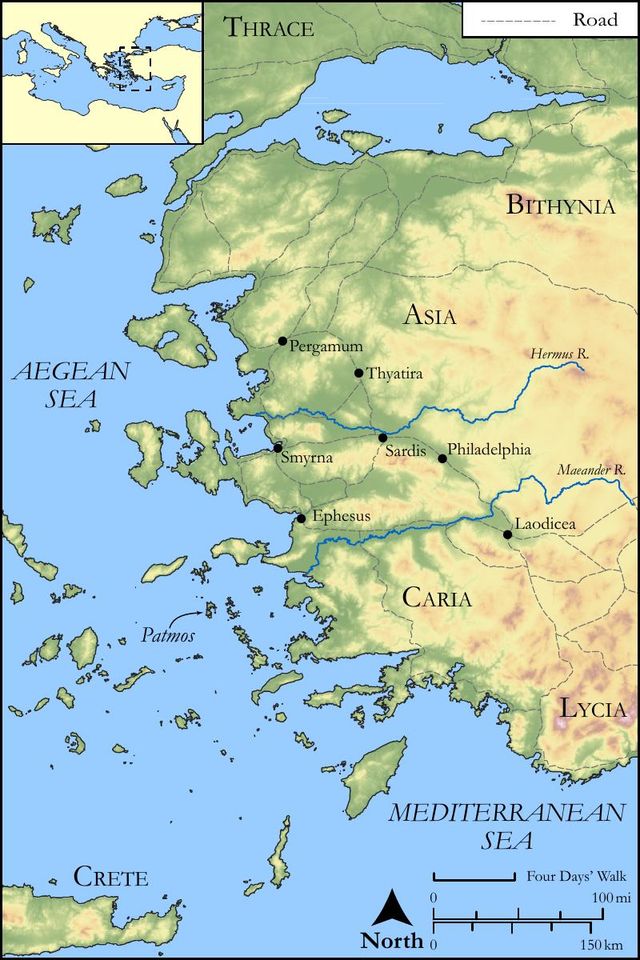
See on the biblical-era maps

Study this verse
Public-domain commentary
Matthew Henry
From his Commentary on the Whole Bible. Henry comments on passages, not single verses — this entry covers Revelation 14:6–12. His two-level outline is real structure in the source text, so it is rendered as structure.
In this part of the chapter we have three angels or messengers sent from heaven to give notice of the fall of Babylon, and of those things that were antecedent and consequent to that great event.
I.The first angel was sent on an errand antecedent to it, and that was to preach the everlasting gospel, Rev 14:6, Rev 14:7. Observe,
1.The gospel is an everlasting gospel; it is so in its nature, and it will be so in its consequences. Though all flesh be grass, the word of the Lord endureth for ever.
2.It is a work fit for an angel to preach this everlasting gospel; such is the dignity, and such is the difficulty of that work! And yet we have this treasure in earthen vessels.
3.The everlasting gospel is of great concern to all the world; and, as it is the concern of all, it is very much to be desired that it should be made known to all, even to every nation, and kindred, and tongue, and people.
4.The gospel is the great means whereby men are brought to fear God, and to give glory to him. Natural religion is not sufficient to keep up the fear of God, nor to secure to him glory from men; it is the gospel that revives the fear of God, and retrieves his glory in the world.
5.When idolatry creeps into the churches of God, it is by the preaching of the gospel, attended by the power of the Holy Spirit, that men are turned from idols to serve the living God, as the Creator of the heaven, and the earth, and the sea, and the fountains of waters, Rev 14:7. To worship any God besides him who created the world is idolatry.
II.The second angel follows the other, and proclaims the actual fall of Babylon.
The preaching of the everlasting gospel had shaken the foundations of antichristianism in the world, and hastened its downfall. By Babylon is generally understood Rome, which was before called Sodom and Egypt, for wickedness and cruelty, and is now first called Babylon, for pride and idolatry. Observe,
1.What God has fore-ordained and foretold shall be done as certainly as if it were done already.
2.The greatness of the papal Babylon will not be able to prevent her fall, but will make it more dreadful and remarkable.
3.The wickedness of Babylon, in corrupting, debauching, and intoxicating the nations round about her, will make her fall just and will declare the righteousness of God in her utter ruin, Rev 14:8. Her crimes are recited as the just cause of her destruction.
III.A third angel follows the other two, and gives warning to all of that divine vengeance which would overtake all those that obstinately adhered to the antichristian interest after God had thus proclaimed its downfall, Rev 14:9, Rev 14:10. If after this (this threatening denounced against Babylon, and in part already executed) any should persist in their idolatry, professing subjection to the beast and promoting his cause, they must expect to drink deep of the wind of the wrath of God; they shall be for ever miserable in soul and body; Jesus Christ will inflict this punishment upon them, and the holy angels will behold it and approve of it. Idolatry, both pagan and papal, is a damning sin in its own nature, and will prove fatal to those who persist in it, after fair warning given by the word of Providence; those who refuse to come out of Babylon, when thus called, and resolve to partake of her sins, must receive of her plagues; and the guilt and ruin of such incorrigible idolaters will serve to set forth the excellency of the patience and obedience of the saints. These graces shall be rewarded with salvation and glory. When the treachery and rebellion of others shall be punished with everlasting destruction, then it will be said, to the honour of the faithful (Rev 14:12): Here is the patience of the saints; you have before seen their patience exercised, now you see it rewarded.
Historical interpretation
Four Centuries of Reception
4 surviving comments on this verse. Each one is dated, so this reads as a timeline rather than a list.
Select a marker to jump to its quote. Markers stagger vertically where authors wrote within a few decades of each other.
We must understand this smoke to be either the sighing of those being tormented, which arises from below along with their lamentation, or the smoke that comes from the fire that torments the fallen. It says that it “goes up forever and ever,” and by this we learn that even as the bliss of the righteous is everlasting, so also is the torment of the sinners.… He says “day and night,” not as though the condition of the future age in which the ungodly will have no rest will be measured by the sun, but he rather accommodates himself to the custom in the present time, which is reckoned in nights and days. Or it might be that the “day” is to be regarded as the life of the saints and the “night” as the torment of the impure, which those who do the works of the devil and blaspheme against Christ in the manner of the apostate beast will attain. For through the doing of these things they make an image [of the beast] and engrave his name upon their hearts as though it were precious.
And if anyone receives the mark of his name. Saint Augustine interprets the beast as the impious city, its image as the simulation of piety, that is, the false appearance of Christians, and the mark as the sign of a crime, which he says is worshipped, submitted to, and consented to.
And they have no rest day nor night, etc. They say that a lion spares a prostrate man, but this beast is fiercer than a lion, the more it is worshipped, the greater punishments it inflicts.
For what does he say? And the smoke of their torment ascends forever and ever; and they have no rest day or night. To whom would one say this? "Is it, O man, to be tormented eternally and not suffer according to due merit?" For what? If someone is worthy of fire and darkness, and is condemned into darkness, and is punished merely in this, by not being in participation of God's goods, and is pained only by that, and not punished sensibly. But he says that the smoke of torment that ascends is the anguish of sinners, poured out below in weeping to the outside.
Continue studying Revelation 14:11 across the web’s major study libraries — every link below opens this exact verse, chapter, or book on the destination site.
Read & Compare
 BibleGatewayThis verse in more than 200 translations and 70 languages.
 Bible.comThe YouVersion reader — hundreds of translations, reading plans, and highlights.
 ESV.orgCrossway's official English Standard Version reader.
 NET BibleThe NET translation with 60,000+ translators' notes on every rendering decision.
 STEP BibleTyndale House's free study tool — original text, vocabulary, and scholarly resources.
 BibliaLogos Bible Software's free web reader.
 USCCBThe New American Bible (Revised Edition) with the U.S. bishops' study notes.
Commentaries
 BibleHub CommentariesDozens of classic commentaries on this verse, gathered on one page.
 StudyLightMore than 100 commentary sets — the largest collection on the web.
 BibleRefPlain-English commentary on what this verse means, verse by verse.
 Enduring WordDavid Guzik's free commentary on this chapter, widely used by Bible teachers.
 Bible Study ToolsVerse commentary alongside Greek and Hebrew study aids.
Original Language & Research
- BibleHub InterlinearThe verse word by word — original language, transliteration, and English.
- BibleHub LexiconEvery word's original-language definition and Strong's entry.
 Blue Letter BibleDeep-study tools — Strong's numbers, concordance, and word studies.
 CNTR CollationThe earliest Greek manuscripts of this verse, collated letter by letter.
Sermons, Hymns & Audio


TrulyRandomVerse is not affiliated with these sites and doesn’t control their content. They’re linked because they’re genuinely useful.
Summary
Revelation 14:11 delivers a profound and sobering warning regarding the eternal and unceasing consequences for those who reject God's sovereignty and align themselves with the anti-Christian forces of the Beast and his system. This verse starkly portrays a future of perpetual torment, devoid of any rest or relief, for those who choose idolatry and rebellion over the worship of the one true God, emphasizing the gravity of allegiance in the final days.
Context
ShowHideLiterary Context
This verse is situated within a pivotal section of Revelation (chapters 12-14) that introduces the primary antagonists (the Dragon, the Beast from the Sea, and the Beast from the Earth) and contrasts their destructive work with God's redemptive plan. Specifically, Revelation 14 presents a series of prophetic visions and angelic proclamations that set the stage for the final judgments. Immediately preceding verse 11 are the messages of three angels: the first proclaiming the "eternal gospel" and calling all to worship the Creator (Revelation 14:6-7), the second announcing the fall of Babylon (Revelation 14:8), and the third delivering a severe warning against worshipping the Beast and receiving his mark, explicitly stating that such individuals "shall drink of the wine of the wrath of God" (Revelation 14:9-10). Verse 11 elaborates on the nature and duration of this "wrath," providing a vivid description of the unceasing torment. It stands in stark contrast to the blessed rest promised to the faithful martyrs just two verses later in Revelation 14:13, highlighting the binary destinies presented in this eschatological narrative.
Historical & Cultural Context
The book of Revelation was written during a period of intense persecution of Christians under the Roman Empire, likely during the reign of Emperor Domitian (c. AD 95). The "Beast" and "his image" would have resonated with the imperial cult, where emperor worship was enforced, and loyalty to Rome was often demonstrated through participation in pagan rituals. Refusal to worship the emperor or participate in these rites could lead to severe economic hardship, social ostracization, and even martyrdom. The "mark of his name" likely alludes to the economic and social control exerted by the Roman system, where participation in commerce or public life might require adherence to imperial decrees or pagan practices. The imagery of "smoke ascending for ever and ever" draws upon Old Testament depictions of divine judgment, such as the destruction of Sodom and Gomorrah (Genesis 19:28), and the perpetual burning of Edom (Isaiah 34:10), which conveyed a sense of utter and irreversible devastation. The concept of "no rest day nor night" would have been particularly terrifying in a world where physical labor was constant and rest was a cherished, often elusive, commodity.
Key Themes
ShowHideRevelation 14:11 powerfully reinforces several overarching themes found throughout the book. The theme of Divine Judgment and Retribution is central, illustrating the absolute certainty and severity of God's wrath against rebellion and idolatry. This verse emphasizes the Eternity of Punishment, portraying a conscious and unending suffering for those who reject God's authority, a concept echoed in other New Testament passages concerning final judgment, such as Matthew 25:46. The Worship of the Beast and His Image directly relates to the theme of Idolatry vs. True Worship, highlighting the ultimate allegiance demanded by the anti-Christian power and its system, as detailed in Revelation 13. This stands in stark opposition to the call to "worship him who made heaven and earth" (Revelation 14:7). Finally, Receiving the Mark of His Name symbolizes complete identification with and submission to the Beast's economic and political control, signifying a deliberate and public choice against God and His people, a critical aspect of the Perseverance of the Saints theme, which calls believers to endure despite immense pressure to compromise their faith (Revelation 13:16-17).
Exposition and Analysis
ShowHideKey Word Analysis
ShowHideProperly "an age," but by extension, "perpetuity." In this context, the repetition "for ever and ever" (εἰς αἰῶνας αἰώνων, eis aiōnas aiōnōn) forms a strong superlative expression in Greek, emphatically denoting an unending, eternal duration. This phrase is used elsewhere in Revelation and the New Testament to describe the eternal nature of God's reign and glory, underscoring the absolute permanence of the torment described here.
Meaning "intermission" or "recreation." The phrase "no rest" (οὐκ ἔχουσιν ἀνάπαυσιν, ouk echousin anapausin) signifies an absolute and complete absence of cessation, relief, or peace from suffering. It stands in direct contrast to the spiritual and physical rest promised to the righteous in other biblical passages, emphasizing the ceaseless and unrelenting nature of the described torment.
Meaning "a scratch or etching," specifically "a stamp (as a badge of servitude), or sculptured figure (statue)." In the context of Revelation, this term refers to a distinguishing sign or seal, often associated with ownership or allegiance. Receiving the "mark of his name" signifies a deliberate and public declaration of loyalty to the Beast and his system, indicating full participation in and submission to his authority, often with economic or social implications.
Verse Breakdown
ShowHide"And the smoke of their torment ascendeth up for ever and ever:"
This clause vividly describes the perpetual nature of the suffering. The "smoke" symbolizes the visible evidence of an ongoing, unceasing fire of judgment, drawing on Old Testament imagery of divine wrath (e.g., Isaiah 34:10). The phrase "for ever and ever" (εἰς αἰῶνας αἰώνων) emphatically denotes an eternal, unending duration, stressing the irreversible and ceaseless quality of this torment.
"and they have no rest day nor night,"
This phrase further emphasizes the relentless and unceasing nature of the torment. "No rest" signifies a complete absence of relief, peace, or cessation from suffering. The specification "day nor night" underscores the continuous, uninterrupted experience of anguish, highlighting the utter despair and lack of respite for those undergoing this judgment.
"who worship the beast and his image, and whosoever receiveth the mark of his name."
This final clause explicitly identifies the recipients of this eternal torment. Their condemnation is directly linked to their deliberate actions: "worshipping the beast and his image" signifies giving ultimate allegiance, devotion, and homage to the anti-Christian power and its idolatrous system. "Receiving the mark of his name" indicates a public, conscious, and identifying commitment to the Beast's authority, often implying participation in his economic and social structures, thereby rejecting God's rightful claim to worship and allegiance.
Literary Devices
ShowHideRevelation 14:11 employs several powerful literary devices to convey its solemn message. The most prominent is Hyperbole, particularly in the phrase "for ever and ever" and "no rest day nor night," which emphasizes the extreme and unending nature of the torment. While literally denoting eternity, the hyperbolic language serves to impress upon the reader the utter finality and severity of God's judgment. Symbolism is also evident, with "smoke" representing the visible, enduring evidence of divine wrath and destruction, a recurring motif in apocalyptic literature. The "Beast," "his image," and "the mark of his name" are profound symbols of idolatrous power, antichristian authority, and ultimate allegiance, respectively. The verse also utilizes Contrast, implicitly juxtaposing the perpetual torment of the wicked with the promised "rest" for the righteous found elsewhere in Revelation, particularly in Revelation 14:13. This stark contrast heightens the urgency of the warning and the blessedness of faithful endurance.
Theological and Thematic Connections
ShowHideRevelation 14:11 stands as a stark theological declaration of divine justice and the ultimate consequences of human rebellion against God. It underscores the profound seriousness of allegiance and worship, asserting that the choice to align with worldly systems and idolatrous powers over the Creator carries eternal ramifications. This verse affirms God's absolute sovereignty and His righteous judgment against sin, particularly the sin of idolatry and defiance. It highlights the biblical truth that human choices have eternal weight, and a deliberate rejection of God's authority, manifested through the worship of the Beast and acceptance of his mark, leads to an irreversible state of separation from God's presence and an unending experience of His wrath. This is not arbitrary punishment but the just outcome for those who persistently choose darkness over light, rebellion over submission, and self-worship over divine worship.
Reflection and Application
ShowHideRevelation 14:11, while terrifying in its imagery, serves as a profound call to introspection and a powerful reminder of the eternal stakes involved in our earthly choices. It compels us to critically examine where our ultimate allegiance lies: is it with the fleeting systems and values of this world, or with the eternal God? This verse underscores the absolute necessity of choosing Christ, for there is no neutral ground in the spiritual battle. It should ignite within believers a renewed sense of urgency for the gospel, compelling us to share the good news of salvation with those who are yet to choose Christ, understanding the dire alternative. For those who have committed their lives to Christ, it serves as a powerful encouragement to persevere in faithfulness, to resist the allure of worldly compromise, and to remain steadfast in our worship and testimony, knowing that our temporary afflictions are incomparable to the eternal peace and rest promised to the faithful.
Questions for Reflection
ShowHideFAQ
ShowHideDoes "for ever and ever" truly mean unending torment, or is it symbolic of complete destruction?
ShowHideThe phrase "for ever and ever" (Greek: eis aiōnas aiōnōn) is a strong superlative expression in Greek, consistently used in the New Testament to denote unending duration, particularly in reference to God's eternal nature and reign (e.g., Revelation 1:6). When applied to the torment of the wicked, as in Revelation 14:11 and Revelation 20:10, it strongly indicates a conscious and perpetual state of suffering, not annihilation. The accompanying phrase "they have no rest day nor night" further emphasizes the ceaseless nature of this torment, ruling out a temporary or finite punishment that culminates in non-existence. While the imagery is symbolic, the duration it describes is consistently presented as eternal.
Christ-Centered Fulfillment
ShowHideRevelation 14:11, with its stark depiction of eternal torment, finds its ultimate Christ-centered fulfillment not in a direct prophecy of Jesus's actions, but in the profound contrast it presents to the salvation He offers. The torment described is the just consequence for rejecting the Lamb of God, who alone is worthy of worship and who bore the wrath of God on the cross. Jesus's atoning sacrifice on Calvary is the ultimate provision for humanity to escape this very judgment. He became the "Lamb of God, who takes away the sin of the world!" (John 1:29), offering Himself as the propitiation for our sins, thereby absorbing the divine wrath that would otherwise lead to eternal separation and torment. Those who "worship the beast and his image" are those who refuse the gracious invitation of Christ, the true King, and instead pledge allegiance to a counterfeit kingdom. The "rest" denied to the wicked in this verse is precisely the spiritual and eternal rest promised to those who come to Jesus: "Come to me, all you who are weary and burdened, and I will give you rest" (Matthew 11:28). Thus, this verse serves as a powerful backdrop, highlighting the immense grace and unparalleled deliverance found only in Christ, who offers eternal life and peace in stark contrast to the eternal judgment faced by those who reject Him.