


Revelation 14:9
Bible text: King James Version (1769 Blayney text) · Public domain
Bible text: King James Version with Strong's numbers · Public domain
Bible text: Berean Standard Bible · Public domain
Bible text: American Standard Version (1901) · Public domain
Bible text: World English Bible, Messianic edition · Public domain
Bible text: Geneva Bible (1599) · Public domain
Bible text: Young's Literal Translation · Public domain
- ΚαὶKaiAndG2532CONJConjunction
- ἄγγελοςangelosangelG32N-NSMNoun Nominative Singular Masculine
- τρίτοςtritosa thirdG5154A-NSMAdjective Nominative Singular Masculine
- ἠκολούθησενēkolouthēsenfollowedG190V-AAI-3SVerb Aorist Active Indicative 3rd Singular
- αὐτοῖςautoisafter themG846P-DPMPersonal pronoun Dative Plural Masculine
- λέγωνlegōnsayingG3004V-PAP-NSMVerb Present Active Participle Nominative Singular Masculine
- ἐνeninG1722PREPPreposition
- φωνῇphōnēaa voiceG5456N-DSFNoun Dative Singular Feminine
- μεγάλῃ·megalēloudG3173A-DSFAdjective Dative Singular Feminine
- εἴeiIfG1487CONDConjunction
- τιςtisanyoneG5100X-NSMIndefinite pronoun Nominative Singular Masculine
- προσκυνεῖproskuneiworshipsG4352V-PAI-3SVerb Present Active Indicative 3rd Singular
- τὸtotheG3588T-ASNDefinite article Accusative Singular Neuter
- θηρίονthērionbeastG2342N-ASNNoun Accusative Singular Neuter
- καὶkaiandG2532CONJConjunction
- τὴνtēntheG3588T-ASFDefinite article Accusative Singular Feminine
- εἰκόναeikonaimageG1504N-ASFNoun Accusative Singular Feminine
- αὐτοῦautouof itG846P-GSNPersonal pronoun Genitive Singular Neuter
- καὶkaiandG2532CONJConjunction
- λαμβάνειlambaneireceivesG2983V-PAI-3SVerb Present Active Indicative 3rd Singular
- χάραγμαcharagmaa markG5480N-ASNNoun Accusative Singular Neuter
- ἐπὶepionG1909PREPPreposition
- τοῦtoutheG3588T-GSNDefinite article Genitive Singular Neuter
- μετώπουmetōpouforeheadG3359N-GSNNoun Genitive Singular Neuter
- αὐτοῦautouof himG846P-GSMPersonal pronoun Genitive Singular Masculine
- ἢēorG2228CONJConjunction
- ἐπὶepiuponG1909PREPPreposition
- τὴνtēntheG3588T-ASFDefinite article Accusative Singular Feminine
- χεῖραcheirahandG5495N-ASFNoun Accusative Singular Feminine
- αὐτοῦautouof himG846P-GSMPersonal pronoun Genitive Singular Masculine
English is a literal word-by-word gloss of the Greek, not the KJV's wording. Why?
This is the original text the KJV's translators worked from — each Greek word with its own literal English meaning in this verse, prepared by scholars at Tyndale House, Cambridge. The KJV translates whole sentences, not word by word, so its wording differs: one Greek word can become several English words, and the KJV may choose “charity” where the gloss reads “love”. Both are faithful — they answer different questions. For the KJV's own rendering, switch to the KJV text.
Details
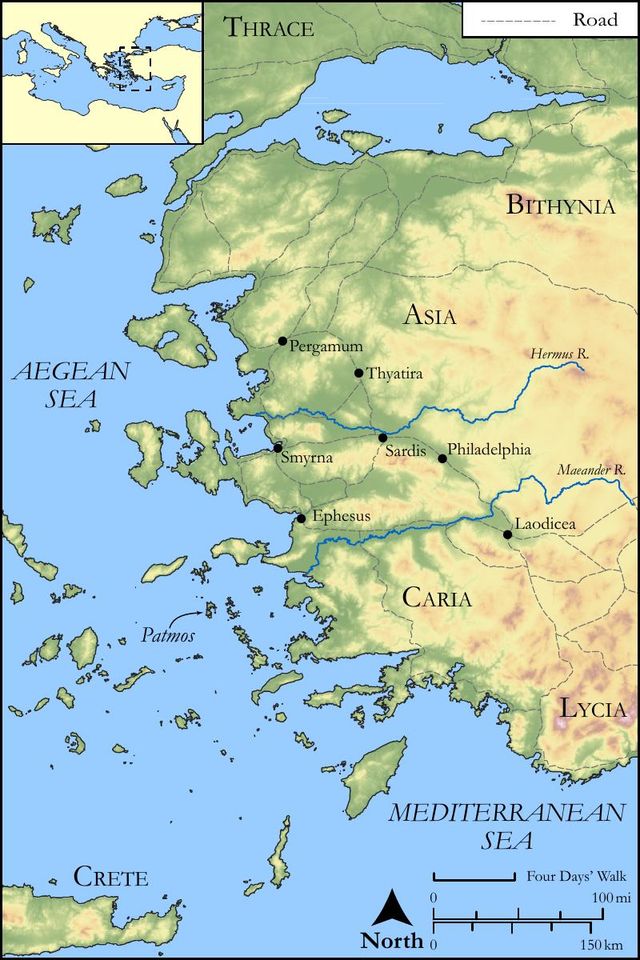
See on the biblical-era maps

Study this verse
Public-domain commentary
Matthew Henry
From his Commentary on the Whole Bible. Henry comments on passages, not single verses — this entry covers Revelation 14:6–12. His two-level outline is real structure in the source text, so it is rendered as structure.
In this part of the chapter we have three angels or messengers sent from heaven to give notice of the fall of Babylon, and of those things that were antecedent and consequent to that great event.
I.The first angel was sent on an errand antecedent to it, and that was to preach the everlasting gospel, Rev 14:6, Rev 14:7. Observe,
1.The gospel is an everlasting gospel; it is so in its nature, and it will be so in its consequences. Though all flesh be grass, the word of the Lord endureth for ever.
2.It is a work fit for an angel to preach this everlasting gospel; such is the dignity, and such is the difficulty of that work! And yet we have this treasure in earthen vessels.
3.The everlasting gospel is of great concern to all the world; and, as it is the concern of all, it is very much to be desired that it should be made known to all, even to every nation, and kindred, and tongue, and people.
4.The gospel is the great means whereby men are brought to fear God, and to give glory to him. Natural religion is not sufficient to keep up the fear of God, nor to secure to him glory from men; it is the gospel that revives the fear of God, and retrieves his glory in the world.
5.When idolatry creeps into the churches of God, it is by the preaching of the gospel, attended by the power of the Holy Spirit, that men are turned from idols to serve the living God, as the Creator of the heaven, and the earth, and the sea, and the fountains of waters, Rev 14:7. To worship any God besides him who created the world is idolatry.
II.The second angel follows the other, and proclaims the actual fall of Babylon.
The preaching of the everlasting gospel had shaken the foundations of antichristianism in the world, and hastened its downfall. By Babylon is generally understood Rome, which was before called Sodom and Egypt, for wickedness and cruelty, and is now first called Babylon, for pride and idolatry. Observe,
1.What God has fore-ordained and foretold shall be done as certainly as if it were done already.
2.The greatness of the papal Babylon will not be able to prevent her fall, but will make it more dreadful and remarkable.
3.The wickedness of Babylon, in corrupting, debauching, and intoxicating the nations round about her, will make her fall just and will declare the righteousness of God in her utter ruin, Rev 14:8. Her crimes are recited as the just cause of her destruction.
III.A third angel follows the other two, and gives warning to all of that divine vengeance which would overtake all those that obstinately adhered to the antichristian interest after God had thus proclaimed its downfall, Rev 14:9, Rev 14:10. If after this (this threatening denounced against Babylon, and in part already executed) any should persist in their idolatry, professing subjection to the beast and promoting his cause, they must expect to drink deep of the wind of the wrath of God; they shall be for ever miserable in soul and body; Jesus Christ will inflict this punishment upon them, and the holy angels will behold it and approve of it. Idolatry, both pagan and papal, is a damning sin in its own nature, and will prove fatal to those who persist in it, after fair warning given by the word of Providence; those who refuse to come out of Babylon, when thus called, and resolve to partake of her sins, must receive of her plagues; and the guilt and ruin of such incorrigible idolaters will serve to set forth the excellency of the patience and obedience of the saints. These graces shall be rewarded with salvation and glory. When the treachery and rebellion of others shall be punished with everlasting destruction, then it will be said, to the honour of the faithful (Rev 14:12): Here is the patience of the saints; you have before seen their patience exercised, now you see it rewarded.
Historical interpretation
Seven Centuries of Reception
7 surviving comments on this verse. Each one is dated, so this reads as a timeline rather than a list.
Select a marker to jump to its quote. Markers stagger vertically where authors wrote within a few decades of each other.
Of the idols which the Gentiles think to be gods. In the Wisdom of Solomon: "All the idols of the nations they counted gods, which neither have the use of their eyes for seeing, nor their nostrils to receive breath, nor their ears for hearing, nor the fingers on their hands for handling; but their feet also are slow to walk. For man made them; and he who has borrowed his breath, he fashioned them. But no man will be able to fashion a god like to himself. For since he is mortal, he fashioneth a dead thing with wicked hands. But he himself is better than they whom he worships, since he indeed lived, but they never." On this same matter: "Neither have they who have regarded the works known who was the artificer, but have thought that either fire, or wind, or the rapid air, or the circle of the stars, or the abundant water, or the sun and moon, were the gods that rule over the world; and if, on account of the beauty of these, they have thought thus, let them know how much more beautiful than these is the Lord; or if they have admired their powers and operations, let them perceive from these very things that He who has established these mighty things is stronger than they." Also in the cxxxivth Psalm: "The idols of the nations are silver and gold, the work of men's hands. They have a mouth, and speak not; they have eyes, and see not; they have ears, and hear not; and neither is there any breath in their mouth. Let them who make them become like unto them, and all those who trust in them." Also in the ninety-fifth Psalm: "All the gods of the nations are demons, but the Lord made the heavens." Also in Exodus: "Ye shall not make unto yourselves gods of silver nor of gold." And again: "Thou shalt not make to thyself an idol, nor the likeness of any thing." Also in Jeremiah: "Thus saith the Lord, Walk not according to the ways of the heathen; for they fear those things in their own persons, because the lawful things of the heathen are vain. Wood cut out from the forest is made. the work of the carpenter, and melted silver and gold are beautifully arranged: they strengthen them with hammers and nails, and they shall not be moved, for they are fixed. The silver is brought from Tharsis, the gold comes from Moab. All things are the works of the artificers; they will clothe it with blue and purple; lifting them, they will carry them, because they will not go forward. Be not afraid of them, because they do no evil, neither is there good in them. Say thus, The gods that have not made the heaven and the earth perish from the earth, and from under this heaven. The heaven hath trembled at this, and hath shuddered much more vehemently, saith the Lord. These evil things hath my people done. They have forsaken the fountain of living water, and have dug out for themselves worn-out wells, which could not hold water. Thy love hath smitten thee, and thy wickedness shall accuse thee. And know and see that it shall be a bitter thing for thee that thou hast forsaken me, saith the Lord thy God, and thou hast not hoped in me, saith thy Lord. Because of old time thou hast resented my yoke, and hast broken thy bonds, and hast said, I will not serve, but I will go upon every lofty mountain, and upon every high hill, and upon every shady tree: there I will be confounded with fornication. To the wood and to the stone they have said, Thou art my father; and to the stone, Thou hast begotten me: and they turned to me their back, and not their face." In Isaiah: "The dragon hath fallen or is dissolved; their carved works have become as beasts and cattle. Labouring and hungry, and without strength, ye shall bear them bound upon your neck as a heavy burden." And again: "Gathered together, they shall not be able to be saved from war; but they themselves have been led captive with thee." And again: "To whom have ye likened me? See and understand that ye err in your heart, who lavish gold out of the bag, and weigh silver in the balance, bringing it up to the weight. The workmen have made with their hand the things made; and, bowing themselves, they have adored it, and have raised it on their shoulders: and thus they walked. But if they should place them down, they will abide in their place, and will not be moved; and they will not hear those who cry unto them: they will not save them from evils." Also in Jeremiah: "The Lord, who made heaven and earth, in strength hath ordered the world, in His wisdom hath stretched forth the heaven, and the multitude of the waters in the heaven. He hath brought out the clouds from the end of the earth, the lightnings in the clouds; and He hath brought forth the winds from His treasures. Every man is made foolish by his knowledge, every artificer is confounded by his graven images; because he hath molten a falsehood: there is no breath in them. The works shut up in them are made vain; in the time of their consideration they shall perish." And in the Apocalypse: "And the sixth angel sounded with his trumpet. And I heard one of the four corners of the golden ark, which is in the presence of God, saying to the sixth angel who had the trumpet, Loose the four angels which are bound upon the great river Euphrates. And the four angels were loosed, which were prepared for an hour, and a day, and a month, and a year, to slay the third part of men; and the number of the army of the horsemen was two hundred thousand of thousand: I heard the number of them. And then I saw the horses in the vision, and those that sate upon them, having breastplates of fire, and of hyacinth, and of sulphur: and the heads of the horses (as the heads of lions); and out of their mouth went fire, and smoke, and sulphur. By these three plagues the third part of men was slain, by the fire, and the smoke, and the sulphur which went forth from their mouth, and is in their tails: for their tails were like unto eels; for they had heads, and with them they do mischief. And the rest of the men who were not slain by these plagues, nor repented of the works of the deeds of their hands, that they should not worship demons and idols, that is, images of gold, and of silver, and of brass, and of stone, and of wood, which can neither see nor walk, repented not also of their, murders." Also in the same place: "And the third angel followed them, saying with a loud voice, If any man worship the beast and his image, and hath received his mark in his forehead or upon his hand, the same shall drink of the wine of His wrath, and shall be punished with fire and sulphur, under the eyes of the holy angels, and under the eyes of the Lamb; and the smoke of their torments shall ascend up for ever and ever."
What is God's threatening against those who sacrifice to idols? In Exodus: "He that sacrificeth unto any gods but the Lord only, shall be rooted out." Also in Deuteronomy: "They sacrificed unto demons, and not to God." In Isaiah also: "They worshipped those which their fingers have made; and the mean man was bowed down, and the great man was humbled: and I will not forgive them." And again: "To them hast thou poured out drink-offerings, and to them thou hast offered sacrifices. For these, therefore, shall I not be angry, saith the Lord? " In Jeremiah also: "Walk ye not after other gods, to serve them; and worship them not, and provoke me not in the works of your hands, to destroy you." In the Apocalypse too: "If any man worship the beast and his image, and receive his mark in his forehead or in his hand, he shall also drink of the wine of the wrath of God, which is mixed in the cup of His wrath, and shall be punished with fire and brimstone before the eyes of the holy angels, and before the eyes of the Lamb: and the smoke of their torments shall ascend for ever and ever: and they shall have no rest day or night, whosoever worship the beast and his image."
Certain heretics withdraw from us because of their evil belief, while with a different depravity of morals, others turn aside from our traditions, and in addition there are yet others ordained to perish from both faith and morals. Here in summary fashion he includes all those among the living who have the inscription of the beast on their forehead or on their hand. Here the cup of wrath must not only be understood as the one of which the Lord spoke, “He must endure God’s wrath” showing original sin, but also the cup that he mentions to the arrogant Jews, when he says, “You will die in your sin,” indicating the merit obtained through their accursed actions.… It says that they will be tormented in the sight of the Lamb for whose condemnation they suffer, whom they haughtily condemned and over whose members they inappropriately pretended to be masters. They will also be tormented in the sight of his angels who know by God’s revelation that they are paying a just penalty.
It says that should anyone bow down to the beastlike antichrist and pursue an ungodly life like his, and should anyone proclaim him to be God in word and deed—for the mark given on the forehead and upon the hand would show this—that person will share with [the antichrist] in the drinking of the revenge-filled cup, which is unmixed and devoid of any divine mercy because of the justice of the judgment. And this cup is of wine poured from different punishments because of the diversity and variety of evils that were freely chosen. He aptly calls this torment the “wine of wrath,” since it follows upon the wine of godlessness, which inebriates those who drink of it, for “in that way by which one sins shall one also be punished.”
And the third angel: If anyone worships the beast and its image. That is, the devil, and the head of the slain calf.
And receive a mark on his forehead, etc. By saying on the forehead or on the hand, he signifies that the devil marks some by a wicked profession, and others only by their deeds.
The third angel forbids people from worshiping the beast and from receiving its mark. For to worship someone as a god other than the true and living God is most impious.
Continue studying Revelation 14:9 across the web’s major study libraries — every link below opens this exact verse, chapter, or book on the destination site.
Read & Compare
 BibleGatewayThis verse in more than 200 translations and 70 languages.
 Bible.comThe YouVersion reader — hundreds of translations, reading plans, and highlights.
 ESV.orgCrossway's official English Standard Version reader.
 NET BibleThe NET translation with 60,000+ translators' notes on every rendering decision.
 STEP BibleTyndale House's free study tool — original text, vocabulary, and scholarly resources.
 BibliaLogos Bible Software's free web reader.
 USCCBThe New American Bible (Revised Edition) with the U.S. bishops' study notes.
Commentaries
 BibleHub CommentariesDozens of classic commentaries on this verse, gathered on one page.
 StudyLightMore than 100 commentary sets — the largest collection on the web.
 BibleRefPlain-English commentary on what this verse means, verse by verse.
 Enduring WordDavid Guzik's free commentary on this chapter, widely used by Bible teachers.
 Bible Study ToolsVerse commentary alongside Greek and Hebrew study aids.
Original Language & Research
- BibleHub InterlinearThe verse word by word — original language, transliteration, and English.
- BibleHub LexiconEvery word's original-language definition and Strong's entry.
 Blue Letter BibleDeep-study tools — Strong's numbers, concordance, and word studies.
 CNTR CollationThe earliest Greek manuscripts of this verse, collated letter by letter.
Sermons, Hymns & Audio


TrulyRandomVerse is not affiliated with these sites and doesn’t control their content. They’re linked because they’re genuinely useful.
Summary
Revelation 14:9 presents the third and most severe angelic warning within a series of urgent proclamations concerning end-time events. Delivered with a loud voice, this message explicitly condemns anyone who chooses to worship the beast and its image, or who receives its identifying mark on their forehead or hand. This declaration sets the stage for the dramatic unfolding of divine judgment, underscoring the critical choice humanity faces regarding ultimate allegiance in the face of widespread deception and coercion.
Context
ShowHideLiterary Context
Revelation 14:9 is strategically positioned within a pivotal section of John's apocalyptic vision, immediately following the contrasting scene of the 144,000 standing with the Lamb on Mount Zion (Revelation 14:1-5). This idyllic image of redemption is juxtaposed with a series of three angelic messages that address the entire world. The first angel proclaims the "everlasting gospel" and calls for the worship of God the Creator (Revelation 14:6-7). The second angel announces the definitive fall of "Babylon the Great" (Revelation 14:8). The third angel's warning, beginning in this verse and extending through Revelation 14:11, serves as the climactic and most terrifying of these proclamations, detailing the eternal, irreversible consequences for those who reject God's call and instead align themselves with the anti-God system embodied by the beast. It forms a stark ultimatum, highlighting the binary nature of allegiance in the final conflict.
Historical & Cultural Context
The imagery of the "beast" and its "mark" would have resonated deeply with John's original audience, who were experiencing persecution under the Roman Empire. The Roman imperial cult demanded worship of the emperor and state, often requiring citizens to participate in rituals as a sign of loyalty. Refusal could lead to economic exclusion, social ostracization, and even martyrdom. The "mark" could evoke the practice of branding slaves or soldiers, or the use of imperial seals on commercial documents, signifying ownership or allegiance. The "forehead" and "hand" often symbolized one's thoughts and actions, respectively, in ancient Jewish and Roman cultures, as seen in the phylacteries worn on the forehead and arm by Jews as a reminder of God's law (Deuteronomy 6:8). Thus, receiving the beast's mark implied a complete and public surrender of one's mind and deeds to the anti-God power, mirroring a perversion of true devotion to God.
Key Themes
ShowHideRevelation 14:9 contributes significantly to several overarching themes within the book of Revelation. Foremost is the theme of Worship and Allegiance, presenting humanity with an ultimate, inescapable choice between worshipping the Creator God and succumbing to the idolatrous demands of the beast system. This choice is not merely ritualistic but signifies total devotion and loyalty, determining eternal destiny. Another crucial theme is the Spiritual Conflict between Good and Evil, where the beast represents the culmination of satanic opposition to God, seeking to usurp divine authority and demand universal homage. The verse also powerfully emphasizes Divine Justice and Judgment, as the severe warning foreshadows the righteous wrath of God against those who persist in rebellion. Finally, it highlights the theme of Perseverance of the Saints, as the dire consequences for beast-worshippers implicitly commend the steadfast faithfulness of those who refuse the mark and remain loyal to Christ, as celebrated in Revelation 12:17 and Revelation 13:10.
Exposition and Analysis
ShowHideKey Word Analysis
ShowHideThis word means "to fawn or crouch to," implying prostration in homage, reverence, or adoration. In the biblical context, it signifies an act of profound submission and devotion, whether directed towards God or, as here, towards an idolatrous power. The verb's continuous aspect in the Greek ("if any man is worshipping") suggests an ongoing, deliberate act of allegiance, not a one-time mistake.
This term denotes a "likeness," "statue," "representation," or "resemblance." In Revelation, the "image of the beast" (Revelation 13:14-15) is not merely a statue but a living, demanding representation of the beast's authority, compelling worship and enforcing its will. It symbolizes the beast's pervasive influence and the system it establishes to demand allegiance.
This word refers to a "scratch or etching," a "stamp (as a badge of servitude)," or a "sculptured figure." It implies an identifying sign, an official seal, or a brand of ownership. In the context of the beast, it functions as a visible and undeniable sign of allegiance and submission to its authority, enabling participation in its economic and social system while simultaneously signifying spiritual ownership.
Verse Breakdown
ShowHide"And the third angel followed them, saying with a loud voice,"
This opening clause emphasizes the urgency and universal reach of the message. The "third angel" continues the sequence of divine warnings, indicating the progressive revelation of God's judgment. The "loud voice" (Greek: phōnḗ mégas) signifies an authoritative, unmistakable, and widely audible proclamation, ensuring that no one can claim ignorance of the impending consequences. It's a final, urgent call to attention before the full outpouring of God's wrath.
"If any man worship the beast and his image,"
This is the core condition for incurring divine wrath. "Any man" (Greek: eí tis) highlights the individual responsibility for this choice. "Worship" (Greek: proskynéō) here is not a casual act but a profound act of allegiance, devotion, and submission. The "beast" (Revelation 13:1-10) represents a powerful, oppressive, anti-God political and religious system, while "his image" (Revelation 13:14-15) signifies a concrete manifestation or embodiment of this system that demands worship. To worship them means to give one's ultimate loyalty and adoration to this satanically inspired power.
"and receive [his] mark in his forehead, or in his hand,"
This clause specifies the second, intertwined condition. Receiving the "mark" (Greek: cháragma) is the tangible, public demonstration of the worship and allegiance mentioned in the previous clause. The "forehead" typically symbolizes one's mind, thoughts, and public confession of belief, indicating intellectual and spiritual alignment. The "hand" represents one's actions, labor, and participation in the world's economic and social systems, indicating practical and active submission. The choice between "forehead, or in his hand" suggests that allegiance can be expressed either through one's core beliefs or through one's practical engagement and compliance, both leading to the same damning outcome.
Literary Devices
ShowHideRevelation 14:9 employs several potent literary devices to convey its urgent message. Symbolism is paramount, with "the beast," "his image," and "his mark" serving as powerful symbols of anti-God power, idolatrous systems, and forced allegiance, respectively. The "forehead" and "hand" are also symbolic, representing the totality of one's inner conviction and outward actions. The "loud voice" of the angel employs Hyperbole to emphasize the universal and undeniable nature of the warning, ensuring its message penetrates all corners of the earth. Furthermore, the verse sets up a clear Antithesis between the worship of God (as called for by the first angel) and the worship of the beast, presenting a stark, binary choice with eternal consequences. This contrast heightens the dramatic tension and moral stakes of the apocalyptic narrative.
Theological and Thematic Connections
ShowHideRevelation 14:9 serves as a profound theological statement on the nature of ultimate allegiance and the consequences of idolatry. It underscores that true worship belongs exclusively to God, the Creator, and any deviation from this singular devotion, particularly to a system that opposes Him, incurs severe divine judgment. The warning highlights God's justice, demonstrating that He will not tolerate rebellion or the usurpation of His rightful place. It also reveals His mercy, in that such a stark warning is issued beforehand, giving humanity a clear choice and ample opportunity to repent before the final judgments are poured out. The theological implication is that spiritual neutrality is impossible; one either belongs to God or to the opposing power.
Reflection and Application
ShowHideRevelation 14:9, while set in an apocalyptic context, carries timeless spiritual principles profoundly relevant for believers today. It challenges us to critically examine where our ultimate allegiance lies. In a world saturated with ideologies, systems, and cultural pressures that often subtly or overtly demand our loyalty, time, and resources, this verse calls for profound discernment. Are we consciously or unconsciously giving our devotion, our thoughts (forehead), or our actions (hand) to anything other than God? This could manifest as an uncritical embrace of consumerism, political ideologies, or even self-worship that subtly displaces God from the center of our lives. The verse urges us to cultivate a radical faithfulness to Christ, even when it means standing apart from the prevailing culture or facing societal pressure. It's a call to courage, knowing that true worship of God may come with earthly costs, but it promises eternal life and freedom from the terrifying consequences awaiting those who compromise their faith.
Questions for Reflection
ShowHideFAQ
ShowHideWho is the 'third angel' and what is the significance of their message?
ShowHideThe "third angel" is one of a sequence of three angelic messengers in Revelation 14, each delivering a crucial, final warning to humanity before the outpouring of God's wrath. While the first angel proclaims the eternal gospel and calls for worship of the Creator (Revelation 14:6-7), and the second announces the fall of Babylon (Revelation 14:8), the third angel's message is the most severe. It explicitly warns of the eternal, irreversible consequences for those who choose to worship the beast and receive its mark, detailing the nature of the divine judgment that awaits them. Its significance lies in its clarity, urgency, and the definitive nature of the choice it presents: allegiance to God or eternal damnation.
What does 'the beast and his image' represent in this context?
ShowHide"The beast" in Revelation, particularly as described in Revelation 13, symbolizes a powerful, oppressive, and anti-God political and religious system that arises to deceive and persecute humanity in the end times. It embodies satanic power and demands universal worship and allegiance. "His image" is a representation or manifestation of this beast that people are compelled to worship. It signifies the pervasive influence and idolatrous nature of this system, which seeks to mimic God's authority and demand the same devotion that is due only to Him. Historically, it has been interpreted in various ways, from specific empires (like Rome) to future global systems that oppose Christ.
What is 'the mark' and why is it received 'in his forehead, or in his hand'?
ShowHide"The mark" (Greek: cháragma) is an identifying sign of allegiance to the beast, signifying ownership and submission to its authority. It's often associated with economic and social control, as those without it cannot buy or sell (Revelation 13:16-17). The placement "in his forehead, or in his hand" is highly symbolic. The forehead typically represents one's mind, intellect, and core beliefs, indicating a mental and spiritual commitment to the beast's ideology. The hand represents one's actions, labor, and practical engagement in the world, signifying active participation and compliance with the beast's system. This dual placement suggests that allegiance to the beast is total, encompassing both one's inner convictions and outward behavior, leaving no aspect of life untouched by its pervasive influence.
Christ-Centered Fulfillment
ShowHideRevelation 14:9, with its dire warning against worshipping the beast, finds its ultimate Christ-centered fulfillment in the absolute sovereignty and exclusive claim of Jesus Christ over all creation and all humanity. The beast's demand for worship is a direct usurpation of Christ's rightful place, for He alone is "King of kings, and Lord of lords" (Revelation 19:16). The warning against receiving the beast's mark implicitly highlights the true "mark" of God's people: the seal of the Holy Spirit, which indwells believers and marks them as belonging to Christ (Ephesians 1:13-14). While the beast seeks to brand its followers with a visible sign of servitude, Christ's followers are marked by an invisible, spiritual transformation and a public confession of faith, as seen in baptism, where believers are identified with His death and resurrection (Romans 6:3-4). The choice presented in Revelation 14:9 is not merely between two powers, but between the deceptive, destructive kingdom of the beast and the eternal, life-giving Kingdom of Christ, established through His atoning sacrifice on the cross (Colossians 1:13-14). Thus, the warning serves as a call to embrace Christ's lordship fully, to worship Him alone, and to trust in His ultimate victory over all opposing powers, ensuring that those who remain faithful will reign with Him forever (Revelation 20:6).