


Matthew 25:42
Bible text: King James Version (1769 Blayney text) · Public domain
Bible text: Berean Standard Bible · Public domain
Bible text: American Standard Version (1901) · Public domain
Bible text: World English Bible, Messianic edition · Public domain
Bible text: Geneva Bible (1599) · Public domain
Bible text: Young's Literal Translation · Public domain
- ἐπείνασαepeinasaI hungeredG3983V-AAI-1SVerb Aorist Active Indicative 1st Singular
- γὰρgarforG1063CONJConjunction
- καὶkaiandG2532CONJConjunction
- οὐκouknothingG3756PRT-NNegative Particle Negative
- ἐδώκατέedōkateyou gaveG1325V-AAI-2PVerb Aorist Active Indicative 2nd Plural
- μοιmoito MeG3165P-1DSPersonal pronoun Dative 1st Singular
- φαγεῖνphageinto eatG5315V-AANVerb Aorist Active Infinitive
- ἐδίψησαedipsēsaI thirstedG1372V-AAI-1SVerb Aorist Active Indicative 1st Singular
- καὶkaiandG2532CONJConjunction
- οὐκouknothingG3756PRT-NNegative Particle Negative
- ἐποτίσατέepotisateYou gave to drinkG4222V-AAI-2PVerb Aorist Active Indicative 2nd Plural
- μεmeMeG3165P-1ASPersonal pronoun Accusative 1st Singular
English is a literal word-by-word gloss of the Greek, not the KJV's wording. Why?
This is the original text the KJV's translators worked from — each Greek word with its own literal English meaning in this verse, prepared by scholars at Tyndale House, Cambridge. The KJV translates whole sentences, not word by word, so its wording differs: one Greek word can become several English words, and the KJV may choose “charity” where the gloss reads “love”. Both are faithful — they answer different questions. For the KJV's own rendering, switch to the KJV text.
Details
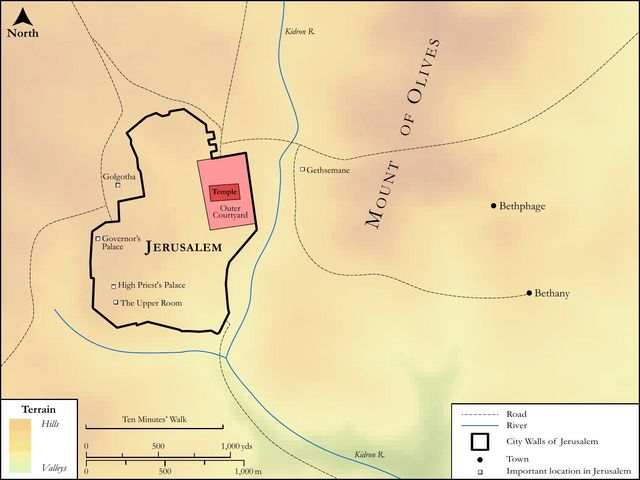
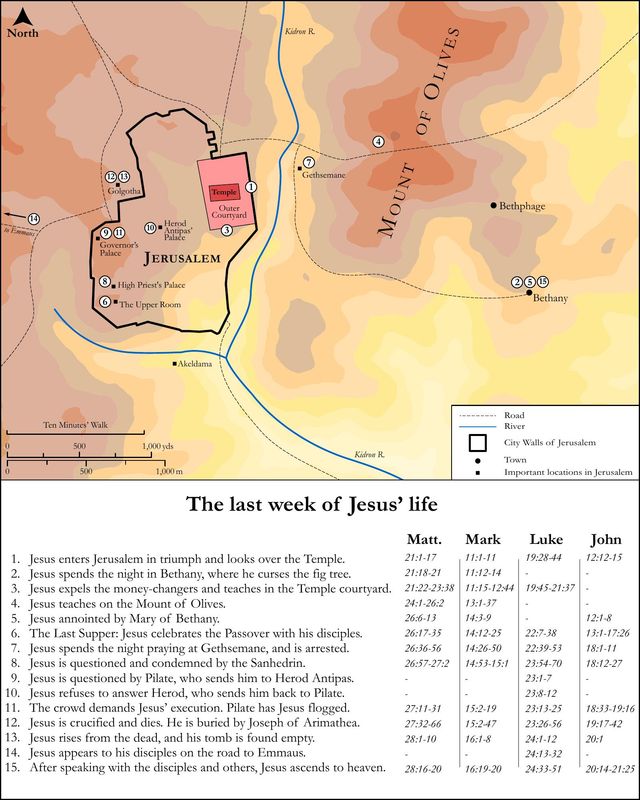
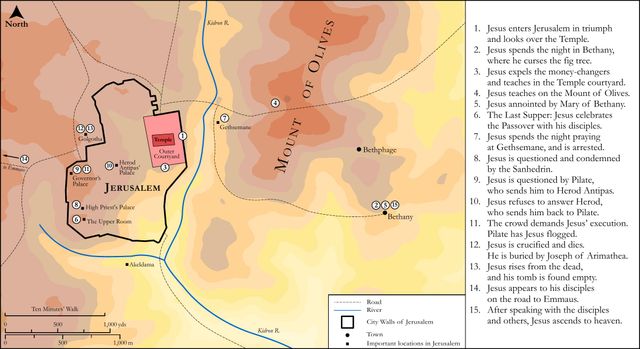
See on the biblical-era maps
Study this verse
Historical interpretation
Ten Centuries of Reception
11 surviving comments on this verse. Each one is dated, so this reads as a timeline rather than a list.
Select a marker to jump to its quote. Markers stagger vertically where authors wrote within a few decades of each other.
It follows, I was an hungred, and ye gave me no meat. It is written to the believers, Ye are the body of Christ. (1 Cor. 12:27.) As then the soul dwelling in the body, though it hungers not in respect of its spiritual substance, yet hungers for the food of the body, because it is yoked to the body; so the Saviour suffers whatever His body the Church suffers, though He Himself be impassible. And observe how in speaking to the righteous He reckons up their good deeds under their several kinds, but to the unrighteous He cuts short the description under the one head, I was sick and in prison, and ye visited me not, because it was the part of a merciful Judge to enlarge and dwell upon men's good deeds, but to pass lightly and cursorily over their evil deeds.
And things here are like this; but let us speak also of the day to come. For though they give not heed, yet it is necessary for us to speak. In the day to come then, one will see everywhere such men as these undergoing punishment. For when He saith, "I was an hungered, and ye gave me no meat; I was thirsty, and ye gave me no drink;" He is punishing these; and when He saith, "Depart into the eternal fire prepared for the devil," He is sending thither them that make a bad use of riches. And the wicked servant, who gives not to his fellow-servants the goods of his Lord, is of the number of these men, and he that buried his talent, and the five virgins.
But to the others He saith, "Depart from me, ye cursed," (no longer of the Father; for not He laid the curse upon them, but their own works), "into the everlasting fire, prepared," not for you, but "for the devil and his angels." For concerning the kingdom indeed, when He had said, "Come, inherit the kingdom," He added, "prepared for you before the foundation of the world;" but concerning the fire, no longer so, but, "prepared for the devil." I, saith He, prepared the kingdom for you, but the fire no more for you, but "for the devil and his angels;" but since ye cast yourselves therein, impute it to yourselves. And not in this way only, but by what follows also, like as though He were excusing Himself to them, He sets forth the causes.
"For I was an hungered, and ye gave me no meat." For though He that came to thee had been thine enemy, were not His sufferings enough to have overcome and subdued even the merciless? hunger, and cold, and bonds, and nakedness, and sickness, and to wander everywhere houseless? These things are sufficient even to destroy enmity. But ye did not these things even to a friend, being at once friend, and benefactor, and Lord. Though it be a dog we see hungry, often we are overcome; and though we behold a wild beast, we are subdued; but seeing the Lord, art thou not subdued? And wherein are these things worthy of defense?
But mark them, how they are destitute not of one or two things only, but of all. For not only did they fail to feed the hungry, or clothe the naked; but not even did they visit the sick, which was an easier thing.
And mark how easy are His injunctions. He said not, "I was in prison, and ye set me free; I was sick, and ye raised me up again;" but, "ye visited me," and, "ye came unto me." And neither in hunger is the thing commanded grievous. For no costly table did He seek, but what is needful only, and His necessary food, and He sought in a suppliant's garb, so that all things were enough to bring punishment on them; the easiness of the request, for it was bread; the pitiable character of Him that requesteth, for He was poor; the sympathy of nature, for He was a man; the desirableness of the promise, for He promised a kingdom; the fearfulness of the punishment, for He threatened hell. The dignity of the one receiving, for it was God, who was receiving by the poor; the surpassing nature of the honor, that He vouchsafed to condescend so far; His just claim for what they bestowed, for of His own was He receiving. But against all these things covetousness once for all blinded them that were seized by it; and this though so great a threat was set against it.
For further back also He saith, that they who receive not such as these shall suffer more grievous things than Sodom; and here He saith, "Inasmuch as ye did it not unto one of the least of these my brethren, ye did it not unto me." What sayest Thou? they are Thy brethren; and how dost Thou call them least? Why, for this reason they are brethren, because they are lowly, because they are poor, because they are outcast. For such doth He most invite to brotherhood, the unknown, the contemptible, not meaning by these the monks only, and them that have occupied the mountains, but every believer; though he be a secular person, yet if he be hungry, and famishing, and naked, and a stranger, His will is he should have the benefit of all this care. For baptism renders a man a brother, and the partaking of the divine mysteries.
So for this cause, while the one are punished justly, the others are crowned by grace. For though they had done ten thousand things, the munificence were of grace, that in return for services so small and cheap, such a heaven, and a kingdom, and so great honor, should be given them.
Wouldest thou do honor to Christ's body? Neglect Him not when naked; do not while here thou honorest Him with silken garments, neglect Him perishing without of cold and nakedness. For He that said, "This is my body," and by His word confirmed the fact, this same said, "Ye saw me an hungered, and fed me not;" and, "Inasmuch as ye did it not to one of the least of these, ye did it not to me." For This indeed needs not coverings, but a pure soul; but that requires much attention.
Let us learn therefore to be strict in life, and to honor Christ as He Himself desires. For to Him who is honored that honor is most pleasing, which it is His own will to have, not that which we account best. Since Peter too thought to honor Him by forbidding Him to wash his feet, but his doing so was not an honor, but the contrary.
Even so do thou honor Him with this honor, which He ordained, spending thy wealth on poor people. Since God hath no need at all of golden vessels, but of golden souls.
(Hom. lxxix.) To this most sweet section of Scripture which we cease not continually to ponder, let us now listen with all attention and compunction of spirit, for Christ does indeed clothe this discourse with more terrors and vividness. He does not accordingly say of this as of the others, The kingdom of heaven is like, but shows of Himself by direct revelation, saying, When the Son of man shall come in his majesty.
For all his Angels shall be with him to bear witness to the things wherein they have administered to men's salvation at His bidding.
Or, He calls the one sheep and the other goats, to denote the unprofitableness of the one, and the fruitfulness of the other, for sheep are greatly productive in fleece, milk, and lambs.
Then He separates them in place.
Observe that He says not 'Receive,' but possess, or inherit, as duo to you from of old.
For what the Saints obtain the boon of this heavenly kingdom He shows when He adds, I was an hungred, and ye gave me to eat.
But if they are His brethren, why does He call them the least? Because they are lowly, poor, and outcast. By these He means not only the monks who have retired to the mountains, but every believer though he should be secular, though an hungred, or the like, yet He would have him obtain merciful succours, for baptism and communication of the Divine mysteries makes him a brother.
Observe how they had failed in mercifulness, not in one or two respects only, but in all; not only did they not feed Him when He was hungry, but they did not even visit Him when He was sick, which was easier. And look how light things He enjoins; He said not, I was in prison, and ye did not set me free, but, and ye visited me not. Also His hunger required no costly dainties, but necessary food. Each of these counts then is enough for their punishment. First, the slightness of His prayer, viz. for bread; secondly, the destitution of Him who sought it, for He was poor; thirdly, the natural feelings of compassion, for He was a man; fourthly, the expectation of His promise, for He promised a kingdom; fifthly, the greatness of Him who received, for it is God who receives in the poor man; sixthly, the preeminent honour, in that He condescended to take of men; and, seventhly, the righteousness of so bestowing it, for what He takes from us is our own. But avarice blinds men to all these considerations.
Thus convicted by the words of the Judge, they make answer submissively, Lord, when saw we thee &c.
He who was within two days to celebrate the passover, to be delivered to the cross, and mocked by men, fitly now holds out the glory of His triumph, that He may overbalance the offences that were to follow by the promise of reward. And it is to be noted, that He who shall be seen in majesty is the Son of Man.
Also the goat is a salacious animal, and was the offering for sins in the Law; and He says not 'she goats' which can produce young, and come up shorn from the washing. (Song of Solomon 4:2.)
This prepared for you from the foundation, of the world, is to be understood as of the foreknowledge of God, with whom things to come are as already done.
It were indeed free to us to understand that it is Christ in every poor man whom we feed when he is hungry, or give drink to when he is thirsty, and so of other things; but when He says, In that ye have done it to one of the least of these my brethren, He seems tome not to speak of the poor generally, but of the poor in spirit, those to whom He pointed and said, Whosoever shall do the will of my Father which is in heaven, the same is my brother. (Matt. 12:50.)
(in Joan. Tr. 21.) The wicked and they also who shall be set on His right hand shall see Him in human shape, for He shall appear in the judgment in that form which He took on Him from us; but it shall be afterwards that He shall be seen in the form of God, for which all the believers long.
(de Civ. Dei, xx. 24.) He shall come down with the Angels whom He shall call from heavenly places to hold judgment.
(Serm. 351, 8.) Or, by Angels here He means men who shall judge with Christ; for Angels are messengers, and such we rightly understand all who have brought tidings of heavenly salvation to men.
(de Civ. Dei, xx. 24.) This gathering shall be executed by the ministry of Angels, as it is said in the Psalm, Gather to him his saints. (Ps. 50:5.)
(de Civ. Dei, xx. 9.) Besides that kingdom of which He will say in the end, Inherit the kingdom prepared for you, though in a very inferior manner, the present Church is also called His kingdom, in the which we are yet in conflict with the enemy until we come to that kingdom of peace, where we shall reign without an enemy.
(Serm. 351. 8.) But one will say, I desire not to reign, it is enough for me that I be saved. Wherein they are deceived, first, because there is no salvation for those whose iniquity abounds; and, secondly, because if there be any difference between those that reign, and those that do not reign, yet must all be within the same kingdom, lest they be esteemed for foes or aliens, and perish while the others reign. Thus all the Romans inherit the kingdom of Rome, though all do not reign in it.
(de Civ. Dei, xxi. 10.) It is hence clear, that the same fire will be appropriated to the punishment of men and of dæmons. If then it inflicts pain by corporeal touch, so as to produce bodily torment, how will there be in it any punishment for the evil spirits, unless the dæmons have, as some have thought, bodies composed of gross and fluid air. But if any man asserts that the dæmons have no bodies, we would not pugnaciously contend the point. For why may we not say, that truly, though wonderfully, even incorporeal spirit can feel pain of corporeal fire? If the spirits of men, though themselves incorporeal, can be now inclosed in bodily limbs, they can then be inseparably attached to the bonds of body. The dæmons then will be united to a body of material fire, though themselves immaterial, drawing punishment from their body, not giving life to it. And that fire being material will torture such bodies as ours with their spirits; but the dæmons are spirits without bodies.
(de Civ. Dei, xx. 1.) He is now treating of the last judgment, when Christ shall come from heaven to judge the quick and dead. This day of the Divine judgment we call the Last Day, that is, the end of time; for we cannot tell through how many days that judgment will be prolonged; but day, as is the use of holy Scripture, is put for time. And we therefore call it the last or latest judgment, because He both now judges and has judged from the beginning of the human race, when He thrust forth the first man from the tree of life, and spared not the Angels that sinned. But in that final judgment both men and Angels shall be judged together, when the Divine power shall bring each man's good and evil deeds in review before his memory, and one intuitive glance shall present them to the perception, so that at once we shall be condemned or acquitted in our consciences.
These words overthrow the error of those who said that the Lord should not continue in the same form of a servant. By his majesty, He means His divinity, in which He is equal to the Father and the Holy Spirit.
And all nations shall be gathered before Him. These words prove that the resurrection of men shall be real.
And it is to be noted, that the Lord here enumerates six works of mercy which whoso shall study to accomplish shall be entitled to the kingdom prepared for the chosen from the foundation of the world.
(Mor. xxvi. 27.) These, to whom as they stand on His right hand the Judge at His coming shall say, I was an hungred &c. are they who are judged on the side of the elect, and who reign; who wash away the stains of their life with tears; who redeem former sins by good deeds following; who, whatever unlawful thing they have at any time done, have covered it from the Judge's eyes by a cloak of alms. Others indeed there are who are not judged, yet reign, who have gone even beyond the precepts of the Law in the perfection of their virtue.
(ubi sup.) They to whom this is said are the wicked believers, who are judged and perish; others, being unbelievers, are not judged and perish; for there is no examination of the condition of such as appear before the face of an impartial Judge already condemned by their unbelief; but those who hold the profession of the faith, but have not the works of their profession, are convicted that they may be condemned. These at least hear the words of their Judge, because they have at least kept the words of His faith. The others hear no words of their Judge pronouncing sentence of condemnation, because they have not paid Him honour even in word. For a prince who governs an earthly kingdom punishes after a different manner the rebellion of a subject and the hostile attempts of an enemy; in the former case, he recurs to his prerogative; against an enemy he takes arms, and does not ask what penalty the law attaches to his crime.
After the parables concerning the end of the world the Lord proceeds to describe the manner of the judgment to come.
Or, they are called blessed, to whom an eternal blessing is due for their good deserts. He calls it the kingdom of His Father, ascribing the dominion of the kingdom to Him by whom Himself the King was begotten. For by His royal power, with which He shall be exalted alone in that day, He shall pronounce the sentence of judgment, Then shall the King say.
Mystically, He who with the bread of the word and the drink of wisdom refreshes the soul hungering and thirsting after righteousness, or admits into the home of our mother the Church him who is wandering in heresy or sin, or who strengthens the weak in faith, such an one discharges the obligations of true love.
Lord, when sate we thee &c. This they say not because they distrust the Lord's words, but they are in amaze at so great exaltation, and at the greatness of their own glory; or because the good which they have done will seem to them to be so small according to that of the Apostle, For the sufferings of this present time are not worthy to be compared to the glory that shall be revealed in us. (Rom. 8:18.)
(non occ.) Under the figure of a sheep in Scripture is signified simplicity and innocence. Beautifully then in this place are the elect denoted by sheep.
Continue studying Matthew 25:42 across the web’s major study libraries — every link below opens this exact verse, chapter, or book on the destination site.
Read & Compare
 BibleGatewayThis verse in more than 200 translations and 70 languages.
 Bible.comThe YouVersion reader — hundreds of translations, reading plans, and highlights.
 ESV.orgCrossway's official English Standard Version reader.
 NET BibleThe NET translation with 60,000+ translators' notes on every rendering decision.
 STEP BibleTyndale House's free study tool — original text, vocabulary, and scholarly resources.
 BibliaLogos Bible Software's free web reader.
 USCCBThe New American Bible (Revised Edition) with the U.S. bishops' study notes.
Commentaries
 BibleHub CommentariesDozens of classic commentaries on this verse, gathered on one page.
 StudyLightMore than 100 commentary sets — the largest collection on the web.
 BibleRefPlain-English commentary on what this verse means, verse by verse.
 Enduring WordDavid Guzik's free commentary on this chapter, widely used by Bible teachers.
 Bible Study ToolsVerse commentary alongside Greek and Hebrew study aids.
Original Language & Research
- BibleHub InterlinearThe verse word by word — original language, transliteration, and English.
- BibleHub LexiconEvery word's original-language definition and Strong's entry.
 Blue Letter BibleDeep-study tools — Strong's numbers, concordance, and word studies.
 CNTR CollationThe earliest Greek manuscripts of this verse, collated letter by letter.
Sermons, Hymns & Audio


TrulyRandomVerse is not affiliated with these sites and doesn’t control their content. They’re linked because they’re genuinely useful.
Summary
Matthew 25:42 presents a stark indictment from Jesus' discourse on the Last Judgment, revealing the King's condemnation of those who failed to demonstrate practical compassion. Within the broader "Parable of the Sheep and the Goats," this verse specifically highlights the neglect of basic human needs—food for the hungry and drink for the thirsty—as a critical failure that signifies a profound spiritual disconnect from Christ Himself, who identifies with the most vulnerable members of society.
Context
ShowHideLiterary Context
This verse is an integral part of Jesus' eschatological discourse in Matthew 24-25, specifically occurring within the "Parable of the Sheep and the Goats" (Matthew 25:31-46). Following parables emphasizing readiness (the Ten Virgins) and stewardship (the Talents), this final parable shifts focus to the criteria for ultimate judgment. Verse 42 immediately follows the King's commendation of the "sheep" for their compassionate actions and precedes the full list of neglected needs, serving as the opening charge against the "goats." It sets the tone for the profound revelation that one's treatment of "the least of these" is tantamount to their treatment of Christ Himself, a truth explicitly stated in Matthew 25:40.
Historical & Cultural Context
Jesus' teachings here resonate deeply with Old Testament prophetic calls for justice and care for the poor, the widow, and the orphan (e.g., Deuteronomy 15:7-11; Isaiah 58:6-7). In ancient Near Eastern societies, hospitality and care for the stranger and the needy were not merely ethical ideals but fundamental social obligations. To deny food and drink to someone in distress was a severe breach of communal and religious duty, often leading to death in harsh environments. Jesus' audience would have understood the life-or-death implications of the actions (or inactions) described, making the King's judgment particularly poignant and culturally relevant. The emphasis on tangible acts of mercy would have been a familiar concept, yet Jesus elevates it by identifying Himself with the recipients of such acts.
Key Themes
ShowHideMatthew 25:42 powerfully contributes to several overarching themes in the Gospel of Matthew and broader biblical theology. Firstly, it underscores the theme of Practical Compassion and Service, asserting that authentic faith is not merely intellectual assent but is visibly expressed through concrete deeds of love and mercy towards others. Secondly, it highlights Jesus' profound Identification with the Needy, revealing that acts of charity (or neglect) directed towards the lowly are perceived by Christ as direct actions towards (or against) Him. This theme is central to understanding the nature of the Kingdom of God, where the King's presence is found among the vulnerable, as echoed in Matthew 10:42. Lastly, the verse emphasizes Judgment by Omission, a crucial theological point where condemnation is not for overt wrongdoing but for the failure to act mercifully. This concept challenges the passive assumption that inaction is benign, revealing that a lack of love can be as spiritually damning as active malice, aligning with the call to bear good fruit found in Matthew 7:19.
Exposition and Analysis
ShowHideKey Word Analysis
ShowHideThis verb means "to famish" or "to be hungry," often with the implication of intense craving or need. It describes a fundamental human condition of physical deprivation. In this context, Jesus uses it to vividly portray the dire state of those He identifies with, emphasizing the basic, life-sustaining nature of the need for food.
While the KJV translates this as "meat," the underlying Greek verb refers to the general act of "eating" or "food" in a broad sense, not specifically animal flesh. This clarifies that Jesus is speaking of any form of nourishment necessary to sustain life, underscoring the universal and essential nature of the provision being withheld.
This verb means "to thirst for," whether literally or figuratively. Here, it refers to the literal physical need for water, another absolute necessity for human survival. Paired with "hungred," it forms a comprehensive picture of basic human needs, highlighting the severity of the neglect described.
Verse Breakdown
ShowHide"For I was an hungred"
Jesus begins by stating His own experience of hunger, using the first person "I." This is a profound statement of identification, where the King of Glory places Himself in the position of the most vulnerable and deprived. It establishes the premise for the subsequent judgment, framing the neglect of the hungry as a personal affront to Him.
"and ye gave me no meat:"
This clause presents the first specific failure of the condemned. The phrase "ye gave me no meat" (food) directly contrasts with the King's hunger. The "no" (Greek ou) is an absolute negation, indicating a complete absence of provision. This highlights the sin of omission—it's not what they did to Him, but what they failed to do.
"I was thirsty"
Parallel to the first clause, Jesus reiterates His identification, this time with those experiencing thirst. This repetition reinforces the personal nature of the need and the King's solidarity with the suffering, broadening the scope of basic human necessities.
"and ye gave me no drink:"
Completing the parallel, this clause details the second specific failure: the withholding of water. Like the previous phrase, it emphasizes the absolute lack of provision ("no drink") for a fundamental need. This parallel structure underscores the consistency of the neglect and the comprehensive nature of the King's expectation for compassionate action.
Literary Devices
ShowHideMatthew 25:42 employs several powerful literary devices to convey its message. Parallelism is evident in the symmetrical structure of the two clauses: "I was an hungred, and ye gave me no meat: I was thirsty, and ye gave me no drink." This rhythmic repetition emphasizes the consistent nature of the neglect and highlights the fundamental, life-sustaining needs that were ignored. Identification is a central device, as Jesus, the King, explicitly equates Himself with "the hungry" and "the thirsty." This is not merely a metaphor but a profound theological statement that transforms acts of charity towards the lowly into direct service (or disservice) to Christ. Furthermore, the verse uses Metonymy or Synecdoche, where "hunger" and "thirst" stand in for a broader spectrum of human suffering and vulnerability, inviting the audience to consider all forms of need. Finally, there is a stark Juxtaposition between the King's stated need and the subjects' active inaction, creating a dramatic contrast that underscores the severity of their failure.
Theological and Thematic Connections
ShowHideMatthew 25:42 is a cornerstone passage for understanding the practical outworking of faith and the nature of divine judgment. It unequivocally links genuine discipleship not merely to creedal affirmation but to tangible acts of love and mercy towards the most vulnerable. The theological implication is profound: how one treats "the least of these" is a direct reflection of one's relationship with Christ. This passage challenges any notion of a passive faith, asserting that inaction in the face of suffering is a grave spiritual offense. It underscores God's deep concern for justice and compassion, revealing that true righteousness is characterized by active engagement with the needs of others, echoing the prophetic call for righteousness and justice to flow like a river.
Reflection and Application
ShowHideMatthew 25:42 serves as a profound mirror for self-examination, challenging believers to move beyond mere intellectual assent to a vibrant, active faith. It compels us to ask: do we truly see Christ in the faces of the hungry, the thirsty, the stranger, the sick, and the imprisoned? This verse reminds us that our spiritual health is inextricably linked to our practical compassion. It calls us to a lifestyle of intentional generosity and service, recognizing that every act of kindness (or neglect) towards those in need is, in essence, an act towards Christ Himself. This isn't about earning salvation, but about demonstrating the transformative power of a salvation already received, where the love of God compels us to love our neighbor. It urges us to open our eyes, our hearts, and our hands to alleviate suffering, using our resources, time, and talents to reflect the boundless love of God to a hurting world.
Questions for Reflection
ShowHideFAQ
ShowHideWhat does "meat" mean in the King James Version of Matthew 25:42?
ShowHideIn the King James Version, the word "meat" (from the Greek phágō, G5315) does not refer exclusively to animal flesh as it commonly does today. Instead, it means "food" in a general sense, encompassing any form of nourishment. This archaic usage can be confusing for modern readers, but understanding the original Greek clarifies that Jesus was speaking about the fundamental need for sustenance of any kind, not specifically a type of food. The parallel with "drink" further emphasizes the basic necessities of life.
Why is judgment in this passage based on what people didn't do, rather than what they did do wrong?
ShowHideThis passage highlights the concept of "judgment by omission," which is a crucial aspect of biblical ethics. While many biblical condemnations address active wrongdoing (sins of commission), Matthew 25:42-43 focuses on the failure to act when compassion was required. This underscores that true righteousness involves not just refraining from evil, but actively pursuing good and demonstrating love. The absence of compassion is revealed as a grave spiritual failing because it indicates a heart that is not aligned with the King's own character and priorities. Jesus teaches that genuine faith is active and expressed through tangible love for others, as seen in James 2:17. Therefore, the failure to meet basic needs is seen as a direct rejection of Christ's presence in the needy.
Christ-Centered Fulfillment
ShowHideMatthew 25:42 finds its ultimate fulfillment and profound meaning in the person and work of Jesus Christ. He is not merely the King who issues this judgment; He is the one who perfectly embodied the very compassion He demands. Jesus, though rich, became poor for our sakes (2 Corinthians 8:9), identifying with humanity in its deepest hunger and thirst—not just for physical sustenance, but for spiritual truth and salvation. His entire life was a testament to serving "the least of these," as He healed the sick, fed the multitudes (Matthew 14:13-21), and ministered to the outcast. Ultimately, on the cross, Jesus experienced the ultimate hunger and thirst, crying out, "I thirst" (John 19:28), bearing the spiritual deprivation of humanity. His self-giving sacrifice provides the "bread of life" (John 6:35) and the "living water" (John 4:10-14) for all who believe. Thus, when Jesus identifies with the hungry and thirsty, He calls His followers to participate in His ongoing mission of compassion, extending the same love and provision that He, the Good Shepherd, has shown to His flock (John 10:11). Our acts of mercy are not just good deeds, but an overflow of the life of Christ within us, a tangible expression of His Kingdom come.