


Joshua 21:44
Bible text: King James Version (1769 Blayney text) · Public domain
Bible text: King James Version with Strong's numbers · Public domain
Bible text: Berean Standard Bible · Public domain
Bible text: American Standard Version (1901) · Public domain
Bible text: World English Bible, Messianic edition · Public domain
Bible text: Geneva Bible (1599) · Public domain
Bible text: Young's Literal Translation · Public domain
- וַיָּנַחvai·Ya·nachand he gave restH5117Conj-w ¦ V-Hiphil-ConsecImperf-3msVerb Hiphil Consecutive Imperfect 3rd Singular Masculineוַandיָּנַחhe gave rest
- יְהוָהYah·wehYahwehH3068N-properNoun Proper Title
- לָהֶםla·Hemto <the> themPrep-l ¦ 3mpSuffix Personal 3rd Plural Masculineלָto <the>הֶםthem
- מִסָּבִיבmi·sa·Vivfrom round aboutH5439Prep-m ¦ N-csNoun Singular common gender Absoluteמִfromסָּבִיבround about
- כְּכֹלke·Kholaccording to allH3605Prep-k ¦ N-msNoun Singular Masculine Absoluteכְּaccording toכֹלall
- אֲשֶׁר'a·SherthatH834RelParticle Relative
- נִשְׁבַּעnish·Ba'he had swornH7650V-Niphal-Perf-3msVerb Niphal Perfect 3rd Singular Masculine
- לַאֲבוֹתָםla·'a·vo·Tamto their ancestorsH1Prep-l ¦ N-fpc ¦ 3mpNoun Plural Feminine Constructלַtoאֲבוֹתָancestorsםtheir
- וְלֹאve·lo'and notH3808Conj-w ¦ NegParticle Negativeוְandלֹאnot
- עָמַד'A·madhe stoodH5975V-Qal-Perf-3msVerb Qal Perfect 3rd Singular Masculine
- אִישׁ'ishanyoneH376N-msNoun Singular Masculine Absolute
- בִּפְנֵיהֶםbif·nei·Hemin their facesH6440Prep-b ¦ N-mpc ¦ 3mpNoun Plural Masculine Constructבִּinפְנֵיfacesהֶםtheir
- מִכָּלmi·kolfrom allH3605Prep-m ¦ N-mscNoun Singular Masculine Constructמִfromכָּלall
- אֹיְבֵיהֶם'o·ye·vei·Hemtheir enemiesH341V-Qal-Prtcpl-mp ¦ 3mpVerb Qal Participle Plural Masculine Constructאֹיְבֵיenemiesהֶםtheir
- אֵת'et<obj.>H853DirObjMParticle Object Indicator
- כָּלkolallH3605N-mscNoun Singular Masculine Construct
- אֹיְבֵיהֶם'o·ye·vei·Hemtheir enemiesH341V-Qal-Prtcpl-mp ¦ 3mpVerb Qal Participle Plural Masculine Constructאֹיְבֵיenemiesהֶםtheir
- נָתַןna·Tanhe gaveH5414V-Qal-Perf-3msVerb Qal Perfect 3rd Singular Masculine
- יְהוָהYah·wehYahwehH3068N-properNoun Proper Title
- בְּיָדָםbe·ya·Damin their handH3027Prep-b ¦ N-csc ¦ 3mpNoun Singular common gender Constructבְּinיָדָhandםtheir
English is a literal word-by-word gloss of the Hebrew, not the KJV's wording. Why?
This is the original text the KJV's translators worked from — each Hebrew word with its own literal English meaning in this verse, prepared by scholars at Tyndale House, Cambridge. The KJV translates whole sentences, not word by word, so its wording differs: one Hebrew word can become several English words, and the KJV may choose “the LORD” where the gloss reads “Yahweh”. Both are faithful — they answer different questions. For the KJV's own rendering, switch to the KJV text.
Details
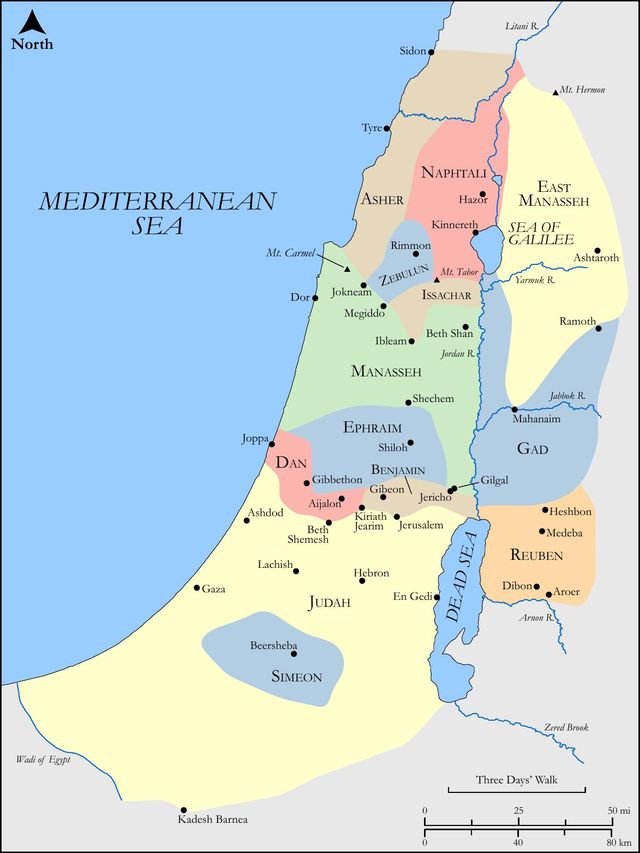
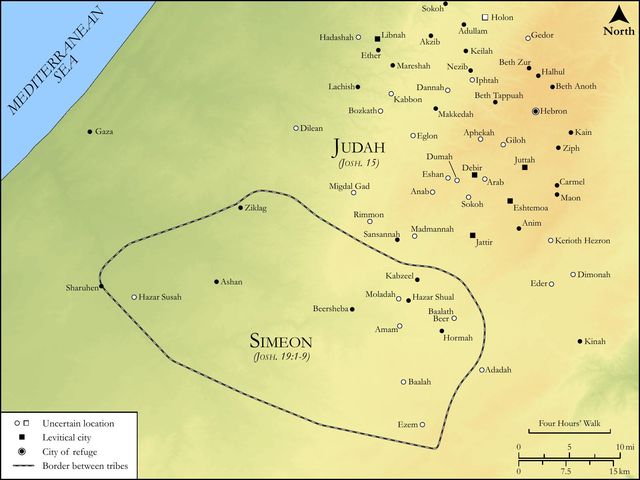
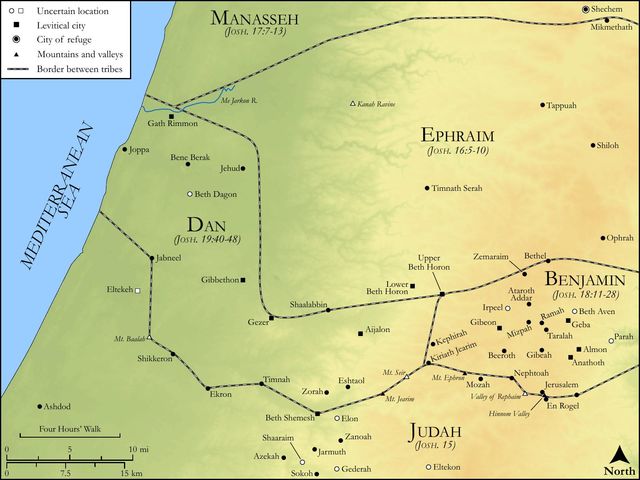
See on the biblical-era maps
Study this verse
Public-domain commentary
Matthew Henry
From his Commentary on the Whole Bible. Henry comments on passages, not single verses — this entry covers Joshua 21:43–45. His two-level outline is real structure in the source text, so it is rendered as structure.
We have here the conclusion of this whole matter, the foregoing history summed up, and, to make it appear the more bright, compared with the promise of which it was the full accomplishment. God's word and his works mutually illustrate each other. The performance makes the promise appear very true and the promise makes the performance appear very kind.
I.God had promised to give the seed of Abraham the land of Canaan for a possession, and now at last he performed this promise (Jos 21:43):
They possessed it, and dwelt therein. Though they had often forfeited the benefit of that promise, and God had long delayed the performance of it, yet at last all difficulties were conquered, and Canaan was their own. And the promise of the heavenly Canaan is as sure to all God's spiritual Israel, for it is the promise of him that cannot lie.
II.God had promised to give them rest in that land, and now they had rest round about, rest from the fatigues of their travel through the wilderness (which tedious march, perhaps, was long in their bones), rest from their wars in Canaan, and the insults which their enemies there had at first offered them. They now dwelt, not only in habitations of their own, but those quiet and peaceable ones; though there were Canaanites that remained, yet none that had either strength or spirit to attack them, nor so much as give them an alarm. This rest continued till they by their own sin and folly put thorns into their own beds and their own eyes.
III.God had promised to give them victory and success in their wars, and this promise likewise was fulfilled:
There stood not a man before them, Jos 21:44. They had the better in every battle, and which way soever they turned their forces they prospered. It is true there were Canaanites now remaining in many parts of the land, and such as afterwards made head against them, and became very formidable. But,
1.As to the present remains of the Canaanites, they were no contradiction to the promise, for God had said he would not drive them out all at once, but by little and little, Exo 23:30. They had now as much in their full possession as they had occasion for and as they had hands to manage, so that the Canaanites only kept possession of some of the less cultivated parts of the country against the beasts of the field, till Israel, in process of time, should become numerous enough to replenish them.
2.As to the after prevalency of the Canaanites, that was purely the effect of Israel's cowardice and slothfulness, and the punishment of their sinful inclination to the idolatries and other abominations of the heathen, whom the Lord would have cast out before them but that they harboured and indulged them. So that the foundation of God stands sure. Israel's experience of God's fidelity is here upon record, and is an acquittance under their hands to the honour of God, the vindication of his promise which had been so often distrusted, and the encouragement of all believers to the end of the world: There failed not any good thing, no, nor aught of any good thing (so full is it expressed), which the Lord had spoken unto the house of Israel, but in due time all came to pass, Jos 21:45. Such an acknowledgment as this, here subscribed by Joshua in the name of all Israel, we afterwards find made by Solomon, and all Israel did in effect say Amen to it, Kg1 8:56. The inviolable truth of God's promise, and the performance of it to the utmost, are what all the saints have been ready to bear their testimony to; and, if in any thing the performance has seemed to come short, they have been as ready to own that they themselves must bear all the blame.
Continue studying Joshua 21:44 across the web’s major study libraries — every link below opens this exact verse, chapter, or book on the destination site.
Read & Compare
 BibleGatewayThis verse in more than 200 translations and 70 languages.
 Bible.comThe YouVersion reader — hundreds of translations, reading plans, and highlights.
 ESV.orgCrossway's official English Standard Version reader.
 NET BibleThe NET translation with 60,000+ translators' notes on every rendering decision.
 STEP BibleTyndale House's free study tool — original text, vocabulary, and scholarly resources.
 BibliaLogos Bible Software's free web reader.
 USCCBThe New American Bible (Revised Edition) with the U.S. bishops' study notes.
Commentaries
 BibleHub CommentariesDozens of classic commentaries on this verse, gathered on one page.
 StudyLightMore than 100 commentary sets — the largest collection on the web.
 BibleRefPlain-English commentary on what this verse means, verse by verse.
 Enduring WordDavid Guzik's free commentary on this chapter, widely used by Bible teachers.
 Bible Study ToolsVerse commentary alongside Greek and Hebrew study aids.
Original Language & Research
- BibleHub InterlinearThe verse word by word — original language, transliteration, and English.
- BibleHub LexiconEvery word's original-language definition and Strong's entry.
 Blue Letter BibleDeep-study tools — Strong's numbers, concordance, and word studies.
 SefariaThe Hebrew text with Rashi and centuries of Jewish commentary.
Sermons, Hymns & Audio


TrulyRandomVerse is not affiliated with these sites and doesn’t control their content. They’re linked because they’re genuinely useful.
Summary
Joshua 21:44 stands as a profound declaration of God's unwavering faithfulness and the comprehensive fulfillment of His ancient covenant promises to Abraham, Isaac, and Jacob. Following the intricate division of the land among the tribes of Israel, this verse climactically asserts that the LORD had indeed granted them complete rest and security from their adversaries, delivering all their enemies into their hands, precisely as He had sworn to their forefathers. It encapsulates the divine initiative behind Israel's successful settlement and triumph, marking a significant milestone in their redemptive history and underscoring the absolute reliability of God's Word.
Context
ShowHideLiterary Context
Joshua 21:44 serves as a powerful, climactic summary statement at the conclusion of a lengthy and meticulous section (Joshua 13-21) concerning the allocation of the Promised Land to the various Israelite tribes and the specific cities given to the Levites. This verse follows the detailed record of how every territorial promise was fulfilled, demonstrating God's precision and faithfulness in keeping His word. It acts as a theological capstone, affirming that the preceding events—the conquest and subsequent distribution—were not merely human achievements but direct outworkings of divine promise. Its placement immediately before Joshua's farewell addresses (Joshua 23-24) underscores the foundational truth that God had done His part in establishing Israel in the land; the remaining challenges for Israel would be in their continued obedience and faithfulness to His covenant.
Historical & Cultural Context
The setting for Joshua 21:44 is the period immediately following the major military campaigns of the conquest of Canaan, roughly 1400-1200 BC. For ancient Israel, land was not merely property but a tangible manifestation of God's covenant faithfulness and their identity as His chosen people. The concept of "rest" (Hebrew: menuchah) in this context was multifaceted, encompassing not just cessation from warfare but also secure habitation, economic stability, and spiritual peace within the boundaries of their divinely appointed inheritance. The defeat of enemies was a critical component of this rest, as hostile neighbors posed constant threats to their security and ability to worship God freely. This era was characterized by tribal societies and frequent regional conflicts, making the LORD's provision of comprehensive rest a miraculous and counter-cultural reality, showcasing His unique power over the nations.
Key Themes
ShowHideThis verse powerfully articulates several core themes central to the book of Joshua and the broader Old Testament narrative. Firstly, it highlights the Fulfillment of Divine Promises, emphasizing that God acted "according to all that he sware unto their fathers," a direct reference to the Abrahamic covenant established in passages like God's promise to Abraham in Genesis 12:7 and the more detailed covenant in Genesis 15:18. Secondly, the theme of God's Provision of Rest is paramount. This "rest" signifies a secure and peaceful existence in the land, a gift from the LORD that was essential for Israel to flourish and worship Him without distraction, as also promised in Deuteronomy 12:10. Finally, the verse underscores the theme of Divine Victory and Sovereignty. The declaration that "there stood not a man of all their enemies before them; the LORD delivered all their enemies into their hand" unequivocally attributes Israel's success not to their military prowess but to God's active intervention and power, echoing earlier assurances that the LORD would fight for them against their adversaries.
Exposition and Analysis
ShowHideKey Word Analysis
ShowHideDerived from a primitive root meaning "to settle down," this word signifies more than mere cessation from activity. It encompasses a state of secure habitation, tranquility, and settled peace, achieved through divine provision and protection. In the context of the conquest, it implies freedom from the constant threat of war and the ability to live securely in the inherited land. It is a profound gift from God, foundational to Israel's well-being and their ability to fulfill their covenant obligations.
This primitive root means "to seven oneself," implying the solemnity of an oath, as if by repeating a declaration seven times. When God "swore" to their fathers, it emphasized the unbreakable, covenantal commitment and the absolute certainty of His word. This highlights God's absolute trustworthiness and the guaranteed fulfillment of His redemptive plan, demonstrating His faithfulness across generations.
This primitive root, meaning "to give," is used with great latitude. Here, it denotes God's active, decisive, and complete transfer of power and victory to Israel over their enemies. It underscores divine agency; the enemies were not merely defeated by Israel's strength, but God Himself "gave" them into Israel's hand, signifying His sovereign control over the outcomes of battle and the ultimate triumph of His people.
Verse Breakdown
ShowHide"And the LORD gave them rest round about, according to all that he sware unto their fathers:"
This opening clause immediately establishes the divine initiative ("the LORD gave"), attributing the provision of peace directly to God. The "rest round about" indicates a comprehensive, pervasive peace, surrounding them on all sides, implying security from external threats and internal turmoil. The crucial phrase "according to all that he sware unto their fathers" anchors this present reality in the ancient, unbreakable covenant promises made to Abraham, Isaac, and Jacob, affirming God's perfect fidelity to His word across generations and His meticulous fulfillment of every detail.
"and there stood not a man of all their enemies before them;"
This statement emphasizes the completeness and decisiveness of the victory. It is a declaration of total dominance, implying that no enemy force could withstand Israel's advance or maintain a hostile presence within the land. While later events show ongoing struggles, this verse captures the ideal and initial fulfillment of God's promise for the major military campaigns, signifying that the primary, organized resistance had been broken and no one could successfully oppose God's plan for His people.
"the LORD delivered all their enemies into their hand."
This concluding clause powerfully reiterates the primary agent of victory: "the LORD." The idiomatic expression "delivered all their enemies into their hand" signifies complete and decisive victory, where the vanquished are utterly subjected to the power of the victor. It reinforces the theocentric nature of the conquest, ensuring that all glory for the triumph belongs to God alone, who sovereignly controls the destinies of nations and the outcomes of battles.
Literary Devices
ShowHideJoshua 21:44 masterfully employs several literary devices to convey its powerful message. Repetition is evident in the repeated emphasis on "the LORD" as the primary actor, reinforcing the theocentricity of the narrative and ensuring that all credit for Israel's success is attributed to divine power rather than human might. The phrase "there stood not a man of all their enemies before them" functions as a form of hyperbole, emphasizing the overwhelming and decisive nature of God's victory, even if minor skirmishes or pockets of resistance remained. This summary statement serves as a climactic declaration, bringing a significant section of the book to a theological conclusion. The verse also utilizes idiomatic expression with "delivered all their enemies into their hand," a common biblical phrase for absolute victory and subjugation. Together, these devices create a powerful declaration of God's faithfulness, sovereignty, and the complete fulfillment of His covenant promises.
Theological and Thematic Connections
ShowHideJoshua 21:44 is a cornerstone verse for understanding God's covenant faithfulness and His active involvement in the history of His people. It demonstrates that God is not merely a distant observer but a faithful covenant keeper who meticulously fulfills every promise He makes. The "rest" provided is not just physical peace but a theological concept tied to God's presence and blessing, foreshadowing a deeper, spiritual rest. This verse also highlights God's sovereign control over nations and battles, affirming that true victory comes from Him alone. It serves as a powerful reminder that God's word is reliable and His purposes will ultimately prevail, even when circumstances seem daunting, providing a foundation for trust in His unfailing character.
Reflection and Application
ShowHideJoshua 21:44 offers profound encouragement for believers today, serving as a timeless testament to God's unwavering faithfulness. Just as He meticulously fulfilled every promise to ancient Israel, providing them rest and victory in the Promised Land, so too can we trust Him to fulfill His promises in our lives. This verse calls us to reflect on the absolute reliability of God's Word and to rest in His sovereign control, even when we face spiritual battles, personal challenges, or periods of uncertainty. It reminds us that our ultimate security and peace come not from our own efforts or strength, but from the LORD who fights for us and delivers us. This divine rest is a foretaste of the perfect peace and security found in God's eternal presence, urging us to lean into His provision, trust in His unfailing love, and find our true repose in Him alone.
Questions for Reflection
ShowHideFAQ
ShowHideDid Israel truly experience complete rest and the defeat of all enemies, given later conflicts and the existence of un-conquered peoples?
ShowHideJoshua 21:44 speaks to the initial and decisive fulfillment of God's promise concerning the major military campaigns and the secure establishment of Israel in the land. It declares that no organized, standing opposition could prevent their settlement, and God had delivered the primary Canaanite strongholds into their hands. While later biblical accounts (e.g., Judges) detail ongoing skirmishes and the failure of Israel to completely dispossess all inhabitants, this verse emphasizes that God had fulfilled His part in providing the opportunity for complete rest and victory. The subsequent lack of full rest was often due to Israel's disobedience or lack of faith in fully driving out the remaining inhabitants, not a failure on God's part. The verse highlights the ideal and covenantal reality of God's provision, setting the stage for Israel's responsibility to walk in obedience to maintain that rest. It is a declaration of God's faithfulness in providing the means for a secure inheritance.
What is the deeper theological significance of "rest" in this verse?
ShowHideThe "rest" (Hebrew: menuchah) in Joshua 21:44 is far more than simply the absence of war. Theologically, it signifies a state of secure, settled, and peaceful habitation in the Promised Land, a place of blessing and intimacy with God. It connects to the concept of the Sabbath rest, pointing to a cessation from struggle and a dwelling in God's provision. This earthly rest in Canaan foreshadows a greater, spiritual rest that God offers His people. It is a rest from the anxieties of nomadic life, from the constant threat of enemies, and from the uncertainty of God's promises. It represents the fulfillment of God's plan for His people to live securely under His covenant blessings, free to worship and serve Him without distraction, establishing a pattern for the ultimate rest found in Christ.
Christ-Centered Fulfillment
ShowHideJoshua 21:44, a powerful declaration of God's faithfulness in providing rest and victory to Israel, finds its ultimate and most profound fulfillment in Jesus Christ. The earthly rest in Canaan, though significant, was always partial and temporary, ultimately disrupted by Israel's disobedience and subsequent exiles. However, Jesus offers a perfect and eternal rest that transcends geographical boundaries and temporal limitations. He is the true Lamb of God who takes away the sin of the world, providing rest from the burden of sin and the curse of the law. Just as the LORD delivered Israel's enemies into their hand, Christ has decisively defeated humanity's ultimate enemies: sin, death, and the devil. Through His crucifixion and resurrection, He disarmed the spiritual rulers and authorities, triumphing over them in His cross (see Colossians 2:15). Jesus' gracious invitation, "Come unto me, all ye that labour and are heavy laden, and I will give you rest, echoes the promise of rest in Joshua, but on a spiritual and eternal plane. The book of Hebrews explicitly draws this connection, affirming that a Sabbath rest remains for the people of God, a rest entered into by faith in Christ, far surpassing the rest Joshua provided (see Hebrews 4:8). In Christ, believers receive not just a physical land but an eternal inheritance and a secure dwelling in God's presence, where all tears are wiped away and death is no more (see Revelation 21:4). The victory and rest promised and partially fulfilled in Joshua are fully realized in the person and work of Jesus, who has overcome the world (see John 16:33) and secured an eternal inheritance for all who believe.