


Deuteronomy 31:2
- וַיֹּאמֶרvai·Yo·merand he saidH559Conj-w ¦ V-Qal-ConsecImperf-3msVerb Qal Consecutive Imperfect 3rd Singular Masculineוַandיֹּאמֶרhe said
- אֲלֵהֶם'a·le·Hemto themH413Prep ¦ 3mpPreposition Definiteאֲלֵtoהֶםthem
- בֶּןben[am] a son ofH1121N-mscNoun Singular Masculine Construct
- מֵאָהme·'Ahone hundredH3967N-fsNoun Singular Feminine Absolute
- וְעֶשְׂרִיםve·'es·Rimand twentyH6242Conj-w ¦ N-mpNoun Plural Masculine Absoluteוְandעֶשְׂרִיםtwenty
- שָׁנָהsha·Nahyear[s]H8141N-fsNoun Singular Feminine Absolute
- אָנֹכִי'a·no·KhiIH595Pro-1csPronoun Personal 1st Singular common gender
- הַיּוֹםhai·Yomthis dayH3117Art ¦ N-msNoun Singular Masculine Absoluteהַthisיּוֹםday
- לֹאlo'notH3808NegParticle Negative
- אוּכַל'u·KhalI am ableH3201V-Qal-Imperf-1csVerb Qal Imperfect 1st Singular common gender
- עוֹדodstillH5750Adj-msAdjective Numerical Singular Masculine Absolute
- לָצֵאתla·Tzetto go outH3318Prep-l ¦ V-Qal-InfVerb Qal Infinitive Constructלָtoצֵאתgo out
- וְלָבוֹאve·la·Vo'and to comeH935Conj-w ¦ Prep-l ¦ V-Qal-InfVerb Qal Infinitive Constructוְandלָtoבוֹאcome
- וַיהוָהva·Yah·wehand YahwehH3068Conj-w ¦ N-properNoun Proper TitleוַandיהוָהYahweh
- אָמַר'a·Marhe has saidH559V-Qal-Perf-3msVerb Qal Perfect 3rd Singular Masculine
- אֵלַי'e·Laito meH413Prep ¦ 1csPreposition Definiteאֵלַtoיme
- לֹאlo'notH3808NegParticle Negative
- תַעֲבֹרta·'a·Voryou will pass overH5674V-Qal-Imperf-2msVerb Qal Imperfect 2nd Singular Masculine
- אֶת'et<obj.>H853DirObjMParticle Object Indicator
- הַיַּרְדֵּןhai·yar·Denthe JordanH3383Art ¦ N-properNoun Proper LocationהַtheיַּרְדֵּןJordan
- הַזֶּהha·Zeh<the> thisH2088Art ¦ PrtParticle Demonstrativeהַ<the>זֶּהthis
English is a literal word-by-word gloss of the Hebrew, not the KJV's wording. Why?
This is the original text the KJV's translators worked from — each Hebrew word with its own literal English meaning in this verse, prepared by scholars at Tyndale House, Cambridge. The KJV translates whole sentences, not word by word, so its wording differs: one Hebrew word can become several English words, and the KJV may choose “the LORD” where the gloss reads “Yahweh”. Both are faithful — they answer different questions. For the KJV's own rendering, switch to the KJV text.
Details
See on the biblical-era map
Study this verse
Public-domain commentary
Matthew Henry
From his Commentary on the Whole Bible. Henry comments on passages, not single verses — this entry covers Deuteronomy 31:1–8. His two-level outline is real structure in the source text, so it is rendered as structure.
Loth to part (we say) bids oft farewell. Moses does so to the children of Israel: not because he was loth to go to God, but because he was loth to leave them, fearing that when he had left them they would leave God. He had finished what he had to say to them by way of counsel and exhortation: here he calls them together to give them a word of encouragement, especially with reference to the wars of Canaan, in which they were now to engage. It was a discouragement to them that Moses was to be removed at a time when he could so ill be spared: though Joshua was continued to fight for them in the valley, they would want Moses to intercede for them on the hill, as he did, Exo 17:10. But there is no remedy: Moses can no more go out and come in, Deu 31:2. Not that he was disabled by any decay either of body or mind; for his natural force was not abated, Deu 24:7. But he cannot any longer discharge his office; for, 1. He is 120 years old, and it is time for him to think of resigning his honour and returning to his rest. He that had arrived at so great an age then, when seventy or eighty was the ordinary stint, as appears by the prayer of Moses (Psa 90:10), might well think that he had accomplished as a hireling his day. 2. He is under a divine sentence: Thou shalt not go over Jordan. Thus a full stop was put to his usefulness; hitherto he must go, hitherto he must serve, but no further. So God had appointed it and Moses acquiesces: for I know not why we should any of us desire to live a day longer than while God has work for us to do; nor shall we be accountable for more time than is allotted us. But, though Moses must not go over himself, he is anxious to encourage those that must.
I.He encourages the people; and never could any general animate his soldiers upon such good grounds as those on which Moses here encourages Israel.
1.He assures them of the constant presence of God with them (Deu 31:3): The Lord thy God. that has led thee and kept thee hitherto will go over before thee; and those might follow boldly who were sure that they had God for their leader. He repeats it again (Deu 31:6) with an emphasis: "The Lord thy God, the great Jehovah, who is thine in covenant, he it is, he and no less, he and no other, that goes before thee; not only who by his promise has assured thee that he will go before thee; but by his ark, the visible token of his presence, shows thee that he does actually go before thee." And he repeats it with enlargement: "Not only he goes over before thee at first, to bring thee in, but he will continue with thee all along, with thee and thine; he will not fail thee nor forsake thee; he will not disappoint thy expectations in any strait, nor will he ever desert thy interest; be constant to him, and he will be so to thee." This is applied by the apostle to all God's spiritual Israel, for the encouragement of their faith and hope; unto us is this gospel preached, as well as unto them He will never fail thee, nor forsake thee, Heb 13:5.
2.He commends Joshua to them for a leader: Joshua, he shall go over before thee, Deu 31:3. One whose conduct, and courage, and sincere affection to their interest, they had had long experience of; and one whom God had ordained and appointed to be their leader, and therefore, no doubt, would own and bless, and make a blessing to them. See Num 27:18. Note, It is a great encouragement to a people when, instead of some useful instruments that are removed, God raises up others to carry on his work.
3.He ensures their success. The greatest generals, supported with the greatest advantages, must yet own the issues of war to be doubtful and uncertain; the battle is not always to the strong nor to the bold; an ill accident unthought of may turn the scale against the highest hopes. But Moses had warrant from God to assure Israel that, notwithstanding the disadvantages they laboured under, they should certainly be victorious. A coward will fight when he is sure to be a conqueror. God undertakes to do the work - he will destroy these nations; and Israel shall do little else than divide the spoil - thou shalt possess them, Deu 31:3. Two things might encourage their hopes of this: - (1.) The victories they had already obtained over Sihon and Og (Deu 31:4), from which they might infer both the power of God, that he could do what he had done, and the purpose of God, that he would finish what he had begun to do. Thus must we improve our experience. (2.) The command God had given them to destroy the Canaanites (Deu 7:2; Deu 12:2), to which he refers here (Deu 31:5, that you may do unto them according to all which I have commanded you), and from which they might infer that, if God had commanded them to destroy the Canaanites, no doubt he would put it into the power of their hands to do it. Note, What God has made our duty we have reason to expect opportunity and assistance from him for the doing of. So that from all this he had reason enough to bid them be strong and of a good courage, Deu 31:6. While they had the power of God engaged for them they had no reason to fear all the powers of Canaan engaged against them.
II.He encourages Joshua, Deu 31:7, Deu 31:8. Observe,
1.Though Joshua was an experienced general, and a man of approved gallantry and resolution, who had already signalized himself in many brave actions, yet Moses saw cause to bid him be of good courage, now that he was entering upon a new scene of action; and Joshua was far from taking it as an affront, or as a tacit questioning of his courage, to be thus charged, as sometimes we find proud and peevish spirits invidiously taking exhortations and admonitions for reproaches and reflections. Joshua himself is very well pleased to be admonished by Moses to be strong and of good courage.
2.He gives him this charge in the sight of all Israel, that they might be the more observant of him whom they saw thus solemnly inaugurated, and that he might set himself the more to be an example of courage to the people who were witnesses to this charge here given to him as well as to themselves.
3.He gives him the same assurances of the divine presence, and consequently of a glorious success, that he had given the people. God would be with him, would not forsake him, and therefore he should certainly accomplish the glorious enterprise to which he was called and commissioned: Thou shalt cause them to inherit the land of promise. Note, Those shall speed well that have God with them; and therefore they ought to be of good courage. Through God let us do valiantly, for through him we shall do victoriously; if we resist the devil, he shall flee, and God shall shortly tread him under our feet.
Continue studying Deuteronomy 31:2 across the web’s major study libraries — every link below opens this exact verse, chapter, or book on the destination site.
Read & Compare
 BibleGatewayThis verse in more than 200 translations and 70 languages.
 Bible.comThe YouVersion reader — hundreds of translations, reading plans, and highlights.
 ESV.orgCrossway's official English Standard Version reader.
 NET BibleThe NET translation with 60,000+ translators' notes on every rendering decision.
 STEP BibleTyndale House's free study tool — original text, vocabulary, and scholarly resources.
 BibliaLogos Bible Software's free web reader.
 USCCBThe New American Bible (Revised Edition) with the U.S. bishops' study notes.
Commentaries
 BibleHub CommentariesDozens of classic commentaries on this verse, gathered on one page.
 StudyLightMore than 100 commentary sets — the largest collection on the web.
 BibleRefPlain-English commentary on what this verse means, verse by verse.
 Enduring WordDavid Guzik's free commentary on this chapter, widely used by Bible teachers.
 Bible Study ToolsVerse commentary alongside Greek and Hebrew study aids.
Original Language & Research
- BibleHub InterlinearThe verse word by word — original language, transliteration, and English.
- BibleHub LexiconEvery word's original-language definition and Strong's entry.
 Blue Letter BibleDeep-study tools — Strong's numbers, concordance, and word studies.
 SefariaThe Hebrew text with Rashi and centuries of Jewish commentary.
Sermons, Hymns & Audio


TrulyRandomVerse is not affiliated with these sites and doesn’t control their content. They’re linked because they’re genuinely useful.
Summary
Deuteronomy 31:2 presents a poignant and pivotal moment in Israel's history as Moses, at 120 years old, delivers his final address to the assembled congregation. In this declaration, he articulates his divinely ordained inability to continue as their active leader and to personally cross the Jordan River into the Promised Land. This statement not only marks a significant transition of leadership from Moses to Joshua but also profoundly underscores God's ultimate sovereignty over His people's destiny and the fulfillment of His covenant promises.
Context
ShowHideLiterary Context
This verse serves as the opening statement of Deuteronomy 31, a chapter that initiates the final, climactic section of Moses' farewell discourse. It immediately follows the profound covenant stipulations, blessings, and curses outlined in Deuteronomy 28-30, setting the stage for the practical implementation of the covenant as Israel prepares to enter Canaan. Moses' declaration of his impending departure is crucial for the narrative flow, as it directly precedes the formal commissioning of Joshua as his successor, the instruction to write the Law and place it beside the Ark of the Covenant, and a prophetic warning about Israel's future apostasy and eventual restoration. This passage thus frames the transition from Moses' direct leadership to a new era under Joshua, preparing the people for the conquest and settlement of the land promised by God.
Historical & Cultural Context
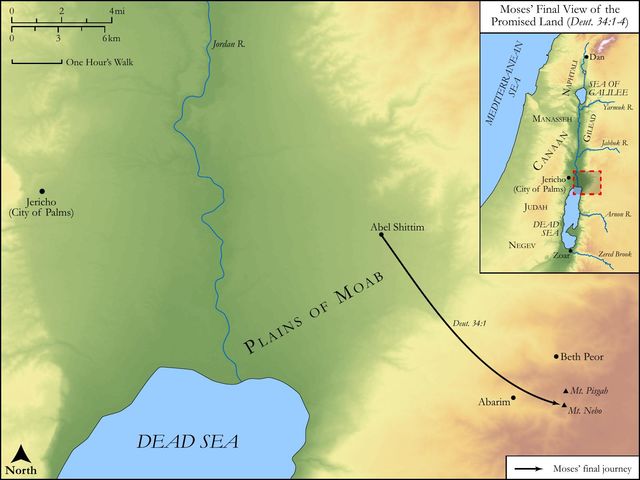
The historical setting for this declaration is the plains of Moab, located on the eastern side of the Jordan River, with the vast Israelite encampment poised to cross into the land of Canaan. Forty years have elapsed since the miraculous Exodus from Egypt, and the generation that experienced the wilderness wanderings and rebellion has largely passed away. A new generation, born and raised in the wilderness, now stands on the precipice of their inheritance. In the ancient Near East, the succession of a leader was a moment of immense significance, often fraught with potential instability or power struggles. Moses' public announcement of his age and, more importantly, the divine decree concerning his departure, provided a clear, divinely sanctioned transition of authority. This public declaration served to prevent any challenges to Joshua's leadership and reinforced the fundamental principle that all leadership within Israel was a stewardship under the ultimate, sovereign authority of Yahweh. The Jordan River itself was not merely a geographical barrier but a profound symbolic threshold, representing the definitive entry into the fulfillment of God's long-standing covenant promises to Abraham, Isaac, and Jacob.
Key Themes
ShowHideDeuteronomy 31:2 contributes significantly to several overarching theological and narrative themes within the book of Deuteronomy and the broader Pentateuch. Foremost among these is the theme of Divine Sovereignty and Succession. Moses' departure, while a consequence of his disobedience at Meribah (Numbers 20:12), is ultimately presented as part of God's sovereign plan for His people, demonstrating that God's purposes transcend any single human leader, no matter how indispensable they may seem. This verse also highlights the crucial theme of Transition of Leadership, marking the conclusion of an era defined by Moses' unparalleled prophetic and administrative leadership and inaugurating a new phase under Joshua's guidance as they prepare to conquer the land (Joshua 1:1). Furthermore, it subtly reinforces the theme of Obedience and Consequences, as Moses' exclusion from the Promised Land serves as a stark, albeit painful, reminder of the seriousness of disobedience, even for God's most devoted servants. Finally, Moses' age of 120 years, a full, divinely appointed lifespan, signifies the Completion of an Epoch and the End of a Generation, preparing the way for a new covenant generation to step into the promises of God.
Exposition and Analysis
ShowHideKey Word Analysis
ShowHideThis idiomatic phrase is crucial for understanding the nature of Moses' declaration. It does not signify physical infirmity or a lack of vigor, as Deuteronomy 34:7 explicitly states his "eye was not dim, nor his natural force abated." Instead, "to go out and come in" is a common Old Testament idiom denoting the full scope of active leadership duties. This encompasses military command, judicial functions, administrative responsibilities, and general public engagement. It signifies the ability to lead, guide, and represent the people effectively in all their affairs. Moses is declaring that his divinely appointed time for active leadership in this specific capacity, particularly concerning the entry into the land, is complete.
This is the tetragrammaton, the personal covenant name of God, often translated as "Yahweh" or "Jehovah." Its presence here is profoundly significant, emphasizing that Moses' inability to cross the Jordan is not a personal decision or a matter of human limitation alone, but a direct, authoritative decree from the self-existent, eternal God who is faithful to His covenant. It underscores the divine sovereignty over Moses' life and the destiny of Israel, affirming that God's will is the ultimate determinant of events.
Beyond its geographical reality as the principal river of Palestine, the Jordan serves as a powerful symbolic boundary. Crossing the Jordan signifies the transition from the wilderness wandering to the inheritance of the Promised Land, the tangible fulfillment of God's covenant promises to Abraham, Isaac, and Jacob. For Moses, being forbidden to cross it underscores the divine boundary set for him due to his past disobedience at Meribah, yet it simultaneously highlights God's unwavering faithfulness to His people's ultimate destiny regardless of human leadership.
Verse Breakdown
ShowHide"And he said unto them, I [am] an hundred and twenty years old this day;"
Moses' declaration of his age is highly significant. It marks the completion of a full, divinely appointed lifespan, echoing the 120 years mentioned in Genesis 6:3 as a potential limit for human life or a period of divine patience. For Moses, it signifies the culmination of his unparalleled leadership and the end of his active, divinely commissioned role in leading Israel. It also serves as a chronological marker, emphasizing the imminent transition of power and the close of an era.
"I can no more go out and come in:"
As detailed in the "Key Word Analysis," this is not a statement of physical weakness or infirmity. Rather, it is a solemn declaration of the cessation of his divinely appointed, active leadership role. Moses is acknowledging that his season of leading the people in their daily affairs, particularly as they prepare for conquest, has come to an end. This is a divinely imposed limitation, signifying a change in his mandate, not a personal failing of strength.
"also the LORD hath said unto me, Thou shalt not go over this Jordan."
This clause reveals the ultimate authority behind Moses' inability to lead. His exclusion from the Promised Land is a direct divine decree, a consequence of his disobedience at Meribah (Numbers 20:12). This underscores God's holiness, the gravity of disobedience even for His most faithful servants, and His sovereign control over the destiny of His people and their entry into the land. It emphasizes that God's plan will proceed, even if through a different leader.
Literary Devices
ShowHideDeuteronomy 31:2 employs several literary devices to convey its profound message. Foreshadowing is prominently evident, as Moses' declaration of his inability to lead further and his imminent death sets the stage for the transition to Joshua's leadership and the subsequent conquest of Canaan. There is a powerful sense of Irony in the fact that the great leader who delivered Israel from Egyptian bondage will not lead them into the ultimate fulfillment of God's promise, the physical Promised Land. This irony highlights the limitations of even the most exceptional human leadership and the absolute sovereignty of God. Symbolism is also deeply at play: Moses' age of "120 years" symbolizes a complete, divinely ordained lifespan and the close of an epoch in Israel's history, while the "Jordan" itself symbolizes the threshold of God's promises, a final barrier that must be crossed to enter into the inheritance.
Theological and Thematic Connections
ShowHideDeuteronomy 31:2 serves as a powerful theological statement about divine sovereignty, human accountability, and the continuity of God's redemptive plan. It underscores that even the greatest of human leaders operate under God's ultimate authority, and their roles are subject to His timing and decrees. Moses' humble acceptance of his divinely appointed boundary, despite his deep desire to enter the land, exemplifies profound submission to God's will. This moment also highlights the critical theme of succession, assuring Israel that God's purposes would not cease with Moses' departure but would continue through His chosen successor, Joshua, ensuring the fulfillment of His covenant promises to His people.
Reflection and Application
ShowHideMoses' farewell address in Deuteronomy 31:2 offers timeless lessons for believers today. It calls us to recognize and embrace the changing seasons of life and leadership, understanding that God's purposes often involve transitions and the empowering of new generations. Just as Moses humbly accepted God's decree, even when it meant personal sacrifice and the unfulfillment of a deeply held desire, we are challenged to trust in God's sovereign plan, knowing that His wisdom surpasses our own understanding and His ultimate will is always for our good and His glory. This passage reminds us of the vital responsibility to mentor, equip, and release others into leadership, ensuring the continuity of God's work beyond our individual contributions. It also serves as a sober reminder that even the most faithful servants are accountable to God's standards, and disobedience carries consequences, yet God's faithfulness to His covenant promises remains steadfast, always bringing His ultimate purposes to fruition.
Questions for Reflection
ShowHideFAQ
ShowHideWhy was Moses not allowed to enter the Promised Land?
ShowHideMoses was not permitted to enter the Promised Land due to his act of disobedience at Meribah, recorded in Numbers 20:12. God had commanded him to speak to the rock to bring forth water, but in his frustration, Moses struck it twice with his staff. This act, in God's eyes, demonstrated a failure to trust and sanctify Him before the people, especially as a leader. God declared that because he did not believe Him enough to honor Him, he would not lead the assembly into the land.
Did Moses' physical strength truly diminish, or was "go out and come in" symbolic?
ShowHideDeuteronomy 34:7 explicitly states that when Moses died at 120 years old, "his eye was not dim, nor his natural force abated." This indicates that his physical strength and faculties were remarkably intact. Therefore, "I can no more go out and come in" is symbolic, an idiom signifying the cessation of his active, divinely appointed leadership role, particularly concerning the entry into the land. It represents a divine boundary and a transition of authority, not a physical incapacitation.
What is the significance of Moses' age, 120 years?
ShowHideThe age of 120 years is highly significant. In Genesis 6:3, God declares that human lifespan will be 120 years, possibly indicating a full and complete life span. For Moses, reaching 120 marks the completion of his divinely appointed mission and a full life dedicated to God's service. It signifies the end of an era for Israel, as the generation that wandered in the wilderness under his leadership concludes its journey, and a new generation prepares to enter the Promised Land.
Christ-Centered Fulfillment
ShowHideMoses, the great lawgiver and prophet, stands as a profound type of Christ, yet his inability to lead Israel into the Promised Land due to his sin and the limitations of the Law he represented highlights the profound need for a greater leader. While Moses could not bring the people into the physical inheritance, Jesus Christ, the perfect Son of God, not only leads His people into the true spiritual Promised Land of salvation and eternal life but is the way, the truth, and the life (John 14:6). Moses' exclusion from Canaan underscores the Law's inability to provide ultimate rest and salvation; it points beyond itself to the One who perfectly fulfills its righteous demands and offers direct access to God's presence. Just as Joshua, whose name is the Hebrew equivalent of Jesus, led Israel into the earthly Canaan, so Jesus leads His people into the heavenly rest and inheritance secured by His perfect obedience and atoning sacrifice (Hebrews 4:8). Moses' death and the transition to Joshua signify that salvation and true access to God's promises come not through the Law or human effort, but through God's grace embodied in the new covenant leader. The ultimate "going out and coming in" is found in Christ, who grants believers full access to God's presence and leads them into their eternal inheritance, having perfected forever those who are being sanctified (Hebrews 10:19).