


Exodus 34:15
- פֶּןpenlestH6435PrtParticle Conditional
- תִּכְרֹתtikh·Rotyou should makeH3772V-Qal-Imperf-2msVerb Qal Imperfect 2nd Singular Masculine
- בְּרִיתbe·Rita covenantH1285N-fsNoun Singular Feminine Absolute
- לְיוֹשֵׁבle·yo·Shevto [the] inhabitant[s] ofH3427Prep-l ¦ V-Qal-Prtcpl-msVerb Qal Participle Singular Masculine Constructלְtoיוֹשֵׁב[the] inhabitant[s] of
- הָאָרֶץha·'A·retzthe landH776Art ¦ N-fsNoun Singular Feminine Absoluteהָtheאָרֶץland
- וְזָנוּve·za·Nuand they will prostitute themselvesH2181Conj-w ¦ V-Qal-ConsecPerf-3cpVerb Qal Consecutive Perfect 3rd Plural common genderוְandזָנוּthey will prostitute themselves
- אַחֲרֵי'a·cha·ReiafterH310Adj-mpcAdjective Numerical Plural Masculine Construct
- אֱלֹהֵיהֶם'e·lo·hei·Hemtheir godsH430N-mpc ¦ 3mpNoun Plural Masculine Constructאֱלֹהֵיgodsהֶםtheir
- וְזָבְחוּve·za·ve·Chuand they will sacrificeH2076Conj-w ¦ V-Qal-ConsecPerf-3cpVerb Qal Consecutive Perfect 3rd Plural common genderוְandזָבְחוּthey will sacrifice
- לֵאלֹהֵיהֶםle·Lo·hei·Hemto their godsH430Prep-l ¦ N-mpc ¦ 3mpNoun Plural Masculine Constructלֵtoאלֹהֵיgodsהֶםtheir
- וְקָרָאve·ka·Ra'and someone will inviteH7121Conj-w ¦ V-Qal-ConsecPerf-3msVerb Qal Consecutive Perfect 3rd Singular Masculineוְandקָרָאsomeone will invite
- לְךָle·Kha<to> <the> youPrep-l ¦ 2msSuffix Personal 2nd Singular Masculineלְ<to> <the>ךָyou
- וְאָכַלְתָּve·'a·khal·Taand you will eatH398Conj-w ¦ V-Qal-ConsecPerf-2msVerb Qal Consecutive Perfect 2nd Singular Masculineוְandאָכַלְתָּyou will eat
- מִזִּבְחוֹmi·ziv·Chosome of his sacrificeH2077Prep-m ¦ N-msc ¦ 3msNoun Singular Masculine Constructמִsome ofזִּבְחsacrificeוֹhis
English is a literal word-by-word gloss of the Hebrew, not the KJV's wording. Why?
This is the original text the KJV's translators worked from — each Hebrew word with its own literal English meaning in this verse, prepared by scholars at Tyndale House, Cambridge. The KJV translates whole sentences, not word by word, so its wording differs: one Hebrew word can become several English words, and the KJV may choose “the LORD” where the gloss reads “Yahweh”. Both are faithful — they answer different questions. For the KJV's own rendering, switch to the KJV text.
Details
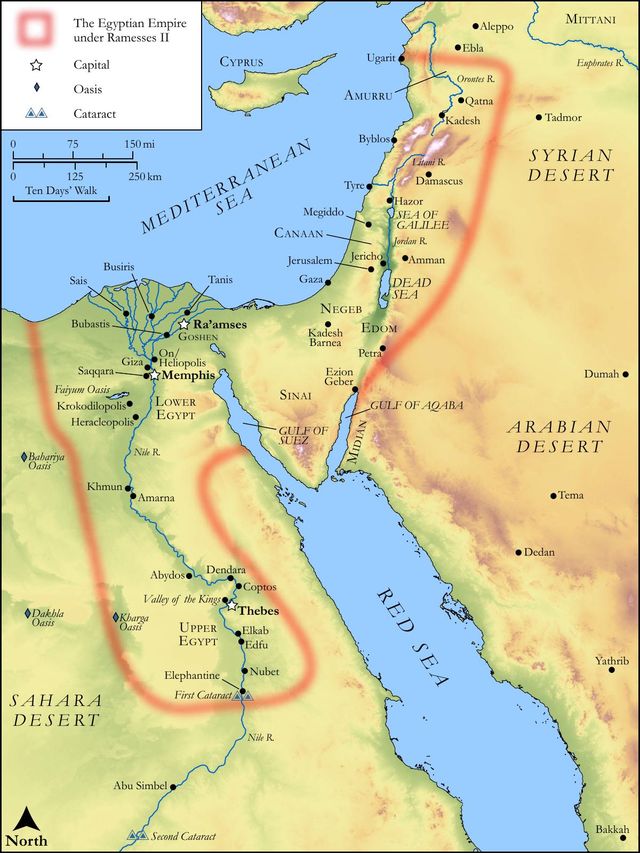
See on the biblical-era map
Study this verse
Public-domain commentary
Matthew Henry
From his Commentary on the Whole Bible. Henry comments on passages, not single verses — this entry covers Exodus 34:10–17. His three-level outline is real structure in the source text, so it is rendered as structure.
Reconciliation being made, a covenant of friendship is here settled between God and Israel. The traitors are not only pardoned, but preferred and made favourites again. Well may the assurances of this be ushered in with a behold, a word commanding attention and admiration: Behold, I make a covenant. When the covenant was broken, it was Israel that broke it; now that it comes to be renewed, it is God that makes it. If there be quarrels, we must bear all the blame; if there be peace, God must have all the glory. Here is,
I.God's part of this covenant, what he would do for them, Exo 34:10, Exo 34:11.
1.In general: Before all thy people, I will do marvels. Note, Covenant-blessings are marvellous things (Psa 98:1), marvels in the kingdom of grace; those mentioned here were marvels in the kingdom of nature, the drying up of Jordan, the standing still of the sun, etc. Marvels indeed, for they were without precedent, such as have not been done in all the earth. They were the joy of Israel, and the confirmation of their faith: Thy people shall see, and own the work of the Lord. And they were the terror of their enemies: It is a terrible thing that I will do. Nay, even God's own people should see them with astonishment.
2.In particular: I drive out before thee the Amorite. God, as King of nations, plucks up some, to plant others, as it pleases him; as King of saints, he made room for the vine he brought out of Egypt, Psa 80:8, Psa 80:9. Kingdoms are sacrificed to Israel's interests, Isa 43:3, Isa 43:4.
II.Their part of the covenant:
Observe that which I command thee. We cannot expect the benefit of the promises unless we make conscience of the precepts.
1.The two great precepts are, (1.) Thou shalt worship no other gods (Exo 34:14), not give divine honour to any creature, or any name whatsoever, the creature of fancy. A good reason is annexed. It is at thy peril if thou do: For the Lord, whose name is Jealous, is a jealous God, as tender in the matters of his worship as the husband is of the honour of the marriage-bed. Jealousy is called the rage of a man (Pro 6:34), but it is God's holy and just displeasure. Those cannot worship God aright who do not worship him alone. (2.) "Thou shalt make thee no molten god (Exo 34:17); thou shalt not worship the true God by images." This was the sin they had lately fallen into, which therefore they are particularly cautioned against.
2.Fences are here erected about these two precepts by two others:
(1.)That they might not be tempted to worship other gods, they must not join in affinity or friendship with those that did (Exo 34:12): "Take heed to thyself, for thou art upon thy good behaviour. It is a sin that thou art prone to and that will easily beset thee, and therefore be very cautious, and carefully abstain from all appearances of it and advances towards it. Make no covenant with the inhabitants of the land." If God, in kindness to them, drove out the Canaanites, they ought, in duty to God, not to harbour them. What could be insisted on more reasonable than this? If God make war with the Canaanites, let not Israel make peace with them. If God take care that the Canaanites be not their lords, let them take care that they be not their snares. It was for their civil interest to complete the conquest of the land; so much does God consult our benefit in the laws he gives us. They must particularly take heed of intermarrying with them, Exo 34:15, Exo 34:16. If they espoused their children, they would be in danger of espousing their gods; such is the corruption of nature that the bad are much more likely to debauch the good than the good to reform the bad. The way of sin is downhill: those that are in league with idolaters will come by degrees to be in love with idolatry; and those that are prevailed upon to eat of the idolatrous sacrifice will come at length to offer it. Obsta principiis - Nip the mischief in the bud.
(2.)That they might not be tempted to make molten gods, they must utterly destroy those they found and all that belong to them, the altars and groves (Exo 34:13), lest, if these were left standing, they should be brought, in process of time, either to use them or to take pattern by them, or to abate in their detestation and dread of idolatry. The relics of idolatry ought to be abolished as affronts to the holy God and a great reproach to human nature. Let it never be said that men who pretend to reason were ever guilty of such absurdities as to make gods of their own and worship them.
Continue studying Exodus 34:15 across the web’s major study libraries — every link below opens this exact verse, chapter, or book on the destination site.
Read & Compare
 BibleGatewayThis verse in more than 200 translations and 70 languages.
 Bible.comThe YouVersion reader — hundreds of translations, reading plans, and highlights.
 ESV.orgCrossway's official English Standard Version reader.
 NET BibleThe NET translation with 60,000+ translators' notes on every rendering decision.
 STEP BibleTyndale House's free study tool — original text, vocabulary, and scholarly resources.
 BibliaLogos Bible Software's free web reader.
 USCCBThe New American Bible (Revised Edition) with the U.S. bishops' study notes.
Commentaries
 BibleHub CommentariesDozens of classic commentaries on this verse, gathered on one page.
 StudyLightMore than 100 commentary sets — the largest collection on the web.
 BibleRefPlain-English commentary on what this verse means, verse by verse.
 Enduring WordDavid Guzik's free commentary on this chapter, widely used by Bible teachers.
 Bible Study ToolsVerse commentary alongside Greek and Hebrew study aids.
Original Language & Research
- BibleHub InterlinearThe verse word by word — original language, transliteration, and English.
- BibleHub LexiconEvery word's original-language definition and Strong's entry.
 Blue Letter BibleDeep-study tools — Strong's numbers, concordance, and word studies.
 SefariaThe Hebrew text with Rashi and centuries of Jewish commentary.
Sermons, Hymns & Audio


TrulyRandomVerse is not affiliated with these sites and doesn’t control their content. They’re linked because they’re genuinely useful.
Summary
Exodus 34:15 delivers a profound and urgent divine prohibition to Israel, warning against the formation of covenants with the indigenous inhabitants of the Promised Land. This command underscores God's absolute demand for exclusive devotion, recognizing that such alliances would inevitably lead to spiritual compromise, causing Israel to engage in idolatry, metaphorically described as "whoring after their gods," and participating in pagan sacrifices. The verse highlights the severe consequences of spiritual unfaithfulness, safeguarding the purity of Israel's unique covenant relationship with Yahweh and His singular claim on their worship.
Context
ShowHideLiterary Context
This verse is situated within Exodus 34, a pivotal chapter detailing the renewal of God's covenant with Israel following the catastrophic golden calf incident in Exodus 32. After Moses' fervent intercession, God, in an extraordinary display of grace and mercy, agrees to restore His relationship with His people. The chapter outlines the re-engraving of the Ten Commandments (vv. 1, 28) and further covenant stipulations designed to prevent a recurrence of idolatry. Verses 10-26 specifically enumerate commands related to worship, the destruction of pagan altars, and the avoidance of any form of syncretism. Exodus 34:15, therefore, is not an isolated command but a crucial component of God's strategy to preserve Israel's spiritual integrity and ensure their exclusive allegiance, directly applying the principles of the first two commandments found in Exodus 20:3-6.
Historical & Cultural Context
As the Israelites stood on the cusp of entering Canaan, they faced a land populated by various polytheistic nations—Canaanites, Hittites, Amorites, Perizzites, Hivites, and Jebusites, as specified in Exodus 34:11. These cultures practiced diverse forms of pagan worship, often involving fertility cults dedicated to deities like Baal and Asherah, which included ritual prostitution, child sacrifice, and other abhorrent practices. In the ancient Near East, covenants were not merely political or military treaties but often carried profound religious implications, requiring participants to acknowledge and even swear by each other's deities. Thus, forming a covenant with these nations would inevitably entangle Israel in their religious systems, leading to syncretism and the erosion of their unique identity as Yahweh's chosen people. Eating from a sacrifice was a deeply communal and religious act, signifying allegiance and shared fellowship with the deity to whom the offering was made. God's command was a radical call for Israel to be a distinct, holy nation, set apart from the corrupting influences of the surrounding world.
Key Themes
ShowHideThis verse powerfully contributes to several overarching themes in Exodus and the Pentateuch. Foremost is the theme of God's Jealousy and Exclusive Worship. Yahweh demands singular devotion from His people, tolerating no rivals. Idolatry is presented as a profound betrayal, a spiritual "harlotry" that breaks the covenant relationship. Another key theme is Holiness and Separation. Israel is called to be a holy nation, distinct from the pagan practices of the surrounding peoples. This separation is not merely geographical but spiritual, ensuring the purity of their worship and identity. Furthermore, the verse highlights the theme of Covenant Fidelity. The covenant between God and Israel is a binding agreement, and faithfulness to its terms, particularly regarding exclusive worship, is paramount for Israel's blessing and continued relationship with God, as seen throughout the covenant stipulations in Exodus 34 and the warnings in Deuteronomy.
Exposition and Analysis
ShowHideKey Word Analysis
ShowHideFrom the root meaning "to cut," this term (H1285) refers to a solemn, binding agreement or compact, often sealed by passing between pieces of a cut animal (hence the imagery of "cutting a covenant"). In this context, it signifies a treaty or alliance with the Canaanite inhabitants. For Israel, their covenant with Yahweh was exclusive and foundational to their national identity and existence. Making a "covenant" with other nations would inherently involve acknowledging their gods and practices, thereby compromising Israel's unique and singular relationship with the one true God.
This primitive root (H2181) literally means "to commit adultery" or "to be unfaithful," often referring to prostitution. Here, it is used as a potent and vivid metaphor for spiritual infidelity and idolatry. Just as a spouse betrays their marriage vows through adultery, Israel would betray their sacred covenant with God by turning to other deities. This imagery underscores the deeply personal and relational offense of idolatry in God's eyes, portraying it as a breach of the sacred "marriage" covenant between Yahweh and His people, demonstrating the profound intimacy and exclusivity God desired.
Derived from the verb "to slaughter" (H2076), this noun (H2077) properly refers to a slaughter, specifically the flesh of an animal offered to a deity. By implication, it signifies the act of sacrifice itself or the victim. Sacrifices were central to ancient worship, serving as acts of propitiation, thanksgiving, or communion with the divine. Eating from a "sacrifice" was a communal and religious act signifying participation in the worship of that deity and shared fellowship with the worshippers. The prohibition against eating pagan sacrifices was thus a direct command to avoid any form of participation in or identification with idolatrous worship, emphasizing the exclusive nature of Israel's worship of Yahweh.
Verse Breakdown
ShowHide"Lest thou make a covenant with the inhabitants of the land"
This is the foundational prohibition. God explicitly forbids Israel from entering into any treaties, alliances, or binding agreements with the various Canaanite peoples. Such political or social integration was seen as the primary gateway to spiritual compromise, as it would inevitably lead to interaction and assimilation with their religious practices.
"and they go a whoring after their gods"
This clause describes the direct and inevitable consequence of forming such alliances. The "whoring" is a powerful metaphor for spiritual adultery, indicating that the inhabitants, and by extension, any Israelites who intermarried or assimilated, would turn away from their exclusive covenant with Yahweh to worship the pagan deities of the land, betraying their divine spouse.
"and do sacrifice unto their gods"
This specifies the act of idolatry that would follow. The inhabitants would offer sacrifices to their false gods, a practice strictly forbidden for God's people. This highlights the active participation in pagan worship that would ensue from the forbidden covenants.
"and [one] call thee, and thou eat of his sacrifice;"
This final clause details the social pressure and the direct act of participation in idolatry. If Israel made covenants, they would be invited to feasts where pagan sacrifices were consumed. Eating these sacrifices was not a neutral social act; it was a profound religious act of communion with the pagan deity, directly violating Israel's exclusive devotion to Yahweh and signifying allegiance to false gods.
Literary Devices
ShowHideExodus 34:15 employs several potent literary devices to convey its urgent and serious warning. The most prominent is Metaphor, specifically the use of "go a whoring after their gods" to describe idolatry. This powerful imagery likens Israel's turning away from God to sexual infidelity, emphasizing the deep betrayal and broken covenant relationship. It underscores God's view of His relationship with Israel as a sacred marriage, where exclusive devotion is paramount and any breach is a profound personal offense. Additionally, the phrase "eat of his sacrifice" functions as a form of Synecdoche (or meronymy), where a part (eating the sacrifice) represents the whole (full participation in and allegiance to pagan worship and the religious system of the inhabitants). The entire verse also serves as a clear Prohibition and a Warning, explicitly stating a forbidden action and outlining the severe, inevitable spiritual consequences of disobedience. This highlights the absolute necessity of maintaining Israel's distinct identity and exclusive loyalty to Yahweh, emphasizing the cause-and-effect relationship between forbidden alliances and spiritual apostasy.
Theological and Thematic Connections
ShowHideExodus 34:15 is foundational to understanding God's demand for exclusive worship and His absolute intolerance for idolatry. It reveals God's holy and jealous nature, His desire for His people's unreserved devotion, and the profound spiritual danger of syncretism. Idolatry is not merely a breaking of a rule but a betrayal of a covenant relationship, likened to spiritual adultery, which deeply offends God's character. This verse establishes a core principle for God's people throughout history: the necessity of spiritual separation from practices and influences that would draw one away from singular devotion to the one true God. It underscores the purity required in worship and the inherent danger of compromising one's faith through seemingly innocuous social or political alliances, which inevitably lead to spiritual defilement and a divided heart.
Reflection and Application
ShowHideWhile believers today are not entering a literal promised land inhabited by pagan nations, the spiritual principles embedded in Exodus 34:15 remain profoundly relevant for Christian living. We are called to an exclusive devotion to God, recognizing that anything that takes His rightful place in our hearts, minds, or lives becomes an idol. This warning challenges us to critically examine the "covenants" or alliances we might be tempted to make with the prevailing philosophies, values, or trends of our culture that subtly promote self-worship, materialism, humanism, or any agenda contrary to God's Word. We must discern influences in our relationships, media consumption, career pursuits, and even our pursuit of comfort or approval that could lead us to "go a whoring" after modern "gods," subtly diminishing our allegiance to Christ. The call to avoid "eating of his sacrifice" translates to a vigilance against participating in activities or adopting mindsets that compromise our faith, dilute our spiritual purity, or align us with anything that rivals God's supreme authority in our lives. Our ultimate loyalty must be to Him alone, manifesting in a life of distinct holiness and unwavering commitment to His kingdom.
Questions for Reflection
ShowHideFAQ
ShowHideWhy was making a covenant with the inhabitants of the land so dangerous?
ShowHideMaking a covenant (a binding treaty or alliance) with the Canaanite inhabitants was profoundly dangerous because such agreements in the ancient Near East were often sealed with oaths sworn by the gods of both parties. This would implicitly acknowledge the legitimacy of pagan deities, leading Israel into syncretism—the blending of their worship of Yahweh with the worship of false gods. Furthermore, these covenants often led to intermarriage, which Deuteronomy 7:3-4 explicitly warns against, as it would inevitably turn Israel's hearts away from God to serve other gods. It was a direct threat to Israel's unique identity as God's chosen, holy nation, and a violation of the exclusive covenant relationship with Yahweh.
What does "go a whoring after their gods" mean in this context?
ShowHideThe phrase "go a whoring after their gods" is a powerful and vivid metaphor for spiritual infidelity or idolatry. In the Old Testament, God's covenant with Israel is often likened to a marriage (e.g., Ezekiel 16 and Hosea 3). Just as a spouse commits adultery by being unfaithful to their marriage vows, Israel would commit spiritual adultery by turning away from their exclusive covenant with Yahweh to worship other deities. This strong language emphasizes the deep betrayal, the broken intimacy, and the personal offense that idolatry represents to God, portraying it as a profound act of unfaithfulness against their divine husband.
How does "eating of his sacrifice" relate to idolatry?
ShowHideIn ancient cultures, eating food offered in sacrifice was not merely a social act but a profound religious one. It signified communion and identification with the deity to whom the sacrifice was made. By eating the sacrifices offered to pagan gods, Israelites would be participating in the worship of those false deities, thereby acknowledging their power and aligning themselves with them. This act was a direct expression of allegiance and fellowship with the pagan god and its worshippers. The Apostle Paul later addresses a similar issue in the New Testament, warning believers that they cannot partake of the table of the Lord and the table of demons (1 Corinthians 10:20-21), highlighting the enduring principle that participation in idolatrous feasts is a form of spiritual allegiance that is incompatible with devotion to the one true God.
Christ-Centered Fulfillment
ShowHideExodus 34:15, with its stern warning against spiritual idolatry and compromise, finds its ultimate fulfillment and resolution in Jesus Christ. The Old Covenant's repeated failures to maintain exclusive devotion to God, as epitomized by Israel's persistent "whoring" after other gods, highlighted humanity's inherent inability to keep God's perfect law and the covenant's stipulations. This demonstrated inability pointed to the desperate need for a new covenant and a perfect mediator. Jesus, the true Israelite, perfectly fulfilled the demand for exclusive worship of God, resisting every temptation to compromise His allegiance, even when offered all the kingdoms of the world and their glory (Matthew 4:8-10). He is the ultimate sacrifice, the Lamb of God who takes away the sin of the world, whose single, perfect offering on the cross forever removes the need for other sacrifices and purifies us from all unrighteousness (Hebrews 10:10-14). Through His atoning work and the establishment of the New Covenant in His blood, believers are brought into a relationship where the Holy Spirit empowers them to live lives of genuine, exclusive devotion to God, fulfilling the spirit of the law that Israel so often broke. We are now called to put to death what is earthly in us, including "idolatry" (Colossians 3:5), because Christ is all and in all, our sole object of worship and allegiance, ensuring that our spiritual fidelity is rooted not in our own efforts but in His perfect work and indwelling Spirit.