


Judges 10:13
Bible text: King James Version (1769 Blayney text) · Public domain
Bible text: Berean Standard Bible · Public domain
Bible text: American Standard Version (1901) · Public domain
Bible text: World English Bible, Messianic edition · Public domain
Bible text: Geneva Bible (1599) · Public domain
Bible text: Young's Literal Translation · Public domain
- וְאַתֶּםve·'a·Temand youH859Conj-w ¦ Pro-2mpPronoun Personal 2nd Plural Masculineוְandאַתֶּםyou
- עֲזַבְתֶּם'a·zav·Temyou have forsakenH5800V-Qal-Perf-2mpVerb Qal Perfect 2nd Plural Masculine
- אוֹתִי'o·Ti<obj.> meH853DirObjM ¦ 1csParticle Object Indicatorאוֹתִ<obj.>יme
- וַתַּעַבְדוּva·ta·'av·Duand you have servedH5647Conj-w ¦ V-Qal-ConsecImperf-2mpVerb Qal Consecutive Imperfect 2nd Plural Masculineוַandתַּעַבְדוּyou have served
- אֱלֹהִים'E·lo·HimgodsH430N-mpNoun Plural Masculine Absolute
- אֲחֵרִים'a·che·RimotherH312Adj-mpAdjective Plural Masculine Absolute
- לָכֵןla·Khen<to> thereforeH3651Prep-l ¦ AdvAdverbלָ<to>כֵןtherefore
- לֹאlo'notH3808NegParticle Negative
- אוֹסִיף'o·SifI will repeatH3254V-Hiphil-Imperf-1csVerb Hiphil Imperfect 1st Singular common gender
- לְהוֹשִׁיעַle·ho·Shi·a'to deliverH3467Prep-l ¦ V-Hiphil-InfVerb Hiphil Infinitive Constructלְtoהוֹשִׁיעַdeliver
- אֶתְכֶם'et·Khem<obj.> youH853DirObjM ¦ 2mpParticle Object Indicatorאֶתְ<obj.>כֶםyou
English is a literal word-by-word gloss of the Hebrew, not the KJV's wording. Why?
This is the original text the KJV's translators worked from — each Hebrew word with its own literal English meaning in this verse, prepared by scholars at Tyndale House, Cambridge. The KJV translates whole sentences, not word by word, so its wording differs: one Hebrew word can become several English words, and the KJV may choose “the LORD” where the gloss reads “Yahweh”. Both are faithful — they answer different questions. For the KJV's own rendering, switch to the KJV text.
Details
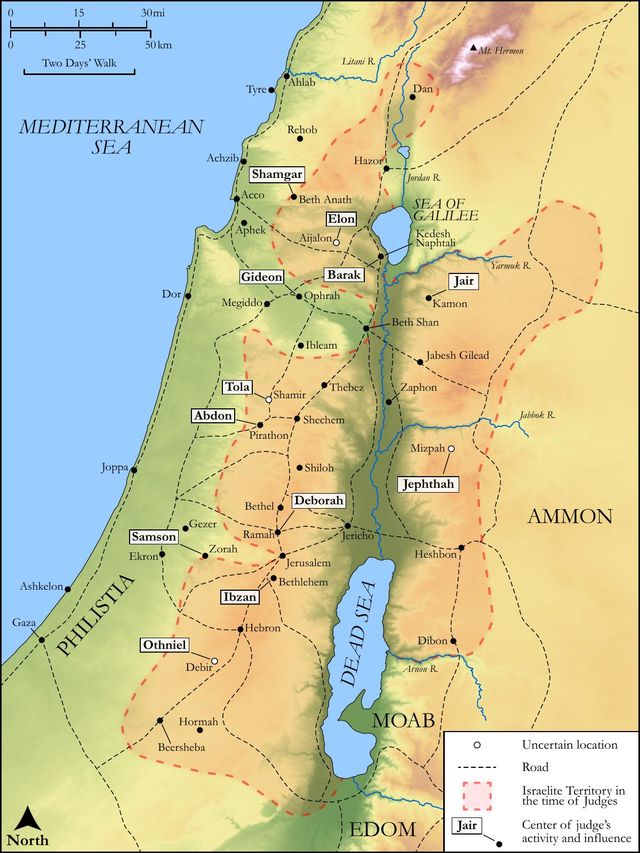
See on the biblical-era maps
Study this verse
Public-domain commentary
Matthew Henry
From his Commentary on the Whole Bible. Henry comments on passages, not single verses — this entry covers Judges 10:10–18. His three-level outline is real structure in the source text, so it is rendered as structure.
Here is, I. A humble confession which Israel make to God in their distress, Jdg 10:10. Now they own themselves guilty, like a malefactor upon the rack, and promise reformation, like a child under the rod. They not only complain of the distress, but acknowledge it is their own sin that has brought them into the distress; therefore God is righteous, and they have no reason to repine. They confess their omissions, for in them their sin began - "We have forsaken our God," and their commissions - "We have served Baalim, and herein have done foolishly, treacherously, and very wickedly."
II.A humbling message which God thereupon sends to Israel, whether by an angel (as Jdg 2:1) or by a prophet (as Jdg 6:8) is not certain.
It was kind that God took notice of their cry, and did not turn a deaf ear to it and send them no answer at all; it was kind likewise that when they began to repent he sent them such a message as was proper to increase their repentance, that they might be qualified and prepared for deliverance. Now in this message,
1.He upbraids them with their great ingratitude, reminds them of the great things he had done for them, delivering them from such and such enemies, the Egyptians first, out of whose land they were rescued, the Amorites whom they conquered and into whose land they entered, and since their settlement there, when the Ammonites had joined with the Moabites to oppress them (Jdg 3:13), when the Philistines were vexatious in the days of Shamgar, and afterwards other enemies had given them trouble, upon their petition God had wrought many a great salvation for them, Jdg 10:11, Jdg 10:12. Of their being oppressed by the Zidonians and the Maonites we read not elsewhere. God had in justice corrected them, and in mercy delivered them, and therefore might reasonably expect that either through fear or through love they would adhere to him and his service. Well therefore might the word cut them to the heart (Jdg 10:13), "Yet you have forsaken me that have brought you out of your troubles and served other gods that brought you into your troubles." Thus did they forsake their own mercies for their own delusions.
2.He shows them how justly he might now abandon them to ruin, by abandoning them to the gods that they had served. To awaken them to a thorough repentance and reformation, he lets them see,
(1.)Their folly in serving Baalim. They had been at a vast expense to obtain the favour of such gods as could not help them when they had most need of their help: "Go, and cry unto the gods which you have chosen (Jdg 10:14), try what they can do for you now. You have worshipped them as gods - try if they have now either a divine power or a divine goodness to be employed for you. You paid your homage to them as your kings and lords - try if they will now protect you. You brought your sacrifices of praise to their altars as your benefactors, imagining that they gave you your corn, and wine, and oil, but a friend indeed will be a friend in need; what stead will their favour stand you in now?" Note, It is necessary, in true repentance, that there be a full conviction of the utter insufficiency of all those things to help us and do us any kindness which we have idolized and set upon the throne in our hearts in competition with God. We must be convinced that the pleasures of sense on which we have doted cannot be our satisfaction, nor the wealth of the world which we have coveted be our portion, that we cannot be happy or easy any where but in God.
(2.)Their misery and danger in forsaking God. "See what a pass you have brought yourselves to; now you can expect no other than that I should say, I will deliver you no more, and what will become of you then?" Jdg 10:13. This he tells them, not only as what he might do, but as what he would do if they rested in a confession of what they had done amiss, and did not put away their idols and amend for the future.
III.A humble submission which Israel hereupon made to God's justice, with a humble application to his mercy, Jdg 10:15.
The children of Israel met together, probably in a solemn assembly at the door of the tabernacle, received the impressions of the message God had sent them, were not driven by it to despair, though it was very threatening, but resolve to lie at God's feet, and, if they perish, they will perish there. They not only repeat their confession, We have sinned, but,
1.They surrender themselves to God's justice: Do thou unto us whatsoever seemeth good unto thee. Hereby they own that they deserved the severest tokens of God's displeasure and were sure he could do them no wrong, whatever he laid upon them; they humbled themselves under his mighty and heavy hand, and accepted of the punishment of their iniquity, which Moses had made the condition of God's return in mercy to them, Lev 26:41. Note, True penitents dare and will refer themselves to God to correct them as he thinks fit, knowing that their sin is highly malignant in its deserts, and that God is not rigorous or extreme in his demands.
2.They supplicate for God's mercy: Deliver us only, we pray thee, this day, from this enemy. They acknowledge what they deserved, yet pray to God not to deal with them according to their deserts. Note, We must submit to God's justice with a hope in his mercy.
IV.A blessed reformation set on foot hereupon.
They brought forth fruits meet for repentance (Jdg 10:16): They put away the gods of strangers (as the word is), strange gods, and worshipped by those nations that were strangers to the commonwealth of Israel and to the covenants of promise, and they served the Lord. Need drove them to him. They knew it was to no purpose to go to the gods whom they had served, and therefore returned to the God whom they had slighted. This is true repentance not only for sin, but from sin.
V.God's gracious return in mercy to them, which is expressed here very tenderly (Jdg 10:16):
His soul was grieved for the misery of Israel. Not that there is any grief in God (he has infinite joy and happiness in himself, which cannot be broken in upon by either the sins or the miseries of his creatures), nor that there is any change in God: he is in one mind, and who can turn him? But his goodness is his glory. By it he proclaims his name, and magnifies it above all names; and, as he is pleased to put himself into the relation of a father to his people that are in covenant with him, so he is pleased to represent his goodness to them by the compassions of a father towards his children; for, as he is the Father of lights, so he is the Father of mercies. As the disobedience and misery of a child are a grief to a tender father, and make him feel very sensibly from his natural affection, so the provocations of God's people are a grief to him (Psa 95:10), he is broken with their whorish heart (Eze 6:9); their troubles also are a grief to him; so he is pleased to speak when he is pleased to appear for the deliverance of his people, changing his way and method of proceeding, as tender parents when they begin to relent towards their children with whom they have been displeased. Such are the tender mercies of our God, and so far is he from having any pleasure in the death of sinners.
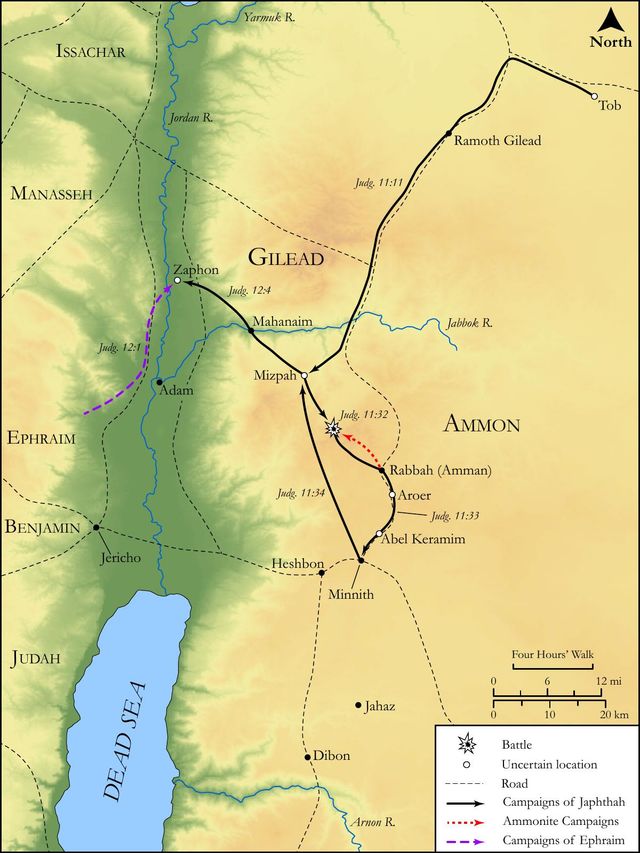
VI.Things are now working towards their deliverance from the Ammonites' oppression, Jdg 10:17, Jdg 10:18.
God had said, "I will deliver you no more;" but now they are not what they were, they are other men, they are new men, and now he will deliver them. That threatening was denounced to convince and humble them, and, now that it had taken its desired effect, it is revoked in order to their deliverance.
1.The Ammonites are hardened to their own ruin. They gathered together in one body, that they might be destroyed at one blow, Rev 16:16.
2.The Israelites are animated to their own rescue. They assembled likewise, Jdg 10:17. During their eighteen years' oppression, as in their former servitudes, they were run down by their enemies, because they would not incorporate; each family, city, or tribe, would stand by itself, and act independently, and so they all became an easy prey to the oppressors, for want of a due sense of a common interest to cement them: but, whenever they got together, they did well; so they did here. When God's Israel become as one man to advance a common good and oppose a common enemy what difficulty can stand before them? The people and princes of Gilead, having met, consult first about a general that should command in chief against the Ammonites. Hitherto most of the deliverers of Israel had an extraordinary call to the office, as Ehud, Barak, Gideon; but the next is to be called in a more common way, by a convention of the states, who enquired out a fit man to command their army, found out one admirably well qualified for the purpose, and God owned their choice by putting his Spirit upon him (Jdg 11:29); so that this instance is of use for direction and encouragement in after-ages, when extraordinary calls are no longer to be expected. Let such be impartially chosen to public trust and power as God has qualified, and then God will graciously own those who are thus chosen.
Continue studying Judges 10:13 across the web’s major study libraries — every link below opens this exact verse, chapter, or book on the destination site.
Read & Compare
 BibleGatewayThis verse in more than 200 translations and 70 languages.
 Bible.comThe YouVersion reader — hundreds of translations, reading plans, and highlights.
 ESV.orgCrossway's official English Standard Version reader.
 NET BibleThe NET translation with 60,000+ translators' notes on every rendering decision.
 STEP BibleTyndale House's free study tool — original text, vocabulary, and scholarly resources.
 BibliaLogos Bible Software's free web reader.
 USCCBThe New American Bible (Revised Edition) with the U.S. bishops' study notes.
Commentaries
 BibleHub CommentariesDozens of classic commentaries on this verse, gathered on one page.
 StudyLightMore than 100 commentary sets — the largest collection on the web.
 BibleRefPlain-English commentary on what this verse means, verse by verse.
 Enduring WordDavid Guzik's free commentary on this chapter, widely used by Bible teachers.
 Bible Study ToolsVerse commentary alongside Greek and Hebrew study aids.
Original Language & Research
- BibleHub InterlinearThe verse word by word — original language, transliteration, and English.
- BibleHub LexiconEvery word's original-language definition and Strong's entry.
 Blue Letter BibleDeep-study tools — Strong's numbers, concordance, and word studies.
 SefariaThe Hebrew text with Rashi and centuries of Jewish commentary.
Sermons, Hymns & Audio


TrulyRandomVerse is not affiliated with these sites and doesn’t control their content. They’re linked because they’re genuinely useful.
Summary
Judges 10:13 encapsulates a moment of profound divine exasperation and a pivotal turning point in the cyclical narrative of Israel's apostasy and deliverance. God directly confronts the Israelites, not merely with a rebuke, but with a declaration that their persistent spiritual infidelity and abandonment of Him for other gods have exhausted His immediate willingness to rescue them. This verse highlights the severe consequences of covenant breaking and serves as a stark reminder that divine patience, while vast, is not infinite in the face of deliberate and repeated rebellion, ultimately forcing His people to confront the futility of their idolatry.
Context
ShowHideLiterary Context
Judges 10:13 is a pivotal moment within God's direct and rare speech to Israel, occurring after eighteen years of oppression by the Ammonites and Philistines (Judges 10:7-9). This divine address, commencing in Judges 10:11, is unique in the book of Judges as it is God Himself, not a prophet or judge, who articulates the indictment. Prior to this verse, God meticulously recounts His past acts of salvation, reminding them how He had delivered them from numerous oppressors, including the Egyptians, Amorites, Ammonites, Philistines, Sidonians, Amalekites, and Maonites (Judges 10:11-12). This recitation of past faithfulness underscores the depth of Israel's ingratitude and the audacity of their renewed idolatry. Verse 13, therefore, marks a dramatic shift from a historical recounting of divine mercy to a stern declaration of withdrawal, setting the stage for the Israelites' subsequent repentance and their desperate plea to God in Judges 10:15. The narrative then progresses to their active removal of foreign gods and renewed service to the Lord in Judges 10:16, demonstrating the immediate impact of God's severe words.
Historical & Cultural Context
The period of the Judges (approximately 1400-1050 BC) was characterized by a decentralized tribal confederacy in Israel, lacking a central monarchy or unified leadership. This era was marked by frequent incursions from surrounding peoples and, more significantly, by Israel's recurring spiritual apostasy. The Canaanite religious landscape, with its polytheistic worship of gods like Baal (the storm god, associated with agricultural fertility) and Ashtoreth (his consort, a goddess of fertility and war), posed a constant temptation. These deities were often associated with agricultural prosperity, leading Israelites to believe that worshipping them would ensure good harvests, directly violating the covenant demands for exclusive worship of Yahweh. The Ammonites and Philistines, mentioned as oppressors in this chapter, represented distinct threats: the Ammonites from the east, often associated with Molech worship, and the Philistines from the southwest, a powerful maritime people with their own pantheon. Israel's "serving other gods" was not merely a passive neglect but an active participation in pagan rituals, including cultic prostitution and, at times, child sacrifice, which were anathema to the Mosaic Law. God's declaration in Judges 10:13 reflects the profound breach of the covenant established at Sinai, where Israel had vowed to serve Yahweh alone (Exodus 24:7).
Key Themes
ShowHideThis verse powerfully contributes to several overarching themes within the book of Judges and the broader Old Testament narrative. Firstly, it underscores the theme of Divine Justice and Patience, demonstrating that while God is merciful and long-suffering, His patience has limits when His covenant people repeatedly and deliberately violate their exclusive relationship with Him. His declaration is a righteous judgment against persistent sin, even after numerous acts of deliverance. Secondly, the verse highlights the pervasive problem of Idolatry and Covenant Breaking. The core accusation, "ye have forsaken me, and served other gods," is a direct violation of the First Commandment, which demands exclusive devotion to Yahweh. This spiritual adultery is the root cause of Israel's woes and the repeated cycle of oppression. Thirdly, it illustrates the Consequences of Disobedience. The severe consequence, "wherefore I will deliver you no more," is a direct outcome of their unfaithfulness, signifying the withdrawal of divine protection and blessing. It is a natural and just result of breaking fellowship with the very source of their strength and salvation. Finally, Judges 10:13 is a quintessential illustration of the Cycle of Sin, Judgment, and Repentance that defines the entire book of Judges, as articulated in Judges 2:11-19. God's sharp words are intended to awaken Israel to the seriousness of their spiritual rebellion and prompt them towards genuine repentance.
Exposition and Analysis
ShowHideKey Word Analysis
ShowHideThe Hebrew verb עָזַב (ʻâzab) means to loosen, relinquish, permit, commit self, fail, forsake, fortify, help, leave (destitute, off), refuse, or surely. In this context, it carries a strong connotation of deliberate and active disengagement from a previously held commitment or relationship. It implies a conscious and willful turning away from God, not merely a passive drifting, suggesting a profound betrayal of the covenant relationship.
The Hebrew verb עָבַד (ʻâbad) means to work (in any sense); by implication, to serve, till, (causatively) enslave, or to worship. When used in the context of deities, it denotes active and devoted worship, including participation in the rituals and practices associated with those gods. The phrase "served other gods" (עָבַד אֱלֹהִים אֲחֵרִים - ʻâbad ʼĕlôhîym ʼachêrîm) emphasizes that Israel's idolatry was not a casual affair but a committed allegiance, signifying a complete shift in their devotion and obedience from Yahweh to foreign deities.
The Hebrew root יָשַׁע (yâshaʻ) properly means to be open, wide or free, i.e. (by implication) to be safe; causatively, to free or succor. It encompasses concepts like avenging, defending, helping, preserving, rescuing, being safe, bringing (having) salvation, saving (or being a savior), and getting victory. Here, God's declaration "I will deliver you no more" signifies His withdrawal of active intervention and salvation from their oppressors, directly linking their unfaithfulness to the cessation of His saving acts.
Verse Breakdown
ShowHide"Yet ye have forsaken me,"
This opening clause expresses God's profound disappointment and pain. The emphatic "yet" (וְאַתֶּם - ve'attem, "but you") highlights the stark contrast between God's consistent faithfulness (recounted in the preceding verses) and Israel's persistent unfaithfulness. The accusation of "forsaking" is a direct charge of covenant breach, implying a deliberate and active abandonment of the one true God who had delivered them repeatedly. It speaks to a deep spiritual betrayal, akin to a spouse abandoning their marriage vows for another.
"and served other gods:"
This clause specifies the nature of their abandonment: it was not merely neglect, but an active turning to and worship of rival deities. This directly violates the very first commandment given at Sinai, which demanded exclusive allegiance to Yahweh (Exodus 20:3). The phrase "other gods" underscores their foreignness and illegitimacy in contrast to the sovereign Lord of Israel. This idolatry was the root cause of their oppression, as it severed their connection to the source of divine protection and blessing.
"wherefore I will deliver you no more."
This concluding declaration is the divine pronouncement of judgment and the consequence of their actions. The "wherefore" (עַל־כֵּן - ʿal-ken, "therefore") establishes a direct causal link between their forsaking God and His withdrawal of deliverance. It is not an arbitrary punishment but a logical outcome of their broken relationship. By choosing to serve other gods, they effectively chose to rely on those gods for deliverance, and God, in His justice, allows them to experience the futility of that choice. This statement signifies a temporary cessation of His direct intervention, forcing Israel to confront the reality of their self-inflicted predicament and the impotence of their idols.
Literary Devices
ShowHideJudges 10:13 employs several potent literary devices to convey God's message with maximum impact. The most prominent is Anthropomorphism, where God expresses human-like emotions of frustration, disappointment, and resolute withdrawal ("I will deliver you no more"). This allows the audience to grasp the depth of His personal hurt and the gravity of Israel's betrayal, making the divine judgment more relatable and poignant. The verse also functions as the culmination of a powerful Rhetorical Indictment, following God's recounting of His past deliverances in the preceding verses. By implicitly asking, "Did I not deliver you...?" God highlights the obvious answer and Israel's profound ingratitude, making His subsequent declaration of withdrawal even more impactful and justified. There is also an element of Irony in the situation: Israel cries out for deliverance to the very God they have abandoned, and He responds by pointing out the absurdity and injustice of their plea given their actions. The structure of the verse, moving directly from accusation ("forsaken me, and served other gods") to consequence ("wherefore I will deliver you no more"), demonstrates a clear Cause and Effect relationship, emphasizing divine justice and the logical outcome of covenant disobedience.
Theological and Thematic Connections
ShowHideJudges 10:13 is a profound theological statement on the nature of God's covenant with Israel and the consequences of unfaithfulness. It underscores that God is not merely a vending machine to be approached only in times of crisis, but a relational God who demands exclusive devotion as part of His covenant. His declaration of withdrawal, while severe, is not an act of vindictiveness but a just response to repeated spiritual adultery, designed to bring His people to a place of genuine repentance and recognition of their utter dependence on Him. It highlights the principle that true deliverance comes only from the one true God, and when His people abandon Him, they forfeit their right to His protection. This verse also foreshadows the recurring theme throughout Israel's history, where their sin leads to judgment, but God's ultimate mercy always provides a path back to restoration, contingent upon their repentance.
Reflection and Application
ShowHideJudges 10:13 serves as a timeless and sobering warning against spiritual complacency and idolatry in all its forms. While modern believers may not bow to physical statues, the principle of "forsaking God and serving other gods" remains acutely relevant. Anything that takes precedence over God in our lives—be it career, material possessions, relationships, entertainment, personal comfort, or even self-righteousness—can become an "other god" that demands our ultimate allegiance and subtly draws us away from exclusive devotion to Christ. This verse challenges us to honestly examine our priorities and allegiances. Are we truly serving the Lord alone, or have we allowed lesser gods to creep into the throne room of our hearts, subtly siphoning off our time, energy, and deepest affections? God's declaration reminds us that His discipline, though painful, is often an act of profound love, designed to expose our idols, humble us, and draw us back into a right relationship with Him. When we persist in rebellion, we essentially choose to remove ourselves from His protective hand, leaving us vulnerable to the very "oppressors" (spiritual or otherwise) that we then cry out to Him to deliver us from. The path to restoration always begins with genuine repentance, acknowledging our idolatry, and turning back to the Lord with undivided hearts, trusting in His steadfast love even in His discipline.
Questions for Reflection
ShowHideFAQ
ShowHideDoes God truly abandon His people when they sin?
ShowHideJudges 10:13 might sound like God is abandoning Israel permanently, but a closer look at the broader biblical narrative reveals that God's declaration here is a form of disciplinary withdrawal rather than ultimate abandonment. His purpose is not to destroy but to bring about repentance and restoration. Immediately following this verse, in Judges 10:15-16, Israel expresses remorse, puts away their foreign gods, and serves the Lord, and then "His soul was grieved for the misery of Israel." This demonstrates God's enduring compassion and faithfulness to His covenant, even when His people are unfaithful. While He allows consequences for sin to teach and refine, His ultimate commitment to His people remains. This is a pattern seen throughout the Old Testament, where judgment is often a prelude to restoration for a repentant people, as exemplified in passages like Lamentations 3:31-32 and Romans 11:29. God's discipline is a sign of His love, designed to lead His children back to Him, not to cast them off forever.
Christ-Centered Fulfillment
ShowHideJudges 10:13, with its stark declaration of God's withdrawal of deliverance due to Israel's unfaithfulness, powerfully foreshadows the ultimate solution to humanity's persistent rebellion and idolatry found in Jesus Christ. Israel's cyclical failures—their "forsaking" of God and "serving other gods"—highlighted their inherent inability to maintain covenant faithfulness and secure lasting salvation through their own efforts. This recurring pattern in Judges is a microcosm of the universal human condition, where all have "turned to their own way" (Isaiah 53:6). While God declared He would deliver them "no more" in a temporal sense, the New Testament reveals that God, in His boundless love and unwavering covenant faithfulness, provided the definitive deliverance through His Son. Jesus Christ is the faithful Israelite, the true and obedient Son who never forsook the Father or served other gods. He endured the ultimate "forsaking" on the cross, crying out, "My God, my God, why have you forsaken me?" (Matthew 27:46), so that those who believe in Him would never be truly forsaken by God. Through His atoning sacrifice, Christ delivers us from the bondage of sin and the dominion of false gods, offering not temporary relief but eternal salvation and reconciliation with God (Colossians 1:13-14). He is the Lamb of God who takes away the sin of the world (John 1:29), providing the ultimate and final deliverance that Israel's repeated failures in Judges so desperately needed and which humanity still requires.