


Judges 10:11
Bible text: King James Version (1769 Blayney text) · Public domain
Bible text: King James Version with Strong's numbers · Public domain
Bible text: Berean Standard Bible · Public domain
Bible text: American Standard Version (1901) · Public domain
Bible text: World English Bible, Messianic edition · Public domain
Bible text: Geneva Bible (1599) · Public domain
Bible text: Young's Literal Translation · Public domain
- וַיֹּאמֶרVai·yo·merand he saidH559Conj-w ¦ V-Qal-ConsecImperf-3msVerb Qal Consecutive Imperfect 3rd Singular Masculineוַandיֹּאמֶרhe said
- יְהוָהYah·wehYahwehH3068N-properNoun Proper Title
- אֶל'eltoH413PrepPreposition
- בְּנֵיbe·Nei[the] people ofH1121N-mpcNoun Plural Masculine Construct
- יִשְׂרָאֵלYis·ra·'ElIsraelH3478N-properNoun Proper Location
- הֲלֹאha·Lo'¿ notH3808Interrog ¦ NegParticle Negativeהֲ¿לֹאnot
- מִמִּצְרַיִםmi·mitz·Ra·yimfrom EgyptH4714Prep-m ¦ N-properNoun Proper LocationמִfromמִּצְרַיִםEgypt
- וּמִןu·minand fromH4480Conj-w ¦ PrepPrepositionוּandמִןfrom
- הָאֱמֹרִיha·'e·mo·Rithe Amorite[s]H567Art ¦ N-msNoun Gentilic Singular Masculine AbsoluteהָtheאֱמֹרִיAmorite[s]
- וּמִןu·minand fromH4480Conj-w ¦ PrepPrepositionוּandמִןfrom
- בְּנֵיbe·Nei[the] people ofH1121N-mpcNoun Plural Masculine Construct
- עַמּוֹןa·MonAmmonH5983N-proper-mNoun Proper Masculine
- וּמִןu·minand fromH4480Conj-w ¦ PrepPrepositionוּandמִןfrom
- פְּלִשְׁתִּיםpe·lish·Tim[the] PhilistinesH6430N-mpNoun Gentilic Plural Masculine Absolute
English is a literal word-by-word gloss of the Hebrew, not the KJV's wording. Why?
This is the original text the KJV's translators worked from — each Hebrew word with its own literal English meaning in this verse, prepared by scholars at Tyndale House, Cambridge. The KJV translates whole sentences, not word by word, so its wording differs: one Hebrew word can become several English words, and the KJV may choose “the LORD” where the gloss reads “Yahweh”. Both are faithful — they answer different questions. For the KJV's own rendering, switch to the KJV text.
Details
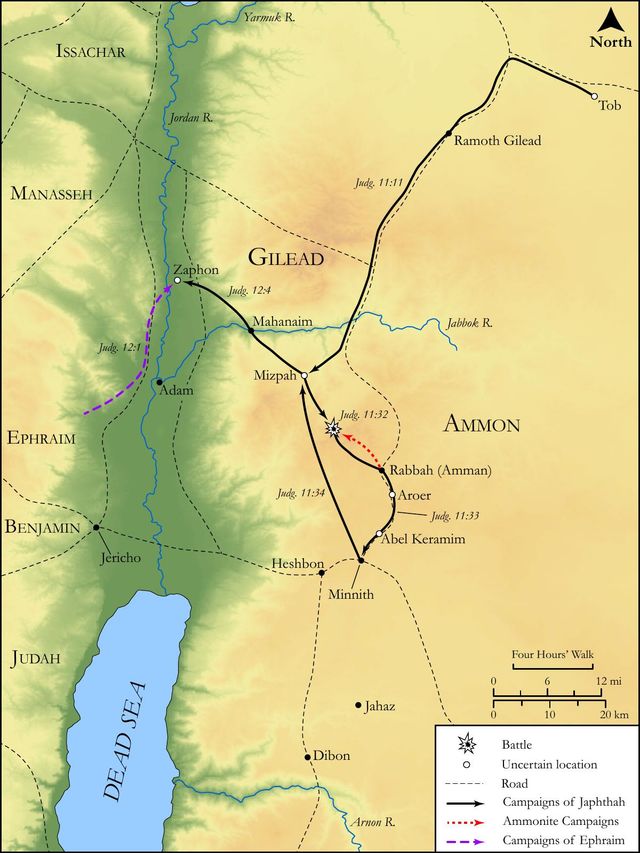
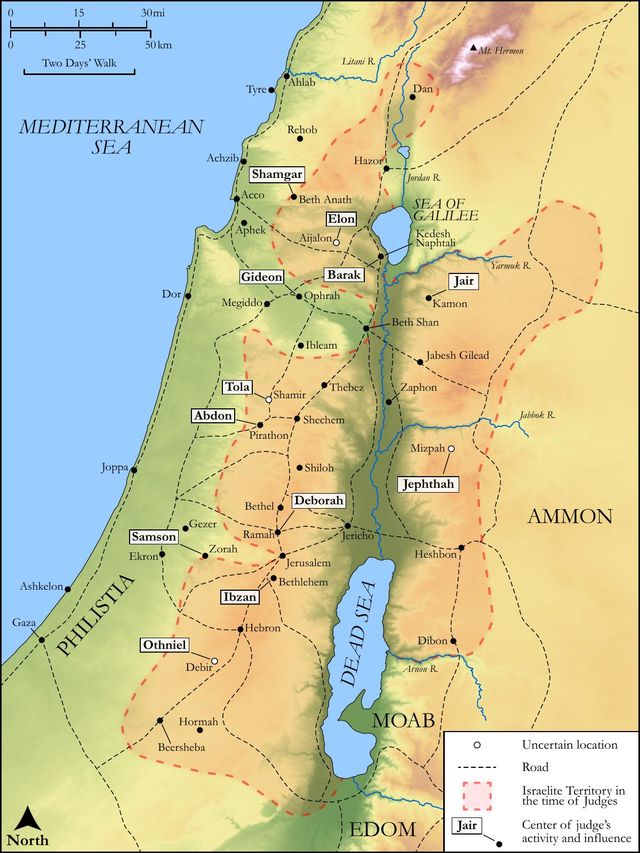
See on the biblical-era maps
Study this verse
Public-domain commentary
Matthew Henry
From his Commentary on the Whole Bible. Henry comments on passages, not single verses — this entry covers Judges 10:10–18. His three-level outline is real structure in the source text, so it is rendered as structure.
Here is, I. A humble confession which Israel make to God in their distress, Jdg 10:10. Now they own themselves guilty, like a malefactor upon the rack, and promise reformation, like a child under the rod. They not only complain of the distress, but acknowledge it is their own sin that has brought them into the distress; therefore God is righteous, and they have no reason to repine. They confess their omissions, for in them their sin began - "We have forsaken our God," and their commissions - "We have served Baalim, and herein have done foolishly, treacherously, and very wickedly."
II.A humbling message which God thereupon sends to Israel, whether by an angel (as Jdg 2:1) or by a prophet (as Jdg 6:8) is not certain.
It was kind that God took notice of their cry, and did not turn a deaf ear to it and send them no answer at all; it was kind likewise that when they began to repent he sent them such a message as was proper to increase their repentance, that they might be qualified and prepared for deliverance. Now in this message,
1.He upbraids them with their great ingratitude, reminds them of the great things he had done for them, delivering them from such and such enemies, the Egyptians first, out of whose land they were rescued, the Amorites whom they conquered and into whose land they entered, and since their settlement there, when the Ammonites had joined with the Moabites to oppress them (Jdg 3:13), when the Philistines were vexatious in the days of Shamgar, and afterwards other enemies had given them trouble, upon their petition God had wrought many a great salvation for them, Jdg 10:11, Jdg 10:12. Of their being oppressed by the Zidonians and the Maonites we read not elsewhere. God had in justice corrected them, and in mercy delivered them, and therefore might reasonably expect that either through fear or through love they would adhere to him and his service. Well therefore might the word cut them to the heart (Jdg 10:13), "Yet you have forsaken me that have brought you out of your troubles and served other gods that brought you into your troubles." Thus did they forsake their own mercies for their own delusions.
2.He shows them how justly he might now abandon them to ruin, by abandoning them to the gods that they had served. To awaken them to a thorough repentance and reformation, he lets them see,
(1.)Their folly in serving Baalim. They had been at a vast expense to obtain the favour of such gods as could not help them when they had most need of their help: "Go, and cry unto the gods which you have chosen (Jdg 10:14), try what they can do for you now. You have worshipped them as gods - try if they have now either a divine power or a divine goodness to be employed for you. You paid your homage to them as your kings and lords - try if they will now protect you. You brought your sacrifices of praise to their altars as your benefactors, imagining that they gave you your corn, and wine, and oil, but a friend indeed will be a friend in need; what stead will their favour stand you in now?" Note, It is necessary, in true repentance, that there be a full conviction of the utter insufficiency of all those things to help us and do us any kindness which we have idolized and set upon the throne in our hearts in competition with God. We must be convinced that the pleasures of sense on which we have doted cannot be our satisfaction, nor the wealth of the world which we have coveted be our portion, that we cannot be happy or easy any where but in God.
(2.)Their misery and danger in forsaking God. "See what a pass you have brought yourselves to; now you can expect no other than that I should say, I will deliver you no more, and what will become of you then?" Jdg 10:13. This he tells them, not only as what he might do, but as what he would do if they rested in a confession of what they had done amiss, and did not put away their idols and amend for the future.
III.A humble submission which Israel hereupon made to God's justice, with a humble application to his mercy, Jdg 10:15.
The children of Israel met together, probably in a solemn assembly at the door of the tabernacle, received the impressions of the message God had sent them, were not driven by it to despair, though it was very threatening, but resolve to lie at God's feet, and, if they perish, they will perish there. They not only repeat their confession, We have sinned, but,
1.They surrender themselves to God's justice: Do thou unto us whatsoever seemeth good unto thee. Hereby they own that they deserved the severest tokens of God's displeasure and were sure he could do them no wrong, whatever he laid upon them; they humbled themselves under his mighty and heavy hand, and accepted of the punishment of their iniquity, which Moses had made the condition of God's return in mercy to them, Lev 26:41. Note, True penitents dare and will refer themselves to God to correct them as he thinks fit, knowing that their sin is highly malignant in its deserts, and that God is not rigorous or extreme in his demands.
2.They supplicate for God's mercy: Deliver us only, we pray thee, this day, from this enemy. They acknowledge what they deserved, yet pray to God not to deal with them according to their deserts. Note, We must submit to God's justice with a hope in his mercy.
IV.A blessed reformation set on foot hereupon.
They brought forth fruits meet for repentance (Jdg 10:16): They put away the gods of strangers (as the word is), strange gods, and worshipped by those nations that were strangers to the commonwealth of Israel and to the covenants of promise, and they served the Lord. Need drove them to him. They knew it was to no purpose to go to the gods whom they had served, and therefore returned to the God whom they had slighted. This is true repentance not only for sin, but from sin.
V.God's gracious return in mercy to them, which is expressed here very tenderly (Jdg 10:16):
His soul was grieved for the misery of Israel. Not that there is any grief in God (he has infinite joy and happiness in himself, which cannot be broken in upon by either the sins or the miseries of his creatures), nor that there is any change in God: he is in one mind, and who can turn him? But his goodness is his glory. By it he proclaims his name, and magnifies it above all names; and, as he is pleased to put himself into the relation of a father to his people that are in covenant with him, so he is pleased to represent his goodness to them by the compassions of a father towards his children; for, as he is the Father of lights, so he is the Father of mercies. As the disobedience and misery of a child are a grief to a tender father, and make him feel very sensibly from his natural affection, so the provocations of God's people are a grief to him (Psa 95:10), he is broken with their whorish heart (Eze 6:9); their troubles also are a grief to him; so he is pleased to speak when he is pleased to appear for the deliverance of his people, changing his way and method of proceeding, as tender parents when they begin to relent towards their children with whom they have been displeased. Such are the tender mercies of our God, and so far is he from having any pleasure in the death of sinners.
VI.Things are now working towards their deliverance from the Ammonites' oppression, Jdg 10:17, Jdg 10:18.
God had said, "I will deliver you no more;" but now they are not what they were, they are other men, they are new men, and now he will deliver them. That threatening was denounced to convince and humble them, and, now that it had taken its desired effect, it is revoked in order to their deliverance.
1.The Ammonites are hardened to their own ruin. They gathered together in one body, that they might be destroyed at one blow, Rev 16:16.
2.The Israelites are animated to their own rescue. They assembled likewise, Jdg 10:17. During their eighteen years' oppression, as in their former servitudes, they were run down by their enemies, because they would not incorporate; each family, city, or tribe, would stand by itself, and act independently, and so they all became an easy prey to the oppressors, for want of a due sense of a common interest to cement them: but, whenever they got together, they did well; so they did here. When God's Israel become as one man to advance a common good and oppose a common enemy what difficulty can stand before them? The people and princes of Gilead, having met, consult first about a general that should command in chief against the Ammonites. Hitherto most of the deliverers of Israel had an extraordinary call to the office, as Ehud, Barak, Gideon; but the next is to be called in a more common way, by a convention of the states, who enquired out a fit man to command their army, found out one admirably well qualified for the purpose, and God owned their choice by putting his Spirit upon him (Jdg 11:29); so that this instance is of use for direction and encouragement in after-ages, when extraordinary calls are no longer to be expected. Let such be impartially chosen to public trust and power as God has qualified, and then God will graciously own those who are thus chosen.
Continue studying Judges 10:11 across the web’s major study libraries — every link below opens this exact verse, chapter, or book on the destination site.
Read & Compare
 BibleGatewayThis verse in more than 200 translations and 70 languages.
 Bible.comThe YouVersion reader — hundreds of translations, reading plans, and highlights.
 ESV.orgCrossway's official English Standard Version reader.
 NET BibleThe NET translation with 60,000+ translators' notes on every rendering decision.
 STEP BibleTyndale House's free study tool — original text, vocabulary, and scholarly resources.
 BibliaLogos Bible Software's free web reader.
 USCCBThe New American Bible (Revised Edition) with the U.S. bishops' study notes.
Commentaries
 BibleHub CommentariesDozens of classic commentaries on this verse, gathered on one page.
 StudyLightMore than 100 commentary sets — the largest collection on the web.
 BibleRefPlain-English commentary on what this verse means, verse by verse.
 Enduring WordDavid Guzik's free commentary on this chapter, widely used by Bible teachers.
 Bible Study ToolsVerse commentary alongside Greek and Hebrew study aids.
Original Language & Research
- BibleHub InterlinearThe verse word by word — original language, transliteration, and English.
- BibleHub LexiconEvery word's original-language definition and Strong's entry.
 Blue Letter BibleDeep-study tools — Strong's numbers, concordance, and word studies.
 SefariaThe Hebrew text with Rashi and centuries of Jewish commentary.
Sermons, Hymns & Audio


TrulyRandomVerse is not affiliated with these sites and doesn’t control their content. They’re linked because they’re genuinely useful.
Summary
Judges 10:11 captures a pivotal and poignant moment where the LORD directly confronts the children of Israel, who are once again suffering under the oppression of their enemies due to their idolatry. Through a powerful rhetorical question, God reminds them of His consistent and multifaceted acts of deliverance throughout their history—from the foundational liberation from Egypt to victories over the Amorites, Ammonites, and Philistines. This verse underscores God's unwavering faithfulness and His personal involvement in their salvation, while simultaneously serving as a sharp rebuke for their persistent unfaithfulness and spiritual amnesia, calling them to remember His past mercies as a prelude to repentance and restoration.
Context
ShowHideLiterary Context
Judges 10:11 falls within a crucial section of the book of Judges (chapters 10-12) that immediately precedes the rise of Jephthah. The preceding verses Judges 10:6-9 describe Israel's deep spiritual apostasy, as they "again did evil in the sight of the LORD and served the Baals and the Ashtaroth, the gods of Syria, the gods of Sidon, the gods of Moab, the gods of the Ammonites, and the gods of the Philistines." This widespread idolatry provoked God's anger, leading Him to sell them into the hands of the Philistines and Ammonites, who oppressed them severely for eighteen years. In their distress, the Israelites finally cry out to the LORD Judges 10:10, confessing their sin. However, instead of immediate deliverance, God responds with a sharp, rhetorical rebuke in Judges 10:11-14, recounting His past deliverances and questioning their sincerity, challenging them to return to Him fully. This divine monologue sets a somber tone, highlighting the depth of Israel's spiritual decline and the LORD's righteous indignation.
Historical & Cultural Context
The period of the Judges (roughly 1400-1050 BC) was a tumultuous era for Israel, characterized by a cyclical pattern of apostasy, oppression, crying out to God, and divine deliverance through a "judge." This era followed the initial conquest of Canaan and preceded the establishment of the monarchy. Without a central, faithful king, "every man did that which was right in his own eyes" Judges 21:25. The mention of the Egyptians, Amorites, Ammonites, and Philistines in Judges 10:11 reflects the diverse and ongoing geopolitical threats Israel faced. The Egyptians represent the foundational act of redemption from slavery. The Amorites were a powerful Canaanite people group defeated during the initial conquest of the land east of the Jordan Numbers 21:21-35. The Ammonites and Philistines were contemporary oppressors in the specific period of Judges 10, representing ongoing threats from Israel's eastern and western borders, respectively. This list serves as a historical recapitulation of God's consistent intervention across different historical phases and against various formidable adversaries, emphasizing His enduring power and covenant faithfulness despite Israel's repeated failures.
Key Themes
ShowHideJudges 10:11 powerfully articulates several core themes central to the book of Judges and the broader Old Testament narrative. Firstly, it highlights God's Unwavering Faithfulness and Deliverance, emphasizing His consistent character as a rescuer, even when His people are undeserving. He has a track record of saving Israel from overwhelming odds, from the miraculous exodus from Egypt to the defeat of various Canaanite and surrounding nations. Secondly, the verse underscores Israel's Persistent Unfaithfulness and Spiritual Amnesia. Despite experiencing God's mighty acts, Israel repeatedly turns to idolatry, forgetting His past mercies and the covenant obligations. This cyclical pattern of sin and suffering is the dominant narrative in the book of Judges, illustrating the human propensity to stray from God. Thirdly, the verse exemplifies Divine Rebuke and the Call to Remembrance. God's rhetorical question is not born of ignorance but serves as a strong indictment, designed to provoke Israel to remember His past works and their own failures, thereby leading them to repentance. This divine confrontation is a form of tough love, a means to draw His people back into right relationship, demonstrating that God's discipline is often a pathway to restoration, as seen in Deuteronomy 8:2-5.
Exposition and Analysis
ShowHideKey Word Analysis
ShowHideThis is the covenant name of God, signifying His self-existence, eternal nature, and His active presence in the history of His people. The use of Yᵉhôvâh (H3068) here emphasizes that it is the personal, covenant-keeping God of Israel who is speaking, highlighting the deeply personal and relational nature of this rebuke and the covenantal basis for His past deliverances and His present expectations.
This primitive root (H559) means "to say" and is used with great latitude, encompassing declaring, commanding, speaking, or uttering. In Judges 10:11, the LORD's "saying" is not merely informative but carries the weight of divine authority and a direct, forceful communication. It underscores the gravity of the divine address, indicating a deliberate and pointed confrontation with His people.
Derived from a word meaning "to build," bên (H1121) refers to a son, but in its widest sense, it encompasses literal and figurative relationships, including posterity, nation, or those belonging to a group. "Children of Israel" thus denotes the entire nation, emphasizing their collective identity as God's chosen people, descended from Jacob (Israel), and their corporate responsibility under the covenant.
Verse Breakdown
ShowHide"And the LORD said unto the children of Israel,"
This opening clause establishes the divine speaker and the direct audience. It signifies a moment of direct divine communication, not through a prophet or judge, but seemingly a direct, audible address from God Himself, perhaps through a theophany or an oracle. This directness adds weight and solemnity to the message that follows, emphasizing the gravity of Israel's situation and God's personal engagement with their plight.
"[Did] not [I deliver you]"
This is the core of the rhetorical question, a powerful erotesis. The Hebrew phrasing "הֲלֹא הוֹשַׁעְתִּי אֶתְכֶם" (ha-lo hosh'ati et-khem) literally means "Was it not I who delivered you?" or "Did I not save you?" The "not" (הֲלֹא) expects an affirmative answer, making the question a strong assertion of an undeniable truth. It's not a request for information but a forceful reminder and an indictment. The emphasis is on "I" (אֲנִי, ani, implied in the verb form), highlighting God's singular agency and personal involvement in their past salvations.
"from the Egyptians,"
This refers to the foundational act of national deliverance—the Exodus from slavery in Egypt under Pharaoh's oppressive rule. This event was the birth of Israel as a nation and the cornerstone of their covenant relationship with God, as recounted in Exodus 14. It represents God's power to rescue from the most formidable and entrenched oppression.
"and from the Amorites,"
The Amorites were a powerful group of Canaanite inhabitants of the land, particularly prominent east of the Jordan River. God's deliverance from them refers to the victories over Sihon, king of Heshbon, and Og, king of Bashan, as Israel approached the Promised Land Numbers 21:21-35. This highlights God's role in enabling Israel to conquer and possess their inheritance.
"from the children of Ammon,"
The Ammonites were descendants of Lot, often hostile neighbors to Israel. While specific deliverances from them are mentioned in earlier periods (e.g., Judges 3:12-13), this reference is particularly poignant as the Ammonites are one of the current oppressors in Judges 10. God is reminding them that He has delivered them from these very people before, underscoring their current predicament as a result of their own sin, not God's inability.
"and from the Philistines?"
The Philistines, a powerful "Sea Peoples" group who settled on the southwestern coast of Canaan, were a persistent and formidable enemy of Israel throughout the period of the Judges and early monarchy. Like the Ammonites, they are one of the current oppressors in Judges 10. God's mention of them serves a similar purpose to the Ammonites: a reminder that He has previously delivered them from this ongoing threat, highlighting His consistent power over their most dangerous adversaries.
Literary Devices
ShowHideJudges 10:11 employs several powerful literary devices to convey its message. The most prominent is Rhetorical Question (specifically, an erotesis). The LORD's question, "Did not I deliver you...?" is not posed to elicit information but to make a forceful assertion and a biting indictment. It assumes an undeniable affirmative answer, thereby highlighting Israel's culpability and the stark contrast between God's unwavering faithfulness and their persistent unfaithfulness. The question serves to shame and convict, prompting self-reflection and repentance. Another device is Anaphora and Parallelism, seen in the repeated "from the..." structure when listing the enemies. This repetition creates a rhythmic, emphatic catalog of God's past deliverances, reinforcing the breadth and consistency of His saving acts. Finally, the verse utilizes Historical Allusion and Recapitulation, as God succinctly reviews key moments in Israel's history of salvation. By recalling the Egyptians, Amorites, Ammonites, and Philistines, the LORD provides a comprehensive, albeit brief, summary of His enduring commitment to His covenant people across different eras and against various formidable foes. This historical review serves as a powerful reminder of His character and their obligation.
Theological and Thematic Connections
ShowHideJudges 10:11 is a profound theological statement on the nature of God and humanity. It reveals God as eternally faithful, a Deliverer who consistently intervenes on behalf of His covenant people, even when they are undeserving. His question is not a sign of weakness or forgetfulness on His part, but a demonstration of His righteous indignation and His desire for His people to remember His goodness and repent of their spiritual adultery. It underscores the biblical truth that forgetting God's past mercies inevitably leads to present unfaithfulness and suffering. The verse implicitly teaches that true repentance begins with a recognition of God's character and our own sin, acknowledging His steadfast love despite our waywardness. It also highlights the cyclical nature of sin and grace in the Old Testament, where divine discipline is a means to bring His people back into right relationship, not an act of abandonment.
Reflection and Application
ShowHideJudges 10:11 offers a timeless mirror for believers today, challenging us to examine our own hearts and spiritual memory. Just as Israel repeatedly forgot God's mighty acts of deliverance, we too can fall into patterns of spiritual amnesia, taking God's grace for granted and turning to lesser gods—whether they be comfort, success, approval, or self-reliance—when faced with challenges or temptations. This verse calls us to cultivate a posture of diligent remembrance, actively recalling God's faithfulness in our personal histories and in the grand narrative of redemption. When we face difficulties, instead of despairing or turning away, we are invited to look back at God's track record, remembering how He has consistently provided, protected, and delivered us. This act of remembering strengthens our faith, cultivates gratitude, and serves as a powerful antidote to anxiety and unfaithfulness. Furthermore, God's sharp rebuke to Israel is a reminder that divine correction, though uncomfortable, is an expression of His enduring love and desire for our holiness. It is an invitation to humble ourselves, confess our sins, and return to Him with renewed devotion, trusting that His faithfulness remains steadfast even when ours falters.
Questions for Reflection
ShowHideFAQ
ShowHideWhat is the significance of God listing specific nations He delivered Israel from?
ShowHideThe listing of "Egyptians, Amorites, Ammonites, and Philistines" is highly significant because it provides a historical overview of God's consistent and comprehensive deliverance of Israel across different eras and against various types of enemies. The Egyptians represent the foundational act of national liberation from slavery, establishing God as their redeemer. The Amorites signify God's power in enabling Israel to conquer and settle the Promised Land, overcoming formidable indigenous peoples. The Ammonites and Philistines are particularly relevant as they were the current oppressors of Israel at the time of Judges 10. By mentioning them, God is essentially saying, "I have delivered you from these very enemies before! Why do you doubt My power or turn away from Me now?" This detailed recapitulation of His saving acts serves as an undeniable testimony to His unwavering faithfulness and power, making Israel's current unfaithfulness all the more inexcusable. It underscores that their suffering was not due to God's inability to save, but their own persistent rebellion against the One who had repeatedly saved them.
Christ-Centered Fulfillment
ShowHideJudges 10:11, with its powerful assertion of God's consistent deliverance, finds its ultimate and most profound fulfillment in Jesus Christ. The LORD's rhetorical question, "Did not I deliver you?", foreshadows the definitive and eternal deliverance accomplished through the Son. While God delivered Israel from physical oppressors like the Egyptians and Philistines, these were but temporal salvations pointing to a greater spiritual reality. Jesus is the Lamb of God who takes away the sin of the world, delivering humanity not merely from earthly foes, but from the ultimate enemies: sin, death, and the power of the devil Hebrews 2:14-15. The pattern of God's faithfulness in delivering a rebellious people, so evident in Judges, culminates in Christ's atoning work on the cross, where He provides a final and complete rescue for all who believe Romans 5:8. Just as God remembered His covenant with Israel despite their failures, God's ultimate covenant faithfulness is perfectly demonstrated in sending His Son to redeem a humanity that continually forgets Him. Thus, the divine question in Judges 10:11 echoes through history, finding its resounding "Yes!" in the person and work of Jesus, who delivers us from a far greater bondage and secures an everlasting salvation, translating us from the domain of darkness into the kingdom of His beloved Son Colossians 1:13-14.