


Judges 10:12
Bible text: King James Version (1769 Blayney text) · Public domain
Bible text: Berean Standard Bible · Public domain
Bible text: American Standard Version (1901) · Public domain
Bible text: World English Bible, Messianic edition · Public domain
Bible text: Geneva Bible (1599) · Public domain
Bible text: Young's Literal Translation · Public domain
- וְצִידוֹנִיםve·tzi·do·Nimand [the] SidoniansH6722Conj-w ¦ N-mpNoun Gentilic Plural Masculine Absoluteוְandצִידוֹנִים[the] Sidonians
- וַעֲמָלֵקva·'a·ma·Lekand AmalekH6002Conj-w ¦ N-properNoun Proper LocationוַandעֲמָלֵקAmalek
- וּמָעוֹןu·ma·'onand MaonH4584Conj-w ¦ N-proper-mNoun Proper MasculineוּandמָעוֹןMaon
- לָחֲצוּla·cha·Tzuthey oppressedH3905V-Qal-Perf-3cpVerb Qal Perfect 3rd Plural common gender
- אֶתְכֶם'et·Khem<obj.> youH853DirObjM ¦ 2mpParticle Object Indicatorאֶתְ<obj.>כֶםyou
- וַתִּצְעֲקוּva·titz·'a·Kuand you cried outH6817Conj-w ¦ V-Qal-ConsecImperf-2mpVerb Qal Consecutive Imperfect 2nd Plural Masculineוַandתִּצְעֲקוּyou cried out
- אֵלַי'e·Laito meH413Prep ¦ 1csPreposition Definiteאֵלַtoיme
- וָאוֹשִׁיעָהva·'o·Shi·'ahand I delivered !H3467Conj-w ¦ V-Hiphil-ConsecImperf-1cs ¦ SfxVerb Hiphil Consecutive Imperfect 1st Singular common genderוָandאוֹשִׁיעָI deliveredה!
- אֶתְכֶם'et·Khem<obj.> youH853DirObjM ¦ 2mpParticle Object Indicatorאֶתְ<obj.>כֶםyou
- מִיָּדָםmi·ya·Damfrom their handH3027Prep-m ¦ N-csc ¦ 3mpNoun Singular common gender Constructמִfromיָּדָhandםtheir
English is a literal word-by-word gloss of the Hebrew, not the KJV's wording. Why?
This is the original text the KJV's translators worked from — each Hebrew word with its own literal English meaning in this verse, prepared by scholars at Tyndale House, Cambridge. The KJV translates whole sentences, not word by word, so its wording differs: one Hebrew word can become several English words, and the KJV may choose “the LORD” where the gloss reads “Yahweh”. Both are faithful — they answer different questions. For the KJV's own rendering, switch to the KJV text.
Details
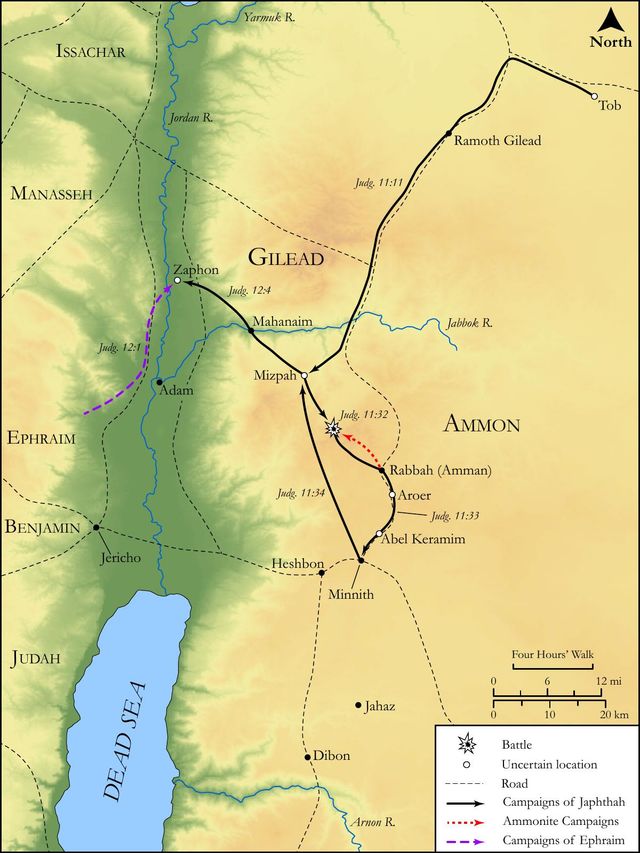
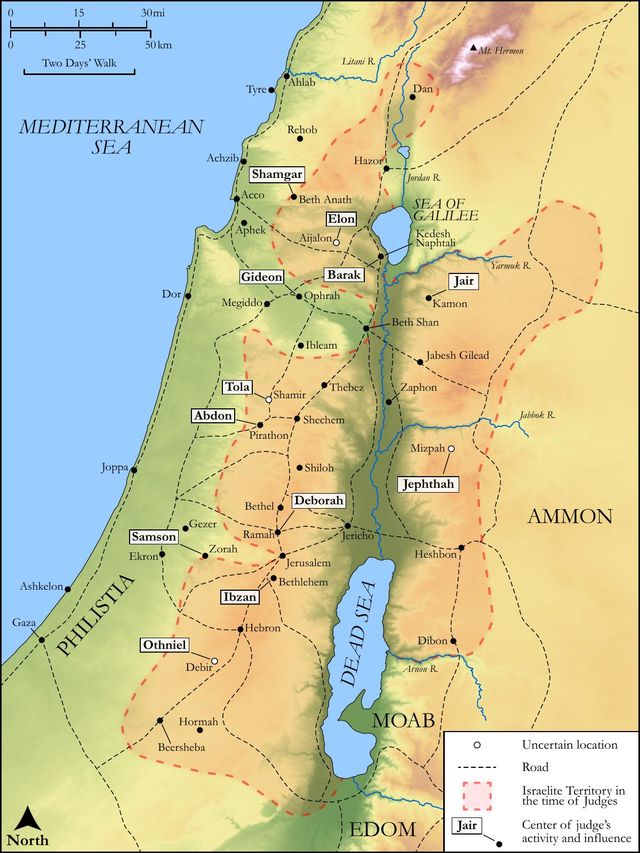
See on the biblical-era maps
Study this verse
Public-domain commentary
Matthew Henry
From his Commentary on the Whole Bible. Henry comments on passages, not single verses — this entry covers Judges 10:10–18. His three-level outline is real structure in the source text, so it is rendered as structure.
Here is, I. A humble confession which Israel make to God in their distress, Jdg 10:10. Now they own themselves guilty, like a malefactor upon the rack, and promise reformation, like a child under the rod. They not only complain of the distress, but acknowledge it is their own sin that has brought them into the distress; therefore God is righteous, and they have no reason to repine. They confess their omissions, for in them their sin began - "We have forsaken our God," and their commissions - "We have served Baalim, and herein have done foolishly, treacherously, and very wickedly."
II.A humbling message which God thereupon sends to Israel, whether by an angel (as Jdg 2:1) or by a prophet (as Jdg 6:8) is not certain.
It was kind that God took notice of their cry, and did not turn a deaf ear to it and send them no answer at all; it was kind likewise that when they began to repent he sent them such a message as was proper to increase their repentance, that they might be qualified and prepared for deliverance. Now in this message,
1.He upbraids them with their great ingratitude, reminds them of the great things he had done for them, delivering them from such and such enemies, the Egyptians first, out of whose land they were rescued, the Amorites whom they conquered and into whose land they entered, and since their settlement there, when the Ammonites had joined with the Moabites to oppress them (Jdg 3:13), when the Philistines were vexatious in the days of Shamgar, and afterwards other enemies had given them trouble, upon their petition God had wrought many a great salvation for them, Jdg 10:11, Jdg 10:12. Of their being oppressed by the Zidonians and the Maonites we read not elsewhere. God had in justice corrected them, and in mercy delivered them, and therefore might reasonably expect that either through fear or through love they would adhere to him and his service. Well therefore might the word cut them to the heart (Jdg 10:13), "Yet you have forsaken me that have brought you out of your troubles and served other gods that brought you into your troubles." Thus did they forsake their own mercies for their own delusions.
2.He shows them how justly he might now abandon them to ruin, by abandoning them to the gods that they had served. To awaken them to a thorough repentance and reformation, he lets them see,
(1.)Their folly in serving Baalim. They had been at a vast expense to obtain the favour of such gods as could not help them when they had most need of their help: "Go, and cry unto the gods which you have chosen (Jdg 10:14), try what they can do for you now. You have worshipped them as gods - try if they have now either a divine power or a divine goodness to be employed for you. You paid your homage to them as your kings and lords - try if they will now protect you. You brought your sacrifices of praise to their altars as your benefactors, imagining that they gave you your corn, and wine, and oil, but a friend indeed will be a friend in need; what stead will their favour stand you in now?" Note, It is necessary, in true repentance, that there be a full conviction of the utter insufficiency of all those things to help us and do us any kindness which we have idolized and set upon the throne in our hearts in competition with God. We must be convinced that the pleasures of sense on which we have doted cannot be our satisfaction, nor the wealth of the world which we have coveted be our portion, that we cannot be happy or easy any where but in God.
(2.)Their misery and danger in forsaking God. "See what a pass you have brought yourselves to; now you can expect no other than that I should say, I will deliver you no more, and what will become of you then?" Jdg 10:13. This he tells them, not only as what he might do, but as what he would do if they rested in a confession of what they had done amiss, and did not put away their idols and amend for the future.
III.A humble submission which Israel hereupon made to God's justice, with a humble application to his mercy, Jdg 10:15.
The children of Israel met together, probably in a solemn assembly at the door of the tabernacle, received the impressions of the message God had sent them, were not driven by it to despair, though it was very threatening, but resolve to lie at God's feet, and, if they perish, they will perish there. They not only repeat their confession, We have sinned, but,
1.They surrender themselves to God's justice: Do thou unto us whatsoever seemeth good unto thee. Hereby they own that they deserved the severest tokens of God's displeasure and were sure he could do them no wrong, whatever he laid upon them; they humbled themselves under his mighty and heavy hand, and accepted of the punishment of their iniquity, which Moses had made the condition of God's return in mercy to them, Lev 26:41. Note, True penitents dare and will refer themselves to God to correct them as he thinks fit, knowing that their sin is highly malignant in its deserts, and that God is not rigorous or extreme in his demands.
2.They supplicate for God's mercy: Deliver us only, we pray thee, this day, from this enemy. They acknowledge what they deserved, yet pray to God not to deal with them according to their deserts. Note, We must submit to God's justice with a hope in his mercy.
IV.A blessed reformation set on foot hereupon.
They brought forth fruits meet for repentance (Jdg 10:16): They put away the gods of strangers (as the word is), strange gods, and worshipped by those nations that were strangers to the commonwealth of Israel and to the covenants of promise, and they served the Lord. Need drove them to him. They knew it was to no purpose to go to the gods whom they had served, and therefore returned to the God whom they had slighted. This is true repentance not only for sin, but from sin.
V.God's gracious return in mercy to them, which is expressed here very tenderly (Jdg 10:16):
His soul was grieved for the misery of Israel. Not that there is any grief in God (he has infinite joy and happiness in himself, which cannot be broken in upon by either the sins or the miseries of his creatures), nor that there is any change in God: he is in one mind, and who can turn him? But his goodness is his glory. By it he proclaims his name, and magnifies it above all names; and, as he is pleased to put himself into the relation of a father to his people that are in covenant with him, so he is pleased to represent his goodness to them by the compassions of a father towards his children; for, as he is the Father of lights, so he is the Father of mercies. As the disobedience and misery of a child are a grief to a tender father, and make him feel very sensibly from his natural affection, so the provocations of God's people are a grief to him (Psa 95:10), he is broken with their whorish heart (Eze 6:9); their troubles also are a grief to him; so he is pleased to speak when he is pleased to appear for the deliverance of his people, changing his way and method of proceeding, as tender parents when they begin to relent towards their children with whom they have been displeased. Such are the tender mercies of our God, and so far is he from having any pleasure in the death of sinners.
VI.Things are now working towards their deliverance from the Ammonites' oppression, Jdg 10:17, Jdg 10:18.
God had said, "I will deliver you no more;" but now they are not what they were, they are other men, they are new men, and now he will deliver them. That threatening was denounced to convince and humble them, and, now that it had taken its desired effect, it is revoked in order to their deliverance.
1.The Ammonites are hardened to their own ruin. They gathered together in one body, that they might be destroyed at one blow, Rev 16:16.
2.The Israelites are animated to their own rescue. They assembled likewise, Jdg 10:17. During their eighteen years' oppression, as in their former servitudes, they were run down by their enemies, because they would not incorporate; each family, city, or tribe, would stand by itself, and act independently, and so they all became an easy prey to the oppressors, for want of a due sense of a common interest to cement them: but, whenever they got together, they did well; so they did here. When God's Israel become as one man to advance a common good and oppose a common enemy what difficulty can stand before them? The people and princes of Gilead, having met, consult first about a general that should command in chief against the Ammonites. Hitherto most of the deliverers of Israel had an extraordinary call to the office, as Ehud, Barak, Gideon; but the next is to be called in a more common way, by a convention of the states, who enquired out a fit man to command their army, found out one admirably well qualified for the purpose, and God owned their choice by putting his Spirit upon him (Jdg 11:29); so that this instance is of use for direction and encouragement in after-ages, when extraordinary calls are no longer to be expected. Let such be impartially chosen to public trust and power as God has qualified, and then God will graciously own those who are thus chosen.
Continue studying Judges 10:12 across the web’s major study libraries — every link below opens this exact verse, chapter, or book on the destination site.
Read & Compare
 BibleGatewayThis verse in more than 200 translations and 70 languages.
 Bible.comThe YouVersion reader — hundreds of translations, reading plans, and highlights.
 ESV.orgCrossway's official English Standard Version reader.
 NET BibleThe NET translation with 60,000+ translators' notes on every rendering decision.
 STEP BibleTyndale House's free study tool — original text, vocabulary, and scholarly resources.
 BibliaLogos Bible Software's free web reader.
 USCCBThe New American Bible (Revised Edition) with the U.S. bishops' study notes.
Commentaries
 BibleHub CommentariesDozens of classic commentaries on this verse, gathered on one page.
 StudyLightMore than 100 commentary sets — the largest collection on the web.
 BibleRefPlain-English commentary on what this verse means, verse by verse.
 Enduring WordDavid Guzik's free commentary on this chapter, widely used by Bible teachers.
 Bible Study ToolsVerse commentary alongside Greek and Hebrew study aids.
Original Language & Research
- BibleHub InterlinearThe verse word by word — original language, transliteration, and English.
- BibleHub LexiconEvery word's original-language definition and Strong's entry.
 Blue Letter BibleDeep-study tools — Strong's numbers, concordance, and word studies.
 SefariaThe Hebrew text with Rashi and centuries of Jewish commentary.
Sermons, Hymns & Audio


TrulyRandomVerse is not affiliated with these sites and doesn’t control their content. They’re linked because they’re genuinely useful.
Summary
Judges 10:12 is a pivotal moment in God's direct rebuke to Israel, where He recounts His unwavering faithfulness in delivering them from various oppressors—the Zidonians, Amalekites, and Maonites—in response to their desperate cries for help. This divine reminder serves to highlight Israel's recurring pattern of apostasy and forgetfulness, contrasting it sharply with Yahweh's consistent character as a compassionate and powerful rescuer, even in the face of His people's persistent unfaithfulness.
Context
ShowHideLiterary Context
Judges 10:12 is embedded within a profound dialogue between the Lord and the Israelites, following eighteen years of severe oppression by the Ammonites and Philistines (Judges 10:6-9). Having succumbed to widespread idolatry, serving various false gods, Israel finally cries out to the Lord in their distress. This verse is part of God's direct, rhetorical response, where He challenges their sincerity by enumerating His past salvific acts (Judges 10:11-12) and questioning why they continue to forsake Him for other gods (Judges 10:13). The divine speech in Judges 10:10-16 marks a unique moment of direct divine communication, preceding Israel's subsequent repentance and God's eventual raising of Jephthah as a deliverer. It reinforces the cyclical pattern of sin, oppression, cry, and deliverance that defines the entire Book of Judges.
Historical & Cultural Context
The period of the Judges was characterized by a decentralized tribal confederacy, marked by a lack of consistent national leadership and frequent lapses into syncretistic worship. Israel often adopted the religious practices of surrounding nations, leading to divine judgment in the form of foreign oppression. The Zidonians were a prominent Phoenician people from the coastal city of Sidon, known for their maritime trade and the worship of Baal and Asherah, which frequently lured Israel into idolatry. The Amalekites were nomadic raiders, ancient enemies of Israel (Exodus 17:8-16; Deuteronomy 25:17-19), who often allied with other groups to plunder Israelite territory. The Maonites are less clearly identified but are likely associated with groups from the Transjordan region, possibly related to the Midianites or other desert tribes, who also harassed Israel. God's specific mention of these diverse oppressors underscores the breadth and consistency of His past deliverances across different geographical and cultural threats, highlighting Israel's repeated failure to learn from history.
Key Themes
ShowHideThis verse powerfully contributes to several overarching themes in Judges and the broader Old Testament narrative. Foremost is the theme of God's Unwavering Deliverance and Covenant Faithfulness. Despite Israel's persistent rebellion and turning away from Him, God consistently acts as their rescuer when they genuinely "cried to me." This highlights His immense patience and enduring faithfulness to His covenant promises, even when Israel is unfaithful (Deuteronomy 7:9). Conversely, the verse implicitly emphasizes Israel's Forgetfulness and Inconstancy, a central theme throughout Judges, where the people repeatedly forget God's past mercies and turn to idols (Judges 2:10-13). The phrase "ye cried to me" also underscores the Power of a Sincere Cry or desperate appeal to God, demonstrating that He responds to genuine repentance and distress, even from a rebellious people. This divine response, though sometimes accompanied by rebuke, reveals God's profound Longsuffering and His desire for His people's restoration.
Exposition and Analysis
ShowHideKey Word Analysis
ShowHideThe verb לָחַץ (lâchats) means "to press," "to distress," or "to afflict." It conveys a sense of crushing burden, severe pressure, or restrictive subjugation. In this context, it describes the profound suffering and limitation imposed upon Israel by their enemies, highlighting the dire circumstances from which God delivered them.
The verb צָעַק (tsâʻaq) signifies a strong, urgent, and desperate cry for help, often born out of anguish, distress, or oppression. It is not a casual prayer but an impassioned, fervent plea. In the context of Judges, this cry often signals a moment of profound suffering and a turning, however brief, back to the Lord in desperation, acknowledging His sovereignty and ability to deliver. It implies a recognition of their dire situation and a desperate appeal to the only one who can provide rescue.
The verb יָשַׁע (yâshaʻ) is a foundational term in the Old Testament, meaning "to save," "to help," "to grant victory," or "to rescue." It denotes a powerful, decisive, and effective act of liberation. When God "delivered" Israel, it was a comprehensive act of salvation, removing them from the hand of their oppressors and restoring them to a state of peace and freedom. This word is the root of the name "Jesus" (Yeshua), signifying His ultimate role as Savior.
The noun יָד (yâd) primarily refers to the physical hand, but it is used extensively in a figurative sense to denote power, authority, control, or agency. To be delivered "out of their hand" signifies a complete removal from the control, dominion, and oppressive power of the enemy, emphasizing the totality and decisiveness of God's rescue.
Verse Breakdown
ShowHide"The Zidonians also, and the Amalekites, and the Maonites, did oppress you"
This clause serves as a historical indictment, reminding Israel of specific instances of foreign domination and the suffering they endured. The mention of distinct groups—the maritime Zidonians, the nomadic Amalekites, and the likely Transjordanian Maonites—underscores the varied and widespread nature of the threats from which God had previously rescued them. The verb "oppress" (לָחַץ, laḥaṣ) implies a crushing, restrictive, or burdensome subjugation, highlighting the severity of their plight.
"and ye cried to me"
This phrase highlights the crucial turning point in Israel's cycle of rebellion and suffering. Despite their idolatry and unfaithfulness, their desperate cry to the Lord was the catalyst for divine intervention. It signifies a moment, albeit often temporary, of repentance and recognition of God as their only true source of help. God's response is contingent upon this cry, revealing His attentiveness to the genuine distress and humble appeal of His people.
"and I delivered you out of their hand"
This final clause emphatically declares God's consistent and powerful response to Israel's cries. It is a declaration of divine faithfulness and omnipotence. The phrase "out of their hand" emphasizes a complete and decisive rescue, signifying God's ability to break the power and control of any oppressor. This statement serves as a powerful reminder of God's past actions, intended to provoke Israel to trust Him in their current distress and to highlight their ingratitude for His repeated salvations.
Literary Devices
ShowHideJudges 10:12 employs several potent literary devices to convey its message. The most prominent is Historical Allusion, as God directly references specific past deliverances from the Zidonians, Amalekites, and Maonites. This serves as a powerful rhetorical strategy, reminding Israel of concrete examples of His faithfulness and their own forgetfulness. The entire passage is a direct Divine Speech, giving it immense authority and solemnity, as the Creator of the universe directly addresses His wayward people. This direct address creates a sense of immediate accountability. Furthermore, there is an implicit Contrast between Israel's recurring unfaithfulness (implied by the need for repeated deliverances and their current state) and God's unwavering faithfulness. This contrast underscores the depth of God's patience and the severity of Israel's apostasy, setting the stage for the rhetorical questions that follow in Judges 10:13.
Theological and Thematic Connections
ShowHideJudges 10:12 profoundly illustrates God's enduring character as a faithful deliverer, even to a people prone to rebellion. It underscores the principle that while God permits the consequences of sin (oppression), He remains accessible and responsive to the sincere cries of His people. This verse is a testament to God's covenant loyalty, demonstrating that His commitment to Israel transcends their repeated failures. It highlights that true deliverance comes not from human strength or alliances, but solely from the Lord, who hears and acts on behalf of those who turn to Him in their distress. The divine patience exhibited here is remarkable, showcasing a God who, though just, is also rich in mercy and slow to anger, always providing a path back to Him through repentance and a desperate plea.
Reflection and Application
ShowHideJudges 10:12 offers powerful and timeless insights for believers today. It serves as a profound reminder that our God is a God who hears and delivers. Just as He responded to ancient Israel's desperate pleas, He remains attentive to the sincere cries of His people in their distress. This verse encourages us to turn to Him in every trial, knowing that His ear is not dull, nor His arm shortened. It also challenges us to remember God's past faithfulness in our own lives, recalling specific instances where He has intervened, provided, or delivered us from difficult circumstances. Such remembrance strengthens our faith for present and future challenges, preventing us from falling into the same pattern of forgetfulness that plagued Israel. While God is merciful, the broader context of Judges 10 also reminds us that true and lasting deliverance often follows genuine repentance and a turning away from whatever "idols"—whether material possessions, relationships, or self-reliance—have taken God's rightful place in our hearts.
Questions for Reflection
ShowHideFAQ
ShowHideWho were the Zidonians, Amalekites, and Maonites, and why did God list these specific groups?
ShowHideThe Zidonians were a prominent Canaanite people from the coastal city of Sidon, known for their maritime trade and the worship of Baal and Asherah, which often influenced Israelite idolatry. The Amalekites were nomadic, warlike people, ancient enemies of Israel who frequently raided their territories, particularly from the south (Exodus 17:8-16). The Maonites are less definitively identified but are generally understood to be a group from the Transjordan region, possibly associated with the Midianites or other desert tribes who also oppressed Israel. God lists these specific groups to provide concrete, historical examples of His past deliverances, spanning different geographical regions and types of enemies. This serves as a powerful rhetorical device, reminding Israel of the breadth and consistency of His saving acts across their history, thereby highlighting their ingratitude and persistent pattern of forgetting His faithfulness. It underscores that no matter the foe or the nature of the oppression, God had always been their deliverer when they turned to Him.
Christ-Centered Fulfillment
ShowHideJudges 10:12, though rooted in Old Testament history, profoundly foreshadows the ultimate deliverance found in Jesus Christ. The repeated cycle of Israel's sin, oppression, cry, and God's deliverance points to humanity's deeper need for a permanent solution to sin and its consequences. While God delivered Israel from external oppressors like the Zidonians and Amalekites, these deliverances were temporary and did not address the root problem of Israel's rebellious heart. Christ, however, is the ultimate Deliverer who rescues us not merely from physical enemies, but from the spiritual oppression of sin, death, and the devil (Colossians 1:13-14). He is the Lamb of God who takes away the sin of the world, providing a final and complete salvation that the Old Testament deliverances could only hint at. Our "cry" to God today finds its perfect access and efficacy through Jesus, our great High Priest, who sympathizes with our weaknesses and enables us to approach the throne of grace with confidence to receive mercy and find grace in our time of need. Thus, the pattern of God hearing and delivering in Judges 10:12 culminates in the person and work of Christ, who offers eternal deliverance and a new covenant where God's faithfulness is perfectly revealed and His people are truly transformed (Romans 5:8; 1 Corinthians 15:57).