


Judges 10:6
Bible text: King James Version (1769 Blayney text) · Public domain
Bible text: King James Version with Strong's numbers · Public domain
Bible text: Berean Standard Bible · Public domain
Bible text: American Standard Version (1901) · Public domain
Bible text: World English Bible, Messianic edition · Public domain
Bible text: Geneva Bible (1599) · Public domain
Bible text: Young's Literal Translation · Public domain
- וַיֹּסִפוּvai·yo·Si·fuand they repeatedH3254Conj-w ¦ V-Hiphil-ConsecImperf-3mpVerb Hiphil Consecutive Imperfect 3rd Plural Masculineוַandיֹּסִפוּthey repeated
- בְּנֵיbe·Nei[the] people ofH1121N-mpcNoun Plural Masculine Construct
- יִשְׂרָאֵלYis·ra·'ElIsraelH3478N-properNoun Proper Location
- לַעֲשׂוֹתla·'a·Sotto doH6213Prep-l ¦ V-Qal-InfVerb Qal Infinitive Constructלַtoעֲשׂוֹתdo
- הָרַעha·Ra'the evilH7451Art ¦ Adj-msAdjective Singular Masculine Absoluteהָtheרַעevil
- בְּעֵינֵיbe·'ei·Neiin [the] eyes ofH5869Prep-b ¦ N-fdcNoun Dual Feminine Constructבְּinעֵינֵי[the] eyes of
- יְהוָהYah·wehYahwehH3068N-properNoun Proper Title
- וַיַּעַבְדוּvai·ya·'av·Duand they servedH5647Conj-w ¦ V-Qal-ConsecImperf-3mpVerb Qal Consecutive Imperfect 3rd Plural Masculineוַandיַּעַבְדוּthey served
- אֶת'et<obj.>H853DirObjMParticle Object Indicator
- הַבְּעָלִיםha·be·'a·Limthe BaalsH1168Art ¦ N-mpNoun Title Plural Masculine AbsoluteהַtheבְּעָלִיםBaals
- וְאֶתve·'Etand <obj.>H853Conj-w ¦ DirObjMParticle Object Indicatorוְandאֶת<obj.>
- הָעַשְׁתָּרוֹתha·'ash·ta·Rotthe AshtarothH6252Art ¦ N-fpNoun Plural Feminine AbsoluteהָtheעַשְׁתָּרוֹתAshtaroth
- וְאֶתve·'Etand <obj.>H853Conj-w ¦ DirObjMParticle Object Indicatorוְandאֶת<obj.>
- אֱלֹהֵי'e·lo·Hei[the] gods ofH430N-mpcNoun Plural Masculine Construct
- אֲרָם'a·RamAramH758N-properNoun Proper Location
- וְאֶתve·'Etand <obj.>H853Conj-w ¦ DirObjMParticle Object Indicatorוְandאֶת<obj.>
- אֱלֹהֵי'e·lo·Hei[the] gods ofH430N-mpcNoun Plural Masculine Construct
- צִידוֹןtzi·DonSidonH6721N-properNoun Proper Location
- וְאֵתve·'Etand <obj.>H853Conj-w ¦ DirObjMParticle Object Indicatorוְandאֵת<obj.>
- אֱלֹהֵי'e·lo·Hei[the] gods ofH430N-mpcNoun Plural Masculine Construct
- מוֹאָבmo·'AvMoabH4124N-properNoun Proper Location
- וְאֵתve·'Etand <obj.>H853Conj-w ¦ DirObjMParticle Object Indicatorוְandאֵת<obj.>
- אֱלֹהֵי'e·lo·Hei[the] gods ofH430N-mpcNoun Plural Masculine Construct
- בְנֵיve·nei[the] people ofH1121N-mpcNoun Plural Masculine Construct
- עַמּוֹןa·MonAmmonH5983N-proper-mNoun Proper Masculine
- וְאֵתve·'Etand <obj.>H853Conj-w ¦ DirObjMParticle Object Indicatorוְandאֵת<obj.>
- אֱלֹהֵי'e·lo·Hei[the] gods ofH430N-mpcNoun Plural Masculine Construct
- פְלִשְׁתִּיםfe·lish·Tim[the] PhilistinesH6430N-mpNoun Gentilic Plural Masculine Absolute
- וַיַּעַזְבוּvai·ya·'az·Vuand they forsookH5800Conj-w ¦ V-Qal-ConsecImperf-3mpVerb Qal Consecutive Imperfect 3rd Plural Masculineוַandיַּעַזְבוּthey forsook
- אֶת'et<obj.>H853DirObjMParticle Object Indicator
- יְהוָהYah·wehYahwehH3068N-properNoun Proper Title
- וְלֹאve·Lo'and notH3808Conj-w ¦ NegParticle Negativeוְandלֹאnot
- עֲבָדוּהוּ'a·va·Du·huthey served himH5647V-Qal-Perf-3cp ¦ 3msVerb Qal Perfect 3rd Plural common genderעֲבָדוּthey servedהוּhim
English is a literal word-by-word gloss of the Hebrew, not the KJV's wording. Why?
This is the original text the KJV's translators worked from — each Hebrew word with its own literal English meaning in this verse, prepared by scholars at Tyndale House, Cambridge. The KJV translates whole sentences, not word by word, so its wording differs: one Hebrew word can become several English words, and the KJV may choose “the LORD” where the gloss reads “Yahweh”. Both are faithful — they answer different questions. For the KJV's own rendering, switch to the KJV text.
Details
See on the biblical-era maps
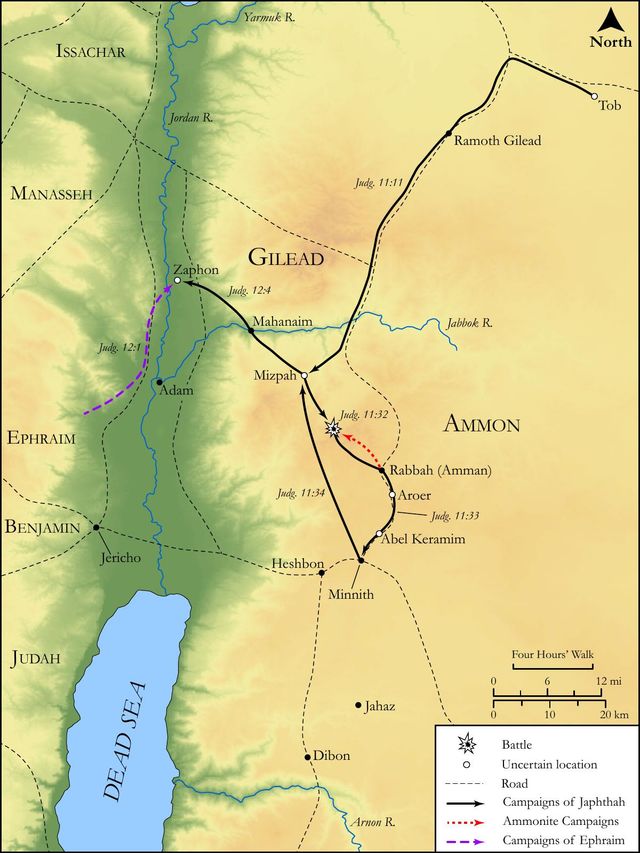
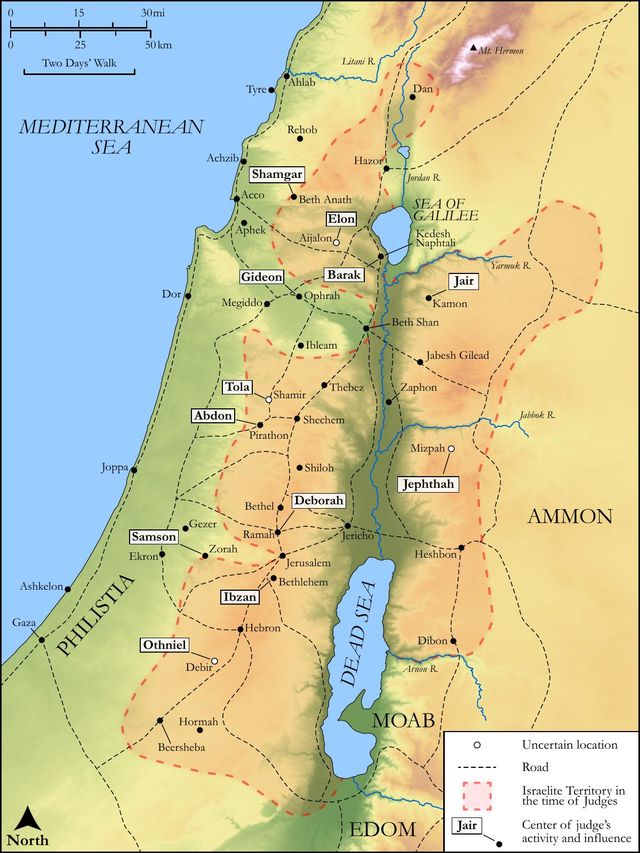
Study this verse
Public-domain commentary
Matthew Henry
From his Commentary on the Whole Bible. Henry comments on passages, not single verses — this entry covers Judges 10:6–9. His two-level outline is real structure in the source text, so it is rendered as structure.
While those two judges, Tola and Jair, presided in the affairs of Israel, things went well, but afterwards,
I.Israel returned to their idolatry, that sin which did most easily beset them (Jdg 10:6):
They did evil again in the sight of the Lord, from whom they were unaccountably bent to backslide, as a foolish people and unwise.
1.They worshipped many gods; not only their old demons Baalim and Ashtaroth, which the Canaanites had worshipped, but, as if they would proclaim their folly to all their neighbours, they served the gods of Syria, Zidon, Moab, Ammon, and the Philistines. It looks as if the chief trade of Israel had been to import deities from all countries. It is hard to say whether it was more impious or impolitic to do this. By introducing these foreign deities, they rendered themselves mean and despicable, for no nation that had any sense of honour changed their gods. Much of the wealth of Israel, we may suppose, was carried out, in offerings to the temples of the deities in the several countries whence they came, on which, as their mother-churches, their temples in Israel were expected to own their dependence; the priests and devotees of those sorry deities would follow their gods, no doubt, in crowds into the land of Israel, and, if they could not live in their own country, would take root there, and so strangers would devour their strength. If they did it in compliment to the neighbouring nations, and to ingratiate themselves with them, justly were they disappointed; for those nations which by their wicked arts they sought to make their friends by the righteous judgments of God became their enemies and oppressors. In quo quis peccat, in eo punitur - Wherein a person offends, therein he shall be punished.
2.They did not so much as admit the God of Israel to be one of those many deities they worshipped, but quite cast him off: They forsook the Lord, and served not him at all. Those that think to serve both God and Mammon will soon come entirely to forsake God, and to serve Mammon only. If God have not all the heart, he will soon have none of it.
II.God renewed his judgments upon them, bringing them under the power of oppressing enemies.
Had they fallen into the hands of the Lord immediately, they might have found that his mercies were great; but God let them fall into the hands of man, whose tender mercies are cruel. He sold them into the hands of the Philistines that lay south-west of Canaan, and of the Ammonites that lay north-east, both at the same time; so that between those two millstones they were miserably crushed, as the original word is (Jdg 10:8) for oppressed. God had appointed that, if any of the cities of Israel should revolt to idolatry, the rest should make war upon them and cut them off, Deu 13:12, etc. They had been jealous enough in this matter, almost to an extreme, in the case of the altar set up by the two tribes and a half (Jos. 22); but now they had grown so very bad that when one city was infected with idolatry the next took the infection and instead of punishing it, imitated and out-did it; and therefore, since those that should have been revengers to execute wrath on those that did this evil were themselves guilty, or bore the sword in vain, God brought the neighbouring nations upon them, to chastise them for their apostasy. The oppression of Israel by the Ammonites, the posterity of Lot, was,
1.Very long. It continued eighteen years. Some make those years to be part of the judgeship of Jair, who could not prevail to reform and deliver Israel as he would. Others make them to commence at the death of Jair, which seems the more probable because that part of Israel which was most infested by the Ammonites was Gilead, Jair's own country, which we cannot suppose to have suffered so much while he was living, but that part at least would be reformed and protected.
2.Very grievous. They vexed them and oppressed them. It was a great vexation to be oppressed by such a despicable people as the children of Ammon were. They began with those tribes that lay next them on the other side Jordan, here called the land of the Amorites (Jdg 10:8) because the Israelites had so wretchedly degenerated, and had made themselves so like the heathen, that they had become, in a manner, perfect Amorites (Eze 16:3), or because by their sin they forfeited their title to this land, so that it might justly be looked upon as the land of the Amorites again, from whom they took it. But by degrees they pushed forward, came over Jordan, and invaded Judah, and Benjamin, and Ephraim (Jdg 10:9), three of the most famous tribes of Israel, yet thus insulted when they had forsaken God, and unable to make head against the invader. Now the threatening was fulfilled that they should be slain before their enemies, and should have no power to stand before them, Lev 26:17, Lev 26:37. Their ways and their doings procure this to themselves; they have sadly degenerated, and so they come to be sorely distressed.
Continue studying Judges 10:6 across the web’s major study libraries — every link below opens this exact verse, chapter, or book on the destination site.
Read & Compare
 BibleGatewayThis verse in more than 200 translations and 70 languages.
 Bible.comThe YouVersion reader — hundreds of translations, reading plans, and highlights.
 ESV.orgCrossway's official English Standard Version reader.
 NET BibleThe NET translation with 60,000+ translators' notes on every rendering decision.
 STEP BibleTyndale House's free study tool — original text, vocabulary, and scholarly resources.
 BibliaLogos Bible Software's free web reader.
 USCCBThe New American Bible (Revised Edition) with the U.S. bishops' study notes.
Commentaries
 BibleHub CommentariesDozens of classic commentaries on this verse, gathered on one page.
 StudyLightMore than 100 commentary sets — the largest collection on the web.
 BibleRefPlain-English commentary on what this verse means, verse by verse.
 Enduring WordDavid Guzik's free commentary on this chapter, widely used by Bible teachers.
 Bible Study ToolsVerse commentary alongside Greek and Hebrew study aids.
Original Language & Research
- BibleHub InterlinearThe verse word by word — original language, transliteration, and English.
- BibleHub LexiconEvery word's original-language definition and Strong's entry.
 Blue Letter BibleDeep-study tools — Strong's numbers, concordance, and word studies.
 SefariaThe Hebrew text with Rashi and centuries of Jewish commentary.
Sermons, Hymns & Audio


TrulyRandomVerse is not affiliated with these sites and doesn’t control their content. They’re linked because they’re genuinely useful.
Summary
Judges 10:6 vividly portrays a tragic spiritual decline in Israel during the period of the Judges, marking yet another profound instance of widespread apostasy. This verse encapsulates the children of Israel's deliberate and comprehensive turning away from the LORD, their covenant God, to embrace and serve a multitude of pagan deities from the surrounding nations, thereby illustrating their deep spiritual compromise and pervasive syncretism.
Context
ShowHideLiterary Context
Judges 10:6 is strategically positioned within the cyclical narrative structure that defines the Book of Judges, often summarized as the "cycle of sin, servitude, supplication, and salvation." Following the relatively brief and peaceful periods under the minor judges Tola and Jair (Judges 10:1-5), this verse signals the inevitable downturn, indicating that Israel, despite previous divine deliverances, had once again succumbed to spiritual rebellion. It serves as the immediate prelude to the subsequent oppression by the Ammonites and Philistines (Judges 10:7), setting the stage for Israel's desperate cry for help and initiating the narrative that leads to Jephthah's judgeship. This repeated pattern of apostasy and judgment underscores the deep-seated spiritual instability and covenant unfaithfulness that plagued the nation throughout this era, consistently demonstrating their inability to remain loyal to the God who had redeemed them from Egyptian bondage.
Historical & Cultural Context
The period of the Judges (roughly 1400-1050 BC) was characterized by a lack of centralized leadership, resulting in widespread moral and religious decay, famously summarized by the phrase, "everyone did what was right in his own eyes" (Judges 17:6). Upon entering Canaan, Israel was explicitly commanded to utterly destroy the idolatrous inhabitants and their altars (e.g., Deuteronomy 7:2-5). However, they failed to do so, leading to constant exposure and temptation from the surrounding Canaanite, Syrian, Sidonian, Moabite, Ammonite, and Philistine cultures. These cultures worshipped various pantheons, often centered around fertility gods like Baal and Asherah (Ashtaroth), who were believed to control rain, crops, and livestock. Their worship frequently involved ritual prostitution, child sacrifice, and other abhorrent practices. Israel's adoption of these gods was not merely a passive neglect of Yahweh but an active embrace of foreign religious systems, reflecting a profound cultural and spiritual assimilation into the very practices they were meant to eradicate.
Key Themes
ShowHideJudges 10:6 powerfully articulates several pervasive themes within the book and broader Old Testament narrative. Firstly, it highlights the theme of Repeated Apostasy and Idolatry, emphasizing Israel's chronic spiritual unfaithfulness. The phrase "did evil again" is a recurring motif (e.g., Judges 2:11) that underscores their persistent turning away from the covenant God. Secondly, it showcases Widespread Polytheism and Syncretism, as Israel did not merely neglect the LORD but actively incorporated a vast array of foreign deities into their worship, demonstrating a complete disregard for the first commandment. This syncretism was a direct violation of their covenant with Yahweh, who demanded exclusive devotion (e.g., Deuteronomy 6:4-5). Thirdly, the verse underscores the theme of Forsaking the LORD, which is the root cause of their subsequent oppression. Their abandonment of Yahweh, who had delivered them from slavery and established them in the land, led directly to divine judgment and the loss of His protective hand, plunging them into cycles of distress and servitude.
Exposition and Analysis
ShowHideKey Word Analysis
ShowHideThis term (H7451) signifies not merely misfortune or calamity, but profound moral wickedness, depravity, and actions that are inherently displeasing to God. In the context of Judges, it specifically refers to Israel's idolatry and disobedience to the covenant, which is consistently portrayed as the primary "evil" committed "in the sight of the LORD." It is a theological term indicating a severe breach of the divine-human relationship and a violation of God's holy character.
This verb (H5647) means "to work," "to serve," or "to worship." Its use here is highly significant, indicating active, intentional devotion and allegiance to the pagan deities. It stands in stark contrast to the service owed exclusively to the LORD (e.g., Deuteronomy 6:13). The repetition of "served" throughout the verse emphasizes the breadth and depth of Israel's idolatrous commitment, highlighting their active engagement in foreign worship practices.
This powerful verb (H5800) means "to abandon," "to leave," or "to relinquish." It implies a deliberate and conscious act of desertion, not merely passive neglect. Israel actively chose to abandon their covenant relationship with Yahweh, the God who had chosen and redeemed them, in favor of foreign gods. This act of forsaking was the ultimate betrayal of their unique relationship with the LORD, severing the bond of loyalty and trust.
Verse Breakdown
ShowHide"And the children of Israel did evil again in the sight of the LORD"
This opening clause immediately establishes the recurring pattern of apostasy that characterizes the book of Judges. The phrase "did evil again" (וַיֹּסִפוּ לַעֲשׂוֹת הָרָע, vayyosifu la'asot hara') highlights the cyclical nature of their disobedience, indicating that this was not an isolated incident but a persistent spiritual problem. Their actions were not hidden but were committed "in the sight of the LORD," emphasizing God's full awareness and the direct affront to His holiness and covenant.
"and served Baalim, and Ashtaroth, and the gods of Syria, and the gods of Zidon, and the gods of Moab, and the gods of the children of Ammon, and the gods of the Philistines"
This extensive enumeration provides a chilling inventory of Israel's widespread idolatry. "Baalim" (plural of Baal) refers to various local Canaanite storm and fertility deities, while "Ashtaroth" (plural of Ashtoreth) denotes the primary Canaanite goddess of fertility and war. The inclusion of gods from Syria (Aram), Zidon (Sidon), Moab (Chemosh), Ammon (Molech/Milcom), and the Philistines (Dagon, Baal-zebub) underscores the comprehensive nature of their syncretism. Israel had adopted the entire pantheon of their surrounding enemies, demonstrating a complete spiritual compromise and a wholesale rejection of exclusive allegiance to Yahweh.
"and forsook the LORD, and served not him."
This concluding clause powerfully summarizes the core issue: Israel's deliberate abandonment of Yahweh. The "forsaking" (וַיַּעַזְבוּ, vayya'azvu) signifies a conscious rejection of their covenant God, the one who had delivered them from slavery and established them in the land. The final phrase, "and served not him," acts as a stark counterpoint to the preceding list of gods they did serve, emphasizing their exclusive devotion to idols at the expense of the one true God. This double emphasis on forsaking and not serving Yahweh highlights the depth of their spiritual rebellion and the profound betrayal of their unique relationship with Him.
Literary Devices
ShowHideJudges 10:6 effectively employs several literary devices to convey its powerful message of Israel's pervasive apostasy. Enumeration is prominently used through the extensive listing of the various pagan deities Israel served. This detailed catalog ("Baalim, and Ashtaroth, and the gods of Syria, and the gods of Zidon, and the gods of Moab, and the gods of the children of Ammon, and the gods of the Philistines") emphasizes the breadth and depth of Israel's apostasy, illustrating that their idolatry was not limited to one or two foreign cults but was a widespread, comprehensive spiritual compromise. The repetition of the phrase "and the gods of..." creates a sense of overwhelming spiritual pollution. Anaphora is also evident in the repeated use of "and" at the beginning of clauses, contributing to the cumulative effect of Israel's transgressions and building a sense of their escalating unfaithfulness. Furthermore, the verse uses Contrast by juxtaposing Israel's serving of numerous foreign gods with their complete abandonment of the LORD ("and forsook the LORD, and served not him"), thereby highlighting the profound betrayal of their covenant relationship and the tragic irony of their choices.
Theological and Thematic Connections
ShowHideJudges 10:6 serves as a stark theological indictment of spiritual infidelity, underscoring the severe consequences of divided loyalties. It vividly illustrates the human propensity for idolatry, even after experiencing profound divine deliverance and covenant blessings. Theologically, this verse reinforces the critical importance of exclusive monotheism, a foundational tenet of Israel's faith as revealed in the First Commandment. Israel's repeated turning to "other gods" was not merely a cultural adaptation but a direct affront to Yahweh's sovereignty and a betrayal of the covenant established at Sinai. Their spiritual adultery led directly to divine judgment, demonstrating that God's justice is inextricably linked to His holiness and His demand for unreserved devotion. This pattern of sin and judgment foreshadows the later prophetic warnings against idolatry and the ultimate exile, serving as a perpetual reminder that true freedom and blessing are found only in wholehearted allegiance to the one true God.
Reflection and Application
ShowHideJudges 10:6 offers a sobering mirror for contemporary believers, challenging us to examine the "gods" we might be serving in our own lives, often subtly and unconsciously. While we may not erect physical idols of Baal or Ashtoreth, modern idolatry can manifest in anything that displaces God from the supreme position in our hearts and lives. This could include an insatiable pursuit of wealth, status, pleasure, comfort, or even an over-reliance on our own abilities or intellect. The Israelites' sin was not just adding other gods, but actively "forsaking the LORD" and "serving not him." This reminds us that true faith is not merely intellectual assent but active, exclusive devotion. We are called to a wholehearted commitment, recognizing that anything we prioritize above God becomes an idol, leading to spiritual emptiness and a loss of true freedom. This verse compels us to regularly assess our allegiances, to repent of any divided loyalties, and to intentionally choose to serve the one true God with unwavering devotion, for He alone is worthy of our worship and trust.
Questions for Reflection
ShowHideFAQ
ShowHideWhy did the Israelites keep turning to idolatry despite God's repeated deliverances?
ShowHideThe repeated apostasy of the Israelites, as seen in Judges 10:6, stemmed from several factors. Primarily, it was due to their failure to fully obey God's command to drive out the Canaanite inhabitants and destroy their idolatrous practices (e.g., Numbers 33:55). This left them constantly exposed to pagan influences and temptations. Furthermore, the Canaanite religions, with their emphasis on fertility rites and immediate gratification, often seemed more appealing or practical for agricultural success than the abstract covenant relationship with Yahweh, especially during times of drought or hardship. There was also a spiritual amnesia, a forgetting of God's mighty acts (e.g., Judges 2:10), and a lack of strong, centralized spiritual leadership to guide them. This combination of external temptation, internal spiritual weakness, and a failure to remember God's faithfulness led to a persistent cycle of disobedience and idolatry.
Christ-Centered Fulfillment
ShowHideJudges 10:6, with its grim depiction of Israel's pervasive idolatry and forsaking of the LORD, powerfully underscores humanity's inherent spiritual brokenness and desperate need for a perfect deliverer. The repeated cycles of sin, judgment, and temporary deliverance in Judges reveal the inadequacy of human judges and the Old Covenant system to permanently resolve the problem of sin. These cycles point forward to the ultimate and final solution found in Jesus Christ. Unlike the Israelites who repeatedly "forsook the LORD," Jesus perfectly fulfilled the Law, demonstrating unwavering obedience and exclusive devotion to the Father (e.g., John 8:29). He is the true and faithful Israel, the one who never turned to "other gods" but remained steadfastly committed to God's will, even to the point of death on the cross (e.g., Philippians 2:8). Through His atoning sacrifice, Christ not only delivers us from the oppression and bondage of sin but also empowers us by His Spirit to turn from all forms of idolatry—whether overt or subtle—and to serve the living and true God (e.g., 1 Thessalonians 1:9-10). He is the Lamb of God who takes away the sin of the world, offering a new covenant where true worship is not bound by physical temples or foreign gods, but is in spirit and truth, centered on Him (e.g., John 4:23-24).