


Judges 10:7
- וַיִּחַרvai·yi·charand it burnedH2734Conj-w ¦ V-Qal-ConsecImperf-3msVerb Qal Consecutive Imperfect 3rd Singular Masculineוַandיִּחַרit burned
- אַף'af[the] anger ofH639N-mscNoun Singular Masculine Construct
- יְהוָהYah·wehYahwehH3068N-properNoun Proper Title
- בְּיִשְׂרָאֵלbe·Yis·ra·'Elon IsraelH3478Prep-b ¦ N-properNoun Proper LocationבְּonיִשְׂרָאֵלIsrael
- וַיִּמְכְּרֵםvai·yim·ke·Remand he sold themH4376Conj-w ¦ V-Qal-ConsecImperf-3ms ¦ 3mpVerb Qal Consecutive Imperfect 3rd Singular Masculineוַandיִּמְכְּרֵhe soldםthem
- בְּיַדbe·yadin [the] hand ofH3027Prep-b ¦ N-cscNoun Singular common gender Constructבְּinיַד[the] hand of
- פְּלִשְׁתִּיםpe·lish·Tim[the] PhilistinesH6430N-mpNoun Gentilic Plural Masculine Absolute
- וּבְיַדu·ve·Yadand in [the] hand ofH3027Conj-w ¦ Prep-b ¦ N-cscNoun Singular common gender Constructוּandבְinיַד[the] hand of
- בְּנֵיbe·Nei[the] people ofH1121N-mpcNoun Plural Masculine Construct
- עַמּוֹןa·MonAmmonH5983N-proper-mNoun Proper Masculine
English is a literal word-by-word gloss of the Hebrew, not the KJV's wording. Why?
This is the original text the KJV's translators worked from — each Hebrew word with its own literal English meaning in this verse, prepared by scholars at Tyndale House, Cambridge. The KJV translates whole sentences, not word by word, so its wording differs: one Hebrew word can become several English words, and the KJV may choose “the LORD” where the gloss reads “Yahweh”. Both are faithful — they answer different questions. For the KJV's own rendering, switch to the KJV text.
Details
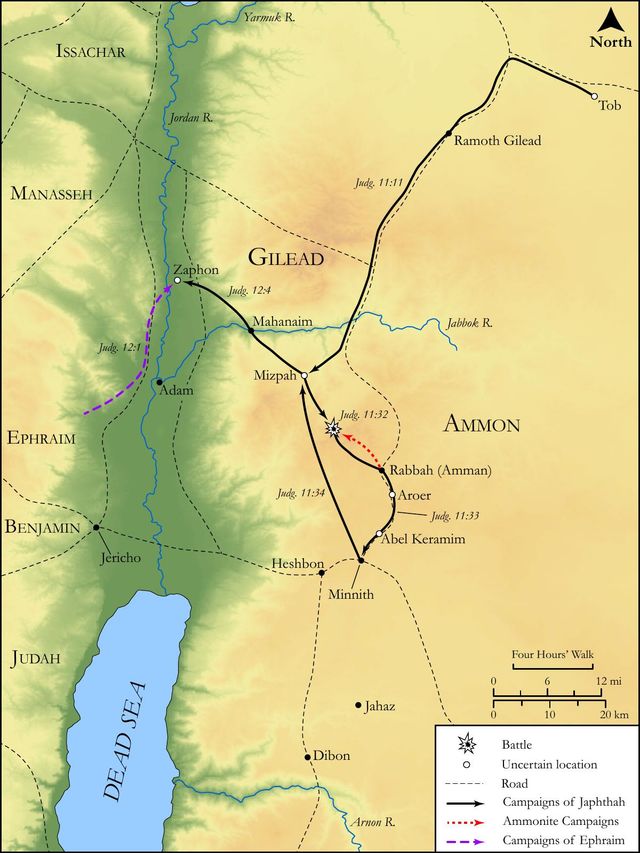
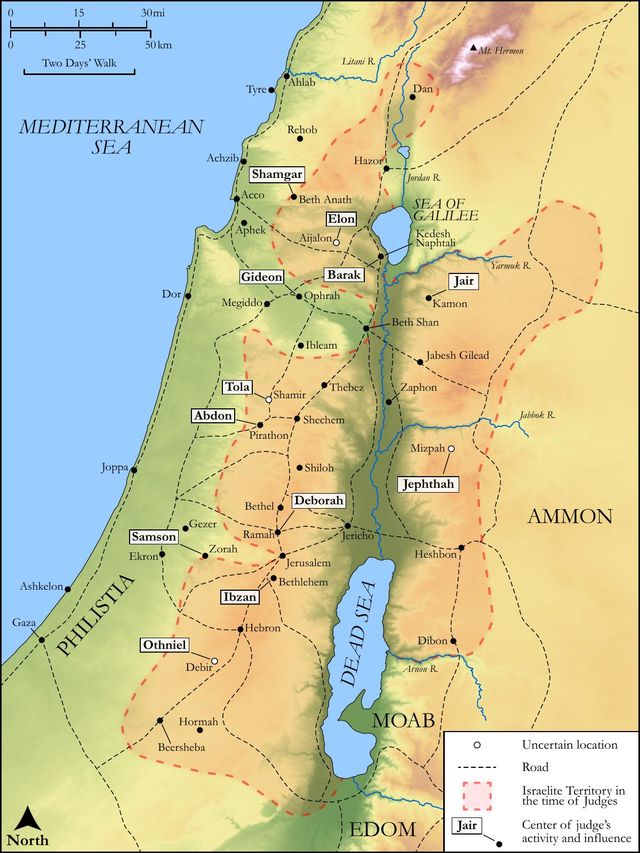
See on the biblical-era map
Study this verse
Public-domain commentary
Matthew Henry
From his Commentary on the Whole Bible. Henry comments on passages, not single verses — this entry covers Judges 10:6–9. His two-level outline is real structure in the source text, so it is rendered as structure.
While those two judges, Tola and Jair, presided in the affairs of Israel, things went well, but afterwards,
I.Israel returned to their idolatry, that sin which did most easily beset them (Jdg 10:6):
They did evil again in the sight of the Lord, from whom they were unaccountably bent to backslide, as a foolish people and unwise.
1.They worshipped many gods; not only their old demons Baalim and Ashtaroth, which the Canaanites had worshipped, but, as if they would proclaim their folly to all their neighbours, they served the gods of Syria, Zidon, Moab, Ammon, and the Philistines. It looks as if the chief trade of Israel had been to import deities from all countries. It is hard to say whether it was more impious or impolitic to do this. By introducing these foreign deities, they rendered themselves mean and despicable, for no nation that had any sense of honour changed their gods. Much of the wealth of Israel, we may suppose, was carried out, in offerings to the temples of the deities in the several countries whence they came, on which, as their mother-churches, their temples in Israel were expected to own their dependence; the priests and devotees of those sorry deities would follow their gods, no doubt, in crowds into the land of Israel, and, if they could not live in their own country, would take root there, and so strangers would devour their strength. If they did it in compliment to the neighbouring nations, and to ingratiate themselves with them, justly were they disappointed; for those nations which by their wicked arts they sought to make their friends by the righteous judgments of God became their enemies and oppressors. In quo quis peccat, in eo punitur - Wherein a person offends, therein he shall be punished.
2.They did not so much as admit the God of Israel to be one of those many deities they worshipped, but quite cast him off: They forsook the Lord, and served not him at all. Those that think to serve both God and Mammon will soon come entirely to forsake God, and to serve Mammon only. If God have not all the heart, he will soon have none of it.
II.God renewed his judgments upon them, bringing them under the power of oppressing enemies.
Had they fallen into the hands of the Lord immediately, they might have found that his mercies were great; but God let them fall into the hands of man, whose tender mercies are cruel. He sold them into the hands of the Philistines that lay south-west of Canaan, and of the Ammonites that lay north-east, both at the same time; so that between those two millstones they were miserably crushed, as the original word is (Jdg 10:8) for oppressed. God had appointed that, if any of the cities of Israel should revolt to idolatry, the rest should make war upon them and cut them off, Deu 13:12, etc. They had been jealous enough in this matter, almost to an extreme, in the case of the altar set up by the two tribes and a half (Jos. 22); but now they had grown so very bad that when one city was infected with idolatry the next took the infection and instead of punishing it, imitated and out-did it; and therefore, since those that should have been revengers to execute wrath on those that did this evil were themselves guilty, or bore the sword in vain, God brought the neighbouring nations upon them, to chastise them for their apostasy. The oppression of Israel by the Ammonites, the posterity of Lot, was,
1.Very long. It continued eighteen years. Some make those years to be part of the judgeship of Jair, who could not prevail to reform and deliver Israel as he would. Others make them to commence at the death of Jair, which seems the more probable because that part of Israel which was most infested by the Ammonites was Gilead, Jair's own country, which we cannot suppose to have suffered so much while he was living, but that part at least would be reformed and protected.
2.Very grievous. They vexed them and oppressed them. It was a great vexation to be oppressed by such a despicable people as the children of Ammon were. They began with those tribes that lay next them on the other side Jordan, here called the land of the Amorites (Jdg 10:8) because the Israelites had so wretchedly degenerated, and had made themselves so like the heathen, that they had become, in a manner, perfect Amorites (Eze 16:3), or because by their sin they forfeited their title to this land, so that it might justly be looked upon as the land of the Amorites again, from whom they took it. But by degrees they pushed forward, came over Jordan, and invaded Judah, and Benjamin, and Ephraim (Jdg 10:9), three of the most famous tribes of Israel, yet thus insulted when they had forsaken God, and unable to make head against the invader. Now the threatening was fulfilled that they should be slain before their enemies, and should have no power to stand before them, Lev 26:17, Lev 26:37. Their ways and their doings procure this to themselves; they have sadly degenerated, and so they come to be sorely distressed.
Continue studying Judges 10:7 across the web’s major study libraries — every link below opens this exact verse, chapter, or book on the destination site.
Read & Compare
 BibleGatewayThis verse in more than 200 translations and 70 languages.
 Bible.comThe YouVersion reader — hundreds of translations, reading plans, and highlights.
 ESV.orgCrossway's official English Standard Version reader.
 NET BibleThe NET translation with 60,000+ translators' notes on every rendering decision.
 STEP BibleTyndale House's free study tool — original text, vocabulary, and scholarly resources.
 BibliaLogos Bible Software's free web reader.
 USCCBThe New American Bible (Revised Edition) with the U.S. bishops' study notes.
Commentaries
 BibleHub CommentariesDozens of classic commentaries on this verse, gathered on one page.
 StudyLightMore than 100 commentary sets — the largest collection on the web.
 BibleRefPlain-English commentary on what this verse means, verse by verse.
 Enduring WordDavid Guzik's free commentary on this chapter, widely used by Bible teachers.
 Bible Study ToolsVerse commentary alongside Greek and Hebrew study aids.
Original Language & Research
- BibleHub InterlinearThe verse word by word — original language, transliteration, and English.
- BibleHub LexiconEvery word's original-language definition and Strong's entry.
 Blue Letter BibleDeep-study tools — Strong's numbers, concordance, and word studies.
 SefariaThe Hebrew text with Rashi and centuries of Jewish commentary.
Sermons, Hymns & Audio


TrulyRandomVerse is not affiliated with these sites and doesn’t control their content. They’re linked because they’re genuinely useful.
Summary
Judges 10:7 encapsulates a critical juncture in Israel's cyclical pattern of disobedience and divine judgment, a hallmark of the Book of Judges. This verse powerfully conveys the severe consequences of Israel's persistent idolatry and covenant unfaithfulness, depicting God's righteous indignation as He actively delivers His disobedient people into the oppressive control of two formidable adversaries: the Philistines and the Ammonites, thereby initiating a new and intense period of suffering and servitude.
Context
ShowHideLiterary Context
Judges 10:7 immediately follows a detailed description of Israel's pervasive spiritual apostasy in Judges 10:6. After periods of relative peace under the minor judges Tola and Jair, the Israelites once again "did evil in the sight of the LORD," abandoning their covenant God to serve a multitude of foreign deities. The comprehensive list of gods mentioned – Baalim, Ashtaroth, and the gods of Syria, Sidon, Moab, Ammon, and the Philistines – underscores the depth and breadth of their spiritual infidelity, a direct violation of the covenant established at Sinai. Verse 7, therefore, presents the inevitable divine response to this unfaithfulness, serving as the "oppression" phase in the well-documented cycle of sin-servitude-supplication-salvation that permeates the book, first outlined in Judges 2:11-15. It directly sets the stage for the eighteen-year oppression by the Philistines and Ammonites, detailed in Judges 10:8, which eventually leads to Israel's cry for deliverance.
Historical & Cultural Context
During the period of the Judges, Israel existed as a loosely confederated group of tribes, often acting independently and lacking a unified central government, which rendered them vulnerable to external threats. The Philistines, a powerful group of "Sea Peoples," had established themselves along the southwestern coast of Canaan in a pentapolis of five major cities (Gaza, Ashkelon, Ashdod, Ekron, and Gath). They possessed superior military technology, particularly iron weaponry, which gave them a significant advantage. Their expansionist ambitions frequently brought them into conflict with Israel, especially the tribes of Dan, Judah, and Simeon. Concurrently, the Ammonites, descendants of Lot, resided to Israel's east, across the Jordan River in Transjordan. They were a consistent threat to the tribes of Reuben, Gad, and Manasseh, often engaging in border disputes and raids. Israel's decision to worship the gods of these surrounding nations, particularly fertility deities like Baal and Ashtoreth, was not merely a theological error but a profound act of disloyalty to Yahweh, the God who had delivered them from Egypt and given them the land. This widespread syncretism often involved practices antithetical to the Mosaic Law, further provoking divine wrath. The dual oppression by both western and eastern enemies highlights the pervasive nature of Israel's sin and the comprehensive scope of God's disciplinary judgment.
Key Themes
ShowHideThis verse powerfully illustrates several central themes within the Book of Judges and broader biblical theology. Firstly, Divine Discipline is paramount; God's "hot anger" is not capricious but a righteous and just response to Israel's blatant covenant breaking and spiritual adultery. It underscores that God, as a holy and just sovereign, cannot tolerate persistent rebellion from His chosen people. Secondly, the Consequences of Sin are starkly evident; Israel's deliberate turning away from God inevitably leads to suffering and subjugation, demonstrating the principle that actions have repercussions, especially for a covenant people. This is a consistent theme throughout the Old Testament, as seen in the warnings of Deuteronomy 28. Thirdly, God's Sovereignty in Judgment is emphasized by the phrase "he sold them"; this anthropomorphic language underscores God's active, intentional role in orchestrating the consequences of their disobedience, rather than merely permitting them. He is not a passive observer but the sovereign Lord who uses foreign nations as instruments of His discipline, as He did with the Assyrians and Babylonians in later history (Isaiah 10:5-6). Finally, the verse is a clear manifestation of the Cyclical Pattern of Judges, marking the transition from apostasy to oppression, setting the stage for Israel's eventual cry for help and God's raising of a deliverer. This cycle reinforces the theological truth that true peace and prosperity for Israel were contingent upon their faithfulness to Yahweh.
Exposition and Analysis
ShowHideKey Word Analysis
ShowHideThis idiom, literally meaning "the nose burned" or "the face burned," conveys intense, burning displeasure and indignation. When applied to the LORD (H3068, Yᵉhôvâh), it signifies His righteous wrath (H639, 'aph), a holy and just response to sin and rebellion, particularly against His covenant people (H3478, Yisrâʼêl) who had repeatedly violated their sacred vows. It is not an uncontrolled human emotion but a settled, severe displeasure that necessitates judgment, reflecting God's perfect justice and holiness (H2734, chârâh).
The verb "sold" (H4376, mâkar) is a vivid and powerful metaphor. It implies a deliberate transaction or handing over, as if God, the ultimate owner of Israel, intentionally delivered them into servitude. This is not a passive allowance but an active, sovereign act of divine justice and discipline. It underscores that Israel's subjugation was not random misfortune but a direct, orchestrated consequence of their covenant violations, emphasizing God's complete control over historical events and His use of other nations as instruments of His will.
The term "hands" (H3027, yâd), repeated in this verse, is a significant metonymy. In biblical language, "hands" often represent power, authority, control, and capability. To be "sold into the hands of" an enemy signifies complete subjugation and loss of autonomy, being placed entirely under the authority and power of the oppressor. Its repetition emphasizes the comprehensive nature of Israel's defeat and the dual sources of their suffering, highlighting the total surrender of their freedom and security.
Verse Breakdown
ShowHide"And the anger of the LORD was hot against Israel"
This clause establishes the divine impetus behind the ensuing oppression. It signifies God's righteous indignation and settled displeasure with His covenant people due to their pervasive idolatry and unfaithfulness, as described in the preceding verse. This "hot anger" is a just and holy response to their spiritual adultery and abandonment of Him, indicating that their suffering is a direct result of their own choices and a manifestation of God's holy character, which cannot tolerate sin.
"and he sold them into the hands of the Philistines"
This phrase describes the first of two primary instruments of God's discipline. The Philistines, a powerful and technologically superior people residing on Israel's western border, are depicted as divinely appointed agents of oppression. The metaphor of "selling" emphasizes God's active role in delivering Israel into servitude, highlighting His sovereignty over nations and His use of them to bring about His disciplinary purposes for His people. This signifies a period of subjugation and hardship under Philistine dominance, particularly affecting the western tribes.
"and into the hands of the children of Ammon"
This second part of the clause identifies the other major oppressor, the Ammonites, located on Israel's eastern border. The repetition of "into the hands of" underscores the dual nature of the threat and the comprehensive scope of Israel's subjugation. It indicates that Israel was simultaneously pressed from both west and east, signifying a widespread and severe period of oppression that would affect various tribes and regions, further emphasizing the depth of God's judgment and the pervasive nature of their national sin.
Literary Devices
ShowHideJudges 10:7 employs several significant literary devices to convey its powerful message. Anthropomorphism is evident in the phrase "the anger of the LORD was hot," attributing human-like emotion and physical sensation (a burning nose or face) to God. This device makes God's righteous indignation relatable and emphasizes the intensity of His displeasure, underscoring that His response to sin is a deeply felt and just reaction. Similarly, the statement "he sold them" is a potent Metaphor, portraying God as engaging in a deliberate transaction, handing Israel over to their enemies as if they were property exchanged for a price. This metaphor powerfully conveys God's active and sovereign role in orchestrating the consequences of Israel's sin, rather than merely allowing events to unfold passively. The Repetition of the phrase "into the hands of" when referring to both the Philistines and the Ammonites serves to emphasize the dual nature and comprehensive scope of the oppression, highlighting that Israel was besieged from multiple directions, underscoring the severity and pervasiveness of the divine judgment. Furthermore, the verse functions as a critical moment in the Cyclical Narrative structure of Judges, clearly marking the transition from Israel's sin to divine judgment and subsequent oppression, thereby advancing the overarching theological message of the book.
Theological and Thematic Connections
ShowHideJudges 10:7 profoundly illustrates God's unyielding commitment to His covenant, even when His people are unfaithful. His "hot anger" is not capricious but a manifestation of His holy character and righteous justice, demonstrating that He cannot tolerate sustained rebellion and idolatry from those He has chosen. This divine discipline, symbolized by "selling" Israel into the hands of their enemies, underscores God's sovereignty over all nations and His willingness to use them as instruments of His corrective purposes. It reveals a God who is actively involved in the affairs of humanity, holding His people accountable for their choices and using hardship to draw them back to Himself, ultimately for their good and His glory. This pattern of sin leading to suffering, and suffering intended to prompt repentance, is a recurring theological truth throughout Scripture, emphasizing God's desire for His people's restoration and faithfulness.
Reflection and Application
ShowHideJudges 10:7 serves as a timeless and sobering reminder of the serious consequences of spiritual infidelity and the profound importance of undivided loyalty to God. For believers today, this verse powerfully illustrates that while God is merciful and gracious, He is also just and holy, and He takes our covenant relationship with Him seriously. Our modern idols may not be carved images of Baal or Ashtoreth, but they can manifest as materialism, self-reliance, the pursuit of worldly approval, comfort, or anything that subtly displaces God from the supreme position in our hearts. When we allow these things to take root, we invite spiritual barrenness, relational brokenness, and a sense of alienation from God's presence. God's discipline, though painful, is ultimately an act of love, designed to draw us back to Him, to refine our faith, and to restore us to a place of deeper dependence and obedience. This verse calls us to honest self-examination, prompting us to identify any areas where our allegiance is divided and to repent, turning back to the Lord with wholehearted devotion, trusting in His restorative power and embracing the refining work He seeks to accomplish in our lives.
Questions for Reflection
ShowHideFAQ
ShowHideWhy was God's anger "hot" against Israel, and what does that imply about His character?
ShowHideGod's anger was "hot" because Israel had repeatedly and flagrantly broken their covenant with Him, turning to worship numerous pagan deities (as seen in Judges 10:6). This was not a sudden, arbitrary outburst but a righteous and just indignation against their spiritual adultery and rebellion. It implies that God is holy and righteous, that He takes sin seriously, and that His love for His covenant people does not preclude His discipline when they stray. His anger is always proportionate to the offense and is ultimately aimed at restoring His people to faithfulness, as seen throughout the cycle of Judges and in passages like Hebrews 12:5-11.
What does it mean that God "sold them" into the hands of their enemies? Did He abandon them?
ShowHideThe phrase "he sold them" is a powerful metaphor signifying God's active and sovereign role in orchestrating the consequences of Israel's sin. It does not imply abandonment, but rather a deliberate act of divine judgment and discipline. Just as a master might "sell" a disobedient servant into temporary servitude, God delivered Israel into the hands of their oppressors as a means of correction and to prompt their repentance. This highlights God's ultimate control over history and His use of other nations as instruments of His will, even in judgment. It underscores that their suffering was not accidental but a direct, divinely ordained consequence of their unfaithfulness to the covenant, as detailed in the warnings of Deuteronomy 28.
Why were both the Philistines and the Ammonites involved in the oppression?
ShowHideThe involvement of both the Philistines (to the west) and the Ammonites (to the east) signifies the pervasive and comprehensive nature of Israel's apostasy and the resulting divine judgment. Israel's idolatry was widespread, embracing gods from various surrounding nations, and thus the discipline came from multiple directions. This dual oppression meant that various tribes of Israel, both in the western plains and the Transjordan region, experienced severe hardship, emphasizing the depth of their national sin and the severity of God's response. It also highlights the strategic vulnerability of a disunited Israel, surrounded by hostile neighbors whom God could use as instruments of His discipline, demonstrating His sovereign reach over all nations.
Christ-Centered Fulfillment
ShowHideJudges 10:7, with its stark depiction of Israel's sin leading to divine judgment and oppressive servitude, finds its ultimate resolution and profound fulfillment in Jesus Christ. The recurring cycle of sin, judgment, and the raising of temporary deliverers in Judges underscores humanity's deep-seated inability to maintain covenant faithfulness and the desperate need for a perfect, lasting deliverer. While the judges could only provide temporary relief from external enemies, Jesus Christ provides eternal deliverance from the root cause of all oppression: sin itself. He is the true Lamb of God who takes away the sin of the world, bearing the "hot anger" of God against sin on the cross, thereby "buying" or redeeming us not with perishable things like silver or gold, but with His precious blood (1 Peter 1:18-19). Through His sacrifice, those who believe in Him are no longer "sold" into the hands of sin and death, but are set free from its dominion and become slaves of righteousness (Romans 6:22). He is the ultimate Judge who has taken the judgment upon Himself, and the ultimate Deliverer who breaks the cycle of sin and oppression, ushering in a new covenant where God's law is written on our hearts, empowering us to live in true faithfulness and enjoy lasting peace (Hebrews 8:10-12). In Christ, God's righteous anger against sin is satisfied, and His boundless love and mercy are fully extended, offering not just temporary reprieve, but eternal reconciliation and adoption into His family (Romans 5:8-10).