


Judges 10:8
Bible text: King James Version (1769 Blayney text) · Public domain
Bible text: King James Version with Strong's numbers · Public domain
Bible text: Berean Standard Bible · Public domain
Bible text: American Standard Version (1901) · Public domain
Bible text: World English Bible, Messianic edition · Public domain
Bible text: Geneva Bible (1599) · Public domain
Bible text: Young's Literal Translation · Public domain
- וַיִּרְעֲצוּvai·yir·'a·Tzuand they shatteredH7492Conj-w ¦ V-Qal-ConsecImperf-3mpVerb Qal Consecutive Imperfect 3rd Plural Masculineוַandיִּרְעֲצוּthey shattered
- וַיְרֹצְצוּvay·ro·tze·Tzuand they crushedH7533Conj-w ¦ V-Piel-ConsecImperf-3mpVerb Piel Consecutive Imperfect 3rd Plural Masculineוַandיְרֹצְצוּthey crushed
- אֶת'et<obj.>H853DirObjMParticle Object Indicator
- בְּנֵיbe·Nei[the] people ofH1121N-mpcNoun Plural Masculine Construct
- יִשְׂרָאֵלYis·ra·'ElIsraelH3478N-properNoun Proper Location
- בַּשָּׁנָהba·sha·Nahin the yearH8141Prep-b ¦ N-fsNoun Singular Feminine Absoluteבַּin theשָּׁנָהyear
- הַהִיאha·Hi'<the> thatH1931Art ¦ Pro-3fsPronoun Personal 3rd Singular Feminineהַ<the>הִיאthat
- שְׁמֹנֶהshe·mo·Neheight-H8083N-csNoun Singular common gender Absolute
- עֶשְׂרֵה'es·RehteenH6240N-csNoun Singular common gender Absolute
- שָׁנָהsha·Nahyear[s]H8141N-fsNoun Singular Feminine Absolute
- אֶת'et<obj.>H853DirObjMParticle Object Indicator
- כָּלkolallH3605N-mscNoun Singular Masculine Construct
- בְּנֵיbe·Nei[the] people ofH1121N-mpcNoun Plural Masculine Construct
- יִשְׂרָאֵלYis·ra·'ElIsraelH3478N-properNoun Proper Location
- אֲשֶׁר'a·SherwhoH834RelParticle Relative
- בְּעֵבֶרbe·'E·ver[were] on [the] other side ofH5676Prep-b ¦ N-mscNoun Singular Masculine Constructבְּ[were] onעֵבֶר[the] other side of
- הַיַּרְדֵּןhai·yar·Denthe JordanH3383Art ¦ N-properNoun Proper LocationהַtheיַּרְדֵּןJordan
- בְּאֶרֶץbe·'E·retzin [the] land ofH776Prep-b ¦ N-fscNoun Singular Feminine Constructבְּinאֶרֶץ[the] land of
- הָאֱמֹרִיha·'e·mo·Rithe Amorite[s]H567Art ¦ N-msNoun Gentilic Singular Masculine AbsoluteהָtheאֱמֹרִיAmorite[s]
- אֲשֶׁר'a·SherwhichH834RelParticle Relative
- בַּגִּלְעָדba·gil·'Ad[is] in <the> GileadH1568Prep-b ¦ N-properNoun Proper Locationבַּ[is] in <the>גִּלְעָדGilead
English is a literal word-by-word gloss of the Hebrew, not the KJV's wording. Why?
This is the original text the KJV's translators worked from — each Hebrew word with its own literal English meaning in this verse, prepared by scholars at Tyndale House, Cambridge. The KJV translates whole sentences, not word by word, so its wording differs: one Hebrew word can become several English words, and the KJV may choose “the LORD” where the gloss reads “Yahweh”. Both are faithful — they answer different questions. For the KJV's own rendering, switch to the KJV text.
Details
See on the biblical-era maps
Study this verse
Public-domain commentary
Matthew Henry
From his Commentary on the Whole Bible. Henry comments on passages, not single verses — this entry covers Judges 10:6–9. His two-level outline is real structure in the source text, so it is rendered as structure.
While those two judges, Tola and Jair, presided in the affairs of Israel, things went well, but afterwards,
I.Israel returned to their idolatry, that sin which did most easily beset them (Jdg 10:6):
They did evil again in the sight of the Lord, from whom they were unaccountably bent to backslide, as a foolish people and unwise.
1.They worshipped many gods; not only their old demons Baalim and Ashtaroth, which the Canaanites had worshipped, but, as if they would proclaim their folly to all their neighbours, they served the gods of Syria, Zidon, Moab, Ammon, and the Philistines. It looks as if the chief trade of Israel had been to import deities from all countries. It is hard to say whether it was more impious or impolitic to do this. By introducing these foreign deities, they rendered themselves mean and despicable, for no nation that had any sense of honour changed their gods. Much of the wealth of Israel, we may suppose, was carried out, in offerings to the temples of the deities in the several countries whence they came, on which, as their mother-churches, their temples in Israel were expected to own their dependence; the priests and devotees of those sorry deities would follow their gods, no doubt, in crowds into the land of Israel, and, if they could not live in their own country, would take root there, and so strangers would devour their strength. If they did it in compliment to the neighbouring nations, and to ingratiate themselves with them, justly were they disappointed; for those nations which by their wicked arts they sought to make their friends by the righteous judgments of God became their enemies and oppressors. In quo quis peccat, in eo punitur - Wherein a person offends, therein he shall be punished.
2.They did not so much as admit the God of Israel to be one of those many deities they worshipped, but quite cast him off: They forsook the Lord, and served not him at all. Those that think to serve both God and Mammon will soon come entirely to forsake God, and to serve Mammon only. If God have not all the heart, he will soon have none of it.
II.God renewed his judgments upon them, bringing them under the power of oppressing enemies.
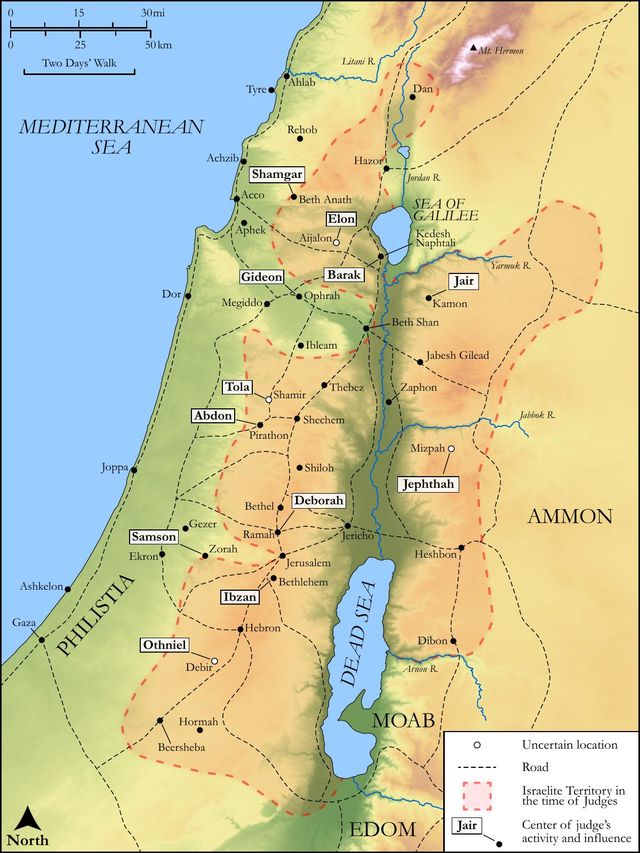
Had they fallen into the hands of the Lord immediately, they might have found that his mercies were great; but God let them fall into the hands of man, whose tender mercies are cruel. He sold them into the hands of the Philistines that lay south-west of Canaan, and of the Ammonites that lay north-east, both at the same time; so that between those two millstones they were miserably crushed, as the original word is (Jdg 10:8) for oppressed. God had appointed that, if any of the cities of Israel should revolt to idolatry, the rest should make war upon them and cut them off, Deu 13:12, etc. They had been jealous enough in this matter, almost to an extreme, in the case of the altar set up by the two tribes and a half (Jos. 22); but now they had grown so very bad that when one city was infected with idolatry the next took the infection and instead of punishing it, imitated and out-did it; and therefore, since those that should have been revengers to execute wrath on those that did this evil were themselves guilty, or bore the sword in vain, God brought the neighbouring nations upon them, to chastise them for their apostasy. The oppression of Israel by the Ammonites, the posterity of Lot, was,
1.Very long. It continued eighteen years. Some make those years to be part of the judgeship of Jair, who could not prevail to reform and deliver Israel as he would. Others make them to commence at the death of Jair, which seems the more probable because that part of Israel which was most infested by the Ammonites was Gilead, Jair's own country, which we cannot suppose to have suffered so much while he was living, but that part at least would be reformed and protected.
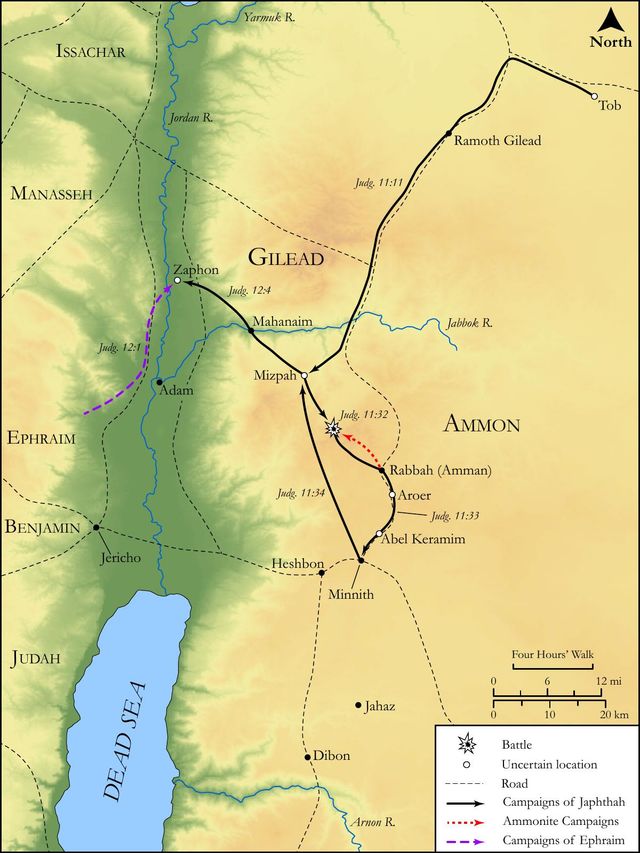
2.Very grievous. They vexed them and oppressed them. It was a great vexation to be oppressed by such a despicable people as the children of Ammon were. They began with those tribes that lay next them on the other side Jordan, here called the land of the Amorites (Jdg 10:8) because the Israelites had so wretchedly degenerated, and had made themselves so like the heathen, that they had become, in a manner, perfect Amorites (Eze 16:3), or because by their sin they forfeited their title to this land, so that it might justly be looked upon as the land of the Amorites again, from whom they took it. But by degrees they pushed forward, came over Jordan, and invaded Judah, and Benjamin, and Ephraim (Jdg 10:9), three of the most famous tribes of Israel, yet thus insulted when they had forsaken God, and unable to make head against the invader. Now the threatening was fulfilled that they should be slain before their enemies, and should have no power to stand before them, Lev 26:17, Lev 26:37. Their ways and their doings procure this to themselves; they have sadly degenerated, and so they come to be sorely distressed.
Continue studying Judges 10:8 across the web’s major study libraries — every link below opens this exact verse, chapter, or book on the destination site.
Read & Compare
 BibleGatewayThis verse in more than 200 translations and 70 languages.
 Bible.comThe YouVersion reader — hundreds of translations, reading plans, and highlights.
 ESV.orgCrossway's official English Standard Version reader.
 NET BibleThe NET translation with 60,000+ translators' notes on every rendering decision.
 STEP BibleTyndale House's free study tool — original text, vocabulary, and scholarly resources.
 BibliaLogos Bible Software's free web reader.
 USCCBThe New American Bible (Revised Edition) with the U.S. bishops' study notes.
Commentaries
 BibleHub CommentariesDozens of classic commentaries on this verse, gathered on one page.
 StudyLightMore than 100 commentary sets — the largest collection on the web.
 BibleRefPlain-English commentary on what this verse means, verse by verse.
 Enduring WordDavid Guzik's free commentary on this chapter, widely used by Bible teachers.
 Bible Study ToolsVerse commentary alongside Greek and Hebrew study aids.
Original Language & Research
- BibleHub InterlinearThe verse word by word — original language, transliteration, and English.
- BibleHub LexiconEvery word's original-language definition and Strong's entry.
 Blue Letter BibleDeep-study tools — Strong's numbers, concordance, and word studies.
 SefariaThe Hebrew text with Rashi and centuries of Jewish commentary.
Sermons, Hymns & Audio


TrulyRandomVerse is not affiliated with these sites and doesn’t control their content. They’re linked because they’re genuinely useful.
Summary
Judges 10:8 precisely details the severe and prolonged oppression endured by the Transjordanian tribes of Israel, specifically those residing in Gilead, at the hands of the Ammonites. This verse highlights an eighteen-year period of intense affliction, serving as a direct consequence of Israel's apostasy and abandonment of Yahweh for pagan deities, marking a significant escalation in the cycle of sin and divine judgment within the Book of Judges.
Context
ShowHideLiterary Context
Judges 10:8 is situated within the well-established cyclical narrative of the Book of Judges, which consistently portrays Israel's pattern of sin, divine judgment through foreign oppression, cries for help, and subsequent deliverance by a divinely appointed judge. Prior to this verse, Israel had experienced a period of relative peace under the judgeships of Tola and Jair, as recorded in Judges 10:1-5. However, Judges 10:6 explicitly states Israel's renewed idolatry, detailing their worship of Baal, Ashtaroth, and other pagan gods, which profoundly provoked the Lord's anger. Consequently, Judges 10:7 reveals God's immediate response: He "sold them into the hands of the Philistines and into the hands of the Ammonites." While verse 7 mentions both oppressors, verse 8 specifically focuses on the Ammonite oppression, indicating its particular severity and geographical scope over the eastern tribes, setting the stage for the narrative of Jephthah.
Historical & Cultural Context
The geographical detail, "on the other side Jordan in the land of the Amorites, which is in Gilead," is profoundly significant. Gilead was a fertile, strategically important region east of the Jordan River, primarily settled by the tribes of Reuben, Gad, and the half-tribe of Manasseh, as recounted in Numbers 32:33. The reference to the "land of the Amorites" serves as a historical reminder of the previous inhabitants whom Israel had dispossessed upon entering the Promised Land under Moses, highlighting a historical claim or vulnerability that the Ammonites would later exploit (Judges 11:13). Culturally, the Ammonites were a Semitic people, descendants of Lot, who frequently clashed with Israel over territorial claims, particularly in Gilead. Their oppression likely involved not only economic exploitation through tribute and forced labor but also destructive raids, seizure of property, and potentially attempts to impose their own idolatrous practices, further exacerbating Israel's spiritual decline. This specific targeting of the Transjordanian tribes underscores their geographical exposure and vulnerability to their immediate eastern neighbors.
Key Themes
ShowHideJudges 10:8 powerfully contributes to several overarching themes within the book and broader biblical narrative. Firstly, it starkly illustrates the consequences of disobedience and apostasy; the eighteen years of oppression are presented as a direct result of Israel's abandonment of Yahweh for false gods, serving as a tangible manifestation of the covenant curses outlined in Deuteronomy 28:15-68. Secondly, this suffering is portrayed as divine discipline, not arbitrary punishment. God allows this hardship as a means to bring His people to repentance and restore their relationship with Him, echoing the pattern established in Judges 2:15. Thirdly, the terms "vexed and oppressed" emphasize the severity and totality of the oppression, indicating a sustained period of intense physical, economic, and psychological subjugation. Finally, the specific mention of Gilead highlights the theme of geographical vulnerability, demonstrating how different regions of Israel faced distinct threats based on their proximity to various hostile neighbors, underscoring the fragmented and often localized nature of the judges' period and the need for a unified, faithful leadership.
Exposition and Analysis
ShowHideKey Word Analysis
ShowHideThis primitive root means "to break in pieces" or "to harass." Figuratively, it conveys a sense of being shattered or subjected to relentless pressure. In this context, it describes the Ammonites' active and aggressive actions against the Israelites, implying a continuous campaign of disruption, violence, and psychological torment that aimed to dismantle their societal stability and peace. It speaks to the brutal, crushing nature of the oppression.
This primitive root means "to crack in pieces," "to bruise," "to crush," or "to discourage." It suggests a more profound and comprehensive subjugation, encompassing both physical and emotional suffering, often leading to a state of debasement or humiliation. When paired with râʻats, it emphasizes the thoroughness and severity of the Ammonite control, indicating that the Israelites were not merely inconvenienced but profoundly broken, disheartened, and brought low by their enemies, stripped of their dignity and strength.
Verse Breakdown
ShowHide"And that year they vexed and oppressed the children of Israel:"
This opening clause immediately establishes the nature of the Ammonite interaction with Israel. The "they" refers to the Ammonites, explicitly identified as instruments of God's judgment in the preceding verse (Judges 10:7). The verbs "vexed" (râʻats) and "oppressed" (râtsats) are a powerful pair, describing a comprehensive and sustained campaign of affliction. This wasn't a one-time raid but a persistent, systematic subjugation designed to inflict hardship, extract resources, and assert dominance over the Israelites. It signifies a period of profound distress and humiliation for God's people, highlighting the direct consequence of their spiritual rebellion.
"eighteen years,"
This phrase specifies the duration of the Ammonite oppression. Eighteen years is a significant period, indicating a long and arduous season of suffering. This extended timeframe underscores the severity of God's judgment and the depth of Israel's apostasy, demonstrating God's patience in allowing the consequences to unfold, yet also the persistent nature of their rebellion that necessitated such prolonged discipline. This long period of suffering also sets the stage for the eventual, and much-needed, cry for deliverance that will lead to Jephthah's judgeship.
"all the children of Israel that [were] on the other side Jordan in the land of the Amorites, which [is] in Gilead."
This final clause provides crucial geographical specificity, identifying the primary victims of this particular oppression. "On the other side Jordan" refers to the Transjordanian territories, east of the Jordan River. "In the land of the Amorites" is a historical designation, recalling the prior inhabitants dispossessed by Israel, which the Ammonites now sought to reclaim. "Which is in Gilead" pinpoints the exact region, a fertile and strategically important area settled by the tribes of Reuben, Gad, and the half-tribe of Manasseh. This detail highlights the particular vulnerability of these eastern tribes to their Ammonite neighbors and emphasizes the localized, yet severe, nature of the judgment, showing how God's discipline targeted specific areas where idolatry was rampant.
Literary Devices
ShowHideThe verse employs several potent literary devices to convey its message. Geographical Specificity is paramount, with the repeated emphasis on "on the other side Jordan," "land of the Amorites," and "Gilead." This precision not only grounds the narrative in a real historical setting but also underscores the particular vulnerability and suffering of these specific tribes, making their plight more tangible and emphasizing the localized impact of God's judgment. The use of a Merism or Doublet in "vexed and oppressed" (Hebrew râʻats and râtsats) creates a powerful rhetorical effect, emphasizing the comprehensive and unrelenting nature of the suffering. These two verbs, while distinct, combine to paint a picture of total subjugation, both physical and psychological. The mention of "eighteen years" serves as a form of Temporal Marker, highlighting the prolonged and arduous nature of the oppression, thereby intensifying the sense of despair and the eventual relief of deliverance. Furthermore, the verse functions as a form of Foreshadowing, setting the stage for the narrative of Jephthah's judgeship, which will directly address this Ammonite threat and the desperate cry for deliverance that follows.
Theological and Thematic Connections
ShowHideJudges 10:8 serves as a stark theological reminder of the immutable principle that disobedience to God carries profound consequences. It illustrates God's covenant faithfulness, even in His judgment, as He allows Israel to experience the natural outcome of forsaking their divine Protector for impotent idols. This period of suffering is not arbitrary punishment but a severe form of divine discipline, designed to humble His people, expose the futility of their idolatry, and ultimately drive them back to Him in repentance. The prolonged nature of the oppression (eighteen years) also speaks to God's longsuffering, allowing ample time for Israel to recognize their sin and cry out for deliverance, demonstrating that even in their darkest hour, His ultimate aim is restoration and renewed relationship.
Reflection and Application
ShowHideThe vivid account of Israel's oppression in Judges 10:8 offers timeless lessons for contemporary believers. It serves as a powerful warning against spiritual complacency and the insidious nature of idolatry, reminding us that anything that displaces God from the center of our lives—be it wealth, success, comfort, or even good intentions—can lead to profound spiritual and relational distress. Just as Israel's unfaithfulness resulted in tangible external oppression, our own compromises with the world can lead to internal turmoil, a sense of bondage, and a loss of the peace and freedom found only in Christ. This verse prompts us to examine our lives for areas where we might be "vexed and oppressed" by the consequences of subtle or overt disobedience, urging us to recognize God's discipline not as abandonment, but as a loving call to repentance and a renewed, wholehearted commitment to Him. It underscores that true peace and liberation are found not in worldly pursuits, but in steadfast faithfulness to the One who alone can deliver us from all forms of bondage and lead us into abundant life.
Questions for Reflection
ShowHideFAQ
ShowHideWho were "they" who vexed and oppressed the children of Israel in Judges 10:8?
ShowHideThe "they" refers primarily to the Ammonites. While Judges 10:7 mentions both the Philistines and the Ammonites as instruments of God's judgment, Judges 10:8 specifically details the Ammonite oppression, particularly focusing on their impact on the Transjordanian tribes of Israel. The Philistines, meanwhile, were oppressing the tribes in the west, indicating a dual, geographically distinct judgment.
Why was the oppression specifically focused on "the other side Jordan in the land of the Amorites, which is in Gilead"?
ShowHideThe specific geographical focus on Gilead highlights the particular vulnerability of the Israelite tribes (Reuben, Gad, and half-Manasseh) who had settled east of the Jordan River. This region, historically known as "the land of the Amorites" before Israel's conquest, bordered the Ammonites to the east, making these tribes their immediate and most accessible targets for raids, territorial disputes, and economic exploitation. The Ammonites had long-standing claims to this territory, which Israel had dispossessed from the Amorites, leading to ongoing conflict and making this area a flashpoint for their aggression, as seen later in Judges 11:13.
What is the significance of the "eighteen years" of oppression?
ShowHideThe "eighteen years" signifies a prolonged and severe period of suffering, underscoring the depth of Israel's apostasy and the intensity of God's judgment. This extended duration indicates that the oppression was not a brief punitive measure but a sustained period of hardship designed to humble Israel and drive them to repentance. It also highlights God's patience, allowing ample time for His people to recognize their sin and cry out for deliverance, which they eventually do in Judges 10:10, demonstrating that even in their darkest hour, God waits for their return.
Christ-Centered Fulfillment
ShowHideThe cycle of sin, oppression, and temporary deliverance in Judges 10:8, and throughout the book, profoundly points to the ultimate need for a perfect and permanent Deliverer, Jesus Christ. Israel's repeated failure to maintain faithfulness, leading to cycles of bondage under human oppressors, underscores humanity's inherent inability to break free from the dominion of sin and its consequences on its own. The judges, like Jephthah who eventually delivers Israel from this Ammonite oppression, offered only temporary relief, foreshadowing the need for a King who would not merely deliver from external enemies but from the internal enemy of sin itself. Jesus, the true Lamb of God, who takes away the sin of the world, perfectly fulfills this need. He enters humanity's cycle of sin and death, not merely to alleviate oppression, but to break its power entirely through His atoning sacrifice on the cross. Where Israel's disobedience led to bondage, Christ's perfect obedience brings true freedom and eternal life, for "the wages of sin is death, but the gift of God is eternal life in Christ Jesus our Lord" (Romans 6:23). He is the ultimate Judge who took the judgment upon Himself, bearing the "vexation and oppression" of humanity's sin so that we might receive His peace and righteousness, as it is written, "by his wounds we are healed" (Isaiah 53:5). Unlike the judges who could only offer physical liberation, Jesus offers spiritual liberation from the bondage of sin and the fear of death, inviting all who are weary and burdened to find rest in Him (Matthew 11:28-30), thereby fulfilling the deepest longing for deliverance that Israel's suffering so vividly expressed.