


Deuteronomy 31:17
- וְחָרָהve·cha·Rahand it will burnH2734Conj-w ¦ V-Qal-ConsecPerf-3msVerb Qal Consecutive Perfect 3rd Singular Masculineוְandחָרָהit will burn
- אַפִּי'a·Pimy angerH639N-msc ¦ 1csNoun Singular Masculine Constructאַפִּangerיmy
- בוֹvoon <the> itPrep-b ¦ 3msSuffix Personal 3rd Singular Masculineבon <the>וֹit
- בַיּוֹםvai·yomon the dayH3117Prep-b ¦ N-msNoun Singular Masculine Absoluteבַon theיּוֹםday
- הַהוּאHa·hu'<the> thatH1931Art ¦ Pro-3msPronoun Personal 3rd Singular Masculineהַ<the>הוּאthat
- וַעֲזַבְתִּיםva·'a·zav·Timand I will forsake themH5800Conj-w ¦ V-Qal-ConsecPerf-1cs ¦ 3mpVerb Qal Consecutive Perfect 1st Singular common genderוַandעֲזַבְתִּיI will forsakeםthem
- וְהִסְתַּרְתִּיve·his·tar·Tiand I will hideH5641Conj-w ¦ V-Hiphil-ConsecPerf-1csVerb Hiphil Consecutive Perfect 1st Singular common genderוְandהִסְתַּרְתִּיI will hide
- פָנַיfa·Naimy faceH6440N-mpc ¦ 1csNoun Plural Masculine Constructפָנַfaceיmy
- מֵהֶםme·Hemfrom <the> themPrep-m ¦ 3mpSuffix Personal 3rd Plural Masculineמֵfrom <the>הֶםthem
- וְהָיָהve·ha·Yahand it will beH1961Conj-w ¦ V-Qal-ConsecPerf-3msVerb Qal Consecutive Perfect 3rd Singular Masculineוְandהָיָהit will be
- לֶאֱכֹלle·'e·Kholfor devouringH398Prep-l ¦ V-Qal-InfVerb Qal Infinitive Constructלֶforאֱכֹלdevouring
- וּמְצָאֻהוּu·me·tza·'U·huand they will come upon itH4672Conj-w ¦ V-Qal-ConsecPerf-3cp ¦ 3msVerb Qal Consecutive Perfect 3rd Plural common genderוּandמְצָאֻthey will come uponהוּit
- רָעוֹתra·'otcalamitiesH7451N-fpNoun Plural Feminine Absolute
- רַבּוֹתra·BotmanyH7227Adj-fpAdjective Plural Feminine Absolute
- וְצָרוֹתve·tza·Rotand troublesH6869Conj-w ¦ N-fpNoun Plural Feminine Absoluteוְandצָרוֹתtroubles
- וְאָמַרve·'a·Marand it will sayH559Conj-w ¦ V-Qal-ConsecPerf-3msVerb Qal Consecutive Perfect 3rd Singular Masculineוְandאָמַרit will say
- בַּיּוֹםbai·Yomon the dayH3117Prep-b ¦ N-msNoun Singular Masculine Absoluteבַּon theיּוֹםday
- הַהוּאha·Hu'<the> thatH1931Art ¦ Pro-3msPronoun Personal 3rd Singular Masculineהַ<the>הוּאthat
- הֲלֹאha·Lo'¿ notH3808Interrog ¦ NegParticle Negativeהֲ¿לֹאnot
- עַל'alonH5921PrepPreposition
- כִּיkiforH3588PrtParticle Conditional
- אֵין'einnotH369N-mscNoun Singular Masculine Construct
- אֱלֹהַי'e·lo·Haimy GodH430N-mpc ¦ 1csNoun Plural Masculine ConstructאֱלֹהַGodיmy
- בְּקִרְבִּיbe·kir·Bi[is] in my midstH7130Prep-b ¦ N-msc ¦ 1csNoun Singular Masculine Constructבְּ[is] inקִרְבִּmidstיmy
- מְצָאוּנִיme·tza·'U·nihave they come upon meH4672V-Qal-Perf-3cp ¦ 1csVerb Qal Perfect 3rd Plural common genderמְצָאוּhave they come uponנִיme
- הָרָעוֹתha·ra·'otthe calamitiesH7451Art ¦ N-fpNoun Plural Feminine Absoluteהָtheרָעוֹתcalamities
- הָאֵלֶּהha·'E·leh<the> theseH428Art ¦ PrtParticle Demonstrativeהָ<the>אֵלֶּהthese
English is a literal word-by-word gloss of the Hebrew, not the KJV's wording. Why?
This is the original text the KJV's translators worked from — each Hebrew word with its own literal English meaning in this verse, prepared by scholars at Tyndale House, Cambridge. The KJV translates whole sentences, not word by word, so its wording differs: one Hebrew word can become several English words, and the KJV may choose “the LORD” where the gloss reads “Yahweh”. Both are faithful — they answer different questions. For the KJV's own rendering, switch to the KJV text.
Details
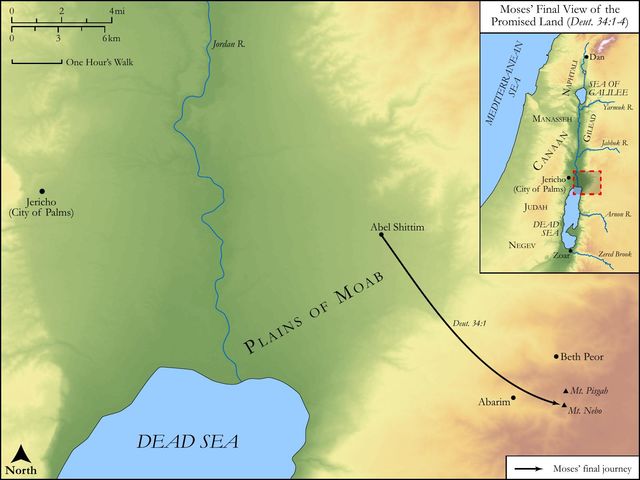
See on the biblical-era map
Study this verse
Public-domain commentary
Matthew Henry
From his Commentary on the Whole Bible. Henry comments on passages, not single verses — this entry covers Deuteronomy 31:14–21.
Here, I. Moses and Joshua are summoned to attend the divine majesty at the door of the tabernacle, Deu 31:14. Moses is told again that he must shortly die; even those that are most ready and willing to die have need to be often reminded of the approach of death. In consideration of this, he must come himself to meet God; for whatever improves our communion with God furthers our preparation for death. He must also bring Joshua with him to be presented to God for a successor, and to receive his commission and charge. Moses readily obeys the summons, for he was not one of those that look with an evil eye upon their successors, but, on the contrary, rejoiced in him.
II.God graciously gives them the meeting:
He appeared in the tabernacle (as the shechinah used to appear) in a pillar of a cloud, v. 15. This is the only time in all this book that we read of the glory of God appearing, whereas we often read of it in the three foregoing books, which perhaps signifies that in the latter days, under the evangelical law, such visible appearances as these of the divine glory are not to be expected, but we must take heed to the more sure word of prophecy.
III.He tells Moses that, after his death, the covenant which he had taken so much pains to make between Israel and their God would certainly be broken. 1. That Israel would forsake God, v. 16. And we may be sure that if the covenant between God and man be broken the blame must lie on man, it is he that breaks it; we have often observed it, That God never leaves any till they first leave him. Worshipping the gods of the Canaanites (who had been the natives, but henceforward were to be looked upon as the strangers of that land) would undoubtedly be counted a deserting of God, and, like adultery, a violation of the covenant. Thus still those are revolters from Christ, and will be so adjudged, who either make a god of their money by reigning covetousness or a god of their belly by reigning sensuality. Those that turn to other gods (v. 18) forsake their own mercies. This apostasy of theirs is foretold to be the effect of their prosperity (v. 20): They shall have eaten and filled themselves; this is all they will aim at in eating, to gratify their own appetites, and then they will wax fat, grow secure and sensual; their security will take off their dread of God and his judgments; and their sensuality will incline them to the idolatries of the heathen, which made provision for the flesh to fulfil the lusts of it. Note, God has a clear and infallible foresight of all the wickedness of the wicked, and has often covenanted with those who he knew would deal very treacherously (Isa 48:8), and conferred many favours on those who he knew would deal very ungratefully. 2. That then God would forsake Israel; and justly does he cast those off who had so unjustly cast him off (v. 17): My anger shall be kindled against them, and I will forsake them. His providence would forsake them, no longer to protect and prosper them, and then they would become a prey to all their neighbours. His spirit and grace would forsake them, no longer to teach and guide them, and then they would be more and more bigoted, besotted, and hardened in their idolatries. Thus many evils and troubles would befal them. (v. 17, 21), which would be such manifest indications of God's displeasure against them that they themselves would be constrained to own it: Have not these evils come upon us because our God is not among us? Those that have sinned away their God will find that thereby they pull all mischiefs upon their own heads. But that which completed their misery was that God would hide his face from them in that day, that day of their trouble and distress, v. 18. Whatever outward troubles we are in, if we have but the light of God's countenance, we may be easy. But, if God hide his face from us and our prayers, we are undone.
IV.He directs Moses to deliver them a song, in the composing of which he should be divinely inspired, and which should remain a standing testimony for God as faithful to them in giving them warning, and against them as persons false to themselves in not taking the warning, v. 19. The written word in general, as well as this song in particular, is a witness for God against all those that break covenant with him. It shall be for a testimony, Mat 24:14. The wisdom of man has devised many ways of conveying the knowledge of good and evil, by laws, histories, prophecies, proverbs, and, among the rest, by songs; each has its advantages. And the wisdom of God has in the scripture made use of them all, that ignorant and careless men might be left inexcusable. 1. This song, if rightly improved, might be a means to prevent their apostasy; for in the inditing of it God had an eye to their present imagination, now, before they were brought into the land of promise, Deu 31:21. God knew very well that there were in their hearts such gross conceits of the deity, and such inclinations of idolatry, that they would be tinder to the sparks of that temptation; and therefore in this song he gives them warning of their danger that way. Note, The word of God is a discerner of the thoughts and intents of men's hearts, and meets with them strangely by its reproofs and corrections, Heb 4:12. Compare Co1 14:25. Ministers who preach the word know not the imaginations men go about, but God, whose word it is, knows perfectly. 2. If this song did not prevent their apostasy, yet it might help to bring them to repentance, and to recover them from their apostasy. When their troubles come upon them, this song shall not be forgotten, but may serve as a glass to show them their own faces, that they may humble themselves, and return to him from whom they have revolted. Note, Those for whom God has mercy in store he may leave to fall, yet he will provide means for their recovery. Medicines are prepared before-hand for their cure.
Continue studying Deuteronomy 31:17 across the web’s major study libraries — every link below opens this exact verse, chapter, or book on the destination site.
Read & Compare
 BibleGatewayThis verse in more than 200 translations and 70 languages.
 Bible.comThe YouVersion reader — hundreds of translations, reading plans, and highlights.
 ESV.orgCrossway's official English Standard Version reader.
 NET BibleThe NET translation with 60,000+ translators' notes on every rendering decision.
 STEP BibleTyndale House's free study tool — original text, vocabulary, and scholarly resources.
 BibliaLogos Bible Software's free web reader.
 USCCBThe New American Bible (Revised Edition) with the U.S. bishops' study notes.
Commentaries
 BibleHub CommentariesDozens of classic commentaries on this verse, gathered on one page.
 StudyLightMore than 100 commentary sets — the largest collection on the web.
 BibleRefPlain-English commentary on what this verse means, verse by verse.
 Enduring WordDavid Guzik's free commentary on this chapter, widely used by Bible teachers.
 Bible Study ToolsVerse commentary alongside Greek and Hebrew study aids.
Original Language & Research
- BibleHub InterlinearThe verse word by word — original language, transliteration, and English.
- BibleHub LexiconEvery word's original-language definition and Strong's entry.
 Blue Letter BibleDeep-study tools — Strong's numbers, concordance, and word studies.
 SefariaThe Hebrew text with Rashi and centuries of Jewish commentary.
Sermons, Hymns & Audio


TrulyRandomVerse is not affiliated with these sites and doesn’t control their content. They’re linked because they’re genuinely useful.
Summary
Deuteronomy 31:17 delivers a profound prophetic warning from God, conveyed through Moses, detailing the severe and inevitable consequences of Israel's future covenant unfaithfulness. It foretells a time when divine righteous anger will be intensely kindled, leading to God's deliberate withdrawal of His protective presence and favor. This withdrawal will result in the people being overwhelmed by profound suffering, calamities, and national distress. Crucially, the verse anticipates that in the midst of their affliction, the Israelites will recognize their misfortunes as a direct outcome of God's perceived absence among them, prompting a painful yet necessary moment of self-reflection concerning their departure from the covenant.
Context
ShowHideLiterary Context
This verse is situated within Moses' final, poignant discourses to the nation of Israel, delivered on the plains of Moab just before his death and their imminent entry into the Promised Land. The broader literary context of Deuteronomy is a comprehensive restatement and renewal of the Mosaic covenant, emphasizing the foundational principles of obedience and the solemn consequences of disobedience. Specifically, Deuteronomy 28 provides an extensive and detailed exposition of the blessings for fidelity and the curses for apostasy. Chapter 31 itself marks a pivotal transition, focusing on Joshua's succession to leadership, the command for the Law to be read publicly every seven years, and a stark, divinely inspired prophecy regarding Israel's future and inevitable unfaithfulness. Moses, endowed with divine foresight, explicitly predicts that the people will, in time, turn away from the covenant, thereby incurring divine judgment. Deuteronomy 31:17 vividly describes the nature of this judgment, setting the theological stage for the "Song of Moses" in Deuteronomy 32, which further elaborates on Israel's rebellion and God's just, yet ultimately redemptive, response.
Historical & Cultural Context
At this juncture, the Israelites stand on the threshold of Canaan, a land teeming with pagan nations and their idolatrous practices. Moses, having borne witness to the previous generation's rebellion and lack of faith in the wilderness, is acutely aware of the spiritual perils that lie ahead. The concept of a covenant, or treaty, was a well-established and understood framework in the ancient Near East. These covenants typically involved a suzerain (a powerful king or deity) and a vassal (a subordinate people or ruler), with clearly stipulated obligations, blessings for loyalty, and severe curses for breach of terms. God's warnings in Deuteronomy 31:17 resonate deeply with these ancient treaty expectations, where a vassal's violation of the agreement would inevitably provoke the suzerain's wrath and the withdrawal of protection. The threat of being "devoured" and suffering "many evils and troubles" would have been readily understood by the Israelites in terms of military defeat, famine, pestilence, and ultimately, exile—calamities universally interpreted as expressions of divine judgment in the ancient world.
Key Themes
ShowHideDeuteronomy 31:17 powerfully articulates several foundational themes central to the book of Deuteronomy and the broader biblical narrative. Foremost is the theme of Divine Anger and Judgment, portraying God's wrath not as an uncontrolled human emotion but as a holy, righteous, and just response to covenant infidelity, idolatry, and spiritual rebellion. This anger manifests as God's Withdrawal, profoundly captured by the phrases "I will forsake them" and "I will hide my face from them." This concept, often termed hester panim (hiding of the face), signifies a deliberate removal of divine favor, active protection, and intimate communion, leaving the people vulnerable to the natural and supernatural consequences of their sin, as also lamented in Psalm 10:1. The verse also highlights the Consequences of Disobedience, predicting that Israel "shall be devoured" by "many evils and troubles," encompassing a wide array of suffering directly resulting from their breach of covenant. Finally, it introduces the poignant theme of Recognition of God's Absence, where the very suffering they endure serves as a painful catalyst for the people to acknowledge the root cause of their calamities: "Are not these evils come upon us, because our God [is] not among us?" This self-realization, though born of distress, holds the potential for repentance and a return to God, a recurring pattern observed throughout Israel's history, from the period of the Judges to the Babylonian Exile, as seen in Judges 2:11-15.
Exposition and Analysis
ShowHideKey Word Analysis
ShowHideDerived from a root meaning "nose" or "nostril," this word often refers to the rapid breathing or snorting associated with intense emotion. When applied to God, it denotes a profound, righteous indignation and fervent displeasure against sin. It is not an impulsive human rage but a holy, decisive, and active opposition to unrighteousness, signifying God's unyielding resolve to uphold His covenant and moral order.
A primitive root meaning "to glow" or "grow warm," and figuratively "to blaze up." When paired with "anger," it emphasizes the intensity and active nature of God's wrath. It suggests a righteous fire of judgment that is ignited in response to specific acts of rebellion and covenant breaking, indicating a deliberate and determined divine action.
This verb signifies to loosen, relinquish, abandon, or withdraw support. In the context of God's relationship with Israel, it implies a deliberate cessation of His active presence, help, and covenantal protection. It highlights a profound shift from active divine intervention and sustenance to a state where Israel is left vulnerable to the consequences of their choices, a stark contrast to God's steadfast faithfulness when they walk in obedience.
This is a powerful and deeply theological idiom. "Face" (פָּנִים, pānîm) frequently represents God's manifest presence, favor, and benevolent regard. To "hide" it implies a deliberate withdrawal of His visible or experienced presence, His protective gaze, His blessings, and His intimate communion. It signifies a state of spiritual desolation, vulnerability, and a profound sense of abandonment, where God's sustaining and guiding presence is no longer perceived or experienced, leaving the people exposed to hardship and distress.
Verse Breakdown
ShowHide"Then my anger shall be kindled against them in that day"
This initial clause sets the stage for the coming judgment. "In that day" points to a specific future time when Israel's predicted apostasy will have fully manifested. God's "anger" (אף, ‘aph) being "kindled" (חָרָה, ḥārâh) signifies a righteous, intense, and active divine response to their deliberate turning away from Him and His covenant. It is not an arbitrary emotion but a holy indignation against their sin.
"and I will forsake them"
Following the kindling of His anger, God declares a direct and severe consequence: He will withdraw His active support and protection. This means Israel will no longer experience the divine intervention and assistance that had characterized their journey from Egypt to the Promised Land, leaving them to face their challenges without His accustomed aid.
"and I will hide my face from them"
This phrase intensifies the sense of divine withdrawal. Beyond merely forsaking them, God will remove His benevolent presence and favor. This implies a cessation of divine guidance, blessing, and the sense of intimate communion, leaving Israel exposed to the full force of their enemies and the natural consequences of their sin. It is a state of spiritual darkness and profound desolation.
"and they shall be devoured"
This passive construction indicates that Israel will be consumed, overwhelmed, or destroyed by external forces or circumstances. It suggests a vulnerability to their enemies, to famine, disease, or other calamities that will diminish and destroy them, without God's protective hand to deliver them from these devastating outcomes.
"and many evils and troubles shall befall them"
This specifies the nature and extent of the "devouring." "Evils" (רָעוֹת, ra‘ot) and "troubles" (צָרוֹת, tsarot) refer to a wide array of afflictions, including natural disasters, military defeat, social breakdown, and personal suffering. These are presented as direct and undeniable consequences of God's judgment and the withdrawal of His blessing and protection.
"so that they will say in that day, Are not these evils come upon us, because our God [is] not among us?"
This final clause provides a crucial insight into the pedagogical and redemptive purpose of the judgment. The intense suffering is intended to lead to a moment of painful realization and self-diagnosis. The rhetorical question indicates that the people, in their distress, will eventually connect their calamities directly to their spiritual condition—specifically, the absence of God's active presence and favor due to their unfaithfulness. This recognition, though born of pain, is a necessary step towards potential repentance and restoration.
Literary Devices
ShowHideDeuteronomy 31:17 employs several potent literary devices to convey its solemn prophetic warning and underscore the gravity of covenant unfaithfulness. The most prominent is Prophecy, as Moses, speaking with divine authority, foretells future events concerning Israel's inevitable apostasy and the ensuing divine judgment. This pre-knowledge highlights God's omniscience and His unwavering commitment to His covenant, even in judgment. Anthropomorphism is evident in the descriptions of God's "anger being kindled" and His decision to "hide His face." While God is spirit and transcendent, these human-like actions make His righteous indignation and deliberate withdrawal comprehensible and impactful for the human audience. The verse also utilizes a Consequence-Clause Structure, particularly with the phrase "so that they will say," which explicitly links the experience of suffering to the people's eventual self-realization and acknowledgment of their spiritual state. This emphasizes the pedagogical and disciplinary nature of divine judgment. Furthermore, the final clause presents a powerful Rhetorical Question ("Are not these evils come upon us, because our God [is] not among us?"), designed not for a direct answer but to provoke deep introspection, self-diagnosis, and an acknowledgment of culpability. Finally, a clear Parallelism exists between "I will forsake them" and "I will hide my face from them," where the second phrase intensifies the meaning of the first, emphasizing a profound, comprehensive, and deliberate withdrawal of divine favor and presence.
Theological and Thematic Connections
ShowHideDeuteronomy 31:17 serves as a foundational text for understanding the recurring Old Testament pattern of covenant, sin, judgment, and the potential for restoration. It underscores God's absolute holiness, His unwavering commitment to justice, and the principle that His profound love for His people does not negate His righteous anger against their persistent unfaithfulness. The "hiding of His face" represents a severe form of divine discipline, signifying a deliberate removal of His protective hand and allowing the natural, and often supernatural, consequences of sin to unfold. Yet, within this stark warning, the verse subtly hints at God's ultimate redemptive purpose; the suffering is designed to lead His people to a point of painful self-awareness and recognition of their spiritual state. This painful recognition, though a consequence of judgment, creates an essential opportunity for repentance and a return to Him. This passage powerfully exemplifies the tension between God's unwavering faithfulness to His covenant promises and His just response to human rebellion, revealing that His discipline is often a profound and necessary means to draw His people back into a right and vibrant relationship with Him.
Reflection and Application
ShowHideDeuteronomy 31:17 carries profound and enduring relevance for believers today, serving as a timeless reminder of the gravity of our covenant relationship with God and the serious consequences of spiritual drifting. While Christians live under the new covenant of grace, the fundamental principle that our choices have spiritual consequences remains immutable. Persistent disobedience, subtle forms of idolatry (such as prioritizing worldly desires, comfort, or self-sufficiency over God), or a casual, indifferent approach to our faith can lead to a perceived sense of God's absence or a period of spiritual barrenness. This verse challenges us to value God's manifest presence and favor above all else, recognizing that true well-being, security, and flourishing are found exclusively in His gracious protection and intimate communion. When we encounter "evils and troubles" in our lives—whether personal struggles, relational brokenness, or societal decay—this passage invites us to engage in honest, humble self-reflection. It prompts us to ask if our struggles might, in fact, be a loving, albeit painful, discipline from our Heavenly Father, intended to draw us back into closer communion with Him. It calls us to actively seek His face, cherish His commands, and understand that His discipline is not punitive in the sense of vindictive punishment, but redemptive, designed to restore us to a vibrant, obedient, and deeply satisfying relationship with Him.
Questions for Reflection
ShowHideFAQ
ShowHideWhat does "hide my face" mean biblically, and how is it different from God simply being absent?
ShowHideThe phrase "hide my face" (Hebrew: hester panim) is a profound theological concept that appears frequently throughout the Old Testament. It does not imply that God ceases to exist or is literally absent from a place, as God is omnipresent and omniscient. Instead, it signifies a deliberate and active withdrawal of God's manifest presence, His favor, His protective hand, and His benevolent regard. When God hides His face, it means He is no longer actively intervening on behalf of His people, no longer granting them His blessings, and no longer providing the intimate communion and guidance they once enjoyed. It's a state of spiritual abandonment or desolation, where His people are left vulnerable to their enemies, the consequences of their sin, or the natural hardships of life without His sustaining and delivering hand. This concept is often found in contexts of divine judgment or lament, as seen in Psalm 27:9 where the psalmist pleads for God not to hide His face. It is a disciplinary act, intended to bring His people to repentance and a realization of their utter dependence on Him.
Is God's anger, as described here, arbitrary or just?
ShowHideGod's anger, as depicted in Deuteronomy 31:17 and consistently throughout Scripture, is never arbitrary, capricious, or irrational like human anger. It is always a righteous, holy, and just response to sin, rebellion, and covenant unfaithfulness. In this context, God's anger is "kindled" because Israel has deliberately chosen to "forsake" Him and turn to idolatry, violating the solemn covenant they made with Him at Mount Sinai. This anger is an expression of His perfect justice and His unwavering commitment to His own holy character and His covenant promises. It signifies His active opposition to evil and His determination to uphold His moral order and the sanctity of His relationship with His people. Far from being a flaw, God's righteous anger is a necessary aspect of His perfect character, demonstrating that He is not indifferent to sin but actively opposes it, ultimately for the purpose of bringing His people back to Himself, as suggested by the final clause of the verse where the people recognize their plight.
Christ-Centered Fulfillment
ShowHideDeuteronomy 31:17, with its stark warning of God's righteous anger and the withdrawal of His face due to sin, finds its most profound and ultimate fulfillment and resolution in the person and work of Jesus Christ. The terrifying prospect of the "hiding of God's face" and the experience of being "devoured" by evils as a consequence of sin reached its most agonizing climax, not in Israel's historical judgments, but on the cross of Calvary. There, Jesus, the perfect and sinless Lamb of God, willingly bore the full weight of God's righteous anger against humanity's sin. He experienced the ultimate "forsaking" and the most profound "hiding of the Father's face" when He cried out in agony, "My God, my God, why have you forsaken me?" This was the unparalleled moment when the Son, who had known perfect and unbroken communion with the Father from eternity, was separated by the crushing burden of our iniquity, enduring the very judgment promised in Deuteronomy 31:17. Through His vicarious suffering and sacrificial death, Christ absorbed the divine wrath and utterly removed the barrier of sin that caused God to hide His face from humanity. Now, for all who are united to Him by faith, the glorious promise of the new covenant is that God will "never leave you nor forsake you" and that we have bold "access to the Father through one Spirit" because Jesus is "Immanuel, God with us". He is the ultimate and eternal presence of God among His people, ensuring that the covenant curses of separation are transformed into the everlasting blessings of intimate communion for all who believe.