


Genesis 47:30
Bible text: King James Version (1769 Blayney text) · Public domain
Bible text: Berean Standard Bible · Public domain
Bible text: American Standard Version (1901) · Public domain
Bible text: World English Bible, Messianic edition · Public domain
Bible text: Geneva Bible (1599) · Public domain
Bible text: Young's Literal Translation · Public domain
- וְשָׁכַבְתִּיve·sha·khav·Tiand I will lie downH7901Conj-w ¦ V-Qal-ConsecPerf-1csVerb Qal Consecutive Perfect 1st Singular common genderוְandשָׁכַבְתִּיI will lie down
- עִם'imwithH5973PrepPreposition
- אֲבֹתַי'a·vo·Taimy ancestorsH1N-fpc ¦ 1csNoun Plural Feminine Constructאֲבֹתַancestorsיmy
- וּנְשָׂאתַנִיu·ne·sa·Ta·niand you will carry meH5375Conj-w ¦ V-Qal-ConsecPerf-2ms ¦ 1csVerb Qal Consecutive Perfect 2nd Singular Masculineוּandנְשָׂאתַyou will carryנִיme
- מִמִּצְרַיִםmi·mitz·Ra·yimfrom EgyptH4714Prep-m ¦ N-properNoun Proper LocationמִfromמִּצְרַיִםEgypt
- וּקְבַרְתַּנִיu·ke·var·Ta·niand you will bury meH6912Conj-w ¦ V-Qal-ConsecPerf-2ms ¦ 1csVerb Qal Consecutive Perfect 2nd Singular Masculineוּandקְבַרְתַּyou will buryנִיme
- בִּקְבֻרָתָםbik·vu·ra·Tamin their graveH6900Prep-b ¦ N-fsc ¦ 3mpNoun Singular Feminine Constructבִּinקְבֻרָתָgraveםtheir
- וַיֹּאמַרvai·yo·Marand he saidH559Conj-w ¦ V-Qal-ConsecImperf-3msVerb Qal Consecutive Imperfect 3rd Singular Masculineוַandיֹּאמַרhe said
- אָנֹכִי'a·no·KhiIH595Pro-1csPronoun Personal 1st Singular common gender
- אֶעֱשֶׂה'e·'e·SehI will doH6213V-Qal-Imperf-1csVerb Qal Imperfect 1st Singular common gender
- כִדְבָרֶךָkhid·va·Re·khaaccording to your wordH1697Prep-k ¦ N-msc ¦ 2msNoun Singular Masculine Constructכִaccording toדְבָרֶwordךָyour
English is a literal word-by-word gloss of the Hebrew, not the KJV's wording. Why?
This is the original text the KJV's translators worked from — each Hebrew word with its own literal English meaning in this verse, prepared by scholars at Tyndale House, Cambridge. The KJV translates whole sentences, not word by word, so its wording differs: one Hebrew word can become several English words, and the KJV may choose “the LORD” where the gloss reads “Yahweh”. Both are faithful — they answer different questions. For the KJV's own rendering, switch to the KJV text.
Details
See on the biblical-era maps


Study this verse
Public-domain commentary
Matthew Henry
From his Commentary on the Whole Bible. Henry comments on passages, not single verses — this entry covers Genesis 47:27–31.
Observe, 1. The comfort Jacob lived in (Gen 47:27, Gen 47:28); while the Egyptians were impoverished in their own land, Jacob was replenished in a strange land. He lived seventeen years after he came into Egypt, far beyond his own expectation. Seventeen years he had nourished Joseph (for so old he was when he was sold from him, Gen 37:2), and now, by way of requital, seventeen years Joseph nourished him. Observe how kindly Providence ordered Jacob's affairs, that when he was old, and least able to bear care or fatigue, he had least occasion for it, being well provided for by his son without his own forecast. Thus God considers the frame of his people. 2. The care Jacob died in. At last the time drew nigh that Israel must die, Gen 47:29. Israel, a prince with God, that had power over the angel and prevailed, yet must yield to death. There is no remedy, he must die: it is appointed for all men, therefore for him; and there is no discharge in that war. Joseph supplied him with bread, that he might not die by famine; but this did not secure him from dying by age or sickness. He died by degrees; his candle was not blown out, but gradually burnt down to the socket, so that he saw, at some distance, the time drawing nigh. Note, It is an improvable advantage to see the approach of death before we feel its arrests, that we may be quickened to do what our hand finds to do with all our might: however, it is not far from any of us. Now Jacob's care, as he saw the day approaching, was about his burial, not the pomp of it (he was no way solicitous about that), but the place of it. (1.) He would be buried in Canaan. This he resolved on, not from mere humour, because Canaan was the land of his nativity, but in faith, because it was the land of promise (which he desired thus, as it were, to keep possession of, till the time should come when his posterity should be masters of it), and because it was a type of heaven, that better country which he that said these things declared plainly that he was in expectation of, Heb 11:14. He aimed at a good land, which would be his rest and bliss on the other side death. (2.) He would have Joseph sworn to bring him thither to be buried (Gen 47:29, Gen 47:31), that Joseph, being under such a solemn obligation to do it, might have that to answer to the objections which otherwise might have been made against it, and for the greater satisfaction of Jacob now in his dying minutes. Nothing will better help to make a death-bed easy than the certain prospect of a rest in Canaan after death. (3.) When this was done Israel bowed himself upon the bed's head, yielding himself, as it were, to the stroke of death ("Now let it come, and it shall be welcome"), or worshipping God, as it is explained, Heb 11:21, giving God thanks for all his favours, and particularly for this, that Joseph was ready, not only to put his hand upon his eyes to close them, but under his thigh to give him the satisfaction he desired concerning his burial. Thus those that go down to the dust should, with humble thankfulness, bow before God, the God of their mercies, Psa 22:29.
Continue studying Genesis 47:30 across the web’s major study libraries — every link below opens this exact verse, chapter, or book on the destination site.
Read & Compare
 BibleGatewayThis verse in more than 200 translations and 70 languages.
 Bible.comThe YouVersion reader — hundreds of translations, reading plans, and highlights.
 ESV.orgCrossway's official English Standard Version reader.
 NET BibleThe NET translation with 60,000+ translators' notes on every rendering decision.
 STEP BibleTyndale House's free study tool — original text, vocabulary, and scholarly resources.
 BibliaLogos Bible Software's free web reader.
 USCCBThe New American Bible (Revised Edition) with the U.S. bishops' study notes.
Commentaries
 BibleHub CommentariesDozens of classic commentaries on this verse, gathered on one page.
 StudyLightMore than 100 commentary sets — the largest collection on the web.
 BibleRefPlain-English commentary on what this verse means, verse by verse.
 Enduring WordDavid Guzik's free commentary on this chapter, widely used by Bible teachers.
 Bible Study ToolsVerse commentary alongside Greek and Hebrew study aids.
Original Language & Research
- BibleHub InterlinearThe verse word by word — original language, transliteration, and English.
- BibleHub LexiconEvery word's original-language definition and Strong's entry.
 Blue Letter BibleDeep-study tools — Strong's numbers, concordance, and word studies.
 SefariaThe Hebrew text with Rashi and centuries of Jewish commentary.
Sermons, Hymns & Audio


TrulyRandomVerse is not affiliated with these sites and doesn’t control their content. They’re linked because they’re genuinely useful.
Summary
Genesis 47:30 captures the poignant and faith-filled final request of Jacob (Israel) to his beloved son Joseph. Recognizing his approaching death, Jacob solemnly asks Joseph to ensure his burial is not in Egypt, the land of his temporary dwelling, but rather with his ancestors in the Promised Land. Joseph's immediate and respectful affirmation of this request underscores not only his filial devotion but also the profound significance of Jacob's unwavering trust in God's covenant promises, his deep attachment to his lineage, and his enduring hope for an eternal inheritance that transcends his earthly life in a foreign land.
Context
ShowHideLiterary Context
This verse is situated at a critical juncture in the life of Jacob and the unfolding narrative of the patriarchal history. Immediately preceding this verse, in Genesis 47:29, Jacob summons Joseph and makes him swear a solemn oath by placing his hand under Jacob's thigh, an ancient and binding custom, to fulfill this specific burial request. This emphasizes the gravity and importance Jacob placed on this final wish. Following Joseph's agreement in Genesis 47:30, the narrative transitions to Jacob's final blessings upon Joseph's sons (Manasseh and Ephraim) in Genesis 48 and then his prophetic blessings to all his sons in Genesis 49. The meticulous fulfillment of Jacob's burial wishes is detailed in Genesis 50:1-14, highlighting the profound impact of this request on the family.
Historical & Cultural Context
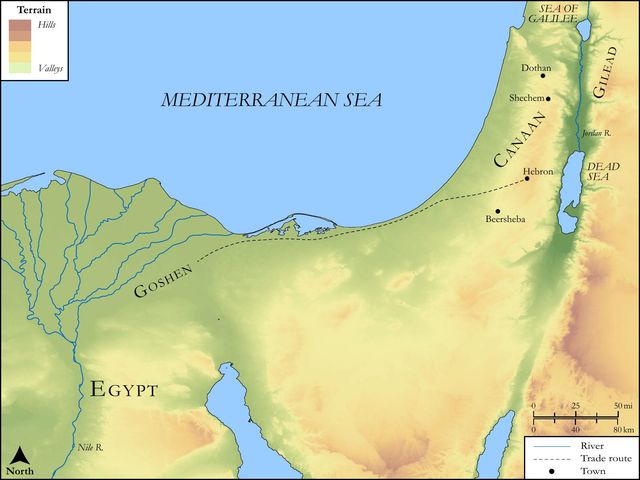
In the household of Abraham, Isaac, and Jacob, burial practices were deeply significant, reflecting beliefs about family, land, and the afterlife. Being buried with one's ancestors in a family tomb was a profound expression of identity, continuity, and belonging. To be buried in a foreign land, especially for a patriarch like Jacob, would have signified a severance from one's heritage and a lack of connection to the ancestral land. The specific "buryingplace" Jacob refers to is the Cave of Machpelah in Hebron, which Abraham had purchased as a family burial plot. This cave held the remains of Sarah, Abraham, Isaac, Rebekah, and Leah, making it a sacred site for the patriarchs and a tangible link to God's covenant promises concerning the land of Canaan. Jacob's request, therefore, was not merely sentimental but culturally and spiritually charged.
Key Themes
ShowHideGenesis 47:30 powerfully contributes to several overarching themes within the book of Genesis and the broader biblical narrative. Firstly, it underscores the theme of God's Covenant Faithfulness. Despite living in a foreign land (Egypt), Jacob's desire to be buried in Canaan demonstrates his unwavering belief that God would ultimately fulfill His promise to give the land to his descendants, as seen in Genesis 12:7. Secondly, it highlights the theme of Familial Loyalty and Piety, as Joseph's immediate and respectful agreement to his father's dying wish exemplifies the strong bonds and honor within the patriarchal family. This filial devotion is a recurring motif in the Joseph narrative. Lastly, it subtly points to the theme of Hope Beyond Death, as Jacob's insistence on being gathered to his "fathers" in the promised land, rather than remaining in Egypt, suggests a profound spiritual longing for his true home and a future inheritance, a concept later developed more fully in the New Testament concerning a heavenly country.
Exposition and Analysis
ShowHideKey Word Analysis
ShowHideThis primitive root signifies "to lie down" for various purposes, including rest, sleep, sexual connection, or, as here, decease. In this context, "I will lie with my fathers" is a common biblical euphemism for dying and being gathered to one's ancestors, implying a peaceful end to earthly life and a joining of the deceased family members in their designated resting place. It emphasizes the communal aspect of death and burial within the family lineage.
This dual form refers to "Upper and Lower Egypt," encompassing the entire land. In this verse, "out of Egypt" is a crucial geographical and theological distinction. Egypt represents a temporary dwelling, a land of provision during famine but not the ultimate inheritance. Jacob's desire to be carried out of Egypt underscores his rejection of it as his final resting place, reinforcing his identity as a sojourner whose ultimate hope and belonging lay elsewhere, in the Promised Land.
This feminine passive participle, derived from the root "to inter," refers to "sepulture" or, concretely, "a sepulchre." The specific "buryingplace" in mind is the Cave of Machpelah, which Abraham had purchased as a permanent family burial site. Jacob's insistence on being buried there signifies his profound connection to his ancestral heritage and, more importantly, his faith in God's covenant promise regarding the land of Canaan, even in death.
Verse Breakdown
ShowHide"But I will lie with my fathers,"
This clause expresses Jacob's impending death using a common biblical euphemism. It signifies a peaceful passing and the expectation of being interred with his deceased patriarchal family members (Abraham, Isaac, Sarah, Rebekah, and Leah) in their shared burial site in Canaan. This phrase emphasizes continuity of lineage and identity.
"and thou shalt carry me out of Egypt,"
This is Jacob's explicit instruction to Joseph, demanding a physical removal from the land where he currently resides. This command is highly significant, highlighting Jacob's spiritual conviction that Egypt, despite its present provision, is not his ultimate home or the land of God's promise. It underscores his desire to be detached from the foreign land in death.
"and bury me in their buryingplace."
This specifies the desired destination for his burial: the ancestral tomb in Canaan. This is not merely a sentimental wish but a profound act of faith, a symbolic claim on the land God had promised to Abraham and his descendants. It demonstrates Jacob's belief that God would ultimately fulfill His covenant to bring His people back to Canaan, and he desired to be part of that future inheritance, even in death.
"And he said, I will do as thou hast said."
This records Joseph's immediate and unequivocal response. His ready agreement signifies profound respect, filial piety, and an understanding of the immense spiritual and familial importance of his father's dying wish. Joseph's commitment here sets the stage for the elaborate funeral procession and burial recounted in Genesis 50.
Literary Devices
ShowHideThe verse employs several significant literary devices. Euphemism is evident in the phrase "I will lie with my fathers," which serves as a gentle and respectful way to refer to death without explicitly stating it. This common biblical idiom highlights the continuity of family lineage even in the grave. Symbolism is powerfully present in Jacob's desire to be carried "out of Egypt" and buried in "their buryingplace." Egypt symbolizes the temporary, foreign sojourn, while the ancestral burial ground in Canaan symbolizes the Promised Land, God's covenant faithfulness, and the ultimate spiritual inheritance. Jacob's choice is a symbolic act of faith, claiming the land even in death. Furthermore, this request serves as a clear Foreshadowing of Joseph's own dying wish in Genesis 50:25, where he similarly instructs his brothers to carry his bones out of Egypt when God leads them back to the Promised Land, reinforcing the theme of faith in God's future deliverance and promises. The Contrast between Egypt (a land of temporary refuge) and Canaan (the land of permanent promise) is also a key element, emphasizing Jacob's spiritual allegiance over his physical circumstances.
Theological and Thematic Connections
ShowHideJacob's earnest and specific request regarding his burial place in Genesis 47:30 is far more than a personal preference; it is a profound theological statement. It stands as a testament to his unwavering faith in God's covenant promises, particularly the promise of the land of Canaan to Abraham's descendants. Despite living in prosperity in Egypt, Jacob's heart remained fixed on the divine pledge, demonstrating that his identity and ultimate hope were tied to God's faithfulness, not to earthly comfort or security. This act underscores the generational nature of faith, where the patriarchs consistently looked beyond their immediate circumstances to the fulfillment of God's word. Joseph's ready agreement further highlights the biblical value of filial piety and the sacred duty to honor parental wishes, especially those rooted in spiritual conviction. This passage, therefore, serves as a powerful reminder of the enduring nature of God's promises and the call for believers to live with an eternal perspective, even in the face of death.
Reflection and Application
ShowHideJacob's final request in Genesis 47:30 offers profound lessons for contemporary believers. His insistence on being buried in the Promised Land, despite his comfortable life in Egypt, serves as a powerful illustration of enduring faith and an eternal perspective. It challenges us to consider where our ultimate allegiance lies – is it with the temporary comforts and securities of this world, or with the enduring promises of God's kingdom? Like Jacob, we are called to live as sojourners, recognizing that our true home and inheritance are not found in earthly possessions or achievements, but in God's eternal plan. This passage encourages us to cultivate a faith that looks beyond the immediate, trusting in God's faithfulness even when His promises seem distant or unfulfilled in our lifetime. Furthermore, Joseph's immediate and respectful agreement to his father's request highlights the timeless value of honoring our parents and faithfully keeping our commitments, particularly those that carry spiritual weight. It reminds us of the importance of passing on a legacy of faith to future generations, living in such a way that our lives point to a hope beyond this world.
Questions for Reflection
ShowHideFAQ
ShowHideWhy was burial in Canaan so important to Jacob?
ShowHideBurial in Canaan was crucial for Jacob primarily as an act of profound faith in God's covenant promises. The land of Canaan was the Promised Land, given by God to Abraham and his descendants as an eternal inheritance. By desiring to be buried there, Jacob was symbolically claiming his portion of that inheritance and expressing his unwavering belief that God would fulfill His promise to bring his people back to that land. It was a testament to his spiritual identity, his connection to his patriarchal lineage, and his enduring hope in God's faithfulness, even in death. It also distinguished him from the Egyptians, affirming his identity as a sojourner whose true home was with God's covenant people.
What does the phrase "I will lie with my fathers" signify?
ShowHide"I will lie with my fathers" is a common biblical euphemism for dying and being gathered to one's ancestors. It signifies a peaceful departure from earthly life and a communal burial with one's deceased family members in their designated resting place. This phrase emphasizes a deep connection to one's lineage, heritage, and the continuity of the family unit, even in death. While it speaks to a physical burial alongside one's kin, in the broader biblical context, it also carries a spiritual dimension, implying a joining of the departed in the realm of the dead, though not necessarily a shared conscious existence in the grave. It is a phrase that highlights the importance of family and ancestral ties in ancient Israelite culture.
Christ-Centered Fulfillment
ShowHideJacob's profound longing to be buried in the Promised Land, rather than in the land of Egypt where he found temporary refuge, serves as a powerful type and shadow of the believer's ultimate hope and inheritance found in Jesus Christ. Jacob's desire for a physical resting place in the land of promise points beyond itself to the spiritual rest and eternal home secured for us in Christ. The "better, heavenly country" that Jacob and the other patriarchs implicitly yearned for, as highlighted in Hebrews 11:16, is ultimately realized through Christ's redemptive work. Through His death and resurrection, Jesus has conquered death and opened the way to a true and everlasting inheritance for all who believe, as promised in 1 Peter 1:3-4. Our true citizenship is not in any earthly nation, but in heaven, from which we eagerly await our Savior (Philippians 3:20-21). Just as Jacob's burial in Canaan was an act of faith in a future promise, so too our hope in Christ secures for us a spiritual resurrection and a place in the new heavens and new earth, where we will dwell eternally with God, in a fulfillment far grander than any earthly burying place (Revelation 21:1-4).